Key takeaways
- Sow biennials from May to July for flowers the following spring and early summer
- Leave fine seed such as foxglove and Canterbury bells uncovered, as it needs light
- Prick out at the first true leaves and grow on in pots or a nursery bed
- Plant into flowering positions in September or October
- Keep wallflowers away from soil that grew cabbages, as both get clubroot
Sow a packet of biennial seed this summer and you get a border full of flowers next spring. Wallflowers, foxgloves, sweet William, honesty and Canterbury bells all flower early, before most annuals get going. The only catch is that you sow them a year ahead.
This guide covers when to sow, how to raise strong young plants, and the autumn planting that sets up next spring. For more on a single plant, follow the links to each one below.
What is a biennial?
A biennial lives for two growing seasons. In its first year it grows a leafy rosette and roots, then sits through winter. In its second year it flowers, sets seed and dies.
So seed sown this summer flowers next spring or early summer. Plants need a full summer of growth to reach flowering size, so there’s no shortcut. The biennials sold in autumn at garden centres were sown the summer before, just like yours.
Home-grown plants cost very little. One packet of seed can give far more plants than you need, which makes biennials handy for filling a cutting garden or a whole spring border.
When to sow biennials in the UK
Sow from May to July. Within that window, earlier is usually better.
- Late May to June is the sweet spot. Plants get the longest run-up to winter and make the biggest rosettes.
- Late June to mid-July still works well for quicker biennials like wallflowers and sweet William.
- After July is a gamble. Plants may not grow big enough before winter, and many won’t flower.

Scatter fine seed thinly over the surface and press it in. Foxglove seed needs light, so don’t cover it.
How to sow biennial seeds
Most biennials are sown the same way. The main difference is whether you cover the seed.
- Fill a seed tray with peat-free seed compost and firm it level. Water it from below first, so you don’t wash fine seed about.
- Sow thinly. Scatter dust-fine seed, such as foxglove and Canterbury bells, on the surface. Press it in with a flat board and leave it uncovered, as it needs light.
- Cover bigger seed lightly. Wallflower, honesty and sweet William seed can take a thin layer of sieved compost or vermiculite.
- Label and find a bright, sheltered spot. A cold frame, unheated greenhouse or windowsill is ideal. Keep trays out of fierce midday sun.
- Keep just moist. Water from below or mist gently. Most come up in one to three weeks.
The same method works indoors. The guide on how to sow seeds indoors covers trays, compost and light.
The best biennials to sow this summer
These are reliable choices for UK gardens.
- Wallflowers (Erysimum cheiri): scented spring flowers in oranges, reds and yellows, lovely with tulips. See how to grow wallflowers.
- Foxgloves (Digitalis purpurea): tall spires for part shade, much loved by bumblebees. They self-seed once settled in.
- Sweet William (Dianthus barbatus): clove-scented domed heads, great for cutting. The sweet William guide has more.
- Honesty (Lunaria annua): purple spring flowers, then papery silver seed discs.
- Forget-me-nots (Myosotis): a low blue haze in spring that seeds itself about. Read how to grow forget-me-nots and stop them spreading.
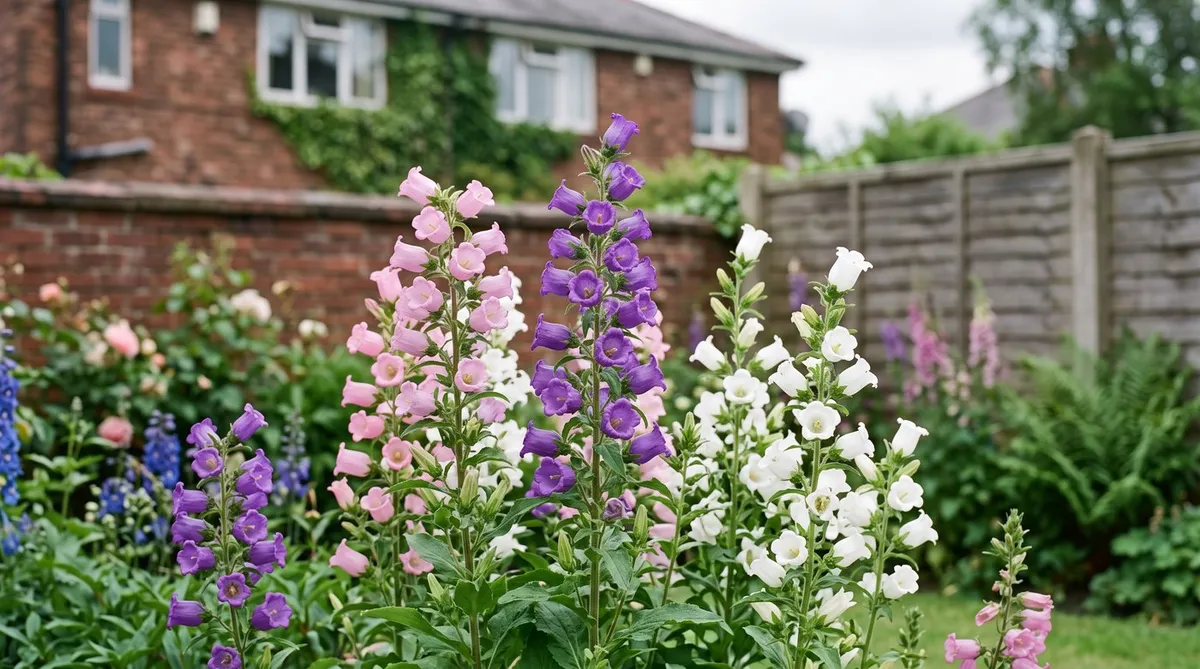
- Canterbury bells (Campanula medium): old-fashioned bells in blue, pink and white. The Canterbury bells guide explains the two-year wait.
- Hollyhocks: often grown as biennials for tall summer spikes. See how to grow hollyhocks.
Warning: All parts of foxgloves are poisonous to people and pets. Wear gloves when handling them and plant them away from where small children play.
| Biennial | Sow by | Flowers | Final spacing | Height |
|---|---|---|---|---|
| Wallflower | Mid-July | April to May | 25cm | 30-45cm |
| Foxglove | Late June | May to June | 40-45cm | 90-150cm |
| Sweet William | Mid-July | May to June | 25cm | 30-50cm |
| Honesty | Late June | April to May | 30cm | 60-90cm |
| Canterbury bells | Early July | May to July | 30cm | 60-75cm |
| Hollyhock | Late June | June to August | 45cm | 150-250cm |

Sweet William sown this summer gives domed, clove-scented heads like these the following year. They last well in a vase.
Pricking out and growing on through summer
Prick seedlings out once they have their first pair of true leaves. Hold each one by a leaf, never the stem, and lift it with a pencil or dibber. Then choose one of two ways to grow them on:
- Modules or 9cm pots: one seedling each, kept on a bench until autumn.
- A nursery bed: a spare strip of ground, with plants 15cm apart in rows.
Keep them watered in dry spells and watch for slugs. Pinching out the tips of young wallflowers helps make bushier plants.

One seedling per cell gives each plant room to grow. Hold them by a leaf, as the stems are easily crushed.

A spare allotment row makes a good nursery bed. The plants grow on here until it’s time to move them in autumn.
Planting biennials out in autumn
Move the plants to their flowering spots in September or October, while the soil is still warm enough for roots to settle before winter.
Lift each plant with as much root as you can. Plant it at the same depth it was growing and firm it in well. Space wallflowers and sweet William about 25cm apart, and foxgloves and hollyhocks about 40-45cm. Water in, then leave them be. They don’t need feeding over winter, and very rich soil gives soft growth that can rot in a wet winter.

Plant out in September or October so roots settle before winter. The plants then wait quietly until spring.
Biennial calendar: sow to flower
| Month | What to do |
|---|---|
| May | Start sowing foxgloves, wallflowers and honesty |
| June | Main sowing month. Prick out May sowings |
| July | Last sowings of wallflowers and sweet William. Line out young plants in a nursery bed |
| August | Water and weed the nursery bed. Pinch out wallflower tips |
| September | Plant out into flowering positions |
| October | Finish planting out. Plant tulips among wallflowers |
| November to March | Leave plants alone. Firm in any lifted by frost |
| April to July | Flowers. Let some foxgloves and forget-me-nots self-seed |
Common biennial sowing mistakes
Burying fine seed. Foxglove and Canterbury bell seed needs light. Sow it on the surface and press it in.
Sowing too late. After July, plants rarely grow big enough to flower the next year.
Letting trays dry out. One hot, dry day can kill a tray of germinating seed. Water from below and keep trays out of fierce sun.
Planting wallflowers after cabbages. Wallflowers and stocks belong to the cabbage family and can pick up clubroot from the same soil. Plant them somewhere else.
Overfeeding. Soft, lush plants going into winter are more likely to rot. Keep them lean.

The payoff: wallflowers sown the summer before, flowering with tulips the next April.
Frequently asked questions
When should I sow biennials in the UK?
Sow biennials from May to July. This gives them time to build strong leaves and roots before winter, ready to flower the next spring or summer. Late May to June is ideal. Wallflowers and sweet William still do well sown in early July.
Do biennial seeds need light to germinate?
Some do, especially very fine seeds like foxgloves and Canterbury bells. Scatter them on the compost surface, press them in and leave them uncovered. Bigger seeds, such as wallflowers, honesty and sweet William, can have a thin covering of compost or vermiculite. Check the packet too.
How long do biennials take to germinate?
Most come up within one to three weeks in summer. Wallflowers are usually among the quickest. Keep the compost just moist and out of strong midday sun. Letting it dry out can stop germination.
Can I sow biennials directly outdoors?
Yes, sow them into a spare seedbed outdoors from late May. Thin the seedlings as they grow, then move them to their flowering spots in autumn. Foxgloves, honesty and wallflowers all suit this. Trays or modules give more control over slugs and spacing.
How far apart do you plant biennials?
Most biennials go about 25-30cm apart. Tall foxgloves and hollyhocks need about 40-45cm. In a nursery bed, 15cm apart is fine, as they will be moved before they get crowded.
Why did my biennials not flower?
They were most likely sown too late and didn’t grow big enough before winter. Most biennials need to reach a decent size, then go through a cold spell, before they flower. Sow by midsummer and plant out by autumn.
Foxgloves are one of the easiest biennials to start with. Read the guide on how to grow foxgloves, or browse more growing guides for the season ahead.
Our team produces practical UK gardening guidance from source research, contributor records and established horticultural practice. Editorial standards are overseen by Matt W.