
Key takeaways
- Sow from May to July for flowers the following summer
- Plant in full sun against a sheltered wall or fence
- Rust is the main problem, so pick off spotted leaves and water at the base
- Spring Celebrities flower in their first year if sown early under glass
- The fig-leaved hollyhock is less troubled by rust
- Leave some seed heads and hollyhocks will happily sow themselves
Hollyhocks are the classic English cottage garden flower. Alcea rosea sends up tall spikes covered in flowers from July to September, in shades from white and pink to red and almost black. Grow them against a sunny wall, by a front door or at the back of a border and your garden instantly feels settled and lived-in.
Most are biennials: sown one summer, they flower the next and then die after setting seed. But they seed themselves so freely that a patch, once started, keeps itself going. Mix them with foxgloves and delphiniums for the tall back row in a cottage garden planting plan.
The one thing to know about is rust. These orange spots under the leaves turn up on most hollyhocks by midsummer. It makes leaves look tatty but rarely kills the plant, and a few simple habits keep it under control.
When and how to sow hollyhock seeds
Sow hollyhocks from May to July for flowers next summer. This is the usual way to grow them in the UK.
Sowing indoors
- Fill small pots or module trays with seed compost.
- Press one or two seeds into the surface of each.
- Cover with a thin layer of vermiculite.
- Water gently and keep somewhere warm.
- Seedlings usually appear in a couple of weeks.
- Move each one into its own small pot once it has its first proper leaves.
Our guide on how to sow seeds indoors covers the basics. The seed sowing calendar for UK gardens shows hollyhocks alongside other flowers to sow each month.
Sowing outdoors
You can sow straight into the ground from May to July. Sow about 6mm deep and 30cm apart, then thin to 45-60cm. Big hollyhocks don’t like being moved, so sowing where they’ll flower often gives stronger plants.
Flowers in the first year
The Spring Celebrities series flowers in its first year if you sow it under glass in January or February. They’re shorter, at about 90-120cm, but the flowers are lovely and arrive from July.
Planting out
Plant pot-raised hollyhocks in September or October, or in spring after the last frost. Autumn planting gives them time to grow good roots, so they’re stronger the next summer. Space them 45-60cm apart so air can move around them, as crowding makes rust worse.
What conditions do hollyhocks need?
Hollyhocks are easy, but where you put them really matters. Get the spot right and they look after themselves.
Sun: Full sun is a must. In shade they get tall, floppy and flower less.
Soil: Well-drained, reasonably fertile soil is best. They’re fine on clay, loam or sand, but sitting in winter wet will kill them. On heavy clay, dig in grit and compost. On thin sandy soil, add compost to hold moisture.
Shelter: Those tall stems don’t like wind. A sunny wall, fence or hedge behind them is perfect. In a windy spot, tie each stem loosely to a tall cane at two or three points.
Watering: Water regularly in the first season while roots settle. After that they cope with dry spells well. Always water at the base, because wet leaves encourage rust.
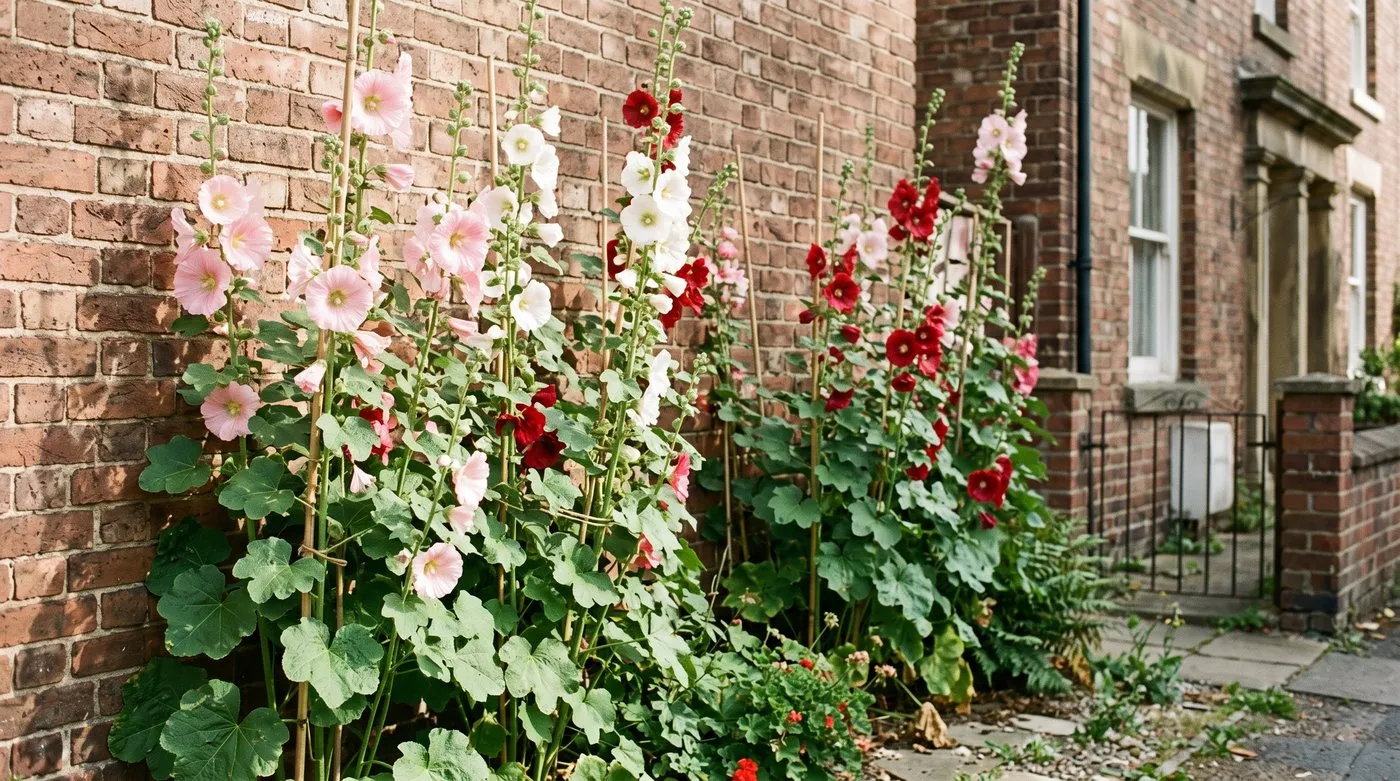
A sunny wall gives hollyhocks warmth and shelter from wind. In a breezy spot, tie each stem loosely to a tall cane.
Hollyhock varieties to grow in the UK
| Variety | Flowers | Height | Good for |
|---|---|---|---|
| Chater’s Double | Fully double, mixed colours | Tall | Classic cottage look |
| Halo Series | Single with a dark centre | Tall | Bees, striking colour |
| Nigra | Single, almost black | Tall | Drama next to pale pinks |
| Spring Celebrities | Single, mixed colours | Medium | First-year flowers |
| Majorette Mix | Semi-double, mixed | Short | Windy or small gardens |
| A. ficifolia (fig-leaved) | Single, yellows and oranges | Tall | Gardens where rust is a problem |
| Queeny Mix | Single, mixed | Short | Pots and small spaces |
If rust drives you mad, try the fig-leaved hollyhock (Alcea ficifolia). It’s less troubled by rust, has pretty lobed leaves, and its warm yellow and orange flowers make a nice change.
For bees, pick single or semi-double types such as the Halo Series or Nigra. Bees can get straight in, while very full doubles slow them down.
For the classic cottage look, Chater’s Double with roses and sweet peas is hard to beat.
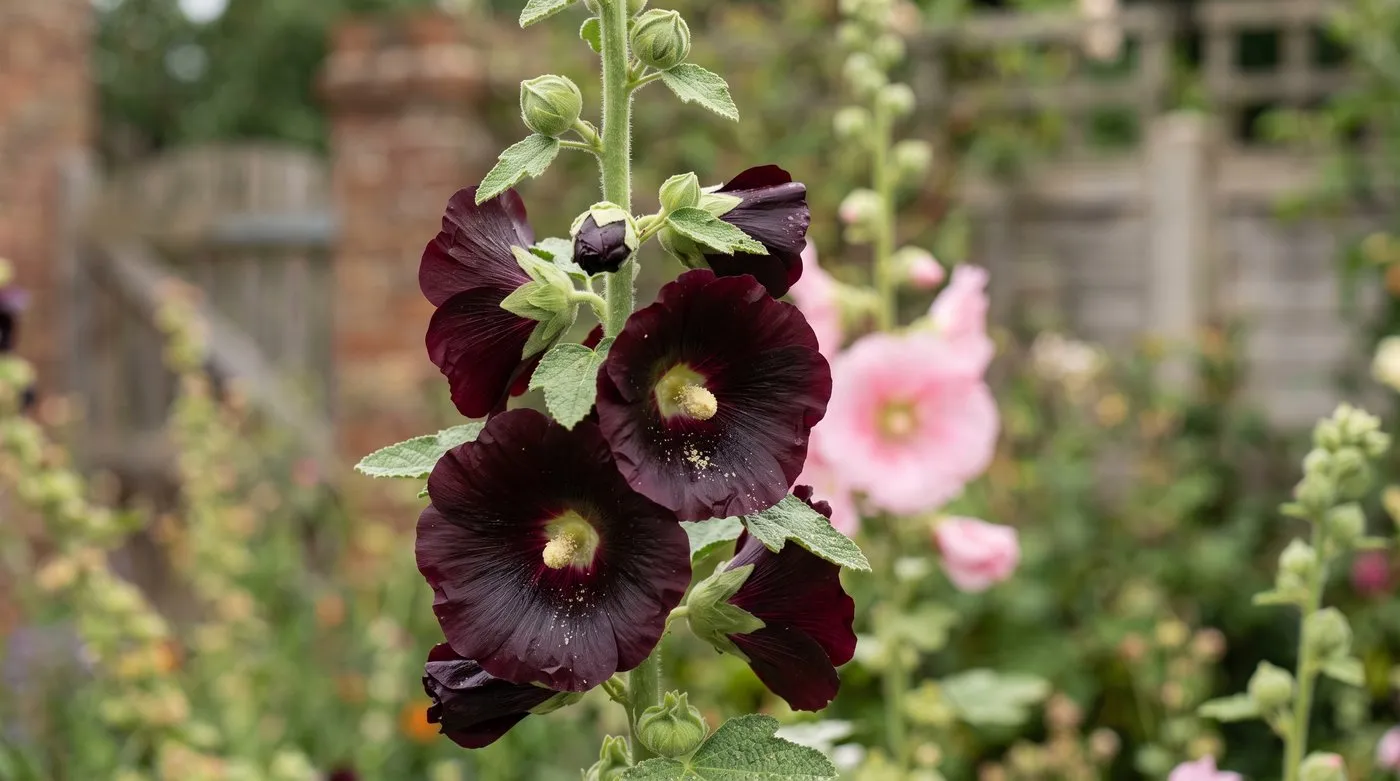
‘Nigra’ is a single, so bees can get straight in. Its near-black flowers look stunning next to pale pinks.
Month-by-month care calendar
| Month | What to do |
|---|---|
| January | Sow Spring Celebrities under glass for first-year flowers |
| February | Prepare the patch where you’ll sow |
| March | Sow Spring Celebrities indoors if you missed January |
| April | Pot on seedlings from earlier sowings |
| May | Sow outdoors or in pots. Harden off spring-sown seedlings |
| June | Plant out seedlings. Stake tall plants in windy spots |
| July | Enjoy the flowers. Pick off rusty leaves. Water at the base |
| August | Deadhead, but leave some spikes to set seed |
| September | Plant out summer-sown seedlings. Collect seed |
| October | Plant any remaining seedlings |
| November | Clear away spent plants. Leave self-sown seedlings be |
| December | Nothing to do. Winter rosettes are fully hardy |
How to deal with hollyhock rust
Rust is the most common hollyhock problem in UK gardens. Orange-brown pustules appear under the leaves from early summer, with pale yellow patches on top. Badly hit leaves turn yellow and drop.
It rarely kills the plant. Well-fed, well-spaced hollyhocks cope with it much better than crowded, stressed ones.
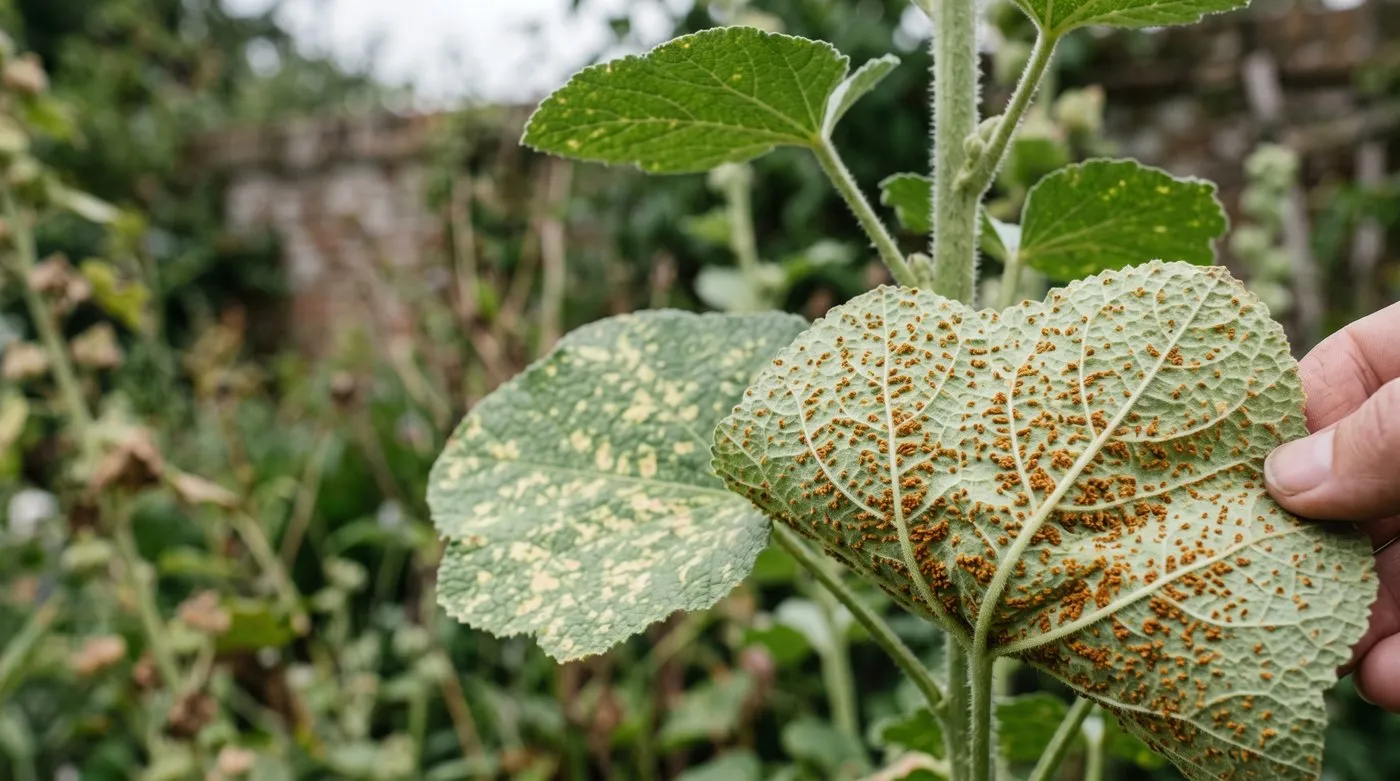
Orange-brown pustules under the leaves are hollyhock rust. Pick spotted leaves off straight away and bin them.
Keeping rust down without sprays
- Pick off spotted leaves straight away. Bin them rather than composting.
- Water at the base. Wet leaves help the disease spread.
- Give them space. 45-60cm between plants lets the air move.
- Clear up in autumn. The disease survives the winter on old leaves and stems, so remove spent plants.
- Raise fresh plants each year. New seedlings start clean, unlike old plants carrying the disease over.
Using fungicides
If you’d like to spray, choose a fungicide approved for home gardens and labelled for rust on ornamentals, and follow the label exactly. Copper sprays such as Bordeaux mixture are no longer allowed for home gardeners. The RHS guidance on hollyhock rust has more. Honestly, the good habits above do more than any spray.
Growing A. ficifolia instead
If rust is a problem every year, the fig-leaved hollyhock is the easy answer. It flowers at the same time, grows just as tall and has the same cottage charm, but rust bothers it less. Growing some alongside ordinary hollyhocks keeps the look while easing the problem.
Hollyhocks as pollinator plants
Hollyhocks are brilliant for bees and hoverflies. Their big open flowers suit bumblebees, honeybees and solitary bees, and they flower from July to September, filling the gap between early and late summer plants.
Single and semi-double flowers are best for wildlife. Doubles like Chater’s Double still get visitors, but the pollen is harder to reach. If pollinators are your priority, plant mostly singles such as Nigra, the Halo Series or A. ficifolia, with a double or two for show.
Hoverflies especially like the open, gently cupped flowers. Planting hollyhocks with other bee-friendly garden plants keeps the pollinator season going into late summer.
Our spring gardening jobs checklist includes getting your hollyhock sowing spots ready.
Encouraging hollyhocks to self-seed
One of the joys of hollyhocks is letting them pop up wherever they like. A hollyhock that’s planted itself at the foot of a wall or in a crack in the paving always looks just right.
Let some seed pods ripen after flowering. The flat, round seeds are easy to collect once the pods turn papery, or just leave them to fall. They sprout readily on bare soil the following spring.
To nudge them where you want them, rake small patches of bare soil at the base of walls or fences in September. Seeds landing there do much better than those landing on grass.
Once settled, hollyhocks keep going with almost no help. For ideas on what to grow alongside them, see our companion planting guide.
Now you’ve got hollyhocks sorted, read our guide on how to grow foxgloves in the UK, another tall biennial that looks great with them.
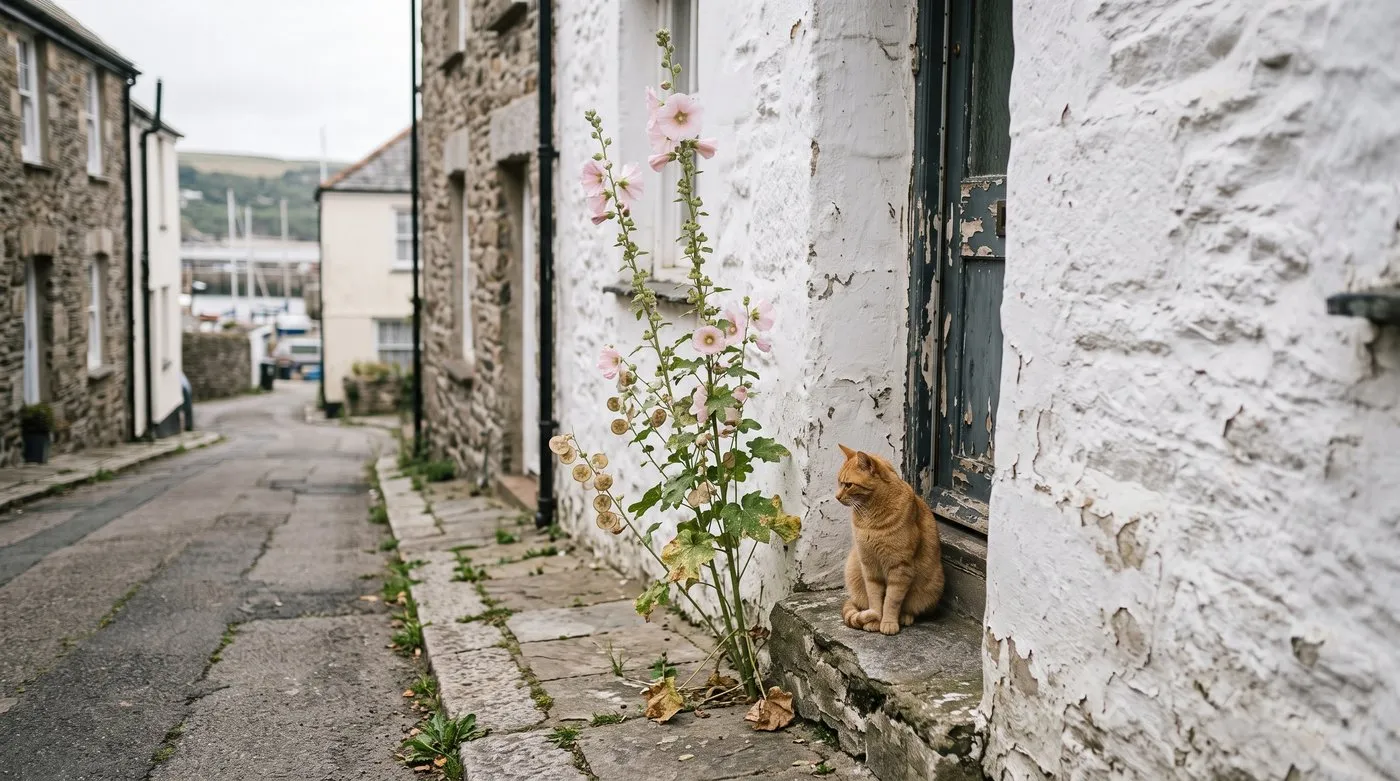
Leave a few spikes to ripen and hollyhocks will pop up in cracks and wall bases. Self-sown ones always look just right.
Frequently asked questions
When should I sow hollyhock seeds in the UK?
Sow them from May to July for flowers next year. Press the seeds lightly into small pots or modules of seed compost and cover with a thin layer of vermiculite. Keep them somewhere warm and they should come up in a couple of weeks. Plant out in autumn or spring, 45-60cm apart.
How tall do hollyhocks grow?
Most hollyhocks grow 1.5-2.5m tall. Chater’s Double and single-flowered types reach the top of that range in rich, moist soil. Compact types such as Spring Celebrities stay at about 90-120cm. Stake any of them if your garden is windy.
What causes orange spots on hollyhock leaves?
Orange spots are hollyhock rust, a common fungal disease. It makes leaves look tatty but rarely kills the plant. Pick off and bin spotted leaves as soon as you see them, and water at the base. If you want to spray, choose a fungicide labelled for rust on ornamentals and follow the label.
Do hollyhocks come back every year?
Most flower once in their second year, then die. They seem to come back every year because they seed themselves so freely. The fig-leaved hollyhock and some named types act as short-lived perennials and may return for two or three years.
Where is the best place to plant hollyhocks?
A sunny, sheltered spot against a wall or fence is ideal. A south or west-facing wall gives warmth and protection from wind, which can snap the tall stems. They need full sun and well-drained soil, as they rot in waterlogged ground.
Are hollyhocks good for wildlife?
Yes, bees and hoverflies love them. They flower from July to September, when many early summer plants have finished. Single and semi-double flowers are easiest for bees to get into, so pick those if wildlife is your priority.
Can hollyhocks grow in pots?
Yes, but they’re not the easiest pot plants. Use a big pot with free-draining compost and water often in hot weather. Short types such as Spring Celebrities or Queeny Mix suit pots far better than the tall ones, which need heavy staking.
Our team produces practical UK gardening guidance from source research, contributor records and established horticultural practice. Editorial standards are overseen by Matt W.


