Key takeaways
- Sweet william is usually grown as a biennial, flowering the summer after you sow it
- Sow outdoors from May to July and plant out in September or October
- Space plants about 25cm apart in full sun and well-drained soil
- It prefers neutral to alkaline soil, so a little lime helps on acid ground
- Cut stems when a few flowers in each head have opened for the longest vase life
- Watch for rust in damp summers and give plants room for air to move
Sweet william is a cottage garden favourite with dense, scented flower heads in red, pink, white and two-tone patterns. It’s easy to grow, loved by bees and butterflies, and one of the best flowers for a jug on the kitchen table.
Most sweet williams are biennials: you sow them one summer and they flower the next. That means a little planning, but very little work.
This guide covers sweet william alone. For its scented cousins, see our guide to growing dianthus and pinks. If you’re after a climbing cottage cut flower instead, our sweet pea growing guide has you covered.
What is sweet william?
Sweet william (Dianthus barbatus) is a member of the pink and carnation family. It comes from the mountains of southern Europe and has grown in British gardens for centuries.
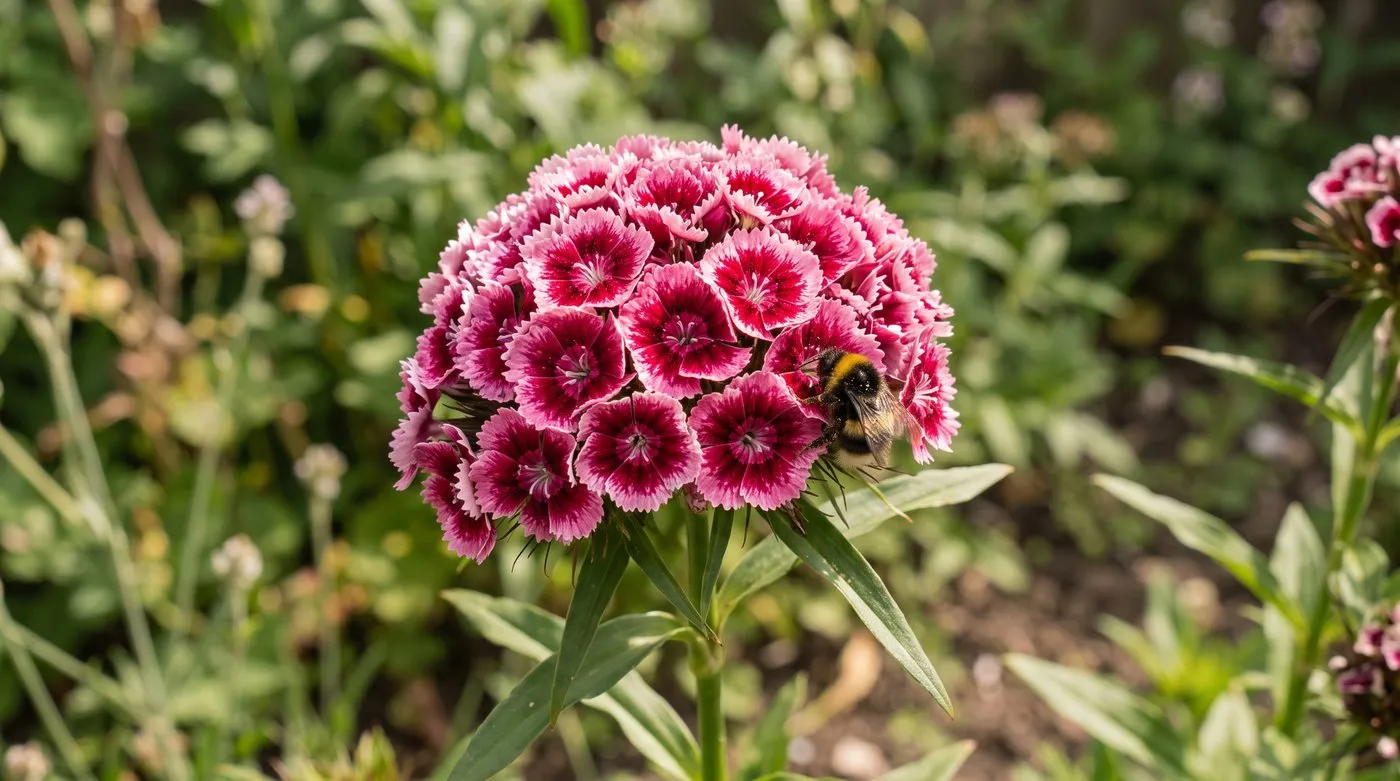
Each sweet william head is a tight posy of small fringed flowers, and bees love them.
In its first year it makes a low clump of narrow green leaves. The next summer it sends up stems 30-60cm tall, each topped with a flat, dense head of small fringed flowers. Many have a darker eye or a pale edge. The scent is sweet and spicy, and is strongest on warm evenings.
Bees and butterflies visit the flowers, so it’s a lovely plant for a wildlife-friendly border.
Best sweet william varieties to grow
Choose a traditional biennial for the best scent and longest stems, or a first-year variety if you want flowers sooner.
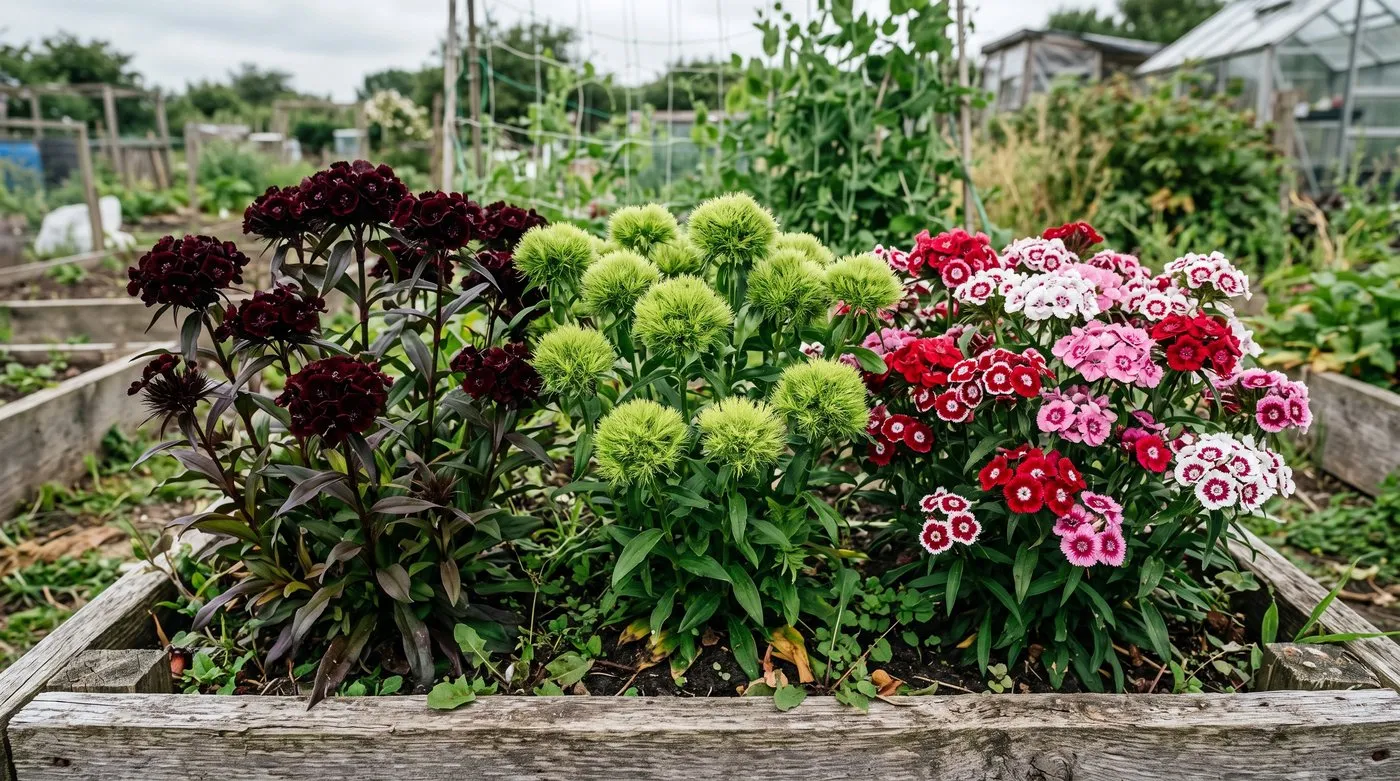
From near-black ‘Sooty’ to fluffy green ‘Green Trick’, there’s a sweet william for every taste.
| Variety | Type | Rough height | Flowers | Good for |
|---|---|---|---|---|
| Auricula-Eyed Mixed | Biennial | 45-60cm | Mixed colours with contrasting eyes | Classic cottage borders, cutting |
| ’Holborn Glory’ | Biennial | About 45cm | Mixed colours with white eyes | Cottage borders, cutting |
| ’Sooty’ | Biennial | About 45cm | Near-black maroon, dark leaves | Dramatic contrast, cutting |
| ’Green Trick’ | Grown as biennial | About 45cm | Green moss-like pompoms, no petals | Unusual flower arrangements |
| ’Indian Carpet’ | Biennial | 15-20cm | Mixed colours | Edging and pots |
| Sweet series | First-year flowering | Tall | Single colours | Cut flower rows |
| Barbarini series | First-year flowering | About 20cm | Single colours and two-tones | Pots and bedding |
‘Green Trick’ doesn’t have the classic scent, but florists love it for its fluffy green heads.
When and how to sow sweet william seeds
Sow traditional sweet williams outdoors from May to July. They grow through summer and autumn, then flower the following year.

Sow in early summer and the young plants will be ready to move to their flowering spot by autumn.
- Rake a small seedbed to a fine, crumbly surface, or fill a seed tray with compost.
- Sow the seed thinly and cover lightly, about 5mm deep.
- Water gently and keep moist. Seedlings usually appear within a couple of weeks.
- Thin seedlings, or prick them out into modules, once they’re big enough to handle.
- Grow them on through summer, watering in dry spells.
- Plant them out into their flowering spot in September or October.
For first-year flowering varieties, sow under cover in February or March. Plant them out after hardening off in spring, and they flower later that summer.
Our guide to sowing biennials covers summer sowing for foxgloves, wallflowers and more alongside sweet william.
Where and how to plant sweet williams
Plant sweet williams in full sun in well-drained soil. They cope with light shade but flower less.
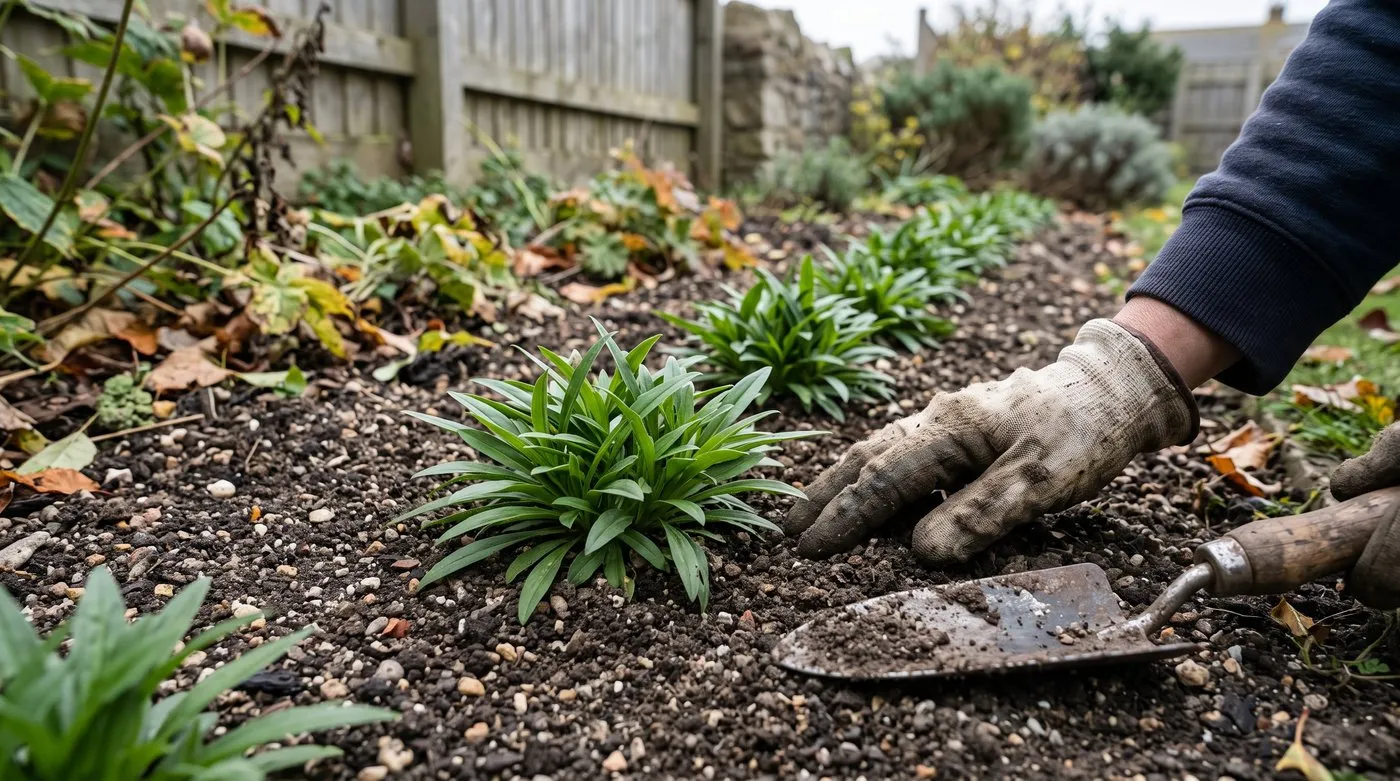
In their first autumn sweet williams are just leaves. Give them room and they’ll flower next summer.
- Soil: neutral to slightly alkaline soil suits them best, and chalky soil is ideal. On acid soil, work in a little garden lime a few weeks before planting.
- Drainage: avoid soggy ground, which can rot the roots in winter. On heavy clay, dig in compost or grit.
- Spacing: plant about 25cm apart, in groups rather than single plants.
- Depth: plant at the same level as in the pot or seedbed, never deeper.
Water in well. Once settled, they only need watering in long dry spells. They don’t need feeding on ordinary soil, as rich ground gives leaves rather than flowers.
Sweet william in a cottage border
Sweet williams are made for cottage borders. Their flat flower heads sit nicely between taller spires and softer, frothier plants.
Good partners include:
- Foxgloves, whose tall spires rise behind them. Our foxglove growing guide shows how to sow them at the same time.
- Lady’s mantle, for a froth of lime green at the front.
- Old-fashioned roses, for a classic early-summer picture.
- Nigella and cornflowers, for soft blue to set off the reds and pinks.
Plant in drifts of five or more. Mixed colours give a relaxed cottage look; one colour feels calmer. Our cottage garden planting plan has more ideas for putting a border together.
Growing sweet williams for cutting
Sweet williams are one of the easiest cut flowers you can grow. The stems are sturdy, the scent fills a room, and they usually last a week or more.
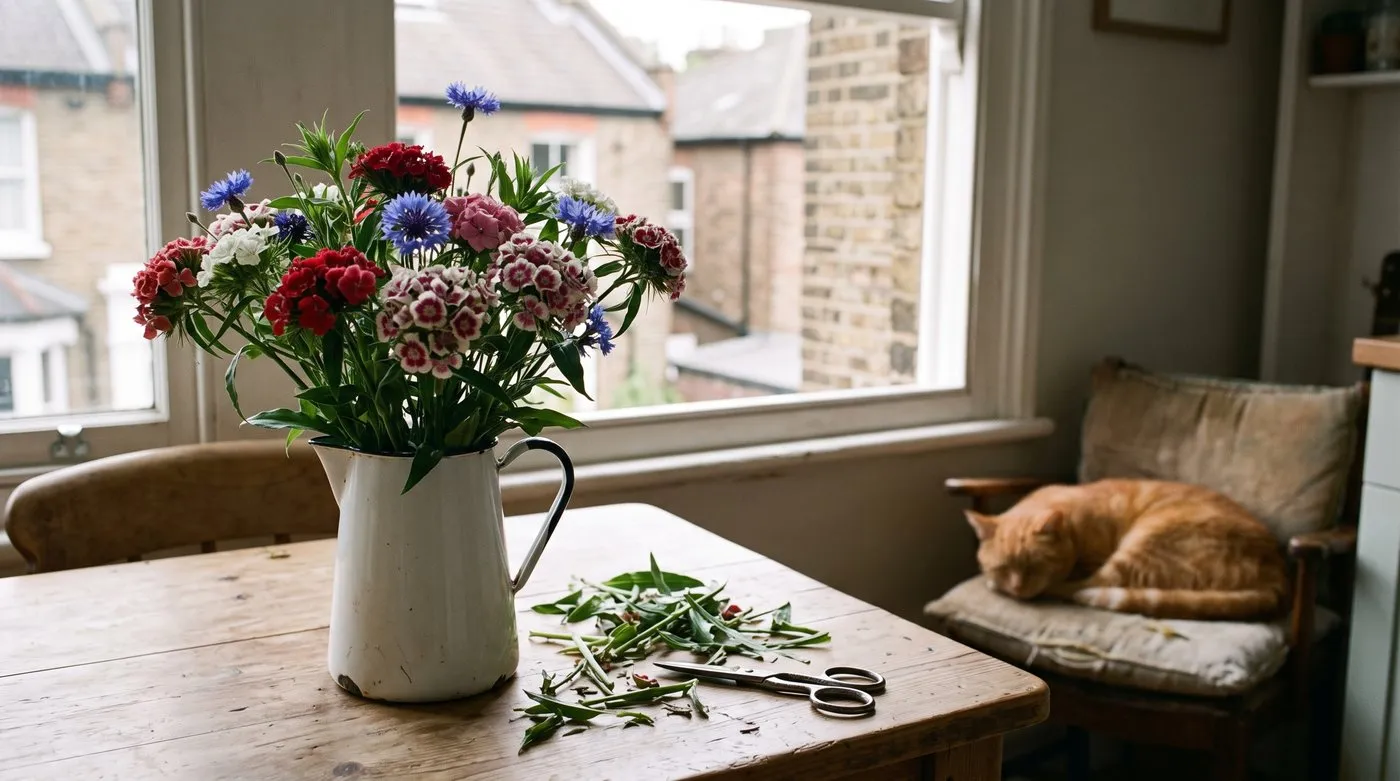
A jug of sweet williams scents a whole room. Cut them when the first few flowers in each head open.
- Cut stems when a few flowers in each head have opened.
- Pick in the cool of the morning.
- Strip off any leaves that would sit below the water.
- Stand the stems in cool water somewhere shady for a few hours before arranging.
- Change the water every couple of days and trim the stems.
Cutting also encourages more side shoots to flower. For more tips, see our guide to conditioning cut flowers, or plan a whole cut flower patch.
Sweet william problems
Sweet williams are generally easy, but a few things can go wrong.
- Rust is the most common problem. Look for orange-brown spots on the undersides of leaves, especially in damp summers. Space plants well, water at the base, and pick off affected leaves. Badly hit plants are best pulled up after flowering.
- Slugs and snails may nibble young plants. Check on damp evenings.
- Root rot happens in wet, heavy soil over winter. Good drainage prevents it.
Month-by-month sweet william calendar
| Month | What to do |
|---|---|
| February to March | Sow first-year varieties under cover |
| April | Harden off first-year plants. Watch for slugs |
| May | Biennials start flowering. Sow next year’s plants outdoors |
| June | Main flowering. Cut for the house. Keep sowing for next year |
| July | Flowering ends. Last sowings. Thin or prick out seedlings |
| August | Grow seedlings on. Water in dry spells |
| September | Plant young plants into their flowering spot |
| October | Finish planting out. Pull up plants that have finished |
| November to January | Leave plants be. They are hardy and need no protection |
Common mistakes with sweet williams
- Sowing in spring and expecting flowers that year. Traditional types need a year. Sow in early summer for flowers next summer.
- Digging them up in autumn. First-year plants are just leaves. They’ll flower next year.
- Crowding plants together. Crowded plants are prone to rust. Space them about 25cm apart.
- Overfeeding. Rich soil gives lots of leaves and fewer flowers.
- Expecting them to last for ever. Plants weaken after flowering. Sow a fresh batch each summer.
Ready for more cottage colour? Browse our plant guides, or read our guide to growing wallflowers, another scented biennial you sow at the same time.
Frequently asked questions
When do you sow sweet william seeds in the UK?
Sow sweet william outdoors from May to July. Sow thinly in a seedbed or in trays, then grow the seedlings on through summer. Plant them out in September or October, and they flower the following summer.
Are sweet williams annual or biennial?
Most sweet williams are grown as biennials. They make leaves in their first year and flower in their second. A few modern varieties, such as the Sweet and Barbarini series, flower in their first year from an early spring sowing.
Do sweet williams come back every year?
Sometimes, but they’re best treated as biennials. Plants may flower again for another year or two, but they get weaker. They often self-seed, so letting a few plants set seed keeps a patch going.
Why are my sweet williams not flowering?
Usually because they’re still in their first year. Biennial sweet williams only flower the summer after sowing. Shade, crowding and very rich soil also cut flowering, so give them sun and room.
What soil do sweet williams like?
Well-drained soil that is neutral to slightly alkaline. They do especially well on chalky soil. On acid soil, a little garden lime before planting helps. Avoid soggy ground, which can rot the roots in winter.
How do you grow sweet williams as cut flowers?
Cut stems when a few flowers in each head have opened. Grow a row in a sunny spot, pick in the morning, strip the lower leaves and stand the stems in cool water. They usually last a week or more.
Are sweet williams poisonous to cats and dogs?
They can cause a mild upset if eaten. Plants in the dianthus family can upset a pet’s stomach or irritate skin. Most pets leave them alone, but call your vet if yours eats a lot.
Our team produces practical UK gardening guidance from source research, contributor records and established horticultural practice. Editorial standards are overseen by Matt W.