Key takeaways
- Sow biennial wallflowers in June and plant them out in October
- Pinch out the tips of young plants for bushier plants with more flowers
- Give them full sun and soil that drains well, ideally neutral or chalky
- Bowles's Mauve flowers for most of the year and lasts a few years
- Plant with tulips and forget-me-nots for a classic spring display
- Wallflowers are in the cabbage family, so keep them off clubroot ground
Wallflowers are one of the best-smelling plants you can grow. Their warm, clove-like scent drifts across the garden from April to June, and the rich colours light up spring borders. Few spring plants match them for colour and perfume together.
There are two kinds to know about. Biennial Erysimum cheiri is the classic spring wallflower, sown one summer to flower the next. Perennial wallflowers, led by the much-loved ‘Bowles’s Mauve’, flower for months on end. Both like sun and soil that drains well.
What are the two types of wallflower?
Biennial wallflowers flower once and die. Perennial ones come back for a few years.
Biennial Erysimum cheiri is the traditional cottage garden wallflower. It makes leaves in its first year, flowers in its second, then sets seed and dies. This is the type sold as bare-root bundles in autumn.
Perennial wallflowers are different types of Erysimum that flower year after year without resowing. The best known is ‘Bowles’s Mauve’, with spikes of mauve-purple flowers for most of the year. It holds the RHS Award of Garden Merit.
Wallflowers are in the cabbage family. That means they like neutral to chalky soil and can catch clubroot, a soil disease of cabbages and their relatives.
How do I sow biennial wallflower seeds?
Sow in June or early July. That gives plants all summer to bulk up before they flower next spring. Sow later and you’ll get small, weak plants.
Fill seed trays with free-draining seed compost. Sow thinly and cover lightly with vermiculite or fine compost. Water gently and leave in a cold frame or sheltered spot outside. Seedlings appear in a couple of weeks.
When they have two true leaves, move them into their own 9cm pots, or space them 15cm apart in a spare bit of ground. Then comes the key step: pinch out the growing tip when plants are about 15cm tall. This makes them branch, giving a bushy plant with lots of flower stems instead of one tall spike.
Water in dry spells over summer, but don’t let them sit wet. By October you should have sturdy, bushy plants ready to go into their final spots.
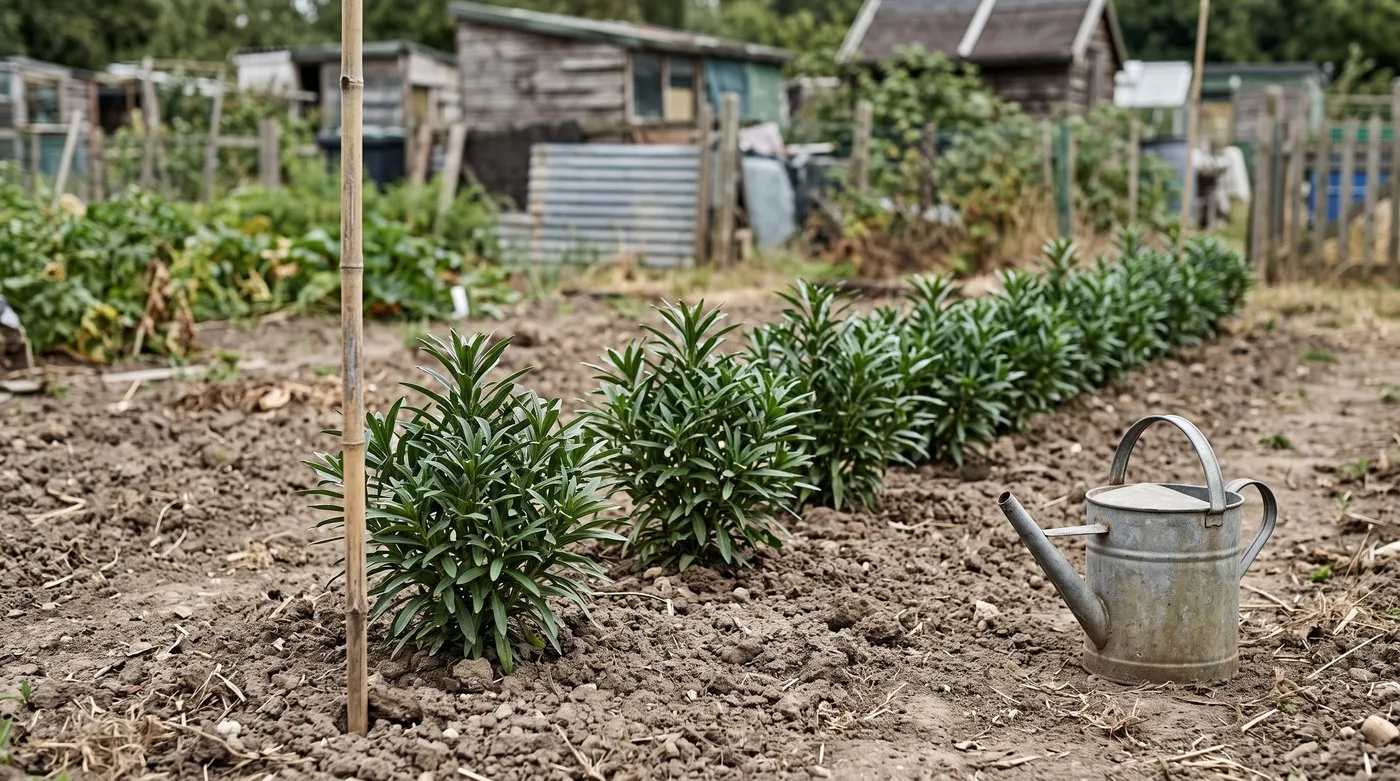
Pinching out the tip at about 15cm makes a bushy plant with lots of flower stems. By October they’re sturdy and ready to plant out.
When should I plant wallflowers out?
Plant out in October. The soil is still warm, so the roots settle in before winter.
Space plants 25 to 30cm apart and firm them in well. Water once, then let the autumn rain take over. Don’t pile mulch around the stems, as it keeps the base wet and can cause rot.
For the classic spring display, plant wallflowers with tulips and forget-me-nots. Tuck tulip bulbs 15cm deep between the wallflowers, and dot forget-me-nots around the front. In spring you get three layers of colour.
On heavy clay, plant wallflowers a little higher than the soil around them. A ring of grit around each plant helps keep the base dry.
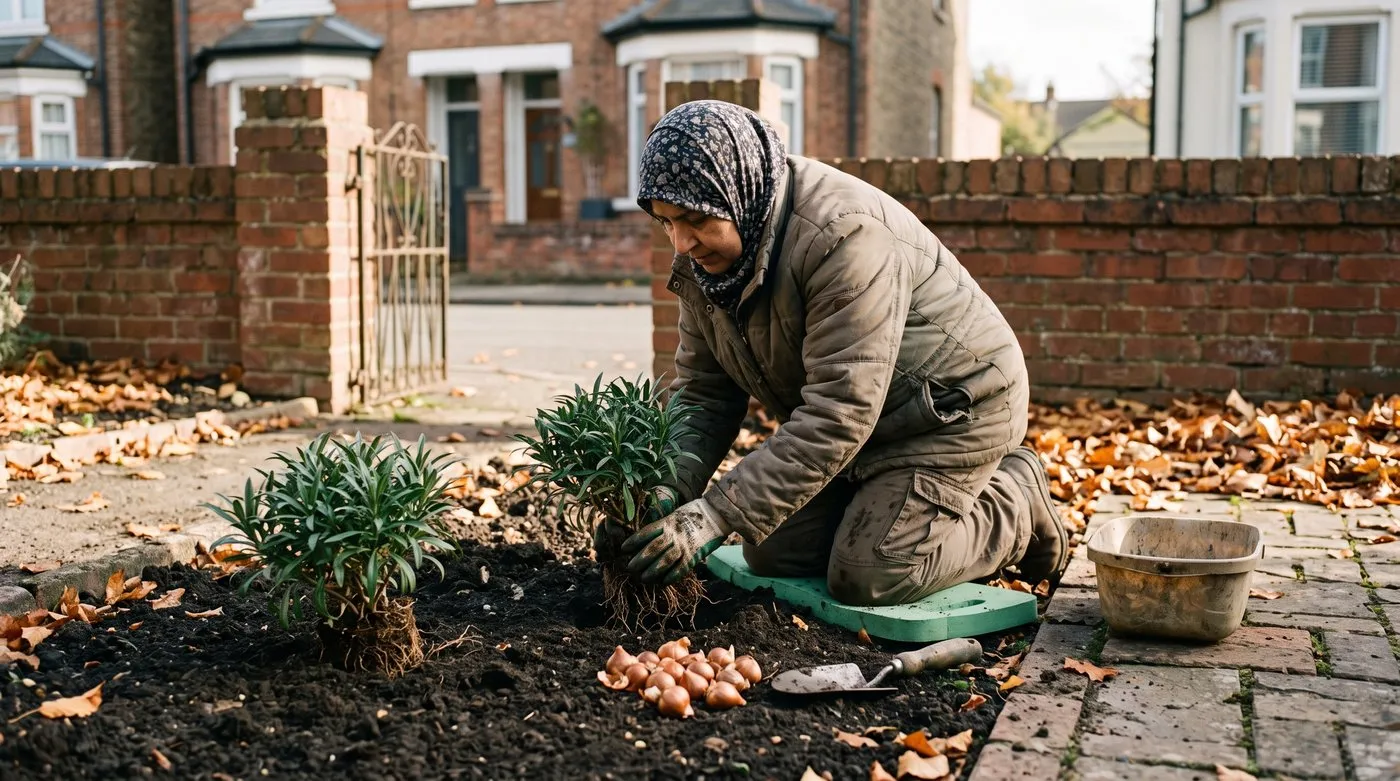
Plant in October while the soil is warm and firm them in well. Tuck tulip bulbs in between for a layered spring show.
Why do wallflowers love walls and rockeries?
Walls give them everything they like. That’s where the name comes from. Wallflowers have grown wild on old stone walls, cliffs and ruins for centuries, and you can still spot them on castle walls around Britain.
A wall gives fast drainage, chalky lime mortar and warmth from the sun-baked stone. To copy this, plant at the foot of a sunny, south-facing wall, in a raised bed with added grit, or in a rockery with pockets of gritty compost. The warmth from a wall seems to bring out their scent too.
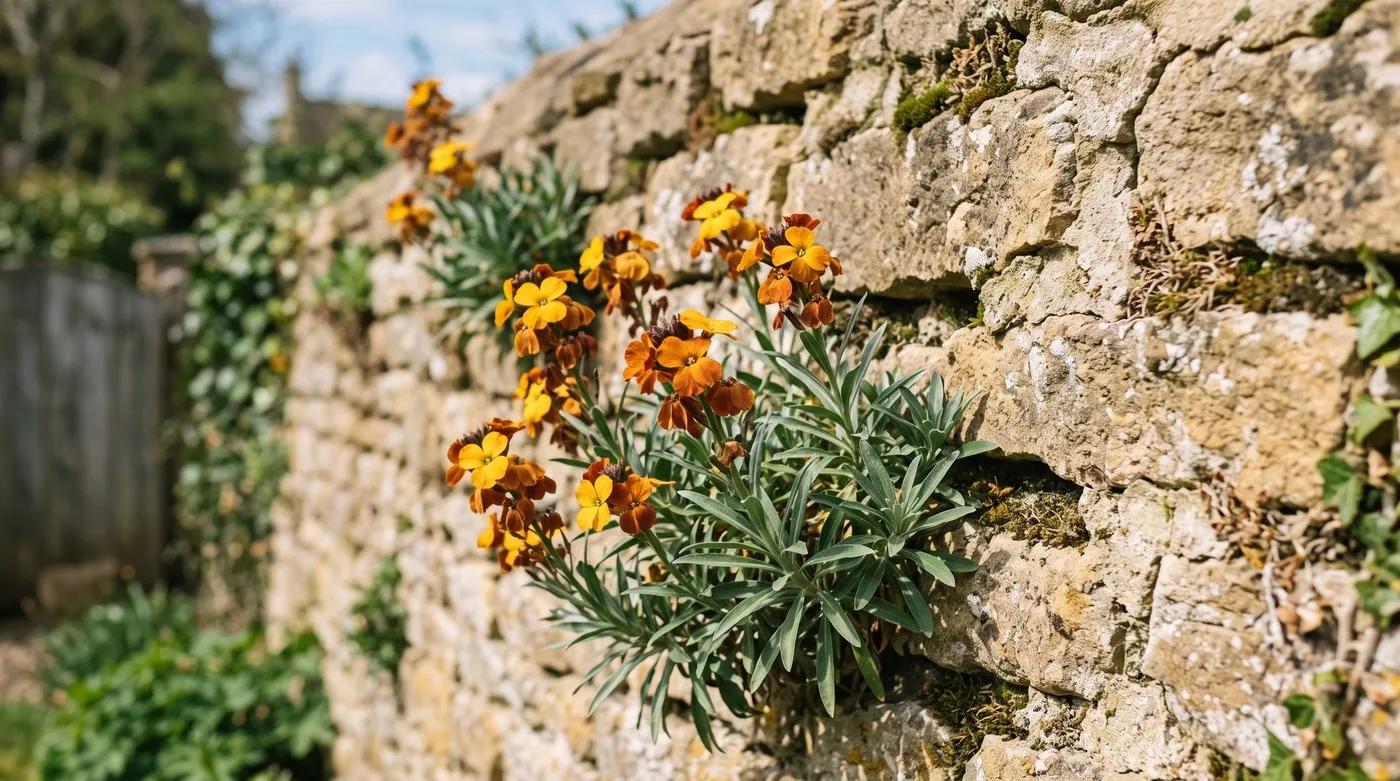
An old wall gives wallflowers sharp drainage, lime and warmth. A gritty raised bed or rockery copies the same conditions.
What makes wallflower scent so special?
It’s a rich, spicy, clove-like scent, strongest in the evening. A good patch of wallflowers in full bloom can scent a whole corner of the garden.
Scent varies by variety. Older, traditional seed mixes are often the most fragrant, while some newer compact types are bred more for neat shape and even colour. If scent matters most, look for seed sold as old-fashioned or heritage mixes.
Perennial types are usually less scented than biennials, though ‘Fragrant Sunshine’ is a sweetly scented exception. For a cutting garden, biennials are best for scent in the vase.
Which perennial wallflowers are best for UK gardens?
Bowles’s Mauve is the favourite, but there are others worth a look. Perennial wallflowers flower for months without resowing. Most only last a few years before going woody, so take cuttings each year.
Erysimum ‘Bowles’s Mauve’ makes a rounded shrub about 75cm tall and wide, covered in mauve-purple spikes from late winter to autumn. In mild winters it hardly stops. It’s an RHS Award of Garden Merit plant and easy to find.
Erysimum ‘Winter Orchid’ has flowers that change through bronze, purple and orange as they age. It flowers from late autumn into spring and grows about 45 to 60cm tall.
Erysimum ‘Apricot Twist’ has soft apricot-orange flowers on neat 30cm plants. It’s great at the front of a border or in a pot, flowering in spring, often with more in autumn.
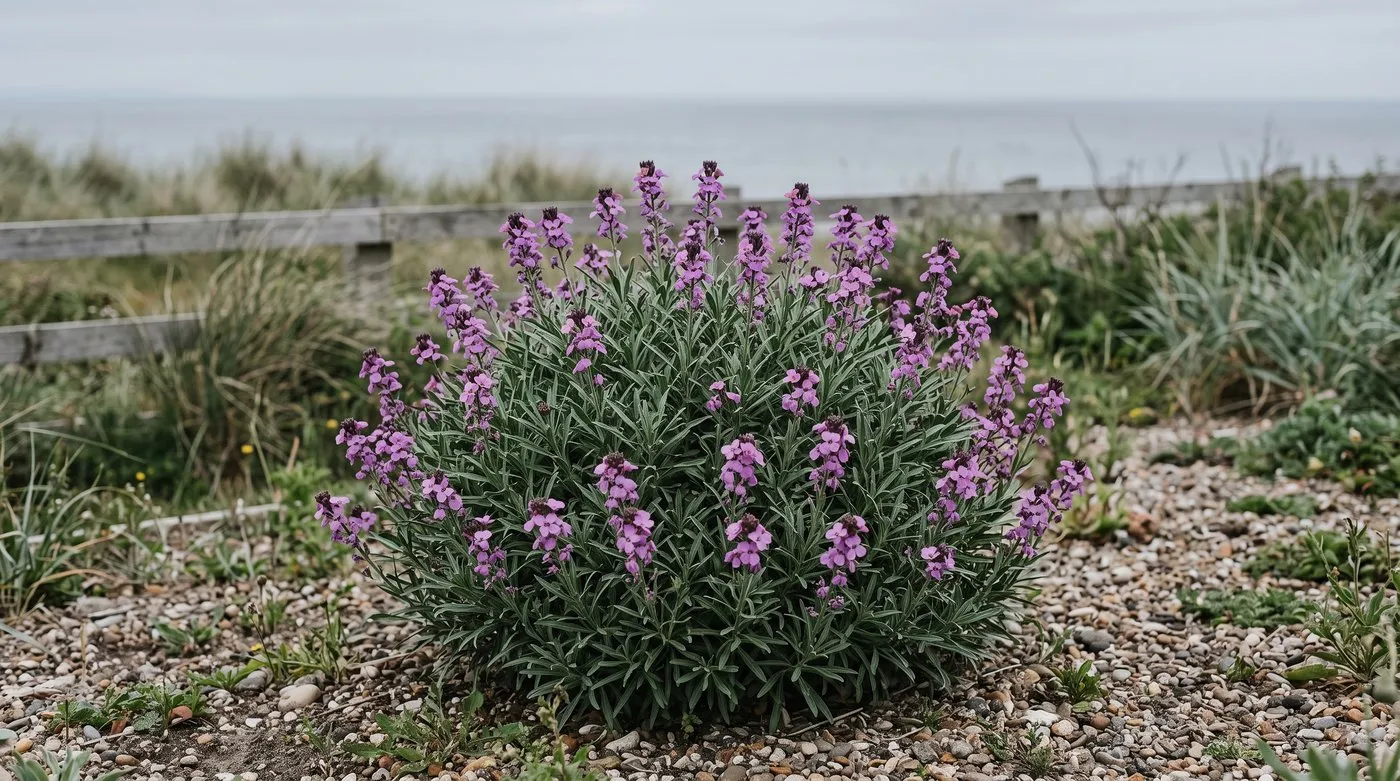
‘Bowles’s Mauve’ flowers for most of the year. Take a few cuttings each summer, as plants go woody after a few years.
Wallflower varieties at a glance
| Variety | Type | Height | Colour | Flowers | Scent |
|---|---|---|---|---|---|
| ’Blood Red’ | Biennial | 45cm | Deep crimson | April to June | Strong |
| ’Cloth of Gold’ | Biennial | 40cm | Golden yellow | April to June | Strong |
| ’Fire King’ | Biennial | 45cm | Orange-scarlet | April to June | Strong |
| ’Ivory White’ | Biennial | 40cm | Creamy white | April to June | Medium |
| ’Bowles’s Mauve’ | Perennial | 75cm | Mauve-purple | Most of the year | Light |
| ’Winter Orchid’ | Perennial | 50cm | Bronze, purple, orange | Late autumn to spring | Medium |
| ’Apricot Twist’ | Perennial | 30cm | Apricot-orange | Spring, plus autumn | Light |
| ’Sunset’ series | Perennial | 35cm | Warm mixed tones | Spring to summer | Light |
Biennials give the best scent but need sowing every year. Perennials flower for longer with less work. Why not grow both?
How do I look after wallflowers through the year?
They’re easy once planted. A few simple jobs keep them looking good.
Spring (March to June): give biennials one high-potash liquid feed, like tomato feed, as buds form. Skip nitrogen-rich feeds, which give leaves instead of flowers. Deadhead perennials to keep new flowers coming.
Summer (July to August): pull out biennials once they finish and pop them on the compost heap. Give perennials a light trim after their spring flush. June is a good time for softwood cuttings of perennials.
Autumn (September to November): plant new biennials in October. Lightly trim perennials, but don’t cut into old bare wood, as it won’t regrow.
Winter (December to February): no protection needed in most of the UK. In cold, wet spots, a little grit around the base helps stop rot. Avoid bark or compost mulches that hold water.
What soil do wallflowers need?
Free-draining soil that’s neutral or chalky. Wallflowers come from limestone cliffs and rocky ground. On acid soil they struggle, so grow them in pots instead.
Drainage matters just as much. Wallflowers hate soggy roots, especially in winter. On heavy clay, raise the bed or dig in plenty of grit.
Don’t make the soil too rich. Lots of compost or manure gives leafy plants with fewer flowers. Average or even poor soil gives better results.
In pots, use John Innes No. 2 with extra grit or perlite, about three parts compost to one part grit. Raise pots on feet over winter so they don’t sit in water.
What can I grow with wallflowers?
Tulips and forget-me-nots are the classic partners. Wallflowers are a favourite for spring bedding thanks to their height, colour and scent.
Plant tulip bulbs between the wallflowers in autumn and dot forget-me-nots around them. Together they make a cheerful, layered display in late spring.
Primroses work well at the front, and honesty adds a cottage feel. Alliums take over as the wallflowers fade. In pots, try compact wallflowers with trailing ivy and miniature daffodils.
Keep wallflowers away from your cabbage patch. They share clubroot, so if your veg beds have had it, plant wallflowers elsewhere.
How do I take cuttings from perennial wallflowers?
Take softwood cuttings from late May to July. Perennial wallflowers go woody after a few years, and cuttings give you free young replacements.
Pick healthy side shoots without flowers, 8 to 10cm long. Cut just below a leaf joint and strip the lower leaves, leaving a few pairs at the top. Dip in rooting powder if you have it.
Push the cuttings around the edge of a 9cm pot of half perlite, half peat-free compost. Water, cover with a clear bag and keep somewhere bright and warm. Roots should form in three to four weeks.
Pot them up on their own and grow on in a sheltered spot. Plant out the next spring, or keep them in a cold frame over winter. Fresh, soft shoots root better than older woody ones.
Common wallflower problems
Clubroot is the most serious. It’s a soil disease that swells the roots into lumps, so plants wilt and die. There’s no cure, and it stays in the soil for many years. Don’t plant wallflowers or cabbages in affected ground. Adding lime to raise the pH can help reduce it.
Flea beetles make lots of small round holes in leaves. It’s mostly cosmetic and plants grow through it. Cover young seedlings with fine insect mesh if they’re badly hit.
Downy mildew shows as yellow patches on top of leaves with greyish fuzz underneath. It loves damp, still weather. Space plants well, water at the base and pick off bad leaves.
Crown rot kills perennials in wet winters, turning the base brown and mushy. Good drainage, no mulch against the stem and planting a little high are the best ways to prevent it.
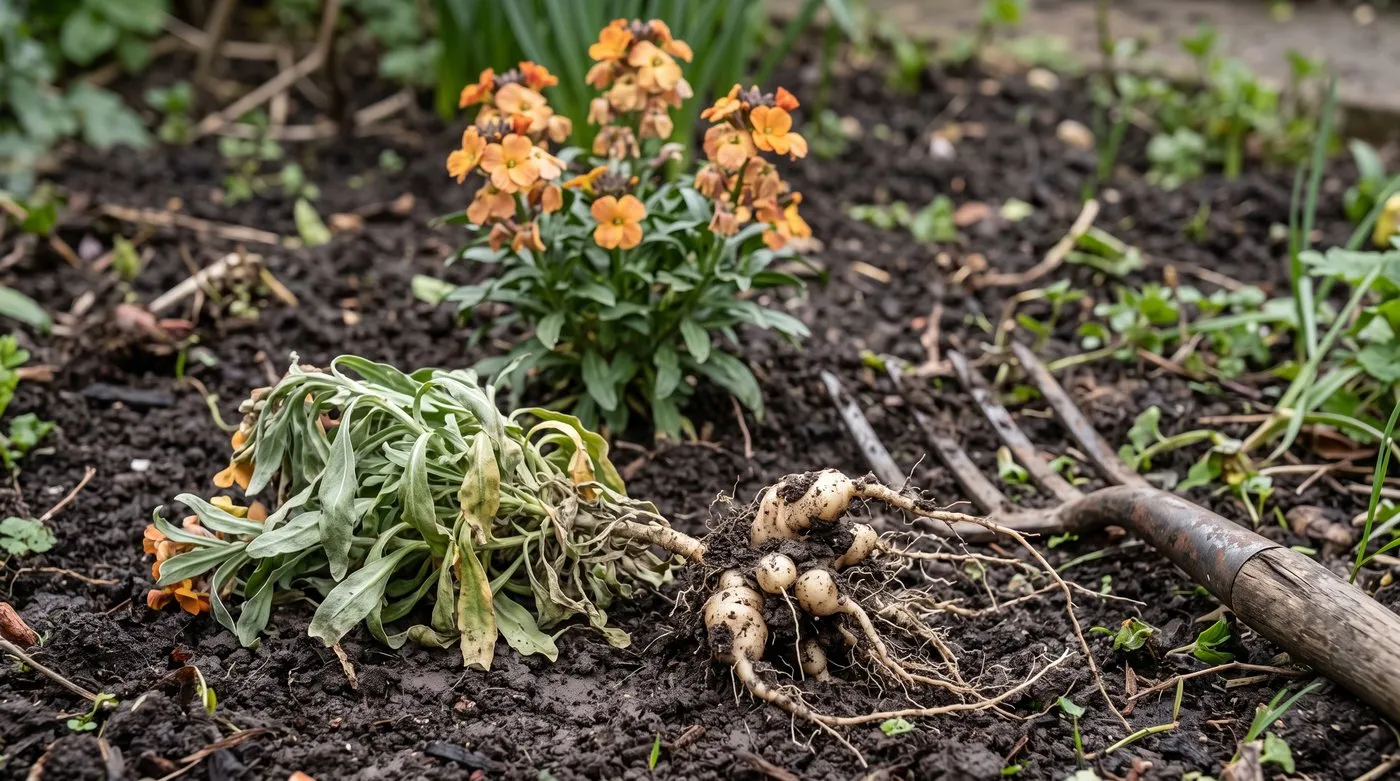
Wilting plants with lumpy, swollen roots have clubroot. Bin them and don’t plant wallflowers or cabbages in that spot again.
Frequently asked questions
When should I sow biennial wallflower seeds?
Sow them in June or early July. Use seed trays or a spare patch of ground outside. Pinch out the tips when the young plants reach about 15cm. Plant them in their final spots in October while the soil is still warm. Sowing much later than mid-July gives smaller plants with fewer flowers.
Why are my wallflowers not flowering?
Late planting in autumn is the usual reason. Plants need a few weeks to root in before hard frosts, so aim for October. Too much shade, very rich soil and overcrowding can also cut flowering. Biennials only flower once and then die, so you’ll need fresh plants each year.
Can wallflowers grow in shade?
They need plenty of sun to do well. A little afternoon shade is fine, but in shade they get leggy, flower less and catch more diseases. Sunny south-facing walls and borders are ideal, and the warmth brings out their scent.
How long do perennial wallflowers last?
Usually a few years before they turn woody. Bowles’s Mauve tends to last longest on well-drained soil. Others like ‘Winter Orchid’ and ‘Apricot Twist’ can be shorter-lived. Take cuttings each year so you always have young plants ready.
Do wallflowers come back every year?
Biennials don’t, but perennial wallflowers do. Classic Erysimum cheiri makes leaves in year one, flowers in year two, then dies. Perennials like Bowles’s Mauve come back for several years. Biennials sometimes self-seed if you leave the seed heads on.
Are wallflowers related to brassicas?
Yes, they’re in the same family as cabbages. That means they can catch clubroot, a soil disease. Don’t plant them where cabbages have had clubroot. Cabbage white butterflies may visit too, but rarely do much harm.
Can I grow wallflowers in pots?
Yes, as long as the pot drains well. Use John Innes No. 2 with some extra grit, and stand the pot on feet over winter. Feed every two weeks with a high-potash feed once buds appear. Both kinds look lovely by a front door or on a patio.
Our team produces practical UK gardening guidance from source research, contributor records and established horticultural practice. Editorial standards are overseen by Matt W.