Key takeaways
- A seed snail is damp compost rolled up in a 12-15cm wide strip of foam underlay or bubble wrap
- A 60cm strip fits a 13cm pot and holds about 20 sweet peas sown 3cm apart
- Roots grow straight down the coil instead of circling, which suits sweet peas and beans
- Skip carrots, parsnips and other taproot crops, which fork when moved
- Coils dry out fast, so check them every day and water from below
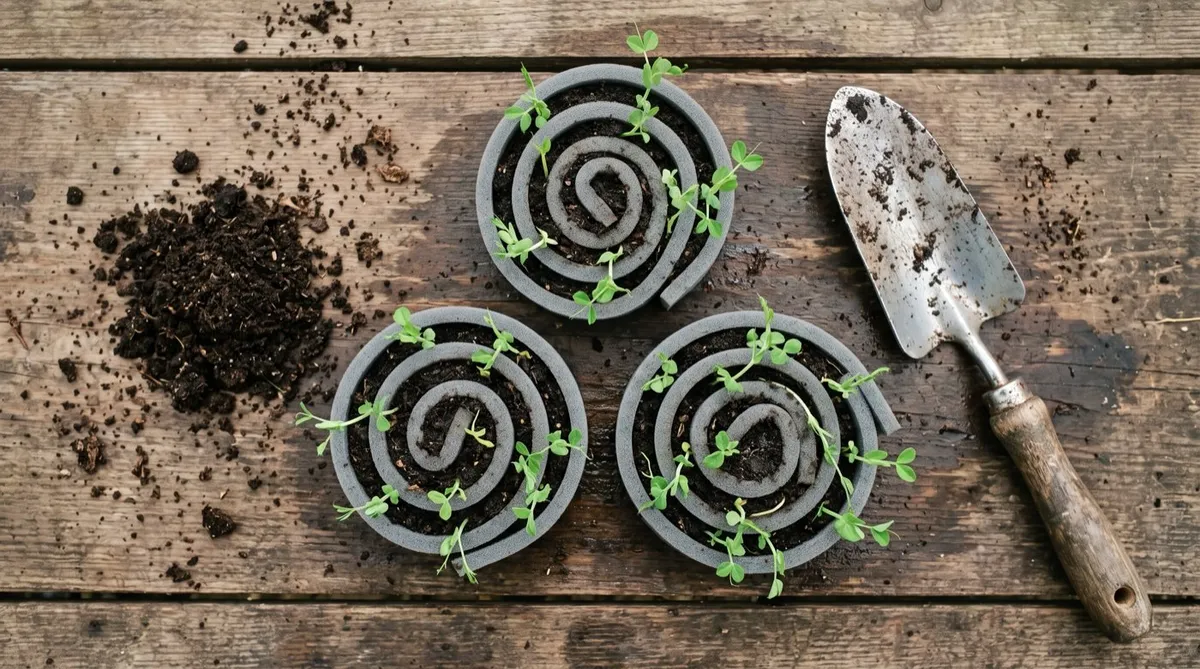
A seed snail is a strip of foam or bubble wrap spread with compost, rolled up like a Swiss roll and stood on end in a pot. You sow into the top, and one 13cm pot holds about 20 sweet peas. It’s a clever answer to two spring problems: a crowded windowsill and seedlings with roots circling round the bottom of their cells.
Here’s how to build one, what to sow in it and how to get the seedlings out in one piece.
What is a seed snail and why use one?
A seed snail is a coil of compost held in shape by a rolled strip of waterproof material. The spiral top is your seed bed, and from above it looks like a snail shell.
The first win is space. A coil packs compost into a solid cylinder with no plastic walls or gaps, so it holds far more seedlings than a module tray of the same footprint.
The second win is roots. In a small module, roots soon hit the bottom and start circling. In a coil made from a 12-15cm strip, each root has a long, straight run down through the compost. That suits deep-rooted seedlings like sweet peas and beans, which dislike being disturbed.
You can make one in about ten minutes from packaging you’d otherwise throw away.
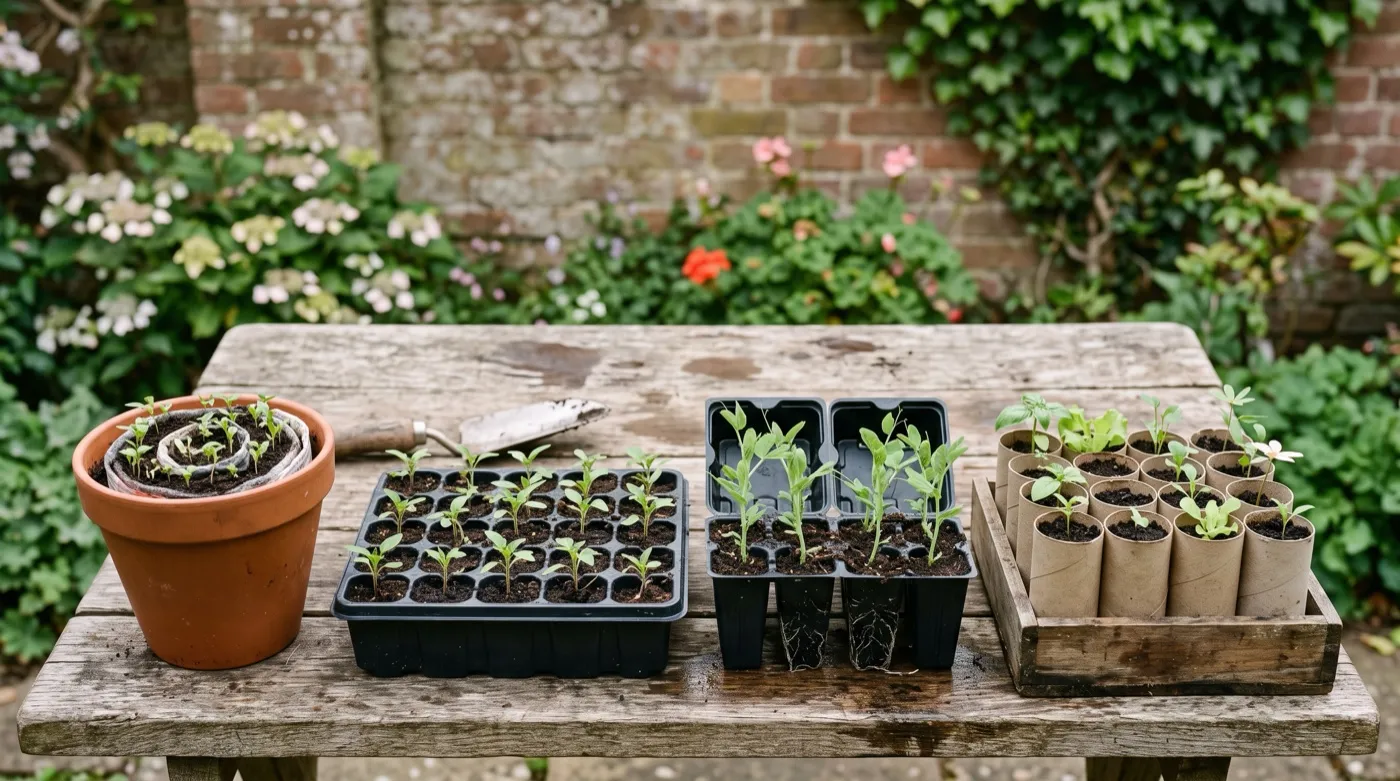
A seed snail next to the usual options. One pot holds a whole row of seedlings.
What you need to make a seed snail
You need a strip of material, compost, tape and a pot. Most of it is probably in the house already.
The strip. Foam laminate-flooring underlay is ideal, as it’s waterproof, flexible and holds compost well. Bubble wrap is a good second choice. Old compost bags work but are floppier. Avoid kitchen roll, newspaper and thin card, as they go soggy and fall apart.
The compost. Peat-free seed compost or sieved multipurpose is fine. Seeds carry their own food, so a rich mix isn’t needed. What matters is moisture: it should hold together when squeezed but not drip.
Tape and a pot. Masking tape, string or a wide elastic band holds the roll closed. A 13cm pot suits a 60cm strip.
A label. Every coil looks the same once sown. Write the variety and date on a label, or on the outside of the strip before you roll it.
How to make a seed snail step by step
Measure your first one carefully, and you’ll do the rest by eye.
- Cut the strip. Make it 12-15cm wide and about 60cm long for sweet peas and beans. For lettuce and onions, 8-10cm wide is enough.
- Add the compost. Spread damp compost 2cm deep along the strip and press it down firmly. Leave the last 5cm bare so the strip overlaps and closes the roll.
- Roll it up. Start at the compost end and roll gently but firmly, keeping the bottom edge level.
- Tape it. Put two bands of tape around the roll, one near the top and one near the bottom. If compost falls out of the base, unroll and start again a little tighter.
- Stand it in a pot. Sit the coil upright in a 13cm pot, spiral side up. Pack any gap with spare compost.
- Sow. Push sweet peas in about 1.5cm deep and beans about 5cm deep, roughly 3cm apart along the spiral. Sprinkle fine seed like chillies and onions 1-2cm apart and cover thinly with sieved compost.
- Water and label. Water gently once, add the label and cover with a clear bag or propagator lid until the seeds come up.
A 60cm strip takes about 20 sweet peas. It takes more onions or chillies, as they can go closer together.
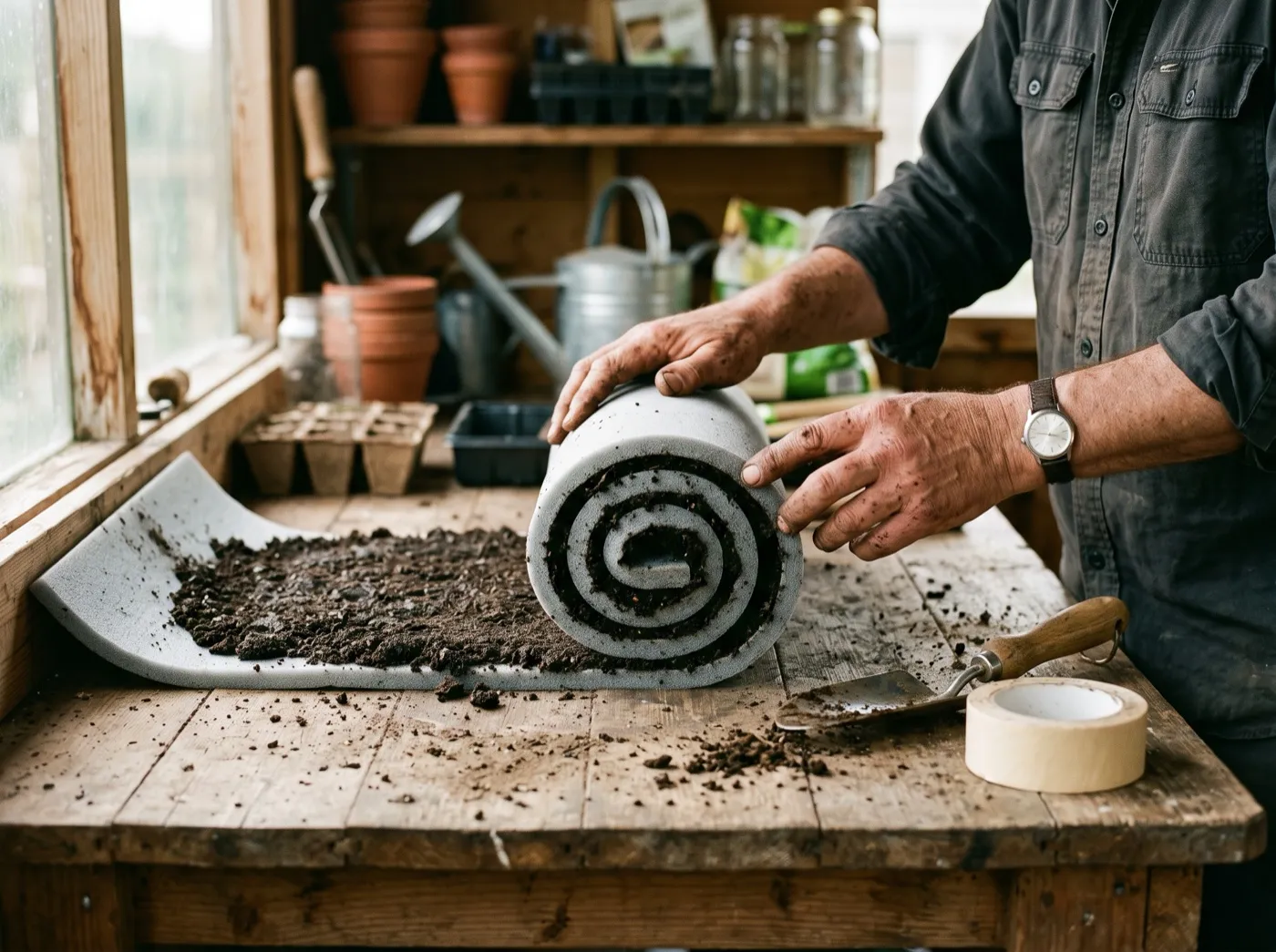
Roll gently but firmly, keeping the bottom edge level. A loose coil drops compost out of its base.
Gardener’s tip: Get the compost moisture right before you roll, because you can’t fix it afterwards. It should feel like a wrung-out sponge. Too dry and it falls out as you roll. Too wet and seeds in the middle can rot.
What can you sow in a seed snail?
Big seeds and long roots suit seed snails best. Anything you’d start in modules will grow in one, though.
Sweet peas are the classic crop. They like a long root run and hate being disturbed, which is why many people grow them in root trainers. The RHS sweet pea growing guide covers sowing times and depths. Once they’re out of the coil, the guide to growing sweet peas from seed takes you through planting and training.
Beans suit the depth too. Sow broad beans under cover from February, and runner and French beans in late April or May for planting out after the last frost. Use the wider 15cm strip for these.
Chillies and tomatoes work sown thinly along the top. Chillies gain the most, as they’re sown in late winter when windowsills are fullest. They need warmth to germinate, so check the seed germination temperatures table before you sow.
Onions and leeks do well too. Sow thinly in February and plant out once the seedlings are about pencil-lead thick.
What to skip: carrots, parsnips and other taproot crops fork when moved, so sow those straight into the ground. Courgettes and squash grow so fast they quickly outgrow a coil.
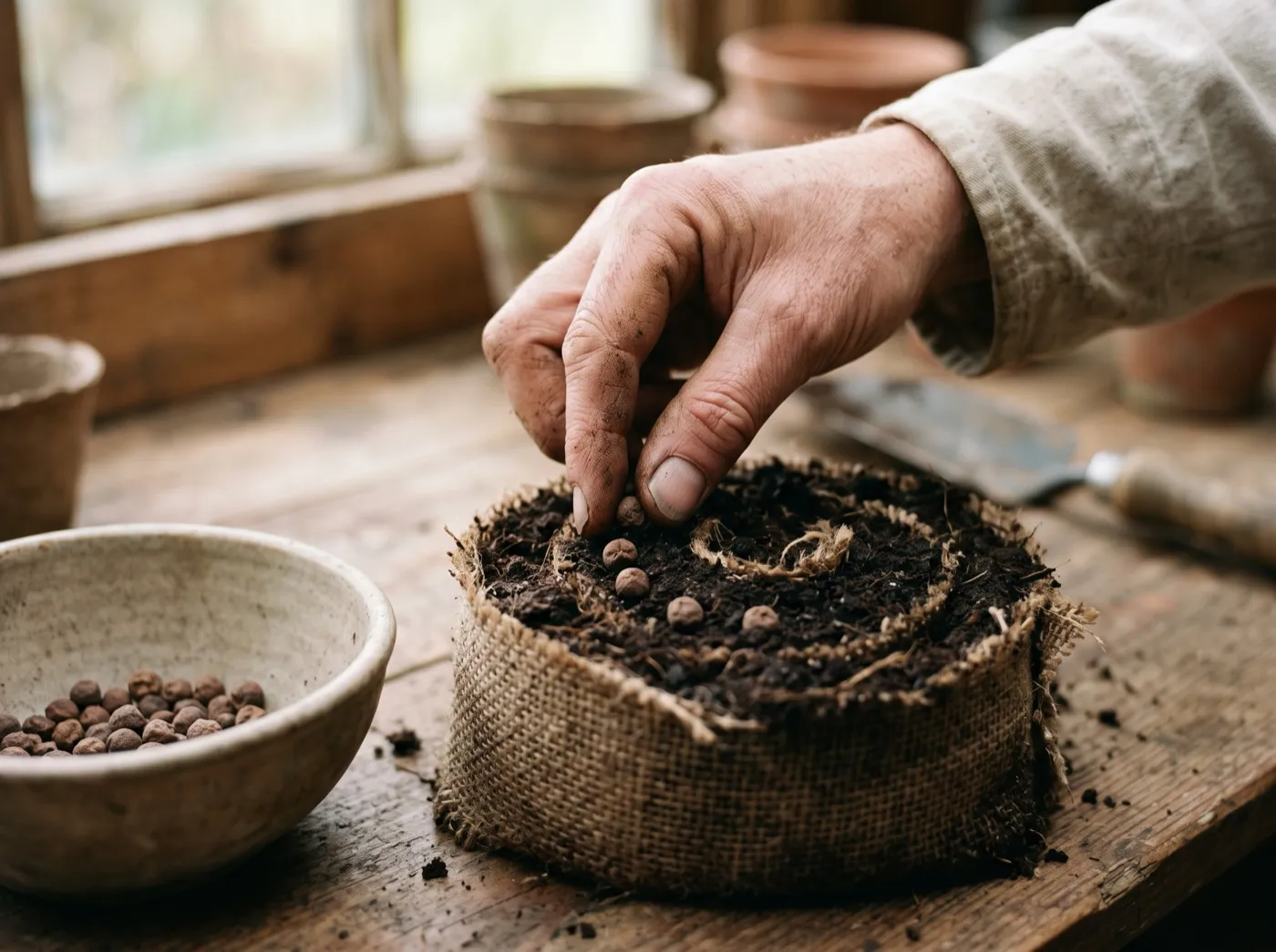
Push big seeds like sweet peas into the top of the coil, about 3cm apart along the spiral.
Seed snails vs root trainers, modules and loo-roll tubes
Seed snails win when you’re short of both space and depth, which for most people means February to April on a windowsill. The other methods still have their place.
| Method | Good for | Watch out for |
|---|---|---|
| Seed snail | Sweet peas, beans, chillies on a crowded sill | Dries out fast, needs daily checks |
| Root trainers | Sweet peas and beans if you can’t water daily | Take more space |
| Modules | Lettuce, brassicas and other shallow roots | Deep roots soon circle |
| Loo-roll tubes | Free, single deep-rooted seedlings | Can go mouldy in cool, damp springs |
If you like the idea of growing without pots, soil blocking for seed starting pairs well with snails: blocks for lettuce and brassicas, coils for climbers.
Seed snail sowing calendar
Seed snails are handy for much of the year, starting with chillies in January and ending with autumn sweet peas in October.
| Month | Sow in seed snails | Notes |
|---|---|---|
| January | Chillies, sweet peas | Chillies need warmth, so use a heated propagator |
| February | Chillies, onions, leeks, broad beans, sweet peas | The busiest month for windowsill space |
| March | Tomatoes, sweet peas, onions, peas | Tomatoes need a warm spot to germinate |
| April | French beans, runner beans (late in the month), sweetcorn | Use the wider 15cm strip for beans |
| May | French beans, sweetcorn, peas | Unroll April coils and harden them off |
| June | Lettuce, beetroot for leaves | Keep coils out of hot sun |
| July | Spring cabbage, kale, autumn salads | Water daily in warm weather |
| August | Winter lettuce, spring onions | Narrow 8cm coils are enough |
| September | Hardy annual flowers | Cornflowers and calendula are good choices |
| October | Sweet peas | Overwinter the coil in a cold frame |
| November to December | Nothing new | Clean and store strips for next year |
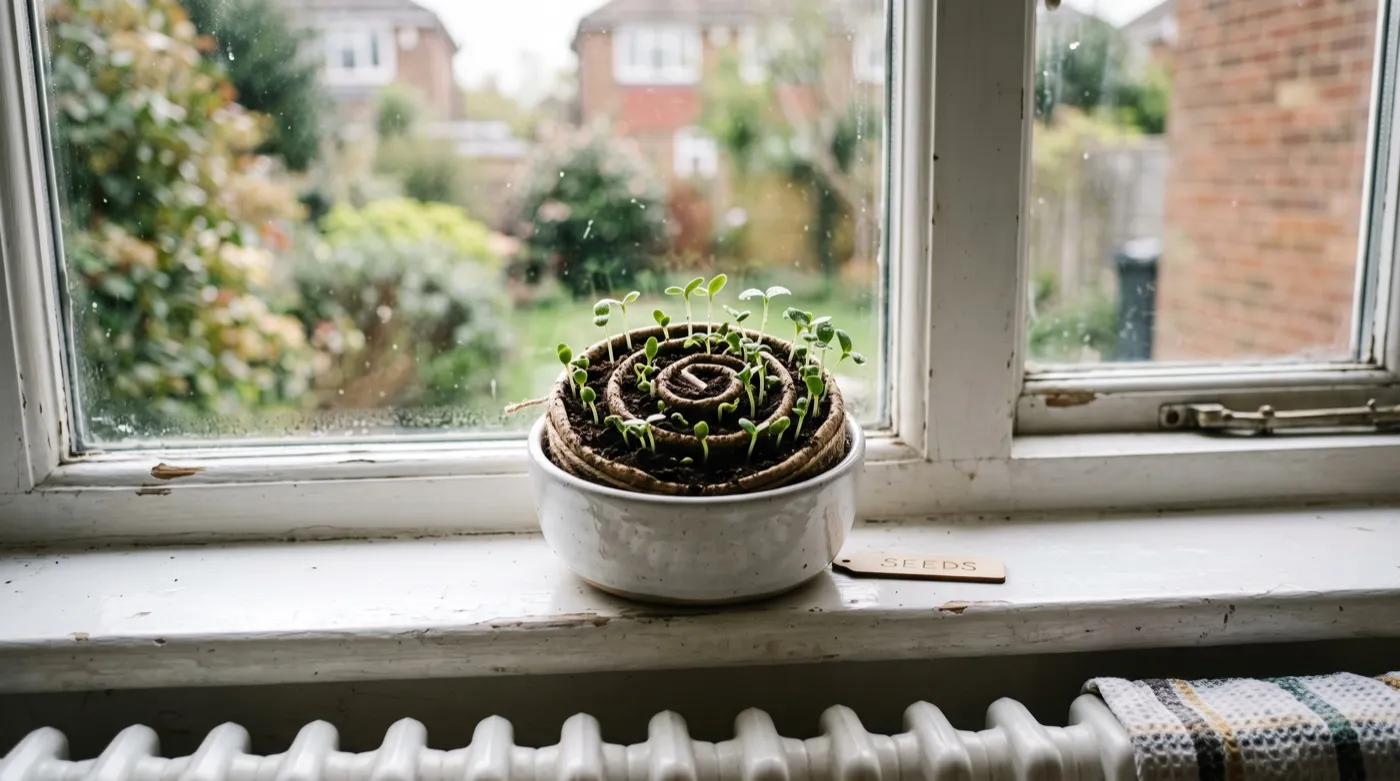
One coil on a bright sill does the work of half a tray of modules. Turn it every day so the seedlings grow straight.
When and how to unroll a seed snail
Unroll when white root tips show at the bottom of the coil. For sweet peas that’s usually five or six weeks after sowing. For chillies and tomatoes, wait until the first true leaves have opened.
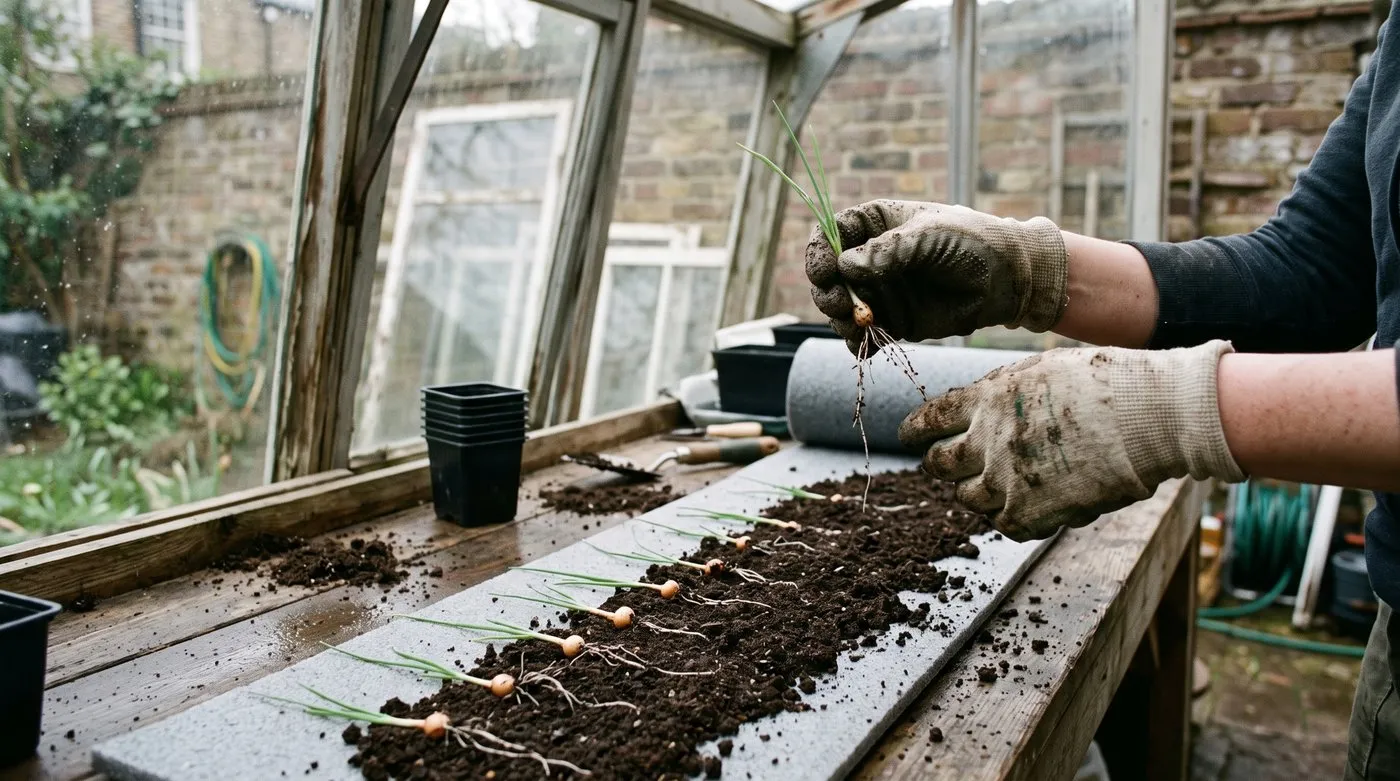
Fine-sown coils of onions or chillies are pricked out into small pots, and the neat row makes it quick.
Peel off the tape and unroll the strip flat. The seedlings lie in a neat row with their roots spread across the compost. Lift each one gently by a leaf, keeping as much compost on the roots as you can. Then pot it on or plant it out.
Don’t leave it too long. Roots start knitting together along the bottom, and you lose the main advantage.
Seedlings still need to get used to outdoor conditions before they go in the ground. Follow the steps for hardening off seedlings, which takes a week or two.
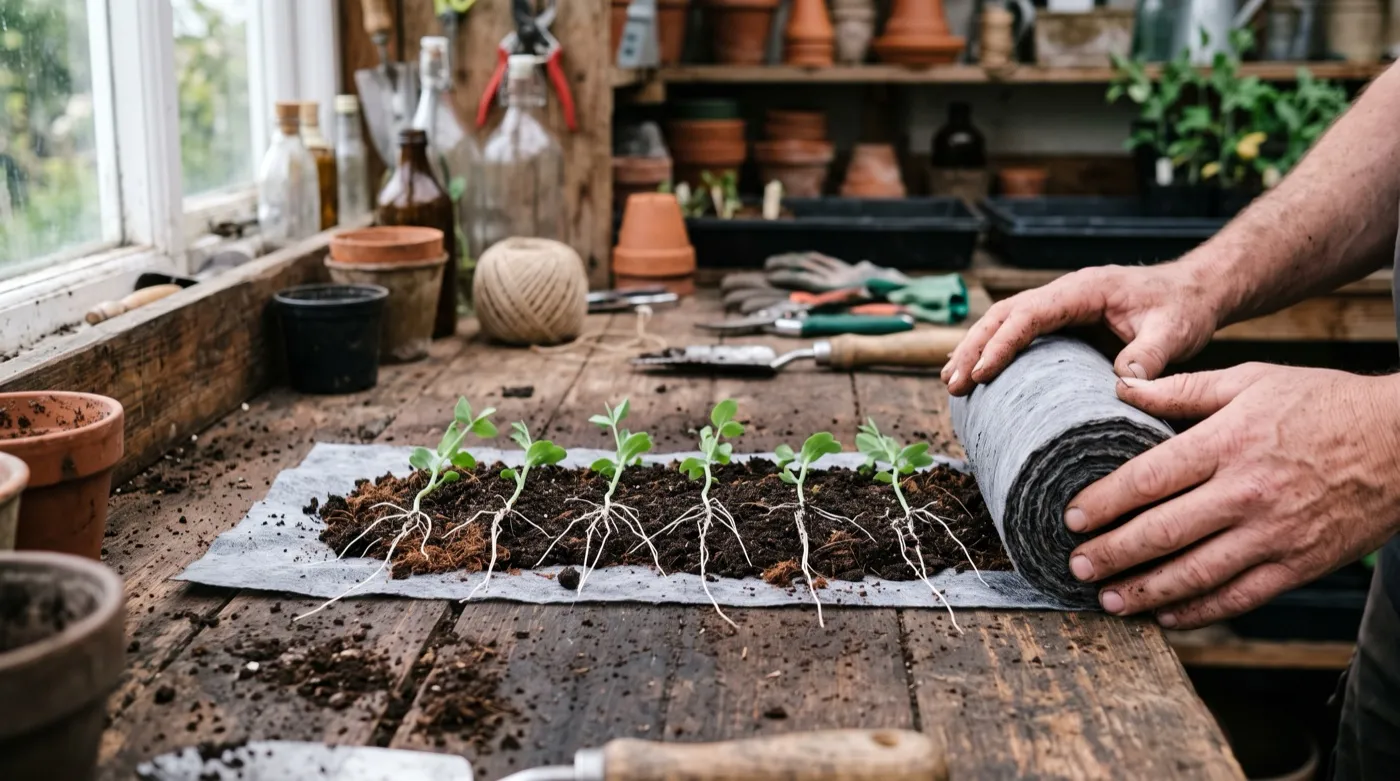
Unrolled at about six weeks, the seedlings lie in a neat row with long, straight roots.
Common seed snail mistakes
Most problems come down to water, depth or light. Here’s what goes wrong and how to fix it.
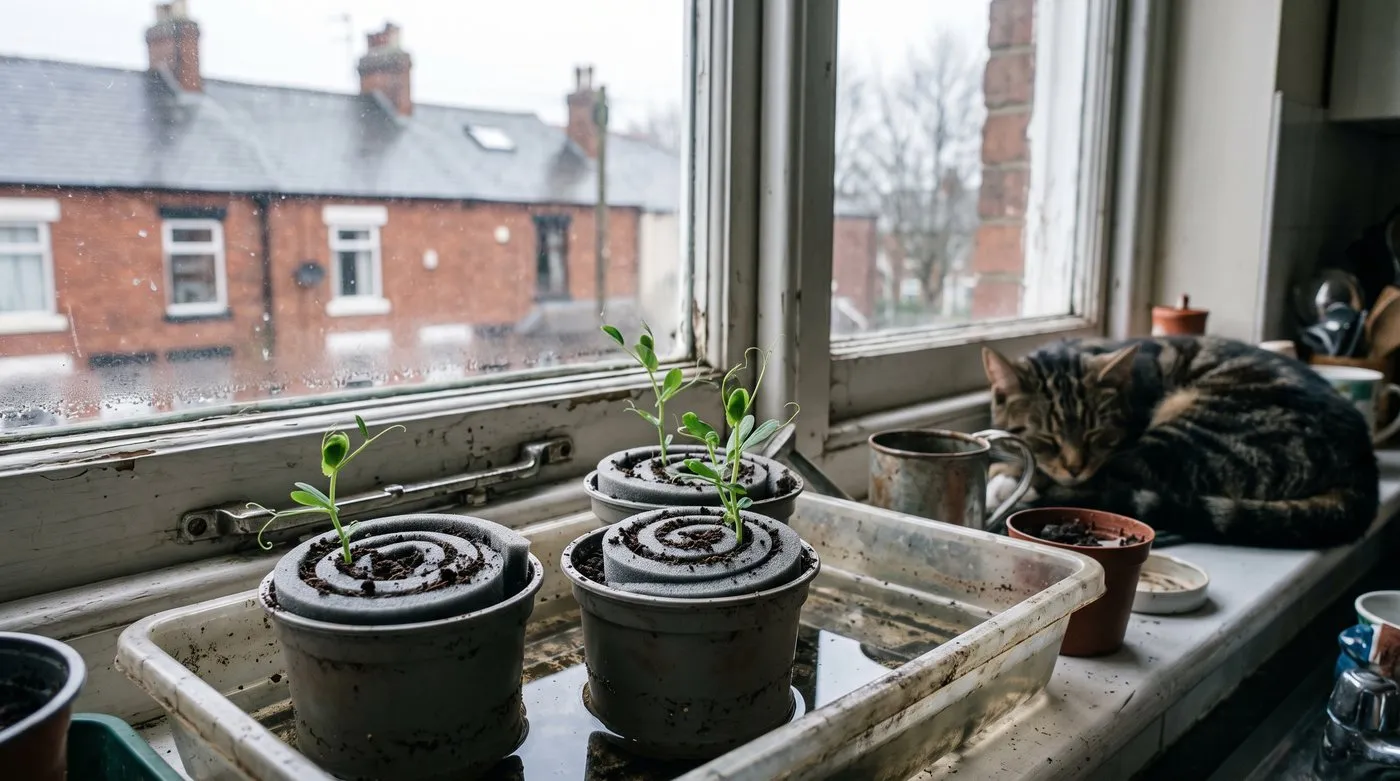
Watering from below lets the coil soak up what it needs without washing seeds out of the top.
Letting it dry out. This is the big one. A coil holds less compost than a pot and the top is open to the air. In a warm greenhouse it can dry out in a day or two. Press the top daily, and water by standing the pot in a few centimetres of water for ten minutes. The bottom watering method works just the same for coils.
Making it too wet. Rolling soggy compost, or leaving the pot standing in water, makes the middle airless. Seeds rot, the strip goes green and fungus gnats move in. Tip away spare water after each soak.
Sowing too deep. Loose compost makes it easy to push seeds too far down. Stick to the packet depth. With fine seed, sow on the surface and sieve a little compost over.
Too little light. Coils on a dim sill grow leggy seedlings, just like trays. Use your brightest spot and turn the pot daily. If they’ve already stretched, the fixes for leggy seedlings still apply, and sweet peas can simply be planted a little deeper.
Find more sowing ideas in the how-to guides. Once your first coil is sown, the same care of light, warmth and steady watering applies as with any tray. Read the guide to sowing seeds indoors for the rest of the routine.
Frequently asked questions
What is a seed snail?
It’s a strip of waterproof material spread with compost and rolled into a coil. The coil stands upright in a pot and you sow into the top edge. Roots grow straight down through the compost instead of circling.
What is the best material for a seed snail?
Foam laminate-flooring underlay works best, with bubble wrap a close second. Both are waterproof and flexible. Old compost bags work but are floppier. Kitchen roll, newspaper and thin card turn to mush once watered.
How deep should the compost be in a seed snail?
About 2cm deep along the strip. Much thinner dries out too fast. Much deeper makes the roll fat and hard to keep tight. A 60cm strip at 2cm rolls up small enough to drop into a 13cm pot.
What seeds grow best in seed snails?
Big seeds with long roots, such as sweet peas and beans, do best. Chillies, tomatoes and onions also work sown thinly along the top. Avoid carrots, parsnips and other root crops, which fork when moved.
How often should you water a seed snail?
Check every day and water whenever the top feels dry. A coil holds less compost than a pot, so it dries quickly. Stand the pot in a few centimetres of water for ten minutes and let it soak up from below.
How do you get seedlings out of a seed snail?
Peel off the tape and unroll the strip flat. The seedlings lie in a row with their roots spread out. Lift each one gently by a leaf with its compost, then pot on or plant out.
Are seed snails better than root trainers?
They save more space, but root trainers are more forgiving. Root trainers hold more compost per plant and dry out more slowly. Choose them if you can’t check your seedlings every day.
Our team produces practical UK gardening guidance from source research, contributor records and established horticultural practice. Editorial standards are overseen by Matt W.