Key takeaways
- Sow from early October to mid-November, one seed per deep pot or root trainer cell
- Autumn-sown plants usually flower a few weeks before spring-sown ones, on longer stems
- Keep them cold and airy all winter in a cold frame, opening it on every mild day
- Mice are the biggest risk, so sow under cover and keep the frame closed at night
- Pinch out the tip above the third or fourth pair of leaves for bushier plants
- Harden off and plant out from late March in mild areas, April further north
Sow sweet peas in October and you’ll be picking scented stems in early summer, a few weeks before spring-sown plants get going. The seedlings spend winter building deep roots, then race away in spring.
Sweet peas (Lathyrus odoratus) are hardy annuals, so a young plant copes with an ordinary British winter in a cold frame. This guide covers the autumn sowing itself, the winter care that keeps seedlings alive, and getting them planted out in spring. For spring sowing, supports and the full growing season, see our main guide on how to grow sweet peas from seed.
Why sow sweet peas in autumn?
Autumn sowing gives you time and roots. A seed sown in October has months to build a root system before it needs to flower. A February sowing has only a few weeks.
The result is earlier flowers, longer stems and sturdier plants. The catch is winter. You’re keeping a young plant alive through the darkest, wettest months, and mould and mice are the usual culprits when it goes wrong. If you’d rather keep things simple, our guide on when to plant sweet peas sets autumn and spring sowing side by side.
When to sow sweet peas in autumn
Sow from early October to mid-November:
- Early to mid-October suits most of the UK. Seedlings make a small, sturdy plant before the light fades.
- Late October to mid-November suits milder southern and coastal gardens.
- After mid-November, growth slows so much that a January or February sowing under glass is the better bet.
You want small, tough seedlings going into winter, not big soft ones. A plant with two or three pairs of leaves overwinters far better than a leggy 20cm one. If October is mild, sow a little later rather than earlier.
How to sow sweet peas in deep pots
Sweet peas grow long roots and dislike being disturbed, so depth matters more than width.
- Pick deep containers. Root trainers, deep 9cm pots, cardboard tubes or loo-roll inners all work. Avoid shallow trays.
- Use free-draining compost. Peat-free multipurpose with a handful of perlite or grit mixed in. Winter wet is the real killer.
- Sow one seed per cell, 2cm deep. Modern seed doesn’t need soaking.
- Water once, then keep it just moist. Seedlings usually appear in 10-14 days in a cool, bright spot. No heat needed.
- Move them to the cold frame once they’re up. Slow, tough growth is the aim from now on.
Short of pots? A rolled seed snail gives sweet peas the same long root run on a windowsill.
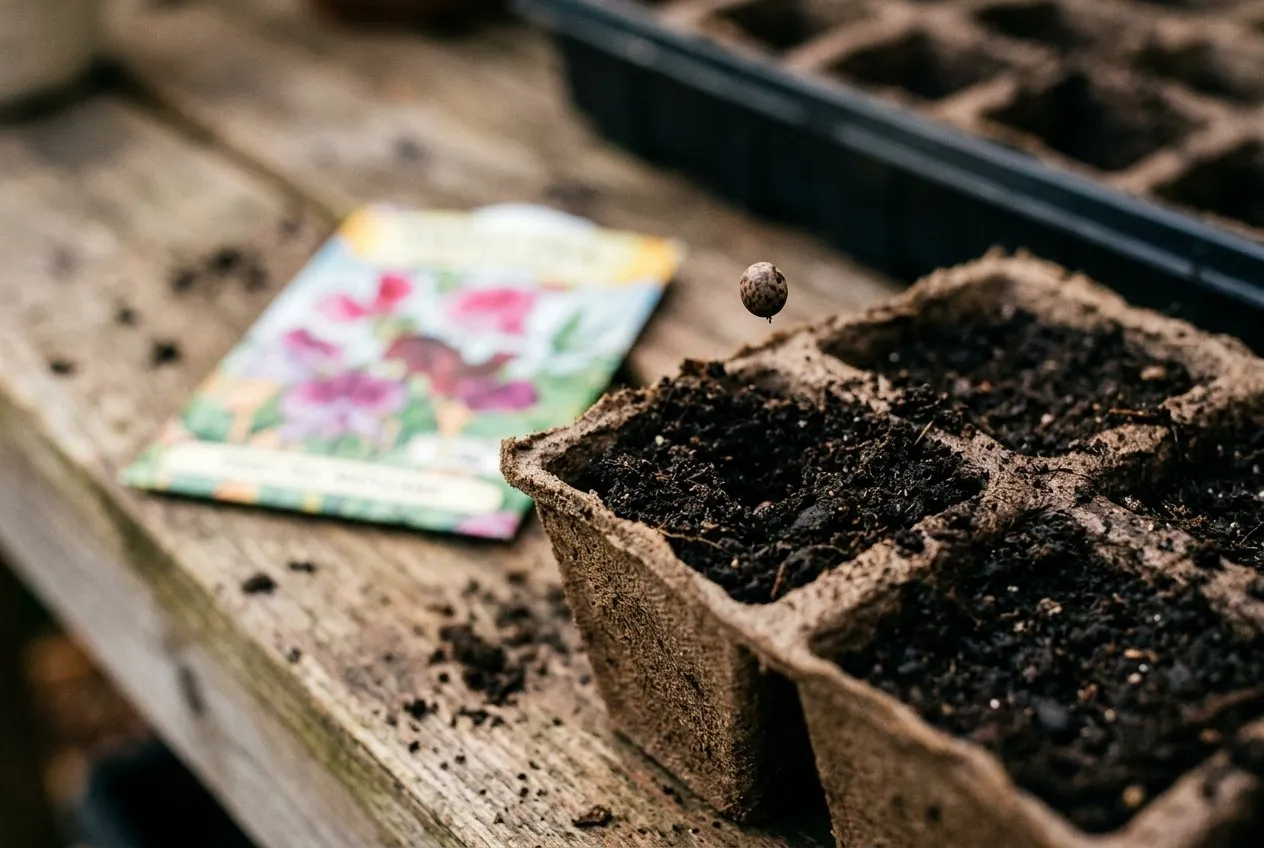
One seed per pot, 2cm deep. Deep pots give sweet peas room for the long roots they love.
Overwintering sweet peas in a cold frame
This is the make-or-break stage. Keep the plants cold, airy and only just moist.
- Open the frame on mild days. Prop the lid open whenever it’s above about 5°C. Still, damp air breeds grey mould, which can flatten a tray of seedlings fast.
- Keep them on the dry side. Water only when the compost surface is dry. Soggy compost in January rots roots.
- Close up on frosty nights. Young sweet peas cope with normal frosts, but a closed lid, or a sheet of fleece in a hard spell, helps.
- Keep mice out. A closed frame at night, mesh over the pots and a couple of traps save the crop.
- Pick off dead leaves. A yellow leaf lying on the compost is where mould starts.
No cold frame? A sheltered spot against a house wall, with the pots raised off wet ground, can work. Our guide to cold frame gardening covers building and using one.
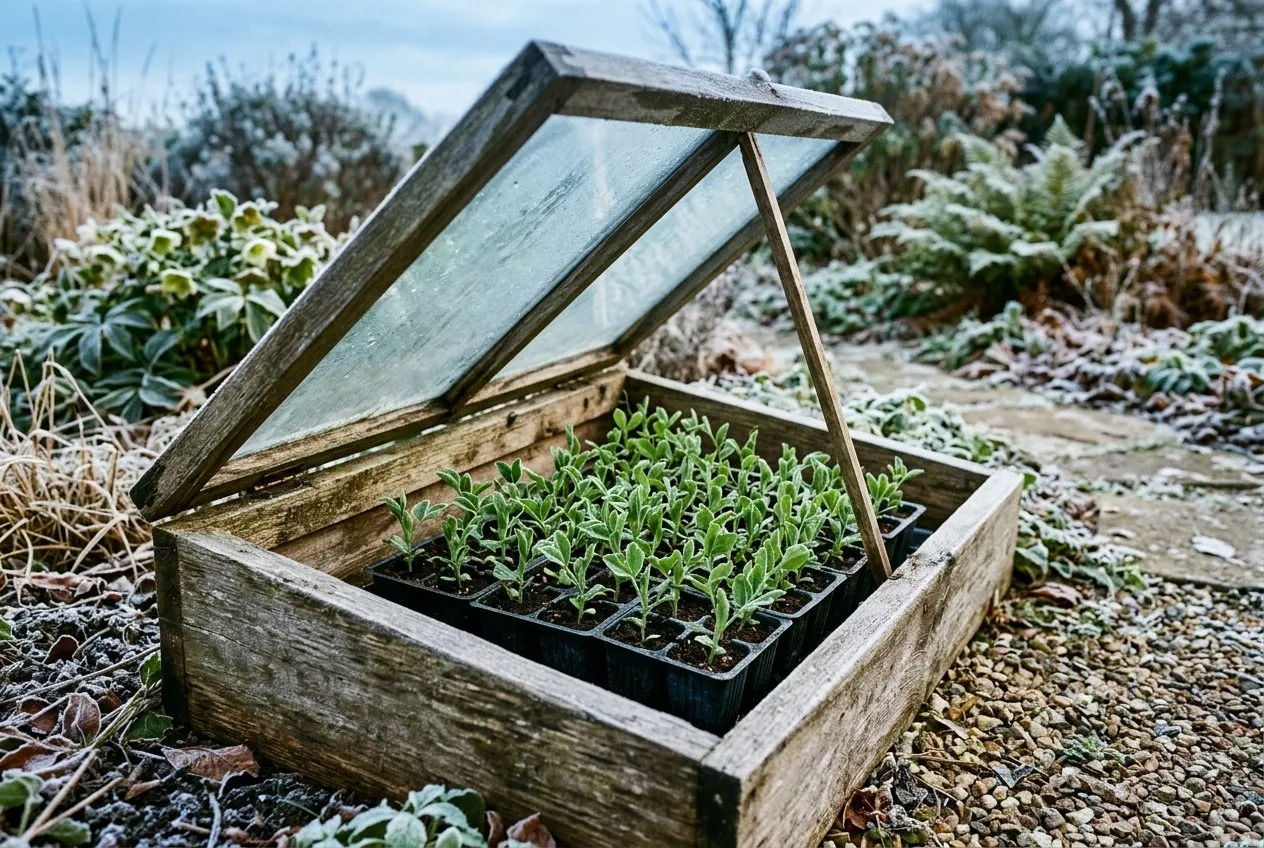
Cold and airy, not warm and cosy. Propping the lid open on mild days stops the grey mould that kills shut-in seedlings.
How to pinch out autumn-sown sweet peas
Once a seedling is 10-15cm tall, nip out the growing tip just above the third or fourth pair of leaves. Use your finger and thumb. This stops it shooting up on one weak stem and pushes out strong side shoots from the base. Each side shoot becomes a flowering stem.
Autumn-sown plants often branch on their own, but pinching makes sure. Do it whenever they reach that height, usually between late autumn and late winter. If you’re growing for long show stems, keep the strongest one or two shoots per plant. Our guide to pinching out cut flowers explains which other annuals like the same treatment.

Nip above the third or fourth pair of leaves. The plant answers with strong shoots from the base, each one a future flowering stem.
Which sweet peas are best for autumn sowing?
Any sweet pea can be sown in autumn. Choose by what you want from the flowers: scent, long stems or old-fashioned charm.
| Variety | Type | Scent | Best for |
|---|---|---|---|
| ’Matucana’ | Heritage grandiflora | Very strong | Scent above all |
| ’Cupani’ | Heritage grandiflora | Very strong | Cottage-garden scent |
| ’Painted Lady’ | Heritage grandiflora | Strong | Pink and white flowers |
| ’Mrs Collier’ | Grandiflora | Strong | Cream flowers, weddings |
| ’Gwendoline’ | Spencer | Good | Long stems for cutting |
| ’Beaujolais’ | Spencer | Moderate | Deep wine-red flowers |
Heritage grandifloras have smaller flowers but the strongest scent. Spencer types have bigger, frilly flowers on longer stems, which is what autumn sowing does best.
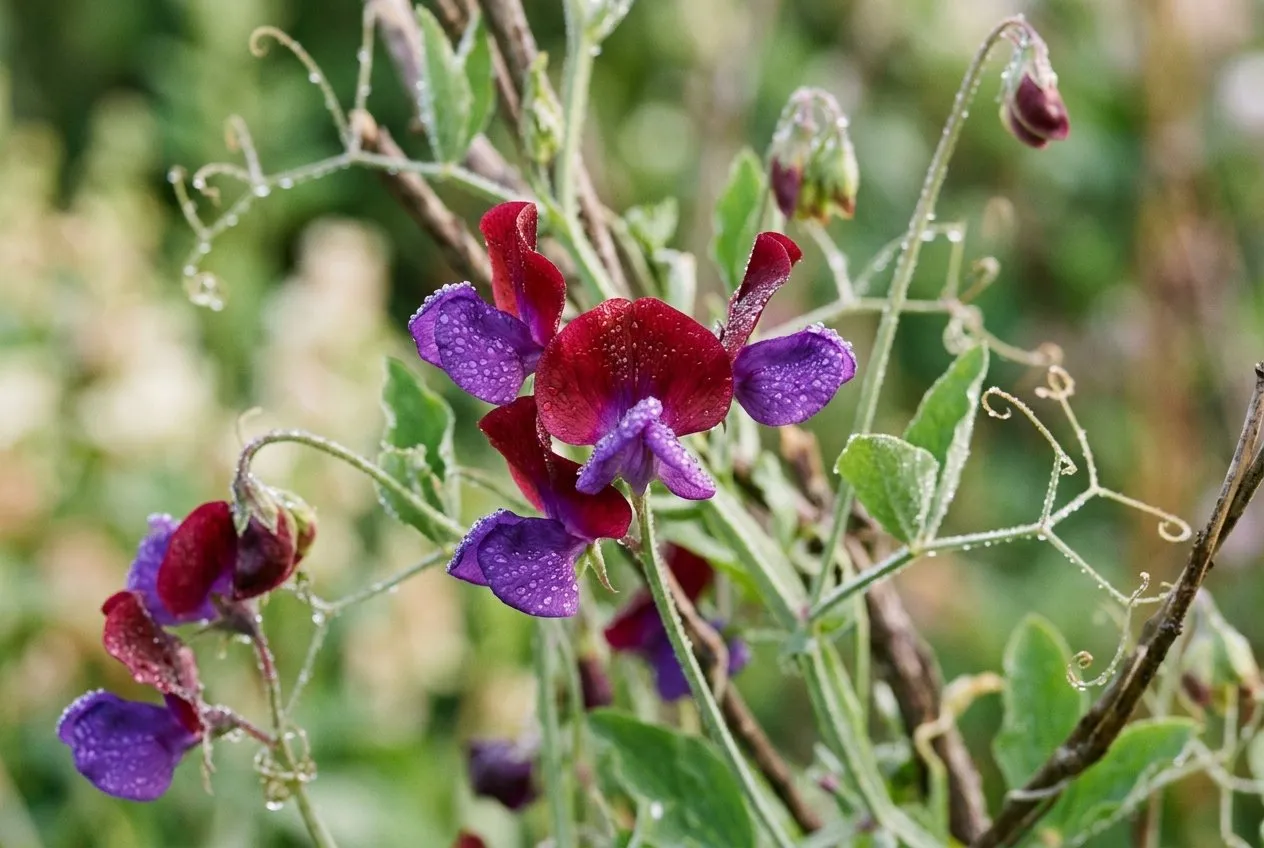
Heritage ‘Matucana’ is the one to grow if scent matters most. Its two-tone maroon and violet flowers fill a room.
Planting out autumn-sown sweet peas in spring
Harden the plants off over 10-14 days, then plant out from late March in mild areas, April further north. Sweet peas are hungry and thirsty, so prepare the ground well.
- Dig in plenty of compost or well-rotted manure before planting. Deep, rich soil grows the longest stems.
- Space plants 20-25cm apart at the foot of their support.
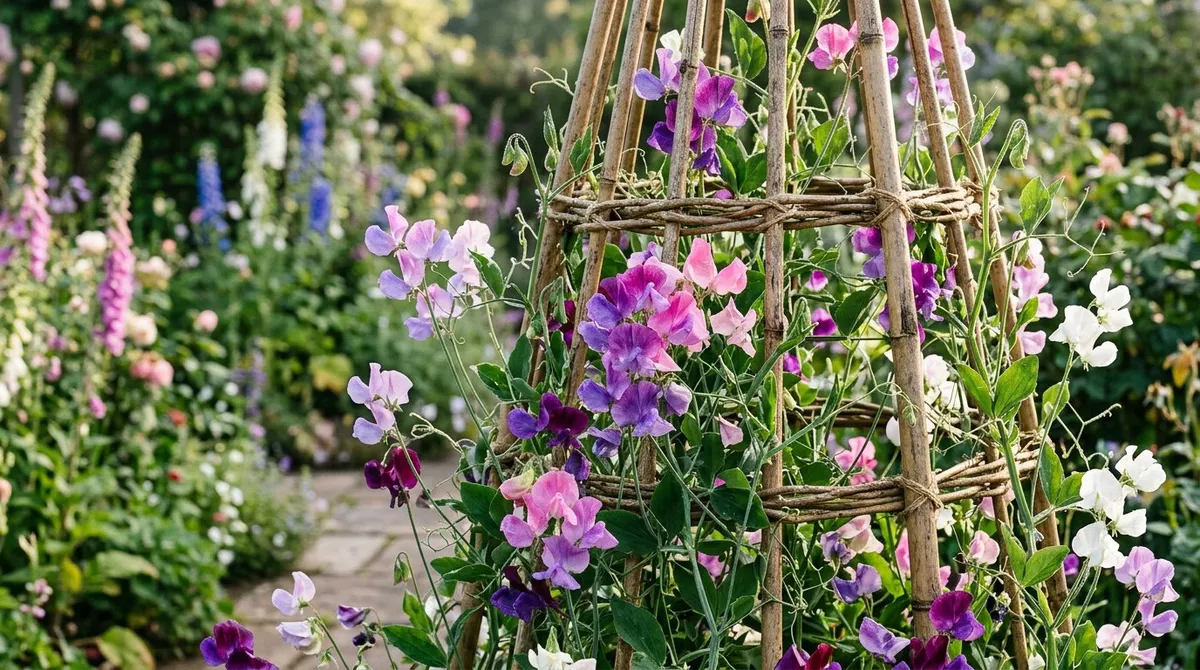
- Give them something tall to climb, such as a hazel wigwam, netting or an obelisk. They usually reach about 1.8m or more.
- Watch for slugs on the soft new growth. Our guide to getting rid of slugs has safe ways to keep them off.
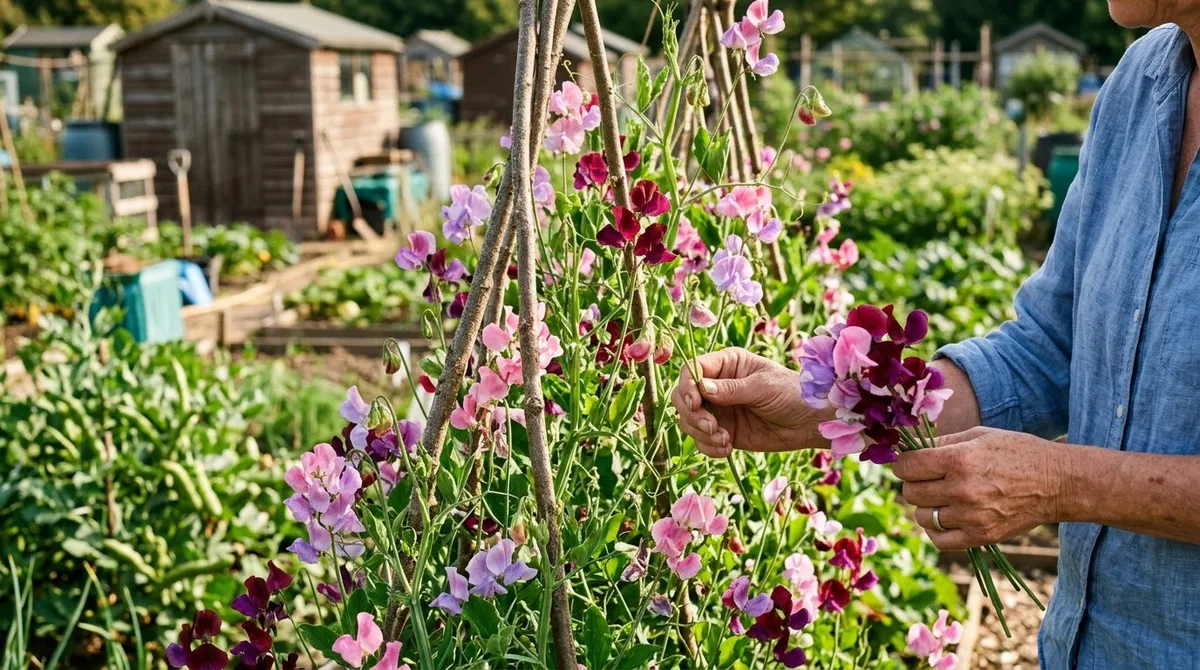
Then keep picking. A sweet pea that sets seed pods stops flowering, so pick every few days to keep the flowers coming through summer. They’re one of the best cut flowers you can grow in a British garden.
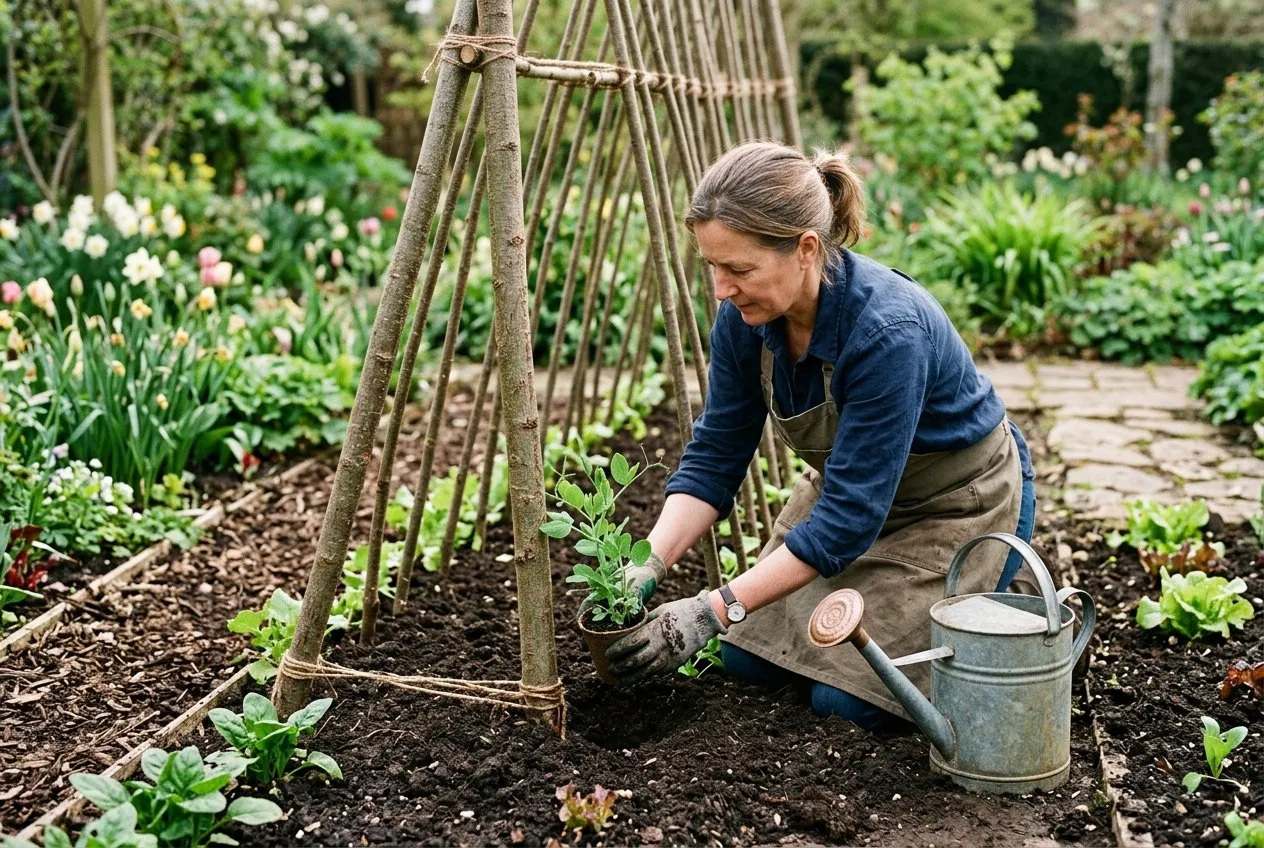
Plant out 20-25cm apart at the foot of a tall support. Rich, moist soil gives the longest stems.
Autumn sweet pea calendar
| Month | Job |
|---|---|
| October | Sow one seed per deep cell, 2cm deep |
| November | Move seedlings to the cold frame. Guard against mice |
| December to January | Keep cold, airy and just moist. Open the frame on mild days |
| February | Pinch out any plants not yet stopped. Prepare the ground |
| March | Harden off. Plant out in mild areas |
| April | Plant out further north. Fit supports. Watch for slugs |
| May | Tie in climbing stems. First buds form |
| June to September | Pick flowers every few days. Water and feed well |
Common autumn sweet pea mistakes
- Keeping them too warm. Heat makes soft, leggy plants that rot. Cold and airy is the goal.
- A shut-up cold frame. No fresh air breeds grey mould. Open it on every mild day.
- Shallow pots. Sweet peas need root depth, and a shallow tray gives a weak plant.
- Leaving seed where mice can reach it. One night is all it takes to lose a sowing.
- Overwatering in winter. Wet compost and cold weather rot roots. Water only when the surface is dry.
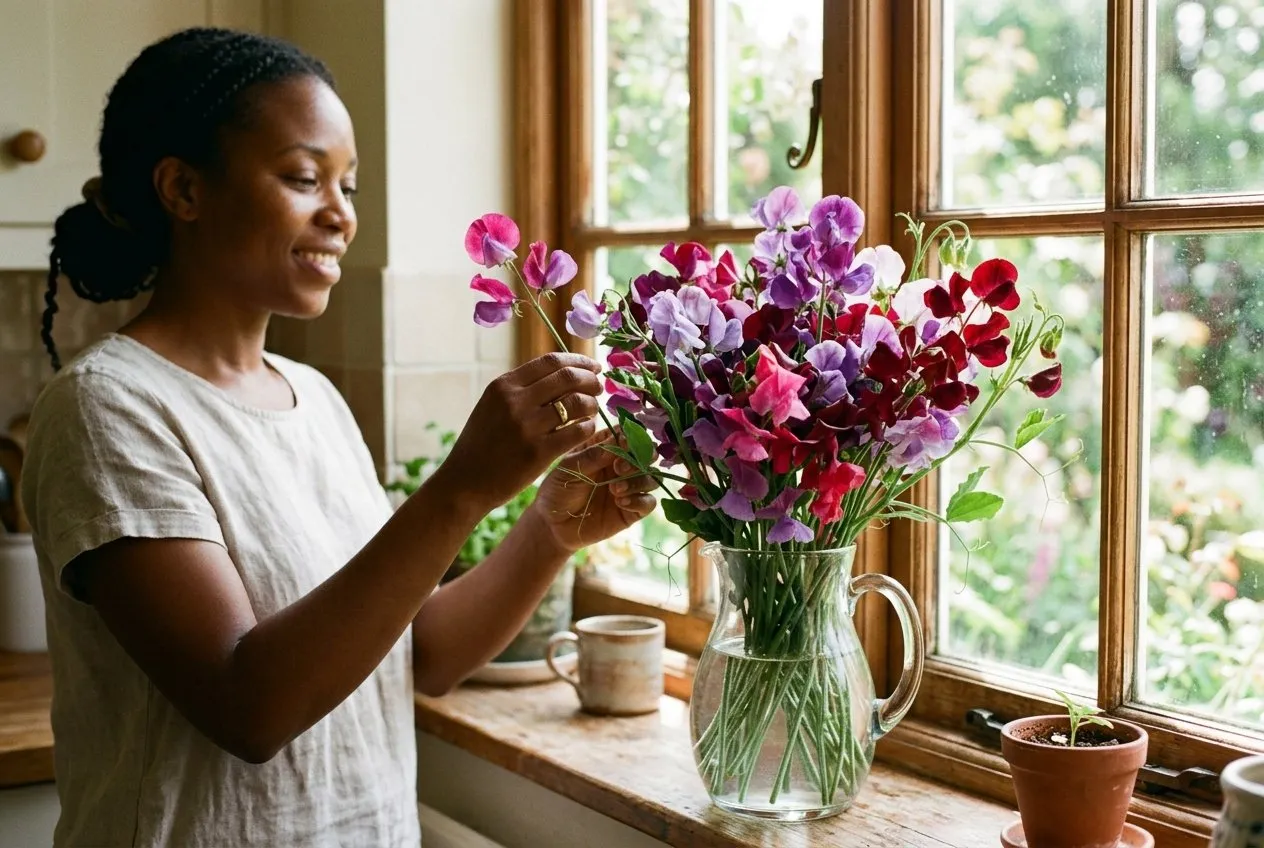
The reward: a jug of scented stems in early summer. The more you pick, the more they flower.
Once your sweet peas are flowering, browse more flowers and plants to grow alongside them, or fill the rest of the garden with the best scented plants for UK gardens.
Frequently asked questions
When should I sow sweet peas in autumn in the UK?
Sow from early October to mid-November. This gives seedlings time to come up and make roots before winter slows them down. In colder northern gardens, aim for October. In the milder south, you can sow into early November. Keep the pots in a cold frame or unheated greenhouse once sown.
Are autumn-sown sweet peas better than spring-sown?
They usually flower a few weeks earlier, on longer stems. They build bigger roots over winter, which gives stronger plants. The trade-off is extra care: protection from mice, good ventilation and shelter from hard frost. Spring sowings are simpler and still flower well, just a little later.
Do I need a greenhouse to overwinter sweet peas?
No, a cold frame works well. A sheltered spot against a house wall can also do the job. Sweet peas want cool conditions over winter, not warmth. Heat makes them soft and leggy and more likely to rot. Keep them out of heavy rain and hard frost.
Should I soak sweet pea seeds before sowing?
Most modern seed doesn’t need soaking. Sow it dry into moist compost. Some growers chit very hard, dark-coated seed on damp kitchen paper to speed things up. Soaking pale, soft-coated seed can make it rot. If in doubt, sow dry and keep the compost just moist.
How do I stop mice eating sweet pea seeds?
Sow under cover and keep the seed out of reach. A closed cold frame or greenhouse, with pots covered by fine mesh or glass, keeps mice off. They can empty a whole tray overnight. Autumn sowings are most at risk because mice hunt for food as the weather cools. Check pots often and set traps nearby if needed.
When do you pinch out autumn-sown sweet peas?
Pinch them out once they are 10-15cm tall. Nip the tip just above the third or fourth pair of leaves. This makes strong side shoots grow from the base. For autumn sowings it usually happens in late autumn or winter, before planting out. You get bushier plants with more flowering stems.
Our team produces practical UK gardening guidance from source research, contributor records and established horticultural practice. Editorial standards are overseen by Matt W.