Key takeaways
- Sow in October or early November for the earliest, sturdiest plants
- January to March indoors is the easiest option for most gardeners
- Sow direct outside in March or April, next to the supports
- Plant out hardened-off seedlings in March or April, about 20cm apart
- Pinch out the tips once young plants have three or four pairs of leaves
- Put supports in before planting, at least 1.8m tall
You can sow sweet peas in the UK at three times of year: autumn, late winter and spring. Autumn sowing in October gives the earliest flowers. Sowing indoors from January to March is the easiest option. Sowing straight outside in March or April is the simplest of all, with flowers a little later.
This guide helps you pick the right time for you and tells you when to plant them out. Pinching out, picking and varieties are covered in our full growing guide, linked at the end.
Which sweet pea sowing time suits you?
All three sowing times work. The best one depends on whether you have winter shelter and how early you want flowers.
| Sow | Where | Plant out | First flowers | Best for |
|---|---|---|---|---|
| October to early November | Cold frame or unheated greenhouse | March to April | June | Earliest, sturdiest plants |
| January to March | Cool windowsill or greenhouse | April | Late June to July | Most gardeners |
| March to April | Direct, outside | No need | July | Anyone without space indoors |
| May | Direct, outside | No need | Late summer | A late catch-up |
If you’re new to sweet peas, January to March is a great place to start. The seedlings don’t need babysitting through winter, and they still flower well all summer.
Sowing sweet peas in autumn: October to November
Autumn sowing gives the strongest plants and the earliest flowers. Sow in October or early November.
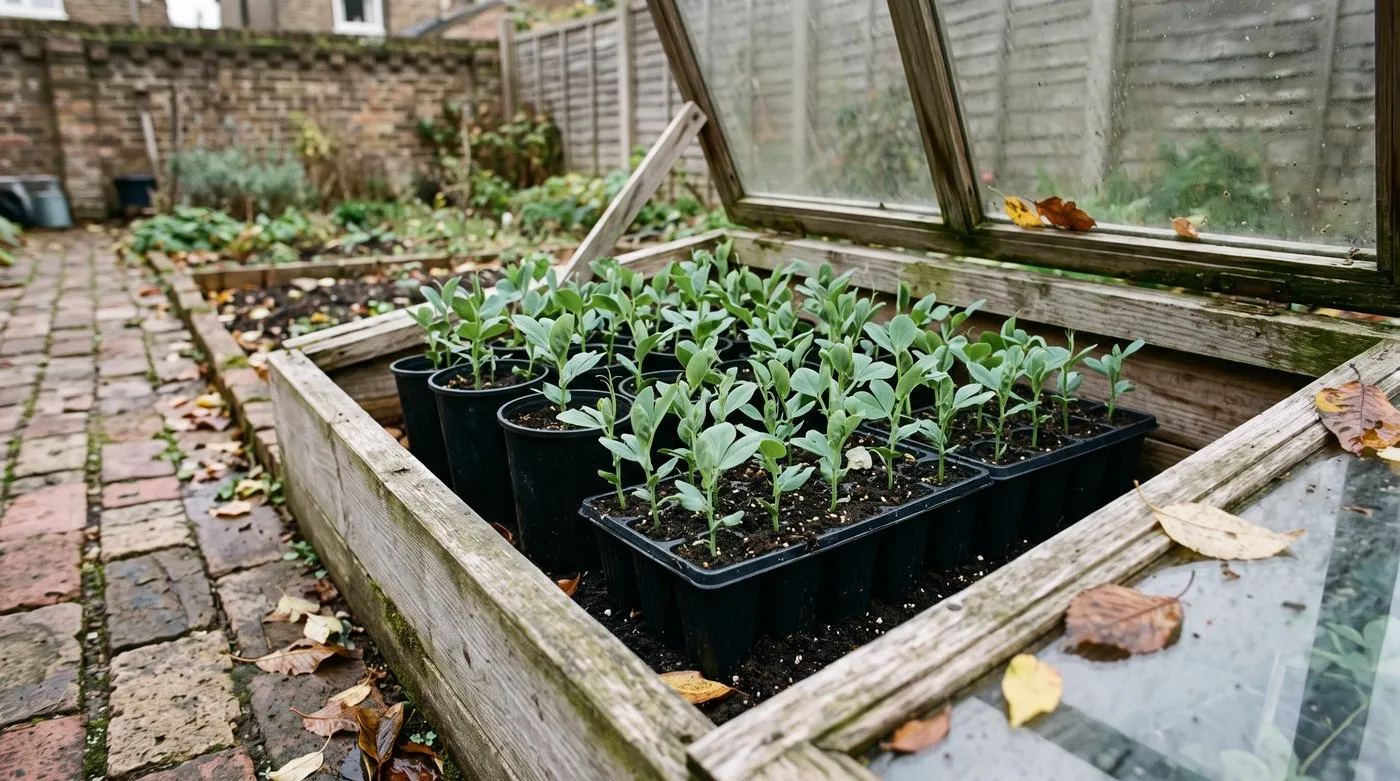
Autumn-sown sweet peas sit in a cold frame all winter, growing roots rather than leaves. Open the lid on mild days.
Sow one or two seeds per deep pot or root trainer, about 2cm deep, in peat-free seed compost. Keep them in a cold frame, unheated greenhouse or sheltered spot by the house. They grow slowly through winter, building roots rather than leaves.
Don’t sow in September. The seedlings get too big and soft before winter. Keep the compost only just damp, open the frame on mild days and watch for mice, which love the seeds.
Our guide to autumn sowing sweet peas covers overwintering step by step, and cold frame gardening shows how to get the most from your frame.
Sowing sweet peas indoors: January to March
Late winter is the most popular time to sow. Sow from January to March on a cool, bright windowsill or in an unheated greenhouse.
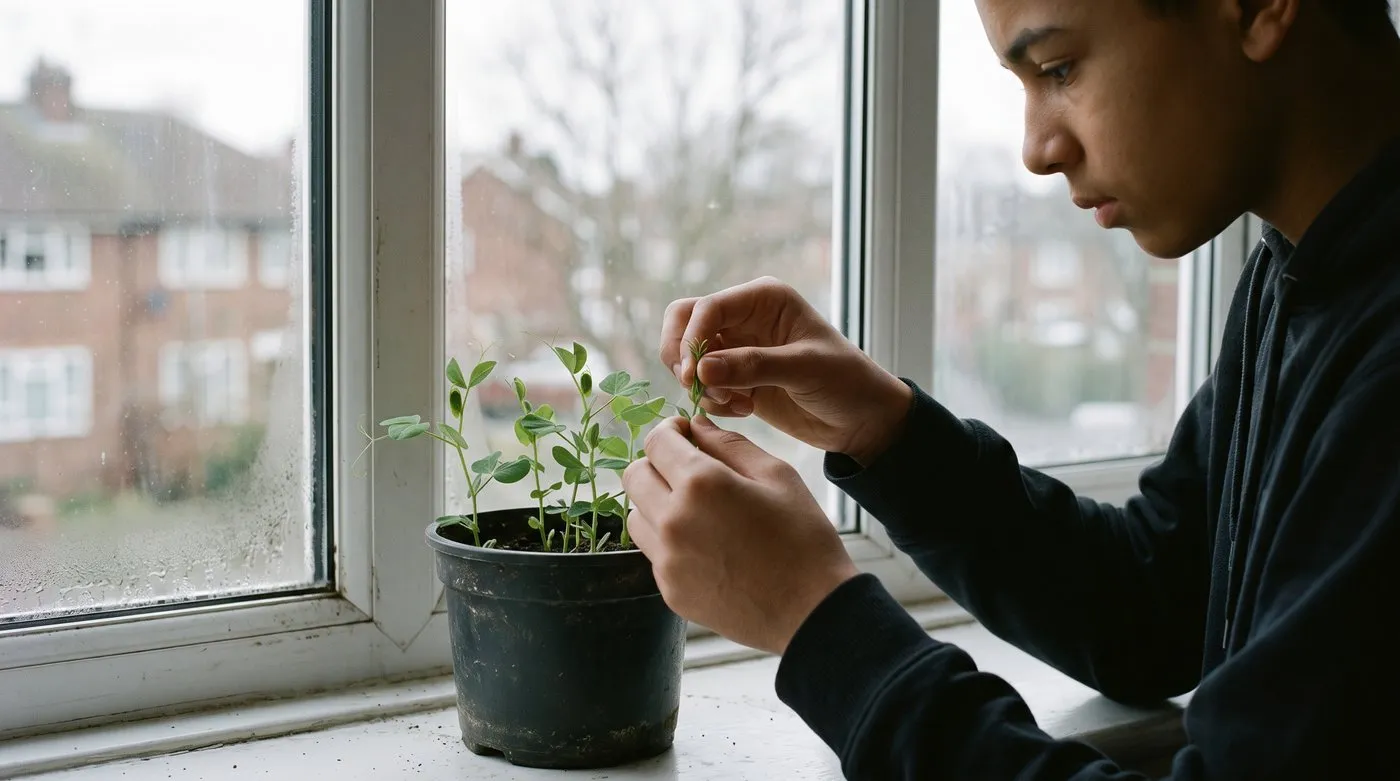
Pinch out the tip once seedlings have three or four pairs of leaves. You’ll get a bushier plant with more flowers.
Sow the same way as in autumn, in deep pots or root trainers. Keep them cool once they’re up. Warm rooms make sweet peas tall and floppy, so a cool porch or greenhouse is better than a warm kitchen. Our guide on how to sow seeds indoors covers the basics.
Once seedlings have three or four pairs of leaves, pinch out the tip just above a leaf joint. This makes a bushier plant with more flowering stems.
Short of space? Seed snails let you start a lot of sweet peas on one windowsill.
Sowing sweet peas straight outside: March to May
Sowing direct is the simplest method. Sow from March in mild southern gardens, or April in the north and Scotland. You can still sow into May for a later show.
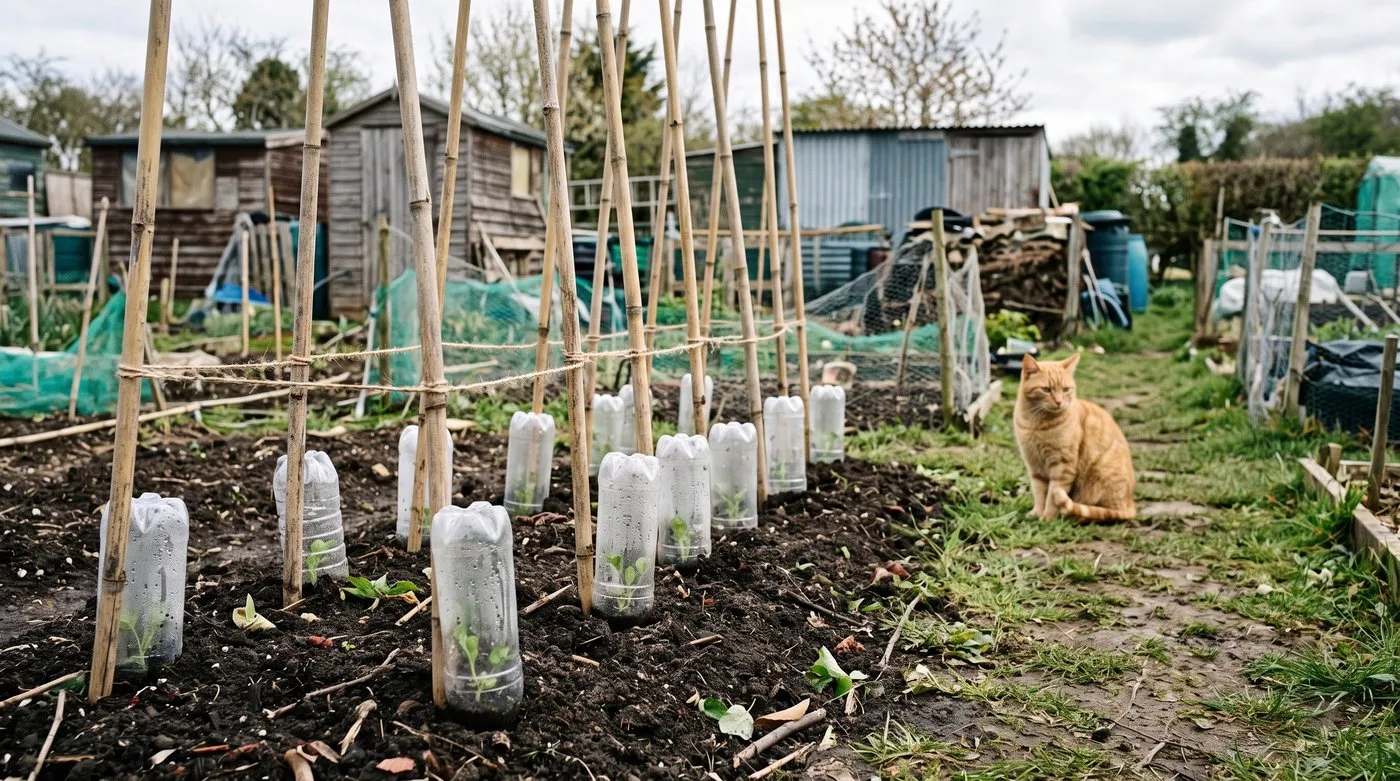
Sowing straight at the foot of each cane is the easy way. A cut-down bottle keeps slugs and mice off for the first few weeks.
Dig in plenty of garden compost first, as sweet peas are hungry. Put up your supports, then sow two seeds at the foot of each cane or every 10cm along netting, about 2cm deep. Thin to the strongest seedling later if both come up.
Slugs and mice target young seedlings outdoors. Cut-down plastic bottles over each spot help, and our guide to getting rid of slugs has more ideas.
When to plant sweet peas outside
Plant indoor-raised sweet peas out in March or April, once they’re hardened off. In the south, March is usually fine. In the north and Scotland, wait until April.
Young sweet peas are hardy and cope with ordinary frosts. Plants straight from a greenhouse still need a week or two of hardening off first, so they get used to wind and cold.
Choose a sunny spot with rich soil. Put the supports in before planting, at least 1.8m tall. Plant about 20cm apart, water well and tie the first stems in loosely. After that, the tendrils do the climbing.

Get your wigwam or obelisk in place before planting out, and sweet peas will climb it by early summer.
Do you need to soak sweet pea seeds?
Usually not. Most sweet pea seed comes up fine sown straight into damp compost.
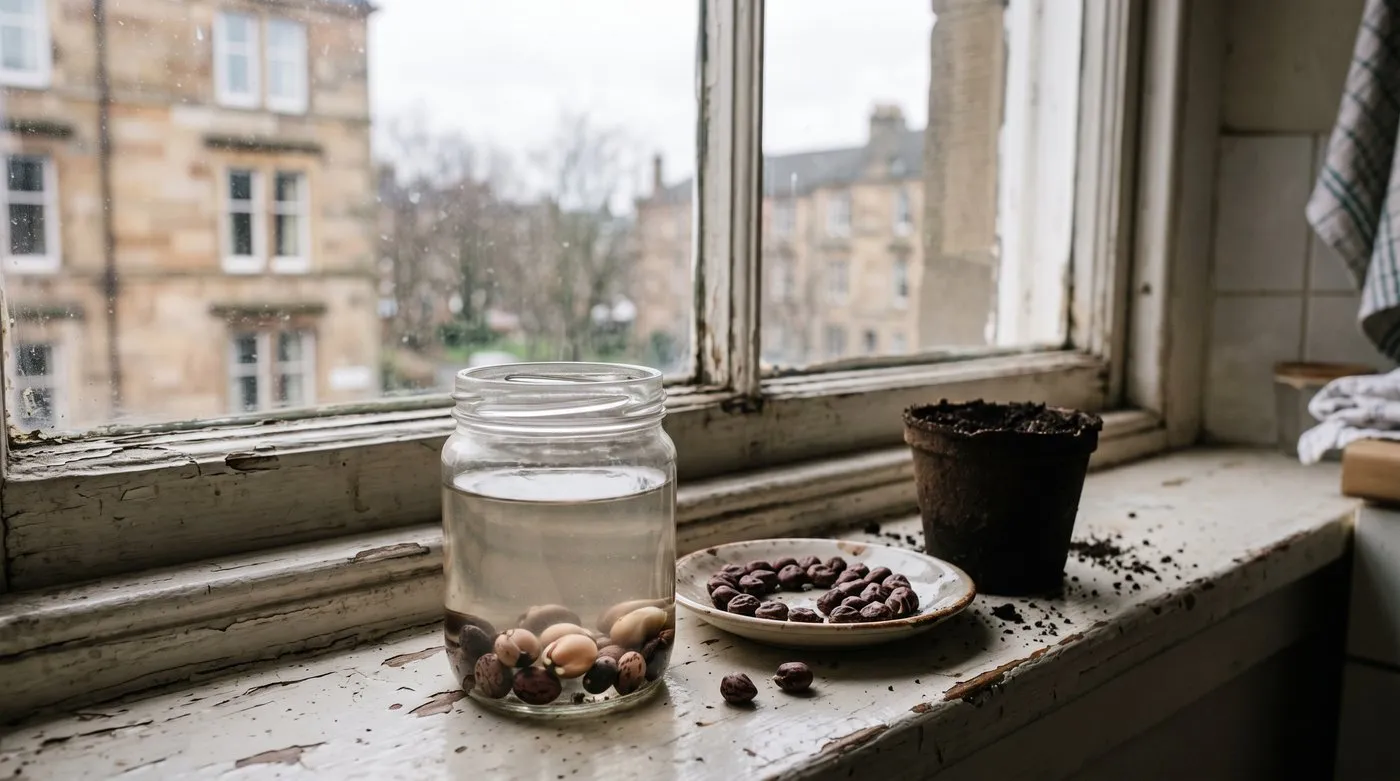
Soaking isn’t essential, but some gardeners give hard, dark seed a night in tepid water. Swollen seed is ready to sow.
Some gardeners soak dark, hard-coated seed in tepid water overnight before sowing. Don’t leave it soaking for days, or the seed can rot. If seed is slow to come up, check it hasn’t been eaten by mice before sowing again.
Warning: Sweet pea seeds are poisonous if eaten. Keep packets and pots of seed away from children and pets.
Sweet pea calendar month by month
This calendar shows what to do with sweet peas through the year.
| Month | What to do |
|---|---|
| October | Sow in deep pots for overwintering in a cold frame |
| November | Finish autumn sowing early in the month. Keep seedlings cool and just damp |
| December | Ventilate the cold frame on mild days. Watch for mice |
| January | Start spring sowings indoors. Pinch out autumn-sown plants if not done |
| February | Keep sowing indoors. Dig compost into the planting spot |
| March | Plant out autumn sowings in the south. Sow direct in mild areas. Last indoor sowings |
| April | Plant out spring-sown seedlings. Sow direct everywhere. Put supports in |
| May | Tie in new growth. A late direct sowing is still possible |
| June | First flowers from autumn sowings. Start picking |
| July to August | Peak flowering. Pick every few days and water in dry spells |
| September | Flowering slows. Let a few pods ripen if you want to save seed |
Common sweet pea timing mistakes
Most sweet pea problems start with sowing at the wrong time or in the wrong place. Watch out for these.
- Sowing too early in autumn. September sowings grow too big and soft before winter.
- Keeping seedlings too warm. A warm room gives tall, weak plants. Cool and bright is best.
- Skipping hardening off. Plants straight from a greenhouse can be knocked back by cold wind.
- Putting supports in last. Pushing canes in after planting can damage the roots.
- Planting in shade. Sweet peas need sun to flower well and smell their best.
If you’re planning other summer flowers from seed, see when to plant sunflowers or browse more flowers in our plants hub. The RHS sweet pea guide is useful too.
Frequently asked questions
When is the best time to sow sweet peas in the UK?
October or early November gives the earliest flowers. Sowing indoors from January to March is easier and still gives a great summer show. Direct sowing outside works in March and April.
Is it too late to sow sweet peas in April or May?
No, you can still sow outside in April and into May. They’ll flower later, from mid to late summer, and won’t last as long as earlier sowings.
When should I plant sweet peas outside?
Plant them out in March or April, once hardened off. In the south, March is usually fine. In the north and Scotland, wait until April.
Do sweet pea seeds need soaking before sowing?
Usually not. Most seed comes up fine sown straight into damp compost. Some gardeners soak hard, dark seeds overnight, but it isn’t essential.
Are autumn-sown sweet peas better than spring-sown?
They flower a few weeks earlier and make sturdier plants. But they need winter shelter, so spring sowing is simpler if you lack a cold frame.
Can sweet peas survive frost?
Yes, young plants are hardy and cope with ordinary frosts. Harden them off first, and protect them from hard frost if they’ve just come out of a greenhouse.
Once your sweet peas are sown, read our guide on how to grow sweet peas from seed for pinching, picking and keeping them flowering all summer.
Our team produces practical UK gardening guidance from source research, contributor records and established horticultural practice. Editorial standards are overseen by Matt W.