Key takeaways
- Work out which deer you have first, because it sets the fence height
- Around 1.5m with a sealed base stops muntjac; aim for 1.8m for roe and 1.8-2m for fallow
- Muntjac squeeze under fences, so pin the bottom of the fence or mesh to the ground
- Repellents only buy time and need reapplying, especially after rain
- Lavender, euphorbia, daffodils, ferns and grasses are browsed least
- No plant is deer-proof in a hard winter, so planting backs up a fence rather than replacing it
Deer in the garden can strip a border overnight. The answer is a fence that is tall enough and has no gaps underneath. Sprays and clever planting help a little, but height and a sealed base do the real work.
This guide covers deer only: how to tell which deer you have, the fence each one needs, and the plants they tend to leave. If rabbits, pigeons or badgers are also helping themselves, the guide to rabbits, deer, pigeons and badgers in the garden covers them all side by side.
Which deer is in your garden?
Three species do most of the damage in UK gardens. Knowing which one you have tells you how tall your fence needs to be.
Muntjac are about the size of a large dog, with a hunched back. They live in an area all year and breed at any time of year. They tend to push through gaps rather than jump, and they browse low.
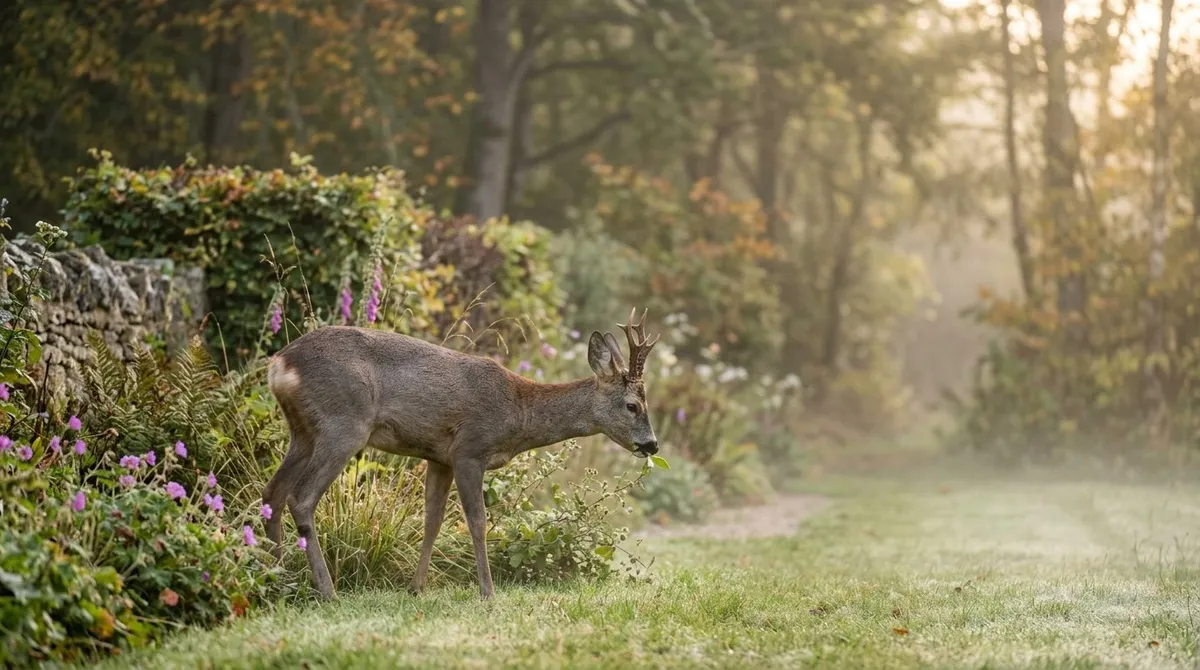
Roe deer are taller and slimmer. They are reddish brown in summer and greyer in winter, with a pale rump and no tail to speak of. You may hear them bark at night. They jump well.
Fallow deer are bigger again, often spotted, and usually move in groups. You will mostly meet them near parks and large woods. Where fallow visit, you need the tallest barrier.
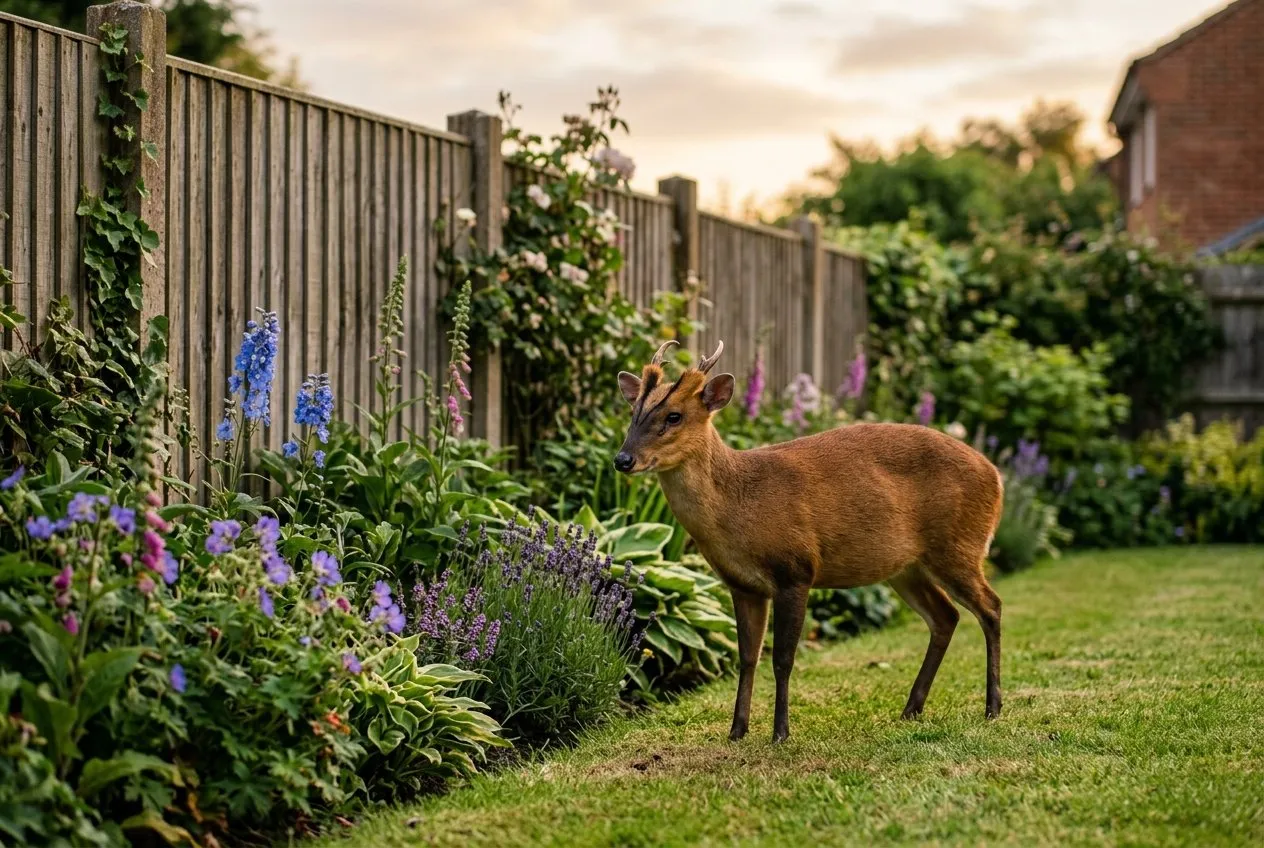
Muntjac are small, hunched and around all year. They squeeze under fences more than they jump them.
Look for clues before you build anything. Deer leave two-toed, slot-shaped hoof prints. They have no upper front teeth, so they tear shoots and leave ragged ends. Rabbits leave a clean, angled cut. The rabbit lawn damage guide helps if the clues point that way instead.
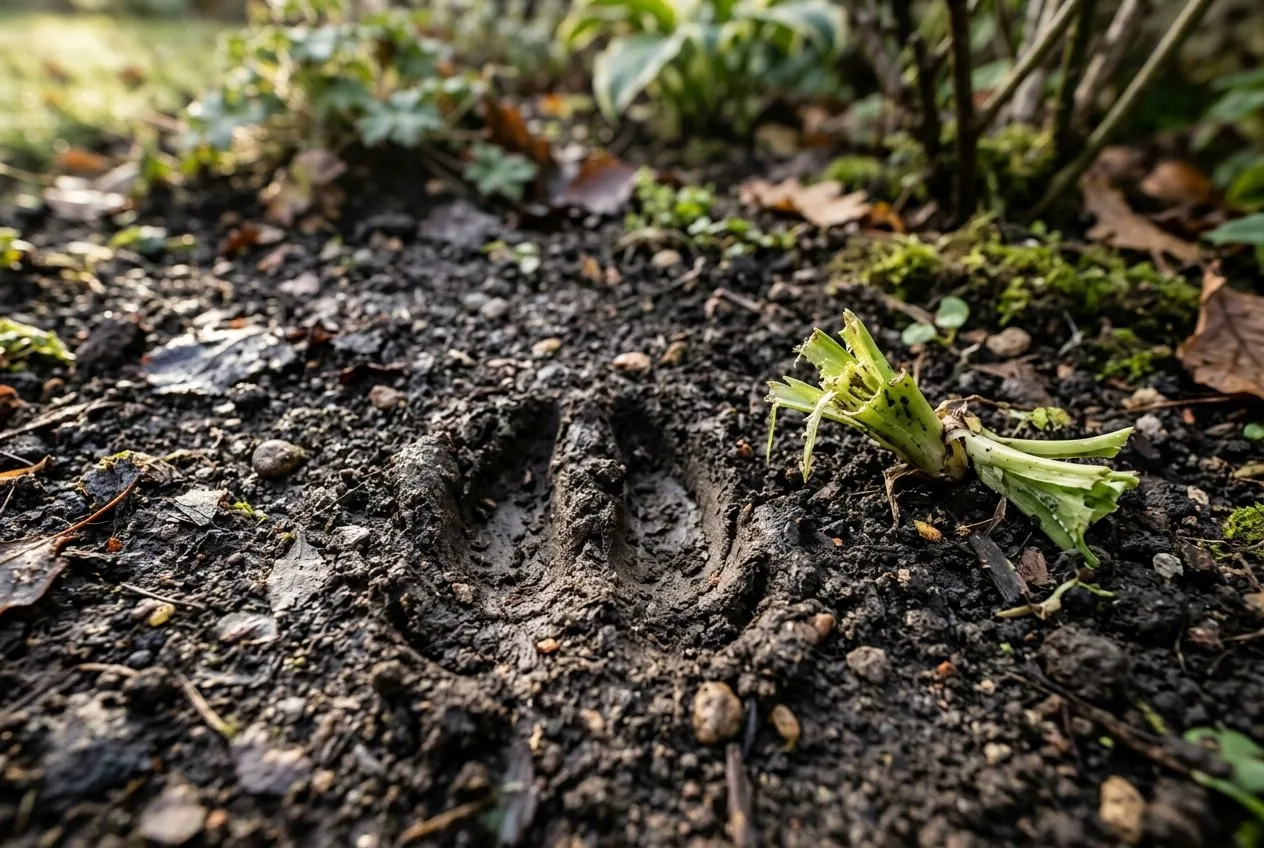
A two-toed slot print and a torn shoot point to deer. Rabbits leave neat, angled cuts instead.
What height fence keeps deer out?
Deer jump fences rather than climbing them, so height is what counts. Muntjac are the exception: they look for a gap underneath.
| Deer | Fence height | Watch out for |
|---|---|---|
| Muntjac | About 1.5m, base sealed | Squeezing under gaps and gates |
| Roe deer | At least 1.5m, 1.8m safer | Clean jumpers |
| Fallow deer | 1.8-2m | Move in groups |
| Red deer | 2m | Rare in gardens; farmland and upland edges |
If you are not sure which deer visit, build for the worst case. Go for 1.8-2m and seal the base. A lower fence is just a speed bump.
A strand of tensioned wire above solid panels adds a little extra height without taller boards. Deer are also more wary of jumping a barrier when they can’t see clearly where they will land.
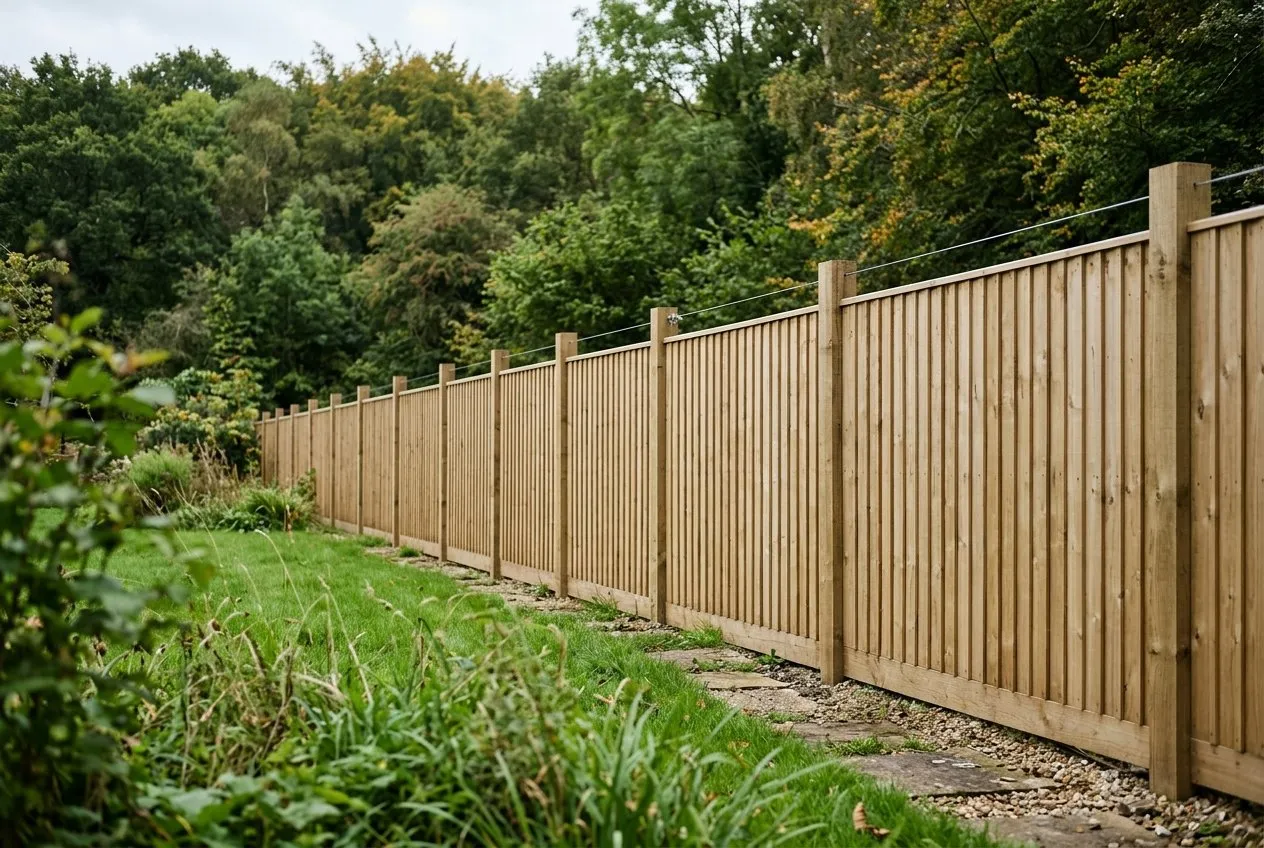
A tall, solid boundary fence with a wire above. Deer are less keen to jump when they can’t see the landing.
Check height limits before you build. In England and Wales, a fence over 2m, or over 1m next to a road, usually needs planning permission. The GOV.UK planning permission pages explain more, or ask your council.
How to build a deer fence that holds
A deer fence doesn’t need to be a fortress. It needs the right height, no gaps and a firm base.
- Use solid panels or close mesh, not open post-and-rail.
- Pin the bottom of the fence or mesh to the ground, or bury it 15cm, so muntjac can’t push under.
- Make gates the same height as the fence, with no gap beneath.
- Walk the boundary every few weeks and fix any gaps, sagging wire or loose pegs.
Muntjac are the reason people think their fence has failed. The deer is not jumping it. It is squeezing through a gap at the bottom or beside a gate. Seal that and the problem usually ends.
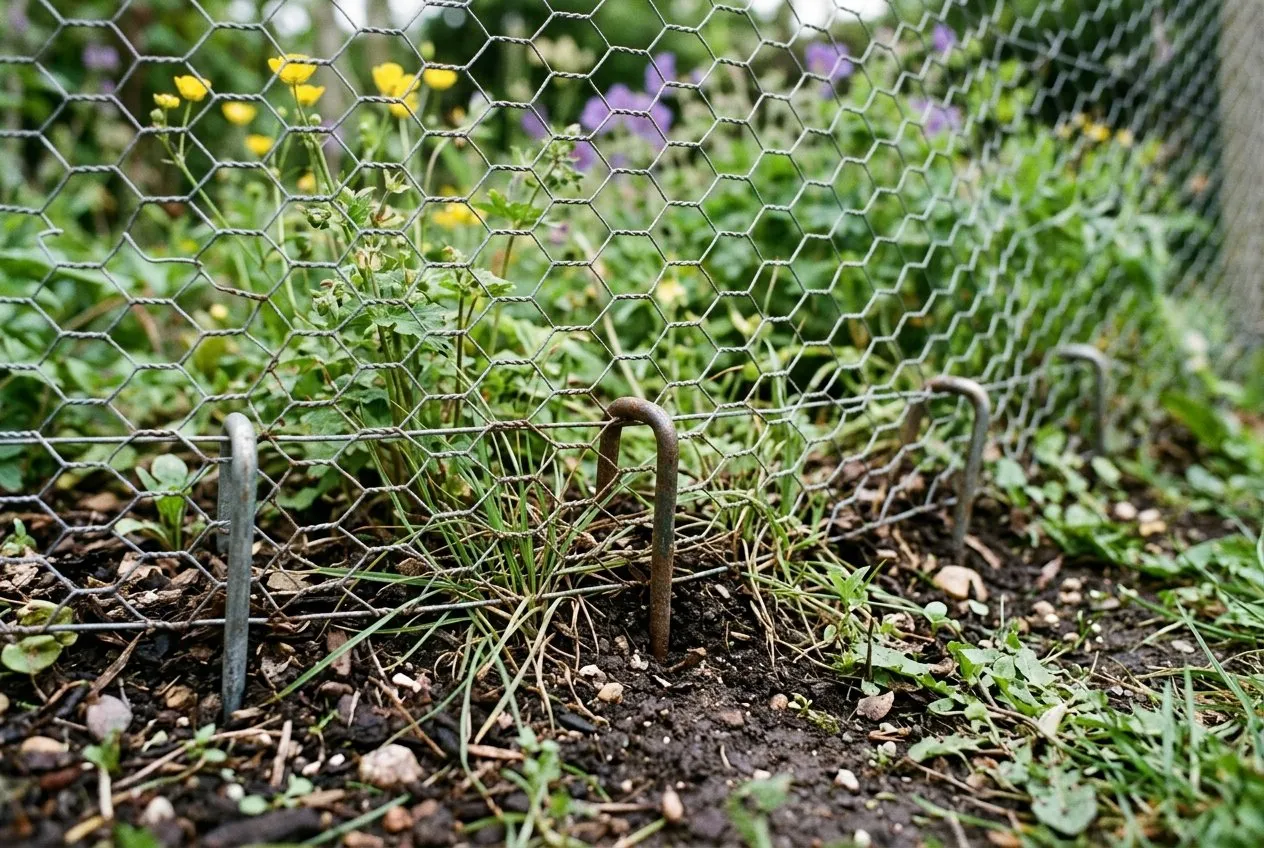
The sealed base is the bit most people forget. Mesh pinned firmly to the soil stops muntjac pushing underneath.
How to protect young trees and hedges from deer
New trees and hedges are easy targets. Deer nibble the shoots and bucks rub their antlers on young trunks, which can strip the bark.
Fit a tall tree guard or a mesh cage around each young tree when you plant it. Keep it on until the trunk is sturdy and the lowest branches are out of reach. The guide to planting bare-root trees covers staking and guarding at planting time.
A young hedge won’t stop deer. Run a wire mesh fence along the inside while it grows. Once it is tall and dense, the hedge helps hold them back and is great for wildlife. Fast-growing hedging plants get you there sooner.
Plants deer usually leave alone
Deer tend to avoid plants that are strongly scented, tough or poisonous. These make a good second line of defence, not the main one. A hungry deer in February will try almost anything.
Plants deer browse least:
- Lavender, rosemary and sage
- Euphorbia
- Daffodils
- Foxgloves
- Hellebores
- Most ferns and ornamental grasses
- Bergenia
Plants deer love:
- Roses, especially soft new shoots
- Tulips, which they strip at bud stage
- Hostas
- Young fruit tree shoots and bark
- Pansies and most soft bedding
| Job in the border | Deer-resistant choice | Deer favourite to avoid |
|---|---|---|
| Spring colour | Daffodils, hellebores | Tulips, pansies |
| Border structure | Euphorbia, bergenia | Hostas |
| Scent and edging | Lavender, rosemary | Roses |
| Shade planting | Ferns, foxgloves | Hostas |
Pet safety: Daffodils, foxgloves, euphorbia and hellebores are poisonous to dogs and cats, and euphorbia sap irritates skin. Think about where you plant them if you have a pet that chews.
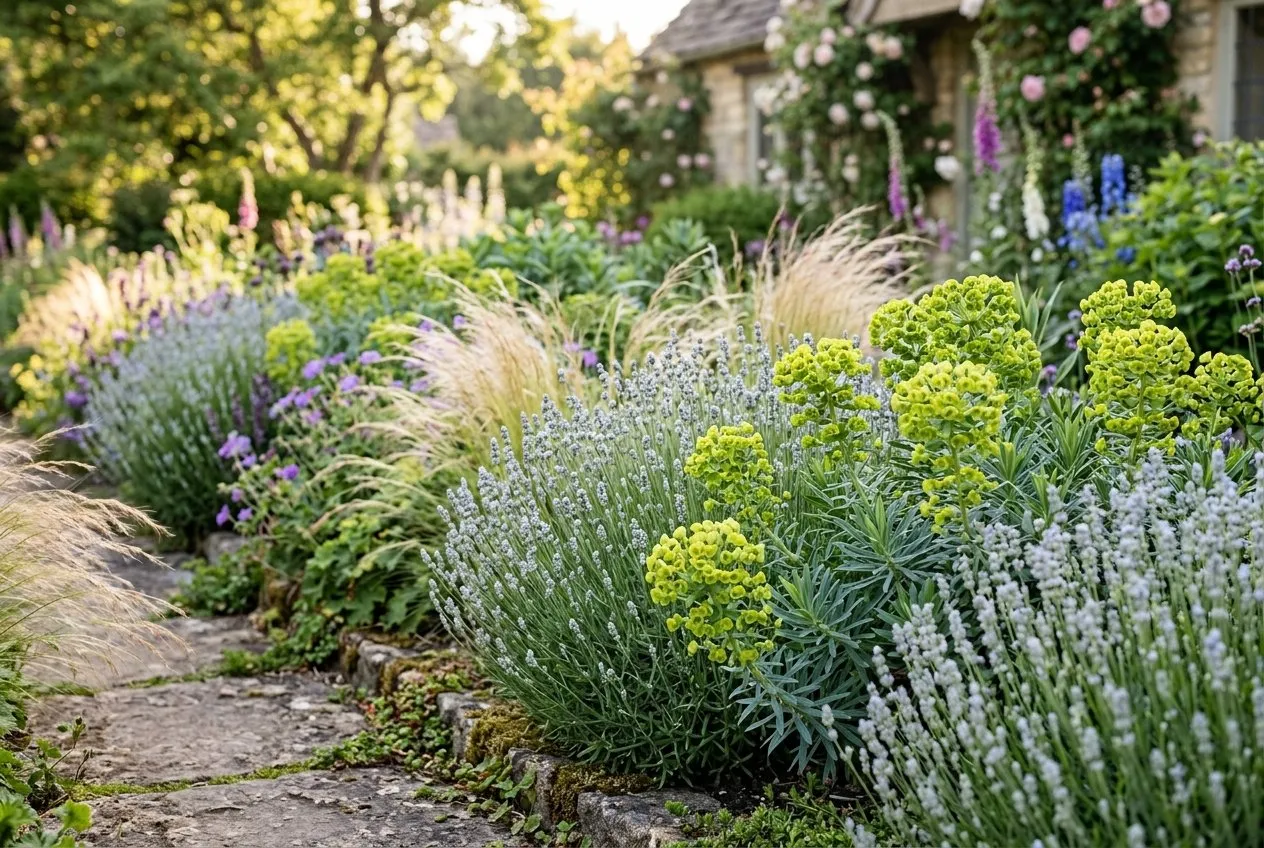
Lavender, euphorbia and grasses are among the last things deer eat. A hungry deer will still test them in winter.
Want more ideas for tough planting? The guide to growing euphorbia covers the best types for UK borders. The RHS advice on deer is also handy.
Do deer repellents work?
Only for a while. Scent and taste repellents wash off in rain and need putting on again. When deer are hungry in late winter, they often ignore them altogether.
They are useful for buying time. Use them on new planting while a fence or hedge goes in, or to protect roses from light summer browsing. Choose a product approved for that use and follow the label. Home-made mixes are not legal to use as deterrents on plants.
Putting it together for your garden
The right plan depends on which deer visit:
- Muntjac only: a 1.5m fence with a sealed base and gates with no gap.
- Roe deer: at least 1.5m, ideally 1.8m, solid or close mesh.
- Fallow nearby: 1.8-2m all round.
- Not sure: build for the worst case at 1.8-2m and seal the base.
Then plant deer-resistant plants on the outside edge and keep roses, tulips and veg safely inside.

A tall fence does the work, with tough, deer-resistant planting along the edge and the tastiest crops inside.
Common mistakes when keeping deer out
- Leaving a gap at the bottom. Muntjac will find it. Pin the base down all the way round.
- Forgetting the gate. A low gate or a gap beneath it undoes a good fence.
- Relying on sprays. They fade fast and fail in a hard winter.
- Building too low for the deer you have. A 1.2m fence won’t stop roe or fallow.
- Planting young trees without guards. One night of browsing or antler rubbing can ruin them.
More help with garden visitors is in the garden problems guides. For animals that dig rather than browse, read the guide to deterring badgers safely and legally for the next step.
Frequently asked questions
What fence height keeps deer out of a UK garden?
Between about 1.5m and 2m, depending on the deer. Muntjac need about 1.5m, roe 1.8m, and fallow or red deer up to 2m. The base must be sealed too, because muntjac push underneath rather than jump. Gates need to be the same height with no gap below.
Do deer repellents actually work?
They help for a short while, but not as the main defence. Rain washes them off, so they need reapplying, and hungry deer in late winter often ignore them. Use an approved product as the label directs, to protect new planting while a fence or hedge goes in.
Which plants do deer not eat in UK gardens?
Deer tend to leave aromatic, tough or poisonous plants alone. Lavender, rosemary, euphorbia, ferns, daffodils, foxgloves, hellebores and ornamental grasses are browsed least. No plant is completely deer-proof when food runs short in winter.
How can I tell which deer is in my garden?
Muntjac are dog-sized and hunched; roe are taller with a pale rump. Fallow are bigger again, often spotted, and usually move in groups. Two-toed slot prints and torn, ragged shoots show it is deer rather than rabbits.
Will a hedge stop deer getting in?
A young hedge won’t, but a tall, dense established one helps. Deer push through or jump thin hedging. Run a wire mesh fence along the inside while the hedge grows, then let the hedge take over as it thickens.
How do I protect young trees from deer?
Fit a tall tree guard or a mesh cage around each young tree. Deer strip shoots and rub bark with their antlers, which can kill a young tree. Keep the guard on until the trunk is sturdy and the lowest branches are out of reach.
Our team produces practical UK gardening guidance from source research, contributor records and established horticultural practice. Editorial standards are overseen by Matt W.