Key takeaways
- The milky sap irritates skin and can badly hurt eyes, so wear gloves and eye protection when cutting
- E. characias is the classic evergreen spurge for sun and gravel
- E. robbiae is one of the few plants that spreads happily in dry shade under trees
- Most types want free-draining soil; wet winter ground is the usual killer
- Cut flowered characias stems right to the base once the heads fade
- Euphorbia is harmful to pets and people if eaten, so site it away from chewers
Euphorbias are tough, easy and full of zing. Their acid-green, lime and orange heads brighten gravel gardens, dry shade and hot borders. Most need little more than free-draining soil and a light trim after flowering. There’s one thing to know before you start, though: every euphorbia bleeds a milky sap when cut, and that sap is an irritant. Glove up and you’ll get on fine.
Is euphorbia sap dangerous?
Yes, the sap is an irritant, so treat it with respect. The milky white sap oozes from any cut stem or snapped leaf. On skin it can cause redness, burning and sometimes blisters. In the eyes it can be very painful and may cause lasting damage.
When cutting euphorbia:
- Wear gloves and long sleeves, as sap runs down stems onto your arms
- Wear eye protection, such as safety glasses, especially when cutting at face height
- Cut on a still day so sap doesn’t flick back at you
- Wash gloves and secateurs afterwards, as dried sap still irritates
If sap gets on skin, wash it off at once with soap and water. If it gets in an eye, rinse with plenty of cool running water, don’t rub, and get medical advice the same day. The RHS lists euphorbia among its potentially harmful garden plants.
Euphorbia is also harmful if eaten, by people and pets. Plant it away from dogs that chew. Our guide to plants toxic to dogs lists others to watch for.
Six euphorbias for UK gardens compared
Choose a euphorbia by your light and soil. These six cover almost every spot in a UK garden.
| Euphorbia | Height | Light | Evergreen? | Best for |
|---|---|---|---|---|
| E. characias subsp. wulfenii | 1-1.2m | Full sun | Yes | Structure in gravel and dry borders |
| E. amygdaloides var. robbiae | 40-60cm | Shade or part shade | Yes | Ground cover in dry shade |
| E. polychroma | 40-50cm | Sun or light shade | No | Neat yellow dome in spring |
| E. griffithii ‘Fireglow’ | 75-90cm | Sun or light shade | No | Orange-red colour in hot borders |
| E. mellifera (honey spurge) | 1.5-2m | Sun, sheltered | Yes | Scented shrub for mild gardens |
| E. oblongata | 45-60cm | Full sun | Grown as annual | Lime-green filler for cutting |
Euphorbia characias: evergreen architecture
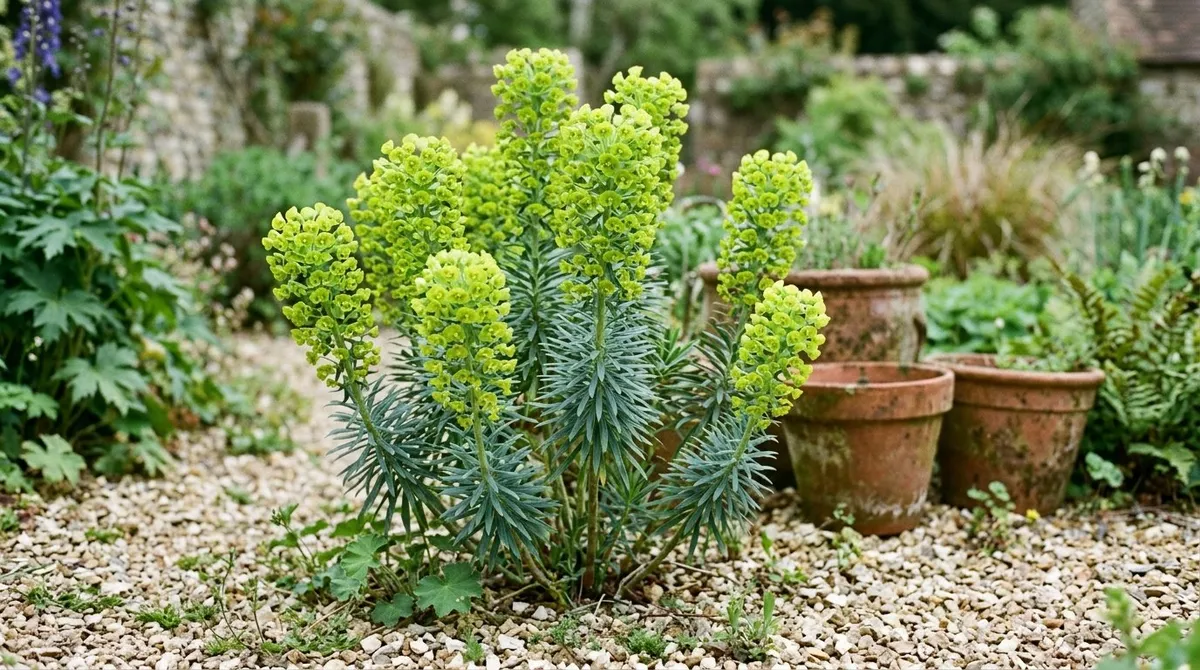
E. characias subsp. wulfenii is the spurge most people picture. It makes a shrubby dome of upright stems clothed in blue-green leaves, which stay all winter. From March to June, each mature stem carries a big, rounded column of acid-green flowers.
Give it full sun and sharp drainage. It’s a natural partner for other low-maintenance architectural plants in a modern or gravel scheme. Each stem flowers only once, which matters when you prune (see below).
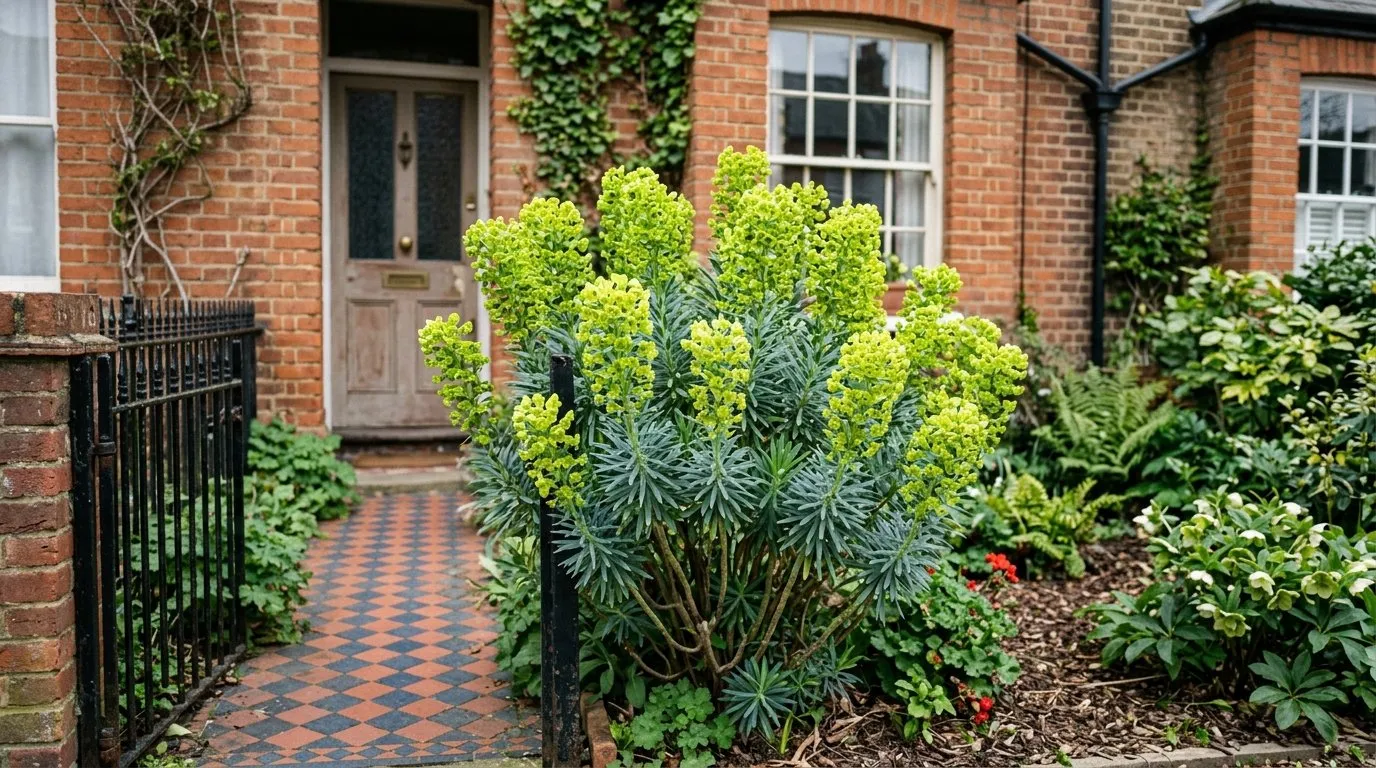
E. characias brings year-round structure and a big burst of acid green in spring. It looks great against warm brick.
Euphorbia robbiae: the dry-shade workhorse
E. amygdaloides var. robbiae is one of the few plants that spreads happily in dry shade. It forms dark green, glossy rosettes on running roots and sends up lime-green flowers in spring. It carpets the awkward ground under trees and along shady fences.
It spreads quickly, so give it room or a hard edge. It’s one of the most useful plants for dry shade, smothering weeds where little else will grow.
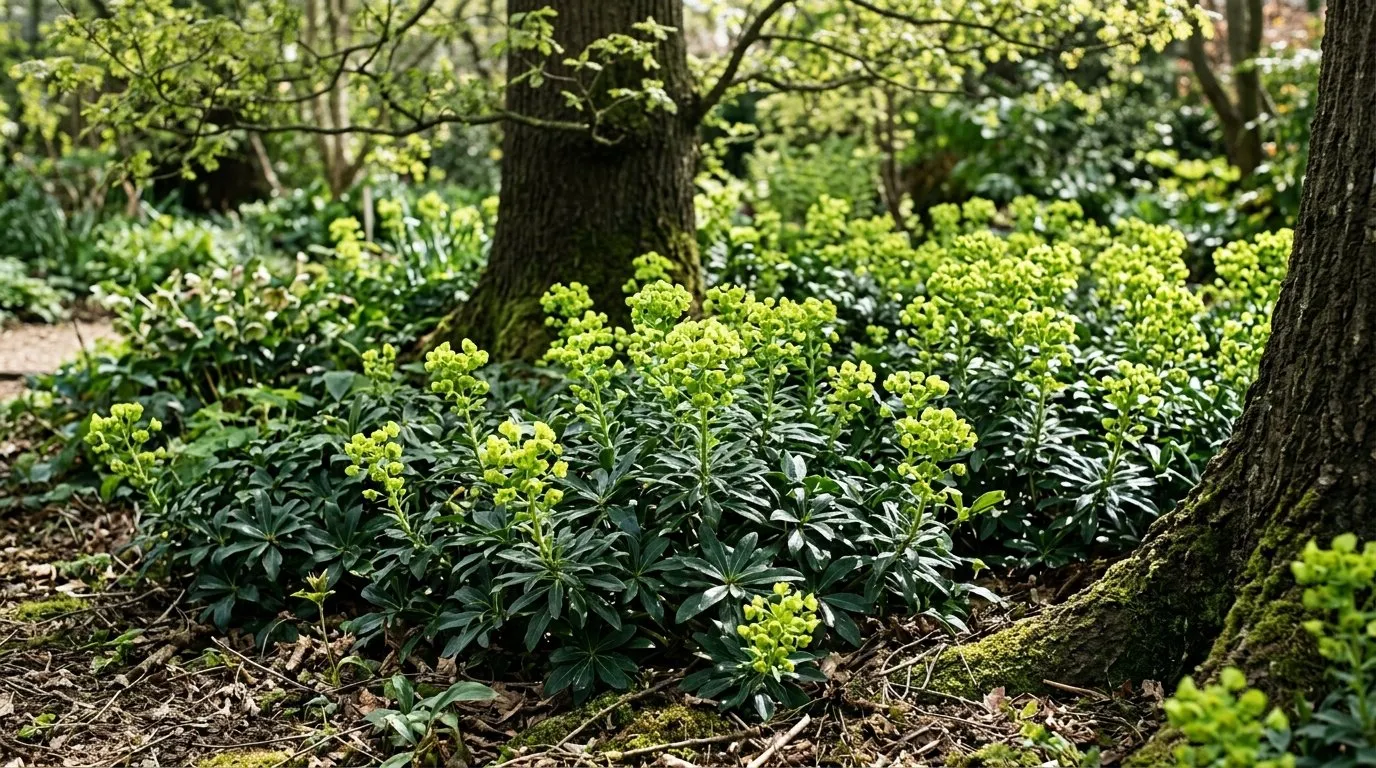
E. robbiae spreads by its roots to carpet dry shade. It’s perfect for that bare patch under a tree.
Euphorbia polychroma: the spring dome
E. polychroma forms a neat, rounded mound covered in sulphur-yellow flower heads in April and May. It then stays quietly green through summer before dying down in winter.
It’s very hardy and suits the front of a sunny border. It looks lovely with tulips and forget-me-nots in a cottage-style border. Unlike characias, it doesn’t need hard pruning.
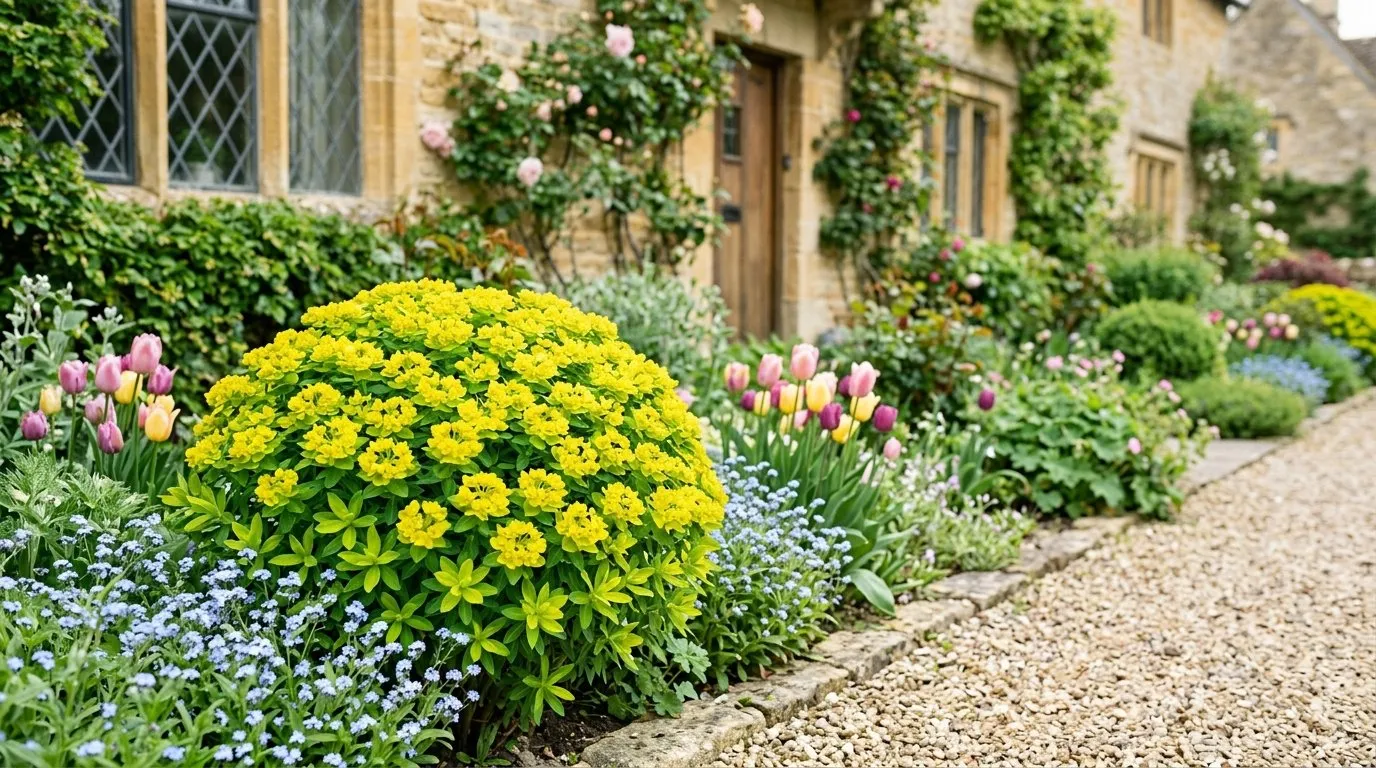
E. polychroma makes a tidy yellow dome in spring. Tulips and forget-me-nots make easy partners.
Euphorbia griffithii ‘Fireglow’: hot colour
E. griffithii ‘Fireglow’ brings fiery orange-red heads over coppery-green leaves in early summer, and the leaves often colour again in autumn. It spreads gently at the root to fill a gap.
Unlike most spurges, it prefers soil that stays a little moist, in sun or light shade. It’s a natural in a hot border with crocosmia and dahlias.
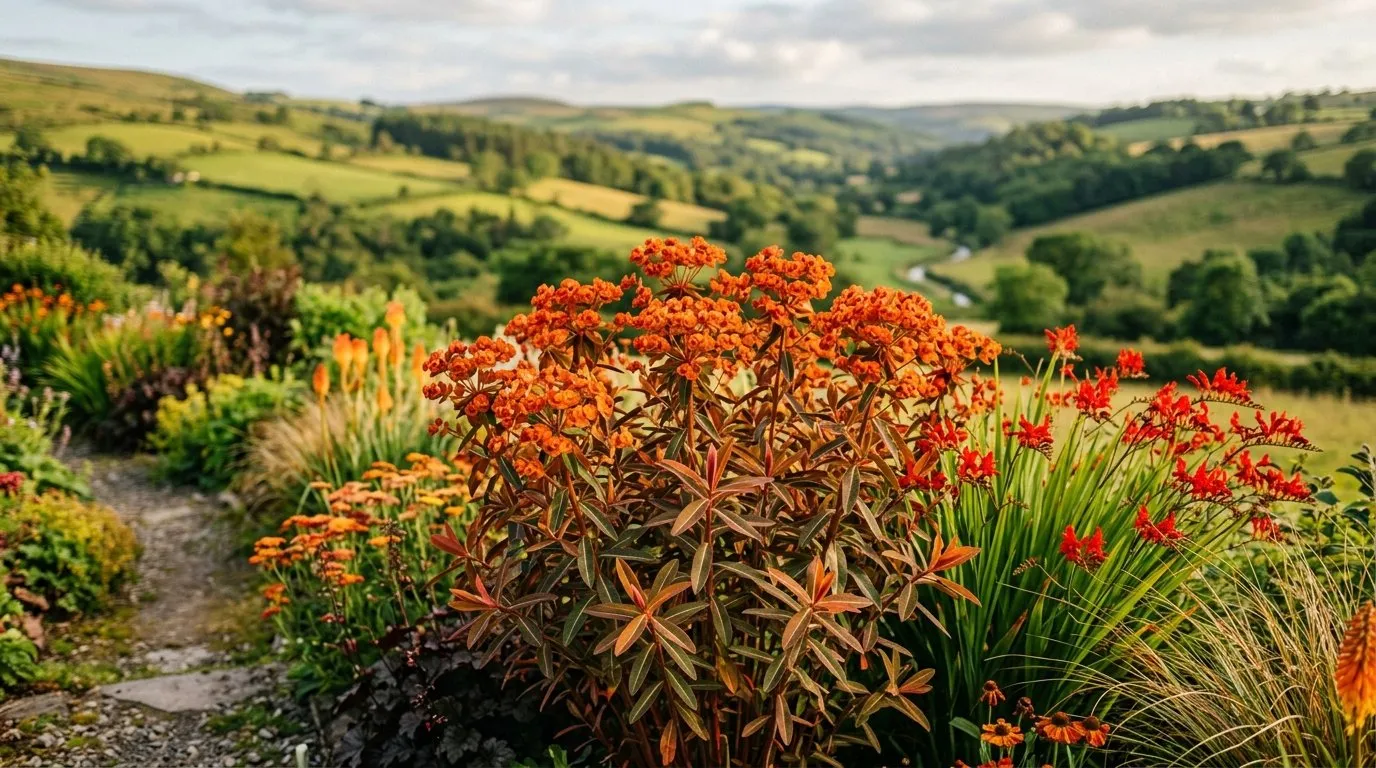
‘Fireglow’ brings flame-orange heads in early summer. It likes a bit more moisture than most spurges.
Euphorbia mellifera: the honey spurge
E. mellifera grows into a large, rounded evergreen shrub up to about 2m tall. In late spring, its brownish flowers give off a lovely honey scent on warm days.
It’s less hardy than the others, so it does best in mild coastal, city and southern gardens. In colder areas, plant it against a warm, sheltered wall. It suits a Mediterranean-style planting scheme.
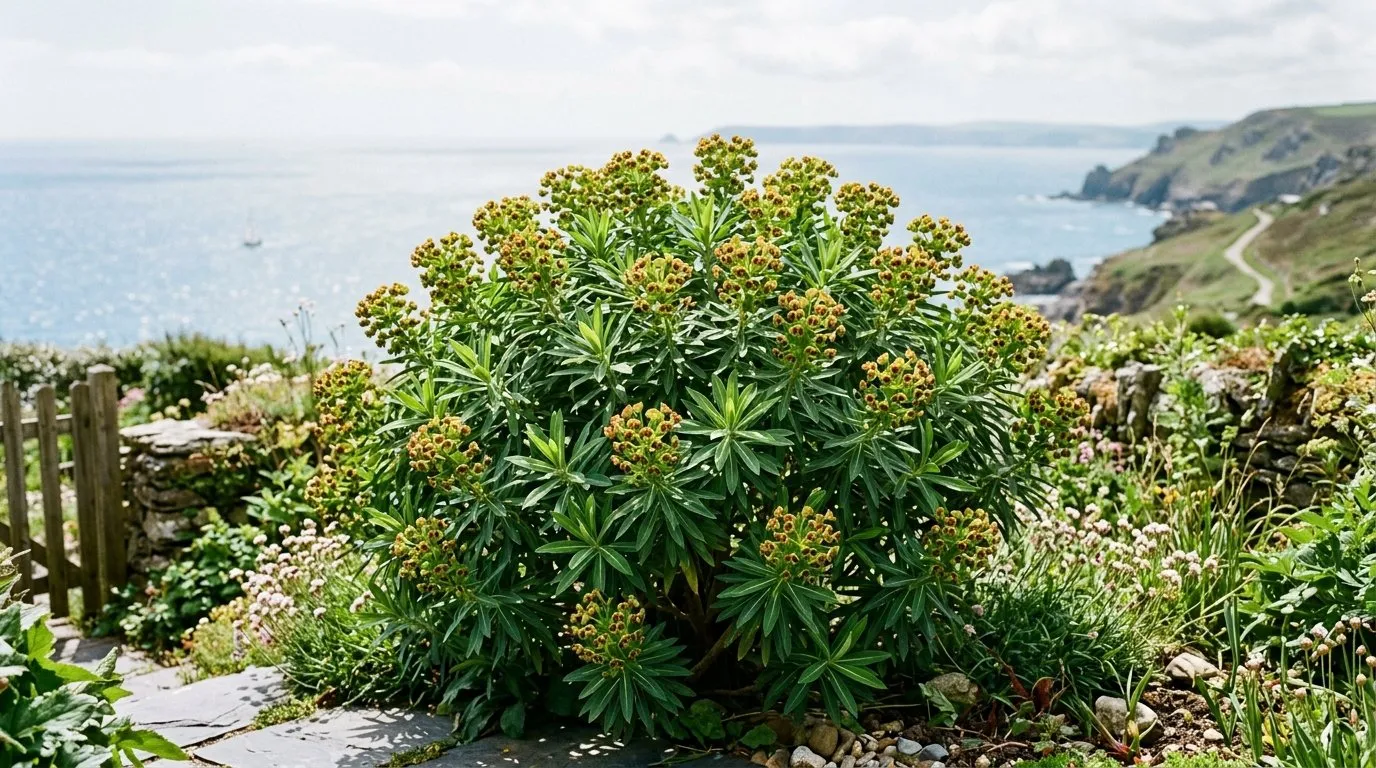
Honey spurge thrives in mild, sheltered seaside gardens. On a warm day, the flowers really do smell of honey.
Euphorbia oblongata: the one for cutting
E. oblongata is usually grown as an annual for its bright lime-green flower heads, a favourite with flower arrangers. Sow it in spring and it flowers from summer into autumn. It self-seeds freely, so one packet can keep you going for years. It’s a handy filler in a cutting garden.
Where to plant euphorbia
Most euphorbias want sun and free-draining soil. Characias and mellifera cope with long dry spells once settled and rarely need watering. That makes them handy drought-tolerant plants for hot, dry summers.
Wet winter soil is the main killer. On heavy clay, dig in grit or plant on a slight mound. Spring or early autumn is the best time to plant, so roots settle before winter.
Two types break the rule. E. robbiae is happiest in shade, and E. griffithii prefers soil that doesn’t dry out.
For a balcony or courtyard pot, choose E. polychroma or a young characias. Use a large pot of gritty, free-draining compost. Water in summer, but never let the pot sit in a saucer of water.
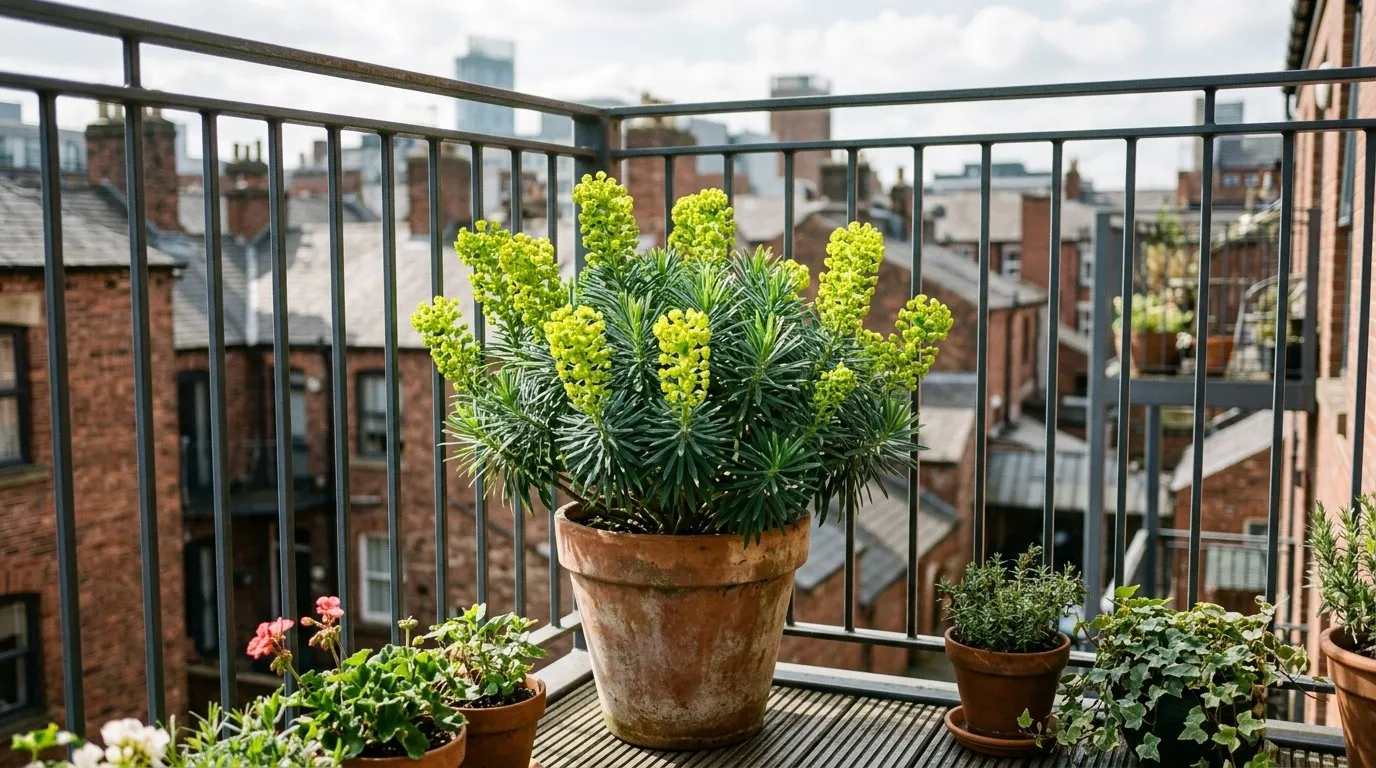
A young characias makes a striking balcony plant. Use gritty compost so the pot never sits wet.
How to prune euphorbia
Pruning depends on the type, so check which one you have. Always wear gloves and eye protection first.
- E. characias and E. mellifera: each stem grows one year and flowers the next, then it’s done. Once the heads fade in early summer, cut each flowered stem right down to the base. Leave the fresh, unflowered shoots to bloom next year. Left alone, old stems flop and the clump looks tired.
- E. polychroma and E. griffithii: lightly deadhead after flowering. Cut the dead stems to the ground in autumn or late winter.
- E. robbiae: cut out flowered stems at the base once they brown, and dig out runners that stray too far.
Cutting euphorbia for the vase
Euphorbia makes a great cut flower, but the sap leaks into the vase water. To stop it, seal the cut ends:
- Cut stems in the cool of the morning, wearing gloves and eye protection.
- Dip the cut ends in just-boiled water for a few seconds until the sap stops running.
- Stand them straight in cold, deep water for a few hours before arranging.
Sealed stems last well and keep their zingy colour longer than many fillers.
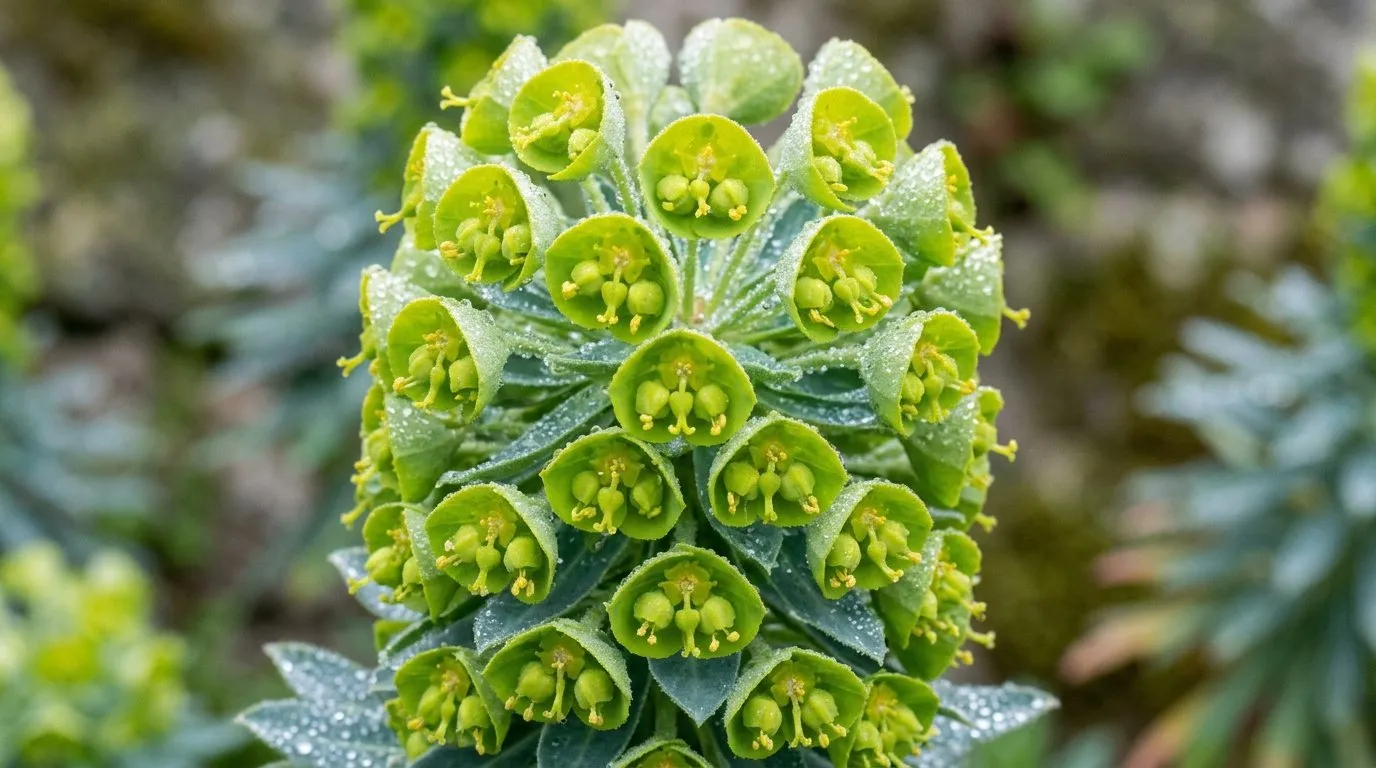
Up close, each characias head is made of dozens of little cup-shaped flowers. Seal the cut stems before they go in a vase.
Keeping euphorbia in bounds
E. characias and E. oblongata self-seed freely. That’s a bonus if you want more plants, and a chore if you don’t. Cutting off the heads as they fade stops most seeding. Seedlings pull up easily when small, but wear gloves, as they bleed sap too.
E. robbiae and E. griffithii spread by roots. Slice round the clump with a spade each spring and lift any runners that stray. Divide crowded clumps of herbaceous types in spring and replant the healthy outer pieces for free plants.
Common mistakes with euphorbia
- Cutting without gloves or glasses. Sap on skin or in eyes is painful. Always protect yourself.
- Planting in wet, heavy soil. Most types rot in waterlogged winter ground. Add grit or choose a better-drained spot.
- Leaving flowered characias stems. The clump gets leggy and floppy. Cut them to the base.
- Cutting polychroma hard. It only needs a light trim after flowering.
- Putting robbiae in a small border. It will run. Give it space or an edge.
Once your spurge is settled, build the scheme around it with our guide to evergreen shrubs for year-round interest. There’s more inspiration in our flowers and plants hub.
Frequently asked questions
Is euphorbia sap dangerous?
Yes, the milky sap irritates skin and can seriously hurt eyes. It can cause redness, burning and blisters on skin. Always wear gloves and eye protection when cutting, and wash any splash off straight away.
What do I do if euphorbia sap gets in my eye?
Rinse it with plenty of clean, cool running water straight away. Don’t rub it. Keep rinsing for several minutes, then get medical advice the same day, especially if pain or blurred vision continues.
Which euphorbia is best for a UK garden?
Euphorbia characias subsp. wulfenii is the best all-rounder for sunny gardens. It gives evergreen structure and big acid-green heads in spring. For dry shade choose E. robbiae, and for a neat spring dome choose E. polychroma.
Is euphorbia hard to grow in the UK?
No, most garden euphorbias are easy to grow. They want free-draining soil and rarely need feeding or watering once settled. Handle the sap safely, prune flowered stems properly, and avoid ground that stays wet in winter.
Do you cut euphorbia back after flowering?
Yes, cut flowered characias stems right to the base once the heads fade. Each stem flowers only once, so removing it makes room for new shoots. Just deadhead E. polychroma lightly instead. Wear gloves and eye protection.
Is euphorbia poisonous to dogs and cats?
Yes, euphorbia is harmful to dogs, cats and people if eaten. The sap irritates the mouth and stomach and can cause drooling and vomiting. Plant it away from pets that chew, and call your vet if one eats any.
Does euphorbia come back every year?
Yes, most garden euphorbias are perennials that return every year. Evergreen types like E. characias keep their leaves in winter. Herbaceous types such as E. griffithii die down and reshoot in spring. E. oblongata is usually grown as an annual.
Our team produces practical UK gardening guidance from source research, contributor records and established horticultural practice. Editorial standards are overseen by Matt W.