Key takeaways
- Gaillardia is short-lived, so expect two or three good years from each plant
- Full sun and sharp drainage matter most; wet winter soil rots the crown
- Don't feed it; rich soil gives floppy, shorter-lived plants
- Deadhead every few days and cut back in late summer for a second flush
- Divide clumps or take basal cuttings in spring so young plants are always coming on
Gaillardia, or blanket flower, is a burst of sunshine on a stem. Its red-and-yellow daisies flower from June right up to the frosts, and it laughs at drought. The catch is that it’s short-lived. Grow it in full sun on lean, gritty soil, deadhead it often and keep a few young plants coming on. Do that and you’ll never be without it.
What is gaillardia?
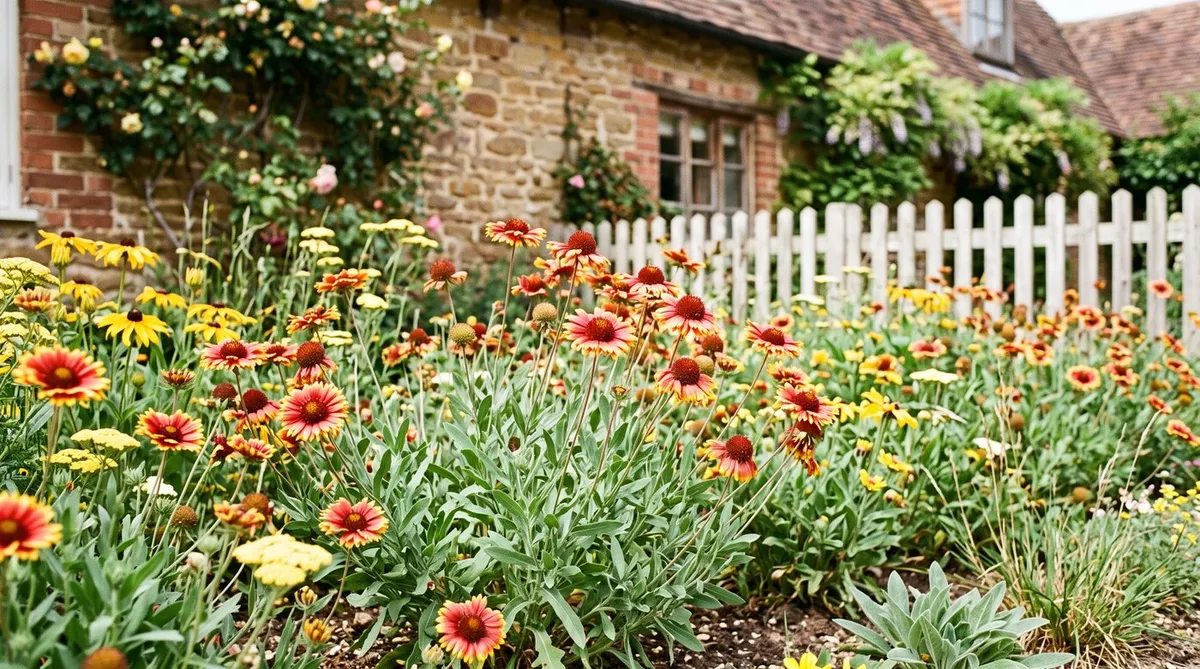
Gaillardia is a daisy from the North American prairies. It makes a low clump of grey-green, slightly hairy leaves, with flowers on wiry stems above. Each bloom has a raised centre ringed by petals, often red at the base and yellow at the tip.
Most garden plants are Gaillardia x grandiflora, a cross between the perennial G. aristata and the annual G. pulchella. That mixed parentage explains its habit. It flowers hard like an annual, but the roots come back like a perennial, just not for long.
If you like this look, you’ll also enjoy coreopsis and rudbeckia, which share its sunny, long-flowering style.
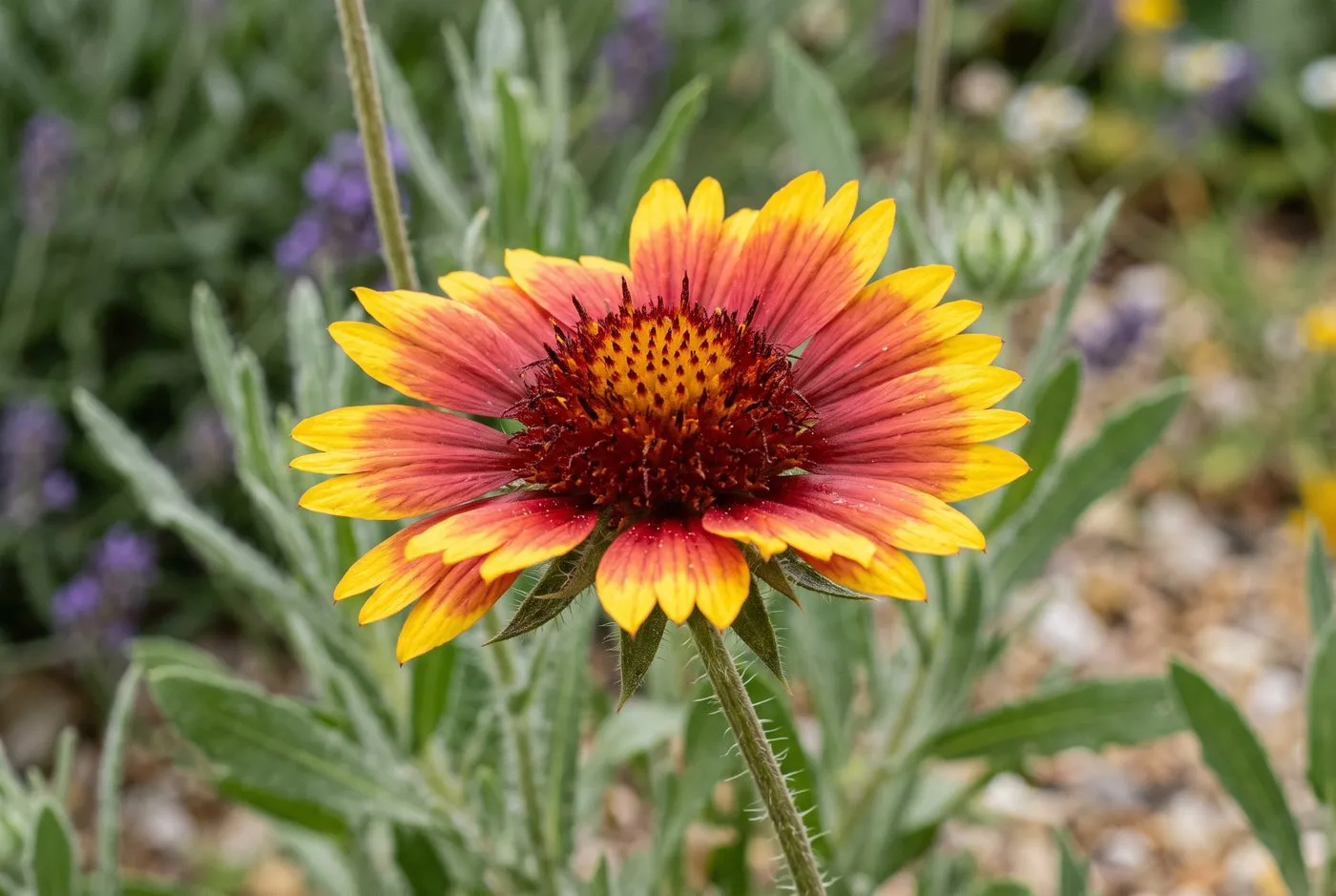
The classic blanket flower: a raised dark centre with petals that fade from red to sunny yellow tips.
Best gaillardia varieties for UK gardens
Choose by height and how long you want the plant to last. Compact seed strains flower in their first summer. Taller named types make more of a border plant.
| Variety | Height | Colour | Good for |
|---|---|---|---|
| ’Arizona Sun’ | 20-30cm | Mahogany-red, yellow tips | Front of border, pots |
| ’Kobold’ (also sold as ‘Goblin’) | About 30cm | Red with yellow edges | Gravel, edging, dry beds |
| ’Arizona Apricot’ | 25-30cm | Soft apricot-yellow | Pastel schemes, pots |
| ’Fanfare’ | 30-45cm | Red and yellow, trumpet-shaped petals | Something a bit different |
| G. aristata | 60-70cm | Yellow with a red centre | Prairie and meadow planting |
| ’Burgundy’ | 60-75cm | Deep wine-red | Mid-border, cutting |
‘Arizona Sun’ and ‘Kobold’ are easy first choices: compact, tough and long-flowering. The ‘Arizona’ series flowers in its first year from an early spring sowing, so it’s a cheap way to fill a sunny border. ‘Burgundy’ is the most striking but the floppiest, so keep it lean and give it a little support.
Why gaillardia is short-lived
Gaillardia simply doesn’t live long. Expect two or three good seasons from a garden hybrid before it fades. Once you accept that, it’s easy: you plan for replacements rather than fighting nature.
Two things shorten its life even further:
- Wet winter soil. The crown rots when it sits cold and waterlogged. On heavy clay, that’s the biggest killer.
- Rich soil and feeding. Gaillardia comes from poor, stony ground. Compost, manure or fertiliser make it grow soft and tall, and it dies sooner.
The answer is a simple routine. Grow it in sharp drainage, don’t feed it, and raise a few new plants every couple of years. Our guide to improving clay soil explains how to open up heavy ground.
How to plant gaillardia
Plant from May, once frosts have passed. Pot-grown plants can go out until about July, giving them a full season to settle. Don’t plant in autumn: young plants rarely survive their first wet winter.
- Pick the sunniest, best-drained spot you have, such as a south- or west-facing bed, gravel garden or sunny bank.
- Fork plenty of horticultural grit into the top 20cm of soil. Don’t add compost or fertiliser.
- Plant about 30cm apart, with the crown level with the soil. Never bury it.
- On clay, sit each crown on a handful of grit.
- Water in once, then leave them to settle.
Once established, gaillardia rarely needs watering except in long dry spells. It sits happily with other drought-tolerant plants in a low-water border.
Deadheading and the late-summer cut back
Deadheading keeps gaillardia flowering into autumn. Every faded flower left on the plant sets seed, and that tells the plant it can slow down. Snip each faded bloom back to the next leaf or bud every few days from June. It only takes a couple of minutes on a small clump.
By August, most plants look tired and thin. Cut the whole plant back by about half and water it once. Fresh growth usually follows, with a second flush of flowers into September and October. Cutting back also removes the tired top growth that would otherwise sit wet over the crown in autumn. Our guide to deadheading flowers covers the technique for the rest of the border.
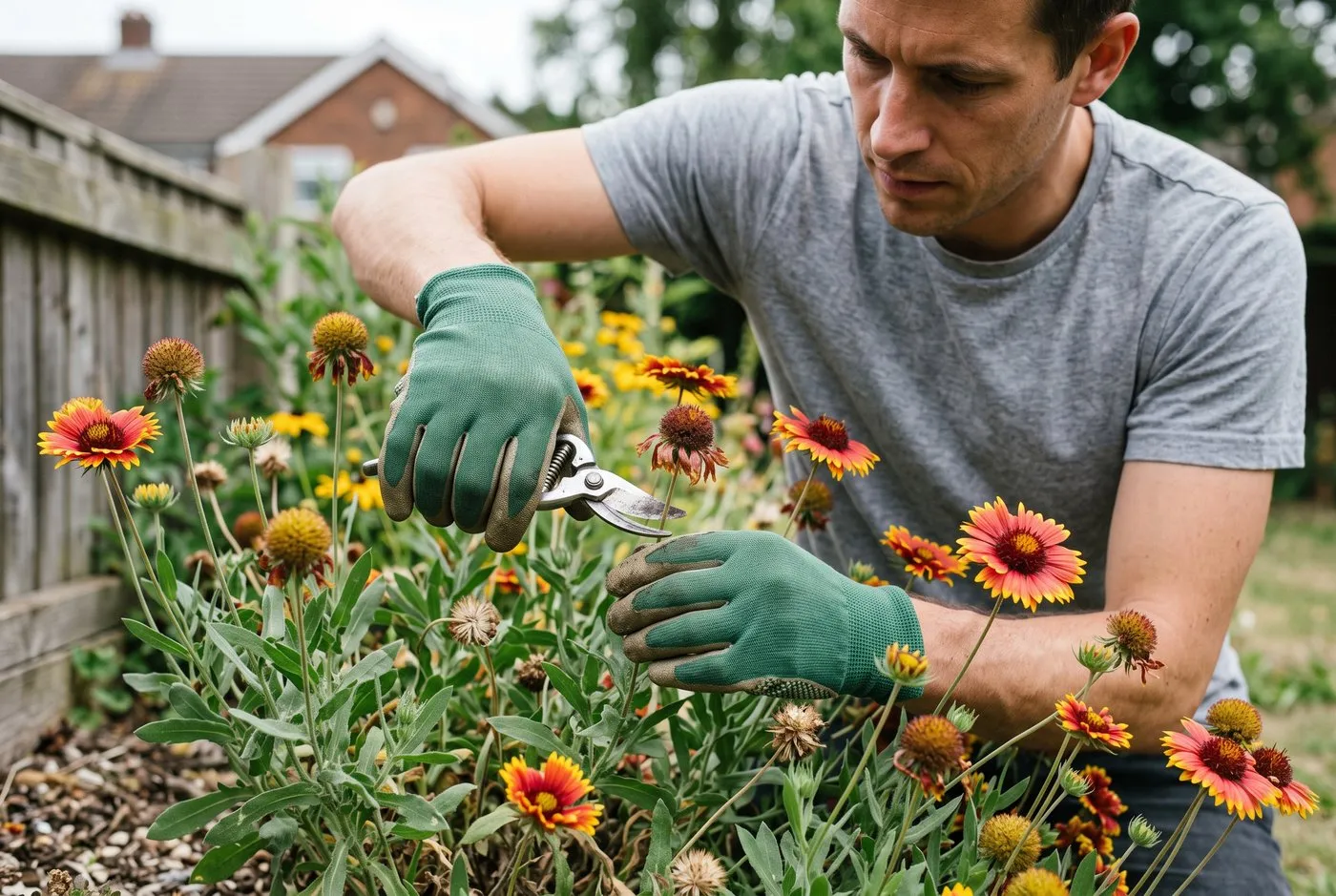
Snip off faded flowers every few days. It’s the one job that keeps blanket flower going for months.
Gardener’s tip: Want free plants? Leave a few seed heads on your best plant in late September. Seedlings often pop up around the parent the next spring, right where the drainage already suits them.
Winter care for gaillardia
Keep the crown dry over winter. Top growth dies back in late autumn, and this is when wet soil does the damage.
Don’t cut plants right to the ground in autumn and then mulch over them. That traps moisture exactly where the plant is most at risk. Leave a little dry growth in place, clear away soggy fallen leaves and never pile wet mulch onto the crown. Tidy up the old growth in spring as new shoots appear.
How to make more gaillardia plants
Because gaillardia is short-lived, raising new plants is how you keep a patch going. There are three easy ways.
Division. In spring, as new shoots appear, lift a clump and pull or cut it into pieces, each with roots and a few shoots. Replant the healthiest pieces straight away, 30cm apart, and throw away the woody old centre.
Basal cuttings. In spring, cut young shoots about 8cm long from the base of the plant. Remove the lower leaves and push them into gritty cutting compost. Keep them warm and lightly moist until they root, then pot them on. Our guide to propagating plants by cuttings and division explains the basics.
Seed. Sow indoors in February or March on the surface of gritty seed compost, somewhere warm and bright. Seed-raised ‘Arizona’ and ‘Mesa’ strains often flower in their first summer.
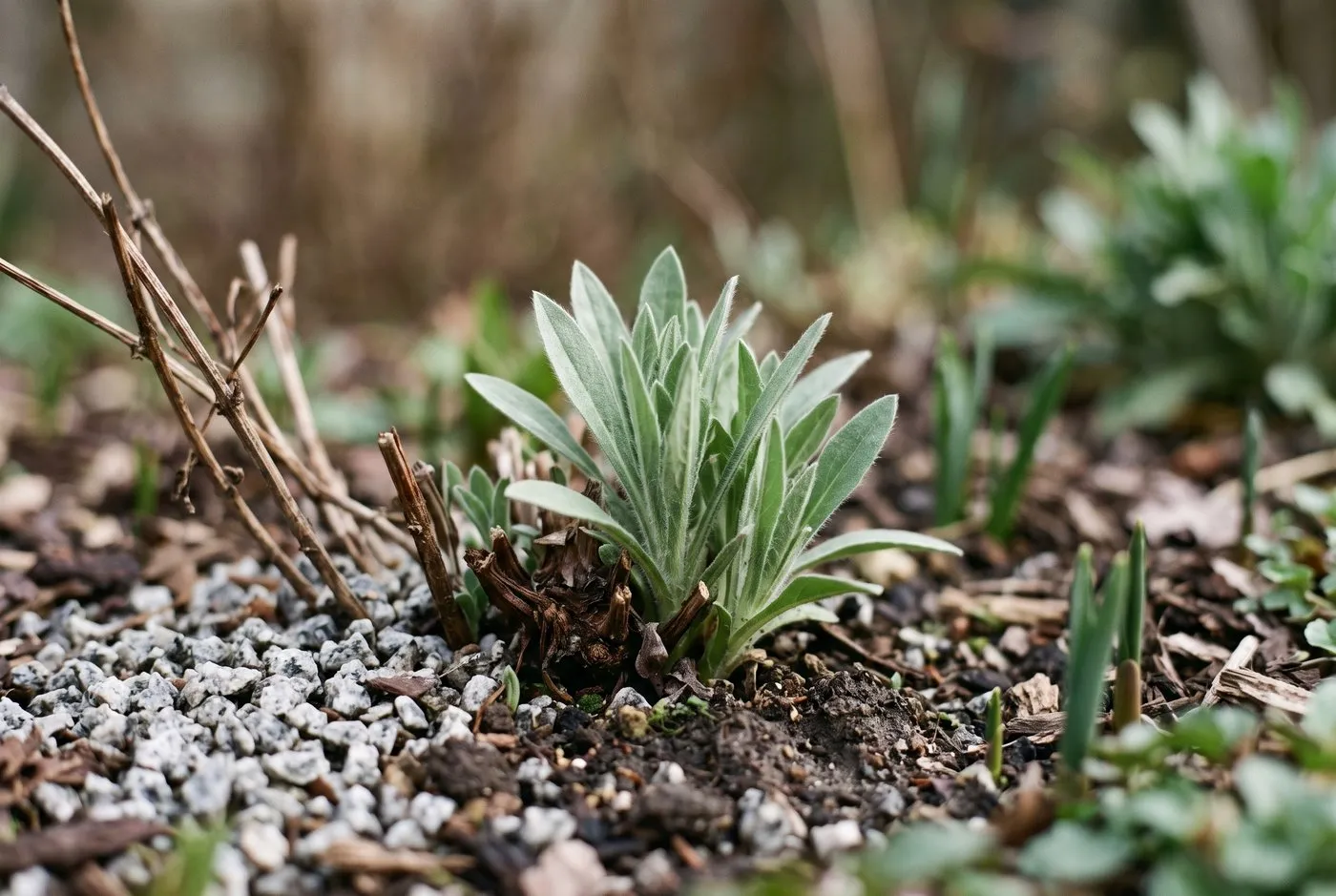
Fresh shoots in spring are your cue to divide or take cuttings. Soft young growth roots quickly.
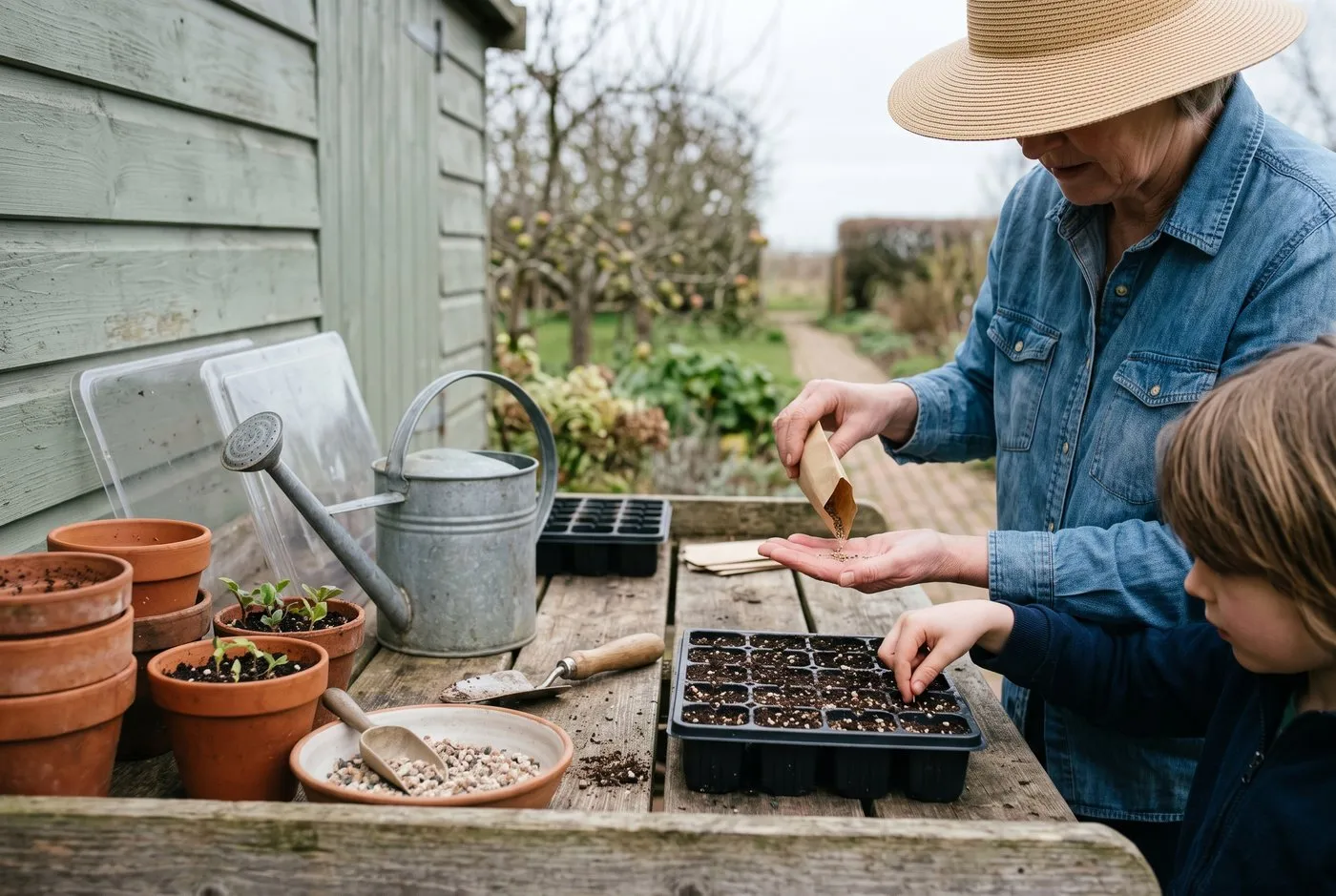
Sowing indoors in late winter. Seed strains can fill a sunny border with flowers by midsummer.
Where gaillardia works best
Gaillardia loves hot, dry, open spots. Gravel gardens, sunny banks, raised beds and seaside gardens all suit it. It copes with wind and salty air where the drainage is sharp. It also fits a prairie-style border alongside grasses and other late daisies.
The open, flat flowers are easy for bees, hoverflies and butterflies to feed on. Because it flowers so late, it keeps feeding them into autumn.
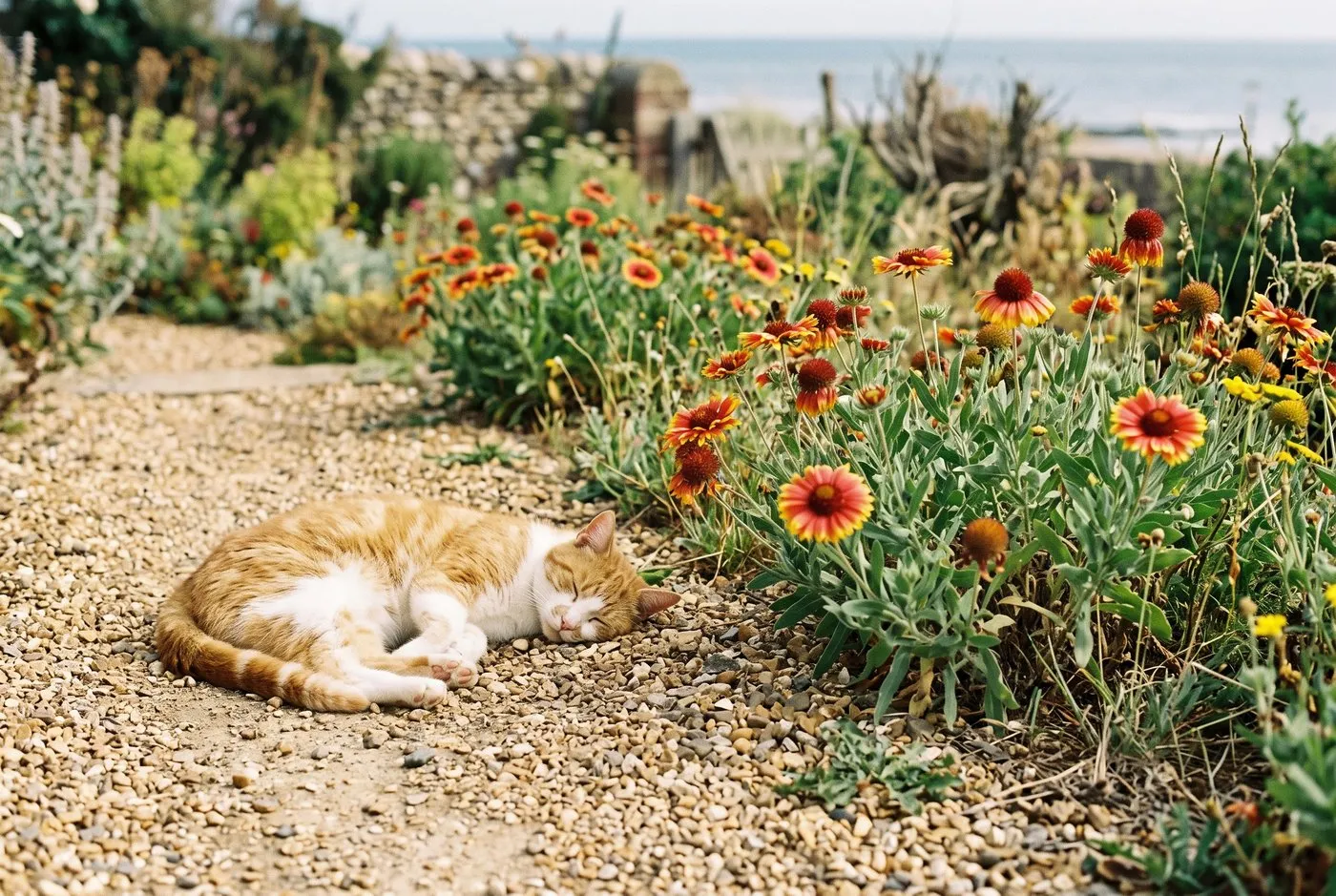
Hot, dry gravel suits blanket flower and sunbathing cats alike.
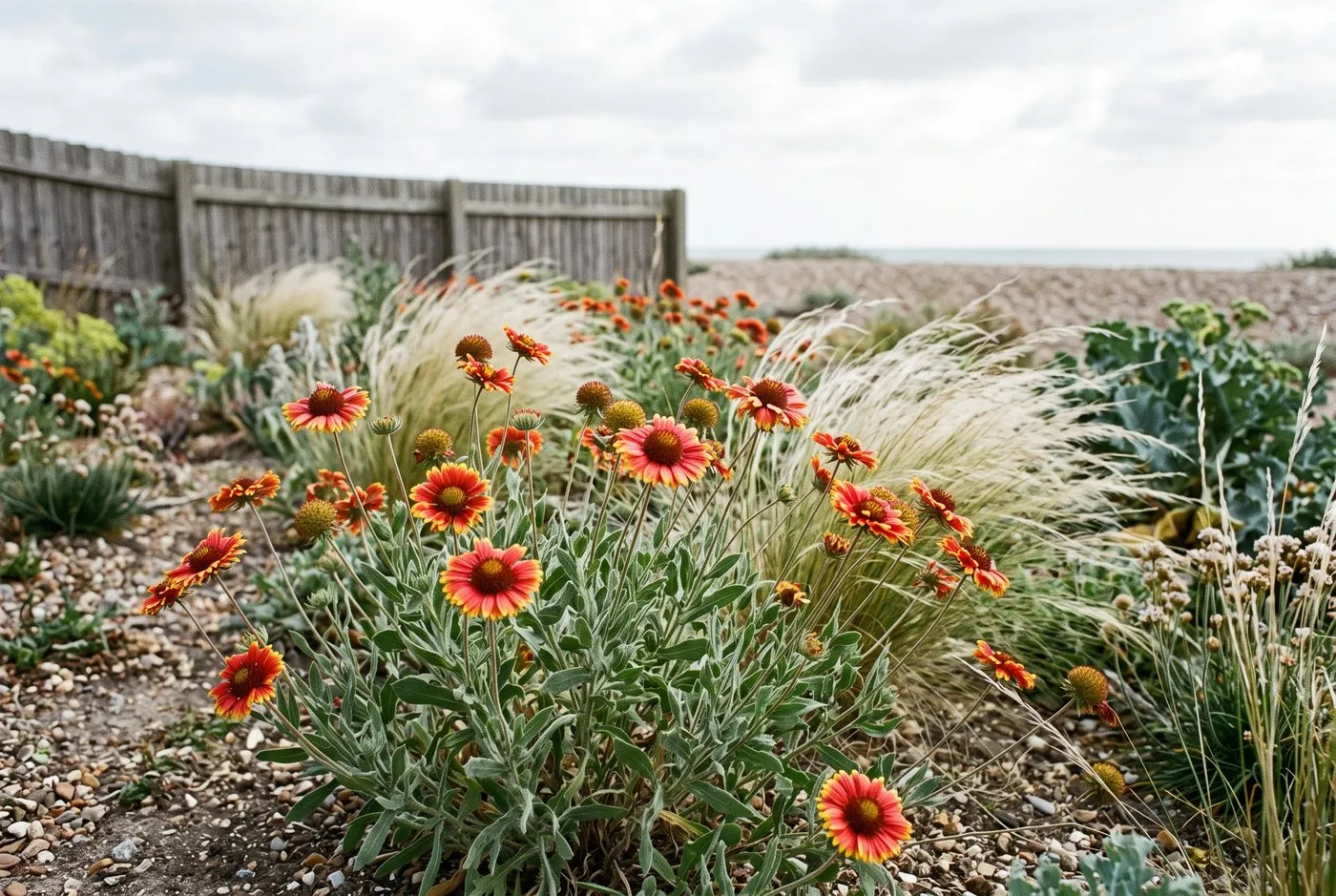
With sharp drainage, blanket flower shrugs off wind and salt. It looks great among grasses by the coast.
Gaillardia calendar
| Month | What to do |
|---|---|
| February to March | Sow seed indoors in warmth. Order plug plants |
| March to April | Divide clumps and take basal cuttings as new shoots appear. Tidy old growth |
| May | Plant out after the frosts, 30cm apart |
| June | First flowers. Start deadheading every few days |
| July | Peak flowering. Keep deadheading. Support tall ‘Burgundy’ if it leans |
| August | Cut tired plants back by about half for a second flush |
| September | Second flush. Leave a few seed heads to self-sow |
| October | Flowering slows. Collect seed if wanted |
| November to January | Keep crowns dry and clear of wet leaves. Don’t mulch over them |
Common mistakes with gaillardia
- Feeding it. Rich soil gives floppy plants that die young. Add grit, not food.
- Wet winter soil. Cold rarely kills it; soggy ground does. Improve drainage or use a raised bed.
- Skipping deadheading. Left to set seed, it slows and stops by late summer.
- Planting in autumn. Young plants often don’t survive their first wet winter. Plant from May.
- Expecting it to last forever. Divide, take cuttings or sow every couple of years.
- Ignoring slugs in spring. They love the soft new shoots. Check plants on damp evenings and pick them off.
Now you know how to keep blanket flower going, try another long-flowering daisy with our guide to growing echinacea. There’s more inspiration in our flowers and plants hub.
Frequently asked questions
How do you grow gaillardia in the UK?
Grow gaillardia in full sun on lean, free-draining soil. Don’t enrich the ground or feed it. Deadhead often through summer and cut plants back in late summer. On heavy clay, add plenty of grit or grow it in a raised bed.
Is gaillardia a perennial or annual?
Gaillardia is usually a short-lived perennial. Garden hybrids and G. aristata come back but often fade after two or three years. G. pulchella is an annual. Some seed strains flower in their first summer, so they’re often grown like bedding.
Why does my gaillardia keep dying?
Wet winter soil is the usual cause, not cold. The crown rots in cold, waterlogged ground. Rich soil and feeding also shorten its life. Improve drainage with grit, stop feeding, and raise new plants every couple of years.
Should you deadhead gaillardia?
Yes, deadhead regularly to keep it flowering into autumn. Snip faded blooms back to the next leaf or bud every few days. Cutting the plant back by about half in late summer usually brings a fresh flush of flowers.
How hardy is gaillardia in the UK?
Gaillardia copes with frost well if the soil is dry. What kills it is cold, wet ground in winter, which rots the crown. Sharp drainage matters far more than temperature in British gardens.
When do you plant gaillardia?
Plant gaillardia from May, once the frosts are over. Pot-grown plants can go out until about July. Sow seed indoors in February or March. Avoid autumn planting, as young plants often don’t survive their first wet winter.
How far apart should you plant gaillardia?
Space gaillardia about 30cm apart. Compact types such as ‘Kobold’ can go a little closer. Taller ones like ‘Burgundy’ need a bit more room. Good spacing lets air move around the crowns, which helps prevent winter rot.
Our team produces practical UK gardening guidance from source research, contributor records and established horticultural practice. Editorial standards are overseen by Matt W.