Key takeaways
- Solomon's seal flowers in May and June, with white bells hanging under arching stems
- Plant rhizomes flat, about 5cm deep and 30cm apart, between October and March
- Sawfly larvae strip leaves in early summer; check leaf undersides every few days from late May
- A stripped plant looks sad but comes back the next spring
- Polygonatum odoratum 'Variegatum' is shorter and copes well with dry shade
- The berries and rhizomes are poisonous, so site it with children and pets in mind
Solomon’s seal makes a dark corner look planned. Arching stems rise in spring, unfurl neat rows of oval leaves and hang little white bells beneath them in May and June. It wants shade, a rhizome laid flat, and then very little else.
The catch comes in early summer. Solomon’s seal sawfly larvae can turn a lovely plant into bare green sticks in a couple of weeks. This guide covers the best kinds to grow, how to plant the rhizomes, which ones cope with dry shade, and the simple checks that keep the leaves on.
How to recognise Solomon’s seal
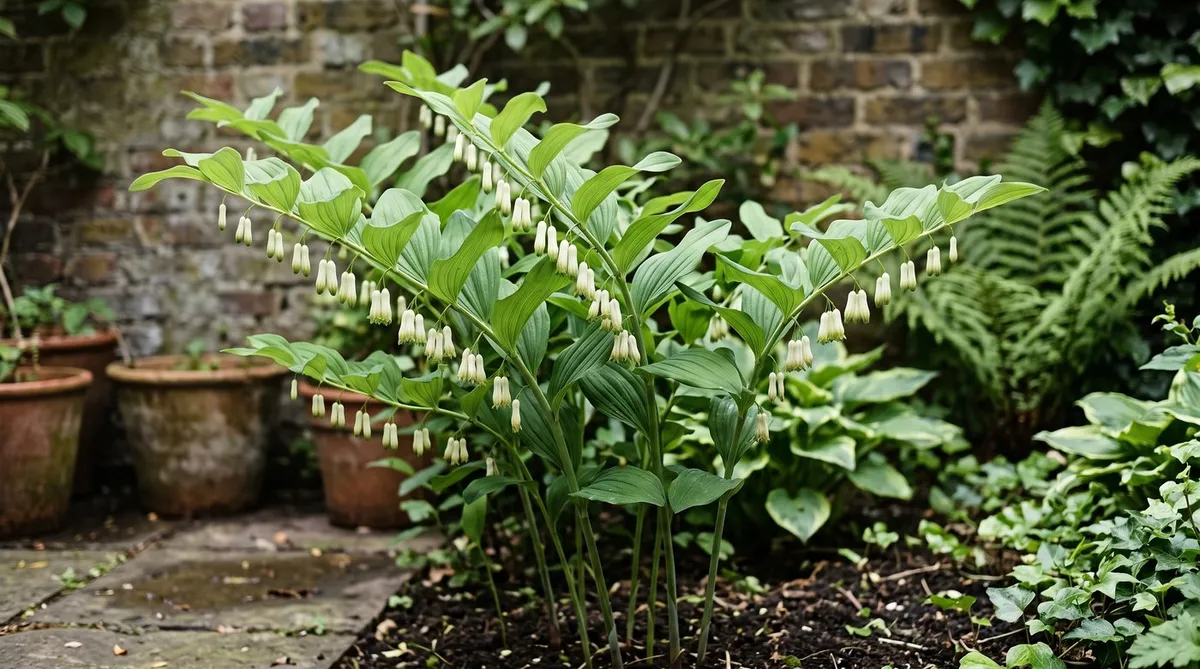
Solomon’s seal (Polygonatum) grows from a thick, knobbly rhizome, an underground stem that runs sideways just below the surface. Each spring it sends up unbranched stems that arch outwards. The oval leaves sit alternately along the stem, with veins running from end to end.
The flowers hang underneath the arch. Each is a narrow white tube with a green tip, in small clusters from the leaf joints. They appear in May and June. Afterwards the plant sets blue-black berries, which are poisonous.
The common garden plant is Polygonatum x hybridum, which grows to about 90cm-1.2m. In autumn the leaves turn butter-yellow before the stems die down, leaving nothing above ground until spring.
The rhizome is marked with round scars where old stems grew, which are said to have given the plant its name.
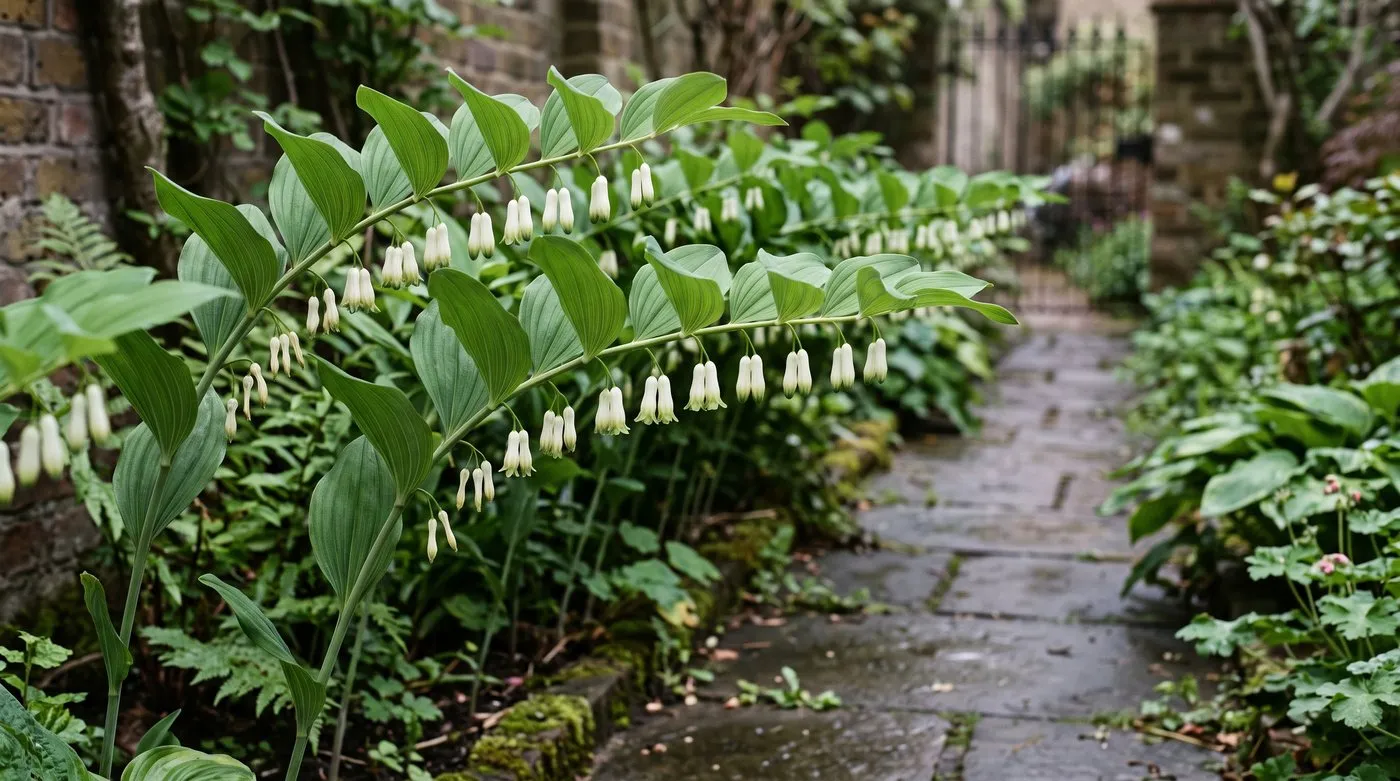
The flowers hang beneath the arching stems, so a path edge is the perfect spot to see them.
Which Solomon’s seal should you grow?
Four kinds turn up most in UK gardens. They differ mainly in height and how well they cope with dry soil.
| Kind | Height | Dry shade | Best for |
|---|---|---|---|
| P. odoratum ‘Variegatum’ | About 60cm | Good | Small gardens, dry shade, brightening dark corners |
| Polygonatum x hybridum | 90cm-1.2m | Good once established | A generous backbone plant in shade |
| P. multiflorum | About 90cm | Moderate | Woodland edges and natural-style planting |
| P. verticillatum | 60-90cm | Poor, needs damp soil | Damp gardens; leaves in whorls |
P. verticillatum, the whorled Solomon’s seal, has leaves in rings around the stem. It’s lovely, but it needs damp soil and struggles in dry shade. P. x hybridum is the toughest and most generous, but it spreads, so give it room or it will flop over a path.
How to plant Solomon’s seal rhizomes
The key is to lay the rhizome flat, not stand it on end. Measure the depth to the top of the rhizome.
- Plant between October and March, while the plant is dormant. Pot-grown plants can go in whenever the soil isn’t frozen or waterlogged.
- Dig a shallow trench rather than a deep hole.
- Mix in some leaf mould or garden compost. No fertiliser is needed.
- Lay the rhizome flat, with the fat, pointed buds facing upwards.
- Cover with about 5cm of soil. Deeper planting slows the first year’s shoots.
- Space about 30cm apart for P. x hybridum, a little closer for the smaller kinds.
- Mulch with leaf mould and water in well.
Gardener’s tip: Plant Solomon’s seal where you’ll walk past it. The flowers hang under the arch, so from a distance you only see leaves. A path edge, a doorway or the top of a low wall shows them off.

Lay the rhizomes flat with the buds pointing up, then cover with about 5cm of soil.
Solomon’s seal sawfly: how to stop it
Solomon’s seal sawfly is the reason many people give up on this plant. It only feeds on Solomon’s seal, it’s common in England and Wales, and it works fast. Knowing when it strikes is the whole battle.
- Late spring: small black adult sawflies lay eggs in the stems. They do no damage themselves.
- Early summer: grey larvae with dark heads hatch and feed in groups under the leaves. At first they are tiny and easy to miss.
- June into July: the larvae grow quickly and strip the leaves down to the veins.
- Midsummer: fully fed larvae drop into the soil and stay there until next year. Damage stops. There is one generation a year.
The big mistake is waiting until the plant looks stripped. By then most larvae have finished feeding, and there’s nothing left to save.
The fix is simple. From late May into early July, check the leaf undersides every few days. Lift the arching stems gently and look underneath. Rub off any larvae with a gloved hand or pick them into a pot. Caught early, when they are small, the damage stays slight.
Sawflies fly in from other gardens, so expect to repeat the checks every year. The RHS page on Solomon’s seal sawfly has pictures of the larvae. If you also grow soft fruit, the guide to gooseberry sawfly covers a related pest.
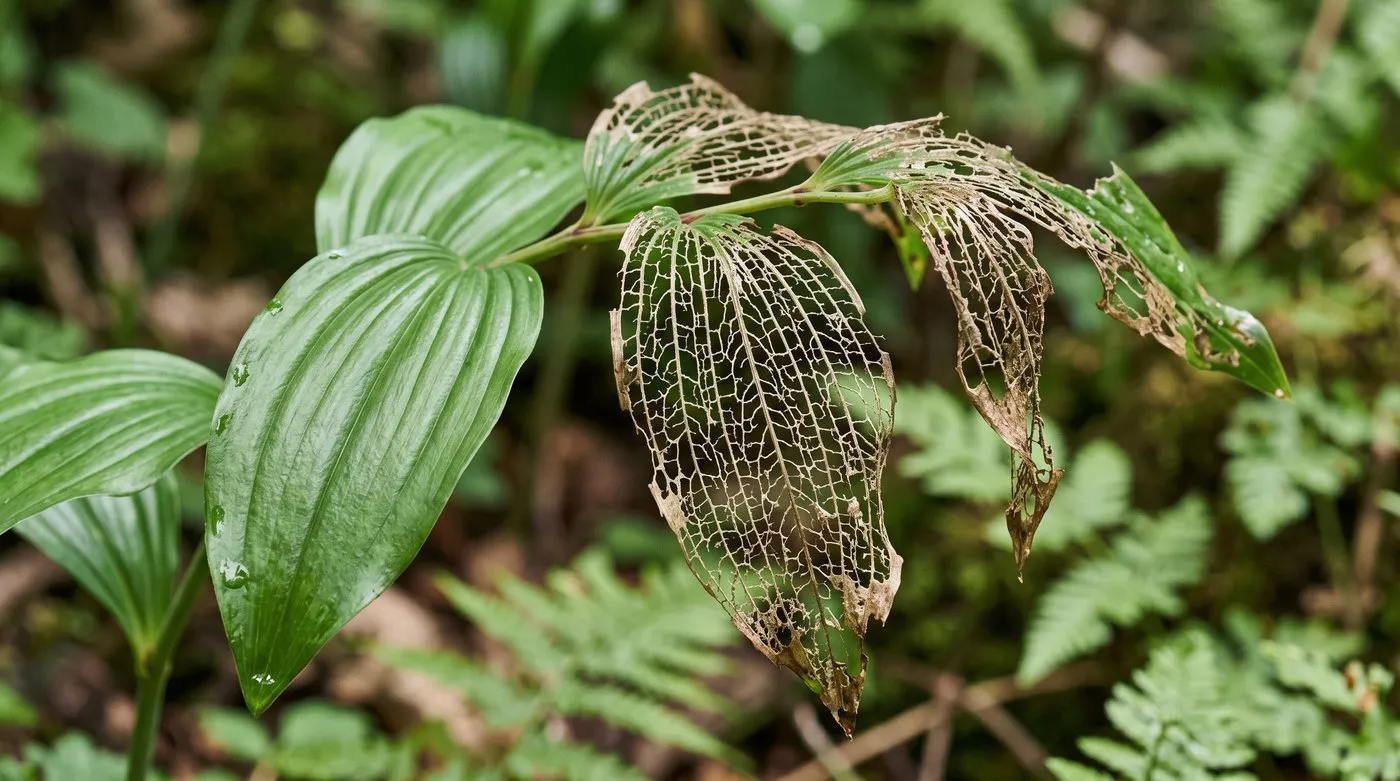
This lacy skeleton is classic sawfly damage. Check under the leaves early so it never gets this far.

Tilt the stem up and look underneath. That’s where the larvae feed before any damage shows from above.
Growing Solomon’s seal in dry shade under trees
Dry shade under a big tree is one of the hardest spots in any garden. Solomon’s seal is one of the plants that copes, with two conditions.
First, choose the right kind. P. odoratum ‘Variegatum’ and P. x hybridum both hold up. P. verticillatum doesn’t.
Second, water for the first two summers. A new rhizome can’t reach far. Give it a good soak once a week in dry spells from spring to late summer. After that, established plants usually look after themselves.
Expect shorter stems and fewer flowers than in a damp border. It’s still a fair trade for filling ground where little else will grow. Pair it with hardy ferns and corydalis for a woodland look. The guide to the best plants for dry shade has more partners.
Warning: The blue-black berries and the rhizomes are poisonous if eaten. Berries ripen in late summer at a height small children can reach. If you have toddlers or a dog that chews plants, cut off the berrying stems after flowering.
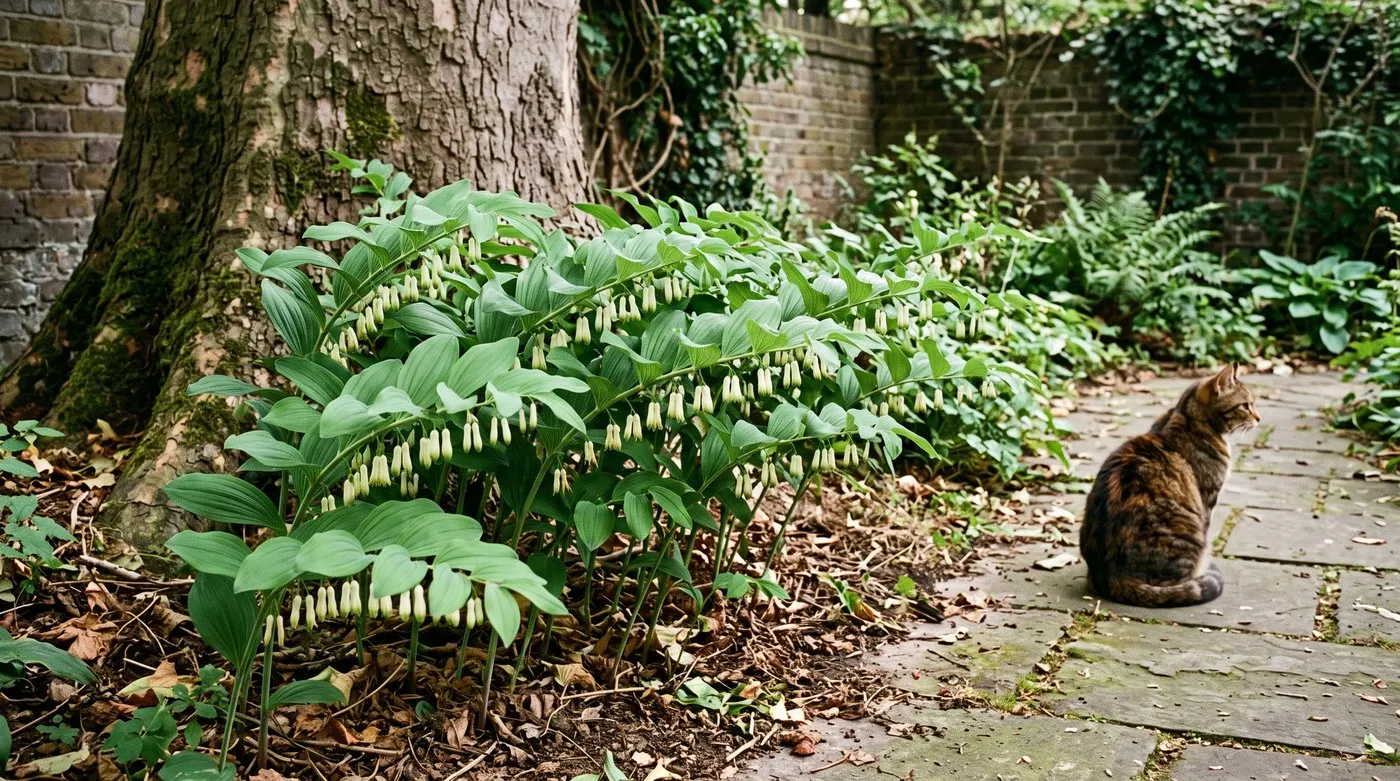
Solomon’s seal filling dry shade at the foot of a tree. Stems are a little shorter here, but the clump still looks great.
Dividing and propagating Solomon’s seal
Division is the easiest way to make more plants. Seed is slow and takes several years to reach flowering size.
Divide between October and March, while the plant is dormant. Lift the clump with a fork, starting well outside it so you don’t slice through the rhizomes. Brush off the soil so you can see the buds.
Cut the rhizomes into pieces with a clean knife, each with several plump buds. Replant straight away about 5cm deep and 30cm apart, then mulch. Don’t leave cut pieces to dry out in the wind. Divisions usually flower the next spring, though they take a couple of years to bulk up.
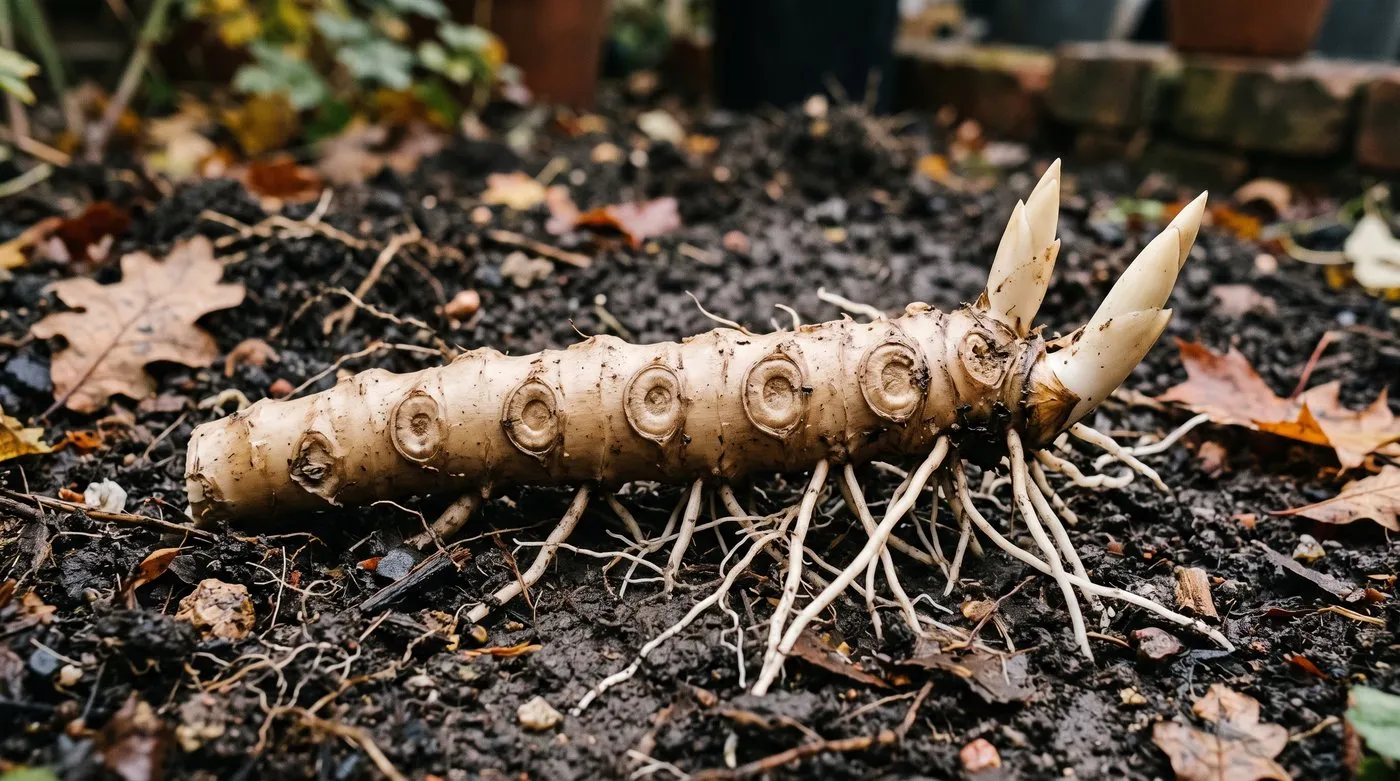
The round scars mark old stems, and the fat, pointed buds show which way is up.
Month-by-month Solomon’s seal calendar
| Month | What to do |
|---|---|
| January to February | Plant or divide rhizomes if the soil isn’t frozen. Top up leaf mould mulch |
| March | Clear old stems. Protect the crown from slugs before shoots appear |
| April | Shoots appear. Watch for slugs on the soft new spears |
| May | Flowering begins. Start checking leaf undersides late in the month |
| June | Keep checking every few days. Rub off sawfly larvae |
| July | Damage stops as larvae drop. Water plants in dry shade in dry spells |
| August to September | Berries ripen. Cut them off if children or pets use the garden |
| October | Leaves turn yellow and die down. Good time to divide |
| November to December | Mulch with leaf mould over the dormant rhizomes |
Common Solomon’s seal mistakes
- Waiting until July to look for sawfly. By then it’s too late. Check from late May.
- Planting rhizomes upright or too deep. Lay them flat about 5cm down.
- Choosing whorled Solomon’s seal for dry shade. It needs damp soil. Pick ‘Variegatum’ or P. x hybridum instead.
- Planting it where you only see it from afar. The flowers hang under the stems. Put it by a path.
- Forgetting slugs in spring. They eat the soft new shoots. The guide to getting rid of slugs covers protecting young growth.
Frequently asked questions
How deep do you plant Solomon’s seal rhizomes?
Lay them flat about 5cm deep with the buds facing upwards. The rhizomes grow sideways, so measure the depth to the top of the rhizome. Planting much deeper slows the shoots down in the first year.
Will Solomon’s seal grow in dry shade?
Yes, some kinds cope well once established. Polygonatum odoratum ‘Variegatum’ and the common Polygonatum x hybridum both manage dry shade. Expect shorter stems, and water regularly for the first two summers.
What is eating my Solomon’s seal leaves?
Almost certainly Solomon’s seal sawfly larvae. The grey, caterpillar-like larvae feed in groups under the leaves in early summer. They can strip a plant to bare stems quickly. Slugs cause the other common damage, but they attack young shoots in spring.
Does Solomon’s seal sawfly kill the plant?
No, the damage looks bad but is rarely fatal. The plant has usually flowered before the larvae get going. Stripped clumps normally come back the next spring, though years of heavy damage can weaken them.
When should you divide Solomon’s seal?
Divide it between October and March while it is dormant. Lift the rhizomes, cut them into pieces with several plump buds each, and replant about 5cm deep. Divisions usually flower the next spring, though more modestly at first.
Is Solomon’s seal poisonous?
Yes, the berries and rhizomes are poisonous if eaten. The blue-black berries ripen in late summer at a height where small children can reach them. Cut off berrying stems if children or pets use the garden.
Which Solomon’s seal is best for a small shady garden?
Polygonatum odoratum ‘Variegatum’ is a good choice. It grows to about 60cm, has cream-edged leaves and spreads slowly, so it won’t swamp a small bed. It also copes well with dry shade under trees.
Now you can keep Solomon’s seal in leaf all summer, build the rest of the shade border with the guide to growing hostas, or find more ideas in the plants hub.
Our team produces practical UK gardening guidance from source research, contributor records and established horticultural practice. Editorial standards are overseen by Matt W.