Key takeaways
- Winter aconite flowers from late January to February, just 5-10cm tall
- Plant clumps in the green in February or March; dry autumn tubers often fail
- It likes humus-rich soil under deciduous trees or shrubs, moist in spring and drier in summer
- Leave the leaves to die down naturally and don't dig or mow over colonies
- Left alone, it self-seeds into a golden carpet over several years
- All parts are poisonous, so wear gloves and keep it away from pets that dig
Winter aconite is often the very first flower of the year. In January, small yellow cups push up through bare soil, each sitting in a frilly green ruff just a few centimetres high. On a sunny morning, a colony under a bare tree looks like spilt sunshine.
It has a reputation for being tricky, but almost all the trouble comes from one thing: dry tubers. Plant it in the green and it settles in happily, then seeds itself about for years. This guide covers how to plant it, where it grows best, how to build a carpet and how to stay safe with a poisonous plant.
What is winter aconite?
Winter aconite (Eranthis hyemalis) is a low, tuberous perennial in the buttercup family. It comes from woods and scrub in southern Europe and has grown wild in parts of Britain for centuries.
Each small, knobbly tuber sends up a stem 5-10cm tall. The flower is a shallow, buttercup-yellow cup about 3cm across. A ruff of deeply cut green leaves sits just beneath it.
After flowering, the leaves keep feeding the tuber for a few weeks. By late spring the whole plant dies back and disappears until next winter.
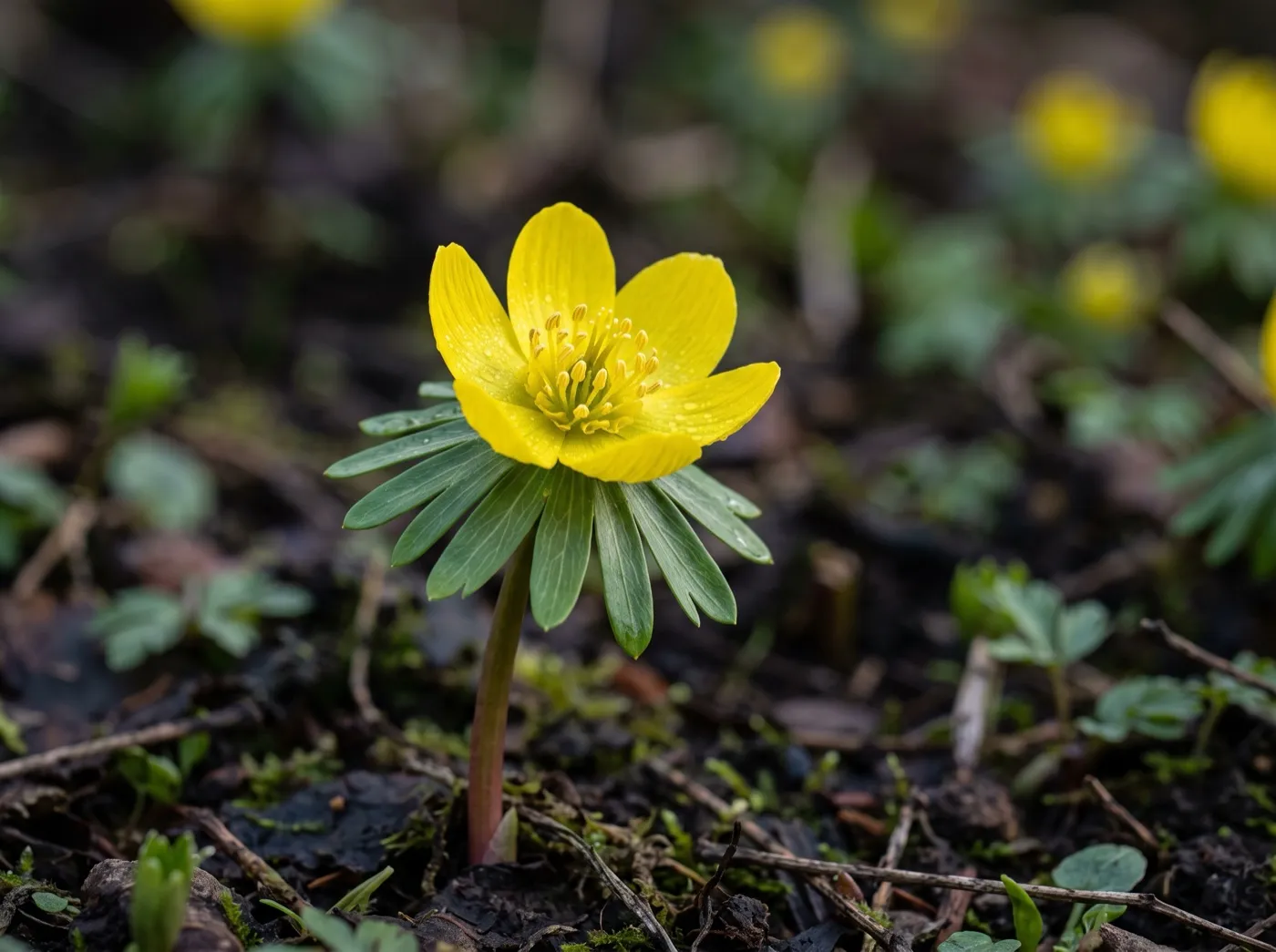
That green ruff under each yellow cup makes winter aconite easy to recognise.
Why dry winter aconite tubers often fail
Dry tubers sold in autumn often fail because they’ve dried out in storage. They have thin skins and hold little moisture. A shrivelled tuber may already be dead, so you plant fifty and only a few appear.
If you do buy dry tubers:
- Buy them as early in autumn as you can.
- Choose plump, heavy ones and skip any that feel light or papery.
- Soak them overnight in tepid water.
- Plant them the same day, about 5cm deep and 5cm apart.
Even then, results can be patchy. Planting in the green is the reliable route.
How to plant winter aconite in the green
Plant clumps in the green in February or March, as soon as they arrive, while they’re still in leaf. Keep the roots damp and shaded if you can’t plant straight away.
- Dig a hole deep enough to plant at the same depth as before. Look for the pale band on the stems: that’s the old soil level, usually 5-8cm deep.
- Plant small clumps rather than splitting them into single plants.
- Space clumps 10-15cm apart.
- Firm the soil gently and water if the ground is dry.
- Leave the leaves alone until they yellow and die back.
Mark the spots with short canes so you don’t dig into them by mistake in summer. The guide to planting bulbs in the green explains the method in more detail.

Plant clumps at the same depth they grew before. The pale band on the stems shows you where.
Where to plant winter aconite
Choose a spot under deciduous trees or shrubs. It needs winter light reaching the ground while the branches are bare, then shade and leaf litter in summer.
The soil should be humus-rich and stay moist in spring while the plant is in leaf. It can dry out a little in summer when the plant is dormant. Winter aconite does especially well on chalky or limy soil.
It won’t thrive in:
- Dense evergreen shade, such as under conifers, where the ground stays dark all winter.
- Soil that bakes dry in spring, which starves the tuber while it’s growing.
Plant it where you’ll see it from the house. It flowers when you’re least likely to wander down the garden.
How to naturalise winter aconite
To build a carpet, plant it under trees or in rough grass, then leave it alone. A few clumps in the green can spread into a wide drift over several years.
Under trees is easiest. Plant in loose, irregular groups. Leave fallen leaves where they land, as they act as a free mulch.
In grass, the leaves need time to die down. Don’t mow until the foliage has yellowed, usually by late April or May. If you need to mow your lawn earlier, keep winter aconite in borders and under trees instead.
The plant spreads by self-seeding. Seed drops in late spring and germinates the next winter. Seedlings take a few years to reach flowering size, so a colony builds slowly, then speeds up. Digging and tidying are the only things that stop it.
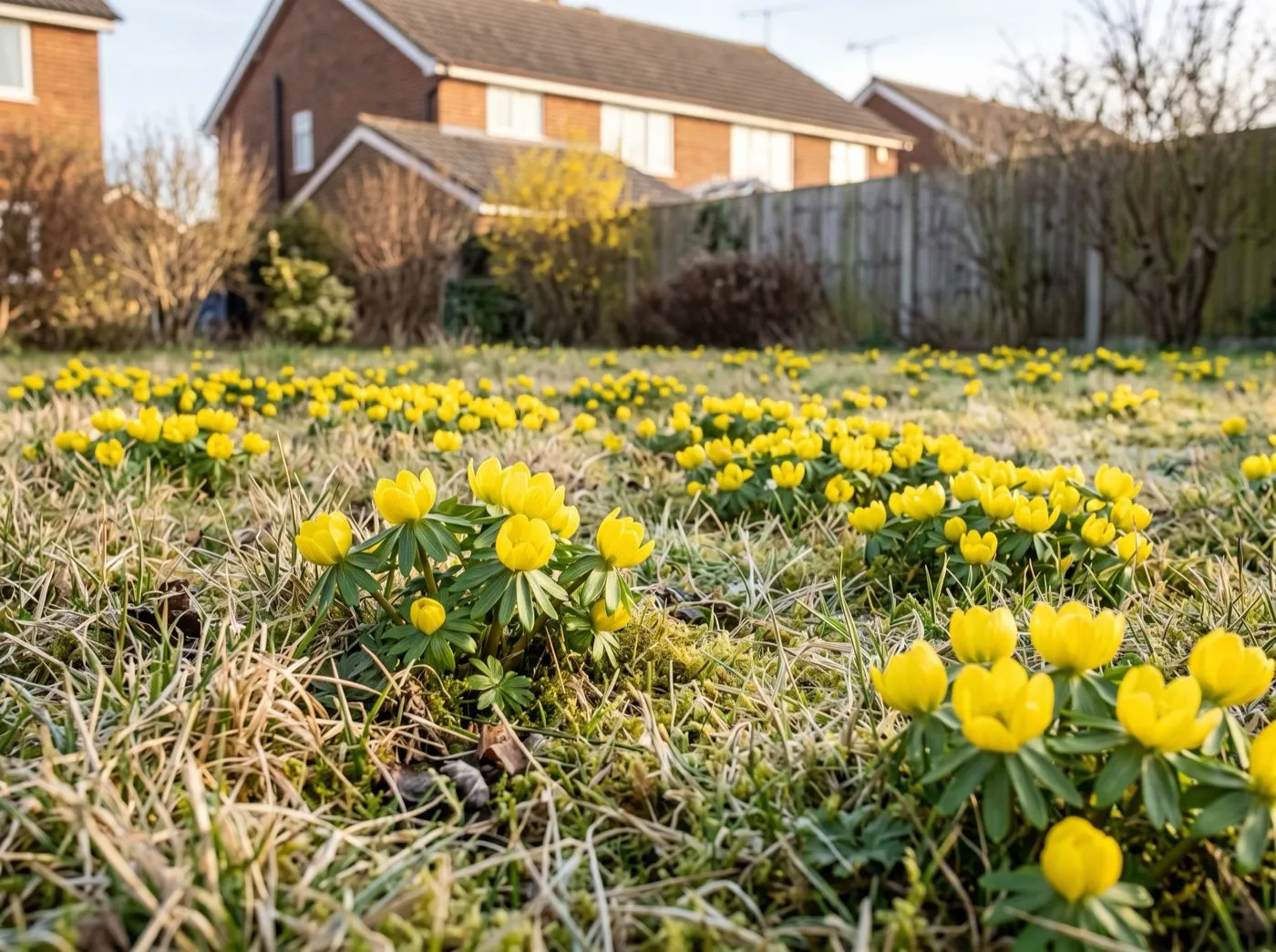
In a lawn, hold off the first mow until the leaves have died back in late spring.
Winter aconite varieties
Most winter aconite sold is the plain species, Eranthis hyemalis, which is the best choice for naturalising.
- Cilicica Group has slightly deeper gold flowers and bronze-tinted young leaves. It tends to flower a little later.
- ‘Guinea Gold’ is a hybrid with larger, deep golden flowers and bronze-tinted ruffs. It sets little or no seed, so it clumps up slowly instead of spreading. It’s a good pick for a border where you don’t want a carpet.
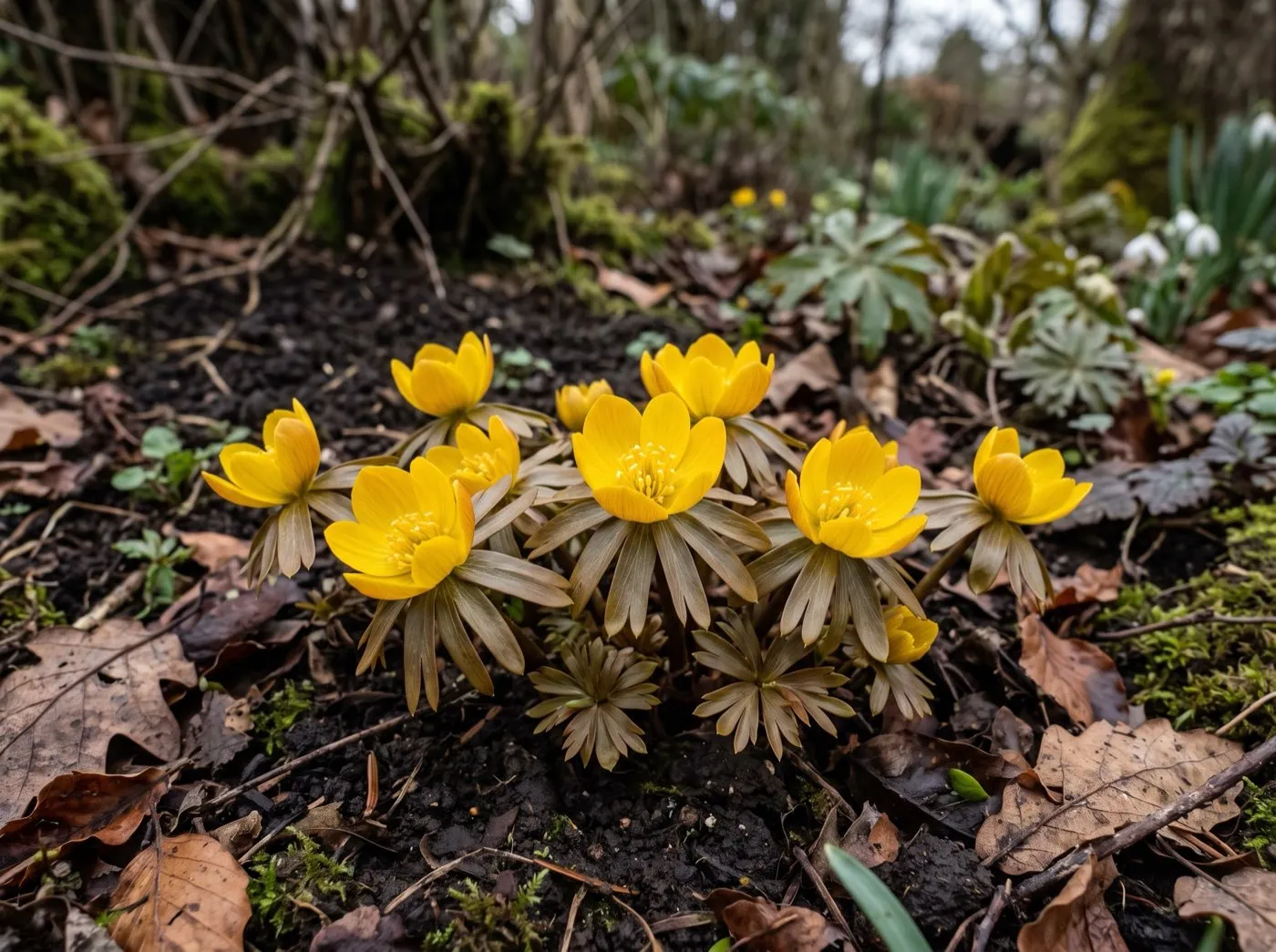
‘Guinea Gold’ has bigger flowers and stays where you put it, which suits a tidy border.
| Plant | Flowers | Height | Best planted |
|---|---|---|---|
| Winter aconite | Late January-February | 5-10cm | In the green, February-March |
| Snowdrop | January-March | 10-15cm | In the green, February-March |
| Early crocus | February-March | 8-12cm | Dry corms in autumn |
Is winter aconite poisonous?
Yes, all parts are poisonous if eaten, and the sap can irritate skin. Wear gloves when planting or dividing tubers, and wash your hands afterwards.
Keep tubers out of reach of children and pets. Avoid planting it where a dog likes to dig, or where small children play unsupervised.
Is winter aconite good for bees?
Yes. It flowers when there’s very little else around, so it gives early pollen and nectar to the first insects of the year. On mild, sunny days, bumblebee queens out of hibernation visit the open flowers. A drift of winter aconite is one of the simplest ways to help them.
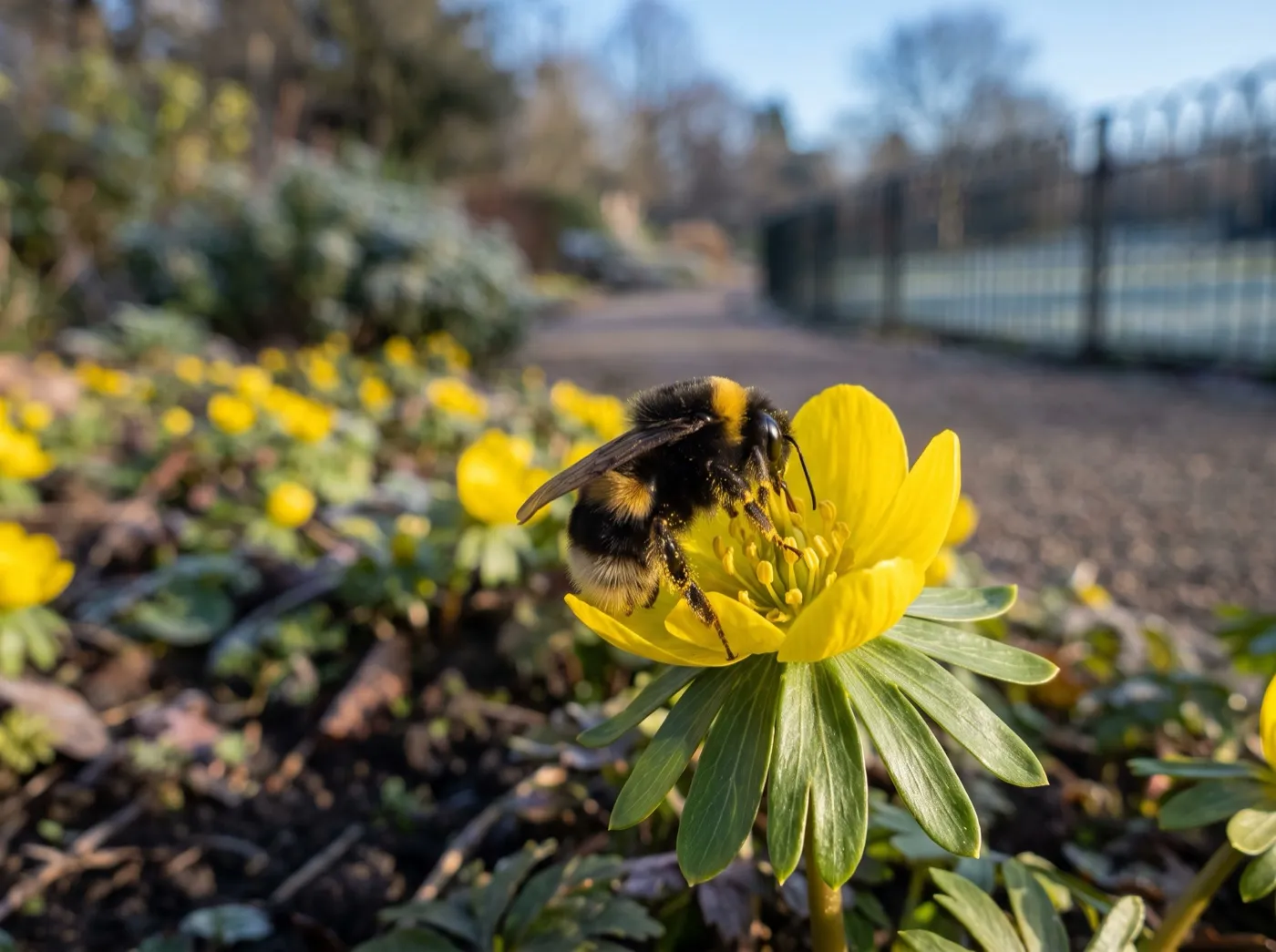
On a mild winter day, early bumblebees head straight for the open yellow cups.
What to plant with winter aconite
Winter aconite works as a low carpet under taller woodland plants that like the same undisturbed, shady ground.
- Snowdrops are the classic partner. Plant them mixed together for white bells among yellow cups. The guide to growing snowdrops uses the same in-the-green method.
- Early crocus picks up as the aconites peak.
- Hellebores flower at the same time and add height. See the guide to growing hellebores.
- Hardy cyclamen weaves through at ground level with marbled leaves. The cyclamen growing guide covers the hardy types.
- Erythronium follows in spring in the same dappled shade. Read how to grow dog’s tooth violets for more.
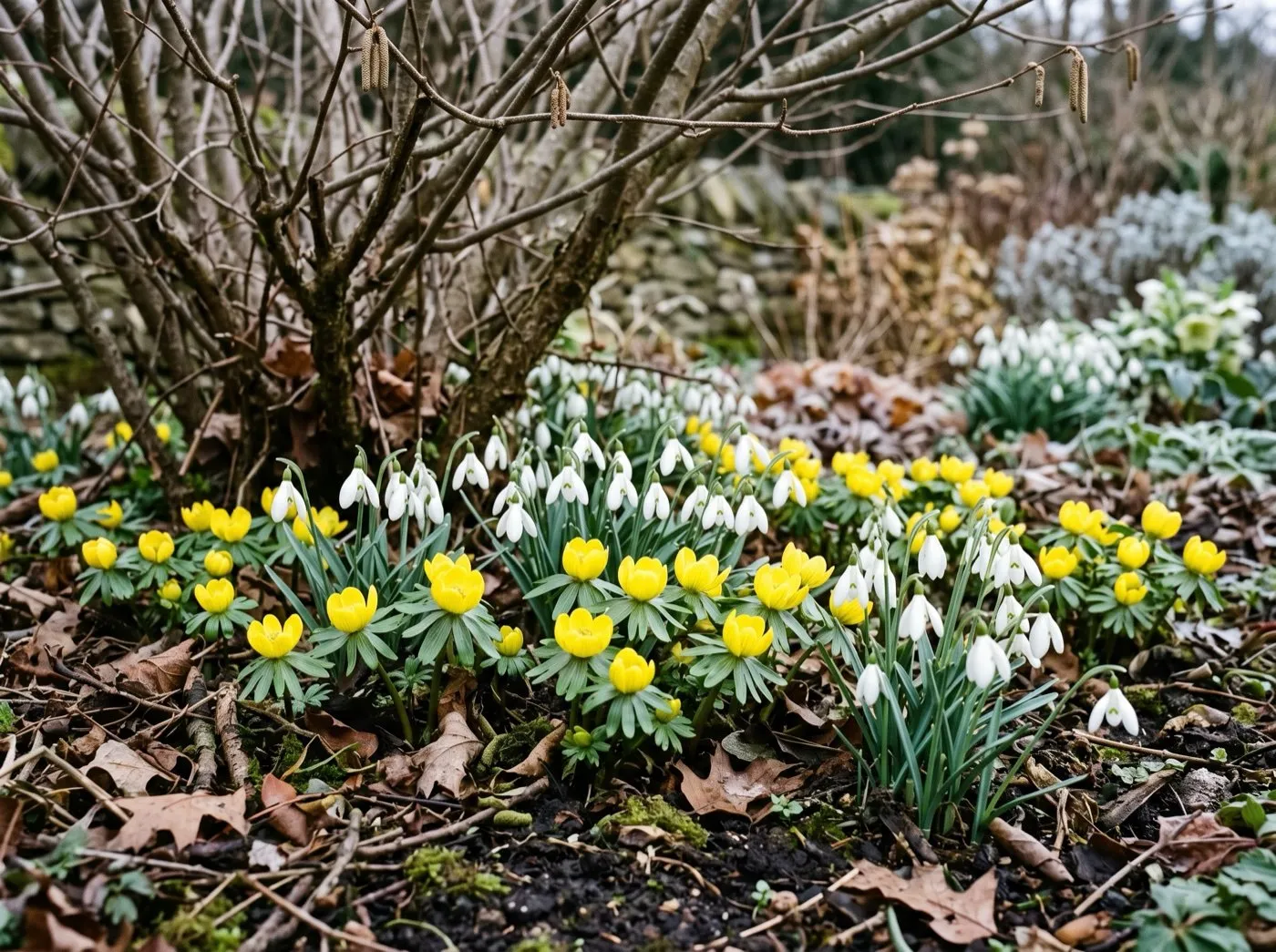
Yellow and white together: winter aconite and snowdrops make the classic January pairing.
How to divide and spread winter aconite
The easiest way to spread winter aconite is to let it self-seed. To speed things up, collect ripe seed in late spring and scatter it straight away on bare, shady soil. Fresh seed comes up far better than stored seed.
To divide, lift a clump in the green just after flowering. Gently tease it into small groups of two or three tubers. Replant straight away at the same depth, about 10cm apart, and keep the roots damp while you work.
Winter aconite calendar
| Month | What to do |
|---|---|
| January | First flowers. Note where you’d like more |
| February | Peak flowering. Buy and plant in the green |
| March | Divide crowded clumps while still in leaf |
| April | Leaves yellow. Don’t mow or tidy them |
| May | Plants die back. Sow fresh seed if you want to spread it |
| June-August | Dormant. Mow naturalised grass. Avoid digging colonies |
| September-October | Dry tubers on sale. Soak and plant at once if you buy them |
| November-December | Leave leaf litter as mulch. First shoots may appear |
Common mistakes with winter aconite
- Relying on dry tubers. Many fail. Plant in the green instead.
- Cutting or mowing the leaves early. They feed next year’s flowers. Wait until they’ve died back.
- Planting in dense evergreen shade. It needs winter light to flower.
- Digging over colonies in summer. You can’t see them, so mark them with canes.
- Splitting clumps into single tubers. Small groups settle in better.
Frequently asked questions
Why did my winter aconite tubers not come up?
Most likely they dried out before you planted them. Winter aconite tubers have thin skins and shrivel in storage, and a shrivelled tuber is often dead. Soaking overnight helps a little. Buying plants in the green in spring is far more reliable.
What does ‘in the green’ mean for winter aconite?
It means planting while the plant is still in leaf, just after flowering. The clumps arrive with roots and leaves attached and have never dried out, so they settle in much better. Snowdrops are sold the same way for the same reason.
Where is the best place to plant winter aconite?
Under deciduous trees or shrubs, in humus-rich soil. It needs winter light reaching the ground, then shade in summer. The soil should stay moist in spring and can dry a little in summer. It does well on chalky or limy soil.
Is winter aconite poisonous?
Yes, all parts are poisonous if eaten. It is in the buttercup family, and the sap can irritate skin. Wear gloves when handling tubers. Avoid planting it where dogs dig or small children might pick and chew it.
Does winter aconite spread and come back every year?
Yes, it returns each year and spreads by seed. Seedlings appear around the parent plants and take a few years to flower. Leave the leaves to die down and avoid digging, and a small planting slowly becomes a carpet.
When does winter aconite flower in the UK?
From late January into February, sometimes earlier in mild spells. The flowers open in sunshine and close in dull, cold weather. Flowering is usually over by March, when the leaves feed the tuber for next year.
What grows well with winter aconite?
Snowdrops are the classic partner. They flower at the same time and like the same conditions. Early crocus, hellebores and hardy cyclamen also suit the same shady, undisturbed ground under deciduous trees.
Want more colour in the coldest months? The guide to the best winter flowering plants has plenty of ideas, and there’s more to explore on the plants hub.
Our team produces practical UK gardening guidance from source research, contributor records and established horticultural practice. Editorial standards are overseen by Matt W.