Key takeaways
- Snowflakes have six equal petals, each tipped green, and often several bells per stem. Snowdrops have three long and three short petals
- Spring snowflake is small and flowers in February and March. Summer snowflake is tall and flowers in April and May
- Leucojum are happy in damp, heavy soil and at pond edges, where snowdrops often struggle
- Plant dry bulbs 8-10cm deep in autumn, or move clumps in the green just after flowering
- Divide crowded clumps in the green every few years
- All parts are poisonous if eaten, so keep bulbs away from pets and children
Leucojum are snowflakes: white, nodding spring bulbs that look a lot like snowdrops but aren’t. Count the petals and you’ll see the difference straight away. Better still, snowflakes do something snowdrops can’t. They thrive in wet ground.
That makes them brilliant for the soggy corner, pond edge or heavy clay bed where other bulbs rot. This guide shows you how to tell the two apart, which snowflake to choose, and how to plant, naturalise and divide them.
How to tell a snowflake from a snowdrop
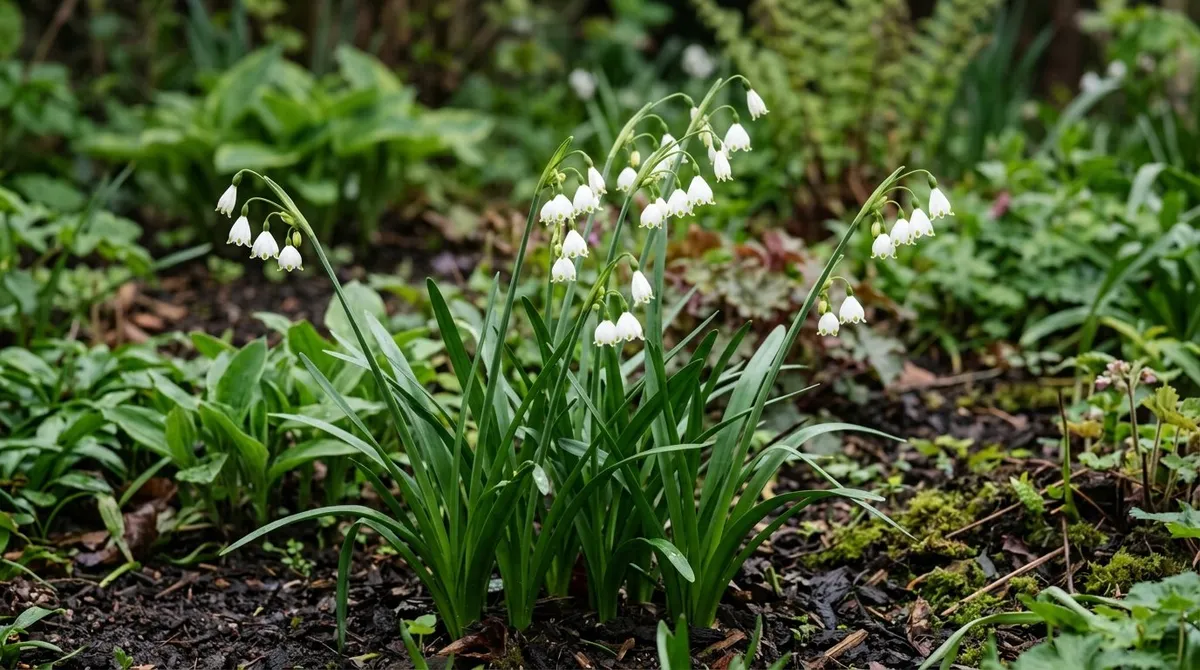
The quickest check is the petals. A leucojum (snowflake) bell has six equal petals, each with a little green spot at the tip. A snowdrop (Galanthus) has three long outer petals and three short inner ones marked with green.
There are other clues. Snowflakes often carry several bells on one stem, while snowdrops have just one. Snowflakes are taller, and they flower a little later, from February into May depending on the type. Snowdrops start in January.
| Feature | Leucojum (snowflake) | Galanthus (snowdrop) |
|---|---|---|
| Petals | Six equal, each tipped green | Three long outer, three short inner |
| Flowers per stem | One to several | One |
| Height | 15-20cm (spring) to 45-90cm (summer) | 10-15cm |
| Flowering | February to May, by type | January to March |
| Soil | Damp, even boggy | Moist but well drained |
For everything about the plant snowflakes are always compared to, see our guide to growing snowdrops.
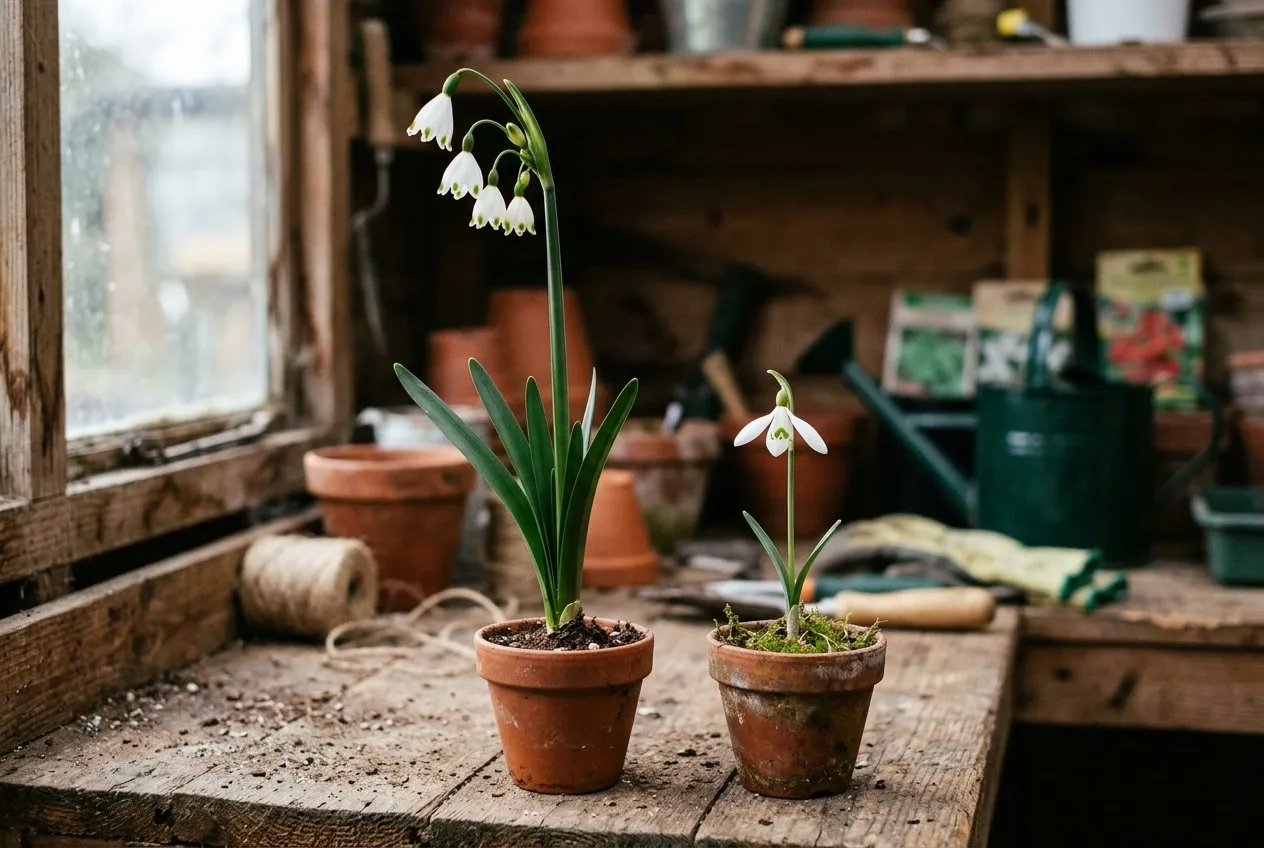
Snowflake on the left, snowdrop on the right. Several bells and six equal petals give the snowflake away.
Spring snowflake or summer snowflake?
Two snowflakes are widely grown in UK gardens, and they suit different spots.
Spring snowflake (Leucojum vernum) grows 15-20cm tall and flowers in February and March, often alongside the last snowdrops. Each stem usually carries one plump bell, sometimes two. It comes from damp European woodland, so it wants a cool, shady spot that never dries out. It’s the fussier of the two.
Summer snowflake (Leucojum aestivum) is the tall one people mistake for a giant snowdrop. It’s a UK native, sometimes called the Loddon lily after the river where it grows wild. It reaches 45-60cm, and the popular variety ‘Gravetye Giant’ grows to about 90cm. Several bells hang from each stem in April and May. It’s easy, vigorous and spreads well in damp borders, grass and pond edges.
| Feature | Spring snowflake | Summer snowflake |
|---|---|---|
| Height | 15-20cm | 45-90cm |
| Flowering | February to March | April to May |
| Bells per stem | One, sometimes two | Several |
| Best spot | Damp shade | Damp sun or part shade, grass, pond edge |
| Ease | Fussier | Easy, spreads freely |
For most gardens, start with summer snowflake ‘Gravetye Giant’. It holds an RHS Award of Garden Merit and settles in almost anywhere damp. Add spring snowflake only if you have cool, moist shade.
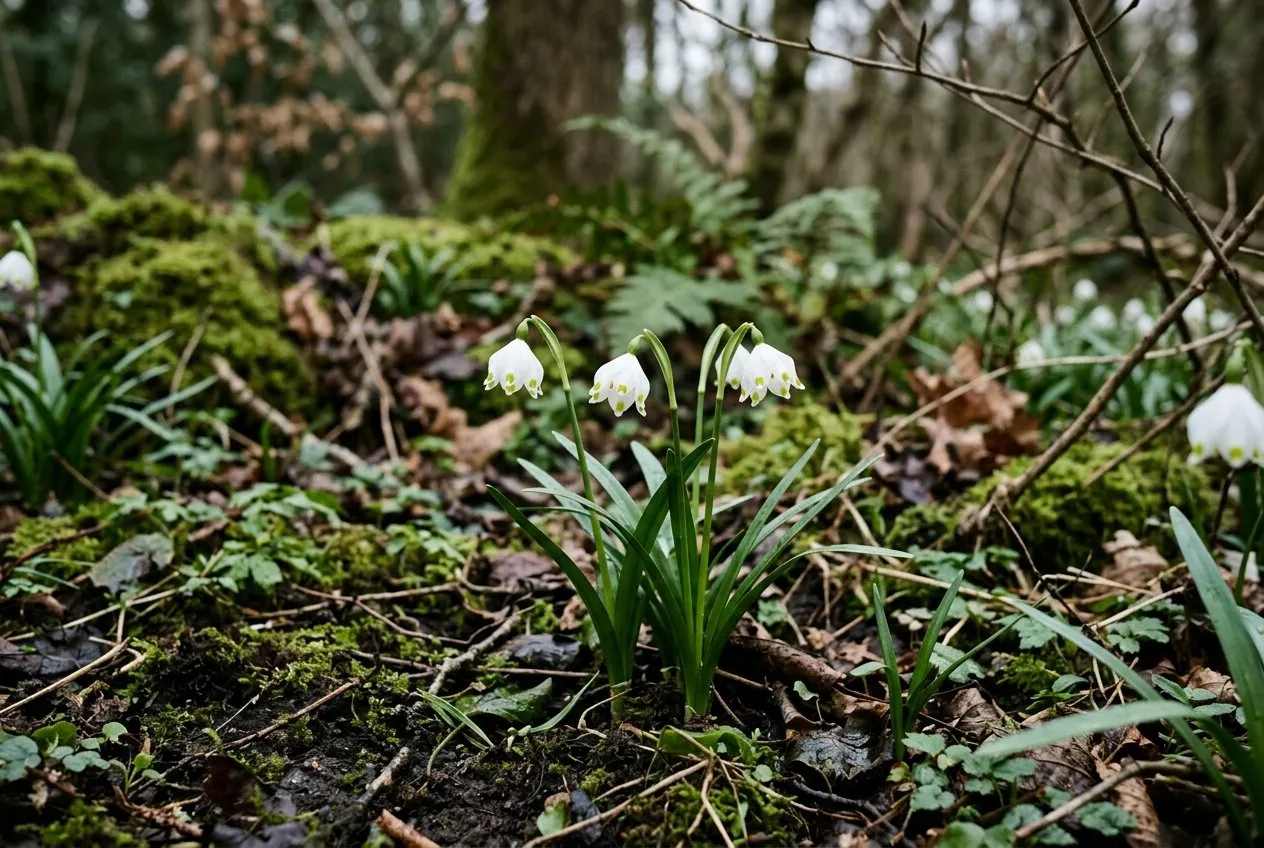
Spring snowflake in damp woodland shade in early March. Short stems carry one or two plump bells each.
Where to plant snowflakes: damp soil is a plus
Snowflakes are one of the few bulbs that grow better in damp soil than in dry. Most spring bulbs, like tulips and alliums, rot if their roots sit wet. Summer snowflake grows wild in wet meadows and riverbanks, so moisture is what it expects.
That makes it handy for the awkward wet spot every garden seems to have: a low corner, the ground by a downpipe, a heavy clay bed. Pair it with other plants from our guide to plants for wet, boggy soil and a nuisance patch becomes a feature.
Put spring snowflake in cool shade under deciduous shrubs or at a woodland edge. Put summer snowflake in an open damp border, at a pond edge, or in rough grass that stays moist.
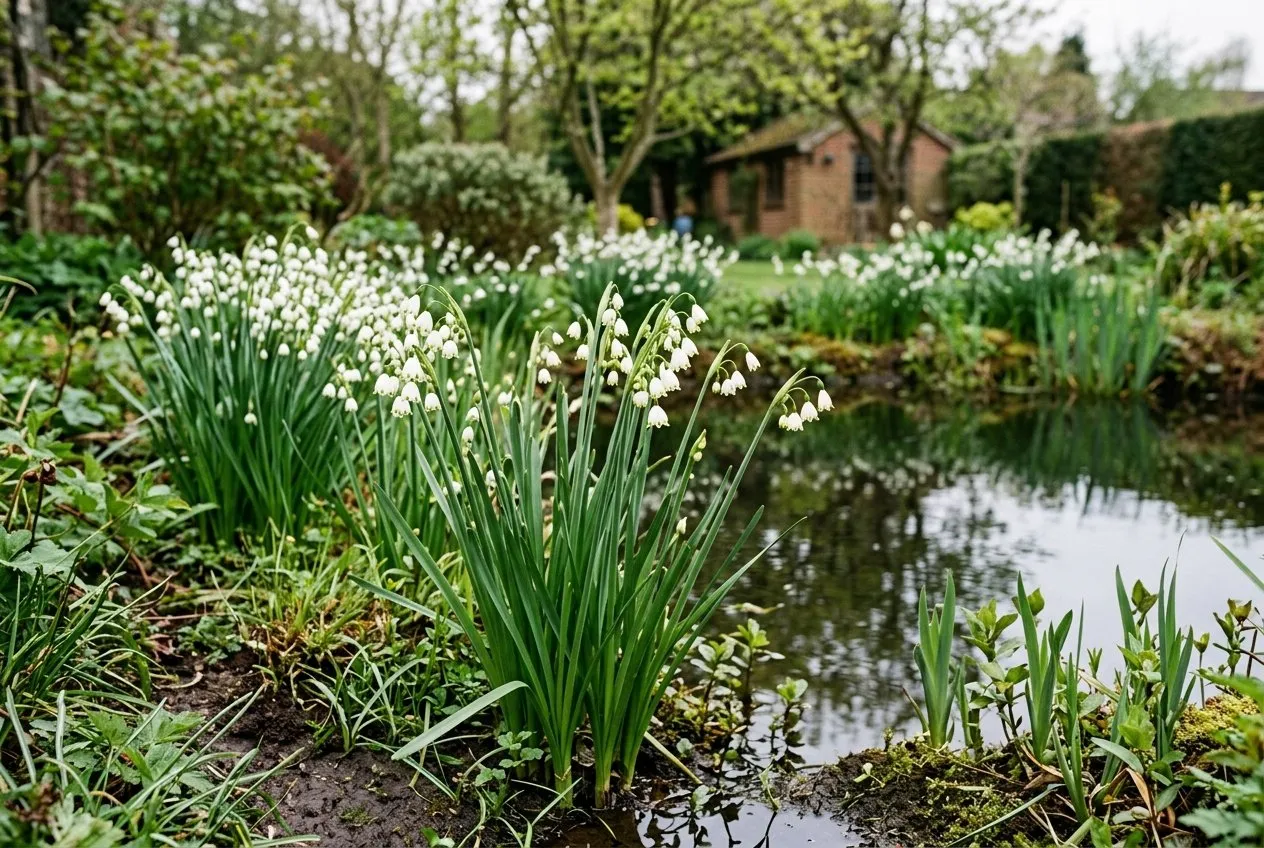
Summer snowflake at a pond edge, happy in ground that stays wet all winter.
How to plant leucojum bulbs
Plant dry bulbs in autumn, from September to November, about 8-10cm deep and 10-15cm apart. Set them pointed end up in moist soil with plenty of leaf mould or garden compost. Firm the soil and water in if it’s dry.
Like snowdrops, snowflake bulbs don’t like drying out. Dry bulbs in packets can be shrivelled and slow to settle, sometimes taking a year or two to flower well. Buy them early in autumn and pick plump, firm ones. Skip any that are soft, mouldy or badly shrunken.
Snowflake bulbs are poisonous if eaten, like daffodils. Keep bags of bulbs out of reach of dogs and children before planting.
Planting snowflakes in the green
In the green means moving plants while they’re still in leaf, just after flowering, instead of as dry bulbs. It’s the same trick used for snowdrops, and it suits snowflakes for the same reason.
Buy in-the-green plants from a specialist bulb nursery in spring. They arrive as small clumps with leaves and roots attached. Plant them the day they arrive if you can. Set each clump at the same depth it grew before (look for the pale part of the stem that was underground), firm gently and water in well. Keep the soil moist while the leaves die back. Our guide to planting bulbs in the green walks through the method step by step.
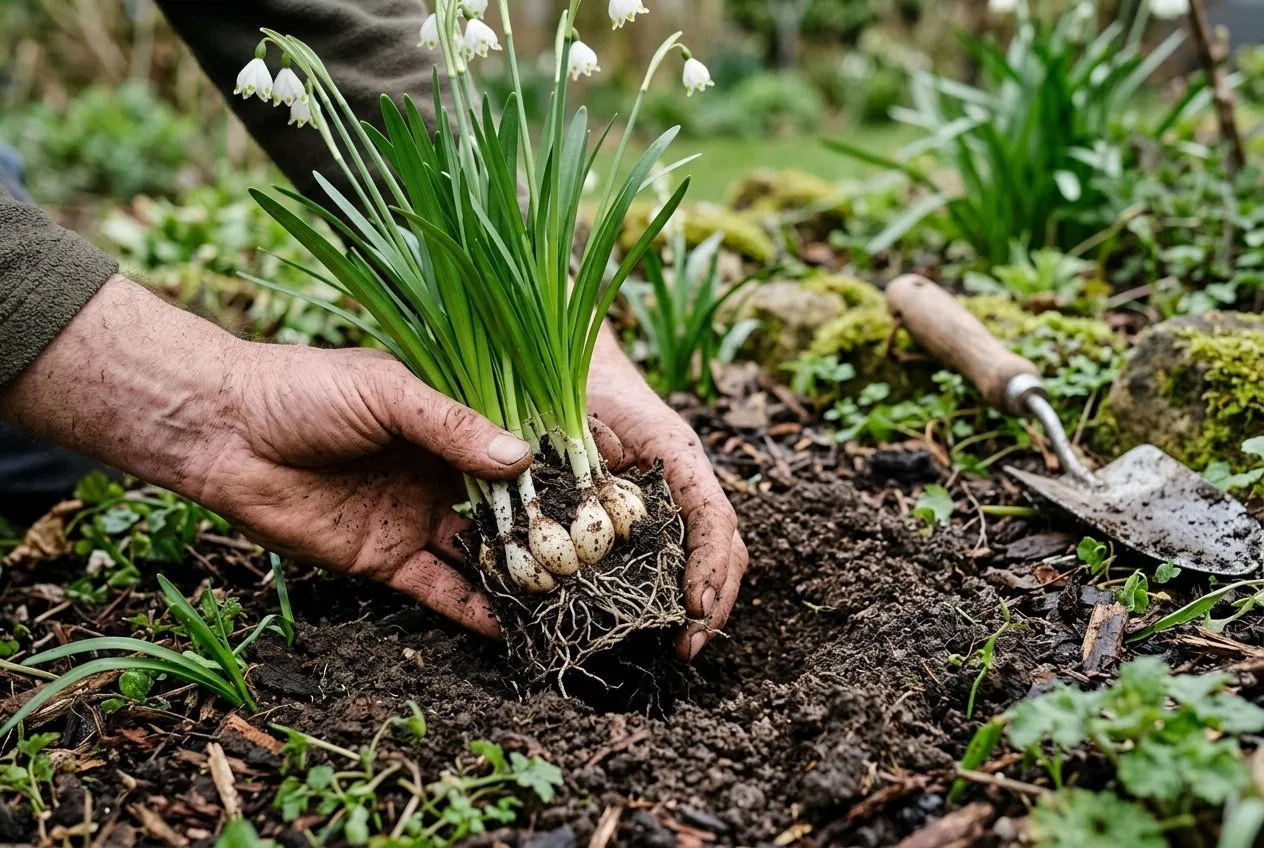
A clump lifted in the green, roots and leaves intact. Replant it at the same depth straight away.
How to naturalise snowflakes in grass
Summer snowflake spreads into bigger clumps over the years in damp grass and at water edges. Once it’s in the right spot, it largely looks after itself.
For a natural look, plant in loose drifts rather than rows. In grass, lift a flap of turf, set the clump or bulbs in the soil underneath and firm the turf back. Space groups unevenly so they look self-sown. Don’t mow until the snowflake leaves have yellowed, usually by late June, so the bulbs can feed up for next year. Our guide to naturalising bulbs in grass has more tips on planting and mowing.
Spring snowflake isn’t as happy in open grass. Keep it for damp shade under shrubs, where it spreads slowly into a small patch.
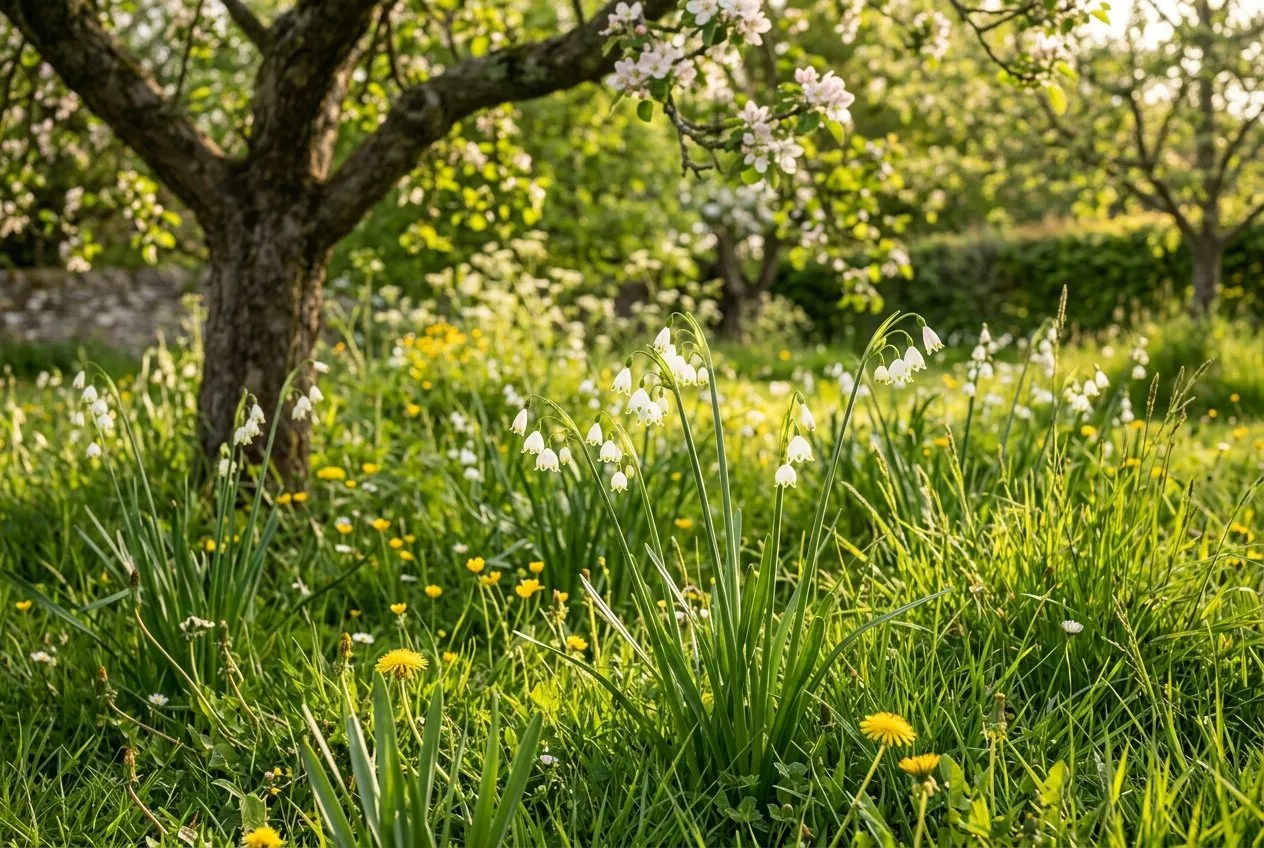
Summer snowflake in damp grass under a fruit tree. Leave the grass long until the leaves yellow in June.
How to divide snowflake clumps
Divide crowded clumps in the green, just after flowering, every few years. It keeps them flowering well and gives you free plants for elsewhere.
Wait until the flowers fade but the leaves are still green. That’s usually April for spring snowflake and May for summer snowflake. Lift the clump with a fork, keeping plenty of soil on the roots. Tease it apart by hand into groups of three to five bulbs. Replant straight away at the same depth and water in.
Don’t lift and store snowflakes dry over summer like tulips, as the bulbs shrivel. Let the leaves die down naturally after flowering. Our guide to spring bulb care after flowering covers the tidying and feeding.
Snowflakes for early bees
Snowflakes offer early nectar when bees have little else. Spring snowflake opens in February, and summer snowflake carries on into May. On mild days, queen bumblebees fresh out of hibernation visit the bells.
They’re a modest food source on their own, but every early flower helps. Combine them with crocus, hellebores and pulmonaria from our guide to early spring pollinator plants for a run of nectar.
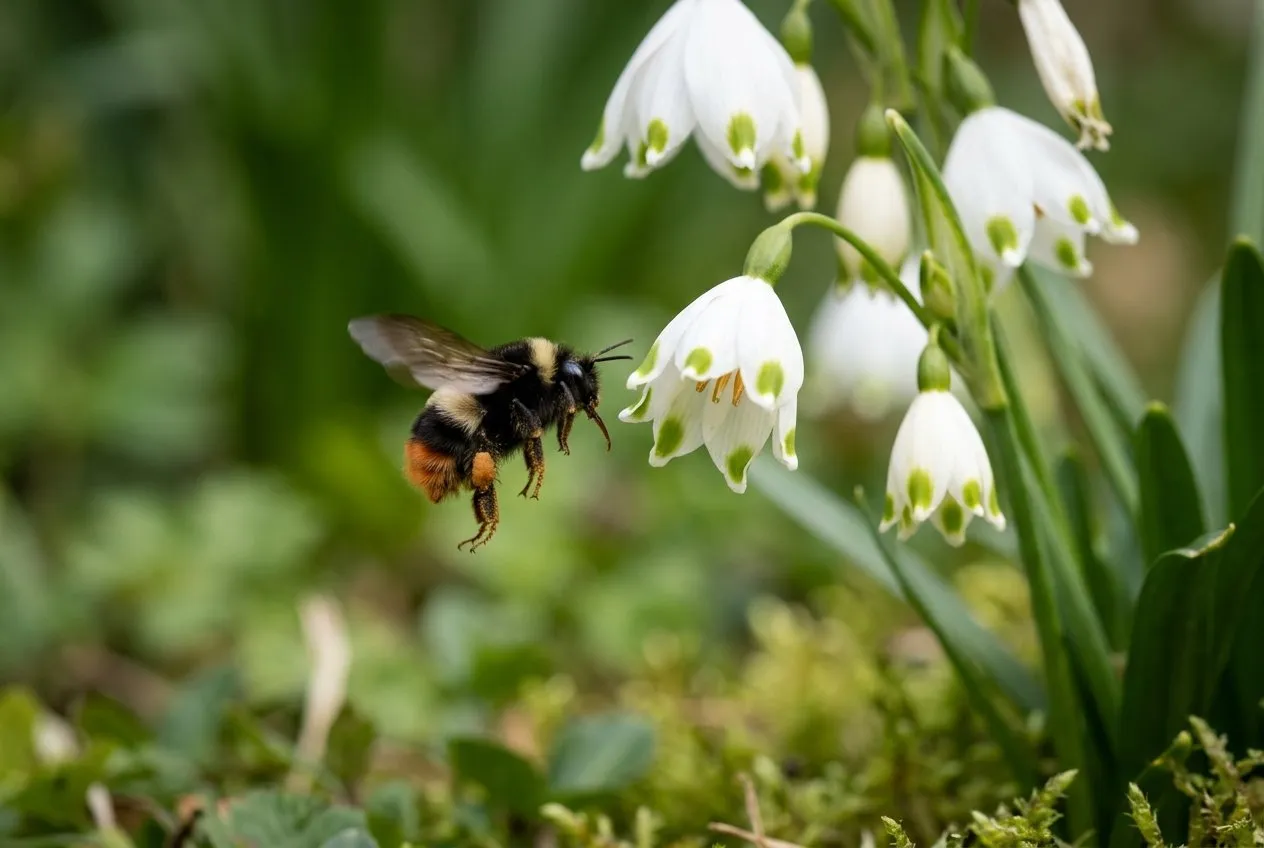
A bumblebee visiting a snowflake bell on a mild spring day.
Pests and problems
Snowflakes are close to trouble-free. Slugs, rabbits and deer mostly leave them alone, and wet soil doesn’t bother them.
The one pest to know is narcissus bulb fly. Its grubs can tunnel into bulbs of the daffodil family and hollow them out. A clump that flowered well one year then only throws thin leaves. If a clump fades for no clear reason, lift a bulb and check it. Bin soft, hollow bulbs rather than composting them. Firming the soil over the bulbs after the leaves die back makes it harder for the fly to get in.
Snowflake care calendar
| Month | What to do |
|---|---|
| January | Nothing needed. Spring snowflake buds may show in mild spells |
| February to March | Spring snowflake flowers. Summer snowflake leaves push up |
| April | Summer snowflake starts flowering. Divide spring snowflake in the green |
| May | Summer snowflake at its best. Divide crowded clumps after flowering |
| June | Leaves yellow and die back. Don’t mow until they’ve gone |
| July to August | Bulbs dormant. Don’t let damp spots dry out completely |
| September to November | Plant dry bulbs 8-10cm deep. Mulch clumps with leaf mould |
| December | Nothing needed |
Common mistakes with snowflakes
Planting in dry soil. Snowflakes want moisture. Spring snowflake especially fails if it bakes dry in summer. Save your driest spots for bulbs that like it.
Expecting quick results from shrivelled bulbs. Poor dry bulbs may sulk for a year or two. Buy plump bulbs early, or plant in the green.
Cutting leaves too soon. The bulb feeds through its leaves after flowering. Wait until they’ve yellowed before mowing or tidying.
Mixing up the two types. Spring snowflake wants cool shade, summer snowflake wants open, damp ground. Check which you’ve got before planting.
Storing bulbs dry over summer. Leave them in the ground all year and only lift them in the green to divide.
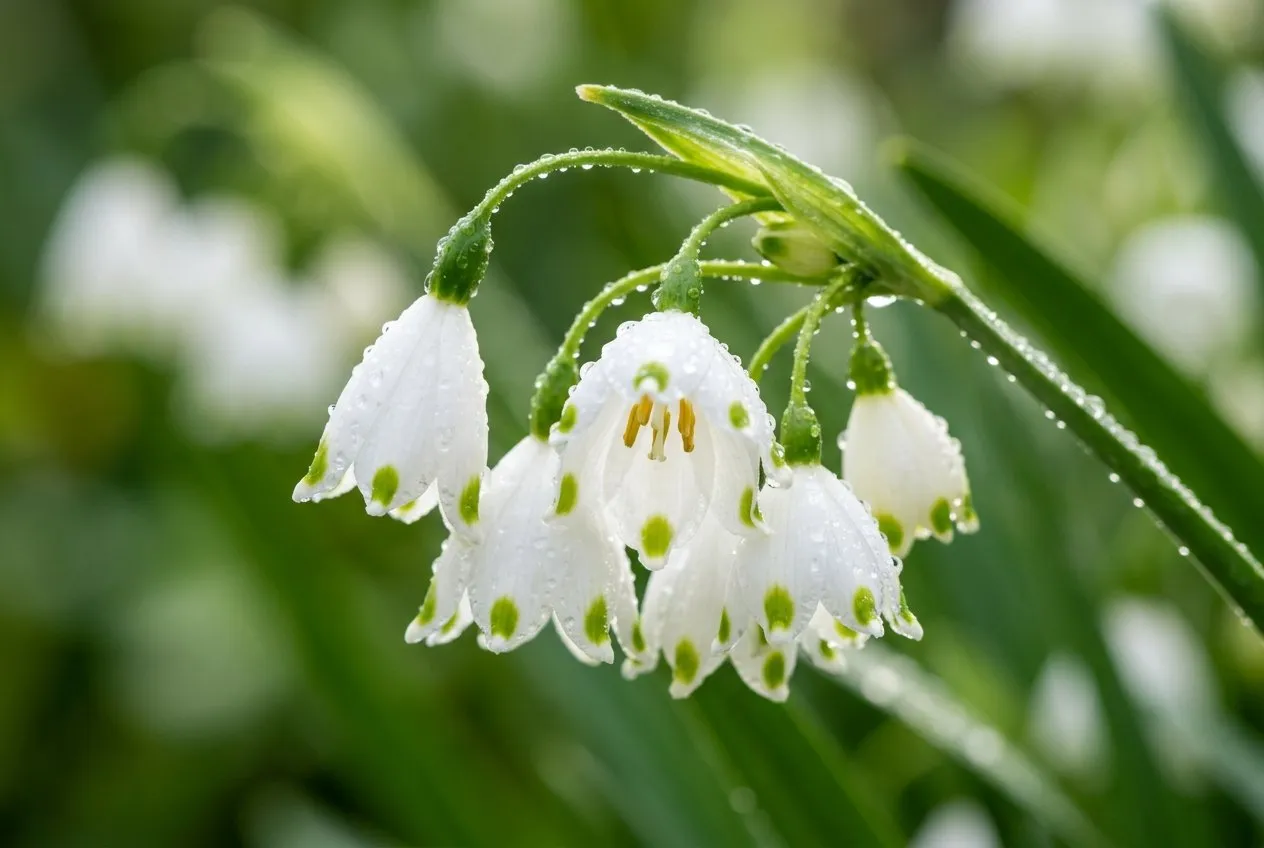
The giveaway: six equal petals, each with a neat green spot. A snowdrop never looks like this.
Frequently asked questions
Is leucojum the same as a snowdrop?
No, leucojum is a snowflake, a different plant. A snowflake bell has six equal petals, each tipped green, and stems are taller. A snowdrop has three long outer petals and three short inner ones, with one flower per stem.
What is the difference between spring and summer snowflake?
Spring snowflake is short and early, summer snowflake is tall and later. Leucojum vernum grows 15-20cm tall and flowers in February and March. Leucojum aestivum reaches 45-90cm and flowers in April and May, with several bells per stem.
Why is it called summer snowflake if it flowers in spring?
Because it flowers later than spring snowflake, not in actual summer. In most UK gardens summer snowflake flowers in April and May and is over by early June. Think of it as a late-spring bulb.
Do leucojum like wet soil?
Yes, they’re among the few bulbs that enjoy damp soil. Summer snowflake grows happily in heavy ground, at pond edges and in spots that stay wet in winter. Spring snowflake likes damp, shady ground that doesn’t dry out.
How deep do you plant leucojum bulbs?
Plant dry bulbs 8-10cm deep and 10-15cm apart. Plant in autumn, September to November, pointed end up. Dry bulbs can be slow to settle, so many gardeners move clumps in the green instead.
Should I plant leucojum in the green?
Yes, it usually gives better results than dry bulbs. Leucojum dislike drying out, so lifting and replanting clumps in leaf just after flowering works well. Replant at once at the same depth and water in.
Are snowflakes poisonous to pets?
Yes, all parts are poisonous if eaten, especially the bulbs. They belong to the same family as daffodils. Store bulbs out of reach before planting, and stop dogs digging them up.
Now you can tell a snowflake from a snowdrop, explore more spring bulbs in our growing hub and plan the rest of your display with our guide to when to plant spring bulbs.
Our team produces practical UK gardening guidance from source research, contributor records and established horticultural practice. Editorial standards are overseen by Matt W.