Key takeaways
- Ragwort has flat-topped clusters of yellow daisy flowers and ragged leaves, 30cm to 1m tall
- It is poisonous to horses and cattle, and most dangerous dried in hay
- Having ragwort in your garden is not illegal, but you may be asked to stop it spreading to grazing land
- Wear gloves and pull or dig out the whole plant before it seeds
- Never leave pulled or cut plants where animals can reach them
- Away from grazing it is a valuable wildflower, especially for cinnabar moths
Common ragwort is the tall yellow wildflower you see on verges, waste ground and field edges in late summer. It’s a poison to horses and cattle and a feast for insects, so whether you pull it depends on where it’s growing. If it’s near grazing animals or land cut for hay, take it out safely. If it isn’t, it can usually stay.
This guide covers how to identify ragwort, why it matters, what the law says, and how to remove it without risk to you or any animals.
How to identify common ragwort
Common ragwort (Jacobaea vulgaris, once called Senecio jacobaea) usually takes two years to flower. In the first year it makes a low, flat rosette of dark green, deeply cut, frilly leaves. In the second year it sends up a tough stem, often red-tinged, 30cm to 1m tall.
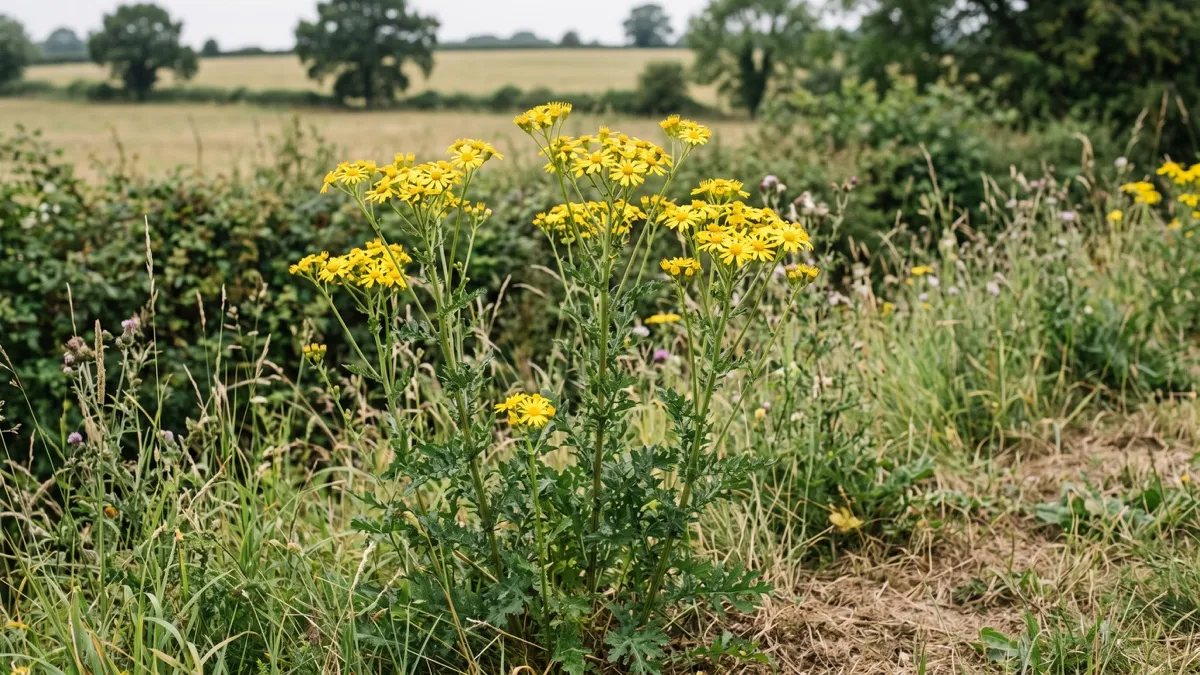
The flowers are the giveaway: dense, flat-topped clusters of bright yellow daisy-like flowers, each about 2cm across, from June into autumn. The leaves are raggedly lobed, which gives the plant its name.
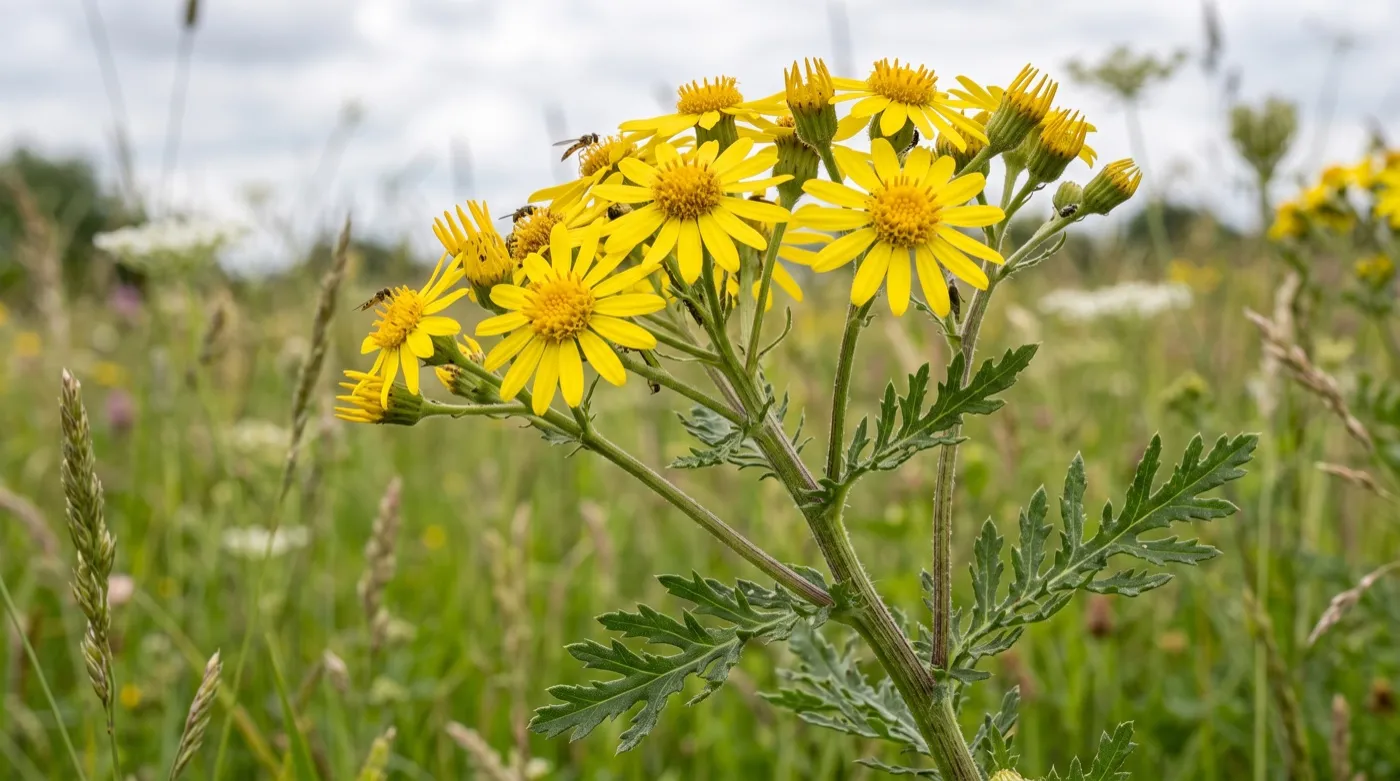
Yellow daisy flowers held in a flat-topped cluster, above ragged, deeply lobed leaves.
Plants that get mixed up with it:
- Groundsel is a much smaller weed whose flowers barely open.
- Oxford ragwort is smaller and bushier, common on walls and railway lines.
- Tansy has flat clusters of yellow buttons with no petals, and feathery leaves.
- St John’s wort has five-petalled flowers, not daisies.
For more look-alikes, the common garden weeds identification guide sets ragwort alongside others.
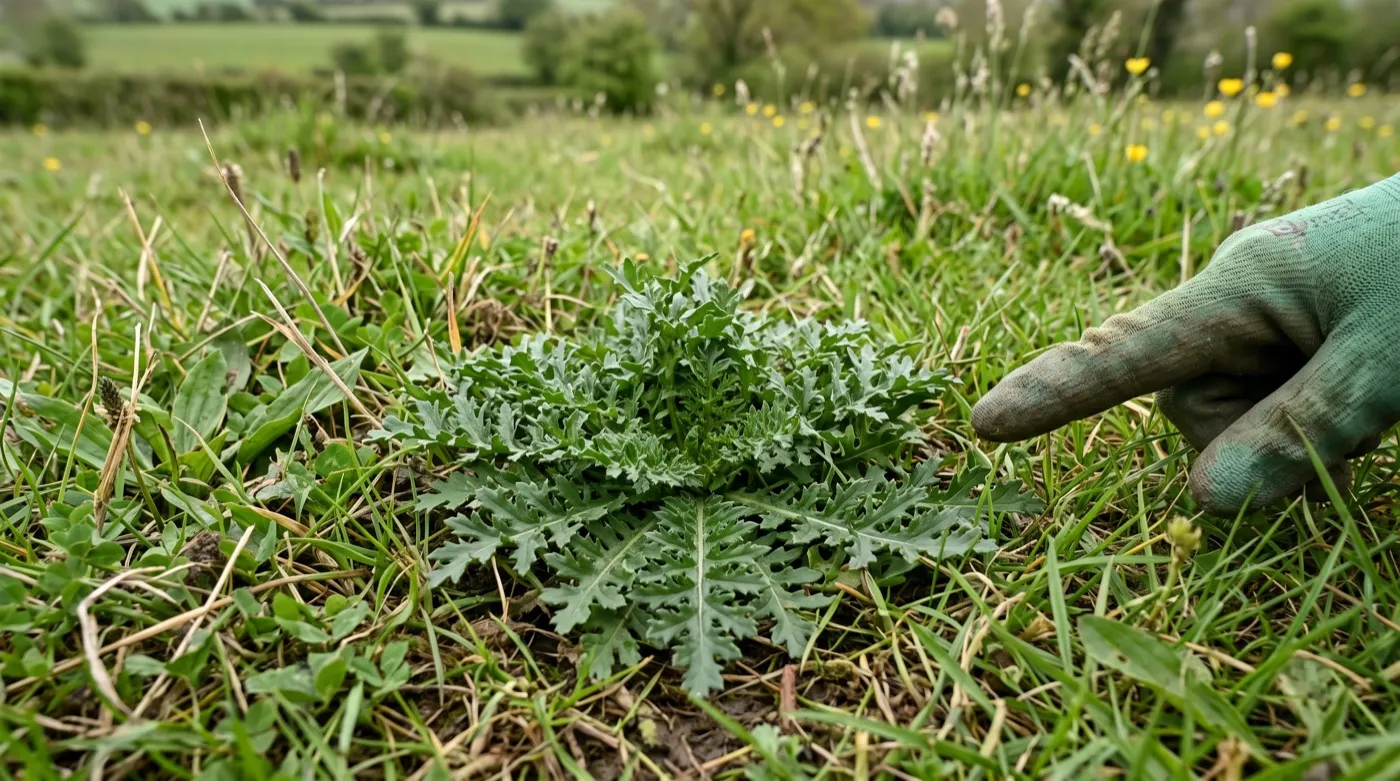
First-year ragwort is a low, frilly rosette. It’s easier to dig out at this stage, before the flower stem grows.
Why ragwort is dangerous, and to whom
Ragwort contains toxins that cause liver damage in animals that eat it, and the harm builds up over time. Horses, ponies and cattle are most at risk.
The surprising part is that ragwort is most dangerous in hay. Growing plants taste bitter, so animals with enough grass usually leave them alone. Drying takes away the bitterness but not the poison, so animals eat it in hay or haylage without noticing. That’s why land cut for hay must be kept clear.
For people, the official advice is simple: wear gloves when handling it, cover your arms and wash your hands afterwards. A plant growing in a garden with no livestock nearby poses little risk.
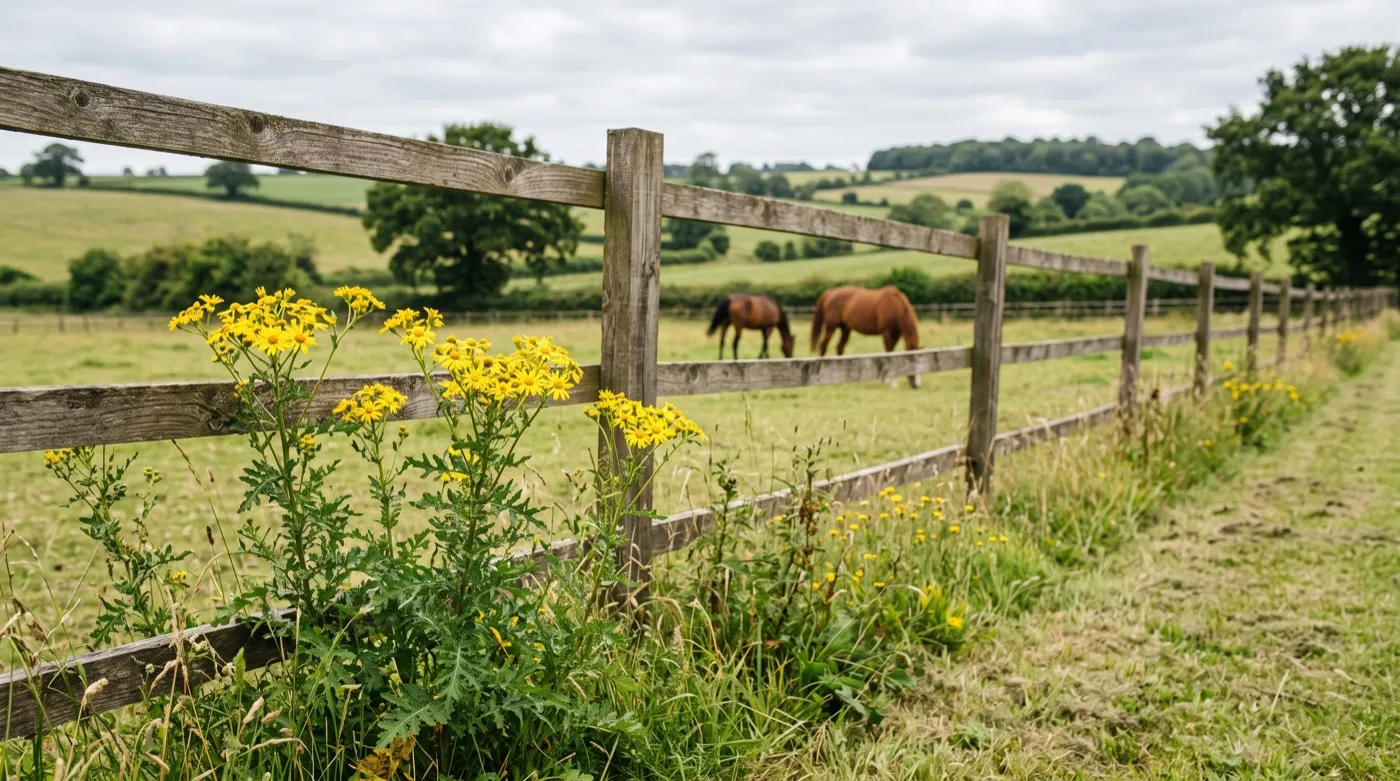
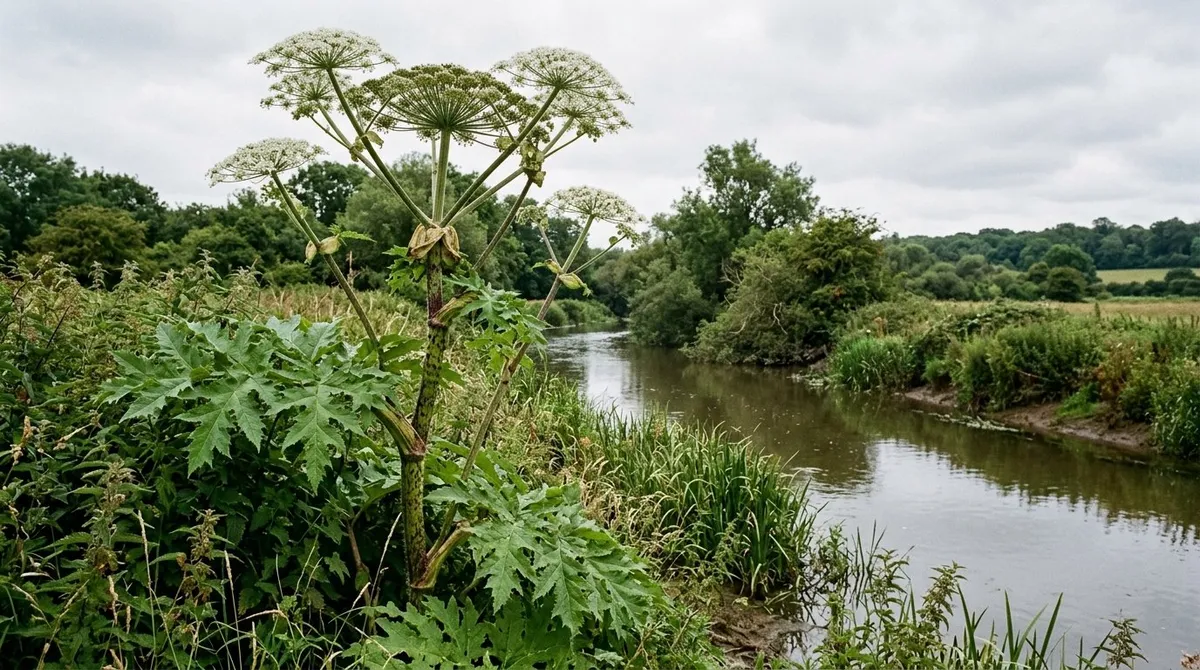
Ragwort along a paddock fence is high risk. Clear it before it seeds into the grazing.
What the law says about ragwort
Ragwort’s legal position is often misunderstood. Common ragwort is one of five weeds listed in the Weeds Act 1959. That doesn’t ban the plant.
- It is not illegal to have ragwort on your land or in your garden.
- There is no duty to remove every plant.
- Landowners can be required to control it where it threatens to spread to grazing or farmland.
In England, the official Code of Practice on ragwort sorts plants by risk:
| Distance from grazing or hay land | Risk | What to do |
|---|---|---|
| Within 50m | High | Remove flowering or seeding plants promptly |
| 50m to 100m | Medium | Keep an eye on them and plan control |
| More than 100m | Low | Usually leave them |
These distances are guidance, not legal lines. Wind direction, hedges and how bare the ground is all make a difference. Other plants have stricter rules, as the giant hogweed guide explains.
How to remove ragwort safely
Where ragwort has to go, the aim is to get the whole plant out before it seeds, without leaving anything an animal could eat.
- Put gloves on. Cover your arms and legs, and wash any bare skin afterwards.
- Get the whole plant, root and all. It can regrow from the crown and root pieces, so use a ragwort fork or a garden fork and lever it out. It comes out most easily from damp soil after rain, as with broad-leaved dock.
- Do it early. Pull plants as they come into flower, before the yellow heads turn to fluffy seed. First-year rosettes can be dug out any time.
- Bag it straight away. Never leave pulled plants lying on grazing land.
Pulled ragwort is still poisonous as it wilts, and animals are more likely to eat it once it’s lost its bitter taste. That’s why bagging it on the spot matters.
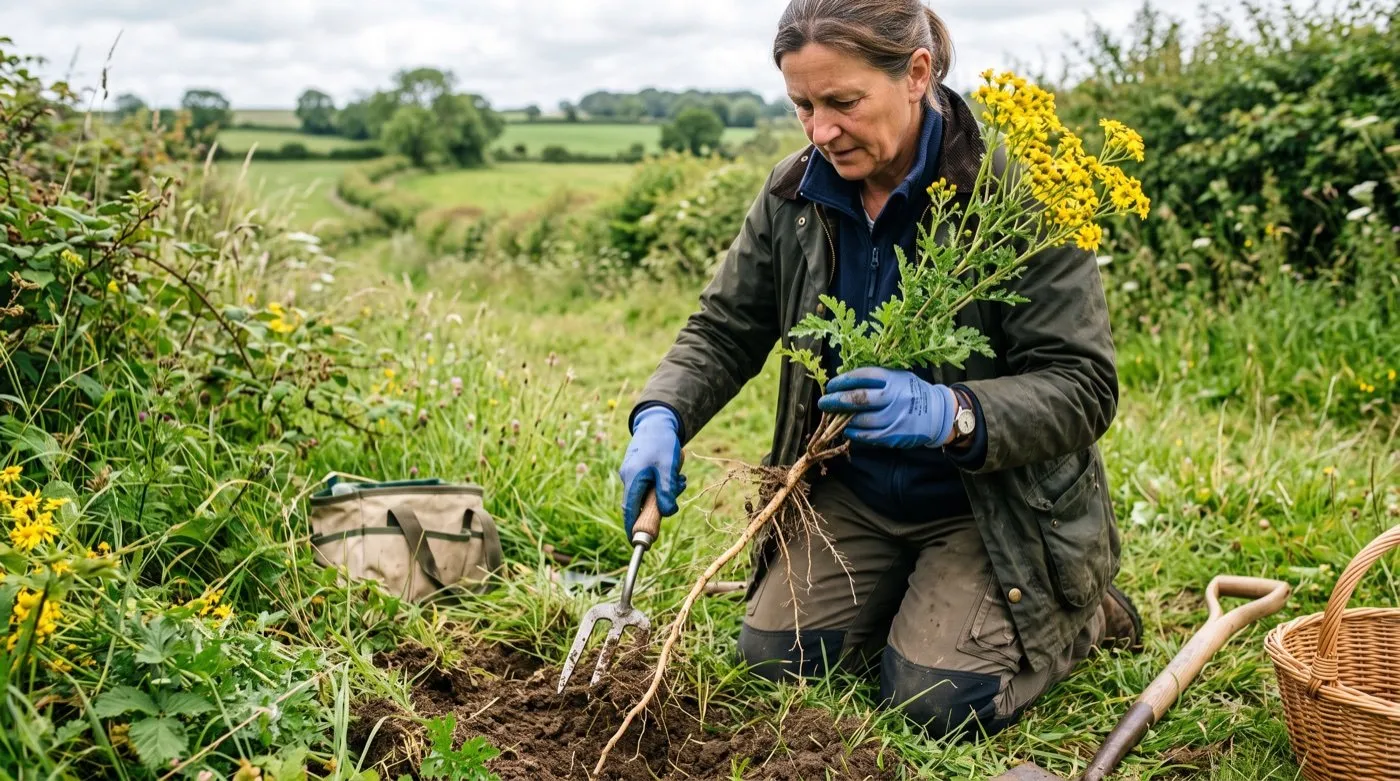
Gloves on and the whole plant out, roots and all, before it seeds.
How to dispose of pulled ragwort
Getting the plant out is only half the job. Pulled ragwort stays poisonous for a long time.
- Small amounts can rot down in a sealed bag or a lidded bin, well away from animals.
- Green waste bins and council tips vary, so check with your council first.
- Large amounts from fields need a licensed waste carrier or a site that accepts ragwort.
Don’t put flowering or seeding ragwort on an open compost heap. Don’t cut it and leave it in a field.
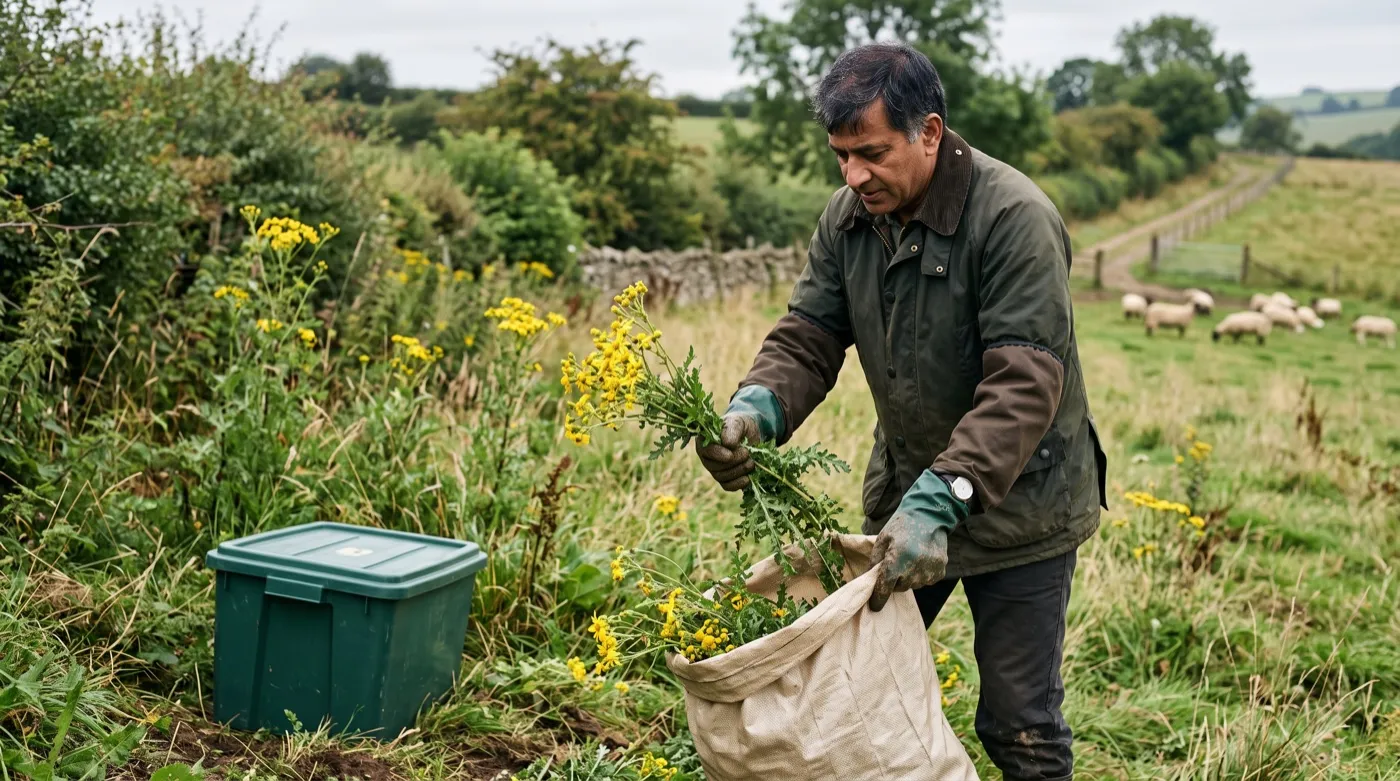
Bag pulled ragwort on the spot and keep it well away from grazing animals.
Warning: Never leave pulled, cut or wilting ragwort where horses, ponies or cattle can reach it. Wilted plants lose their bitter taste but stay poisonous, so animals may eat them.
Why you shouldn’t destroy ragwort everywhere
Away from grazing, common ragwort is one of the most useful wild plants for British insects. Pulling it from a garden with no animals nearby helps nobody.
It’s the main food plant of the cinnabar moth. Its black and yellow striped caterpillars feed on ragwort in summer, and the red and black adults fly by day in early summer. The long-lasting flowers also feed lots of bees, hoverflies, butterflies and beetles in late summer, when other flowers are fading.
So take a sensible approach: clear it where it threatens animals or hay, and leave it where it doesn’t. If you’re managing a wild patch, the wildflower meadow guide covers mowing and upkeep.
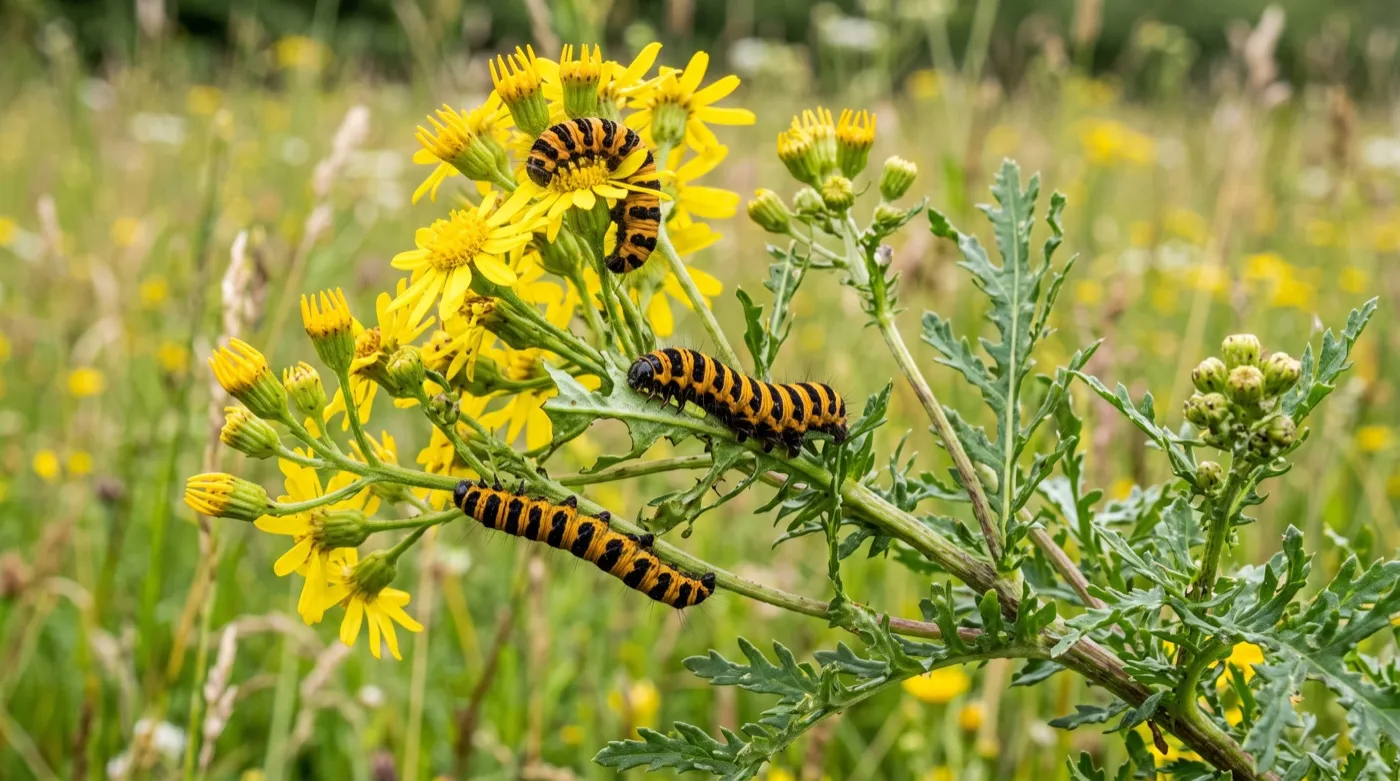
Cinnabar moth caterpillars feed almost only on ragwort. Away from grazing, plants like this are well worth leaving.
Ragwort calendar
| Month | What to do |
|---|---|
| March to April | First-year rosettes are easy to spot. Dig them out of grazing land while small |
| May | Flower stems start to rise. Plan removal from paddocks and hay fields |
| June to July | Flowering begins. Pull whole plants near grazing before they seed. Look out for cinnabar caterpillars where you leave it |
| August | Seed starts to form. Remove any plants you missed near grazing |
| September to October | Late flowers and seed. Bag any remaining seed heads near livestock |
| November to February | Rosettes sit through winter. Dig them out of grazing land on soft ground |
Common mistakes with ragwort
Handling it bare-handed. Always wear gloves and cover your arms.
Leaving pulled plants on the grass. Wilting ragwort is still poisonous and tastes less bitter. Bag it at once.
Mowing it in a paddock. Cutting leaves wilted, poisonous pieces scattered through the grazing. Pull it instead.
Snapping it off at the base. It regrows from the crown. Lever out the whole plant.
Pulling it everywhere. Away from livestock it’s a valuable wildflower. Leave it for the moths and bees.
Frequently asked questions
How do I identify common ragwort?
Look for flat-topped clusters of yellow daisy flowers above ragged, deeply lobed leaves. Plants are usually 30cm to 1m tall and flower from June into autumn. In their first year they form a low, frilly rosette of leaves.
Why is ragwort dangerous to horses?
It contains toxins that damage the liver, and the harm builds up over time. Living plants taste bitter, so animals usually avoid them. Dried in hay or haylage, ragwort loses that bitterness but stays poisonous, so animals eat it without noticing.
Is it illegal to have ragwort in my garden?
No, having ragwort is not illegal. It is listed under the Weeds Act 1959, which means landowners can be required to stop it spreading to farmland. There is no duty to remove every plant.
How do I remove ragwort safely?
Wear gloves and pull or dig out the whole plant before it seeds. A ragwort fork works best on damp soil. Get as much root as you can, as broken roots can regrow, and bag the plants straight away.
How do I dispose of pulled ragwort?
Bag it straight away and keep it away from grazing animals. Small amounts can rot down in a sealed bag or lidded bin. Check with your council before putting it in the green waste bin.
Should I kill all ragwort?
No, only where it threatens grazing animals or hay. Away from livestock it is a valuable native wildflower. The cinnabar moth and many bees, hoverflies and butterflies depend on it.
What eats ragwort?
The cinnabar moth caterpillar feeds almost entirely on ragwort. Its black and yellow striped caterpillars can strip a plant in summer. Lots of bees, hoverflies, butterflies and beetles visit the flowers for nectar too.
Get to know your other weeds
Once you can spot ragwort, other weeds are easier to sort too. The guide to clearing an overgrown allotment plot helps when weeds have taken over, or browse more weed and plant problem guides.
Our team produces practical UK gardening guidance from source research, contributor records and established horticultural practice. Editorial standards are overseen by Matt W.