
Key takeaways
- Clear a small section by hand and cover the rest, rather than tackling it all at once
- Cut top growth down, then smother weeds with overlapping cardboard and compost
- Use a fork, not a spade or rotavator, so perennial weed roots come out whole
- Dig out bramble crowns, and pick out every bit of couch grass and dock root you can
- Check for nesting birds and wildlife before cutting, especially March to August
- Don't compost perennial weed roots: bag, drown or take them to green waste
Don’t try to clear a whole overgrown allotment in one go. Cut everything down, cover most of the plot to smother the weeds, and clear one small section properly by hand. You’ll be growing in your first spring, and the rest of the plot will be far easier to tackle next year.
Most new tenants inherit a plot that needs clearing, so you’re in good company. This guide is the plan for that first season: what to cut, what to cover, which weeds need digging out, and what to plant straight away. If you’ve just been offered a plot, our guide to inheriting a vacant allotment plot covers what to check before you sign.
Why you shouldn’t clear it all at once
A full allotment plot is big, and clearing it all by hand is weeks of hard digging. Many new tenants try, wear themselves out and give up before they’ve grown anything.
The phased approach works better:
- Cut all the top growth down
- Cover most of the plot with cardboard and compost to smother the weeds
- Clear a small section by hand and plant it this year
- Move into the covered ground next year, once it’s soft and much easier to work
It works because annual weeds die off under the cover, and perennial weeds are weakened as they use up their energy trying to reach the light. Worms pull the cardboard and compost down into the soil. And you get a harvest in year one instead of spending the whole season clearing.
A quarter of the plot is plenty to hand-clear in your first year. You can always do more once it’s under control.
Check for wildlife before you start
Overgrown plots are home to all sorts of wildlife. Have a careful look before you cut.
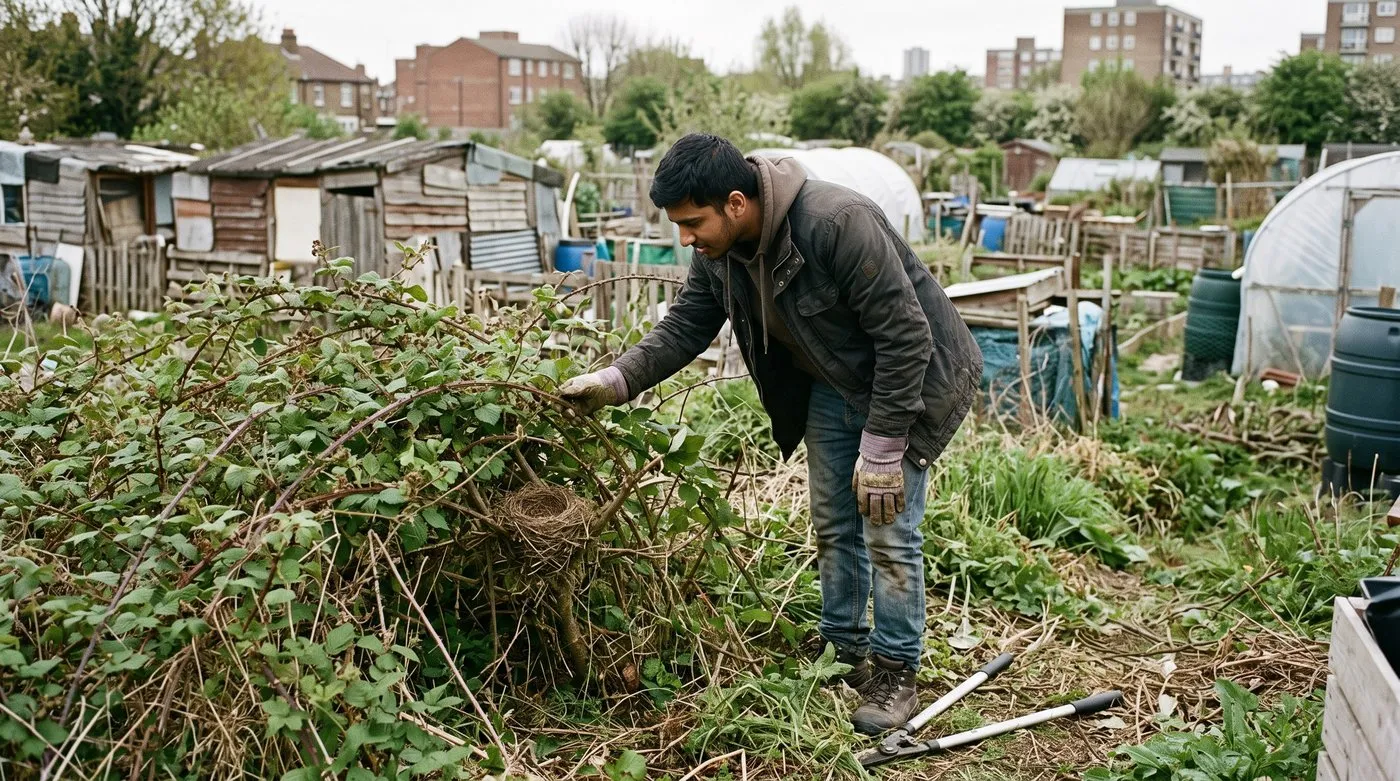
Have a careful look before you cut. If there’s an active nest, leave that patch until the young have flown.
- Nesting birds. Brambles and scrub are popular nest sites, especially from March to August. It’s against the law to damage or destroy an active nest, so leave any area with a nest until the young have flown
- Hedgehogs, frogs, toads and slow-worms shelter in long grass, old piles of wood and under sheets. Cut long grass in stages from the top down, and move debris by hand
- Old carpets, sheets and plastic often hide wildlife underneath. Lift them slowly
Our guide to wildlife-friendly allotments has ideas for leaving a wild corner once the plot is tamed.
Know your weeds before you dig
The right method depends on the weed. Here are the ones you’re most likely to find on an overgrown UK plot.
| Weed | How to spot it | How to tackle it |
|---|---|---|
| Brambles | Thorny arching stems | Cut down, dig out the crown |
| Couch grass | Wiry white roots spreading underground | Fork out and pick out every piece |
| Bindweed | Twining stems, white trumpet flowers, white roots | Dig out what you can, keep pulling shoots |
| Mare’s tail (horsetail) | Upright, bottlebrush-like green shoots | Keep pulling or cutting shoots for years |
| Nettles | Stinging leaves, yellow roots | Fork out the roots |
| Docks | Big broad leaves, long taproot | Dig out the whole root |
| Annual weeds | Soft, shallow-rooted, such as chickweed and groundsel | Hoe or smother |
The tough ones are brambles, couch grass, bindweed and mare’s tail. Nettles, docks and annual weeds are much easier to deal with.
Tools for clearing an allotment
You don’t need much, but the right tools make the job manageable.
- Long-handled loppers for cutting through bramble stems
- A garden fork for lifting perennial roots out whole. A spade slices them into pieces that regrow
- A mattock for prising out big bramble crowns
- A strimmer or brushcutter for knocking down tall growth fast. You can hire one, or borrow one from a plot neighbour
- Thick gloves, long sleeves and stout boots, as brambles and hidden glass are common
- A hoe for keeping the cleared ground clean once it’s done
- A wheelbarrow and an old tarpaulin for collecting weeds as you go
Skip the rotavator for now. On a plot full of couch grass or bindweed, it chops the roots into hundreds of pieces that all regrow.

Long-handled loppers keep the thorns at arm’s length. Cut the stems first, then come back for the crowns.
Step 1: Cut down the top growth
Start by getting everything down to near ground level, so you can see what you’ve got and lay a cover flat.
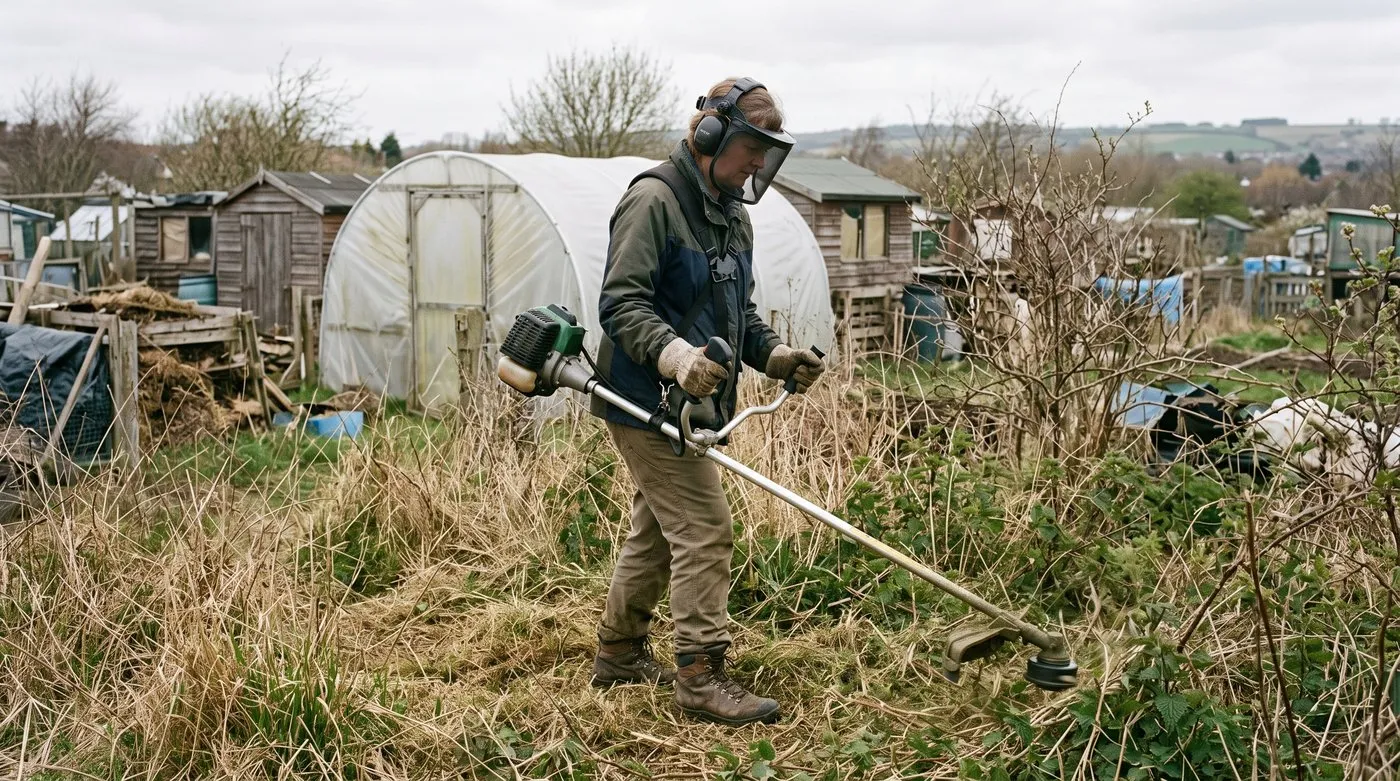
A brushcutter knocks down tall growth fast. Wear eye and ear protection, and keep others well back.
Cut long grass and weeds in stages, working from the top down, to give any wildlife time to move. On a very overgrown plot, a brushcutter with a metal blade is the quickest way through. Wear ear defenders, eye protection, gloves and sturdy boots, and keep other people well away while you work.
Rake the cuttings up. Soft growth such as grass and nettle tops can go on the compost heap. Bramble stems are slow to rot, so shred them or take them to a green waste site.
Step 2: Cover most of the plot
This is the no-dig way to clear ground, and it does most of the work for you. Covering blocks out the light, so weeds underneath weaken and die back.
- Lay cardboard over the cut-down area. Remove any tape and staples, and overlap the edges generously so no light gets through the gaps
- Soak it with water so it softens and stays put
- Cover it with a thick layer of compost, well-rotted manure or wood chip, at least 5-10cm deep
- Plant straight into it if you like. Potatoes, courgettes and squash all do well planted into the compost layer
Check the covered areas every few weeks. Pull any shoots that push through, and patch gaps with more cardboard. Black plastic sheeting, weighed down well, is another option for ground you won’t plant this year.

Overlap the cardboard well and cover it with compost. Weeds underneath are starved of light, while worms get to work on the soil.
Our guide to no-dig gardening explains the method in more detail.
Step 3: Clear your first section by hand
Pick a section near the path for your first growing area. This is where you dig properly and get the perennial roots out.
- Cut the brambles down, then dig round each crown with a fork or mattock and lever it out
- Fork the soil in small patches. Push the fork in, lever it back and lift the soil without slicing the roots
- Shake the soil off and pick out every white couch grass root, bindweed root and dock taproot you can find
- Finish each patch before moving on, so you don’t leave half-cleared ground behind
- Rake it level and hoe off any weed seedlings as they appear
- Cover anything you won’t plant yet, as bare soil soon fills with weeds
It’s slow, steady work, so do it in short sessions. Little and often is kinder on your back.

Couch grass roots snap easily and each piece can regrow, so lift them gently with a fork and pick out every bit you can.
How to deal with the toughest allotment weeds
Brambles. Cut them down and dig out the crowns. Any regrowth from roots left behind is soft and easy to pull or dig out. Keep at it for a season or two. Our guide to getting rid of brambles has more.
Couch grass. Forking it out and picking over the soil is the only reliable way. Covering weakens it but rarely clears it. Expect to repeat this for two or three seasons. See our guide to beating couch grass for the full method.
Bindweed. Its brittle white roots go deep and regrow from small pieces. Dig out what you can, then pull every shoot as soon as you see it. Over time this starves the roots.
Mare’s tail. Its roots go far too deep to dig out. Keep pulling or cutting the shoots through the growing season. It weakens over several years, and improving drainage helps. Our guide on how to deal with horsetail explains why it’s so stubborn.
Docks. Dig straight down with a fork and lift the whole taproot. The top part of the root regrows if you leave it behind.
Weedkillers. Many allotment sites restrict them, so check your site rules first. If you do use one, choose a product approved for that weed and follow the label.
What to do with the weeds you pull
Sort weeds as you go, so you don’t spread them around the plot.
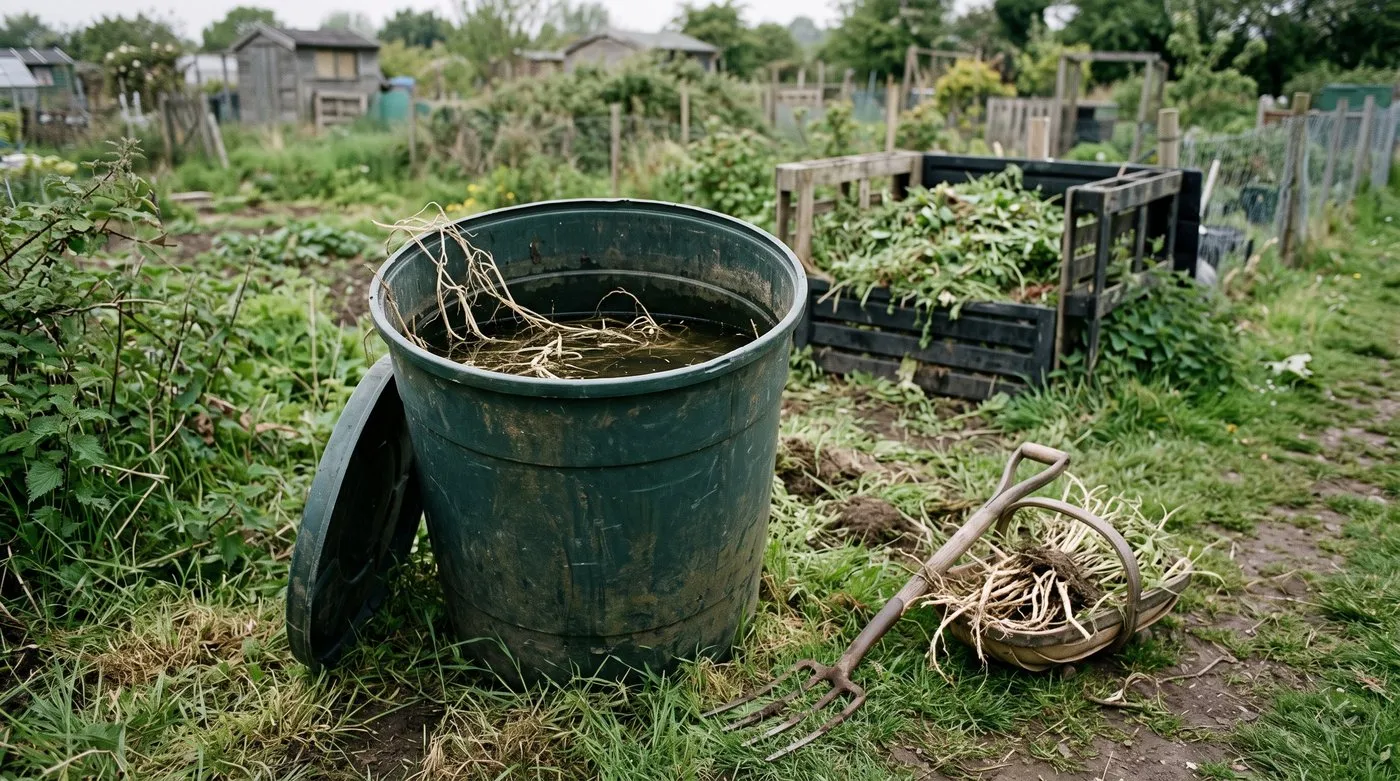
Drowning perennial roots for a few weeks turns them into sludge you can safely add to the compost.
- Compost: soft annual weeds before they flower, grass, nettle leaves and stems, and soft green growth
- Don’t compost: roots of couch grass, bindweed, brambles, docks and mare’s tail, and any weed that has set seed. A home heap rarely gets hot enough to kill them
- Drown, bag or take away: soak perennial roots in a bucket of water for several weeks until they rot, or take them to a green waste site
Bonfires are banned on many sites, so check your tenancy rules before burning anything. Our guide to bonfires on allotments explains the usual rules.
What to plant in your first year
Choose easy, forgiving crops for your first cleared section. These are good on newly cleared ground:
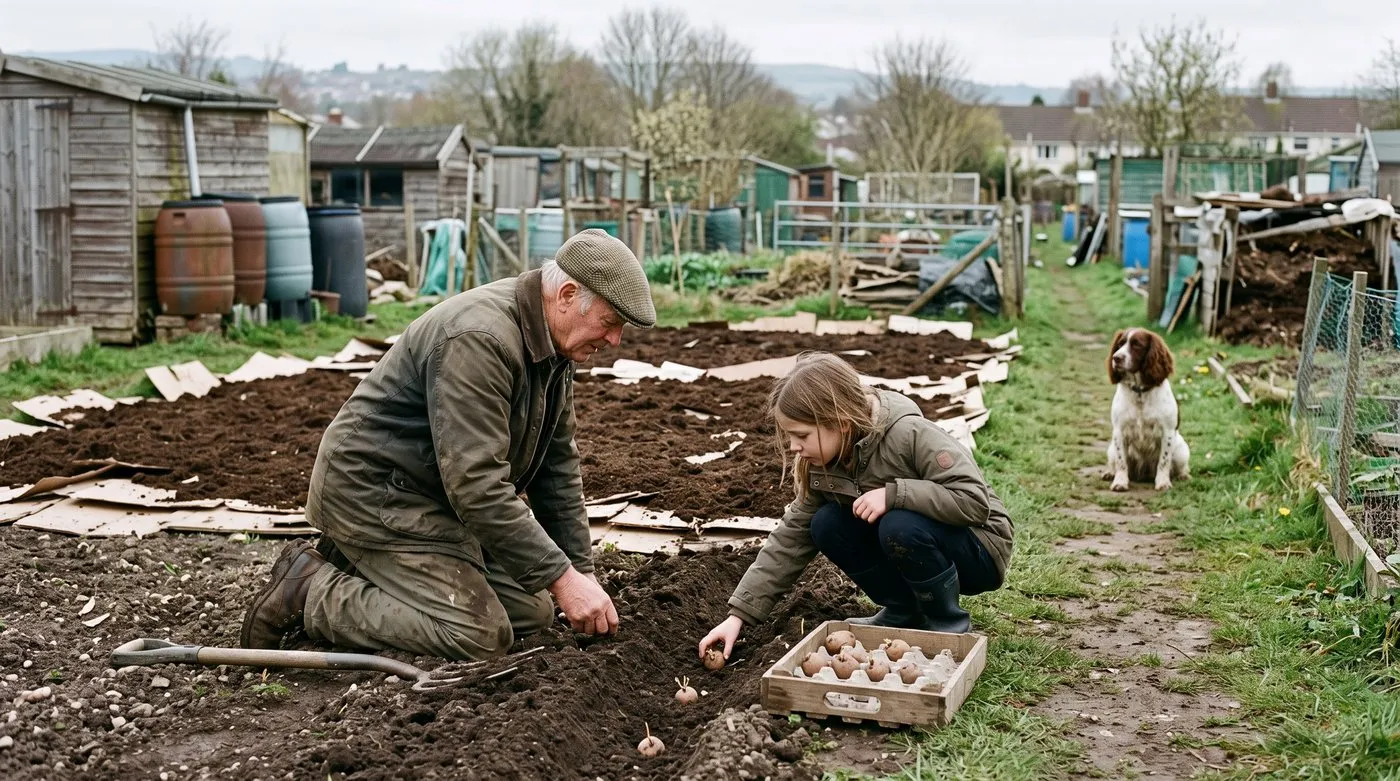
Potatoes are a great first crop for cleared ground. The rest of the plot stays covered until next year.
| Crop | When to plant | Why it suits a new plot |
|---|---|---|
| First early potatoes | March to April | Planting and lifting them breaks up the soil |
| Courgettes | Late May to early June, after frost | Big leaves shade out weeds |
| Squash and pumpkins | Late May to June, after frost | Sprawling leaves cover the ground |
| Runner beans | Sow outside in May or June | Easy and productive |
| Salad leaves | March to September | Quick crops to keep you going |
| Beetroot | April to July | Copes with less-than-perfect soil |
Leave fussier crops such as carrots, parsnips and cauliflowers until the soil is in better shape. Carrots and parsnips fork in stony, freshly dug ground.
What to expect over the first two years
| When | What to do |
|---|---|
| First month | Check for wildlife, cut everything down, cover most of the plot and start hand-clearing your first section |
| First spring | Plant potatoes in the cleared section and courgettes or squash into the covered ground |
| Summer | Hoe the cleared ground weekly. Pull shoots coming through the cover and patch any gaps |
| Autumn | Harvest. Top up the covered areas with more compost or manure |
| Winter | Plan next year’s beds and order seed potatoes |
| Second spring | Plant into last year’s covered ground, forking out any perennial roots that have survived |
Ask your neighbours too. Plot holders are often happy to lend a strimmer, share spare seedlings or tell you what a weed is.
Common mistakes when clearing an allotment
Trying to clear it all at once. It’s the main reason new tenants give up. Cover most of it and clear a little at a time.
Rotavating perennial weeds. It chops the roots into pieces that all regrow. Use a fork.
Composting perennial roots. They survive in most home heaps and spread back around the plot.
Leaving cleared soil bare. Weed seeds sprout within weeks. Plant it or cover it.
Cutting without checking for nests. Look first, especially from March to August.
Frequently asked questions
How long does it take to clear an overgrown allotment plot?
Usually a season or two, depending on its size and weeds. Covering most of the plot and clearing a small patch by hand gets you growing in weeks. The covered ground is much easier to plant by the following year.
What is the fastest way to clear brambles from an allotment?
Cut the stems down, then dig out each crown with a fork or mattock. The crown is the woody knot where stems meet roots, and removing it stops most regrowth. Wear thick gloves and long sleeves.
Can I cover an overgrown allotment with weed membrane?
Yes, as a short-term way to smother weeds. Black plastic sheeting left for a season clears annual weeds and weakens perennials. Cardboard is better for the soil, as it rots down and feeds worms. Avoid woven membrane left for years, as it frays into the soil.
Should I dig or use no-dig on a new plot?
A mix of both often works best. Dig the area you’ll plant this year, forking out perennial roots as you go. Cover the rest with cardboard and compost. By next year it’s softer and much easier to plant.
How do I get rid of couch grass on an allotment?
Fork out its creeping white roots and pick out every piece you can. A spade or rotavator chops them into bits that regrow. Expect to repeat this for two or three seasons, as mulch alone rarely clears it.
Can I burn weeds on my allotment plot?
Only if your site rules allow it, so check your tenancy agreement first. Many sites ban bonfires or limit them to set times. Otherwise, bag perennial weed roots, drown them in water or take them to a green waste site.
What is mare’s tail and how do I remove it?
Mare’s tail, or horsetail, is a deep-rooted weed that can’t be dug out. Its roots go far deeper than any spade. Keep pulling or cutting the shoots through the season, and over several years it weakens.
Once your first patch is clear, our guide to allotment growing for beginners will help you plan what comes next, or browse more growing guides.
Our team produces practical UK gardening guidance from source research, contributor records and established horticultural practice. Editorial standards are overseen by Matt W.


