Key takeaways
- Couch grass spreads by white, jointed underground roots, not mainly by seed
- Small broken pieces of root can regrow, so pick out every bit you find
- Forking and sieving the soil is the most reliable fix for beds and allotments
- Black plastic left down for at least a year clears ground you can't dig
- Never rotavate couch grass: it chops the roots and spreads them
- Keep checking edges, because couch creeps back in from paths and neighbours
To get rid of couch grass, you need to remove its white underground roots, not just the leaves. Fork the soil, pick out every root you can find, and keep checking for regrowth. On ground you can’t dig, cover it with black plastic for a year.
Couch grass, also called twitch, is a spreading perennial grass that creeps into veg beds, borders and allotments. It’s hard work rather than hard to understand. Small broken bits of root can regrow, so the trick is patience and thoroughness. This guide covers how to spot it, the forking method, smothering, weedkiller choices and how to stop it creeping back. For other weeds with deep roots, see the guide to getting rid of bindweed.
How to identify couch grass
The quickest test is to pull up a clump. Couch grass has long white or cream roots with joints every few centimetres, a bit like thin bamboo. The tips are sharp enough to grow straight through a potato.
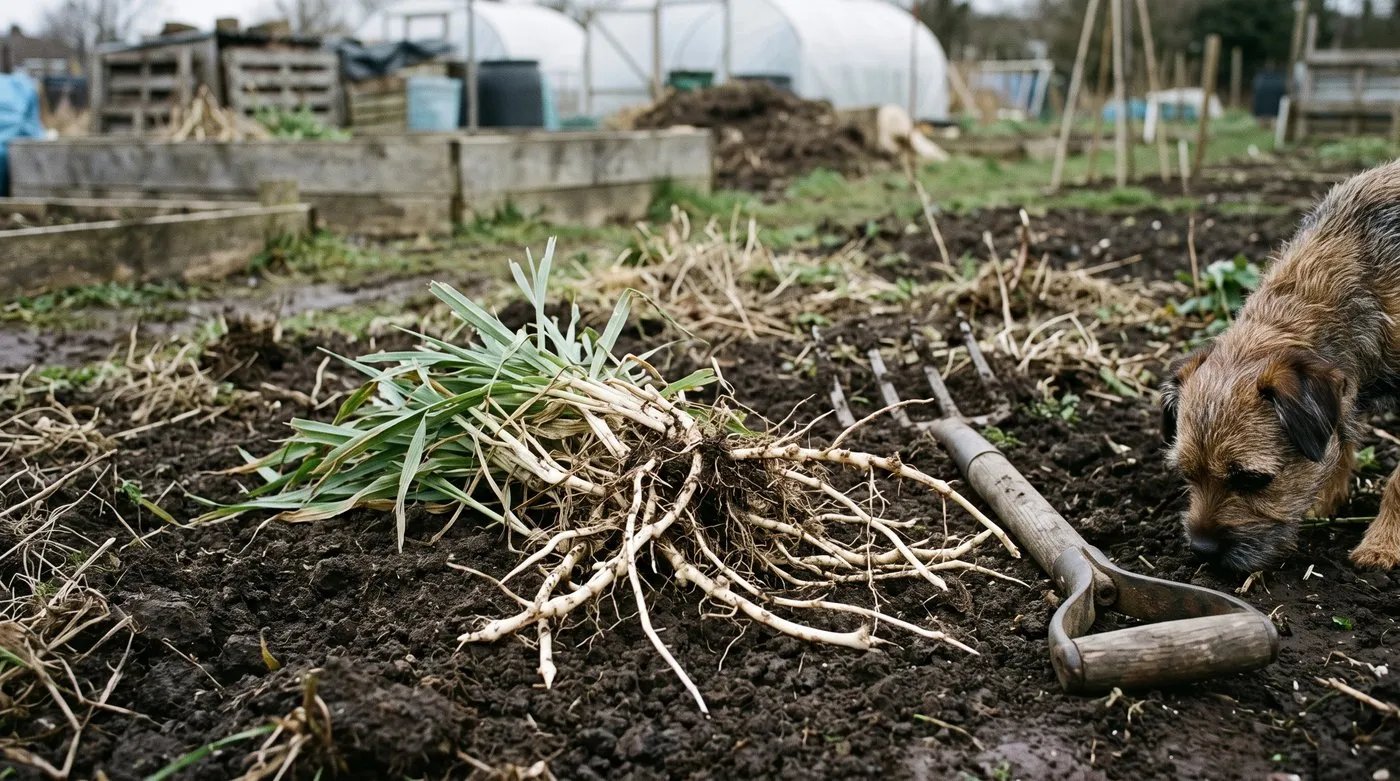
Those long white jointed roots are the giveaway. If they snap as you pull, you’ve got couch grass.
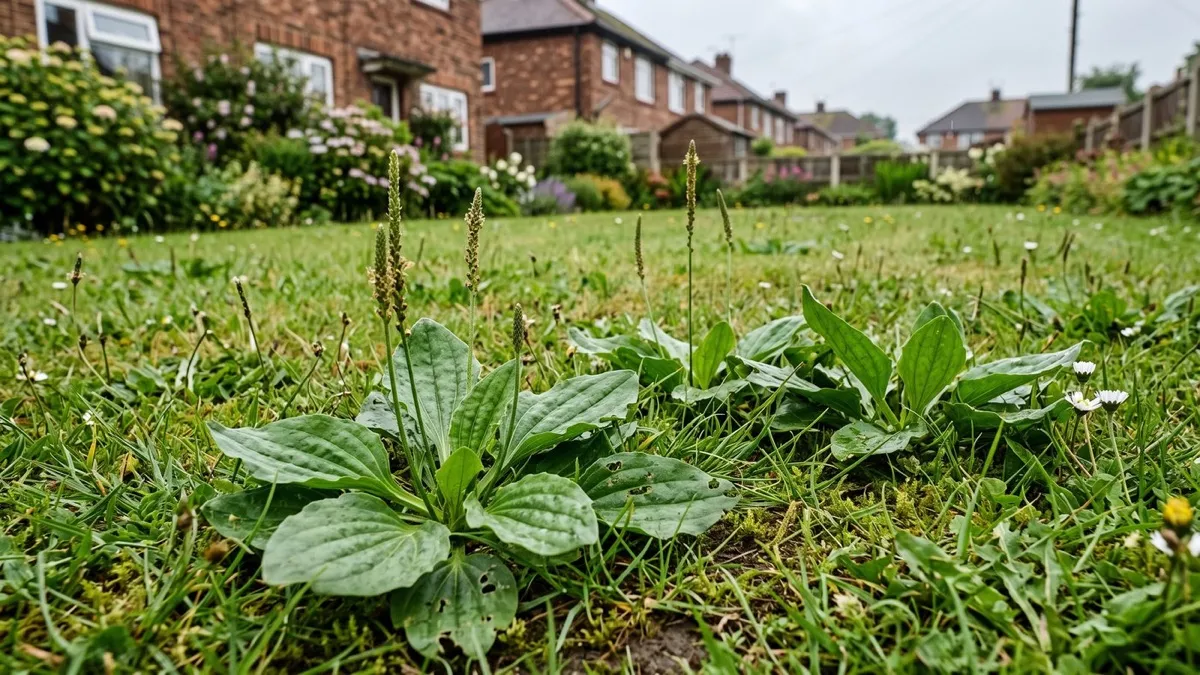
Above ground, couch has flat, dull green leaves on loose, upright shoots. In summer it sends up a slim flower spike that looks like a thin ear of wheat. It spreads in patches that creep outwards, rather than staying as neat tufts.
| Grass | Roots | How it grows |
|---|---|---|
| Couch grass | Long white jointed roots | Spreading patches that creep outwards |
| Annual meadow grass | Fine, shallow, fibrous | Small tufts from seed, easy to pull |
| Yorkshire fog | Fine, fibrous | Soft, greyish, hairy tufts |
| Lawn grasses | Fine roots, some creeping runners | Low, even turf |
If white jointed roots snap off as you pull, it’s couch. The garden weeds identification guide covers other common weeds.
Why couch grass keeps coming back
Couch spreads by rhizomes, which are underground stems that send up new shoots from their joints. When you dig or hoe, they snap. Any piece left in the soil with a joint can grow into a new plant.
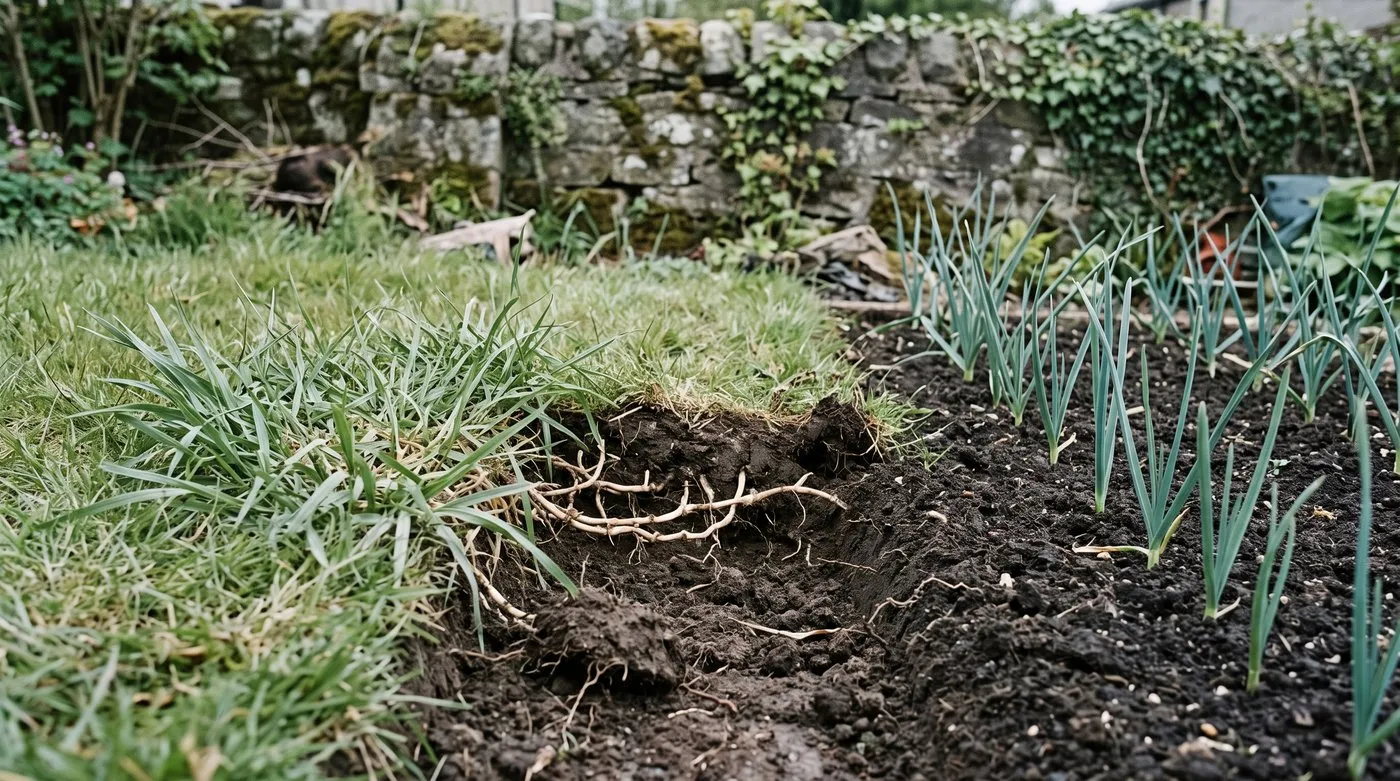
Couch travels underground, so a patch at the lawn edge soon turns up in the middle of your bed.
That’s why hoeing alone never clears it, and why rotavating makes it worse. The roots also creep under edging and in from paths, lawns and neighbouring plots. Seed plays a much smaller part than the roots.
The fork-and-sieve method
Forking out the roots is the most reliable way to clear couch from a veg bed or allotment. Autumn and early spring are the best times, when the soil is moist and easy to work.
- Cut or mow the leaves down so you can see the soil.
- Start at one end and push the fork in to its full depth.
- Lift each forkful and shake it gently, so the roots come out whole.
- Tip the soil onto a garden sieve over a wheelbarrow if you have one. The roots stay on the mesh.
- Pick out every white piece, even short ones.
- Put the soil back and work along the bed in small sections.
- Bag the roots for the council green waste bin, or drown them in a lidded bucket of water before composting.
Use a fork, not a spade. A spade slices roots into pieces, while a fork lifts them out. Wear gloves, as the sharp tips can scratch.
After a few weeks, new green shoots will show where you missed a bit. Dig these out promptly, following each root back as far as it goes. Doing this every few weeks through the season is what finally clears it.

A sieve over the wheelbarrow catches the short bits of root that are easy to miss by hand. Every piece you remove is one less plant.
How to get couch grass out of a border
In a border, couch grass weaves its roots right through other plants. The fix is to lift the plants, clean them and replant.
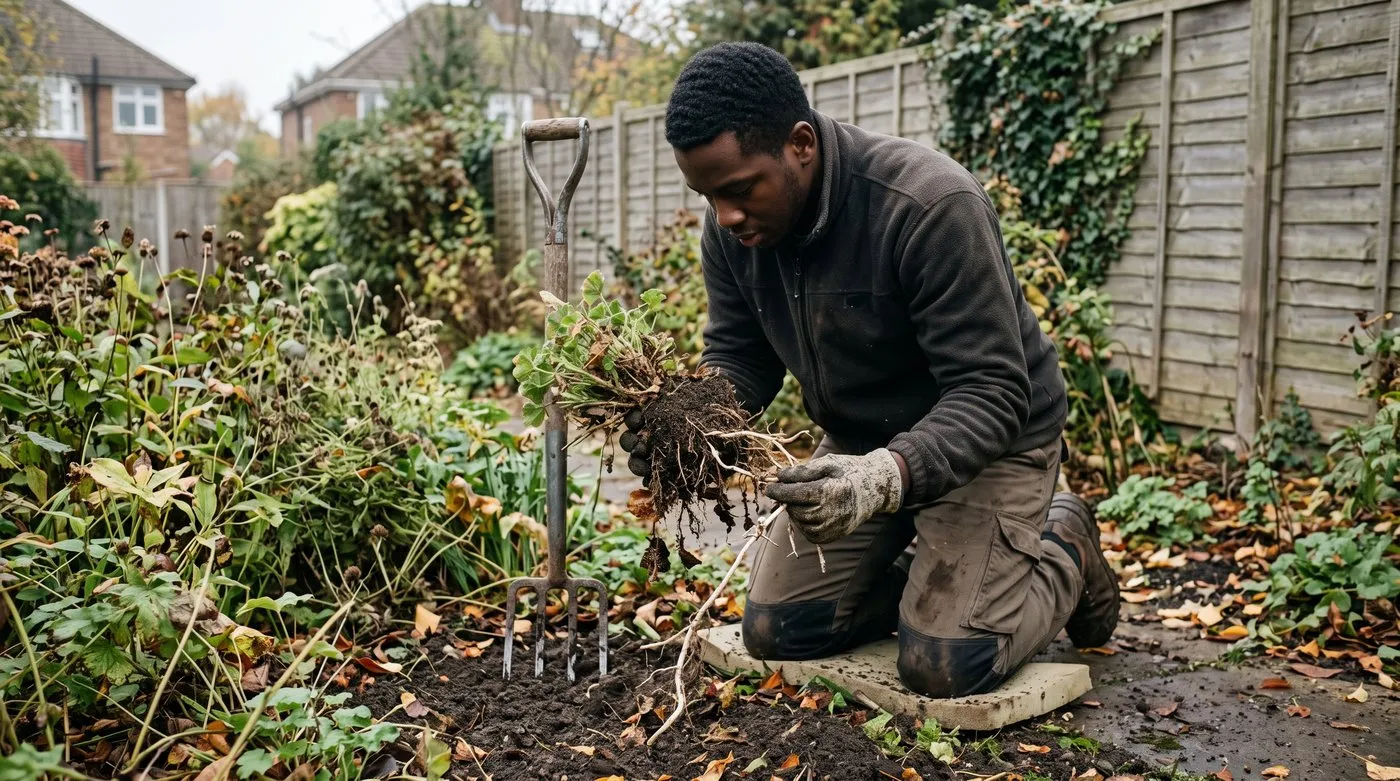
Lifting a perennial lets you pull couch roots out of the root ball before you replant it in clean soil.
In autumn or early spring, dig up the affected perennials. Pull apart their root balls and tease out every white couch root. Then fork the empty soil and clear it. Replant once the ground is clean. Split overgrown clumps while you’re there.
Around shrubs and trees that you can’t lift, fork carefully round the base and pull out what you can. Keep pulling new shoots as they appear. Every time you remove the leaves, the roots get a little weaker.
Smothering couch grass with black plastic
Smothering clears couch without digging. It suits big patches, overgrown allotment beds and anyone who can’t do heavy forking.
Cut the grass short, then cover the ground with thick black plastic sheeting. Overlap the edges well and weigh them down with bricks, boards or soil so no light gets in. Leave it for at least a full year. Couch grass is tough, and a few months is rarely enough.
When you lift the sheet, fork through the soil and pick out any roots that still look white and firm. Then sow or plant straight away. Thick cardboard under a deep mulch can work too, but couch often pushes through the joins, so overlap it generously. The guide to cardboard and grass clipping mulch shows how to layer it.

Weigh the edges down well so light can’t creep in. Leave the plastic for a full year before checking underneath.
Can weedkiller kill couch grass?
A glyphosate weedkiller sold for garden use can kill couch grass, but it often takes more than one application. It works best on lush, actively growing leaves in spring or late summer.
Only spray where it won’t drift onto plants you want to keep, and follow the label exactly. Couch growing through vegetables or border plants is better dug out, because the spray would kill those too. Many gardeners use weedkiller on bare ground or paths, then fork out anything that survives.
Home-made mixes such as vinegar or salt aren’t legal or effective weedkillers, and salt damages the soil. If you’d rather avoid chemicals, the organic weedkillers guide explains the approved non-chemical options.
Stopping couch grass creeping back
Couch grass often creeps back in from grass paths, lawns and neighbouring plots. Once a bed is clear, guard the edges.
Timber boards or metal edging sunk into the soil slow it down, but roots can still sneak underneath. Walk the edges every few weeks in the growing season. If white roots appear, follow them back and pull them out.
Keep cleared soil busy, too. Sow a green manure such as grazing rye in autumn, or plant crops and mulch between them. The green manures and cover crops guide has sowing times. Bare soil is an invitation for couch to return.

An edging board along a grass path slows couch creeping back in. Check along it every few weeks for white roots.
A couch grass clearing calendar
Couch clearing works best as a steady routine. This plan suits a badly infested bed or allotment.
| Month | What to do |
|---|---|
| January to February | Plan which beds to clear. Check edges on mild days |
| March to April | Fork and sieve beds while the soil is moist. Lift and clean border plants |
| May to June | Dig out new shoots every few weeks. Spray paths if using weedkiller |
| July to August | Keep pulling regrowth. Check edges along paths |
| September | Spot-treat lush regrowth if using weedkiller. Lay black plastic on big patches |
| October to November | Main forking window. Sow green manure on cleared beds |
| December | Leave the soil alone in frosty or waterlogged spells |
Common couch grass mistakes
Rotavating. It chops the roots into pieces that regrow, spreading couch across the whole bed.
Leaving small bits of root. Short pieces can still grow. Pick out everything you see.
Composting the roots. Couch can survive a cool home compost heap. Drown the roots first or use the green waste bin.
Lifting plastic too early. A few months isn’t enough. Leave it down for a year.
Planting straight into a half-cleared bed. Couch soon weaves through new plants. Clear first, then plant.
Frequently asked questions
How do I get rid of couch grass?
Fork the soil and pick out every white root by hand. Sieving the soil catches small pieces. Check every few weeks and dig out any new shoots with their roots. Bad patches usually need two or three seasons, so keep at it.
Does weedkiller kill couch grass?
A glyphosate weedkiller can, but usually needs more than one application. Spray only actively growing leaves, keep it off other plants and follow the label. Many gardeners use it on paths or bare ground, then fork out what survives.
Can I compost couch grass roots?
Not straight onto a home compost heap. The roots can survive and spread through your compost. Put them in the council green waste bin, or drown them in a lidded bucket of water for several weeks before composting the sludge.
How deep do couch grass roots go?
Most couch roots sit in the top spade’s depth of soil. They can go a little deeper in light, loose soil. Fork to the full depth of the tines and lift each forkful so you don’t snap the roots.
How do I get couch grass out of a flower border?
Lift the plants it has grown into, in autumn or spring. Tease the white couch roots out of their root balls, clear the soil, then replant. For small clumps, carefully fork round them and pull the roots out.
Why shouldn’t I rotavate couch grass?
Rotavating chops the roots into small pieces, and many regrow. You end up spreading the weed across the whole bed. Fork it out instead, or smother it first.
Taking on a whole weedy plot? Read our guide on how to clear an overgrown allotment plot for the next step, or browse more garden problem guides.
Our team produces practical UK gardening guidance from source research, contributor records and established horticultural practice. Editorial standards are overseen by Matt W.