Key takeaways
- Badgers are protected, so never harm, trap one or block a sett
- They dig your lawn for grubs, not to annoy you
- Take away the food first with nematodes, windfall clearing and secure bins
- A strong fence or low electric wire helps, but never fence a badger in or away from its sett
- Smells and lights only work for a few nights
- Any work on or near a sett needs a Natural England licence
To stop badgers wrecking your garden, take away what they’re eating. Badgers are protected by law, so you can’t trap one, hurt one or block its sett. The good news is that kind, legal deterrence works well. Here’s how to spot badger damage, why they visit and how to move them on.
In short: badgers dig for food, not for spite. Take away the food and the digging stops. Leave setts alone, always.
How to Tell If It Is Badgers
Badger damage is easy to spot once you know what to look for.
Signs of a badger:
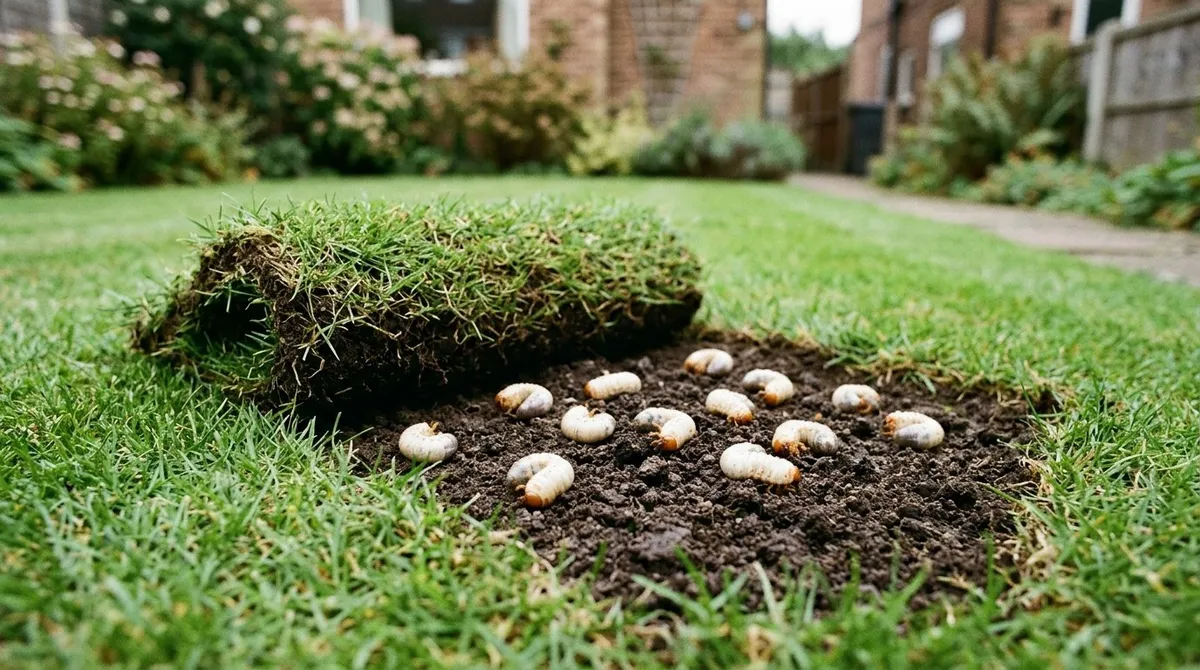
- Lawn rolled back like a carpet, often in strips, showing soil and grubs
- Cone-shaped “snuffle holes” where they’ve rooted for food
- Dug-up bulbs and disturbed plants, especially after rain
- Latrines: shallow pits of droppings, often near a fence or path
- A worn path under the fence at the same spot every night
- Five-toed prints with a wide back pad and claw marks in front of the toes
The five toes are the giveaway. Foxes and cats leave four.
Other visitors it might be:
| Animal | How to tell |
|---|---|
| Fox | Four-toe print, scattered digging, little turf rolled |
| Rabbit | Neat grazed patches, no deep snuffle holes |
| Cat | Four-toe print, small scrapes, no lawn lifting |
| Crows and starlings | Pecking at the surface, no soil rolled back |
Turf peeled back in strips plus five-toed prints means a badger.
 A lawn peeled open overnight. It looks dreadful, but the cause is simple: lots of chafer grubs just under the surface.
Why Badgers Come Into Gardens
Badgers visit gardens for easy food. Take it away and the visits stop.
What draws them in:
- Chafer grubs and leatherjackets in the lawn, their favourite
- Fallen apples, pears and plums in late summer and autumn
- Open compost heaps with kitchen scraps
- Bin bags and wheelie bins with loose lids
- Pet food left out overnight
- Spilt bird food and fat balls they can reach
Badgers eat lots of earthworms, but grubs are an even richer meal. Once a badger learns your lawn is a larder, it comes back night after night. Every tip below works by removing or guarding that food.
 A snuffle hole and a clear five-toed print in soft mud after rain. That wide back pad says badger, not fox.
The Law: What You Can and Cannot Do
Badgers and their setts are protected by the Protection of Badgers Act 1992. Harming, trapping or killing a badger is a crime. So is damaging or blocking a sett, or disturbing a badger inside one.
You can:
- Take away food from your garden
- Put up or repair a strong boundary fence
- Try smells and lights
- Pick up windfalls, secure bins and bring pet food in
You can’t, without a Natural England licence:
- Block, dig out or interfere with a sett
- Fit a one-way badger gate
- Fence so a badger is trapped inside or cut off from its sett
If there’s a sett in or near your garden, you’ll need a licence before any work that could affect it. The gov.uk badger guidance explains when. If you’re not sure, treat the hole as an active sett and leave it be.
 A trail camera on a fence post, aimed at the gap the badger uses. A week of footage shows you where it gets in before you change any fencing.
Remove the Food Source First
Treat the grubs. Water nematodes into the lawn. These are tiny natural predators sold in packs. Use the chafer grub type in late summer and early autumn, and the leatherjacket type in autumn or spring. The soil needs to be warm and moist. Keep the lawn damp for two weeks after.
Pick up windfalls. Clear fallen apples, pears and plums every day in autumn. A badger can clear a whole tree’s drop in one night.
Lock away the food. Bring pet bowls in at dusk. Keep bins in a closed store or strap the lids down. Cover compost heaps and keep cooked scraps out of open piles. Sweep up spilt bird food.
 Watering nematodes into a lawn in early autumn, at dusk while the ground is moist. This one job takes away the badger’s main reason to dig.
Legal Fencing and Electric Fencing
Fencing works when it’s strong enough and put up legally.
Badgers are low, heavy and very strong. They push under weak panels and dig beneath. Bury the bottom of a wire fence 30cm deep, or bend a skirt of mesh outwards along the ground. Use heavy weldmesh, not chicken wire.
A low electric wire is often the easiest fix at a single entry point. Run one wire 10-15cm off the ground from a battery energiser. It gives a harmless shock that teaches the badger to go elsewhere. Some people add a second wire at about 20cm.
The one rule: never fence a badger in, or cut it off from its sett. That needs a licence. Fence your garden, not the badger’s home.

Scent Deterrents and What Actually Works
Smells get a lot of praise, but they don’t last. Citronella, male urine and shop-bought repellents may put a badger off for a few nights. A hungry badger soon ignores them. Treat them as a short-term extra, not the main plan.
Your options at a glance:
| Method | How well it works | Legal? |
|---|---|---|
| Nematodes for grubs | Well, it removes the cause | Yes |
| Clearing windfalls and bins | Well, it cuts easy food | Yes |
| Low electric wire | Well at the entry point | Yes, never seal a sett |
| Strong dug-in fence | Fairly well | Yes, never seal a sett |
| Smells | Briefly | Yes |
| Motion lights and sprinklers | Briefly, badgers get used to them | Yes |
| Blocking a hole or sett | Not an option | No, it’s a crime |
Put your effort into the top of the table.
When to Call a Professional
Some jobs need an expert. Call a licensed ecologist or a local badger group if there’s a sett in or next to your garden, if a wall or foundations are being dug under, or if fencing might cut a badger off from its sett. They can check whether the sett is in use and apply for a licence if work is truly needed.
Your local Wildlife Trust can point you to a badger group nearby. Never let a pest control firm “deal with” a badger off the books, as you could both be prosecuted.
Badger Activity Calendar UK Month-by-Month
| Month | What to do |
|---|---|
| January | Badgers quieter in cold spells; check fencing |
| February | Cubs born underground; never disturb setts |
| March | Feeding picks up; watch for the first snuffle holes |
| April | Leatherjacket nematodes if the soil is warm |
| May | Cubs come above ground |
| June | Keep pet food in at dusk |
| July | Dry spells make badgers dig harder |
| August | Chafer grub nematodes; clear early windfalls |
| September | Last chance for chafer nematodes; clear windfalls daily |
| October | Worst lawn damage; secure bins and mend fences |
| November | Badgers feeding up for winter; lock away food |
| December | Quieter again; think about what worked |
Frequently asked questions
Is it illegal to deter badgers in the UK?
No, gently putting them off is fine. The law bans killing, hurting or trapping a badger, and interfering with a sett. You can take away food, fence your garden and try smells. You must not block a sett or fence a badger in or away from one without a Natural England licence.
Why are badgers digging up my lawn?
They’re after chafer grubs and leatherjackets. Badgers roll the turf back like a carpet to reach the grubs underneath. It’s usually worst in autumn and after rain, when grubs sit near the surface. Treat the grubs with nematodes and the badger has much less reason to dig.
What is the best badger deterrent for a garden?
Taking away the food beats any spray or gadget. Use nematodes on the lawn grubs, pick up fallen fruit every day, and lock away bins and pet food. Add a strong fence or a low electric wire where they get in. Smells only help for a short while.
Can I block a badger hole or sett?
No, blocking a sett is a crime. Even a hole that looks unused may be active, so leave it alone. Any work on a sett, including one-way badger gates, needs a licence from Natural England.
Do badger scent deterrents like male urine work?
Not for long. Citronella and male urine might unsettle a badger for a few nights, but a hungry one soon ignores them. Use them only as a short-term extra while you take away food and fix the fence.
 Bins in a closed store with the lids strapped. With pet bowls in at dusk too, the last easy meals are gone.
Now plan the rest of your garden defences
Our team produces practical UK gardening guidance from source research, contributor records and established horticultural practice. Editorial standards are overseen by Matt W.