Key takeaways
- Worms let air and water into the soil and help clay drain
- Their casts are rich, natural plant food
- Mulch bare soil every autumn to feed them
- Dig less and keep off wet soil to protect their tunnels
- Brandling worms in a wormery turn kitchen scraps into compost
Earthworms are your garden’s hidden workforce. They dig tunnels that let air and water into the soil, drag dead leaves underground and leave behind rich worm casts. Seeing plenty of them is a sign your soil is in good health. The best ways to help them are simple: mulch, dig less and keep off wet soil.
The UK has quite a few kinds of earthworm, though most of us only ever notice three or four. Even those few move an awful lot of soil, more than any amount of digging you could do.
Which earthworm species live in UK garden soil?
There are three main types, and each does a different job. Surface worms break down leaf litter. Topsoil worms mix and aerate the root zone. Deep burrowers make long drainage tunnels. A garden with all three has the healthiest soil.
| Worm | Type | What it looks like | What it does |
|---|---|---|---|
| Lob worm | Deep burrower | Big, dark red-brown head, paler tail | Long deep burrows, pulls leaves down |
| Red worm | Surface worm | Small, dark red-purple | Breaks down leaf litter |
| Green worm | Topsoil worm | Small, green, pink or yellow | Tunnels through the topsoil |
| Grey worm | Topsoil worm | Pale grey-pink | Mixes compost into the soil |
| Brandling worm | Surface worm | Red-brown with pale stripes | Compost expert, used in wormeries |
| Black-headed worm | Deep burrower | Dark head, grey-brown body | Deep burrows, pulls leaves down |
| Blue-grey worm | Topsoil worm | Blue-grey with a yellowish tail | Tunnels through heavier soils |
Deep burrowers are the big ones. The lob worm, the one blackbirds love, makes a permanent burrow straight down into the soil. At night it pops up to pull fallen leaves into its tunnel.
Topsoil worms live near the surface and tunnel sideways. They eat their way through the soil, opening it up for roots, air and water. The little green worm is one of the most common in UK gardens, even though it isn’t always green.
Surface worms live in leaf litter and compost heaps rather than the soil itself. The brandling, or tiger worm, is the one sold for wormeries and composting. It munches through waste faster than any other.
 Worm casts on the soil surface are rich in plant food.
How do earthworms improve garden soil?
They make soil better in lots of ways at once: better crumb, better drainage, more food for plants and more life underground.
Soil structure and aeration
Worm tunnels open up squashed soil so air and water can get in. The worms line their tunnels with slime, which holds the walls together and feeds helpful soil bacteria. On heavy clay, these tunnels are a big part of how water drains away.
Nutrient cycling through castings
Worm casts are soil that’s been through a worm’s gut. They come out much richer in plant food than the soil around them. The RHS earthworm page explains more. It’s a free, steady supply of plant food, alongside any fertiliser you choose to use.
Drainage improvement
Deep burrows work like tiny drainpipes, carrying rainwater down from the surface. That’s a real help in heavy clay soils, where puddles otherwise sit for days.
Organic matter incorporation
Every autumn, worms drag fallen leaves down into the soil, doing your digging for you. Over the year they mix in a good layer of compost and mulch. If you garden no-dig, the worms are your cultivators.
How to count earthworms in your garden
The mustard test is a fun way to see how many worms you have, without digging. Children love it.
- Mark out a square about 30cm by 30cm on bare soil
- Stir a teaspoon of English mustard powder into a large jug of water
- Pour it slowly over the square
- Wait 10-15 minutes and worms will wriggle up to the surface
- Count them, then pop them back somewhere damp and shady
- Try a second jug of mustard water to bring up a few more
What your count means:
| Worms found | What it tells you |
|---|---|
| None or very few | Your soil needs more compost and less digging |
| A handful | Doing OK, with room to improve |
| Lots | Your soil is in great shape |
Try it in two or three spots around the garden. Spring or autumn is best, when worms are near the surface. Skip it in dry spells or hard frost, when they head deeper.
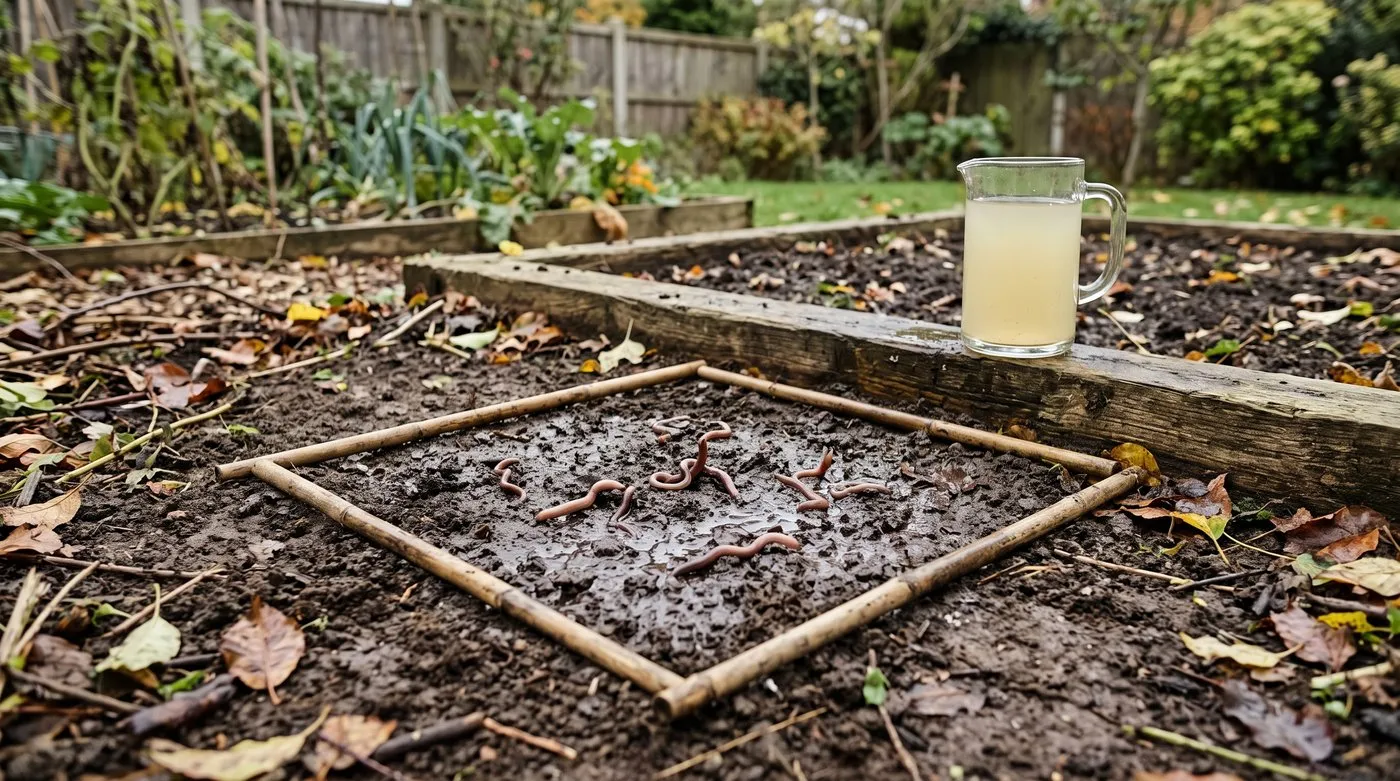
Pour the mustard water slowly over a marked square and wait 10-15 minutes. Count the worms that come up, then pop them back somewhere damp and shady.
What threatens earthworms in UK gardens?
The main problems are heavy chemical use, squashed soil and too much digging.
Chemical fertilisers and pesticides
Strong, salty fertilisers used heavily aren’t kind to worms. Well-rotted manure, garden compost and leaf mould feed plants and worms together.
For slugs, try encouraging natural predators like hedgehogs, frogs and birds. Our guide to getting rid of slugs has more worm-friendly ideas.
Soil compaction
Walking on wet soil squashes worm tunnels and the air spaces they need. A loaded wheelbarrow on wet clay does even more damage. Stick to paths, and use stepping boards when the soil is wet. Raised beds work well because you never need to stand on them.
Rotavating and deep digging
Rotavators chop up worms and wreck their tunnels. Deep burrowers are slow to come back afterwards. No-dig gardening leaves their homes alone.
 A thick layer of compost or leaf mould is the easiest way to get more worms.
How to encourage more earthworms
Mulching is the simplest thing you can do. A layer of leaf mould, garden compost or well-rotted manure gives worms food, keeps the soil moist and means less digging.
Apply organic mulch
Spread a layer several centimetres thick over bare soil. Good choices:
- Leaf mould: worms adore it
- Garden compost: a great food supply
- Well-rotted manure: always well rotted, never fresh
- Bark chippings: good for paths and around shrubs
- Straw: handy on veg beds, breaks down in a season
Top it up each autumn. By spring, the worms will have pulled much of it underground.
Stop digging
Every time you turn the soil, tunnels collapse and worms get eaten by birds. Try no-dig instead: spread compost on top and let the worms mix it in. After a couple of seasons you’ll notice the soil is softer and easier to plant into.
Reduce chemical inputs
Feed with compost, manure and organic feeds. Try nematodes for pests where you can. If you do use chemical feeds, stick to the label rate and water them in well.
Create habitat diversity
Worms love variety. Log piles, compost heaps, leaf mould bins and undisturbed corners all give them shelter. A wildlife-friendly garden with plenty of plants and ground cover suits them far better than bare soil. Bug hotels and ground cover keep things damp and sheltered for surface worms.
Want to dig deeper (sorry)? The Earthworm Society of Britain has help with identifying worms and recording them. For everyday care, just keep mulching and keep off wet soil.
How to start vermicomposting with a wormery
A wormery uses brandling worms to turn kitchen scraps into rich compost. It’s a different job from helping the worms in your soil. Brandlings live in rotting waste, not ordinary garden soil.
What you need
| Item | Notes |
|---|---|
| Tiered wormery bin | Several trays with a sump and tap at the bottom |
| Brandling worms | Sold online by the bag |
| Shredded cardboard | Plain brown cardboard, no glossy print |
| Coir block (optional) | Coconut fibre for extra bedding |
Setting up
Soak shredded cardboard, squeeze it out and fill the bottom tray to about 10cm. Add the worms on top and cover with a damp sheet of newspaper. Leave them a couple of days to settle before feeding.
Start with small amounts of veg peelings, tea bags and coffee grounds. Add more as the worms get going.
Leave out: citrus peel, onions and garlic, meat and dairy (they attract rats) and bread (it goes mouldy).
Harvesting
After a few months the bottom tray fills with dark, crumbly compost. Add a fresh tray on top with new bedding and food, and the worms move up, leaving the finished compost behind. The liquid in the sump is a strong plant feed. Dilute it about 1 part to 10 parts water before use.
 A tiered wormery turns kitchen scraps into compost and liquid feed.
The role of earthworms in lawn health
Worm casts on a lawn are a sign of healthy soil underneath. They can look messy, but the worms are airing the soil and breaking down thatch, the layer of dead grass at the base of the lawn. Just brush the casts away with a stiff broom once they’re dry. Never use chemicals to get rid of lawn worms.
If casts bother you, raise the mower to about 4cm. Longer grass hides them. Keep off the lawn when it’s soggy in winter to protect the tunnels.
Seasonal earthworm activity in the UK
Worms are busiest when the soil is mild and moist.
| Season | What worms are doing | What you can do |
|---|---|---|
| Spring (Mar-May) | Very busy, breeding | Spread compost |
| Summer (Jun-Aug) | Slow down when dry | Water in drought, keep mulch topped up |
| Autumn (Sep-Nov) | Very busy, near the surface | Mulch, and try the mustard test |
| Winter (Dec-Feb) | Deep down, resting | Keep off wet soil |
Both drought and waterlogging send worms deeper. In most gardens, they’re busiest in spring and autumn.
Frequently asked questions
How many earthworms should healthy soil have?
Plenty, though it varies with soil and season. Dig out a spadeful in spring or autumn and look. A handful of worms is a good sign. If you find none at all, your soil probably needs more organic matter and less digging. Clay soils and gardens fed with compost usually have the most.
What do earthworms eat in the garden?
Rotting leaves and other dead plant bits. Some worms pull fallen leaves down into their burrows at night. Others eat their way through the soil, taking goodness from the decaying bits in it. They don’t eat living roots or harm your plants.
Do earthworms survive winter in the UK?
Yes, they move deeper underground. Lob worms retreat down their long burrows when it gets cold. Smaller worms shelter in compost heaps and under mulch. Many curl up in a tight ball and rest until the soil warms up again.
Are earthworms good for clay soil?
Yes, they’re a huge help on clay. Their tunnels act like little drains, so water soaks away instead of sitting on top. The tunnels also let air reach the roots. Keep mulching and the soil gets easier to work over a few years.
Can I buy earthworms for my garden?
You can, but you rarely need to. Mulch and compost will bring your local worms in by themselves. Bought worms often die if the soil isn’t right for them. The exception is brandling worms for a wormery, which you can buy online.
Do chemical fertilisers harm earthworms?
Strong ones can, used heavily. Salty, high-strength feeds aren’t kind to worms. Compost and well-rotted manure feed your plants and the worms at the same time. If you do use a chemical feed, stick to the label rate and water it in well.
How do I start a wormery at home?
Get a tiered bin, some brandling worms and damp shredded cardboard. Add small amounts of veg peelings each week, but skip citrus, onions, meat and dairy. Keep the bin somewhere sheltered, out of frost and hot sun. In a few months you’ll have rich compost and liquid feed.
Our team produces practical UK gardening guidance from source research, contributor records and established horticultural practice. Editorial standards are overseen by Matt W.