Key takeaways
- Build only while the willow is dormant, from November to March
- Use fresh, straight rods of common osier (Salix viminalis) for the frame
- Push uprights about 30cm deep, every 30cm round a 2 to 3m circle
- Tie joints with soft jute or rubber ties, never wire
- Keep the base weed-free and well watered for the first two summers
- Site it well away from the house, drains and paving
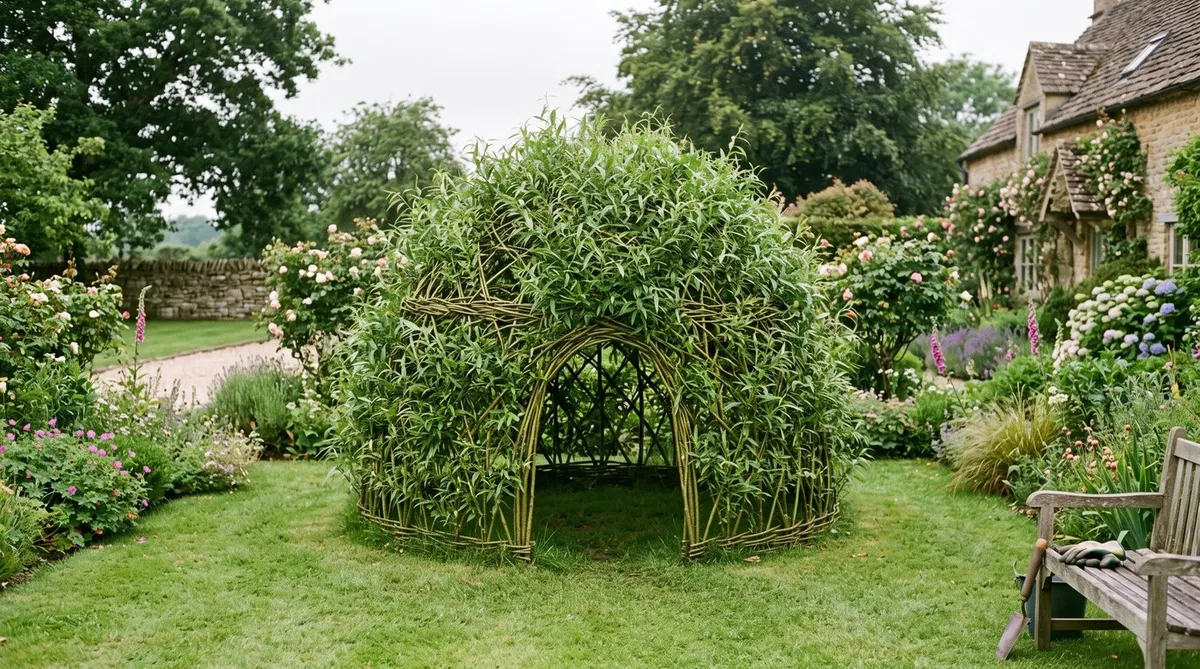
A living willow dome is one of the most fun things you can build in a garden. You push freshly cut willow rods into the ground in a circle, bend and tie the tops, then weave thinner rods through the sides. The rods root where they stand and grow into a leafy den.
It needs no power tools, no foundations and very little money. The only hard rule is timing: build it in winter while the willow is dormant. The same method also makes tunnels, arches and woven fences called fedges.
If you want to grow willow as a tree or hedge rather than a structure, the guide on how to grow willow in the UK covers types, cuttings and coppicing.
What is a living willow structure?
A living willow structure is a framework of willow rods that root in the ground and keep growing. You are planting long cuttings, not building with dead wood. Willow roots so easily that a fresh rod pushed into damp winter soil soon sends out roots and shoots.
There are four main shapes:
- Dome: a round den, usually 2 to 3m across. Children love them.
- Tunnel: pairs of rods arched over a path.
- Arch: a single hoop over a path or gateway.
- Fedge: short for fence-hedge, a flat woven screen.
All four are built the same way. Only the plan on the ground changes.
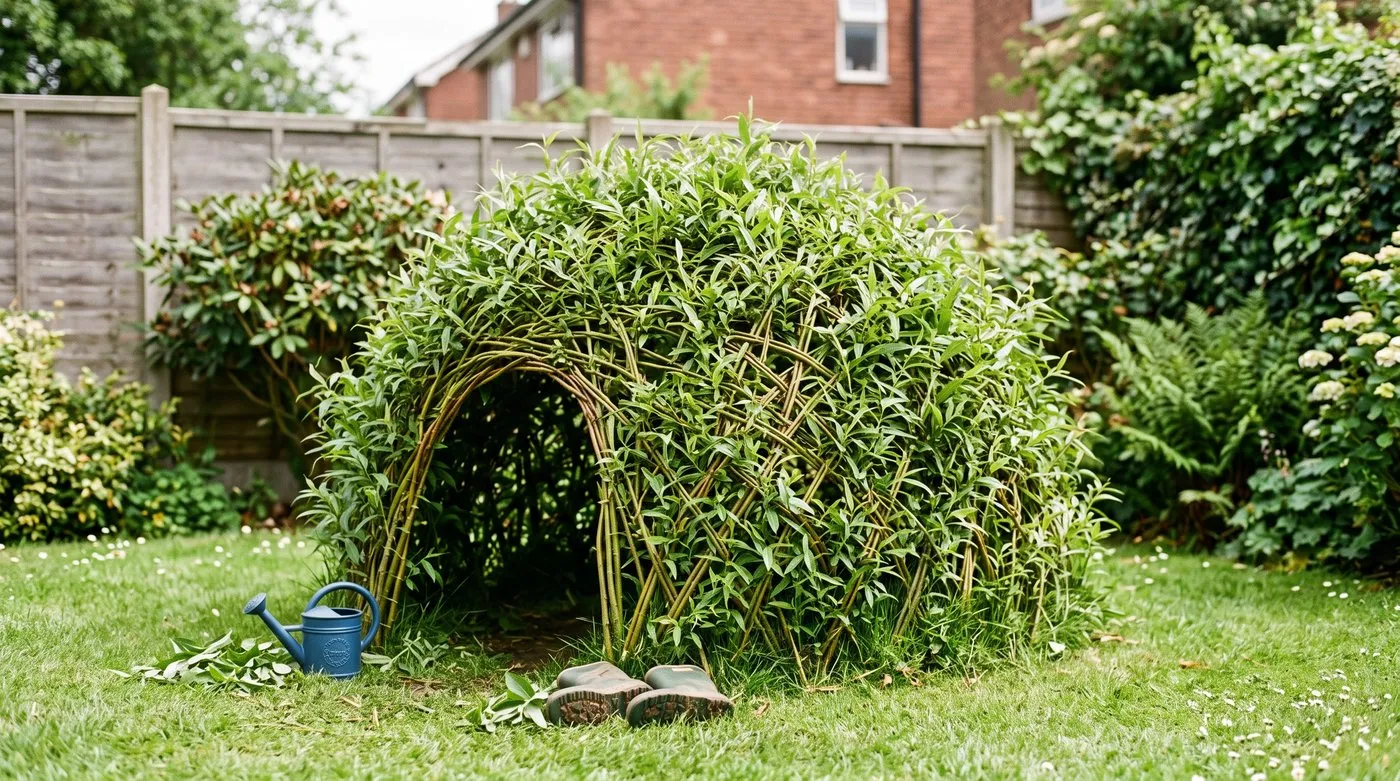
Once the rods root, a willow dome leafs up into a shady den every summer. It’s a brilliant hideaway for children.
When to build a living willow dome
Build between November and March, while the willow is dormant and bare. Order rods for delivery in this window and plant them as soon as they arrive.
In winter the willow stores its energy in the stem. Pushed into cold, damp soil, it roots before it needs to feed any leaves. Plant after the buds have burst and the rod tries to support leaves without roots. It usually wilts and dies.
December to February is the safest core of the season. Avoid days when the ground is frozen hard or waterlogged. Early April can work in a cold spring, but only if the buds are still tight.
| Month | Can you build? |
|---|---|
| November | Yes. Rods are dormant and the soil is still workable |
| December to February | Ideal. Fully dormant rods and moist soil |
| March | Yes, early in the month before buds swell |
| April | Only if buds are still tight. Risky |
| May to October | No. Rods in leaf will not root. Wait for winter |
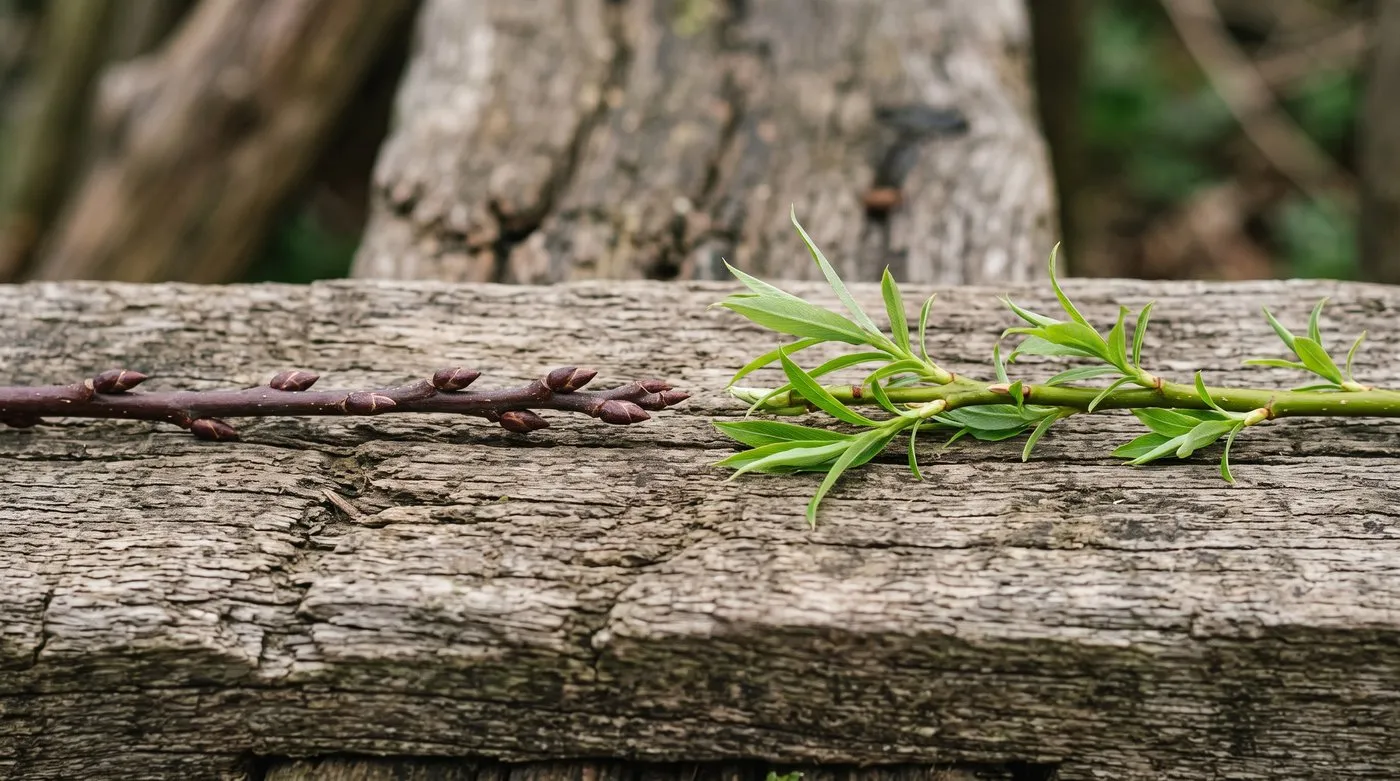
Plant rods while they look like the bare one on the left. Once they’re in leaf like the one on the right, they rarely root.
Which willow should you use?
Common osier (Salix viminalis) is the standard choice for the frame. It is straight, bendy, vigorous and roots very reliably. Rods of 2.5 to 3m suit a dome.
For pattern, weave in a few coloured willows. Salix alba var. vitellina has orange-yellow stems. Salix purpurea has purple stems. Salix daphnoides has purple stems with a white bloom. They show up best in winter, when the leaves are off.
Buy fresh, graded rods from a specialist willow grower between November and March. Many sell dome and tunnel kits with enough rods for the job. Keep rods cool, and stand the cut ends in water if you can’t plant straight away.
Dome, tunnel, arch or fedge: which suits your garden?
Pick the shape that fits your space and what you want it for.
| Structure | Rough number of rods | Space needed | Best for |
|---|---|---|---|
| Dome | 50-100 | A 3m circle | Children’s den, garden feature |
| Arch | 12-20 | Width of the path | Framing a path or gateway |
| Tunnel | 100 or more | 1m wide, several metres long | Walk-through or play route |
| Fedge | A few per metre | A strip about 60cm deep | Screen or plot divider |
An arch is the easiest place to start. A dome takes a day. A tunnel or long fedge takes more rods and more weaving, but the method is identical.
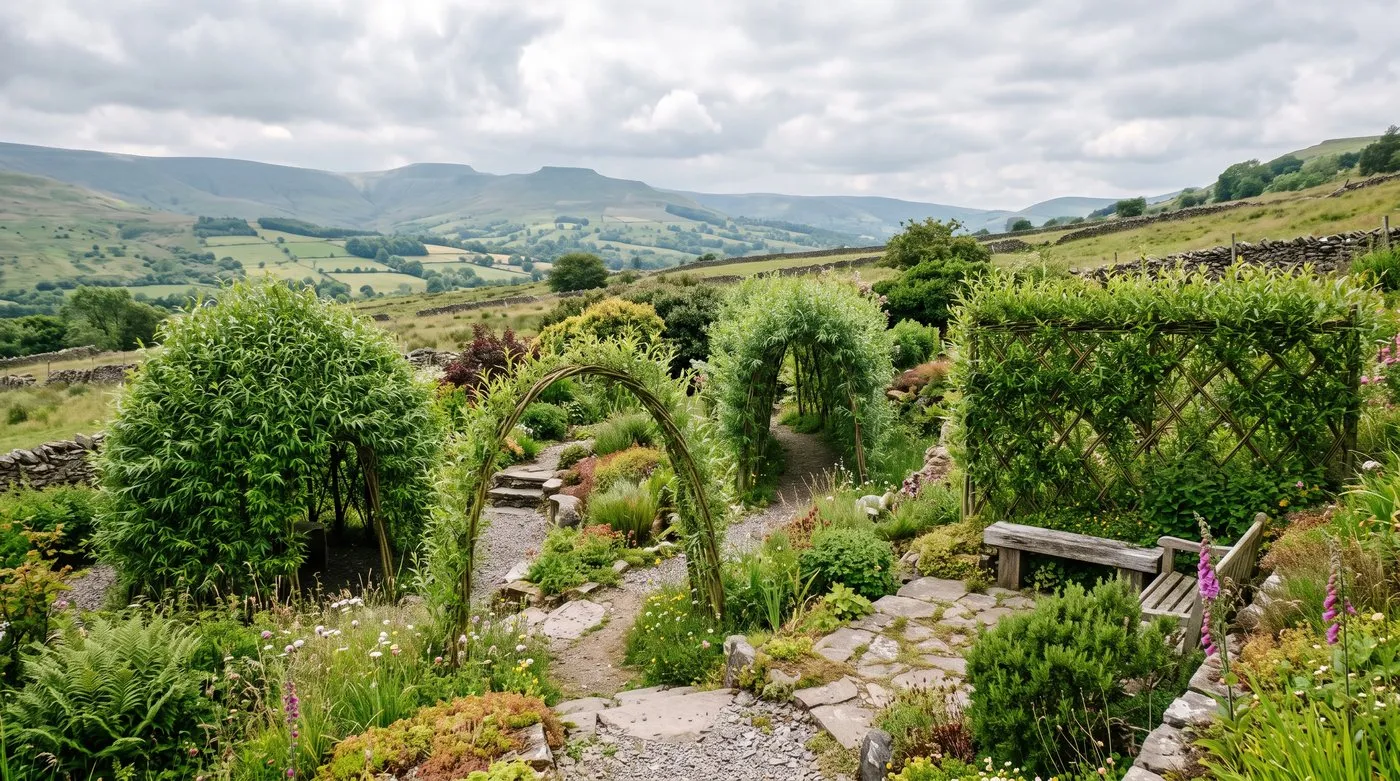
Dome, arch, tunnel and fedge all use the same method. Only the shape you mark on the ground changes.
How to build a living willow dome step by step
A 2.4m dome takes one person about a day, or an afternoon with a helper. Have the rods, membrane and ties ready before you start.
- Clear the ground. Strip the turf from a circle a little wider than the dome. Loosen the top 15cm of soil. Grass is the biggest threat to young willow.
- Lay the membrane. Peg a woven weed-suppressing membrane over the area. Cut a small cross at each planting point.
- Mark the circle and door. Mark a circle 2 to 3m across. Mark planting points every 30cm, leaving a 60cm gap for the door. A 2.4m circle takes about 25 uprights.
- Push in the uprights. Push each thick rod about 30cm into the soil. On hard ground, make a pilot hole with a metal spike first. Firm the soil round each one.
- Bend and tie the crown. Bend opposite rods over to meet in the middle. Tie the tops together with soft jute to make the roof.
- Weave the sides. Push thinner rods in at an angle beside each upright. Weave them over and under the uprights, then cross a second set the other way to make diamonds.
- Tie the joints. Tie each crossing with soft string or rubber tree ties.
- Water in. Soak the base of every rod straight away.
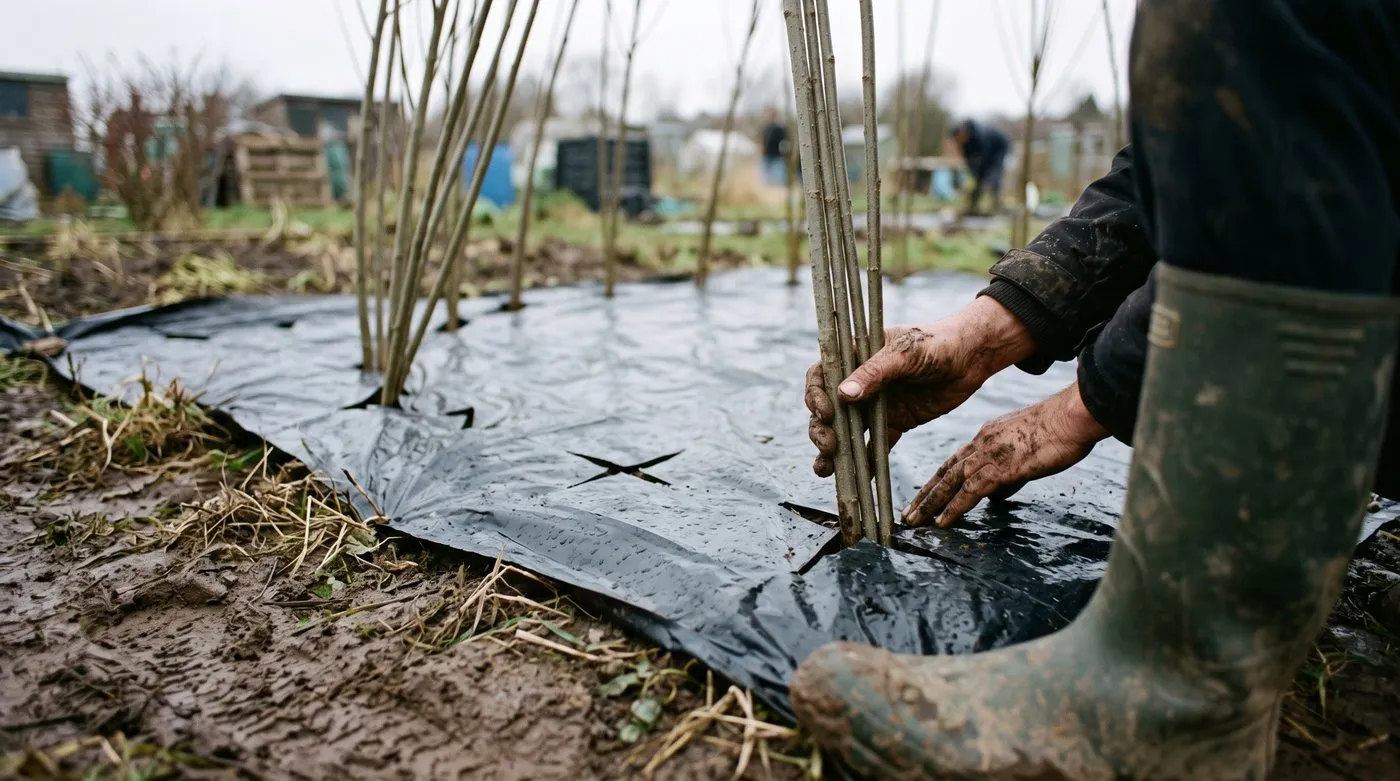
Push each upright about 30cm down through the membrane and firm it in. A rod that wobbles won’t root well.
How to tie living willow joints
Use soft jute string or rubber tree ties at every crossing. Never use wire or plastic-coated ties.
Willow rods thicken every year. Hard ties bite into the bark as the stem swells and can strangle it. Jute rots away within a season or so, by which time the joints have often grafted together on their own. Check rubber ties each winter and loosen any that have tightened.
A tighter weave gives denser walls and a darker den. A looser weave lets in more light and uses fewer rods.
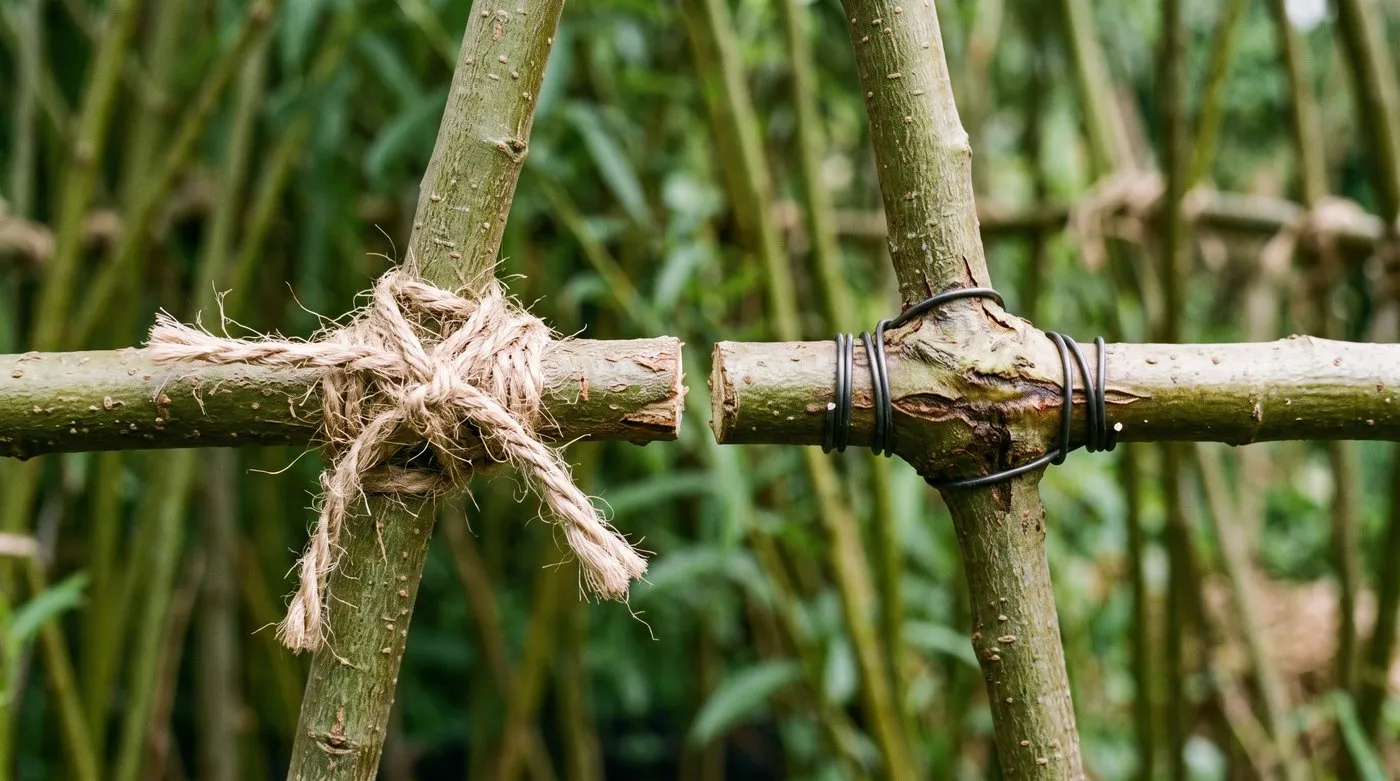
Soft jute on the left rots away harmlessly. The wire on the right is already cutting into the rod as it grows.
How to look after a willow dome through the year
Two jobs keep a willow dome healthy: watering while it’s young and weaving the new growth every winter.
Water well for the first two summers. Young rods have small roots and willow is thirsty. Soak the base once a week in dry spells. Losing rods in a dry first June is the most common failure. Keep the base free of grass and weeds too.
Trim and tie in during summer. Willow grows fast. Trim long shoots that stick out once or twice over summer, or tie them into the frame, so the dome keeps its shape.
Weave in new growth each winter. Between November and March, bend the year’s whippy shoots into the walls and tie them in. Cut out dead rods and plug gaps with fresh ones. This is what turns a thin frame into thick, leafy walls.

A few winters of weaving in new shoots gives thick, leafy walls like these.
Willow dome care calendar
| Month | Task |
|---|---|
| November to February | Build new structures. Weave in last year’s growth. Replace dead rods |
| March | Finish weaving and planting before buds swell |
| April to May | Leaves appear. Keep the base weed-free. Water if dry |
| June to August | Water young structures weekly in dry spells. Trim or tie in long shoots |
| September to October | Ease off watering. Plan which shoots to weave in over winter |
Gardener’s tip: Weave on a mild, still day. Willow is more bendy then, and cold rods are more likely to snap.
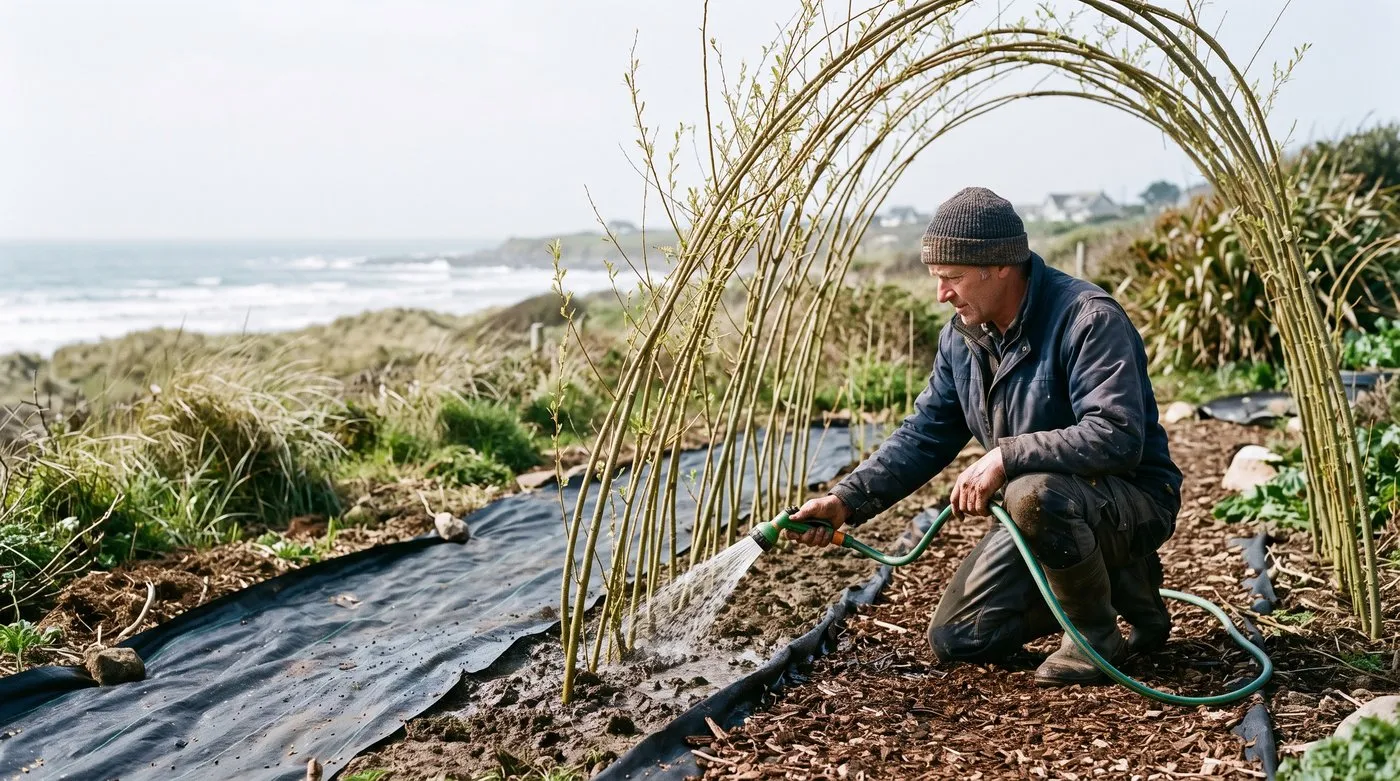
Water the base of a new tunnel or dome every week in dry spells for its first two summers.
Where should you put a willow structure?
Put it on open lawn or a play area in sun or light shade, well away from the house. Willow roots chase water. They can get into cracked drains, lift paving and add to subsidence on shrinkable clay.
Keep it clear of walls, drains, buried pipes and patios, and give it extra room on clay soil. Regular trimming keeps a structure small, which helps, but distance is the best protection.
A dome makes a great centrepiece in a children’s garden. It also suits a wildlife-friendly garden: the dense summer growth gives birds cover. Check for nests before you trim in spring and summer, and leave any active nest alone.
Common mistakes with living willow
- Building in leaf. Rods planted after bud-break rarely root. Build between November and March.
- Planting into grass. Turf and weeds starve young willow of water. Strip the turf and use a membrane.
- Not watering. Dry first summers kill rods. Water weekly in dry spells for two years.
- Building near the house. Roots go looking for drains. Site it well away from buildings and pipes.
- Tying with wire. Wire cuts into thickening stems. Use jute or rubber ties.
- Letting it run wild. Untrimmed willow soon turns into a thicket. Trim in summer and weave in winter.
Want something similar for a boundary? Compare a fedge with a planted hedge in the hedge planting guide. Willow also coppices well, as the guide to pollarding and coppicing explains, which gives you a free supply of rods for repairs.
Frequently asked questions
When can you build a living willow dome in the UK?
Build it between November and March, while the willow is dormant. Rods cut and planted before the buds break root easily in moist winter soil. Once leaves appear in spring, wait until the next winter.
How many willow rods do you need for a dome?
A 2.4m dome needs about 25 uprights plus a similar number of weavers. Uprights go every 30cm round the circle. Thinner rods weave between them. Order extra to allow for thin or broken rods.
What is the best willow for living structures?
Common osier, Salix viminalis, is the best all-rounder. It is vigorous, straight and roots easily. Add a few coloured willows such as Salix alba var. vitellina (orange-yellow stems) or Salix purpurea (purple stems) to pattern the weave.
Do living willow structures need a lot of water?
Yes, especially in the first two summers. Soak the base once a week in dry spells while the roots establish. Keep the base free of grass and weeds, which steal water. After that, it only needs help in a drought.
How far should a willow structure be from a house or drain?
As far as your garden allows. Willow roots chase water and can get into cracked drains, lift paving or add to subsidence on clay. Build on open lawn, well clear of the house, walls, drains and buried pipes.
How long does a living willow dome take to establish?
Usually two to three growing seasons. The rods root and shoot in the first summer. Each winter you weave the new growth into the walls. By the third summer most domes look leafy and solid.
What do you tie living willow with?
Soft jute string or rubber tree ties. Never use wire or plastic-coated ties. As the rods thicken, hard ties cut into the bark and can kill the stem.
Can you make a living willow fence or screen?
Yes, a woven living willow fence is called a fedge. Push uprights in a straight line and weave rods diagonally between them. Plant and water it just like a dome.
Now your dome is planned, find more family-friendly ideas in our guide to gardening projects for kids, or browse all our how-to guides.
Our team produces practical UK gardening guidance from source research, contributor records and established horticultural practice. Editorial standards are overseen by Matt W.