
Key takeaways
- Cut branches from late January to mid-March, when buds are plump but still closed
- Forsythia and pussy willow are the easiest and quickest to force
- Cut stems on a slant and split the base so they can drink well
- Give them a couple of days somewhere cool before moving them into the warmth
- Only take a few branches from each plant, treating it like a light prune
Forcing flowering branches is one of the easiest ways to bring spring indoors weeks before it arrives outside. Imagine a jug of forsythia glowing yellow in February, cherry blossom on the kitchen table in early March, or soft silver pussy willow in January. All you do is cut dormant branches and coax them open with water and warmth.
It’s simple. Cut branches when the buds are plump but still closed, give them a good drink, then bring them gradually into a warm room. Most flower within one to three weeks. Below is what to cut, when to cut it, how to treat the stems and how to arrange them. For forcing crops instead, see our guide to forcing rhubarb, chicory and seakale.
Which branches can I force indoors?
Only spring-flowering trees and shrubs that flower on last year’s wood can be forced. They make their flower buds the summer before, and the buds sit waiting through winter. Bringing a cut branch indoors gives them the warmth they’re waiting for.
Shrubs that flower in summer on new growth won’t work, because their flower buds don’t exist yet in winter. Roses, buddleja, hydrangeas and late clematis are all no-goes.
Eight of the best branches to force:
| Branch | Colour | Time to open indoors | Cut from | How easy |
|---|---|---|---|---|
| Forsythia | Bright yellow | 1-2 weeks | Late January | Easy |
| Pussy willow (Salix caprea) | Silver catkins | A few days to a week | Late January | Easy |
| Flowering quince (Chaenomeles) | Red, pink or white | 2-3 weeks | Early February | Easy |
| Flowering cherry (Prunus) | Pink or white | 2-3 weeks | Mid-February | Medium |
| Crab apple (Malus) | Pink buds, white flowers | 2-4 weeks | Mid-February | Medium |
| Witch hazel (Hamamelis) | Yellow or orange | 1-2 weeks | Late January | Easy |
| Magnolia (stellata, soulangeana) | White or pink | 3-4 weeks | Early March | Harder |
| Dogwood (Cornus) | Coloured stems | Stems look good straight away | Late January | Easy |
For more ideas on early-flowering trees and shrubs, see our best spring flowers guide.
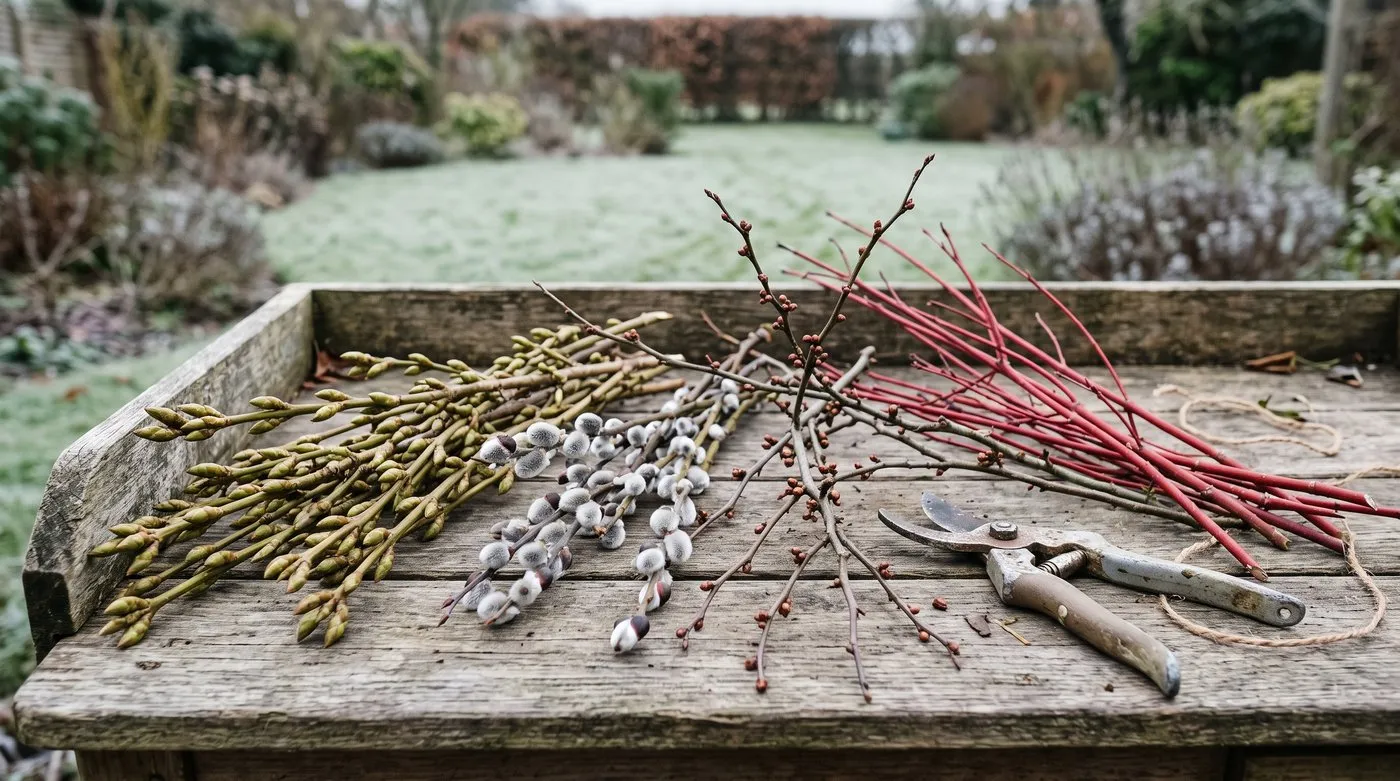
Only spring-flowering shrubs that bloom on last year’s wood will force, as their flower buds are already waiting. Forsythia and pussy willow are the easiest to start with.
When to cut branches for forcing
Cut from late January to mid-March. The exact time depends on the plant and where you live. The south of England is usually a few weeks ahead of Scotland.
The simple test: The buds should look fat and plump. Scratch one with your thumbnail and you should see green inside. If the buds are still small, tight and hard, they’re not ready and may not open.
Earlier cuts (late January and February) take longer to open indoors, often a few weeks. The flowers open slowly and tend to be lovely and clean.
Later cuts (early to mid-March) open faster but don’t gain you much, as the trees outside are nearly ready to flower anyway.
Pick your day: Cut on a mild, dry day. Avoid hard frosts, when frozen branches snap rather than cut cleanly and frozen buds are more likely to drop. Early afternoon is ideal.
Forsythia branches with fat buds, ready to cut in late January
How to cut and condition branches
How you treat the stems decides whether your branches flower or just drop their buds. Here’s what to do.
Step 1: Cut. Use sharp secateurs or loppers. Cut branches about 45-90cm long, as longer stems look more dramatic. Cut just above an outward-facing bud or where a branch joins another. It doubles as a bit of early spring pruning.
Step 2: Slant cut. Re-cut the base of each stem on a long slant indoors, so there’s more cut surface to take up water.
Step 3: Split the base. Make a short cut a few centimetres up the middle of each woody stem with your secateurs. This helps it drink.
Step 4: Warm water. Stand the stems straight away in a bucket of warm, not hot, water. Warm water is taken up faster than cold. A teaspoon of sugar per litre gives them a little extra food.
Step 5: Somewhere cool. Leave the bucket in a cool room (10-15C), like a spare bedroom, porch or garage, for a couple of days. This eases them in gently. Mist the buds with water a couple of times a day.
Step 6: Bring them into the warm. Then move them to a clean vase in a warm room (18-22C). Keep them away from radiators and direct sun, and keep misting the buds until they open. Our flower conditioning guide has more tips for keeping cut stems fresh.
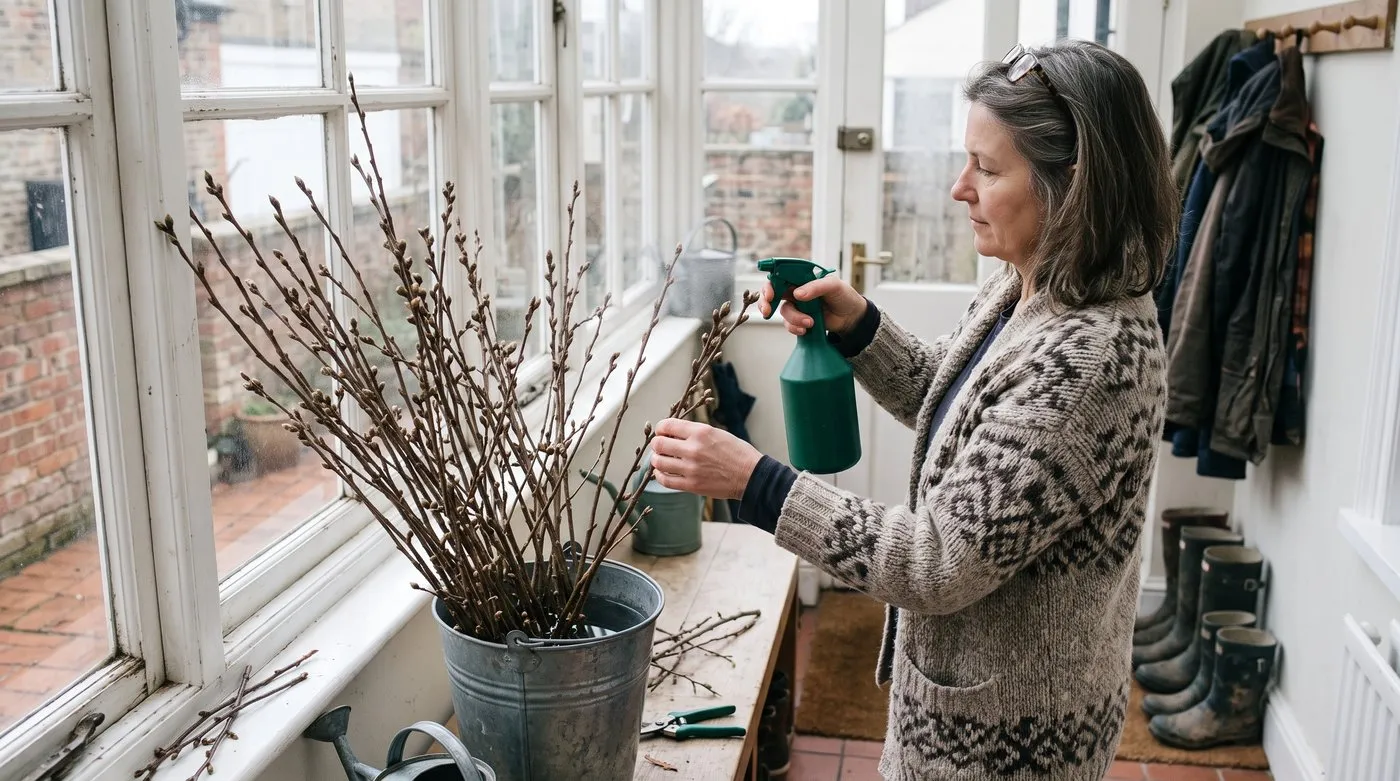
Give branches a couple of days in a bucket somewhere cool before they go into the warm. Misting the buds twice a day helps stop them browning and dropping.
Forcing timeline by species
Forsythia: The quickest and most reliable. Cut from late January and the bright yellow flowers open in a week or two. The bendy stems are easy to arrange. Pull off any leaves that appear, as they’re not much to look at.
Pussy willow: Cut from late January. The silvery catkins appear within days, and it’s the easiest branch of all. The catkins last for weeks and dry nicely. Don’t be surprised if roots form in the vase.
Flowering quince (Chaenomeles): Cut from early February. Flowers open in two or three weeks, in deep red, salmon pink or white depending on the variety. The thorny, angular stems look great. One of the most rewarding to force.
Flowering cherry: Cut from mid-February. Pink or white blossom opens in two or three weeks. Double-flowered varieties last longer in a vase. The petals drop fairly quickly, so put the vase where a shower of petals won’t matter.
Cherry blossom forced into flower in a kitchen vase in late February
Crab apple: Cut from mid-February. Pink buds open to white flowers over two to four weeks, with a lovely scent indoors. The sturdy branches look very sculptural. They’re the slowest of the easier ones.
Witch hazel: Cut from late January. The spidery yellow or orange flowers open in a week or two and look wonderful up close. Our witch hazel growing guide has more on this plant.
Magnolia: Cut from early March only. White or pink flowers take three or four weeks to open. It’s the trickiest, as the big buds need lots of moisture. Mist the furry buds twice a day and keep them out of warm, dry rooms. It doesn’t always work, but when it does it’s spectacular.
Dogwood (Cornus): Cut from late January. Dogwood is mostly cut for its bright red, orange or yellow winter stems rather than flowers. They look brilliant mixed in with flowering branches. Cornus mas is the exception, with tiny yellow flowers in late winter. See our dogwood growing guide for varieties.
How to arrange forced branches
Branches need a different approach from cut flowers. They’re bigger, heavier and woodier.
Vase: Use something heavy with a wide base. Tall, thin vases tip over under long branches. Ceramic jugs, stoneware crocks and wide glass cylinders all work well.
Holding them in place: Drop a handful of clean pebbles or glass marbles into the vase for weight, and push the stems between them. Florist’s foam doesn’t grip woody stems well.
Style: Odd numbers look best, so try three or five branches at different heights. Let the natural curves set the shape. Snip off any side twigs that crowd things or dip into the water.
Mixing branches: Combine early and later ones for a display that changes over a few weeks. Start with pussy willow and forsythia in late January, then add quince and cherry in February.
Leaves: Strip any leaves below the water line, as they rot and cloud the water. Leaves above the water add a fresh splash of green.

A handful of pebbles in a wide, heavy vase holds woody stems far better than florist’s foam. Odd numbers of branches at different heights look most natural.
Responsible harvesting
Only take a few branches from each plant in a season. Cutting for the vase is really early pruning, and taking too much weakens the plant and spoils its show outside.
Choose wisely. Cut branches that cross, grow inwards or are in the wrong place first. You tidy the plant and get flowers for the house.
Young trees: Leave newly planted trees alone for their first few years. They need all their energy for growing roots.
Neighbours’ trees: Always ask before cutting from a tree that belongs to next door, even if it hangs over your garden. The RHS pruning guide is useful on pruning trees well.
In the wild: Don’t cut from wild trees in hedgerows or woods. Wild pussy willow, blackthorn and hawthorn are important early food for bees. Stick to your own garden.
Flowering quince branches forced into flower in a stoneware jug
Troubleshooting common problems
Buds go brown and drop off. Usually the branches went into the warm too fast. Give them a couple of days somewhere cool first. Radiators, a dry vase or very dry central heating can also cause it. Mist daily and keep the vase topped up.
Flowers are small or pale. The branch was cut too early and hadn’t had enough winter cold. Wait until the buds are plump and green inside.
Branches wilt in water. Air may be blocking the stem. Re-cut the base a few centimetres higher, split it again and stand it in warm water for an hour. Very long branches can struggle too, so try shortening them.
Flowers open and drop within a day. It’s too hot or sunny. Move the vase somewhere cooler and bright, away from sunny windows and radiators.
Slimy stems. Change the water every few days and take off any leaves or twigs below the water line. If it keeps happening, re-cut the stems and use a clean vase.
For forcing bulbs instead of branches, see our guide to forcing bulbs for indoor flowers.
 Cherry and forsythia cut in early February and forced indoors, flowering weeks before the trees outside.
Frequently asked questions
When is the best time to cut branches for forcing?
From late January to mid-March. The buds should be plump but not yet showing colour. Earlier cuts take longer to open but give lovely clean flowers. Later cuts open faster but don’t gain you much over the trees outside. Forsythia is ready first, in late January, and magnolia last, in early March.
Which branches are easiest to force indoors?
Forsythia and pussy willow are the easiest. Forsythia opens bright yellow within a week or two, and pussy willow catkins appear within days. Flowering cherry, flowering quince and witch hazel are also straightforward. Magnolia and apple are slower but well worth a try.
How do I condition branches for forcing?
Cut on a slant, split the base and stand them in warm water. Use sharp secateurs, and make a short cut up the middle of each woody stem. Leave them somewhere cool (10-15C) for a couple of days, then move them to a warm room (18-22C) to open. Mist the buds every day.
Can I force branches from any tree or shrub?
No, only spring-flowering ones that flower on last year’s growth. Summer-flowering shrubs flower on new growth, so their buds don’t exist yet in winter. Roses, hydrangeas and buddleja won’t work. Forsythia, cherry, apple, quince, magnolia, willow and hazel all work well.
How long do forced branches last in a vase?
Most last one to three weeks once they start flowering. Pussy willow lasts longest, while cherry blossom drops its petals sooner. Change the water every few days and trim a little off the stems each time.
Will cutting branches damage my tree?
No, as long as you only take a few branches. Use sharp secateurs or loppers and cut just above a bud or where a branch joins another, as you would when pruning. Choose branches that need removing anyway. Don’t cut the main leader or big structural branches.
Why did my forced buds turn brown and fall off?
Usually because they went into the warm too quickly. A radiator nearby or a dry vase can cause it too. Give branches a couple of days somewhere cool first, keep them away from heat and mist the buds daily. In a very dry, centrally heated room, a shallow tray of water nearby helps.
Our team produces practical UK gardening guidance from source research, contributor records and established horticultural practice. Editorial standards are overseen by Matt W.


