Key takeaways
- Forcing uses darkness, and sometimes warmth, to bring a crop on early and tender
- Cover a well-established rhubarb crown in January for pale pink stems in early spring
- Don't force the same rhubarb crown two years running; let it recover
- Witloof chicory roots, lifted in autumn and kept in total darkness, give winter chicons
- Seakale is forced like rhubarb, for blanched shoots in spring
- Chitting potatoes and sowing salads under cloches give a smaller head start
Forcing crops gives you fresh, tender food in the lean months of late winter and early spring. The idea is simple: cover a dormant plant to keep it in the dark, and it sends up pale, sweet shoots early. Rhubarb, chicory and seakale are the classic forced crops. All three are easy once you know the timing.
This guide covers dark forcing step by step, plus a quick look at chitting and cloches for an early start with other crops.
Which crops can you force?
The best crops to force store energy in a thick root or crown. In the dark, they turn that store into fast, tender shoots.
| Crop | How it’s forced | When to start | Ready in about |
|---|---|---|---|
| Rhubarb | Forcer over the crown outdoors | January | 6-8 weeks |
| Chicory (Witloof) | Lifted roots in pots, indoors in the dark | November onwards | 3-4 weeks |
| Seakale | Forcer over the crown outdoors | Winter | A few weeks to a couple of months |
Potatoes and salads aren’t forced in the dark, but chitting and cloches give them a useful head start too.
How to force rhubarb
Cover a dormant, well-established rhubarb crown in January. About six to eight weeks later you’ll have pale pink, tender stems, weeks ahead of the main crop.

Pale pink stalks and tiny yellow leaves: that’s what darkness does. Pop the lid back on quickly to keep the light out.
- Choose a strong crown that has been growing for at least three years
- Clear old leaves and weeds from around the crown
- Add a layer of straw over the crown if you like, for extra insulation
- Cover with a forcer. A terracotta forcer, an upturned dustbin or a large bucket all work
- Block every chink of light. Tuck soil or straw around the rim
- Leave it be. Each peek lets in light, so check only now and then
- Pick the stems when they’re long enough to use. Pull them with a gentle twist rather than cutting
Once you’ve had your crop, take the forcer off and stop picking from that crown for the rest of the year. Mulch it with well-rotted manure or compost to help it recover. Don’t force the same crown two years running. Leave it for at least a year, ideally two. With two or three crowns, you can force a different one each winter. The guide to when to stop picking rhubarb explains why resting matters.
How to force chicory for winter chicons
Witloof chicory is grown for its roots in summer, then forced in the dark in winter. The result is a chicon, the crisp, pale head sold in shops as Belgian endive.
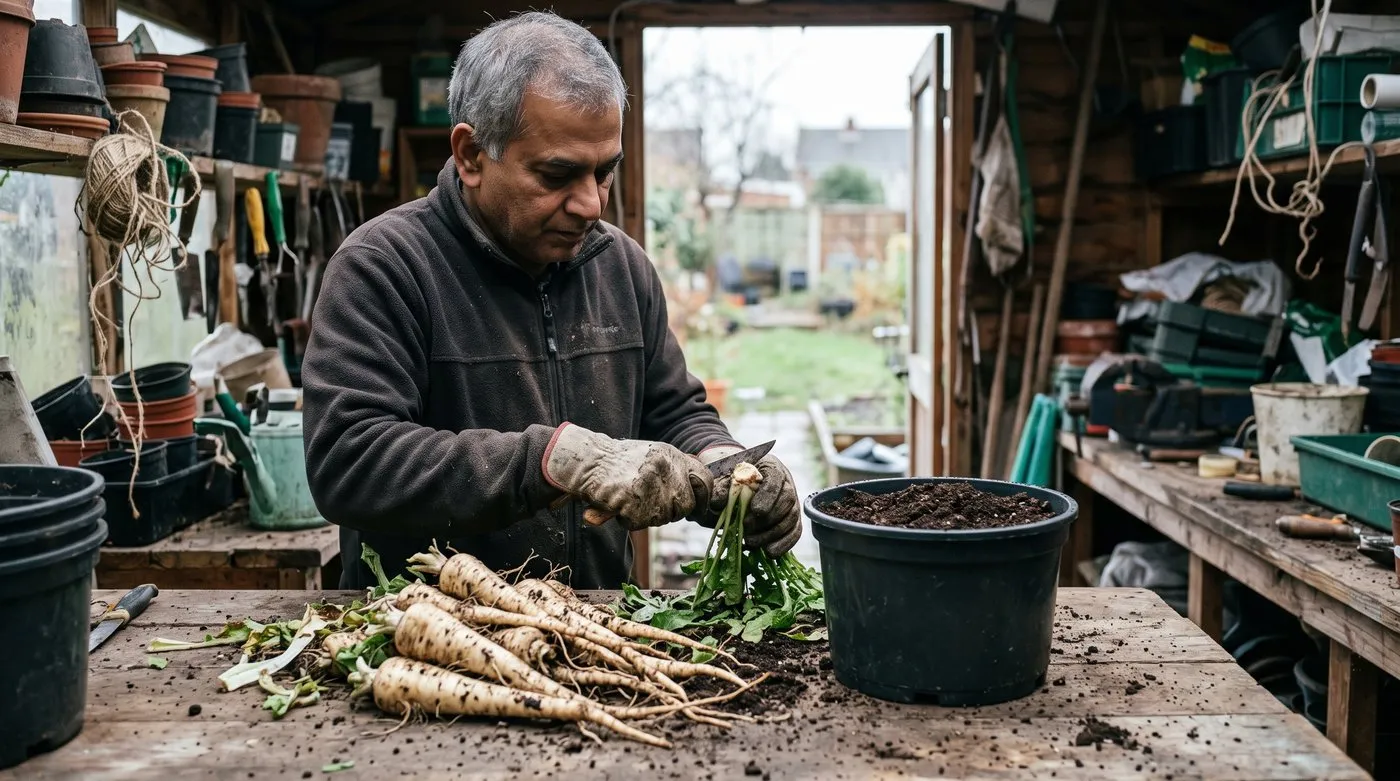
Trim the leaves just above the crown and the roots to about 20cm. Then they’re ready to pot up in the dark.
Growing the roots (spring to autumn)
Sow a Witloof variety such as ‘Zoom’ F1 or ‘Brussels Witloof’ outdoors in May or June. Thin seedlings to about 20cm apart. Let them grow all summer without picking any leaves, so the roots fatten up.
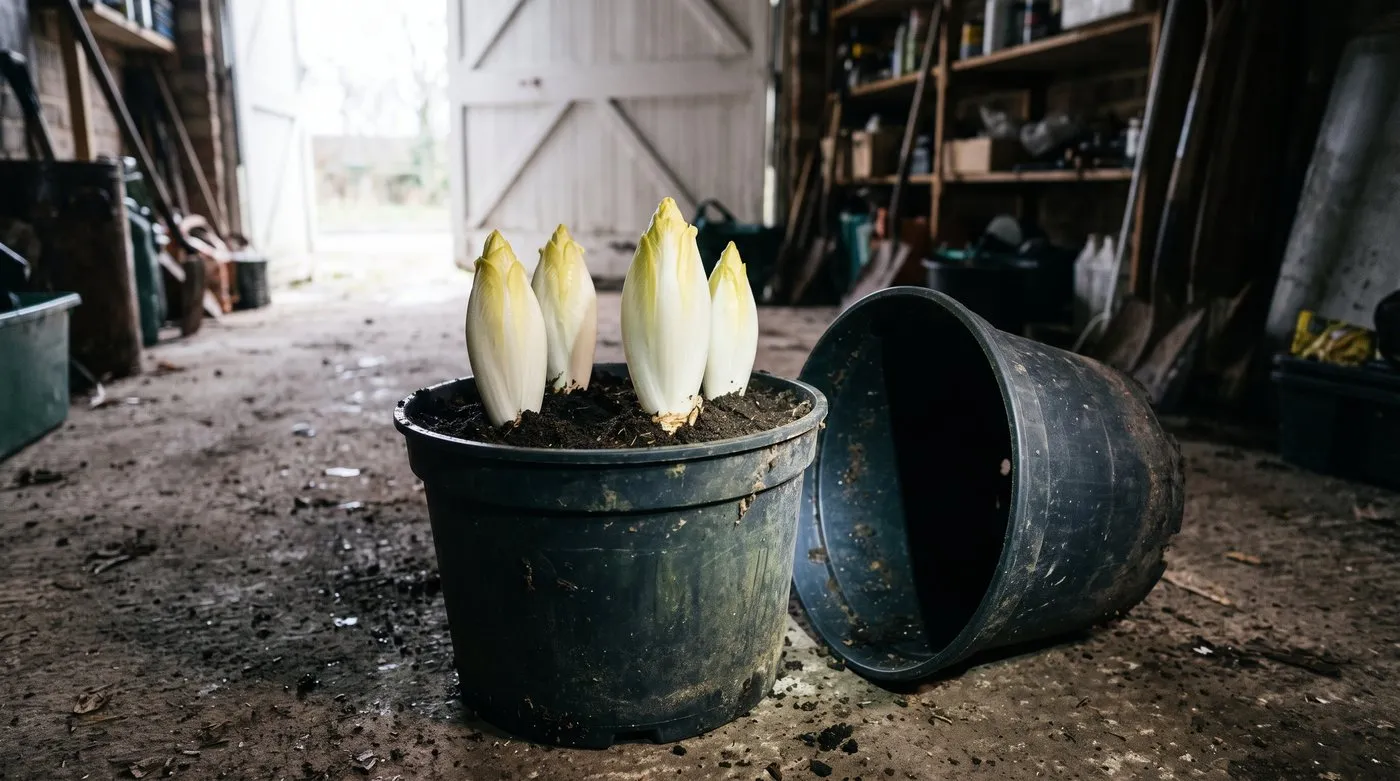
Three or four weeks in the dark gives tight, pale chicons. Cut them just above the root.
Forcing the roots (November onwards)
- Lift the roots in November
- Cut the leaves off about 2.5cm above the crown, without damaging the bud
- Trim the roots to about 20cm long
- Pot three to five roots upright in a deep pot of moist compost or sand, crowns just showing
- Cover with an upturned pot, with the drainage hole blocked, or a black bag
- Keep in a cool, dark place at about 10-13°C, such as a shed, garage or cellar
- Cut the chicons when they’re about 12-15cm tall, usually after three to four weeks
Store spare roots in a box of sand in a cool shed. Pot up a few every couple of weeks for chicons right through winter. The guide to growing chicory and radicchio covers the summer growing in more detail.
How to force seakale
Seakale is forced just like rhubarb. Cover a dormant crown with a forcer or bucket in winter, block out the light and cut the pale shoots in spring. They have a delicate, nutty flavour. Steam them briefly and serve with butter.
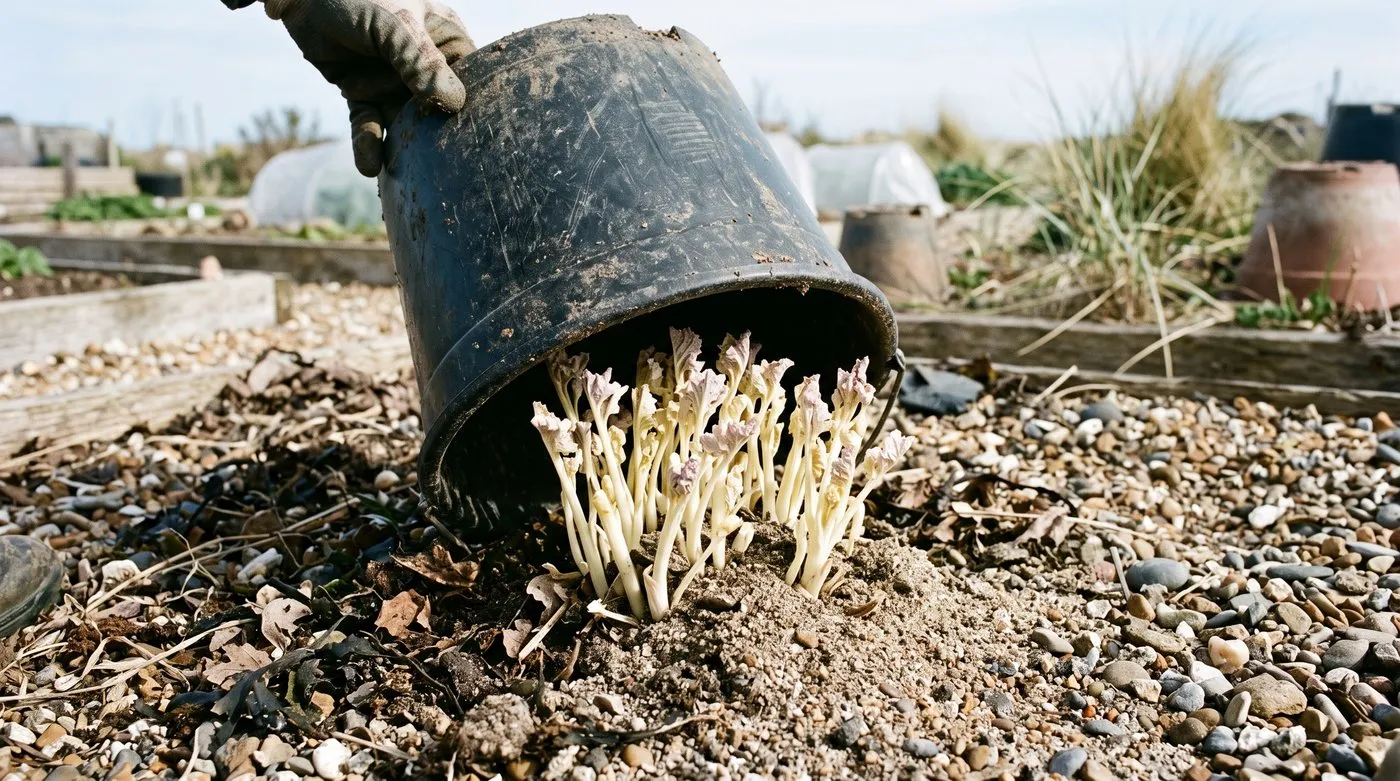
Seakale shoots come up ivory-white under cover. Cut them at about 15-20cm and leave the crown to recover.
Seakale (Crambe maritima) is a hardy coastal perennial. Plant root cuttings, called thongs, in spring in deep, well-drained soil in full sun. Give plants a year or two to build up before forcing. Cut the shoots when they’re about 15-20cm long, leaving the crown intact. Then let the plant grow freely through summer to recover.
Buy plants or thongs from a nursery. Never dig them up from beaches. The guide to perennial vegetables has more long-lived crops like this.
Early potatoes: chitting for a head start
Chitting means letting seed potatoes sprout before planting. It gives first earlies a head start, so you can dig new potatoes sooner.
- Buy first-early seed potatoes, such as ‘Rocket’, ‘Swift’ or ‘Casablanca’, in late winter
- Stand them in egg boxes or trays, with the end that has the most eyes facing up
- Keep them in a cool, bright, frost-free spot, such as a porch or windowsill
- After four to six weeks they should have short, sturdy, dark sprouts
Long, pale, spindly sprouts mean the spot is too warm and dark. Plant out from March in the south, a little later in the north. Cover with fleece or cloches if frost is forecast after the shoots appear. The guide to when to plant potatoes has regional timings.

A cool, bright windowsill is ideal for chitting. Short, dark, sturdy sprouts mean the potatoes are ready to plant.
Using cloches for an early start
Cloches warm the soil and shelter young plants. Put them over the ground a couple of weeks before sowing to take the chill off. Then you can sow hardy salads, radishes, spinach and early carrots a few weeks sooner than in open ground.

Under a cloche, salads and radishes get going weeks before the open ground warms up. Prop one up on sunny days.
On sunny days, open the ends or prop one side up so plants don’t overheat. Close them again in the afternoon to hold the warmth overnight. The guide to cloches and low tunnels covers the different types and how to use them.
Forcing calendar
| Month | What to do |
|---|---|
| October | Order seed potatoes. Mulch rhubarb crowns you plan to force |
| November | Lift chicory roots. Start the first pots in the dark |
| December | Pot up more chicory. Store spare roots in sand |
| January | Cover rhubarb and seakale crowns. Start chitting potatoes |
| February | Keep forcing chicory. Put cloches over beds to warm the soil |
| March | Pick forced rhubarb. Sow salads under cloches. Plant early potatoes |
| April | Cut seakale. Remove forcers and let crowns recover |
| May to June | Sow chicory for next winter’s roots. Feed resting crowns |
Common mistakes when forcing
- Forcing a young crown. Rhubarb and seakale need a few years to build up before forcing
- Letting light in. Light turns forced shoots green and tough. Seal every gap
- Forcing the same crown every year. It weakens and may die. Rest it for a year or two
- Overwatering chicory. Keep the compost just moist, or the roots rot
- Planting potatoes out unprotected. A late frost blackens the shoots. Keep fleece handy
More crop guides are on the growing veg hub. Now you’ve got the hang of forcing, read the guide to growing rhubarb to keep your crowns strong for years.
Frequently asked questions
What does forcing crops mean in gardening?
Forcing means bringing a crop on early using darkness, warmth or both. Rhubarb and seakale are covered to grow pale, tender stems. Chicory roots are forced indoors in the dark for winter chicons. It’s an old kitchen garden trick for fresh food in the lean months.
When should I start forcing rhubarb in the UK?
Cover the crown in January, while it’s still dormant. A spell of cold weather beforehand helps. The pale stems are usually ready about six to eight weeks later, from late winter into early spring.
Can I force the same rhubarb crown every year?
No, a forced crown needs time to recover. Forcing uses up the crown’s stored energy. Stop picking from it once you remove the forcer, then leave it unforced for at least a year, ideally two. Keep two or three crowns so you can force one each winter.
What is the cheapest way to force rhubarb?
An upturned old bucket or dustbin works fine. It just needs to block out all the light. Tuck soil or straw around the rim to seal any gaps. A terracotta forcer looks lovely and has a lid for checking, but it isn’t essential.
How do I force chicory for winter salads?
Lift Witloof chicory roots in November. Cut the leaves off just above the crown and trim the roots to about 20cm. Pot several upright in moist compost or sand, cover to block all light and keep at about 10-13°C. Chicons are ready in three to four weeks.
Do cloches really bring crops on earlier?
Yes, a cloche warms the soil and shelters young plants. Put cloches over the ground a couple of weeks before sowing to warm it. That lets you sow salads, radishes and early carrots a few weeks earlier than in open ground.
Our team produces practical UK gardening guidance from source research, contributor records and established horticultural practice. Editorial standards are overseen by Matt W.