
Key takeaways
- Plant bulbs from September to November, as soon as they arrive
- Snake's head fritillary loves damp grass; Crown Imperial and Persian lily want good drainage
- Plant Crown Imperial on its side so rain doesn't sit in the hollow top
- Don't mow grass with snake's head fritillary until July, so the seed can drop
- Leave the bulbs in the ground; they don't like being disturbed
Fritillaria are some of the most unusual spring bulbs you can grow in the UK. The checked, nodding bells of the native snake’s head fritillary and the tall spires of Crown Imperial look like nothing else in spring. They’re not hard to grow once you match each one to the right soil.
Three kinds are most common in UK gardens. Snake’s head fritillary (Fritillaria meleagris) is a native wildflower about 25-30cm tall that loves damp meadows. Crown Imperial (F. imperialis) is a bold border bulb that reaches 90-120cm. Persian lily (F. persica) has dark purple spires up to 90cm.
Which fritillaria should I grow?
Pick the one that suits your soil. Damp ground suits snake’s head; well-drained, rich soil suits Crown Imperial; sharp drainage suits Persian lily.
Snake’s head fritillary is the UK’s only native fritillary. It grows wild in old flood meadows, mainly in southern England. The hanging bells are chequered in purple, pink or white. It spreads in damp grass and is the easiest one to grow on heavy clay.
Crown Imperial is the showstopper. A ring of big orange, red or yellow bells hangs under a tuft of green leaves on a thick stem. It’s been grown in British gardens for centuries. It needs richer, better-drained soil than snake’s head.
Persian lily has tall spires packed with small plum-purple bells. ‘Adiyaman’ is the one to look for. It needs the sharpest drainage of the three and is happy on chalky or sandy soil. On clay, grow it in a raised bed or pot with lots of grit.
| Snake’s head | Crown Imperial | Persian lily | |
|---|---|---|---|
| Height | 25-30cm | 90-120cm | 60-90cm |
| Flower colour | Purple or white, chequered | Orange, red or yellow | Deep plum-purple |
| Planting depth | 10cm | 20cm | 15cm |
| Spacing | 8-10cm | 30cm | 20cm |
| Soil | Damp, clay or loam | Rich, well-drained | Very free-draining |
| Spreads | Yes, by seed | Slowly | Rarely |
| Smell | None | Strong and foxy | Slight |
| Native | Yes | No | No |
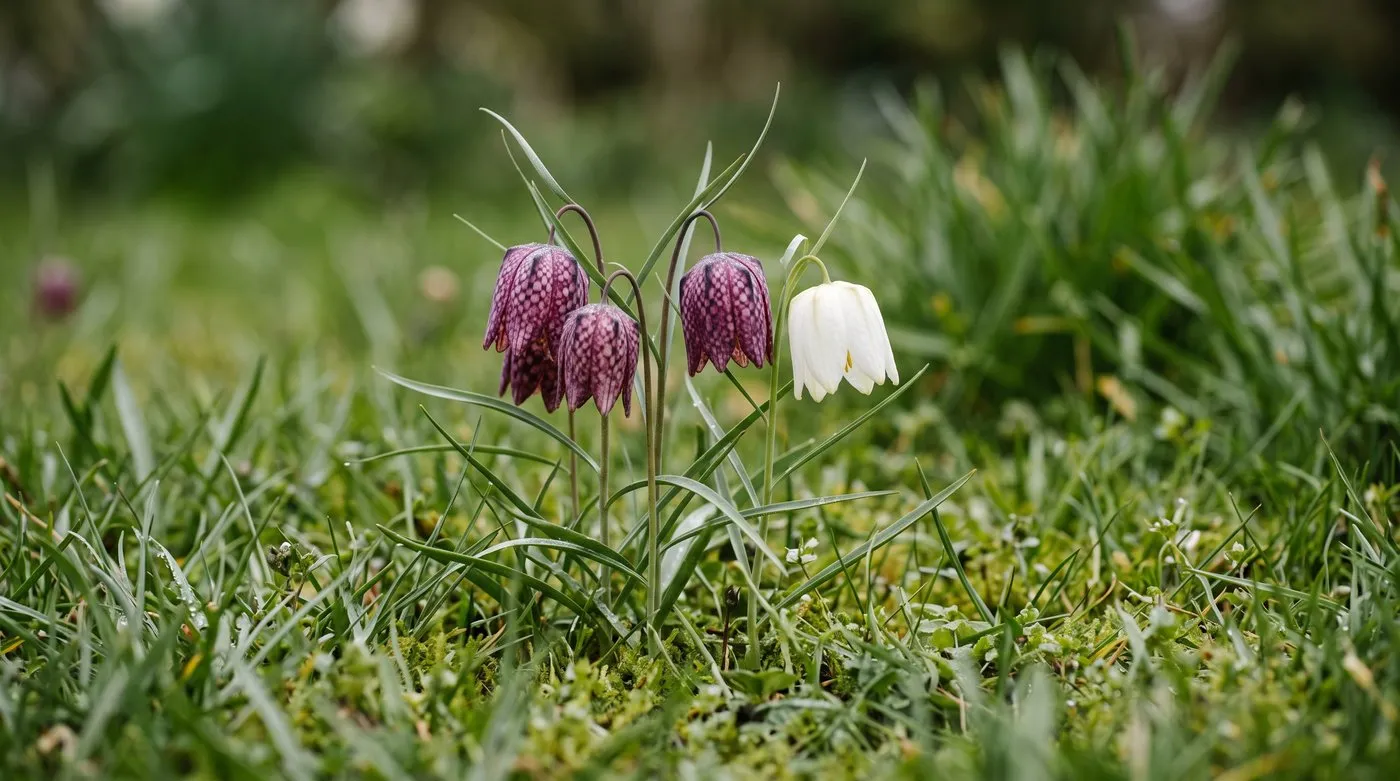
Snake’s head fritillary is the one for damp clay and grass. The white form looks lovely mixed in with the chequered purple.
How to plant fritillaria bulbs
Plant early. Get them in from September to early November. Fritillaria bulbs have no papery skin, so they dry out quickly. Buy them as soon as they’re in the shops and plant straight away.
Plant big bulbs on their side. Crown Imperial bulbs have a hollow dip in the top where last year’s stem grew. Rain can sit in it and rot the bulb. Plant them on their side at a slight angle, on a little grit.
Planting depths:
- Snake’s head: 10cm deep, 8-10cm apart. A narrow bulb planter works well in grass.
- Crown Imperial: 20cm deep, 30cm apart. Put a handful of coarse grit under each bulb.
- Persian lily: 15cm deep, 20cm apart. On clay, mix plenty of grit into the soil you put back.
Soil. Snake’s head needs no soil improving at all. It’s happy in clay soil, wet grass and heavy loam. Crown Imperial likes richer soil, so fork in some well-rotted compost. Persian lily needs sharp drainage, so on anything heavier than sandy soil, use a raised bed with lots of grit.
 Planting a fritillaria bulb on its side so rain can’t sit in the hollow top.
Naturalising snake’s head fritillary in grass
Snake’s head fritillary is a lovely bulb to let loose in a lawn or meadow. It likes ground that stays damp through winter and spring and dries a little in summer, just like the meadows it grows in wild.
Pick the right spot. A patch of lawn that stays soft underfoot after rain is ideal, such as low ground near a pond or ditch. It’s fine under deciduous trees, as it flowers before the leaves come out. The same dappled spots suit erythronium, the dog’s tooth violet, which flowers at the same time.
Planting in grass. Use a narrow bulb planter to lift out plugs of turf and soil. Drop in a bulb at 10cm deep and put the plug back. Plant 8-10cm apart in loose drifts rather than rows. Scatter the holes at random so it looks natural.
Don’t mow until July. The seed ripens in June, and the seedlings are as thin as grass. Mowing early cuts off the seed and the colony won’t spread. After that, mow as normal. It’s the same idea as letting daffodils and other spring bulbs die back before you cut the grass.
What to expect over the years:
| Year | What happens |
|---|---|
| Year 1 | Most bulbs make a leaf and a flower |
| Year 2 | More flowers, and the first grass-like seedlings appear |
| Year 3 | The patch starts to look settled |
| Years 4-5 | Seedlings reach flowering size and the patch spreads |
| After that | It looks after itself |
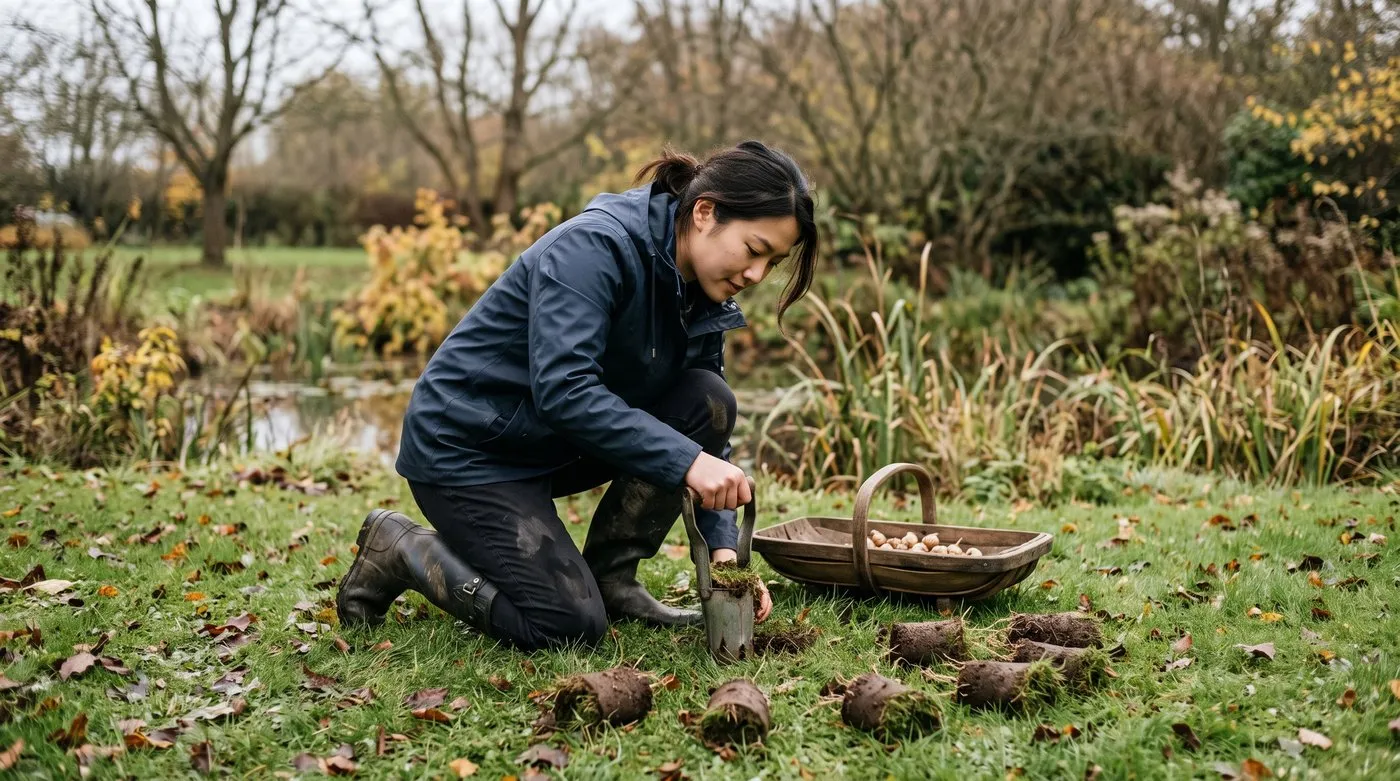
Scatter the holes at random for a natural-looking drift. Then leave the grass unmown until July so the seed can ripen.
How to grow Crown Imperial in borders
Crown Imperial is a real showpiece. At 90-120cm tall with bright orange, red or yellow bells, it stands above tulips and daffodils. For more on this one plant, including the best varieties and how to keep it flowering, read our guide to growing Crown Imperial fritillaria.
Where to plant. Give it full sun and a sheltered spot, as strong spring winds can snap the tall stems. A south or west-facing border against a wall or fence is perfect.
Soil. It needs well-drained soil with some goodness in it. On heavy clay, dig a hole about 25cm deep, put some coarse grit in the bottom, and mix compost and grit into the soil you put back. That stops the big bulb sitting wet all winter.
Feeding. It’s a hungry plant. Give it a sprinkle of bonemeal in autumn and a tomato feed as the shoots come up in spring.
That smell. The whole plant has a musky, foxy smell, strongest on warm April days. Some people don’t mind it; others plant it away from the patio. It’s often said to put off rodents, but don’t count on it.
 Crown Imperial in a cottage border, with its ring of bells under a leafy crown.
Month-by-month fritillaria care calendar
| Month | What to do |
|---|---|
| January | Nothing much. Bulbs are resting underground. |
| February | Look for the first Crown Imperial shoots, often early to appear. |
| March | Snake’s head starts flowering in the south. Don’t mow naturalised areas. |
| April | Main flowering time. Deadhead Crown Imperial once the petals drop. |
| May | Persian lily finishes. Leave snake’s head seed heads to ripen. |
| June | Leaves die back. Leave them until they’re fully brown. |
| July | Mow meadow grass with snake’s head from July. Mark Crown Imperial spots with a cane. |
| August | Bulbs are resting. No watering needed. |
| September | Buy and plant new bulbs straight away. The best month to plant. |
| October | Keep planting. A good time to finish off Crown Imperial. |
| November | Last chance to plant. Mulch Crown Imperial with compost. |
| December | Resting. Plan spring combinations with crocus and early tulips. |
Common mistakes when growing fritillaria
Leaving big bulbs facing up. Rain collects in the hollow top of Crown Imperial bulbs and rots them. Plant them on their side.
Putting the wrong one in the wrong soil. Snake’s head wants damp soil; Crown Imperial and Persian lily hate wet clay. Snake’s head in a dry raised bed goes thirsty. Crown Imperial in soggy clay rots. Match the bulb to the spot.
Mowing too early. Cutting grass before July stops snake’s head from spreading. Mark the patch and leave it until July. Other wildflowers benefit too, just as in a wildflower lawn.
Lifting them too often. Fritillaria don’t like being disturbed. Leave them in the ground. Only lift and divide Crown Imperial if flowering falls off after several years, and leave snake’s head alone.
Keeping bulbs too long before planting. They dry out quickly. Plant them within a week of buying. If you have to wait, keep them in a paper bag of slightly damp perlite in a cool place for a short time.
All parts of fritillaria are poisonous if eaten, so keep bulbs away from children and pets. Wear gloves when handling Crown Imperial bulbs, as they can irritate skin.
Growing fritillaria in pots and containers
All three grow well in pots, which is handy if your soil doesn’t suit them. Persian lily, which sulks on clay, does well in a pot of gritty compost.
Pot size. Use pots at least 25cm deep for snake’s head, 35cm for Crown Imperial and 30cm for Persian lily. Terracotta is good because it doesn’t stay soggy. Make sure the drainage holes are clear.
Compost. Mix John Innes No. 2 half and half with grit. Add a little leaf mould for Crown Imperial. Multipurpose compost on its own holds too much water in winter.
Watering. Water lightly after planting, then more as growth appears in late winter. When the leaves die back in June, stop watering and stand the pots somewhere dry for summer. Start again in September.
Winter. Leave the pots outside. The bulbs need a cold winter to flower well, so don’t bring them into a warm greenhouse. In a hard frost, wrap the pots in bubble wrap so they don’t crack.
Pots of fritillaria work well in a bulb lasagne, with crocuses planted above for flowers over a longer spell.
 Persian lily ‘Adiyaman’ with tall spires of plum-purple bells. It needs really good drainage.
Best fritillaria varieties for UK gardens
| Variety | Kind | Height | Colour | Good for |
|---|---|---|---|---|
| Snake’s head (wild type) | Snake’s head | 25-30cm | Purple and white check | Lawns and meadows |
| White snake’s head (var. unicolor subvar. alba) | Snake’s head | 25cm | Pure white | Mixing with purple ones |
| ’Rubra’ | Crown Imperial | 90-100cm | Deep orange-red | The classic Crown Imperial |
| ’Lutea’ | Crown Imperial | 90-120cm | Bright yellow | Bold spring colour |
| ’Aurora’ | Crown Imperial | 100cm | Tangerine-orange | Smaller borders |
| ’Adiyaman’ | Persian lily | 80-90cm | Dark plum-purple | Borders and pots |
| ’Ivory Bells’ | Persian lily | 70cm | Pale green-cream | Something unusual |
Good choices for different spots:
- Damp meadow or lawn: a mix of purple and white snake’s head, planted in a good drift.
- Cottage border: Crown Imperial ‘Rubra’ and ‘Lutea’ in groups of 3-5.
- Modern border: Persian lily ‘Adiyaman’ with white tulips and alliums.
- Pots: Persian lily ‘Adiyaman’ in deep terracotta with gritty compost.
Fritillaria pests, diseases, and problems
Fritillaria are mostly trouble-free. Wet soil causes more losses than pests do.
Lily beetle is the main pest. The bright red beetles and their messy black grubs chew leaves and flowers. Check plants every week from March to June and pick them off by hand. The RHS lily beetle page has photos to help you spot them. If you must spray, use an approved product exactly as the label says.
Bulb rot hits bulbs sitting in wet soil, or big bulbs planted facing up. Good drainage and planting on the side prevent it. Bin any soft, smelly bulbs.
Slugs and snails nibble young shoots in early spring. Wildlife-friendly ferric phosphate pellets help. Our guide to getting rid of slugs naturally has more ideas.
Squirrels sometimes dig up freshly planted bulbs. Peg chicken wire flat over the spot for the first winter and take it off in February before the shoots appear.
Vine weevil grubs can eat bulbs in pots. Look for white, C-shaped grubs. Water pots with vine weevil nematodes in late summer or early autumn while the compost is still warm.
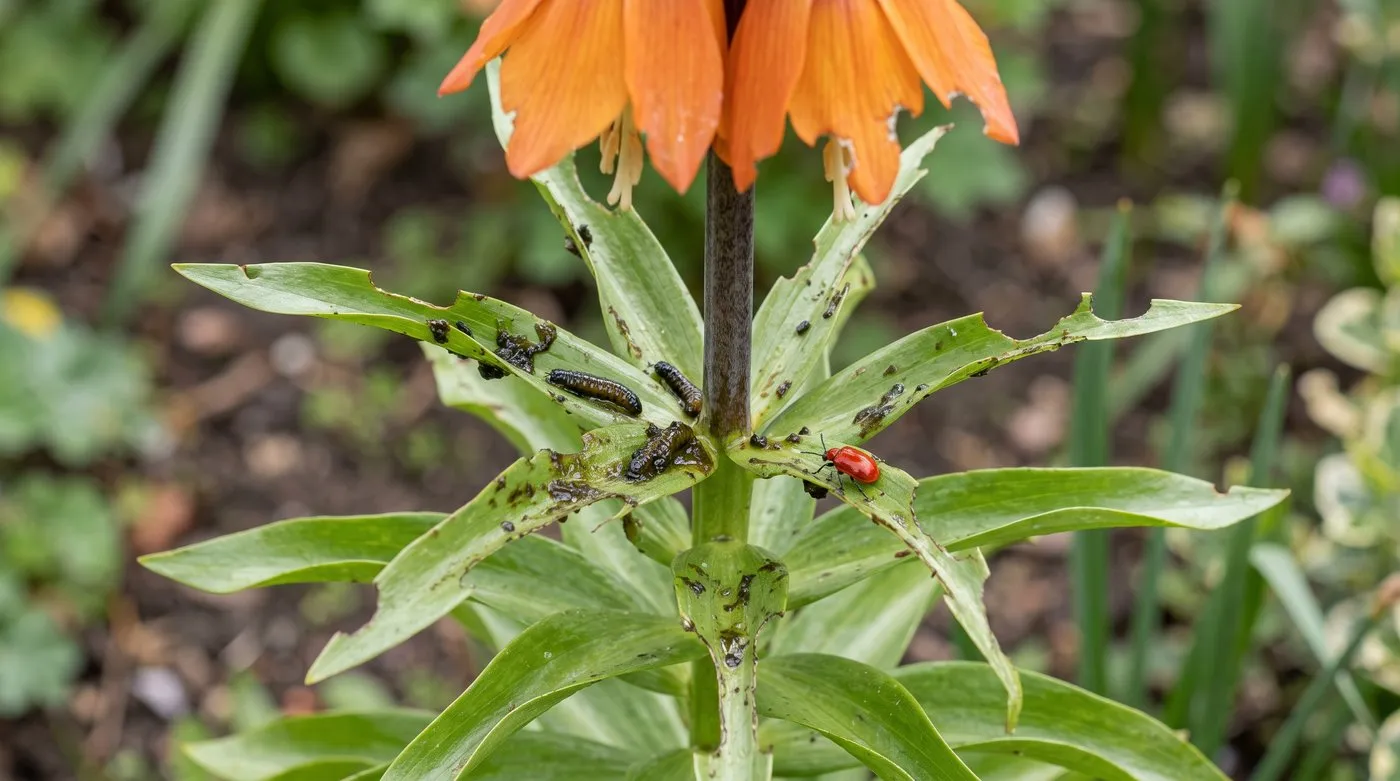
Ragged leaves and dark, messy smears point to lily beetle. Check every week from March and pick off any you find.
Where to see wild fritillaria in the UK
Seeing snake’s head fritillary growing wild is a real springtime treat. They flower from mid-April to early May.
North Meadow, Cricklade, Wiltshire is the most famous spot. This nature reserve is an old flood meadow carpeted with fritillaries in spring.
Magdalen College, Oxford has a meadow full of fritillaries among the buttercups in late April.
Ducklington and Standlake, Oxfordshire have small wild colonies in old water meadows, looked after by the Berkshire, Buckinghamshire and Oxfordshire Wildlife Trust.
Clattinger Farm, Wiltshire is a Wiltshire Wildlife Trust reserve with a rich wildflower meadow that includes fritillaries.
These meadows show what snake’s head likes: damp clay that floods in winter, no fertiliser, and a late hay cut in July. Copy that on a small scale and your own patch can look after itself.
Now you know how to grow fritillaria, read our guide on the best spring flowers for UK gardens to plan the rest of your spring display.
Frequently asked questions
When should I plant fritillaria bulbs in the UK?
Plant them from September to November. Earlier is better, as the bulbs have no papery skin and dry out quickly once lifted. Buy them early in September and plant them as soon as you get them home. Soft, shrivelled bulbs are unlikely to do well.
Why do I need to plant fritillaria bulbs on their side?
It stops rain sitting in the hollow top of the bulb. Large bulbs like Crown Imperial have a dip in the top where last year’s stem grew. Water can collect there and cause rot. Planting on the side lets it drain away, and a handful of grit underneath helps too.
Can snake’s head fritillary grow in garden borders?
Yes, as long as the soil stays moist. It’s happiest in damp grass or meadow. In a border, choose a spot that never dries out completely in spring. It also looks lovely in a lawn or among low wildflowers, where the grass keeps the soil cool and damp.
Is Fritillaria meleagris a protected species in the UK?
It’s a cherished native wildflower, so never dig it up from the wild. It’s against the law to uproot any wild plant without the landowner’s permission. Wild colonies are now rare, mainly in old flood meadows. Buy nursery-grown bulbs instead.
How deep should I plant Crown Imperial fritillaria?
Plant Crown Imperial bulbs 20cm deep and 30cm apart. They’re big bulbs, and planting deep helps anchor the tall stems. Set each bulb on its side on a little coarse grit, and mix some grit into the soil you put back. A sunny, sheltered spot suits them best.
Why does my Crown Imperial smell bad?
The whole plant has a strong, musky, foxy smell. It’s perfectly natural and comes from the bulb, stems and leaves. You notice it most on warm days in April. Some gardeners think it puts off rodents, but don’t rely on it. Plant it a little away from doors and seats.
Will fritillaria spread on its own in UK gardens?
Snake’s head fritillary spreads by seed in damp grass. Seedlings take a few years to reach flowering size. Don’t mow until July so the seed can ripen and drop. Crown Imperial and Persian lily spread slowly by making small offset bulbs instead.
Our team produces practical UK gardening guidance from source research, contributor records and established horticultural practice. Editorial standards are overseen by Matt W.


