
Key takeaways
- Sow in September for early flowers, or March to April for summer flowers
- Sow where it is to flower or in individual pots, as it dislikes root disturbance
- Give it full sun and free-draining soil; it struggles in wet clay
- Autumn sowings only overwinter outdoors in mild, sheltered gardens
- Leave some plants to set seed and it will often self-sow
- Bumblebees love it, and it lasts about a week in a vase
Cerinthe, or honeywort, is a cottage garden annual that bees adore. It has waxy, grey-blue leaves and nodding clusters of deep purple flowers and bracts. It is easy to grow from seed, and in well-drained soil it often comes back each year by self-seeding.
The one thing that trips people up is its dislike of root disturbance. Sow it where you want it to flower, or in individual pots, and it is very easy. This guide covers when to sow, where it grows best, looking after it, and using it in the vase.
What is cerinthe?
The plant most gardeners grow is Cerinthe major ‘Purpurascens’. It comes from the Mediterranean and belongs to the borage family. It grows to about 60cm tall.
The leaves are rounded, grey-blue and often spotted white, with a waxy bloom that makes them look frosted. The stems end in drooping clusters of tubular purple flowers, wrapped in purple-blue bracts. Common names include honeywort, after its nectar, and blue shrimp plant, after its curled flower heads.
It is an annual, so each plant flowers, sets seed and dies within a year. It is only borderline hardy, so young plants may not survive a cold, wet winter outdoors.
‘Kiwi Blue’ is a selection with bluer bracts, if you want a cooler colour. The plain species has yellow flowers marked with purple-brown.
Why cerinthe dislikes root disturbance
Cerinthe makes a long taproot early on. Seedlings pulled apart from a shared seed tray often sulk after transplanting. They can stall, lose lower leaves and flower late.
There are two easy ways round it:
- Sow direct where it is to flower. Rake the soil fine, sow seeds about 30cm apart, cover with about 1cm of soil and water.
- Sow into individual pots or deep modules, one or two seeds in each. Plant out with the rootball intact once roots fill the pot.
The seeds are big and hard. Soaking them in water overnight before sowing can help them get going.

One seedling per cell means no root disturbance. Plant them out with the rootball intact.
When to sow cerinthe in the UK
There are two sowing times: September or March to April.
Autumn sowing gives bigger plants that flower from late spring. The young plants have to get through winter, though. This works best in mild, sheltered gardens with free-draining soil. Elsewhere, keep autumn-sown pots in a cold frame or cover plants with fleece in hard frosts.
Spring sowing works everywhere in the UK. Plants flower from early summer onwards. It is the safer choice for cold, wet or northern gardens. Try to sow by the end of April, as late sowings give smaller plants.

An autumn-sown plant flowering alongside spring tulips. In mild gardens, autumn sowing gives you flowers weeks earlier.
Where to grow cerinthe
Give cerinthe full sun and free-draining soil. It does well on light, sandy or chalky ground. It dislikes heavy, wet clay, where roots can rot, especially over winter. On clay, mix in grit, use a raised bed or grow it in pots.
It doesn’t need rich soil. Poor to moderately fertile ground gives more flowers, while rich soil gives lots of soft leaf. In light shade it still grows, but it flowers less and leans towards the light.
It fits nicely towards the front or middle of a sunny border, and in a gravel garden.
Looking after cerinthe
Cerinthe needs very little care.
- Thin seedlings to about 30cm apart, so each plant has room.
- Water young plants in long dry spells. Established plants cope with dry weather.
- Don’t feed plants in the ground. They rarely need it.
- Stake lightly in exposed spots, as stems can flop.
Picking flowers for the vase encourages more. Leave some to set seed if you want seedlings next year.
Self-seeding and saving cerinthe seed
In well-drained soil, cerinthe often self-seeds. The large black seeds drop near the parent plant in late summer. Seedlings come up in autumn or the following spring.
To keep a patch going:
- Leave a few plants to set seed rather than clearing them all.
- Thin seedlings in spring to about 30cm apart.
- Move spare seedlings while they’re very small, with a good ball of soil round the root.
To save seed, wait until the seeds turn dark and hard, then collect them on a dry day. Dry them for a week or two indoors and store them in a paper envelope somewhere cool and dry. Our guide to self-seeding plants has more plants that come back this way.

Self-sown seedlings love gravel and the cracks in paving. Thin them in spring and move spares while they’re tiny.
Cerinthe for bumblebees
Cerinthe is a favourite of bumblebees. The nodding, tubular flowers hold nectar deep inside, which suits bumblebees well. They visit through spring and summer.
Autumn-sown plants are especially helpful. They flower early, when queen bumblebees are building up their nests and need food. Combine cerinthe with other nectar-rich plants for flowers from spring to autumn. See our list of bee-friendly garden plants for ideas.

Bumblebees can’t resist cerinthe’s nodding purple flowers, which is how it earned the name honeywort.
Cerinthe as a cut flower
Cerinthe is lovely in a vase and lasts about a week. Cut stems in the morning when the bracts are well coloured. Strip the lower leaves and stand the stems in cool water for a few hours before arranging.
Good partners in a vase include:
- Sweet peas, for scent. See our guide on growing sweet peas.
- Ammi majus, for white, lacy heads.
- Nigella, for soft blue flowers and seed pods.
- Dark cornflowers, for a colour echo.
Our guide to conditioning cut flowers has tips for a longer vase life.

Cerinthe mixes beautifully with sweet peas and ammi, and looks good on its own too.
Growing cerinthe in pots
Cerinthe grows well in a pot at least 25cm across. Use peat-free multipurpose compost with some grit mixed in. Sow three or four seeds in the pot in spring or early autumn, then thin to the strongest one or two.
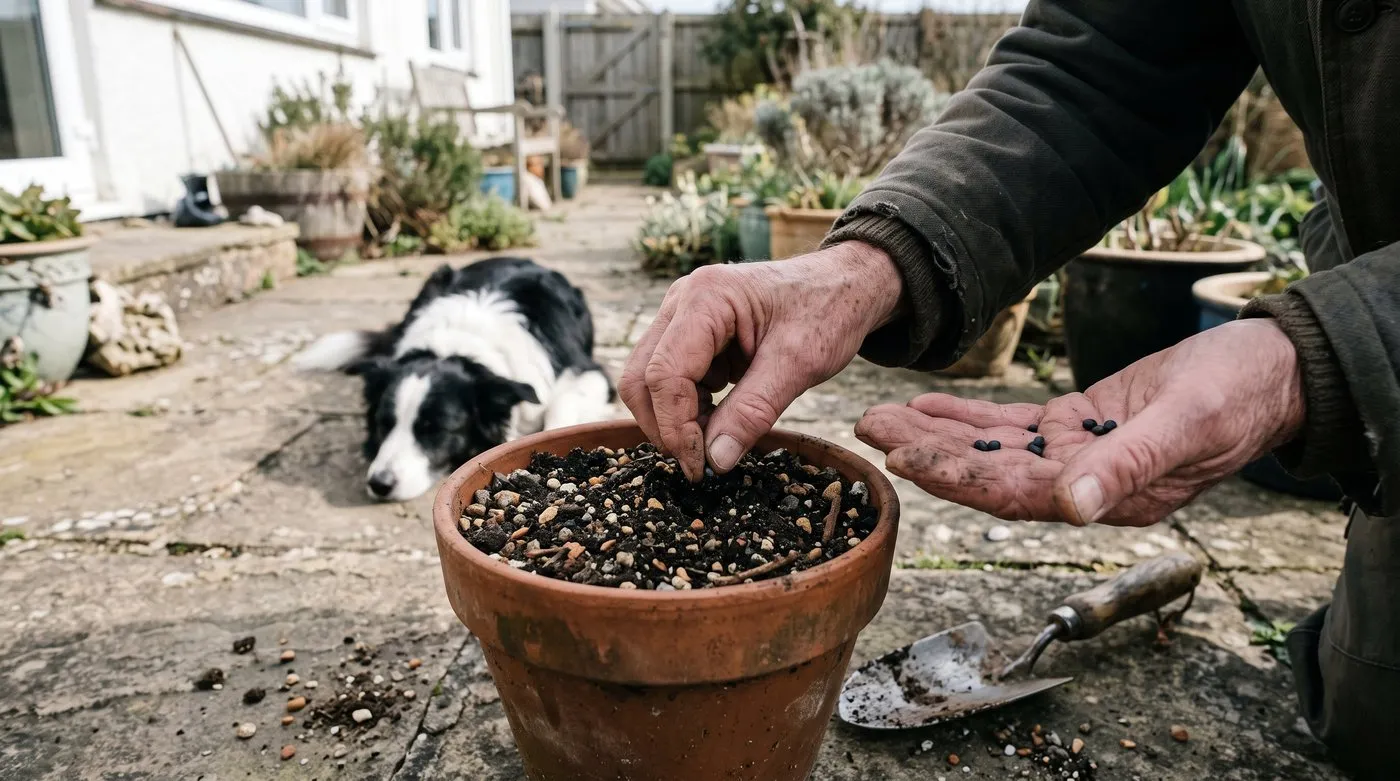
Sow a few of the big seeds straight into the pot and thin to the strongest. No transplanting means no sulking.
Water when the top of the compost feels dry, but never leave the pot standing in water. Plants in pots usually stay a little shorter. A short cane helps stop stems flopping. In winter, move autumn-sown pots somewhere sheltered, such as against a house wall or into a cold frame.
Common cerinthe mistakes
- Sowing in a shared seed tray. Seedlings that must be pulled apart transplant badly. Sow direct or in individual pots.
- Sowing too deep. About 1cm is enough.
- Growing in wet clay. Roots rot, especially in winter. Add grit or use a pot.
- Overfeeding. Rich soil gives leaves rather than flowers.
- Clearing every plant. Leave a few to set seed if you want more next year.
Cerinthe month-by-month calendar
| Month | What to do |
|---|---|
| January-February | Order seed. Add grit to heavy soil where you plan to sow |
| March-April | Sow direct or in individual pots. Thin autumn-sown seedlings |
| May | Autumn-sown plants start flowering. Thin spring-sown seedlings |
| June-July | Flowering. Pick for the vase. Water young plants in dry spells |
| August | Seeds ripen. Collect some, leave some to self-sow |
| September | Sow for flowers next spring |
| October-December | Protect autumn-sown plants in cold or wet spells |
For more easy flowers you can sow straight into the ground, see our guide to sowing hardy annuals direct. For more seed-sown flowers, browse our flowers and plants hub.
Now you know how to grow cerinthe, read our guide on how to grow nigella, another easy self-seeder that loves the same sunny spots.
Frequently asked questions
When should I sow cerinthe seeds in the UK?
Sow in September for early flowers, or March to April for summer flowers. Sow direct where it is to flower, or into individual pots, as it dislikes root disturbance. Cover the large seeds with about 1cm of soil and thin seedlings to around 30cm apart.
Does cerinthe come back every year?
Individual plants don’t, but it often self-seeds. Cerinthe is an annual, so each plant flowers, sets seed and dies. In well-drained soil, seedlings often appear the following year. Leave a few plants to set seed. In cold, wet gardens, sow fresh seed each year.
Is cerinthe a hardy plant in the UK?
Only borderline hardy, so winter survival depends on your garden. Autumn-sown plants can overwinter in mild, sheltered gardens with free-draining soil. Cold, wet winters often kill them. Elsewhere, sow in spring, or keep autumn sowings in a cold frame.
What soil does cerinthe like?
Free-draining soil in full sun, including light or chalky ground. It dislikes heavy, wet clay. On clay, mix in grit or grow it in a raised bed or pot. Poor to moderately fertile soil suits it best.
Do bees like cerinthe?
Yes, bumblebees love the nodding, nectar-rich flowers. They visit through spring and summer. Autumn-sown plants flower early, when queen bumblebees are looking for food.
Can cerinthe be used as a cut flower?
Yes, it makes a good cut flower that lasts about a week. Cut stems in the morning when the purple bracts are well coloured. Strip the lower leaves and stand the stems in cool water for a few hours before arranging.
Why is cerinthe called honeywort or blue shrimp plant?
Honeywort comes from its nectar-rich flowers. Blue shrimp plant comes from its nodding, curled flower heads, which look a little like shrimps. The name Cerinthe comes from the Greek for wax, after the waxy look of its leaves.
Can I grow cerinthe in pots?
Yes, in a pot at least 25cm across. Use peat-free multipurpose compost with some grit for drainage. Sow a few seeds and thin to the strongest seedling. Never let the pot sit waterlogged.
Our team produces practical UK gardening guidance from source research, contributor records and established horticultural practice. Editorial standards are overseen by Matt W.


