Key takeaways
- Wildflower turf gives a flowering meadow in its first summer if laid in spring
- Clear all weeds and grass first, then rake the soil level and firm
- Never add compost or fertiliser, as rich soil helps grass swamp the flowers
- Lay the rolls the day they arrive, with joints staggered and pressed tight
- Water daily until it roots, usually for the first two weeks, then taper off
- Cut once a year in late summer, leave the hay a few days, then rake it off
Wildflower turf is the quickest way to get a meadow. It’s a ready-grown mat of native wildflowers and fine grasses that you unroll like lawn turf. Lay it in spring and it can be buzzing with bees by summer.
It costs more than seed, so it suits smaller spaces where you want a quick result. Here’s how to prepare the ground, lay it, water it in and look after it so it comes back every year. If you’d rather sow a meadow from seed, see our guide on how to create a wildflower lawn.
Is wildflower turf better than sowing seed?
Turf is faster and more reliable. Seed is far cheaper. Which is better depends on the size of your patch and your patience.
| Wildflower turf | Seed | Plug plants | |
|---|---|---|---|
| Flowers | First summer if laid in spring | Mostly from the second year | First or second year |
| Weeds | Smothered from the start | Need careful prep and weeding | Need weeding round plugs |
| Cost | Highest | Lowest | In between |
| Best for | Small areas, quick results | Large areas, patient projects | Adding flowers to grass |
For a small garden patch where you want flowers this year, turf makes sense. For a big area, seed is usually the practical choice. Our guide to turning a lawn into a wildflower meadow covers the seed and plug route.
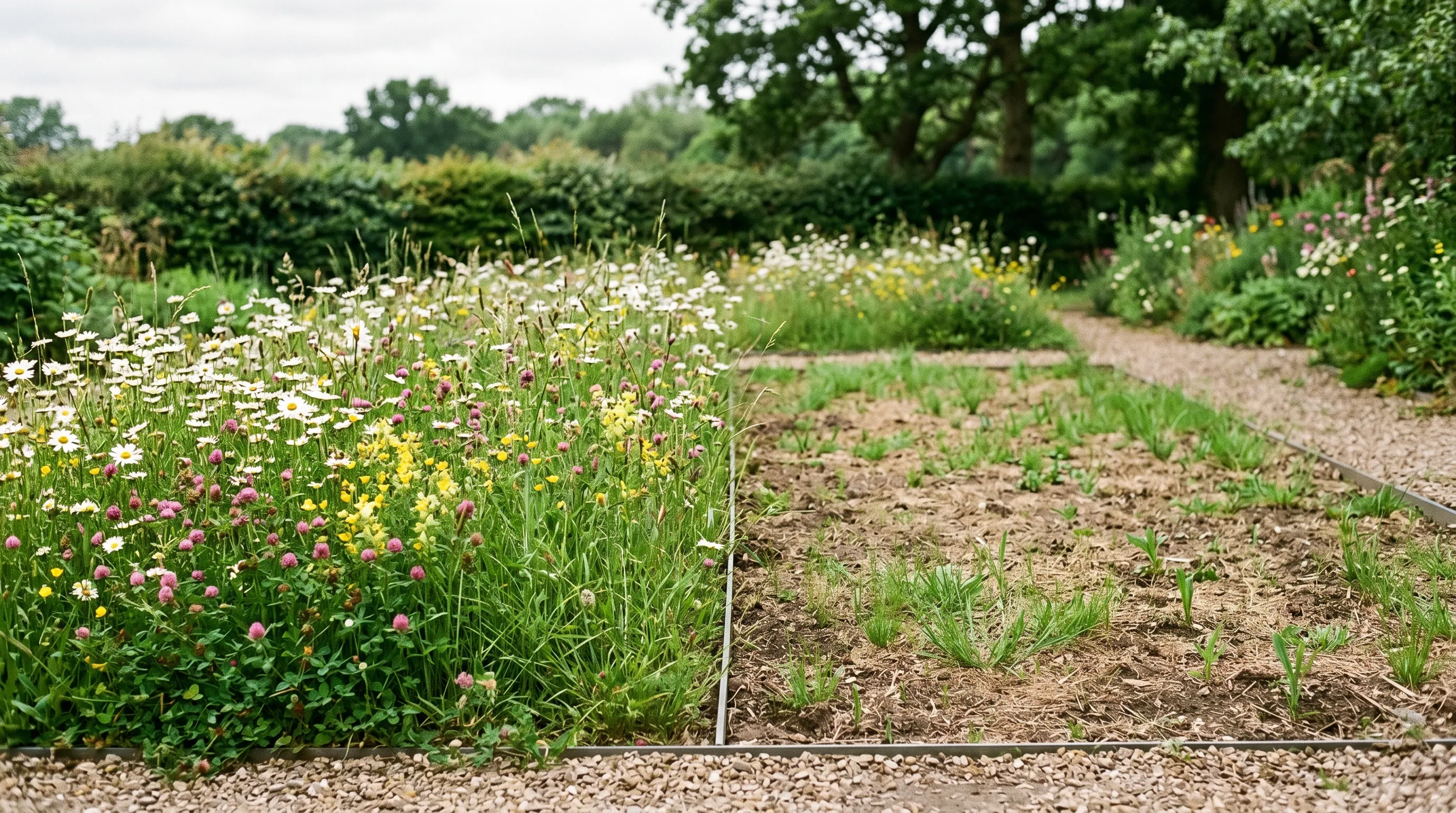
Turf on the left, seed on the right. Turf gives a meadow straight away, while a sown patch takes longer to fill in.
How do you prepare the ground for wildflower turf?
Clear every weed, then rake the soil level and firm. Good prep is what makes the meadow last.
1. Clear the site. Remove all grass and weeds, roots and all. If you’re replacing a lawn, lift it with a spade or hire a turf cutter for bigger areas. Dig out perennial weeds like docks, nettles and bindweed. If you use a weedkiller, choose one approved for the job and follow the label, allowing time for regrowth to show.
2. Don’t enrich the soil. Wildflowers do best in poor soil, where grasses can’t take over. Ordinary garden soil is usually fine. Don’t add compost, manure or fertiliser. On very rich soil, skimming off the top few centimetres helps.
3. Dig over and remove stones. Loosen the top 10cm or so and pick out stones and roots.
4. Rake level and firm. Rake the surface smooth, then firm it by treading it with your weight on your heels. Rake again lightly. It should be firm enough to walk on without sinking.
5. Water the day before. If the soil is dry, give it a good soak the day before the turf arrives. Turf roots into moist soil much faster.
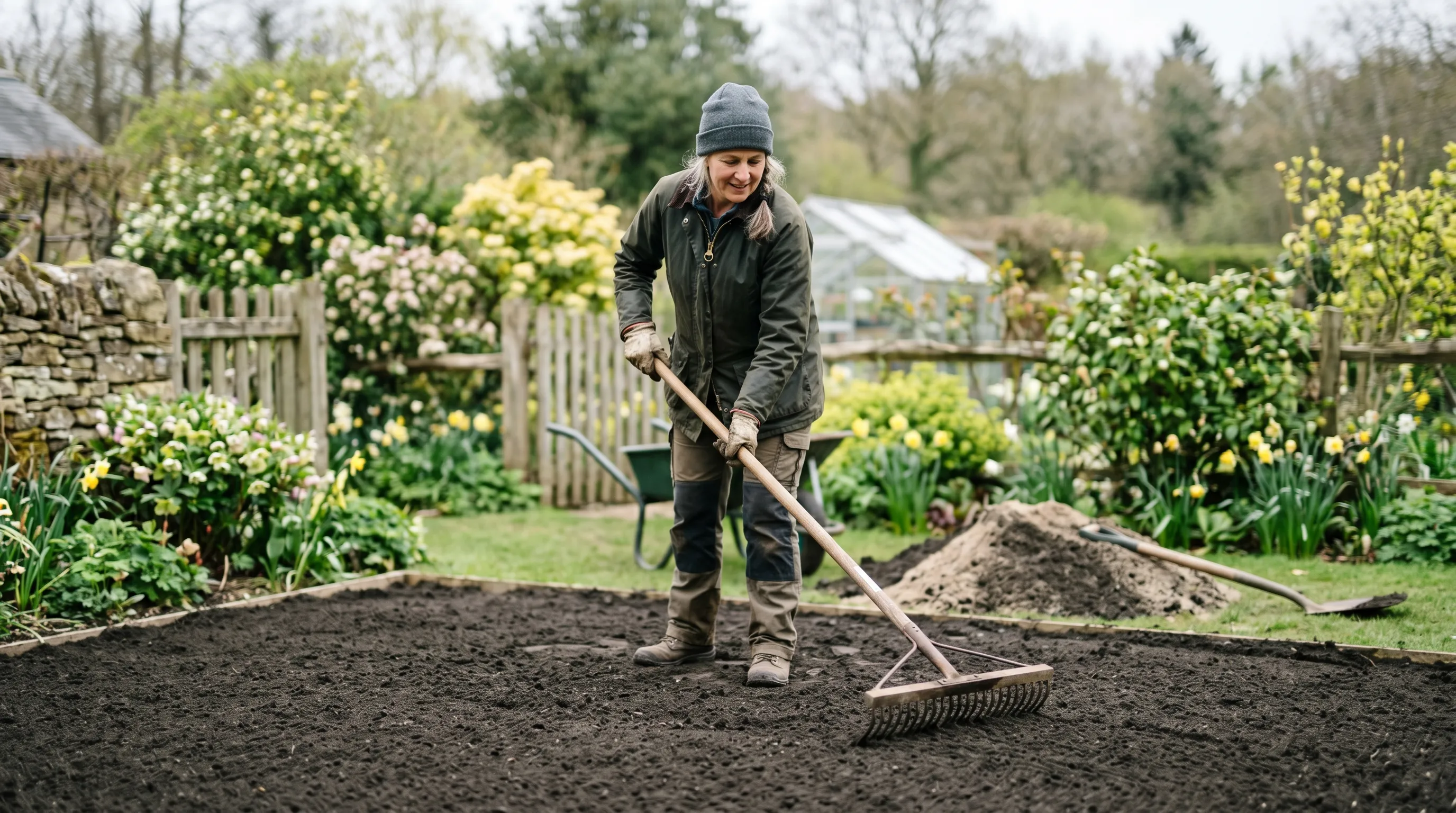
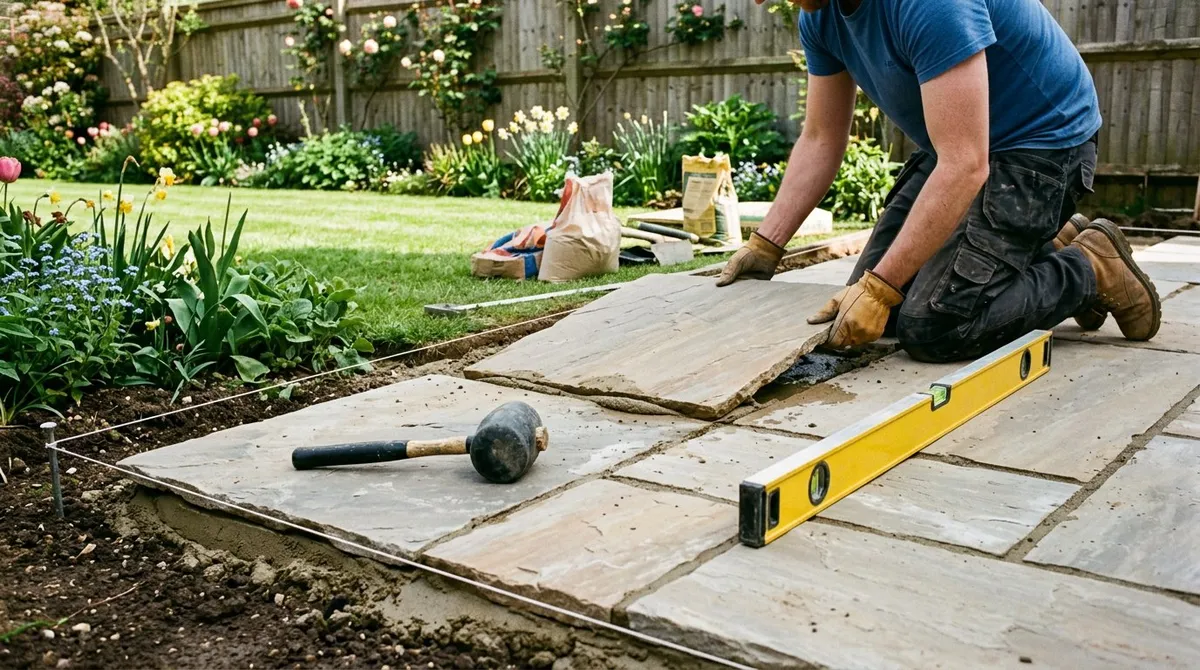
Rake the soil smooth and firm before laying. Lumps and hollows leave the turf with air gaps underneath.
How do you lay wildflower turf?
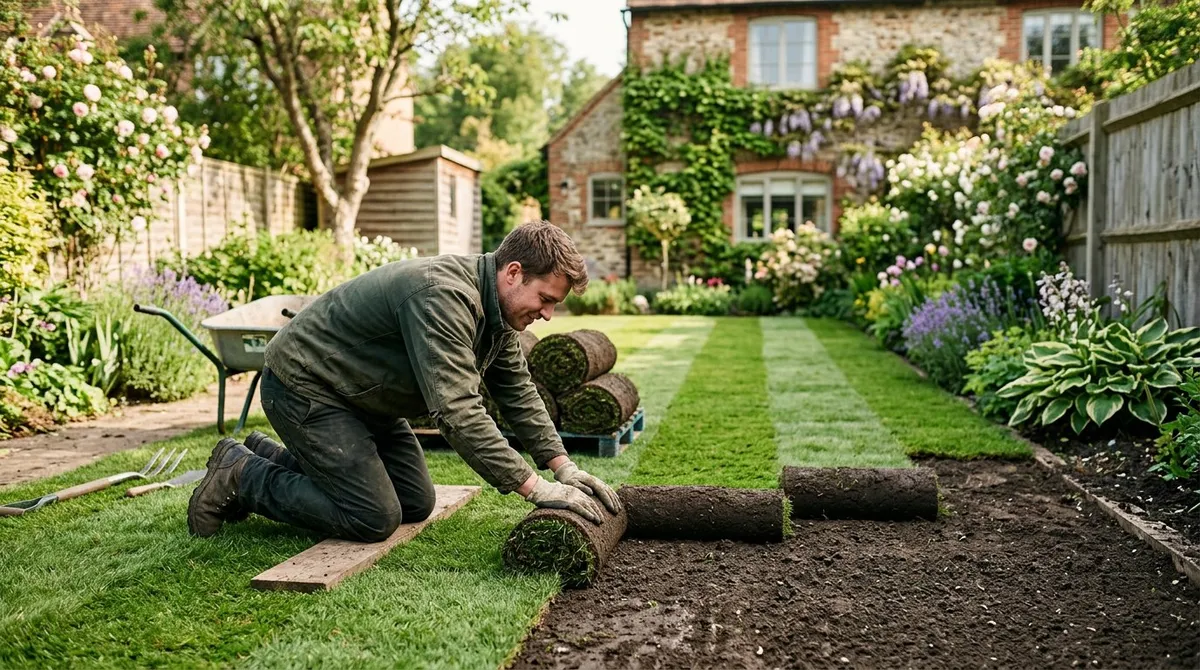
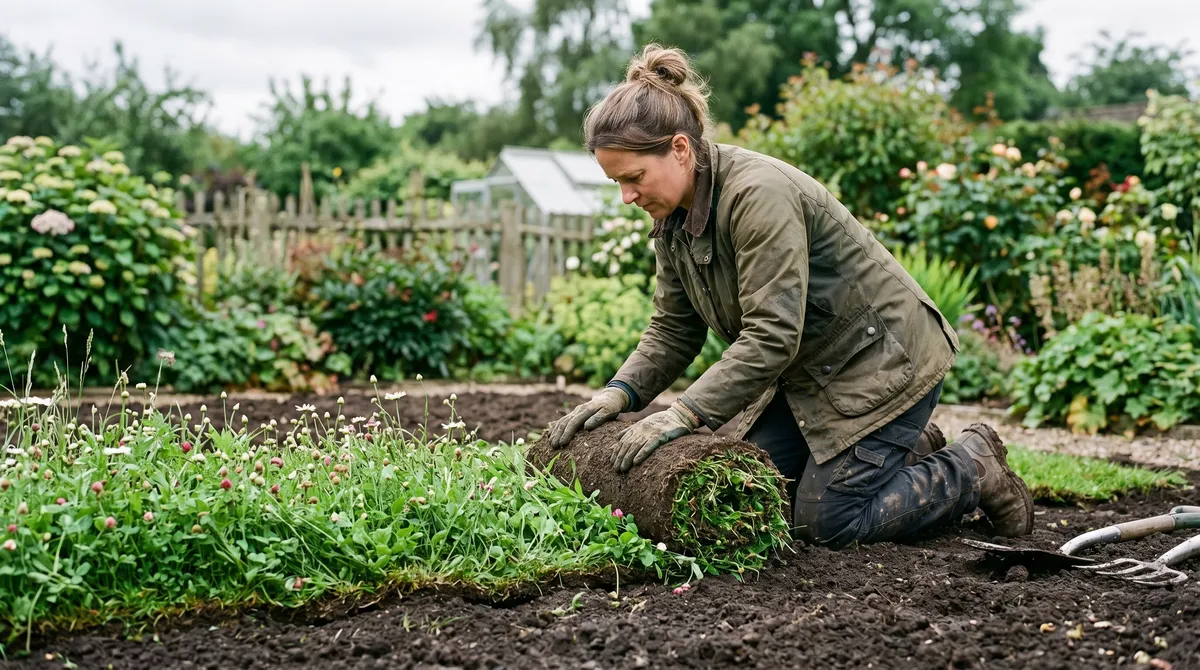
Lay it the day it arrives. Rolled turf soon heats up and yellows, so have the ground ready before delivery.
- Start along a straight edge, such as a path or a board
- Unroll the first roll and press it down firmly
- Butt the next roll tightly against the first, with no gaps or overlaps
- Stagger the joints on the next row, like brickwork
- Use a plank to kneel on so you don’t dent the prepared soil
- Trim edges and curves with an old bread knife or a half-moon edging iron
- Firm the whole area by pressing down or walking over a plank laid on top
Good contact matters most. Any air gap under the turf stops roots growing into the soil below. Press every joint closed, as gaps let weeds in.
How often should you water new wildflower turf?
Water every day for the first couple of weeks unless it rains well. The turf must not dry out while it’s rooting in.
Use a sprinkler or a hose with a fine spray so you don’t wash soil out of the joints. Water in the evening or early morning. After two weeks, start watering every other day, then a couple of times a week for the next few weeks.
How to tell it has rooted: gently lift a corner. If it holds firm to the soil, the roots have grown in. This usually takes a few weeks. Once established, a wildflower meadow shouldn’t need watering at all, even in dry summers.
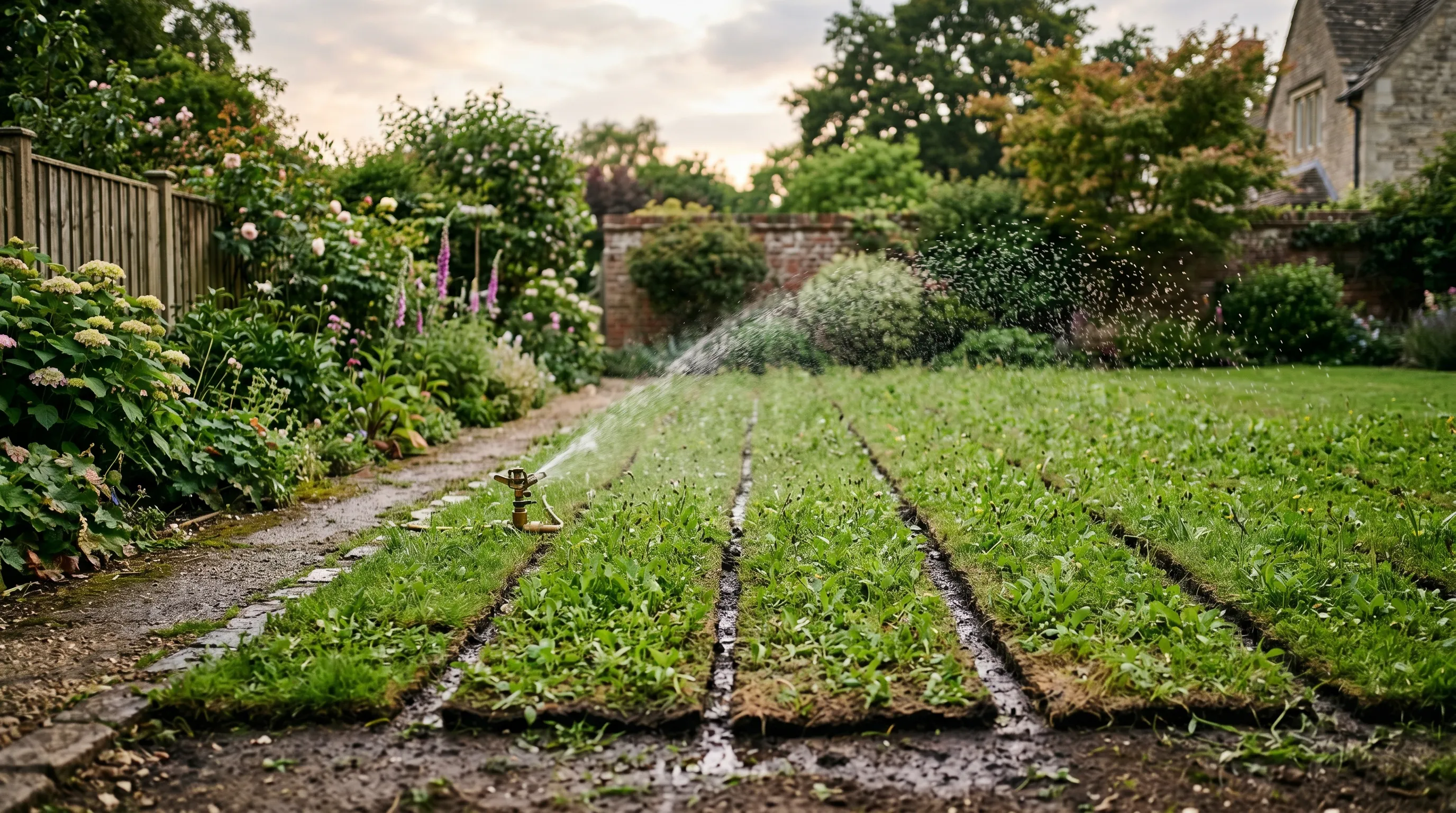
Keep new turf damp while it roots in. A sprinkler in the evening does the job without washing the joints out.
Which wildflowers are in wildflower turf?
Most turfs mix native perennial wildflowers with fine, slow-growing grasses. The exact mix varies by grower, so check what’s in yours.
You’ll often find:
- Oxeye daisy
- Common knapweed
- Bird’s-foot trefoil
- Red clover
- Yarrow
- Self-heal
- Lady’s bedstraw
- Cowslip
- Red campion
These are perennials, so they come back each year. Some turfs also include yellow rattle, a meadow annual that weakens grasses and gives the flowers more room. If yours doesn’t, you can sow yellow rattle seed in autumn. Our guide to yellow rattle shows how.
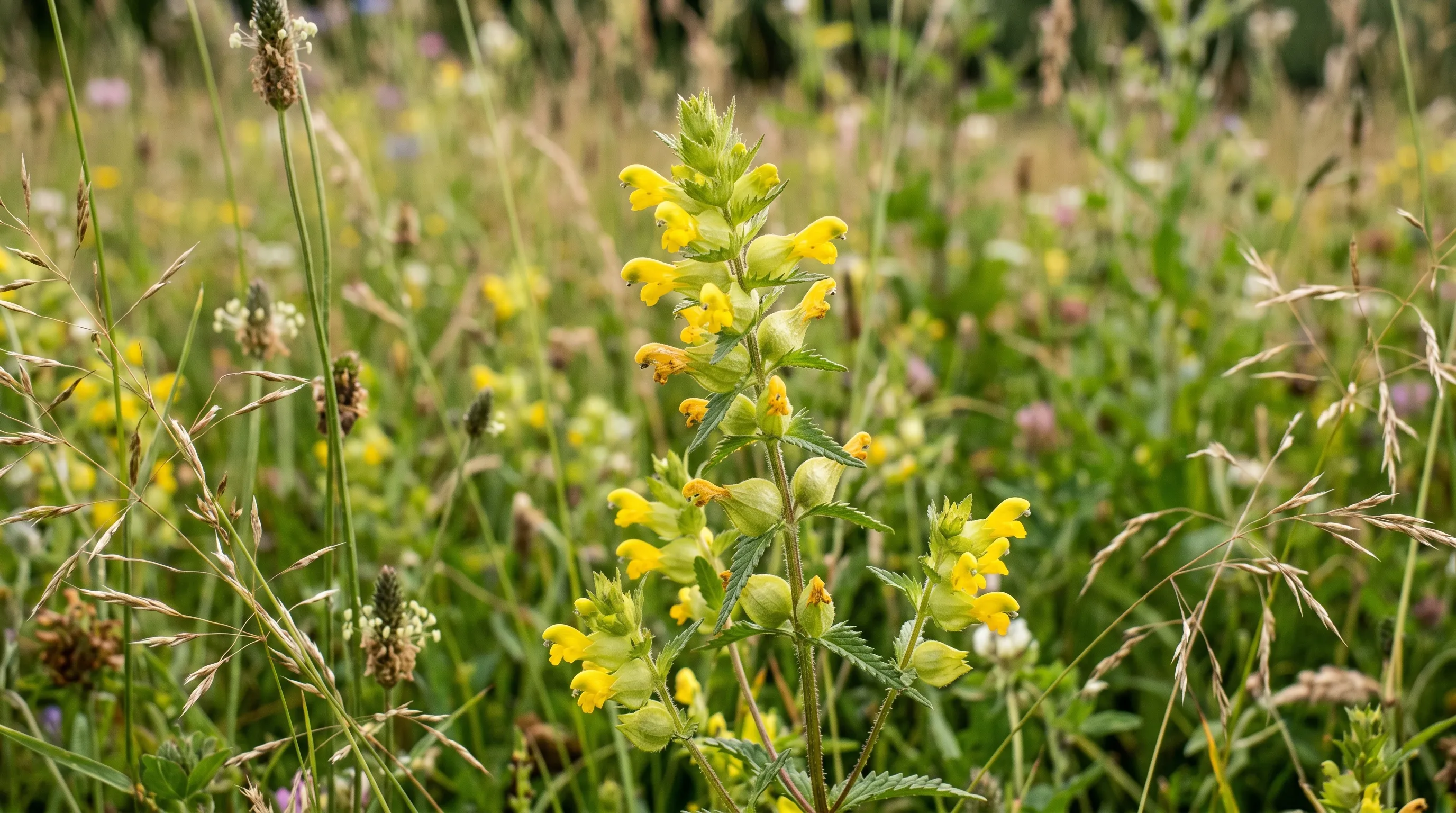
Yellow rattle weakens the grasses around it, which leaves more room for the wildflowers.
Specialist mixes are available for shade, wet ground or chalky soil, so pick one that suits your spot.
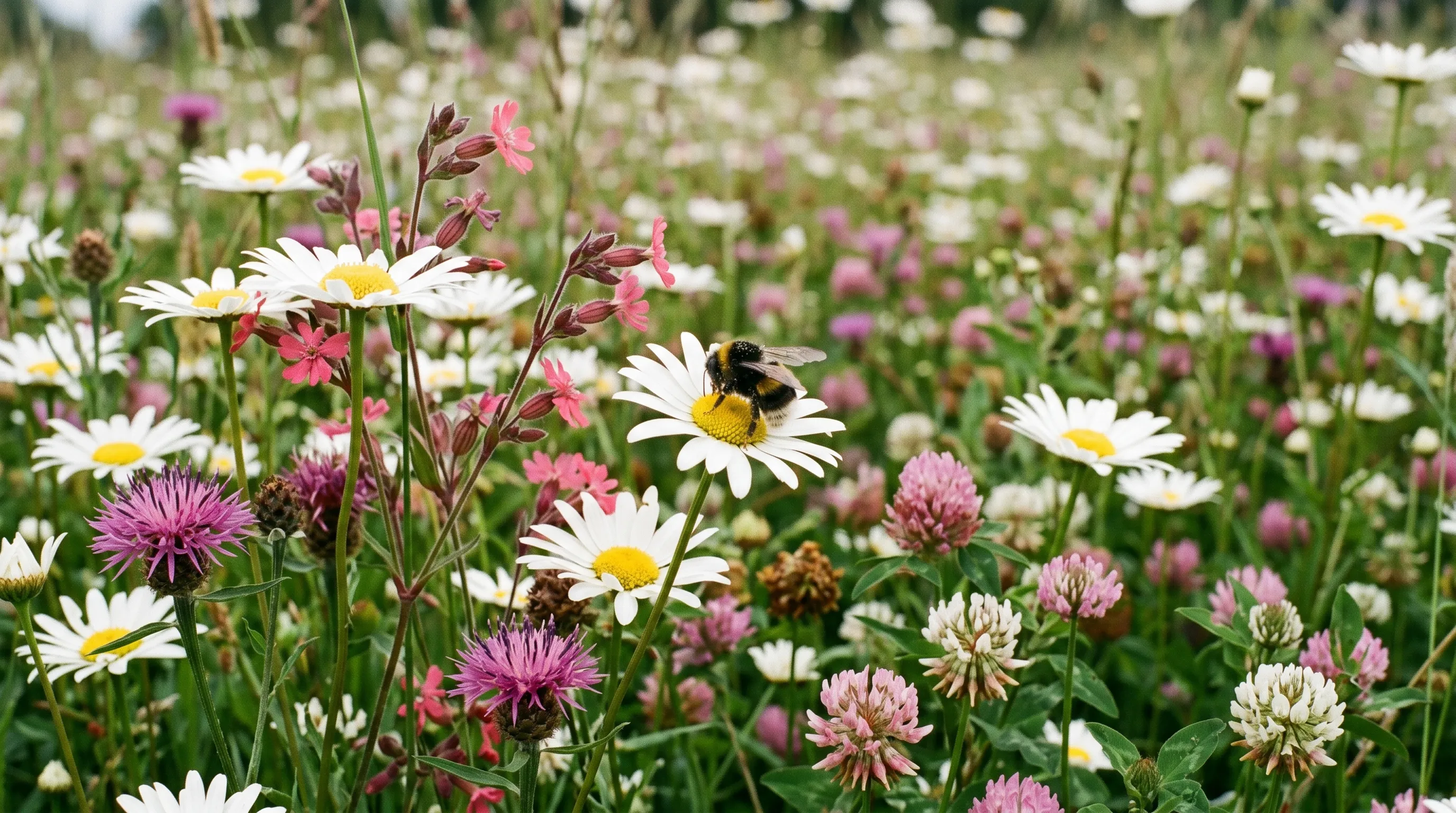
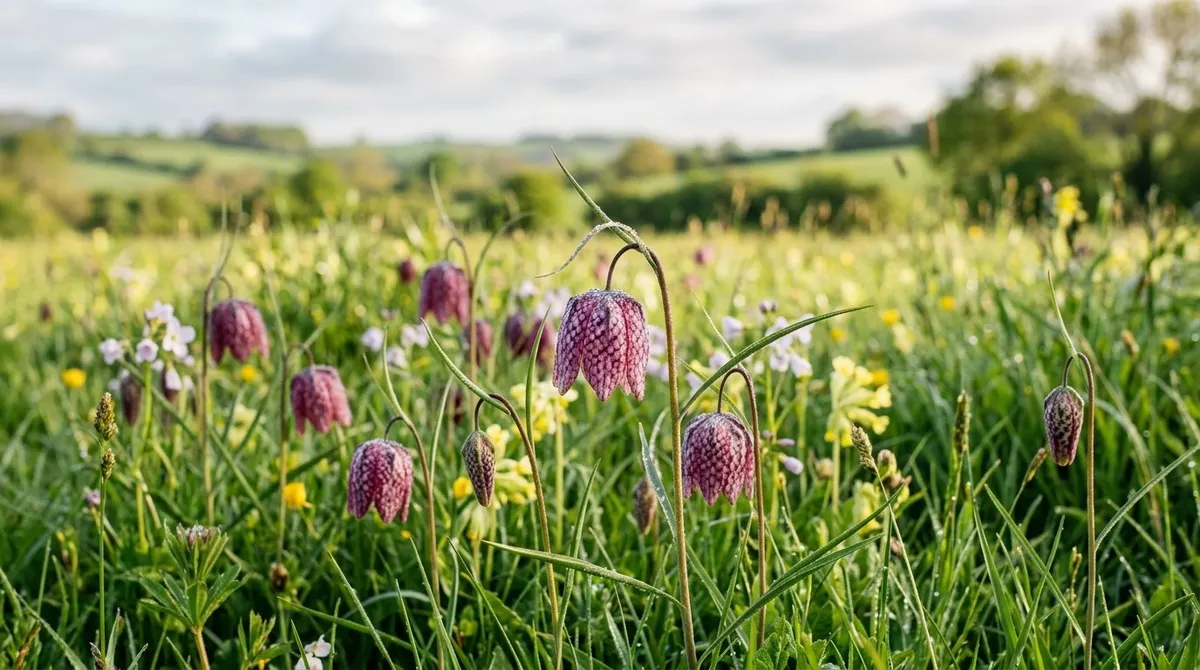
Oxeye daisies, clover and knapweed in full flower. Bumblebees, hoverflies and butterflies soon find a new meadow.
If you want even more for pollinators, our list of bee-friendly garden plants has ideas for the borders around it.
How do you look after wildflower turf each year?
Cut it once a year in late summer and take the hay away. That’s the main job.
- Cut in August or September, once most flowers have set seed
- Cut to about 5-7cm, using a strimmer, brush cutter or scythe
- Leave the cut hay on the surface for a few days so the seeds drop
- Rake off all the hay and put it on the compost heap
Taking the hay away matters. Left in place, it rots down and feeds the soil, which helps grasses take over. Some people give a short trim again in autumn or early spring to keep the grass in check.
Beyond that, leave it alone. No feeding, no watering once established, and no weedkiller. Expect the mix of flowers to shift a little from year to year. Our guide on when to cut a wildflower meadow covers timing in more detail.
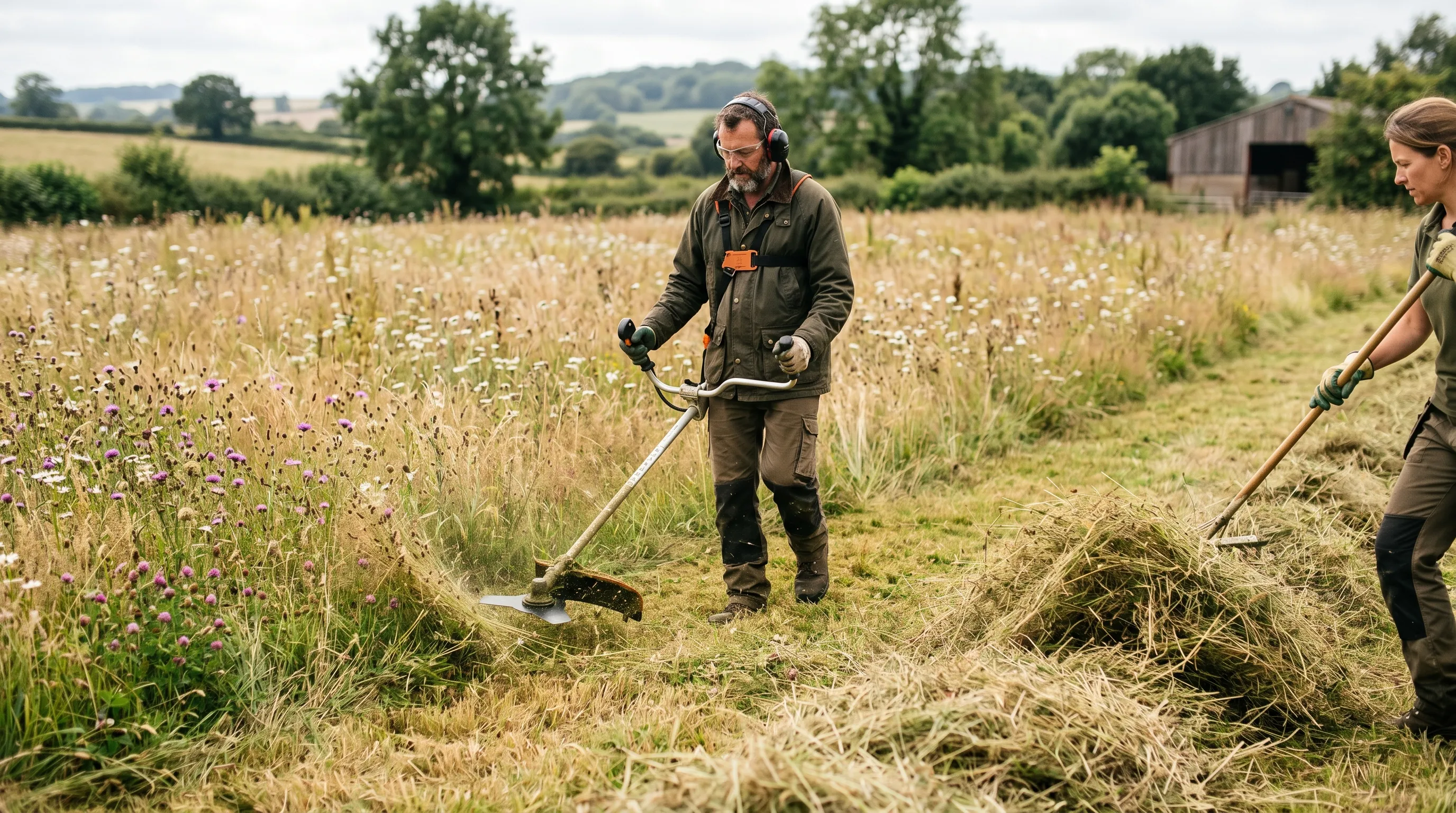
The yearly late-summer cut. Leave the hay a few days to drop its seed, then rake it all away.
Common mistakes with wildflower turf
Laying it on rich soil. Compost and fertiliser feed the grasses, which soon swamp the flowers. Keep the soil plain.
Laying it over a lawn. The old grass grows up through the turf. Always lift the lawn first.
Letting it dry out. New turf can fail in a dry week. Water every day until it roots in.
Leaving the hay. Cut hay left to rot feeds the soil and smothers seedlings. Rake it all off.
Cutting too often. Mowing it like a lawn stops the flowers. One main cut a year is enough.
Wildflower turf calendar: month by month
| Month | Task |
|---|---|
| January | Plan your site and order turf for spring |
| February | Clear the site and lift old lawn if ground isn’t frozen |
| March | Prepare and rake the soil. Start laying in mild weather |
| April | Good month for laying. Water daily if dry |
| May | Water spring-laid turf. First flowers start to open |
| June | Main flowering begins. Enjoy the bees |
| July | Peak flowering. No cutting yet |
| August | Main yearly cut once seeds have set. Remove the hay |
| September | Finish the cut. Good month for laying new turf |
| October | Last laying window. Sow yellow rattle if needed |
| November | Optional short trim. No laying on frozen or waterlogged ground |
| December | Leave alone. Plan any new areas |
Find more wildlife-friendly ideas in our wildlife guides. If you’ve only got a corner to play with, our guide to making a mini meadow shows how to fit wildflowers into a small space.
Frequently asked questions
When can I lay wildflower turf in the UK?
Spring and autumn are the best times. The soil is moist and there’s usually rain to help it root. Avoid frozen ground and hot, dry spells. Whenever you lay it, water daily until it has rooted in.
What soil do I need for wildflower turf?
Ordinary, weed-free garden soil is fine, as long as it isn’t rich. Clear all weeds, rake it level and firm, and don’t add compost or fertiliser. On very fertile ground, skimming off the top few centimetres helps.
Is wildflower turf better than sowing seed?
It’s faster, but it costs much more. Turf flowers in its first summer and smothers weeds from day one. Seed is far cheaper for big areas but takes a year or two to settle. Turf suits smaller spaces.
How do I maintain wildflower turf after laying?
Cut it once a year in late summer, once most flowers have set seed. Leave the hay for a few days, then rake it all off. Don’t feed it, and don’t water once it’s established.
Will wildflower turf come back next year?
Yes, most of the plants in it are perennials that flower every year. With a yearly cut and the hay removed, it should keep going. Expect the mix to change a little over time.
Can I lay wildflower turf on top of my lawn?
No, lift the lawn first. Grass underneath grows up through the turf and crowds out the wildflowers. Remove the old turf and roots, then prepare the soil before laying.
Our team produces practical UK gardening guidance from source research, contributor records and established horticultural practice. Editorial standards are overseen by Matt W.