Key takeaways
- Autumn is the best time to lay turf, followed by spring
- Dig to about 15cm, clear stones and weeds, then level and firm the soil
- Lay rolls in a brick pattern with tight joins and no gaps
- Water every day for the first two weeks, then gradually less
- Wait until the grass is about 5cm tall before the first mow, on the highest setting
- Order about 5% extra turf and lay it the day it arrives
A new lawn is one of the quickest makeovers in gardening. Bare soil becomes green grass in a single day. Turf gives you an instant result, with no patchy bits and far fewer weeds than seed in the first few months.
The job is simple, but the details matter. Poor soil preparation is why most turfed lawns struggle. Rushing the levelling, skipping the firming or forgetting to water in the first fortnight can leave you with a lumpy, brown lawn. Here’s how to get it right, from measuring up to the first mow.
When is the best time to lay turf?
Autumn is best, spring is next, and summer is the one to avoid.
Autumn (September to November) is ideal. The soil is still warm, the rain is coming back, and the grass has all winter and spring to root before the next dry spell. Turf laid in October may need hardly any watering.
Spring (March to April) is the second choice. The soil is warming up and there’s usually enough rain. The risk is a dry May or June before the roots are in, so be ready to water.
Summer (June to August) is hardest. Heat stresses new turf and it needs a lot of water. If you must lay in summer, be ready to water every day, sometimes twice.
Gardener’s tip: Check the forecast before you order. Mild, cloudy weather with a little rain after laying is perfect. Avoid laying just before a heatwave.
Measuring your lawn area and ordering turf
Measuring carefully saves you from running short or wasting money.
How to measure
Split the area into rectangles and triangles. For rectangles, multiply length by width. For triangles, multiply base by height and halve it. Add them all up.
For curved lawns, measure the rectangle the curve fits inside, then take off about a fifth. That’s close enough.
How much extra to order
Order about 5% more than you measured. That covers trimming around edges, beds and paths. For lots of curves, add a bit more.
Roll sizes vary between suppliers, so check whether they price per roll or per square metre when you compare.
Choosing the right turf type
Most gardens are fine with standard turf, but a few spots need something special.
| Turf type | Best for | Shade | Hard-wearing | Cost |
|---|---|---|---|---|
| Standard lawn turf | Most gardens | Some | Yes | Low |
| Hard-wearing ryegrass | Family lawns, kids and pets | Some | Very | Medium |
| Fine fescue | Ornamental lawns | Good | Not very | Medium to high |
| Shade-tolerant turf | Under trees, north-facing | Very good | Fairly | Medium to high |
| Utility turf | Play areas | Not much | Very | Low to medium |
| Wildflower turf | Wildlife gardens | Varies | No | High |
Standard lawn turf suits most UK gardens. It’s a mix of ryegrass and fescue that copes with sun, a bit of shade and everyday wear. Only go specialist if you have a particular problem, like heavy shade.
How to prepare the soil for turf
Good preparation is what makes or breaks a new lawn. It’s the longest part of the job, but every minute pays off.
1. Clear the site
Remove everything growing there. Strip off old grass with a sharp spade, or hire a turf cutter for big areas. Dig out perennial weeds like dandelions, docks and bindweed, as any root left behind will push up through the turf.
If the site is overrun with weeds, you can use a glyphosate weedkiller two to three weeks before you start, following the label. Wait until the weeds have died right back before digging.
2. Dig and break up the soil
Dig the whole area to about 15cm deep with a fork or rotavator. This breaks up compacted soil so roots can grow down.
On heavy clay, this step really matters. Dig in some horticultural grit and plenty of compost to help drainage. On very sandy soil, add organic matter to help it hold water.
3. Level the surface
Rake the soil smooth and even. Break up lumps bigger than a golf ball and pick out stones and roots from the top few centimetres. Check the level with a long straight plank.
Leave the soil about 2.5cm below any paths or patio edges. Once the turf is down, it’ll sit nicely flush.
4. Firm the soil
Shuffle slowly across the whole area with your feet side by side, taking tiny steps. It’s called “heeling in”, and it firms the soil evenly. Then rake lightly to remove footprints and level any bumps.
It should feel firm underfoot but not rock hard. Getting this right stops humps and hollows appearing later.
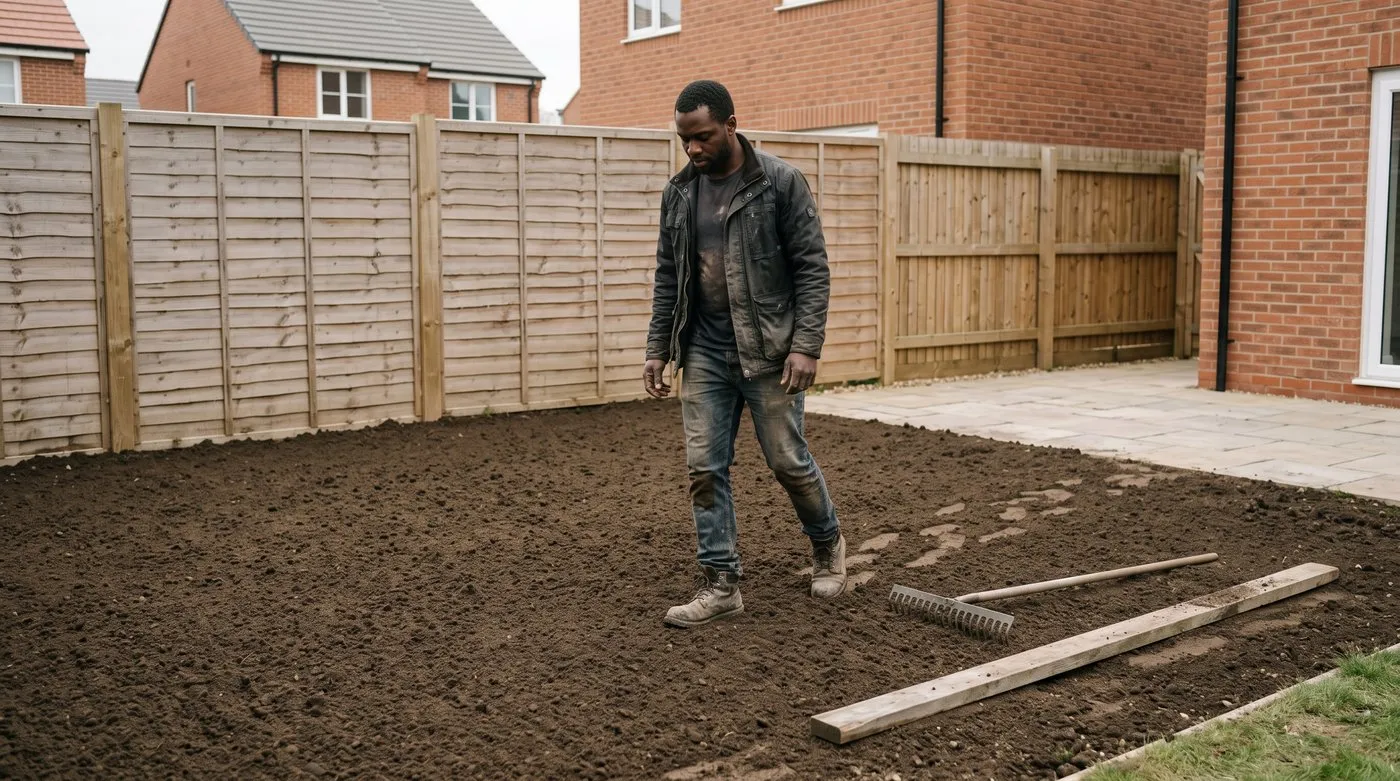
Shuffle across the whole area with tiny steps, then rake out the footprints. Firm but not rock hard is what you’re after.
5. Add a pre-turf fertiliser
Scatter a pre-turf fertiliser over the surface at the rate on the packet and rake it in lightly. It’s made to help new roots grow. Don’t use an ordinary lawn feed here, as that pushes leaf growth rather than roots.
How to lay turf: step by step
With the soil ready, laying is the fun part. Work steadily and try not to walk on the rolls you’ve laid.
Step 1: Start with a straight edge
Begin along your longest straight edge, like a path or fence. Unroll the first strip and press it down firmly. Don’t stretch it or overlap it. It should lie flat with no air pockets.
Step 2: Lay in a brick bond pattern
Start the second row with a half roll, so the joins are staggered like bricks in a wall. That way there are no long lines of joins across the lawn. Cut turf with a sharp knife or an old bread knife.
Push each roll tightly against the next. Even a small gap dries out and leaves a brown line that takes weeks to fill.
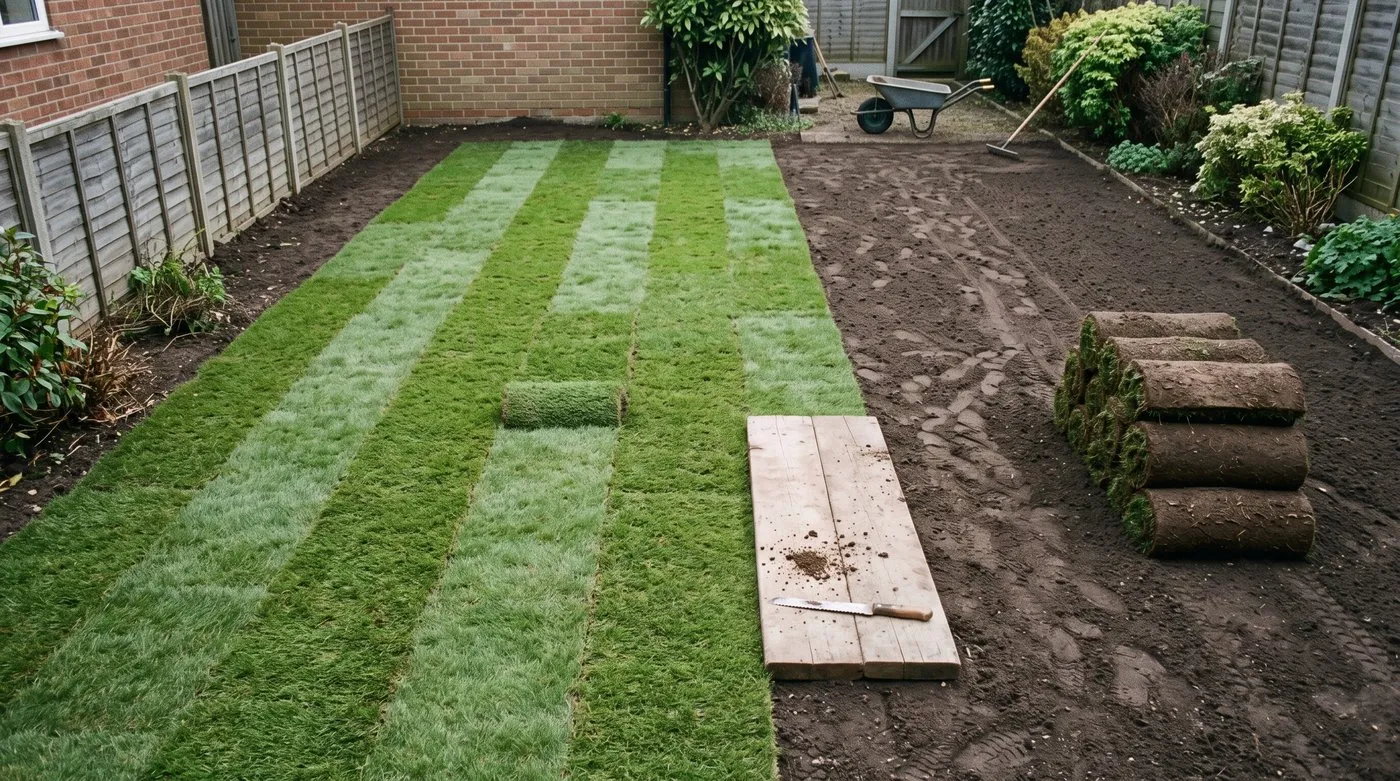
Start every other row with a half roll so the joins stagger like brickwork. Push each roll tight against the last to avoid brown lines.
Step 3: Work forwards and stand on planks
Work forwards onto the bare soil, laying turf in front of you. When you need to stand on new turf, put a plank down to spread your weight. Walking straight on it makes dips.
Step 4: Trim edges and curves
Use a half-moon edging iron or a long knife to cut around beds, paths and curves. Put full rolls round the edges and use small offcuts in the middle. Little pieces at the edge dry out and shrink.
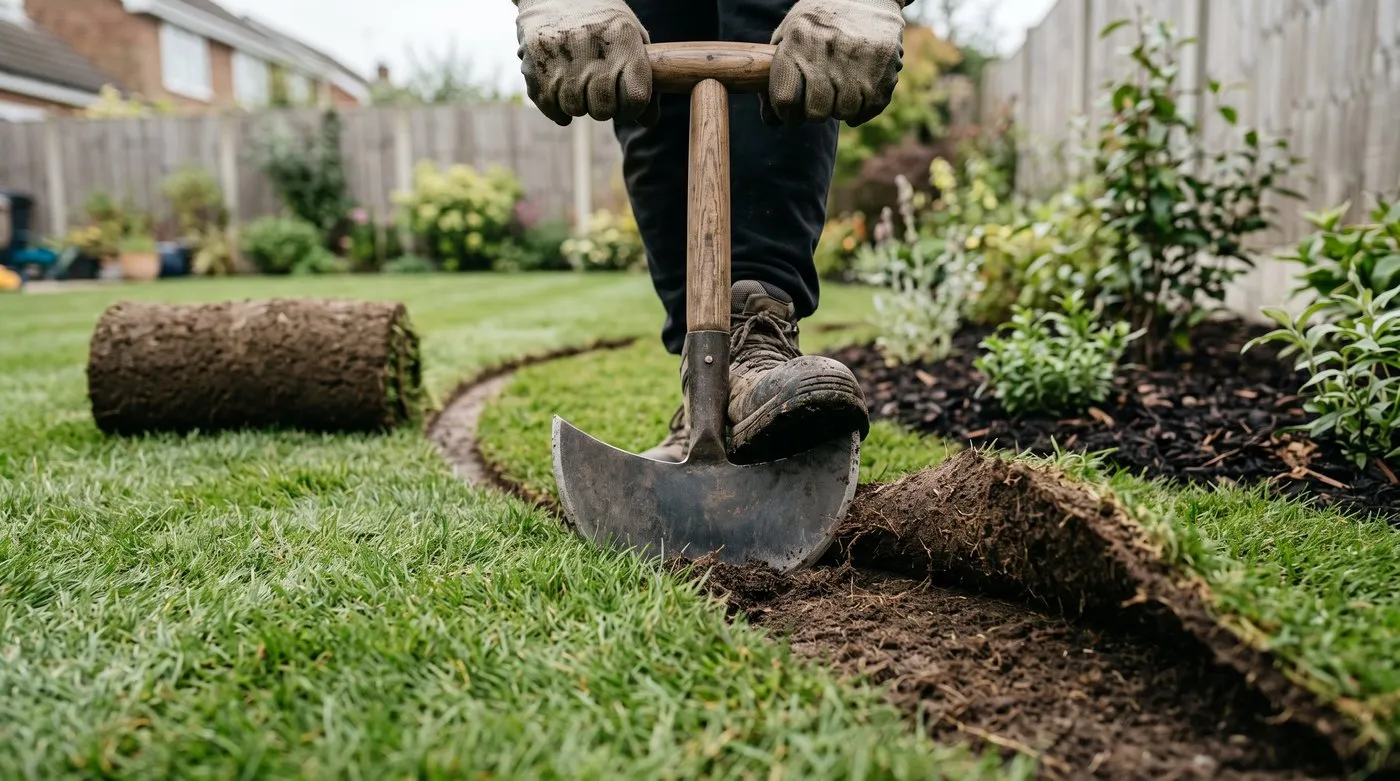
Put full rolls around the edges and trim them to shape. Small offcuts at the edge dry out and shrink, so keep those for the middle.
Step 5: Firm it down
Go over the turf with a light garden roller or the back of a rake. This presses it firmly onto the soil so the roots can grow down.
Gardener’s tip: No roller? Just walk over the lawn on planks. It does the same job.
Watering new turf: the critical first weeks
Watering is the most important job once the turf is down. Without it, the turf can die before it roots.
The first 14 days
Water every day for the first two weeks. Give it a proper soak each time so the soil underneath gets wet too. Lift a corner to check: the bottom of the turf and the soil below should both feel damp.
Water early in the morning if you can. Less is lost to the sun than at midday.
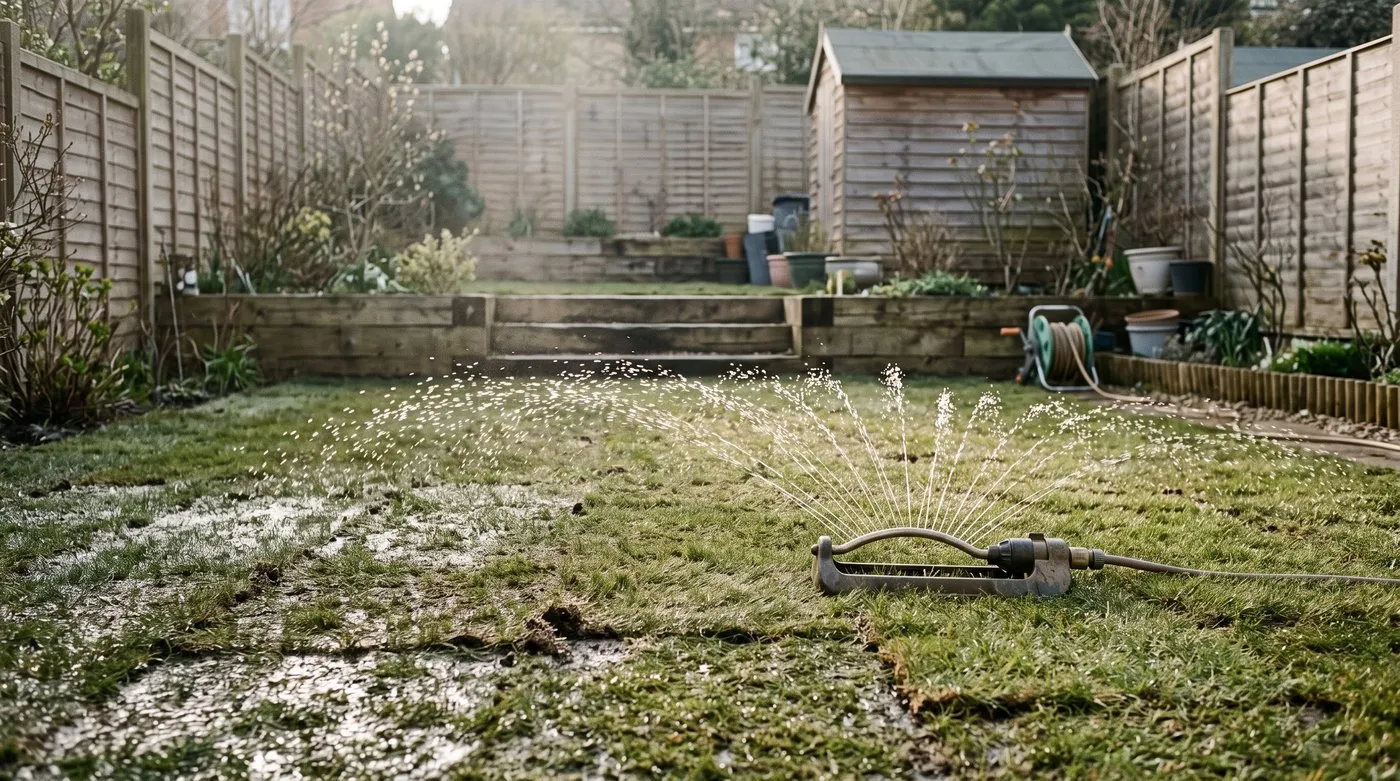
Water every day for the first two weeks, ideally early in the morning. Lift a corner to check the soil underneath is damp too.
Weeks 3 and 4
Cut back to every other day. Gently tug a corner. If it resists, the roots are growing in.
After 4 weeks
Water only in dry spells. Too much water now keeps roots shallow, which weakens the lawn.
When to mow new turf for the first time
It’s tempting to mow early, but cutting too soon can lift turf that hasn’t rooted.
Wait until the grass is about 5cm tall. That’s usually 3 to 4 weeks after laying in autumn, a little sooner in spring. Set the mower to its highest setting and take off no more than a third of the height. Use a light mower with sharp blades so it cuts cleanly.
Lower the blades a notch each time over the next few cuts until you reach your usual height. For a family lawn, that’s usually around 2.5 to 4cm.
Avoid heavy mowers for the first few cuts, as their weight can press dents into the soft lawn.
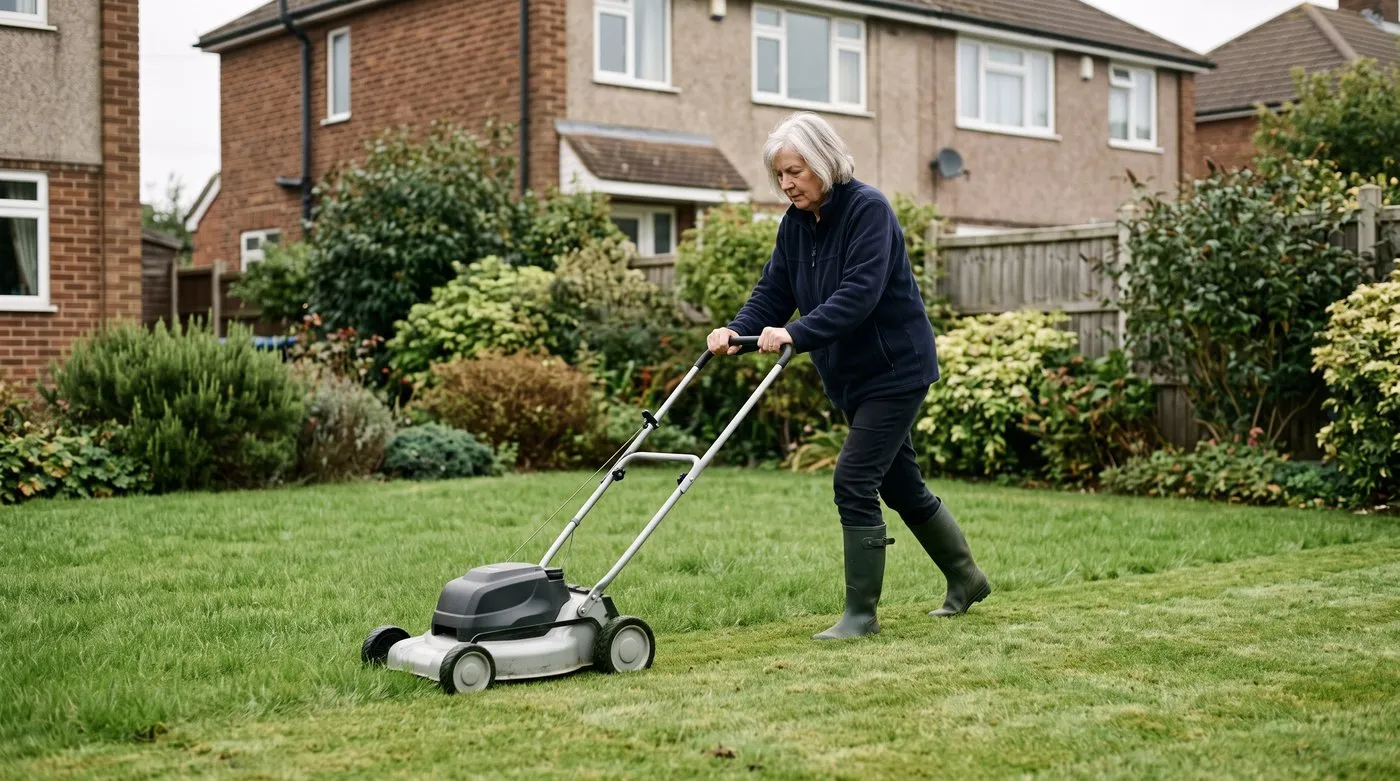
Wait until the grass is about 5cm tall and set the mower high. A light mower with sharp blades won’t lift or dent the new lawn.
Month-by-month establishment calendar
This assumes you laid in autumn. Shift things by a few weeks for a spring lawn.
| Month | What to do |
|---|---|
| Month 1 | Water daily for two weeks, then every other day. Keep off it |
| Month 2 | First mow on the highest setting when it’s 5cm tall. Light use only |
| Month 3 | Mow regularly, lowering the height bit by bit. Light foot traffic is fine |
| Month 4 | Give a seasonal lawn feed. Water it in if it doesn’t rain |
| Month 5 | Normal use, including children playing |
| Month 6 | Patch any gaps with seed and start your usual lawn routine |
Turf vs seed: which is better?
Both give you a good lawn. It comes down to budget, time and your site.
| Turf | Seed | |
|---|---|---|
| Ready to use | Within a few weeks | A couple of months or more |
| Cost | Higher | Much lower |
| Weeds in year one | Few | More |
| Best time | Autumn or spring | Spring or early autumn |
| On slopes | Stays put | Can wash away |
| Instant result | Yes | No |
Choose turf if you want a lawn quickly, have a slope, or want fewer weeds. Choose seed if money’s tight, the area is huge, or you want a special grass mix you can’t get as turf.
For most small and medium gardens, turf is worth the extra cost for the speed and tidy result.
Common mistakes when laying turf
These are the usual reasons turfing goes wrong. All are easy to avoid.
Rushing the soil preparation. Turf on squashed, stony or uneven ground gives you a lumpy, badly drained lawn. Spend longer preparing than laying.
Leaving gaps between rolls. Gaps dry out, turn brown and let weeds in. Push rolls tightly together.
Laying on old grass. The buried grass rots into a soggy layer that new roots can’t get through. Always strip it first.
Leaving rolls sitting around. Turf is alive. Rolled up, it heats up and starts to yellow quickly in warm weather. Lay it the day it arrives. If you can’t, unroll the spare strips on a hard surface and water them.
Forgetting to water. New turf has no roots to find water. In dry weather, missing a day can do real damage.
Walking on it. Feet make dips and lift the turf off the soil. Use planks if you have to cross it.
Mowing too early or too short. Wait for 5cm of growth and start on the highest setting.
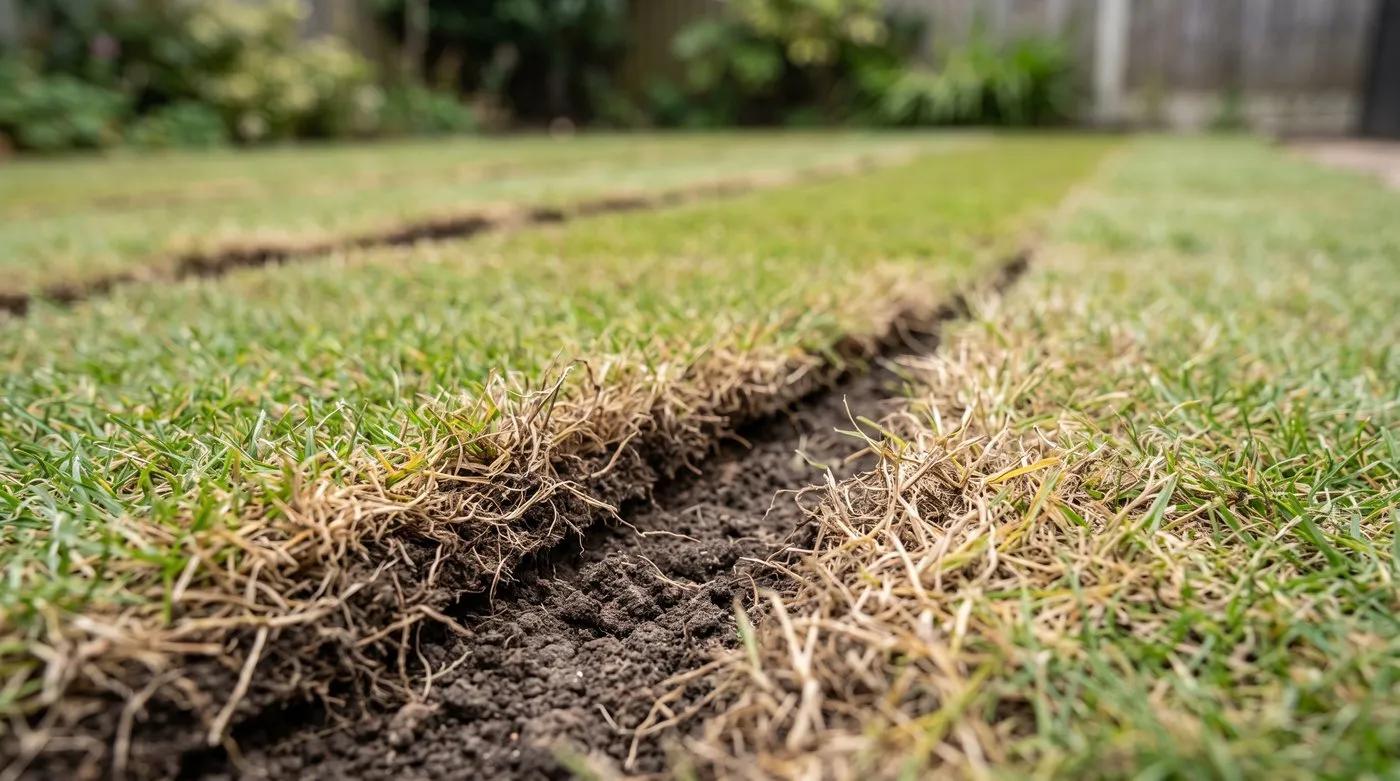
Gaps between rolls dry out and turn brown, and weeds move in. Butt every roll tightly against its neighbour as you lay.
Aftercare schedule for new turf
A new lawn needs a bit of extra care for about six months. After that, it joins your normal spring gardening and seasonal routine.
Weeks 1 to 2
Water daily. Keep everyone off it, including pets and garden furniture. If edges curl up, it’s thirsty: press them down and give it a good soak.
Weeks 3 to 4
Water every other day. The turf should be gripping the soil now. Do the first mow once it’s 5cm tall, on the highest setting.
Months 2 to 3
Mow weekly, lowering the blades bit by bit. Light use is fine. If it looks pale or slow, give it a liquid lawn feed.
Months 4 to 6
Give a seasonal feed. Overseed any bare patches. Start dealing with lawn weeds if any appear.
Beyond 6 months
Treat it like any other lawn, with regular feeding, aerating and the odd scarify. A mulch on nearby borders stops soil washing onto the lawn edges in heavy rain.
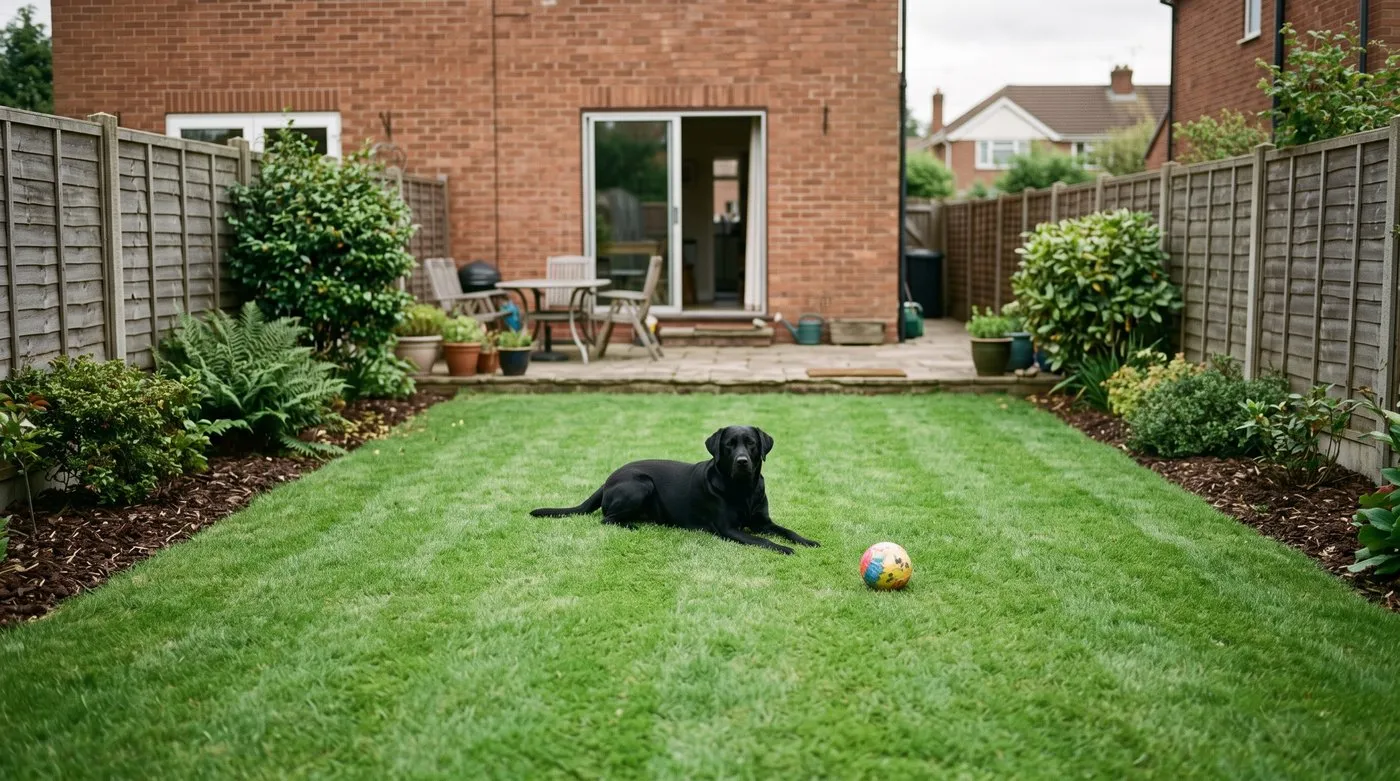
After six months, a new lawn joins your usual routine. Mulching nearby borders stops soil washing onto the edges in heavy rain.
Dealing with problem areas
Some spots need a little extra thought. Plan for them before you start.
Slopes
Lay turf across the slope, not up and down, so it doesn’t slide. On steep slopes, pin each roll down with wooden pegs until it roots.
Shady spots
Under trees and next to fences, use shade-tolerant turf. Standard turf struggles without a few hours of sun. Shady grass grows slower, so mow it a little higher than the rest.
New-build gardens
New-build gardens often hide rubble and squashed subsoil. Dig out the rubble, break up the ground well and add a layer of good topsoil before laying.
Around trees
Leave a small gap between the turf and the trunk. Grass pressed against bark keeps it damp. Keep the gap neat with a half-moon edging iron.
Laying turf in spring: specific advice
Spring laying works well but needs a little more attention. The soil is cooler, so roots grow more slowly and the lawn takes longer to settle than in autumn.
The big risk is a dry spring. April and May can be very dry, and new turf with shallow roots dries out fast. Be ready to water every day in any dry spell. A sprinkler on a timer makes it easier.
A pre-turf fertiliser helps spring turf root faster in the cooler soil.
What does turf cost for a typical UK garden?
Turf itself is only part of the bill. When you budget, include:
- The turf, plus about 5% extra
- Delivery, which can add a lot to small orders
- Topsoil, if your soil is poor
- Pre-turf fertiliser
- Hiring a turf cutter or roller, if needed
Doing it yourself saves the labour cost, which is often the biggest part of a professional quote. If you hire a pro, get a few quotes.
The key steps for laying turf, in order
Laying turf rewards careful preparation. The time spent digging, levelling and firming pays you back with a lawn that roots fast, drains well and looks great.
So, in short: dig to about 15cm, remove stones and weed roots, level it, firm it, lay in a brick pattern, and water every day for the first two weeks. Do that and you’ll have a lovely lawn in a few weeks.
For the borders round your new lawn, see our guides on spring gardening jobs, improving clay soil and using mulch. The RHS guide to laying turf is a handy extra read.
Now you’ve mastered laying turf, read our guide on improving clay soil for the next step in getting your lawn and borders in great shape.
Frequently asked questions
When is the best time to lay turf in the UK?
Autumn, from September to November. The soil is still warm, there’s more rain, and the grass has months to root before summer. Spring, from March to April, is the next best time. Avoid summer unless you can water thoroughly every day.
How long does turf take to root?
It usually starts rooting within two to three weeks. It takes a few more weeks to fully settle, and longer in cool weather. Gently lift a corner after a couple of weeks. If it resists, roots are forming. Keep off it and keep it watered until then.
Can you lay turf on top of old grass?
No, always strip the old grass first. The old grass rots underneath, leaving a spongy, lumpy layer that stops new roots reaching the soil. Lift it with a spade or a hired turf cutter. Then dig, level and firm the soil before laying.
How much does turf cost in the UK?
It depends on the type and where you buy it. Standard lawn turf is cheaper than premium or shade-loving types. Delivery can add quite a bit to small orders. Budget for topsoil too if your ground is poor, and get quotes from a few local suppliers.
How often should I water new turf?
Every day for the first two weeks, unless it rains heavily. Give it a good soak so the soil underneath gets wet too. After that, cut back gradually as the roots take hold. Once it’s rooted, water only in dry spells. Lift a corner to check the soil below is moist.
Should I put topsoil down before turf?
Not always, but it often helps. If your soil is heavy clay, stony or squashed by building work, spread a layer of good topsoil first. Good garden soil just needs digging, raking, levelling and firming.
Can you lay turf in winter?
Yes, as long as the ground isn’t frozen or waterlogged. It roots slowly in the cold, so it takes longer to settle than autumn turf. Keep off it as much as you can until spring growth starts. It won’t need much watering.
Our team produces practical UK gardening guidance from source research, contributor records and established horticultural practice. Editorial standards are overseen by Matt W.