Key takeaways
- The pink shows on new growth only, so a hard prune in March brings it back
- A light trim in early July gives a second, smaller flush of pink
- Rub off any plain green shoots from the trunk below the graft as soon as you see them
- In pots, drying out is the main killer, so water often in summer and never let it go dry
- It's fully hardy in the UK, though late frost can brown the first soft pink tips
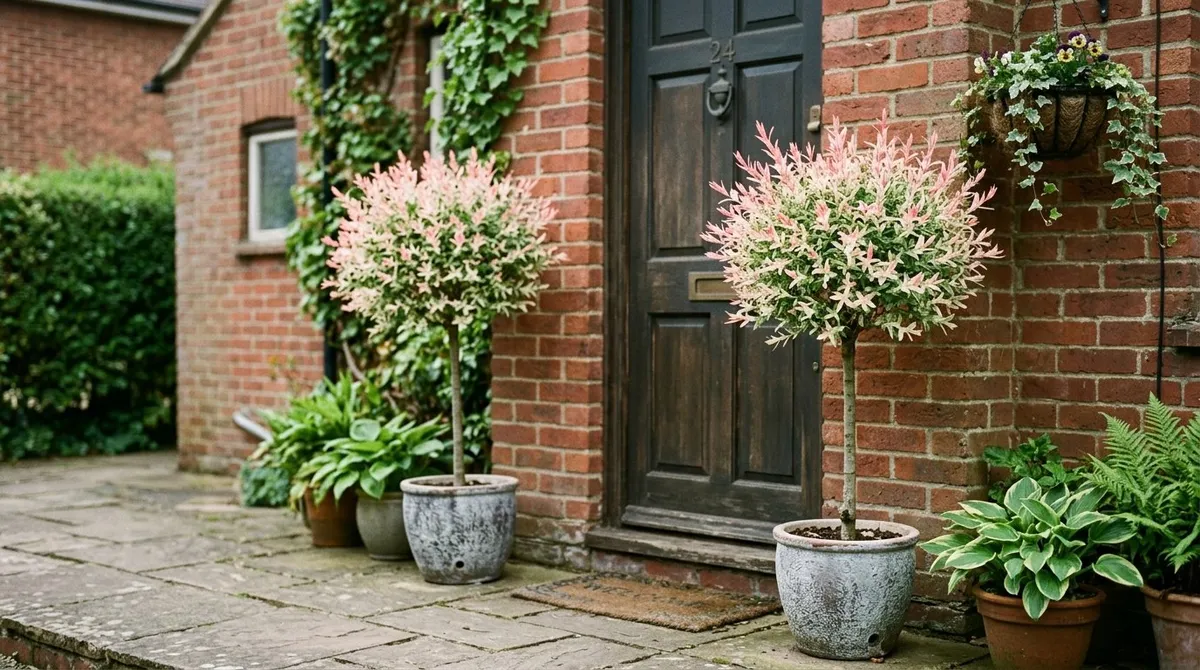
Flamingo tree care comes down to one job: a hard prune every March. That’s what brings back the shrimp-pink and white leaves that made you buy it. The flamingo tree, Salix integra ‘Hakuro-nishiki’, is a dappled willow usually sold as a lollipop standard by shop doors every spring.
By midsummer, many owners ask the same two questions. Why has it gone green, and what are those shoots coming from the trunk? Both have easy answers. This guide covers pruning, suckers, growing in a pot, brown leaves, and how to tell it from two other willows sold alongside it.
What is a flamingo tree?
A flamingo tree is a variegated willow called Salix integra ‘Hakuro-nishiki’. It’s usually sold grafted onto the top of a clear stem of a plainer, stronger willow. That knobbly join at the top of the trunk is the graft union.
The pink is in the leaves, not flowers. New leaves open shrimp-pink and creamy white from April, on slim reddish shoots. As they age, they turn green marbled with white. Small catkins appear on bare stems in early spring.
On its own roots it makes an arching shrub of about 1.5-2.5m. It’s fully hardy in UK gardens.
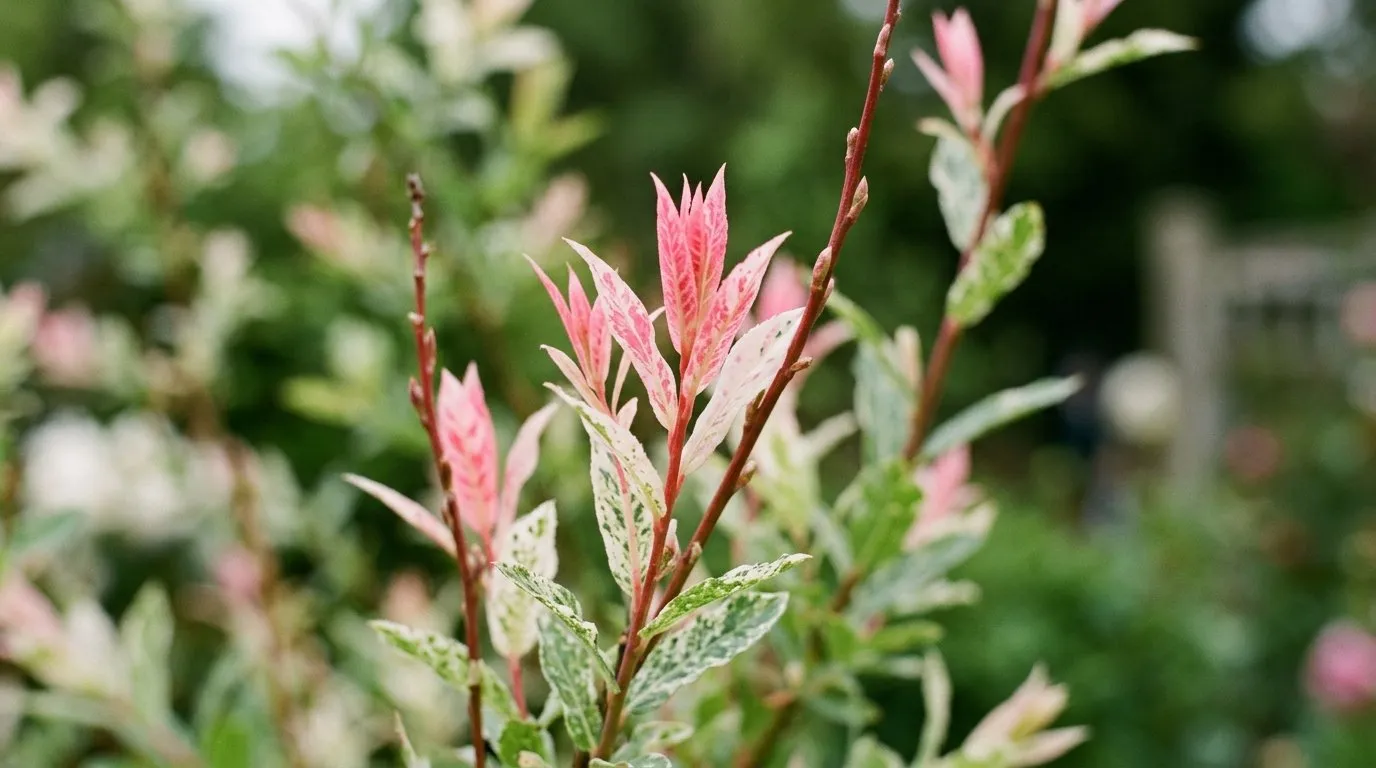
The pink and cream is brightest on the newest leaves at the shoot tips. Older leaves lower down fade to green and white.
Why is my flamingo tree losing its pink colour?
The pink only appears on new growth, and every leaf fades as it ages. Nothing is wrong with your plant. The main show runs from April to June. By late summer, an unpruned head is mostly green and white.
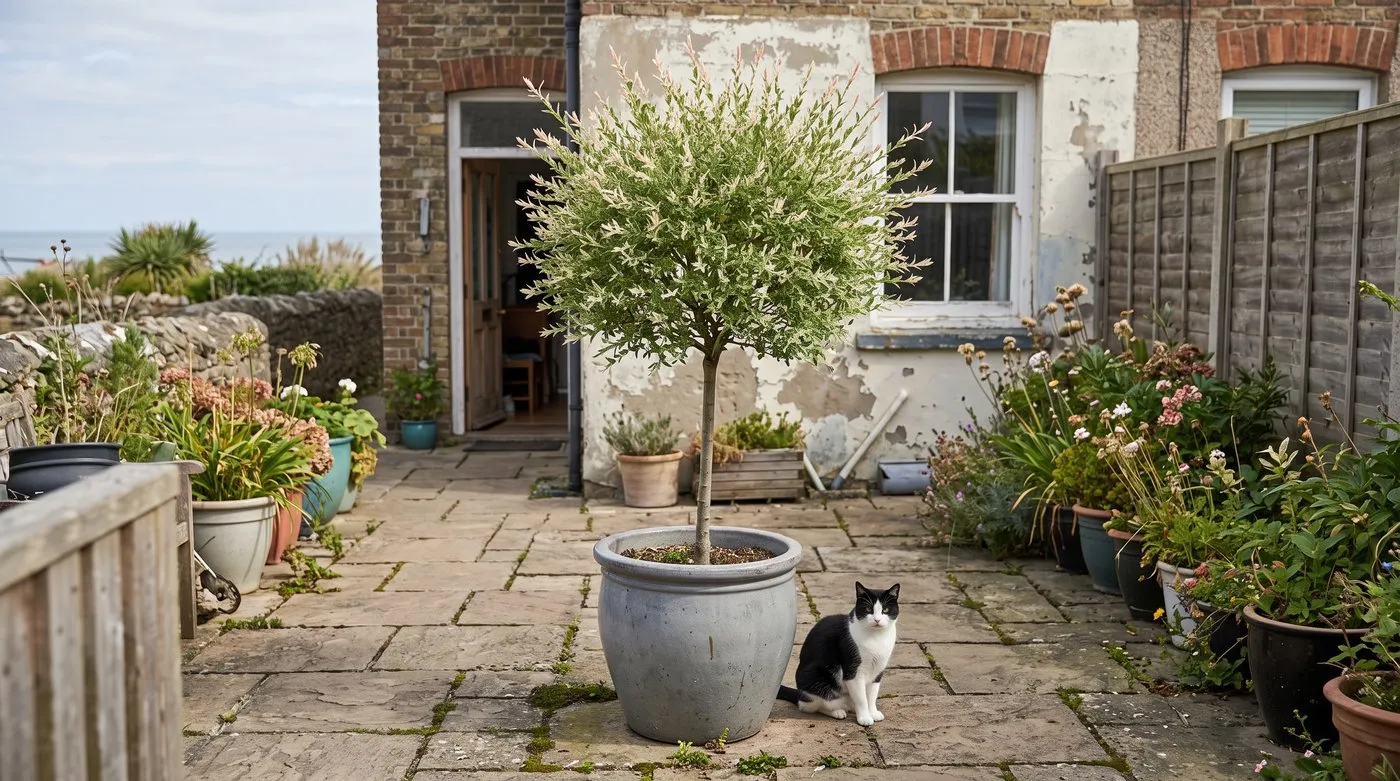
By late summer an unpruned flamingo tree is mostly green and white. A hard prune next March brings the pink back.
Light matters too. In full sun the new shoots colour strongly. In shade the pink is weak and brief, so a tree by a north-facing wall may never colour well.
The fix is simple: colour follows the secateurs. Every cut makes new shoots, and new shoots are pink. A hard March prune gives the big spring flush. A light July trim gives a smaller second flush in late summer. Skip pruning for a few years and you’ll have a shaggy green mop on a stick.
When and how should you prune a flamingo tree?
Prune hard in March, then trim lightly in early July. As a loose border shrub it needs little pruning, but a grafted standard stays a neat, colourful ball only if you cut it each year.
In March, before the leaves open, cut every stem on the head back to two or three buds, just above an outward-facing bud. Take out dead and crossing twigs. Use clean, sharp secateurs. The head will look like a fist of twigs, but it soon leafs out again.
In early July, shorten the new shoots by a third to a half. That brings a second flush of pink. Stop cutting by mid-August so new growth can firm up before the first frosts.
| Month | Flamingo tree job |
|---|---|
| March | Hard prune every stem to 2-3 buds. Remove dead wood |
| April to June | Enjoy the main pink flush. Rub off trunk shoots every few weeks |
| Early July | Trim new shoots by a third to a half for a second flush |
| Mid-August | Last date for any cutting |
| November to February | No pruning. Enjoy the reddish winter stems |
The guide to pruning shrubs explains making good cuts, and the year-round pruning calendar fits these jobs in with the rest of the garden.
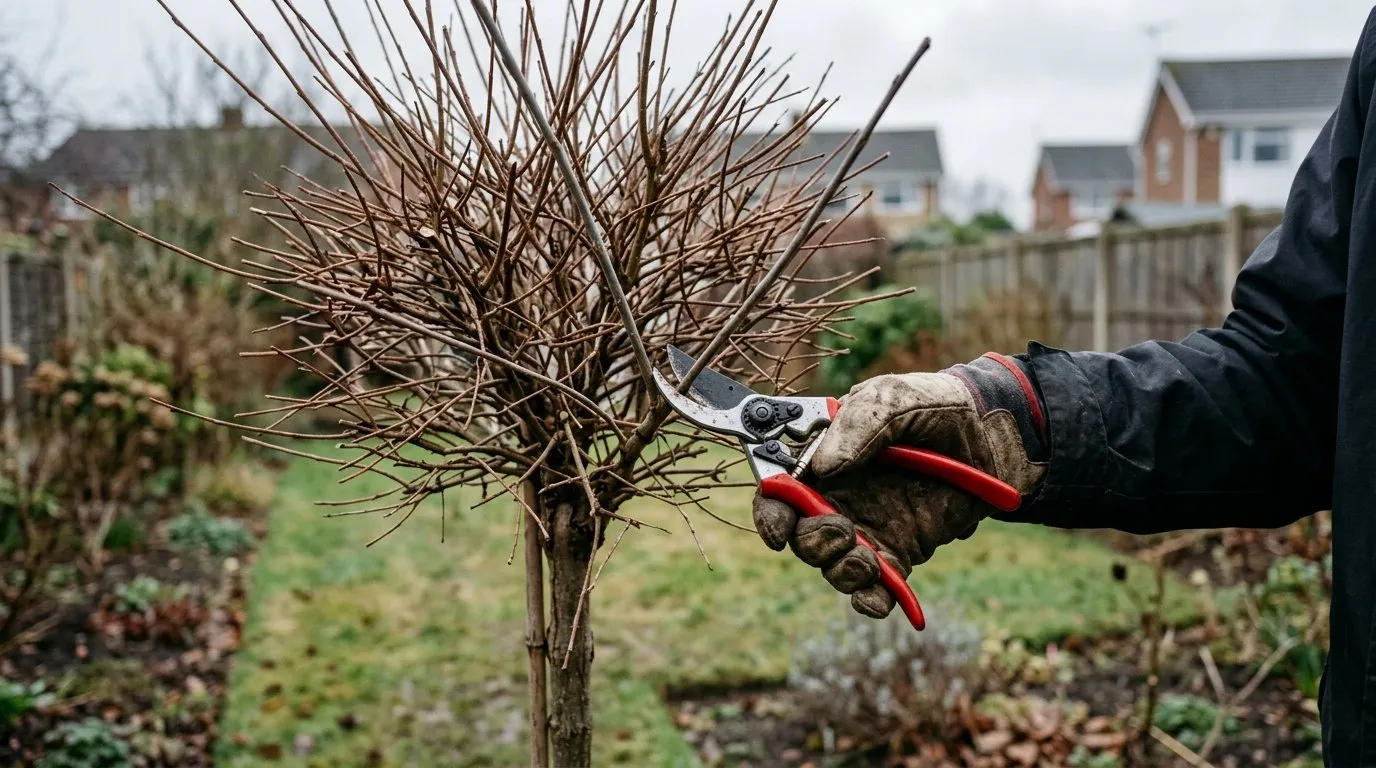
Cut every stem back to two or three buds in March. It looks drastic, but fresh pink shoots follow within weeks.
What are the shoots growing from the trunk?
These are suckers from the rootstock, and every one should come off. Anything sprouting below the graft union belongs to the plain willow the stem is made from, not to ‘Hakuro-nishiki’.
They’re easy to spot: plain green leaves with no pink or white, growing fast and upright from the trunk or from the soil around it. Rub them off with your thumb while they’re small, or cut them flush with the trunk. Left alone, they grow strongly and can take over the plant.
Check the trunk every few weeks from spring to late summer.
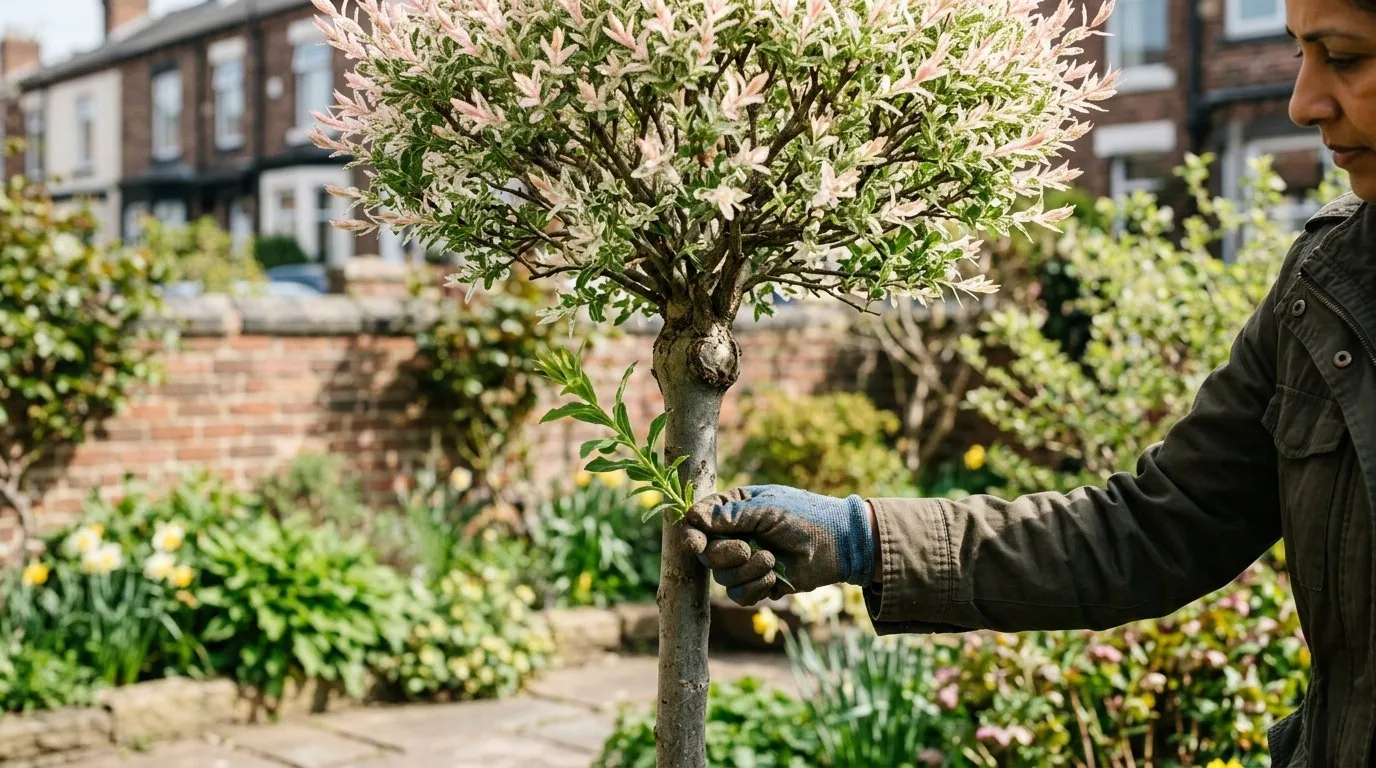
Plain green leaves below the knobbly graft are a rootstock sucker. Remove them while they’re small.
Why are the leaves brown and crispy?
Brown, crispy leaves usually mean drought, wind scorch or willow rust. Each looks a little different.
- Drought: willows love moisture, and a dried-out pot crisps the whole head quickly. Soak the pot in a bucket of water until bubbles stop, then snip off the crispy shoots. It usually releafs within a few weeks.
- Wind scorch: cold or drying spring winds brown the edges and tips on the exposed side only. Move pots to a sheltered spot, or plant where a fence or hedge breaks the wind. The pattern is similar to acer leaf scorch.
- Willow rust: in summer, look for orange spots under the leaves and yellow speckles on top. It spoils the look but rarely kills. Rake up and bin fallen leaves in autumn, and the yearly prune keeps the head airy.
- Anthracnose: in wet summers, small dark leaf spots and dying twigs. Prune out affected shoots, and the next hard prune renews the head.
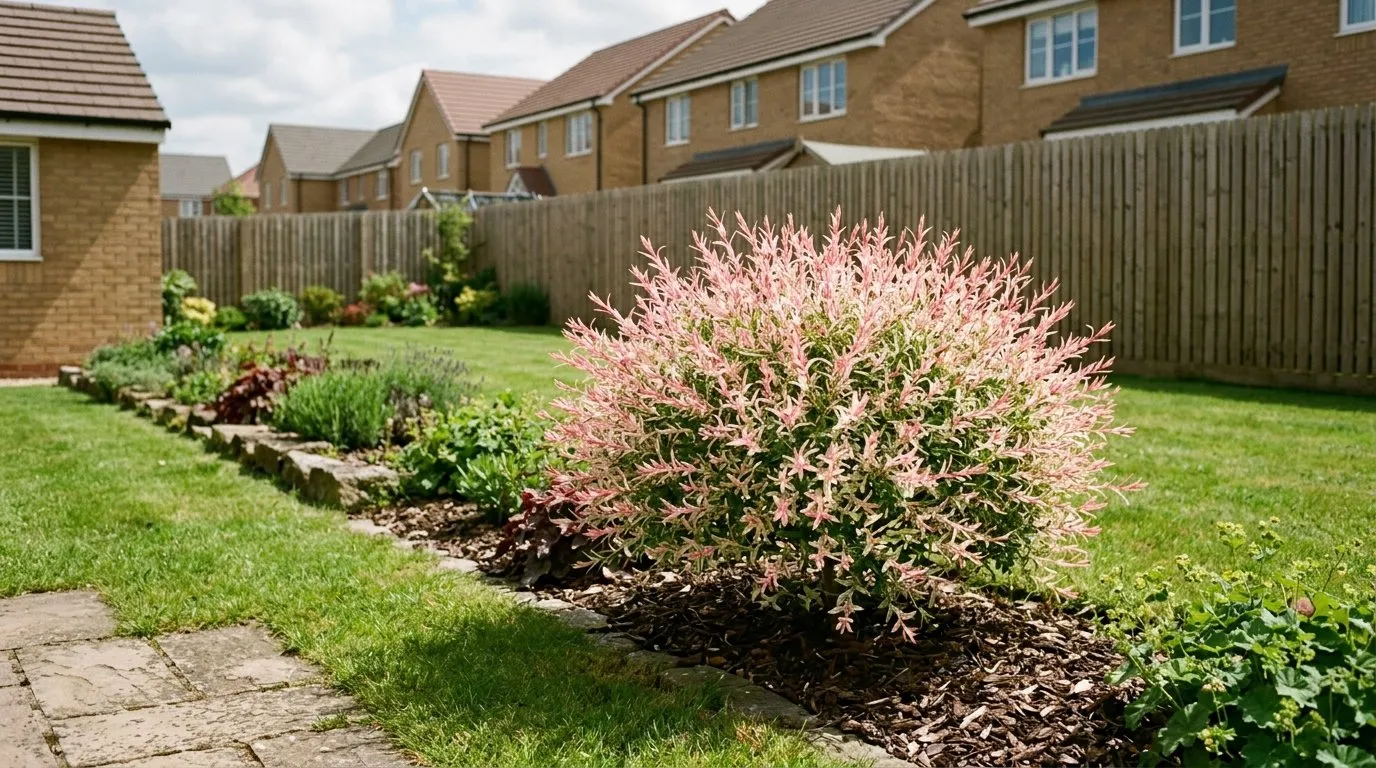
In open new-build gardens, plant where a fence breaks the wind. Shelter keeps the leaves crisp-free.
Can you grow a flamingo tree in a pot?
Yes. A flamingo tree is happy for years in a pot at least 40cm wide, as long as it never dries out. Drying out kills more potted flamingo trees than anything else.
- Compost: use loam-based John Innes No 3. It holds moisture well and its weight helps stop a top-heavy standard blowing over.
- Watering: check daily in warm weather. In a hot summer, a potted standard may need watering every day.
- Mulch: a layer of bark or gravel on top slows drying.
- Feeding: give a balanced liquid feed every few weeks from spring to midsummer, then stop so growth firms up before winter.
Every two to three years the roots fill the pot. Move it into a slightly bigger pot, or root prune it in early spring, as explained in the guide to root pruning plants in pots. The guide to plants for pots year-round has companions to grow around the base.
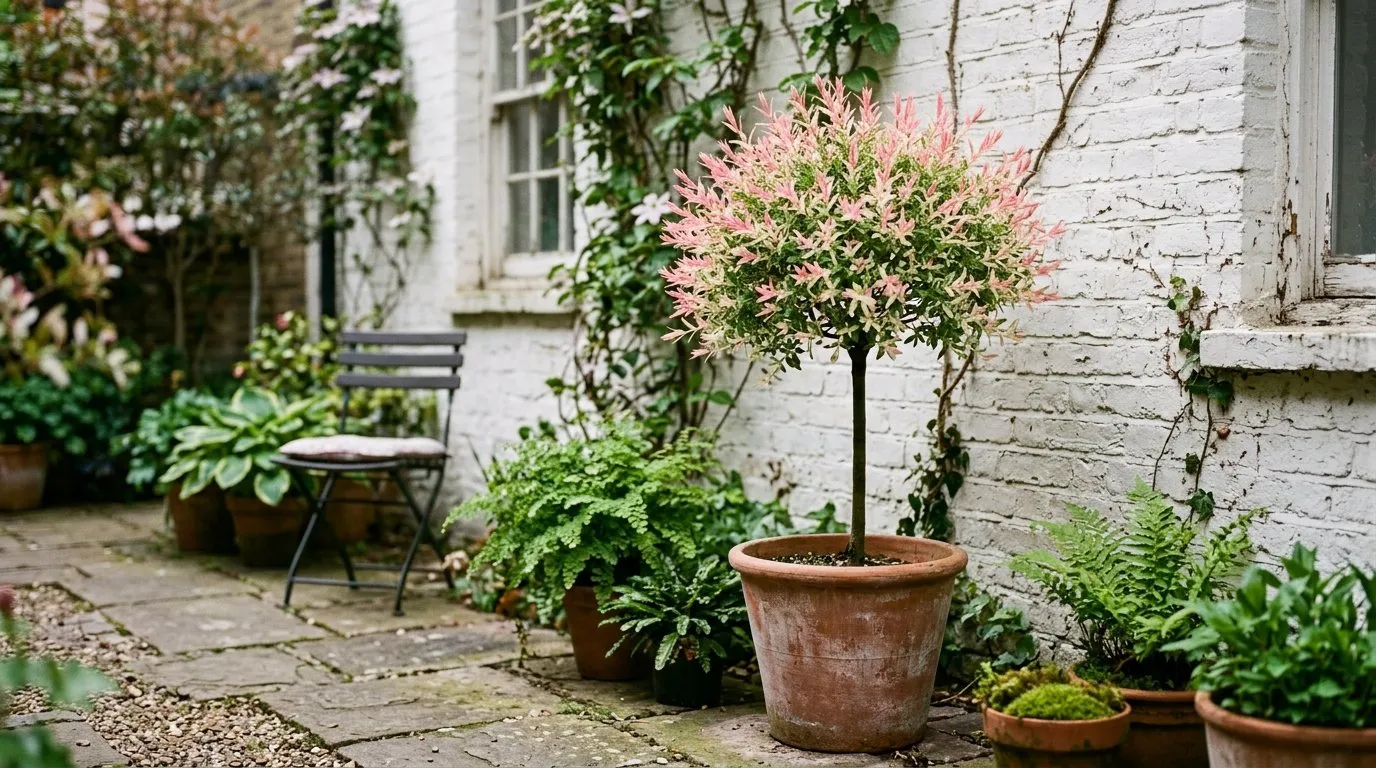
A big pot of John Innes No 3 keeps a standard happy for years. Just don’t let it dry out.
How big does a flamingo tree get, and is it hardy?
As a shrub, a flamingo tree reaches about 1.5-2.5m tall and wide. A grafted standard never gets taller than its stem. Only the head grows, and a hard prune each March keeps it a tidy ball.
It’s fully hardy in the UK. The one catch is a late spring frost, which can brown the soft new pink tips overnight. It looks alarming but the head soon regrows. If frost is forecast after the leaves open, throw fleece over the head for the night.
Winter has its charms too. The young stems turn reddish, and a pruned standard looks neat in a frosty border. If you want a small tree that stays small, the guide to trees for small gardens has more ideas.
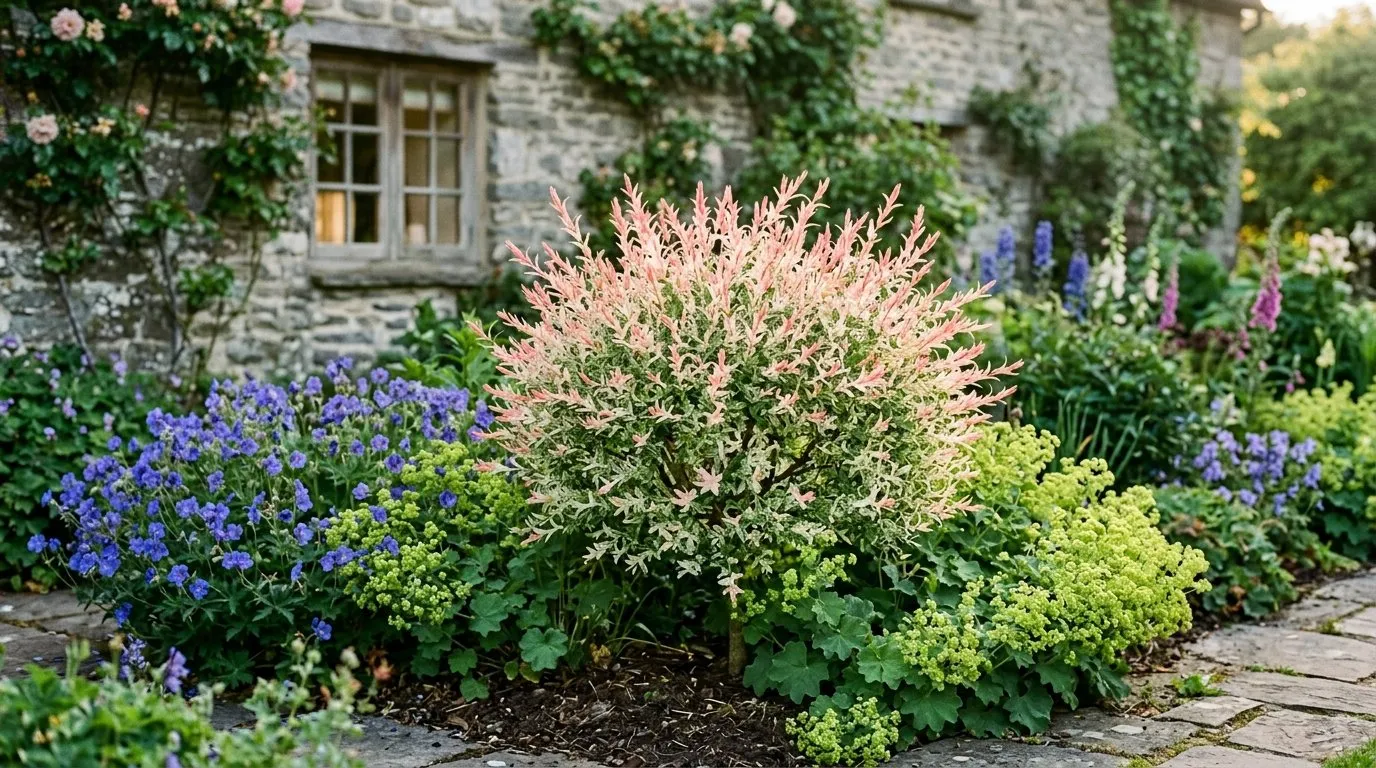
Grown on its own roots as a border shrub, it gets the same hard prune in March as a standard.
Flamingo tree, pussy willow or Kilmarnock willow?
All three are sold as small standards on the same spring displays, so they’re easily confused. The flamingo tree is grown for its leaves. The other two are grown for catkins.
| Flamingo tree | Pussy willow | Kilmarnock willow | |
|---|---|---|---|
| Name | Salix integra ‘Hakuro-nishiki’ | Salix caprea (goat willow) | Salix caprea ‘Kilmarnock’ |
| Grown for | Pink and white spring leaves | Silver catkins in early spring | Catkins on weeping stems |
| Usually sold as | Standard or shrub | Shrub or tree | Weeping standard |
| Main prune | Hard in March | After the catkins finish | Thin the head after flowering |
The Kilmarnock willow weeps to the ground and never turns pink. Wild goat willow grows into a big hedgerow tree, and its early catkins are great for bees. The guide to growing pussy willow covers it.
Common mistakes with flamingo trees
- Never pruning. The head turns green and shaggy. Prune hard every March.
- Letting the pot dry out. Willows hate drought. Check pots daily in summer.
- Ignoring trunk shoots. Plain green suckers take over if left. Rub them off early.
- Pruning late in summer. Soft growth after mid-August gets frosted.
- Planting in deep shade. The pink needs sun to show well.
Frequently asked questions
Why has my flamingo tree turned green?
Because the pink only shows on new growth, and it fades as leaves age. By late summer most leaves are green and white, which is normal. Hard prune in March and trim in early July to get fresh pink shoots. Full sun gives the strongest colour.
When should you prune a flamingo tree?
Prune hard in March, then trim lightly in early July. In March, cut every stem on the head back to two or three buds. In July, shorten the new shoots by a third to a half. Stop by mid-August so new growth can firm up before frost.
Why are my flamingo tree’s leaves brown and crispy?
Usually drought, wind scorch or willow rust. A dried-out pot crisps the whole head fast. Wind scorch browns the edges on the exposed side in spring. Rust shows as orange spots under the leaves in summer. Soak dry plants, improve shelter and clear fallen leaves in autumn.
How big does a flamingo tree get?
As a shrub it grows to about 1.5-2.5m tall and wide. A grafted standard keeps the height of its stem, and only the head grows. Pruned hard each March, the head stays a neat ball. Left unpruned, it gets bigger, shaggier and greener.
Is a flamingo tree the same as a Kilmarnock willow?
No, they’re different willows. The Kilmarnock willow is a weeping form of goat willow grown for its fluffy catkins. The flamingo tree is grown for its pink and white leaves. Both are sold as small grafted standards, which is why they get mixed up.
Can a flamingo tree stay in a pot permanently?
Yes, in a big pot with regular watering it can live there for years. Use a pot at least 40cm wide and John Innes No 3 compost. Feed from spring to midsummer, and repot or root prune every two to three years.
Do flamingo trees have invasive roots?
A grafted standard has a fairly modest root system. Even so, all willows like moisture, so plant a few metres away from drains and foundations, especially on clay soil. In a pot, roots aren’t a concern.
Now your flamingo tree is sorted, read the guide to growing willow for its bigger relatives, or browse more small trees and shrubs in the plants section.
Our team produces practical UK gardening guidance from source research, contributor records and established horticultural practice. Editorial standards are overseen by Matt W.