Key takeaways
- Brown, crispy leaf edges on an acer in summer are usually scorch, not a disease
- Pots that dry out are the most common cause in UK gardens
- Lace-leaf types such as 'Dissectum' scorch fastest in wind and sun
- Scorched leaves won't green up again, but the tree normally reshoots next spring
- Fix it with dappled shade, shelter from wind, a mulch and steady watering
- Whole branches dying one at a time point to verticillium wilt, not scorch
Acer leaf scorch is the brown, crispy, curled leaf edges that appear on Japanese maples in a hot UK summer. It looks alarming, but it is rarely a disease. The tree is simply losing water through its leaves faster than its roots can take it up. Find the cause, fix it, and next spring’s leaves should come out clean.
This guide helps you confirm it really is scorch and pick out the cause. It then covers how to stop it happening again.
What does acer leaf scorch look like?
Scorch starts at the edges and tips of the leaves and works inwards. Look for:
- Brown or tan, dry tissue on leaf edges and tips first
- Green centres that stay green for longer
- Curled, papery leaves that crumble when you rub them
- Worse damage on one side, the side facing wind or afternoon sun
- Timing from June to August, fastest in heatwaves
The key sign is dry browning from the edge inwards, not separate spots. Raised black spots are a different problem, usually a fungal leaf spot. Our guide to acer tar spot shows what that looks like.
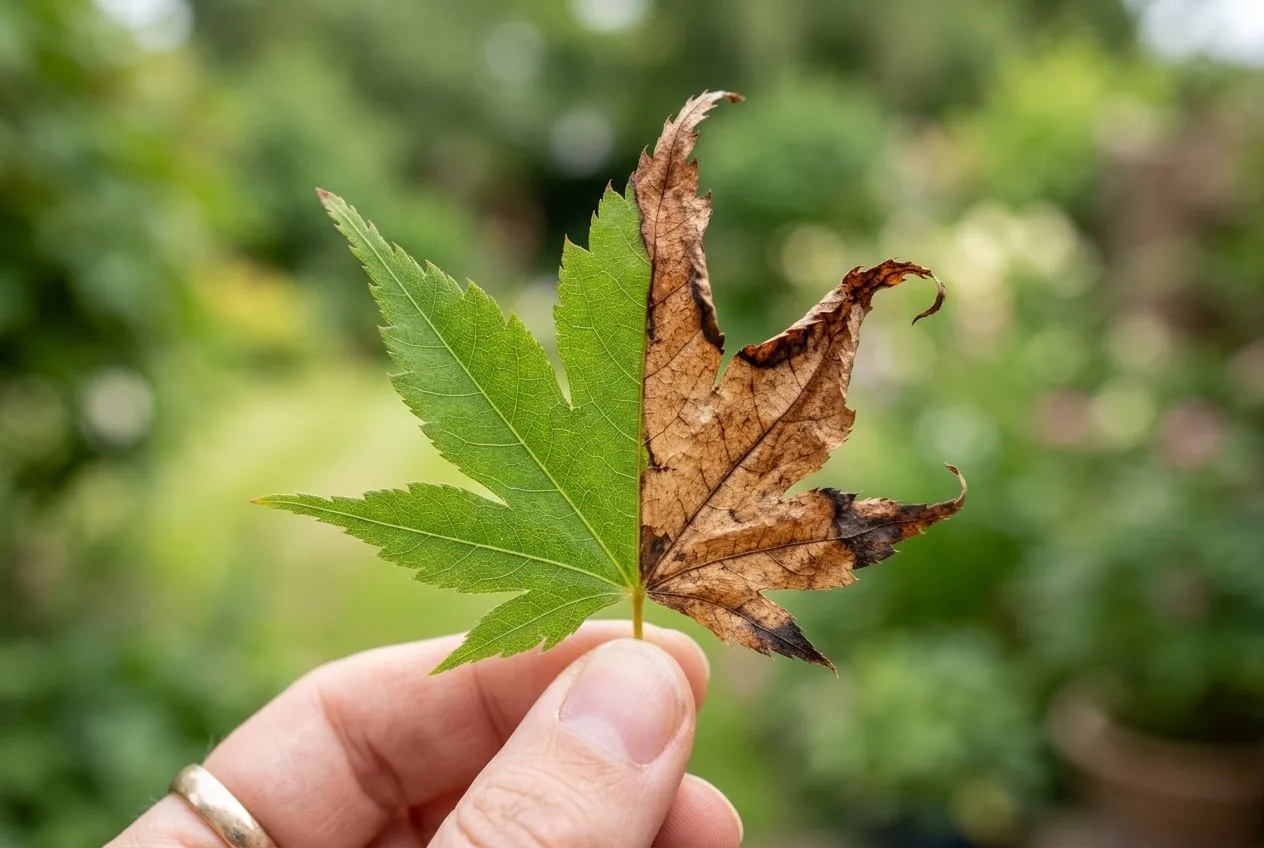
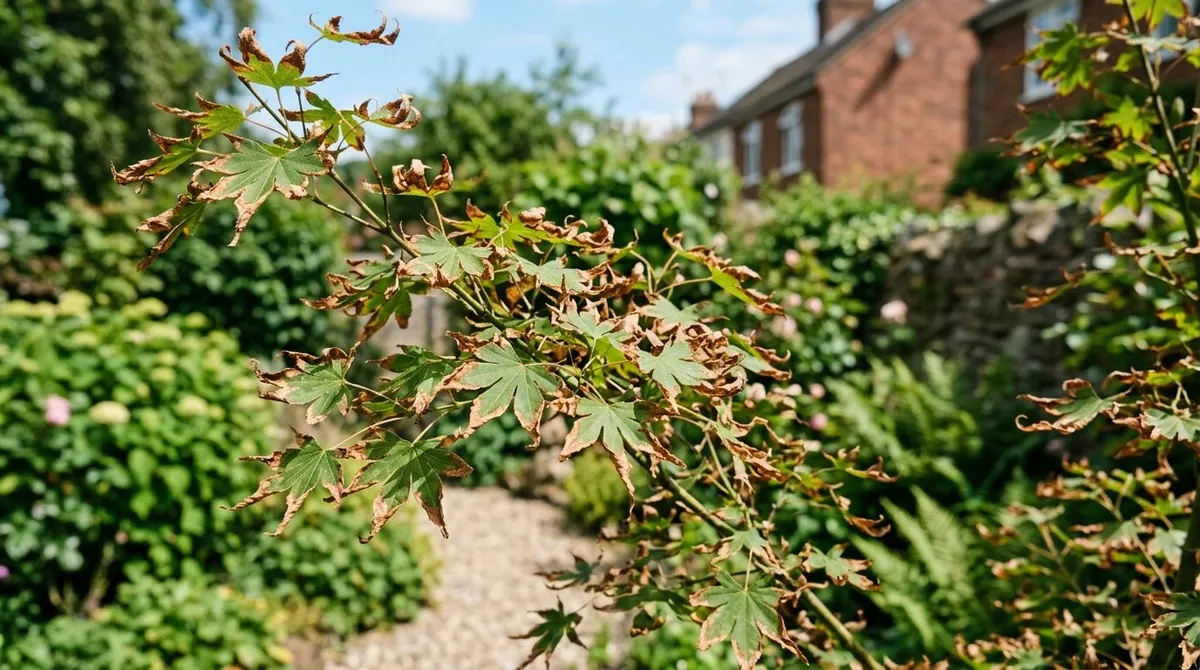
Scorched tissue turns brown, dry and papery while the rest of the leaf stays green. Spots would point to something else.
What causes leaf scorch on Japanese maples?
Scorch is a water and exposure problem, not an infection. These six causes cover nearly every case in UK gardens.
| Cause | Signs to look for | The fix |
|---|---|---|
| Dry roots | Edges crisp across the whole tree, pots worst | Water steadily, mulch, never let pots dry out |
| Drying wind | Worst on the windward side, lace-leaf types hit hardest | Shelter from cold east and north winds |
| Hot afternoon sun | Worst on the sunny side, red and variegated types most | Dappled shade or morning sun only |
| Waterlogging | Browning plus yellowing, soggy compost | Improve drainage, don’t stand pots in water |
| Too much feed | Edge browning in pots, white crust on compost | Stop feeding, water through well, repot |
| Late spring frost | New spring growth blackens overnight | Fleece on frosty nights, sheltered spot |
For frosty April nights, a layer of garden fleece over the tree protects tender new leaves.
Why do potted acers scorch first?
A potted acer has a small amount of compost to draw water from, and no deep soil underneath. In hot sun the pot heats up and the compost dries fast. A pot that was fine in the morning can be dry by evening, and the leaves crisp soon after.
Check potted acers every day in warm, dry spells, and water until it runs out of the drainage holes. If you’re going away in summer, set up one of these holiday watering solutions first.
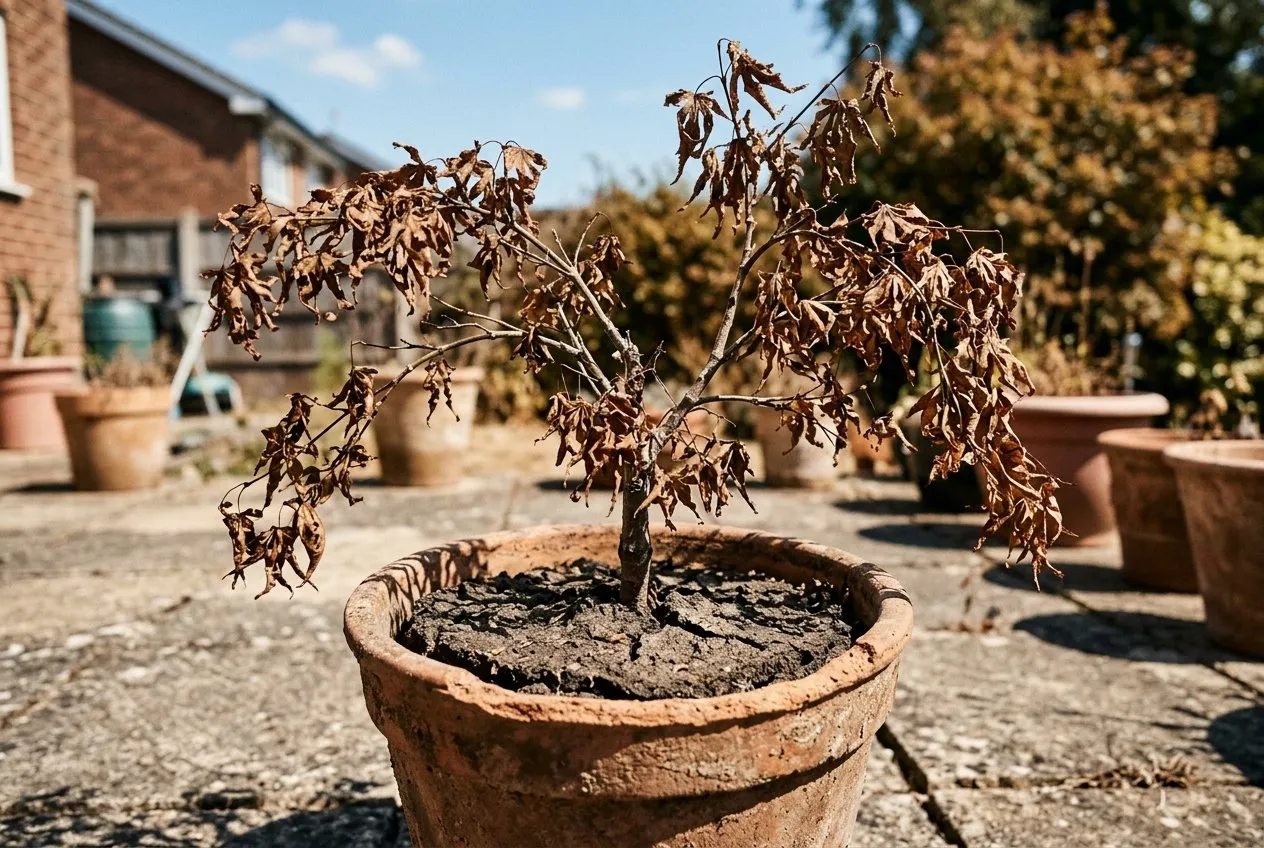
This is what a few hot days of dry compost can do. Water the pot through and it will usually leaf up again next spring.
Wind scorch on lace-leaf acers
Cold, drying wind can scorch an acer even when its roots are moist. Lace-leaf types such as ‘Dissectum’ have very fine, thin leaves that lose water quickly in a breeze. An exposed corner that catches the east wind can brown a lace-leaf acer by early summer, however well you water it.
Move the tree to a sheltered spot in autumn or winter, or plant a hedge or screen to break the wind. Our guide to windbreaks for exposed gardens has ideas that filter wind rather than block it.
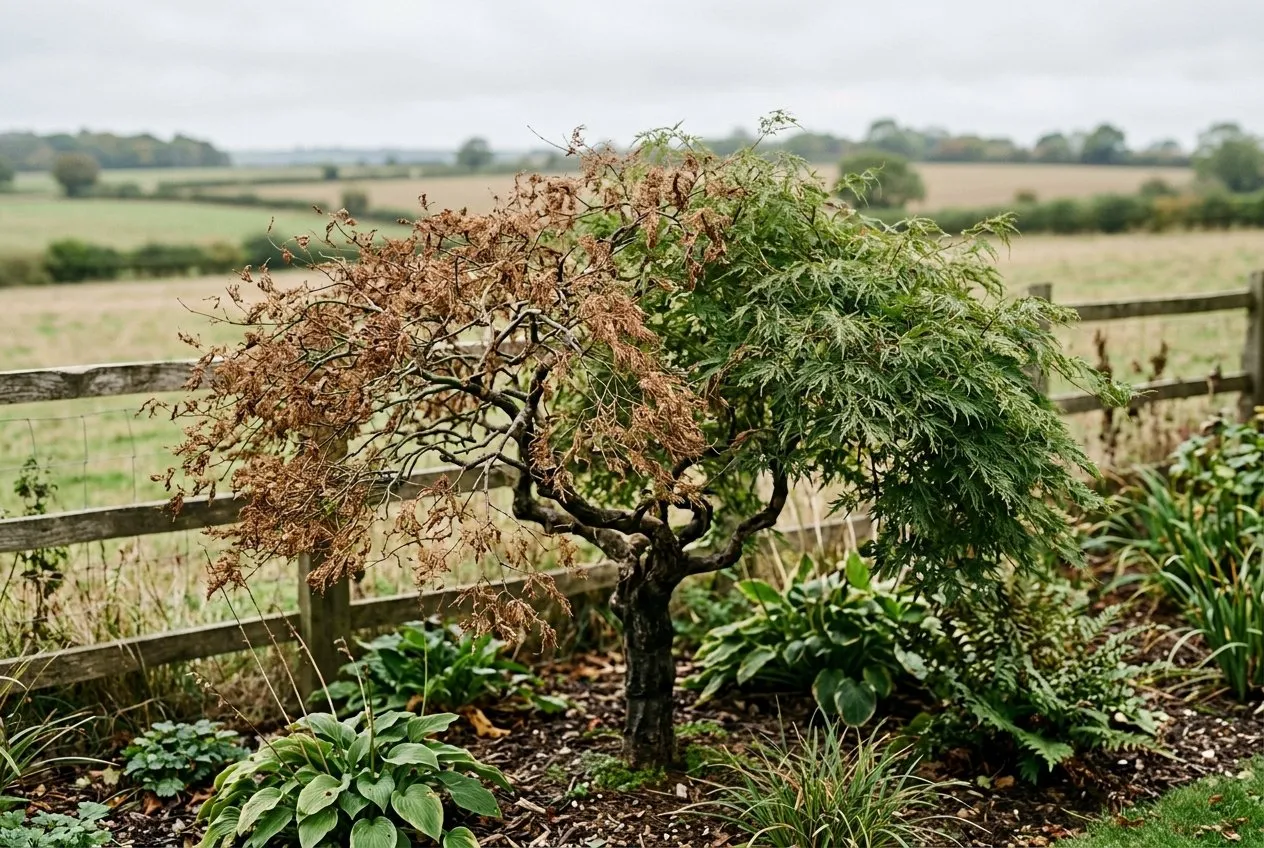
The side facing the wind has browned while the sheltered side is still green. A lace-leaf acer needs shelter as much as water.
How to tell scorch from verticillium wilt
Most browning acers have harmless scorch, but one serious disease looks a little similar. Verticillium wilt is a soil fungus that blocks the tree’s water-carrying vessels.
- Scorch: leaf edges brown fairly evenly across the tree. Branches stay alive.
- Verticillium wilt: whole branches wilt and die, often on one side, sometimes in the space of a few weeks. Cut into a dying stem and you may see dark green or brown streaks in the wood under the bark.
There is no cure for verticillium wilt. Prune out dead branches into healthy wood, and clean your secateurs between cuts. Water and mulch the tree to keep it growing strongly. If the tree dies, plant something that doesn’t catch the disease in that spot. The RHS verticillium wilt page lists resistant plants.
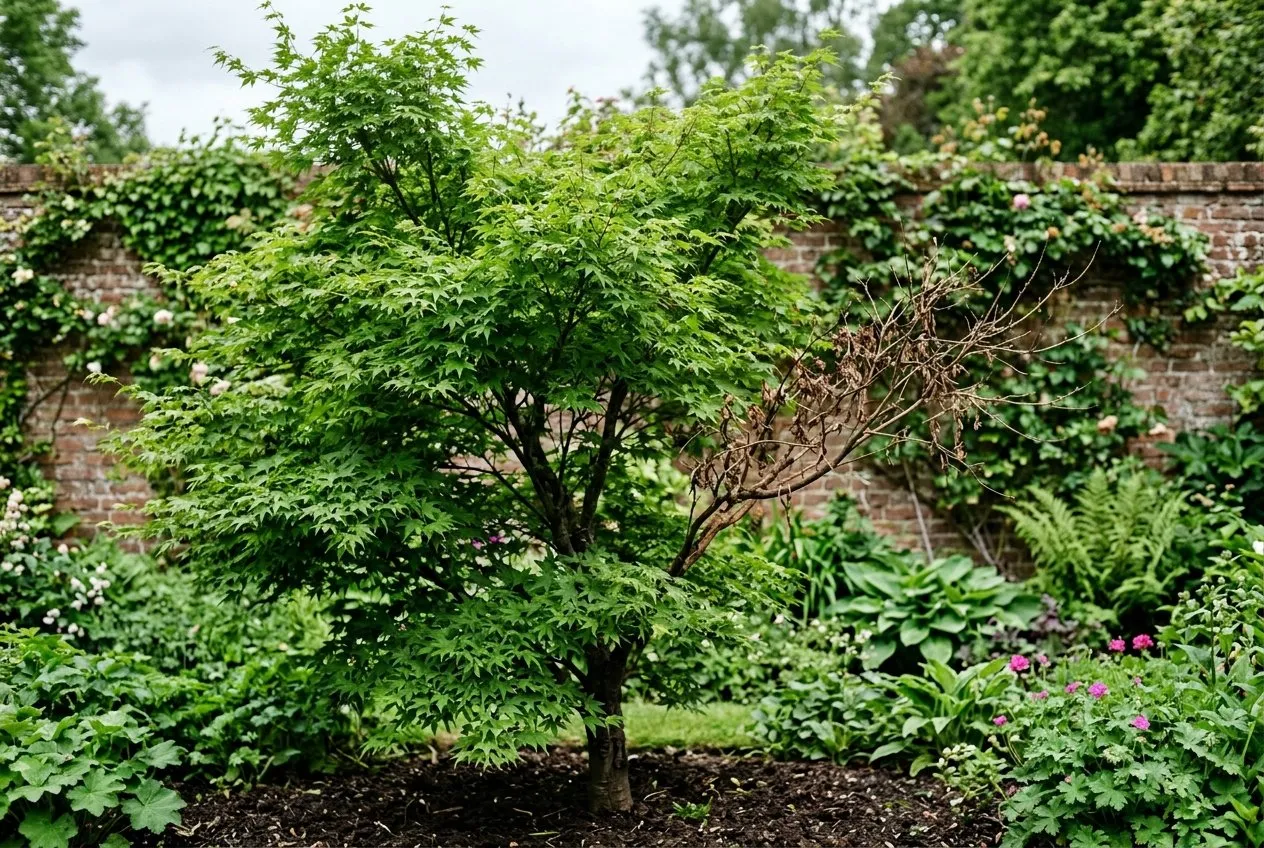
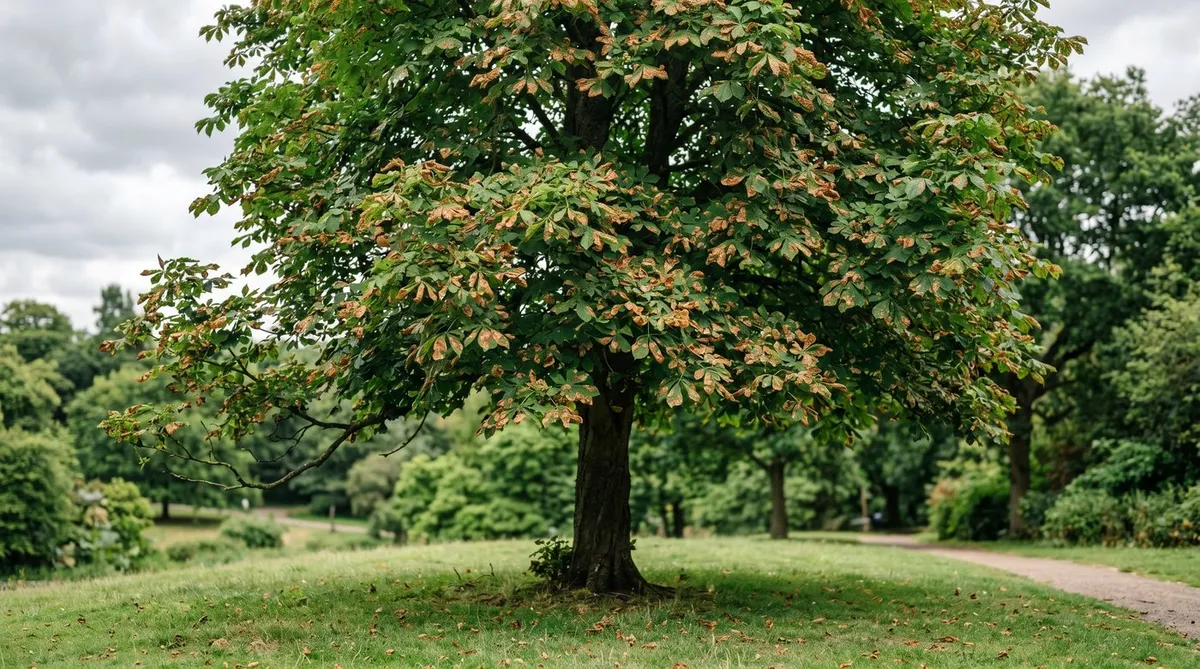
One whole branch dying while the rest of the tree stays green is the pattern to watch for. That points to verticillium wilt rather than scorch.
Where to plant a Japanese maple so it doesn’t scorch
The right spot stops most scorch before it starts. Japanese maples grow naturally at woodland edges. They like dappled shade, moist but well-drained soil and shelter from wind and strong afternoon sun.
Choose a spot with:
- Dappled shade, or morning sun and afternoon shade
- Shelter from cold east and north winds
- Moist, well-drained soil with plenty of organic matter
- No frost pocket, where late spring frosts settle
- No hot, reflective south-facing wall right behind it
Spread a 5cm mulch of leaf mould, bark or garden compost over the root area in spring. It keeps the soil cool and damp through summer. Keep it a hand’s width away from the trunk.
Looking after an acer in a pot
Pot care is where most scorch is won or lost. Repot every two to three years into fresh compost, as old compost holds less water. A pot a little wider than the rootball gives roots room to grow. Thick terracotta or glazed pots stay cooler in sun than thin dark plastic.
Water with rainwater where you can. Cover the compost surface with a bark mulch to slow drying. Feed lightly in spring only, since too much feed can build up in the pot and brown the leaf edges.
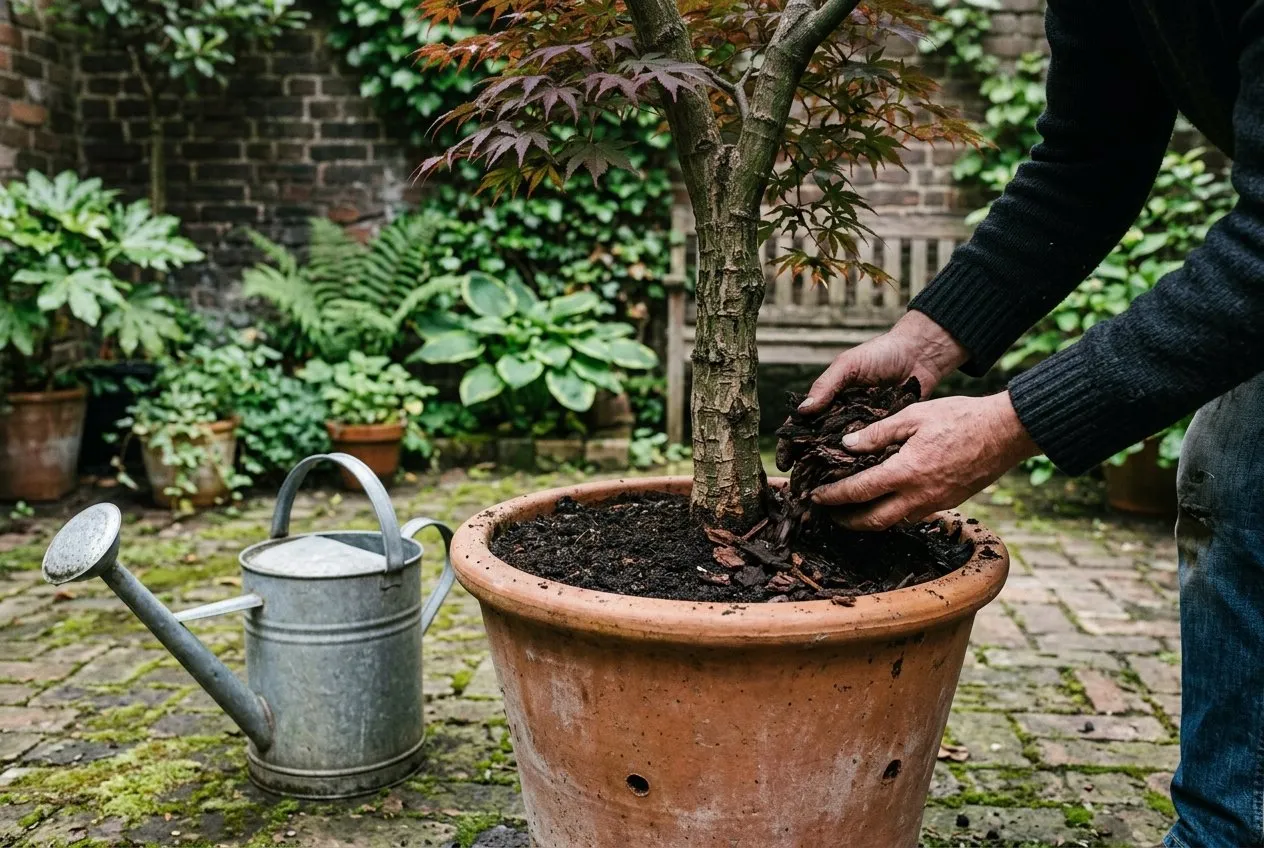
A bark mulch on top of the pot slows drying and keeps the roots cool. It is a five-minute job that saves a lot of crispy leaves.
Which acers cope best with sun and wind?
Upright, green-leaved Japanese maples generally cope with more sun and wind than lace-leaf or variegated types. If your garden is bright or breezy, choose one of these sturdier forms:
- ‘Sango-kaku’: the coral-bark maple, upright with green leaves
- ‘Osakazuki’: a strong green-leaved type with bright red autumn colour
- ‘Bloodgood’: an upright purple-leaved type that copes with brighter spots
Keep these in sheltered, shady spots:
- ‘Dissectum’ and other lace-leaf forms: fine leaves scorch quickly
- Variegated types: the pale parts of the leaf burn easily in strong sun
Our guide to the best trees for small gardens suggests other trees if your spot is too hot for any acer.
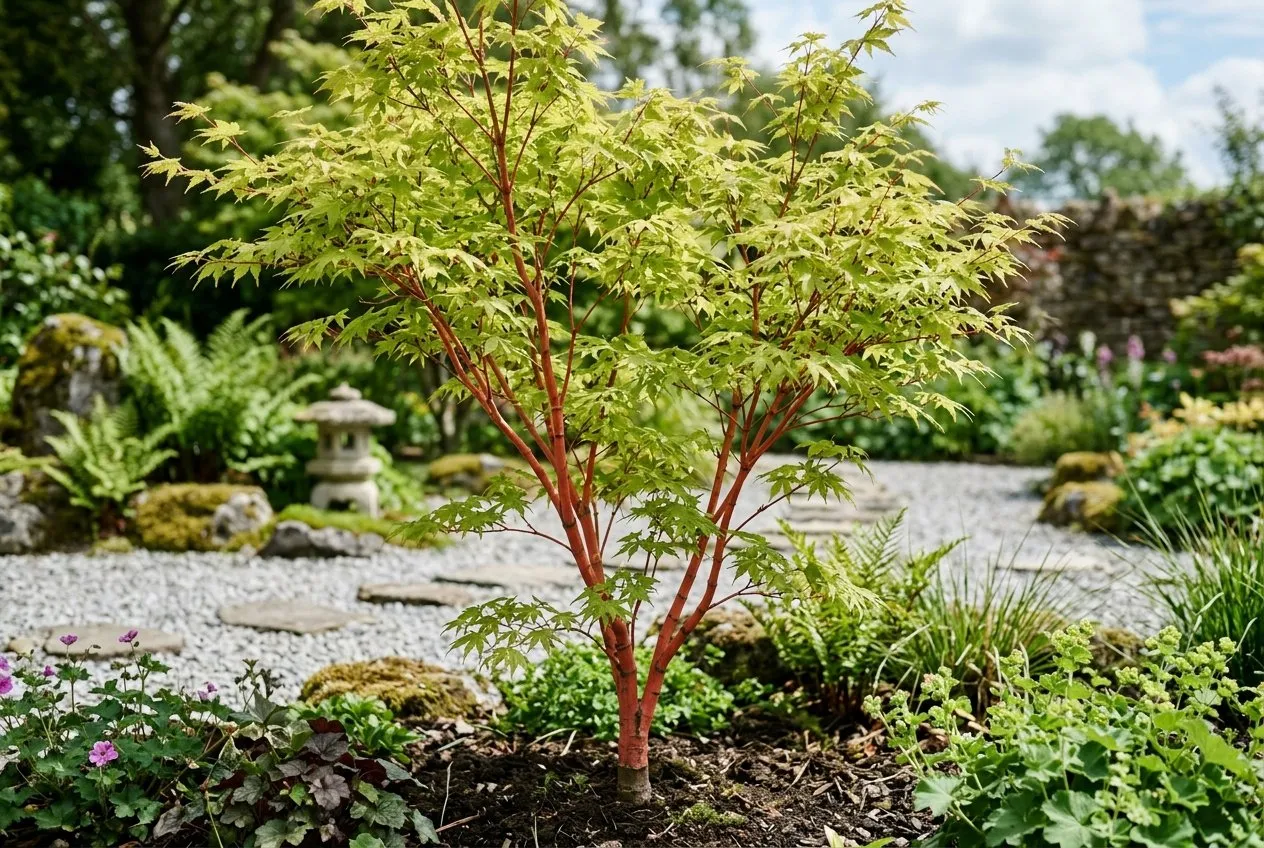
‘Sango-kaku’ is one of the tougher upright acers. It handles brighter spots better than the lace-leaf types.
Common mistakes with scorched acers
- Pulling off brown leaves. It adds stress. Leave them until they fall.
- Feeding to “perk it up”. Extra feed in a pot can make scorch worse.
- Watering little and often. A splash on top doesn’t reach the roots. Water until it drains through.
- Standing pots in saucers of water. Waterlogged roots can’t take up water either.
- Panicking in August. Some edge browning by late summer is normal on an exposed tree. Fix the cause and judge it next spring.
Acer leaf scorch calendar
| Month | What to do |
|---|---|
| January to February | Repot potted acers if due. Plan moves for badly placed trees |
| March | Move or plant acers into sheltered, dappled spots |
| April | Fleece new growth on frosty nights |
| May | Mulch before the dry months |
| June to August | Water steadily. Check pots daily in hot spells. Leave brown leaves on |
| September to October | Note which side scorched and plan shelter. Rake leaves for leaf mould |
| November to December | Plant or move acers. Prune out dead wood once dormant |
Frequently asked questions
Why are my acer leaves going brown and crispy?
It is usually leaf scorch, caused by dry roots, drying wind or hot sun. The leaves lose water faster than the roots can replace it, so the edges and tips dry out and curl. It is a growing-conditions problem, not a disease.
Will my acer recover from leaf scorch?
The scorched leaves won’t, but the tree usually will. Brown, crispy leaf tissue is dead and stays brown. Fix the cause and the tree normally leafs up well the following spring. Scorch year after year can weaken a young tree, so act early.
Should I cut off scorched acer leaves?
No, leave them on until they drop in autumn. The green parts of each leaf still feed the tree. Pulling leaves off adds stress and lets more sun reach the inner leaves. Prune out only wood that is fully dead, once the tree is dormant.
How do I stop my potted acer from scorching?
Give it afternoon shade and never let the compost dry out. In hot weather a potted acer can need watering every day. Mulch the top of the pot, use rainwater where you can, and stand it where it gets morning sun only.
Is acer leaf scorch the same as verticillium wilt?
No, scorch is caused by conditions, verticillium wilt by a soil fungus. Scorch browns leaf edges fairly evenly across the tree. Verticillium wilt kills whole branches, often on one side, with dark streaks in the wood under the bark.
Find more fixes for brown leaves and sick plants in our problems hub. Once the scorch is under control, our Japanese maple care guide covers feeding, pruning and repotting through the year.
Our team produces practical UK gardening guidance from source research, contributor records and established horticultural practice. Editorial standards are overseen by Matt W.