Key takeaways
- The brown is caused by a tiny moth, Cameraria ohridella, mining inside the leaves
- Pale blotches between the veins appear from June and turn crisp brown by late summer
- The tree looks awful but recovers and leafs out normally the following spring
- Pupae spend the winter in fallen leaves, so rake and remove them from October to March
- No spray is practical on a big tree, and felling over leaf miner alone is never needed
Horse chestnut leaf miner is why conker trees go brown and crispy from midsummer, weeks before autumn. The culprit is a tiny moth called Cameraria ohridella. Its caterpillars live inside the leaves and eat them from the inside out.
The good news is that the tree is not dying. This guide shows you how to recognise the damage, how to tell it from leaf blotch fungus and drought, and the one job that genuinely helps: raking up the leaves.
What does horse chestnut leaf miner damage look like?
Look for pale, oblong blotches between the leaf veins from June. They start whitish or pale green, then turn brown and papery as the caterpillars feed. Each leaflet can carry many mines, and they join up until the whole leaf looks scorched.
Hold an affected leaflet up to the light. Inside a fresh blotch you can often see the tiny cream larva, or the dark specks of its droppings. That hidden grub is the clincher, because no fungus or drought leaves a grub inside the leaf.
The adult moth is about 5mm long, rusty brown with silvery-white stripes. You’ll rarely notice it. What you notice is the brown canopy.

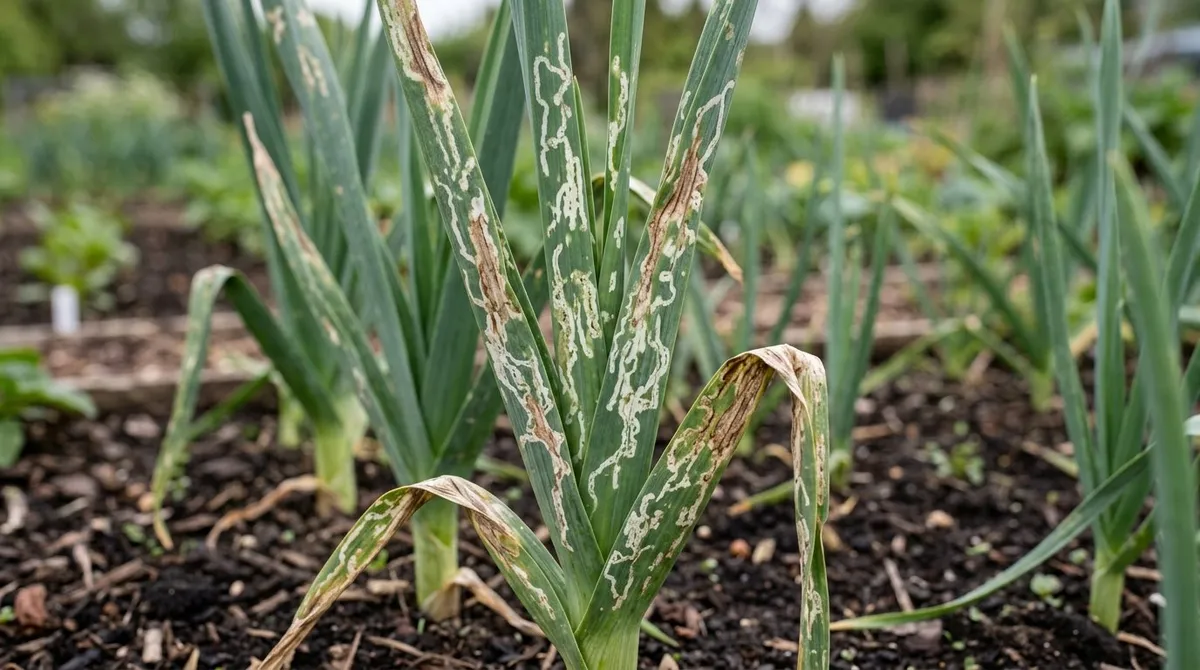
Pale brown mines sit between the veins. Hold a fresh one to the light and you may spot the tiny grub inside.
Leaf miner, leaf blotch or drought scorch?
Three problems brown a horse chestnut, and they often turn up together. Checking which one you have tells you what, if anything, to do.
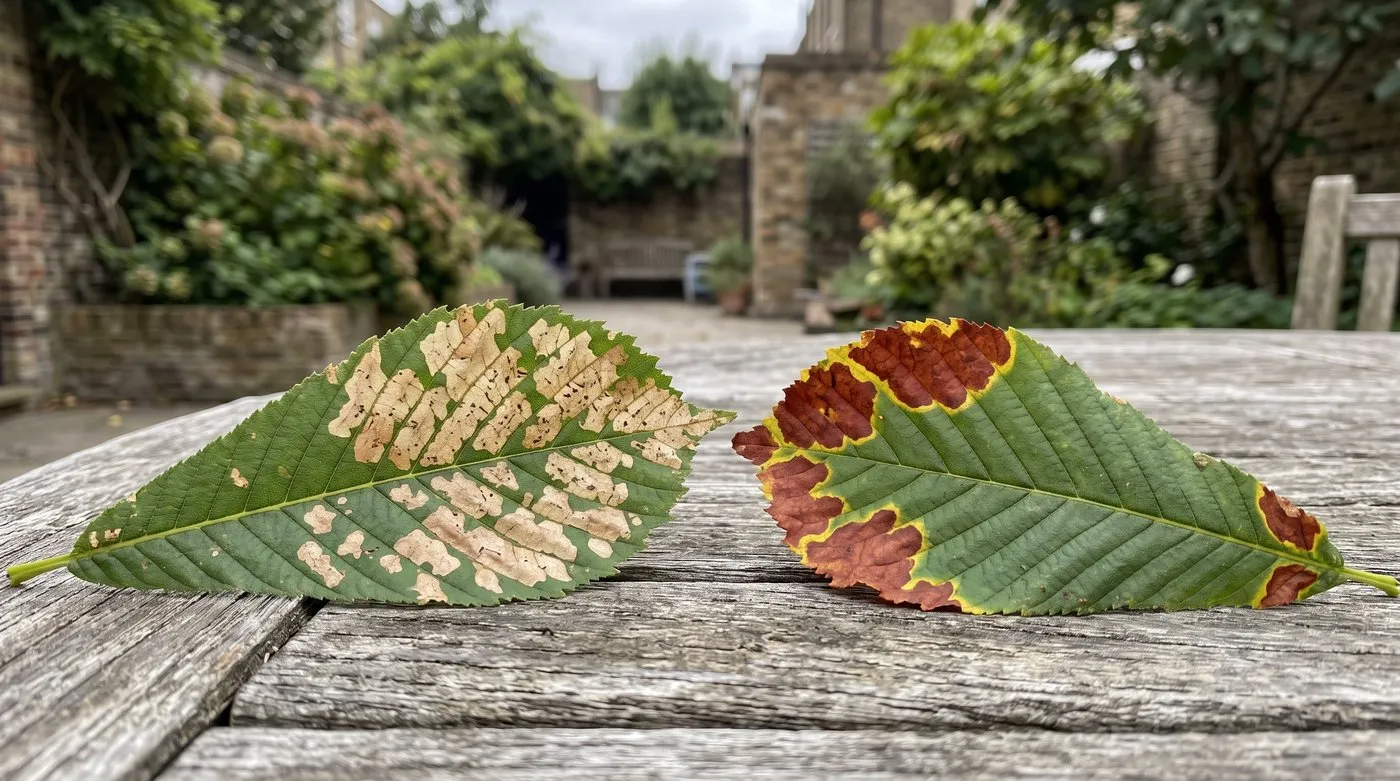
Leaf miner on the left makes pale blotches between the veins. Leaf blotch on the right has reddish patches with a yellow rim.
| Sign | Leaf miner | Leaf blotch fungus | Drought scorch |
|---|---|---|---|
| Cause | Moth larvae | A fungus, worst in wet years | Too little water, hot wind |
| Damage | Pale blotches between the veins | Reddish-brown patches with a yellow edge | Browning from the leaf edges inward |
| Grub inside? | Yes, seen against the light | No | No |
| Leaves curl? | Not much | Yes, often | Yes, crisp and curled |
| What to do | Rake fallen leaves | Rake fallen leaves | Water young trees in dry spells |
Leaf blotch makes reddish-brown patches, often at the leaf tips and edges, with a bright yellow rim. The leaves curl and drop early, just like mined ones. Clearing fallen leaves helps with blotch too, so the same autumn job covers both.
Drought scorch browns leaf margins first and spreads inward. It hits young or newly planted trees hardest in long dry spells. The guide to acer leaf scorch explains the same wind and water problem on a different tree.
Why does the whole tree go brown by August?
The moth has two or three generations a year in the UK, and each one mines more leaves. Damage usually starts low in the canopy and climbs. By August or September a heavily infested tree can look completely brown, and many drop their leaves weeks early.
That looks alarming, but by late summer the tree has done most of its growing for the year. It is not being killed. It is just shutting down sooner than usual.
The browning often gets worse for a few years after the moth arrives in an area, as numbers build up. A tree that looked fine a few summers ago can now be brown every August. That is the moth, not the tree giving up.

A heavily mined horse chestnut in late summer, brown while its neighbours stay green. It looks fatal, but it will leaf up again next spring.
How to control horse chestnut leaf miner
Rake up the fallen leaves from October to March and get them off site. The last generation of the year spends the winter as pupae inside those leaves. In spring the moths hatch from the litter and fly straight back into the new leaves.
Rake several times as the leaves come down, not just once. Put them in the council green waste bin, or seal them in bags and leave them until the following summer so the moths can’t escape. Don’t add them to an open compost heap, which stays too cool to kill the pupae. If you’d like the leaves back as a soil improver, follow the bagged method in the guide to making leaf mould and keep the bags sealed through to summer.
Be realistic about what this achieves. Moths fly in from other chestnuts nearby, so your tree will still get some mining. Clearing your own leaves cuts the first brood, which keeps the leaves cleaner for longer into summer.
Spraying is not practical. The larvae are protected inside the leaf and a big canopy is out of reach. Removing infested debris is the same idea used in allium leaf miner control, just on a much bigger scale.

Raking and bagging the fallen leaves removes the pupae waiting to hatch next spring. It’s the one control that really helps a garden tree.
Will my horse chestnut survive leaf miner?
Yes. Leaf miner alone does not kill horse chestnuts. The leaves brown and fall early, then the tree flushes fresh green leaves the following spring. The trunk, branches and flowers are unaffected, and the tree still produces conkers, though they may be a little smaller.
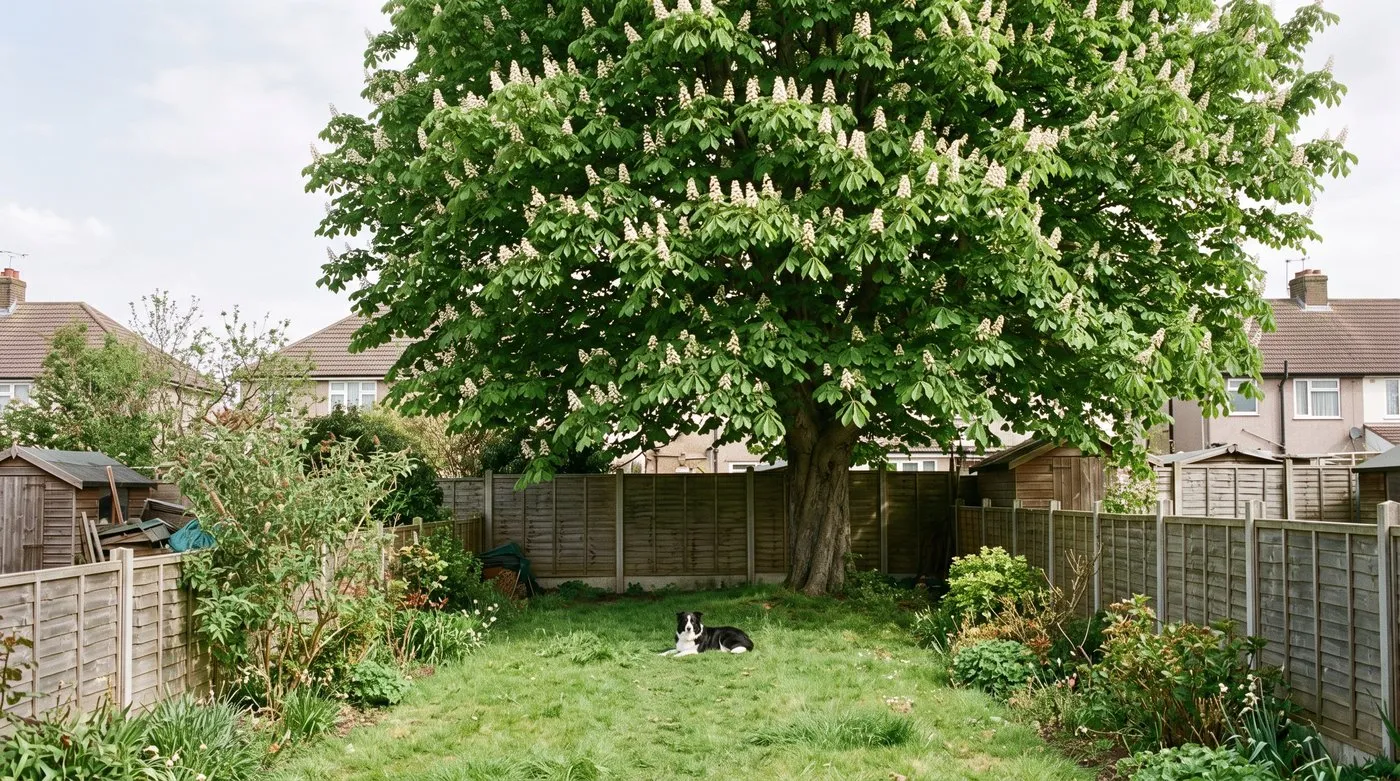
The same tree that looked scorched last August comes back green and flowering in spring. Leaf miner doesn’t touch the wood.
Gardener’s tip: Don’t let anyone talk you into felling a healthy chestnut just because it goes brown in August. The damage is on the leaves, not the wood.
A tree that is already struggling copes less well, so keep an eye out for signs that do matter. Bleeding canker causes dark, weeping patches on the trunk and branches, and can kill trees. Dead branches, fungal growths at the base or bootlace-like strands under the bark may point to honey fungus. For a full checklist of warning signs, see the guide to sudden tree death. If you see any of these, ask a qualified arborist to look at the tree.
Which horse chestnuts are less affected?
White horse chestnut (Aesculus hippocastanum), the classic conker tree, is the one the moth hits hardest. If you’re planting new, two relatives are much less troubled:
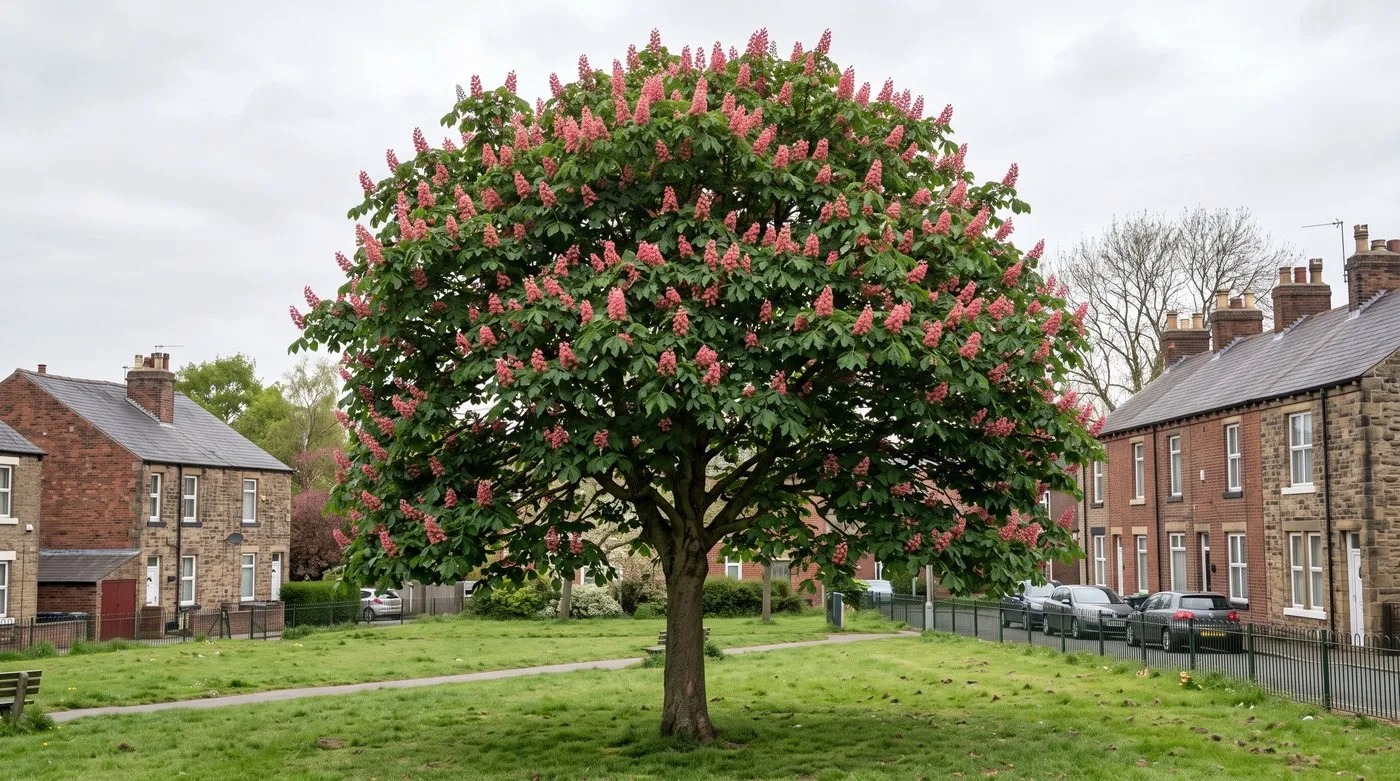
Red horse chestnut is far less bothered by the moth, and its pink-red spikes in May are a lovely bonus.
- Red horse chestnut (Aesculus x carnea), with pink-red flower spikes in May.
- Indian horse chestnut (Aesculus indica), which flowers a little later, in June and July.
Both are big trees, so give them plenty of room. For smaller plots, the guide to trees for small gardens has better-sized choices.
Horse chestnut leaf miner calendar
The timing of your jobs follows the moth’s year. Here’s what to expect and when to act.
| Month | What’s happening and what to do |
|---|---|
| April to May | First moths hatch from fallen leaves; first small mines appear on new leaves |
| June | Pale blotches show low in the canopy |
| July to August | Mining spreads upwards and the canopy browns. Water young trees in drought |
| September | Badly mined trees drop leaves early |
| October to December | Rake fallen leaves often and remove them |
| January to March | Clear any leaves left before the moths hatch in spring |
Common mistakes with horse chestnut leaf miner
Felling a healthy tree. A browned chestnut looks like it’s dying, so people pay to remove it. It would have re-leafed next spring.
Leaving the leaves where they fall. The pupae spend the winter in that litter. Leave it, and next spring’s moths hatch right under the tree.
Putting mined leaves on an open heap. A cool heap won’t kill the pupae, so the moths simply hatch from your compost instead.
Spraying a tall tree. Sprays can’t reach larvae inside leaves high in the canopy, and they harm other insects for no gain.
Mistaking it for something fatal. Bleeding canker and honey fungus can kill chestnuts. Leaf miner does not. Check the signs before you act.
Frequently asked questions
Why is my horse chestnut tree going brown in July?
Almost certainly horse chestnut leaf miner, a tiny moth. Its larvae tunnel inside the leaves, which turn pale and then crisp brown from June. Heavy years brown the whole canopy by late summer, but the tree survives.
Will my horse chestnut tree die from leaf miner?
No, the leaf miner on its own does not kill the tree. The leaves brown and fall early, but the tree leafs out normally the following spring. It just shuts down a few weeks sooner than usual.
How do I treat horse chestnut leaf miner?
Rake up and remove the fallen leaves through autumn and winter. The pupae spend the winter in that leaf litter, so clearing it cuts the first brood next spring. No spray is practical on a big tree.
What is the difference between leaf miner and leaf blotch on horse chestnut?
Leaf miner makes pale blotches between the veins with a grub inside. Leaf blotch is a fungus that makes reddish-brown patches with a yellow edge, often at the leaf tips, and has no grub. The two often turn up on the same tree.
Do horse chestnut conkers still grow if the tree has leaf miner?
Yes, the tree still produces conkers. On heavily mined trees they can be a little smaller. The tree keeps flowering and fruiting year after year.
Should I cut down a horse chestnut with leaf miner?
No, leaf miner alone is never a reason to fell. The tree re-leafs every spring. If the tree has other worrying signs, such as bleeding patches on the trunk or dead branches, ask a qualified arborist to check it.
Keep your trees healthy
A brown conker tree rarely needs more than a rake and some patience. The Forest Research horse chestnut leaf miner page has more on the moth. For other trees showing worrying signs, read the guide to ash dieback identification, or browse all the plant problem guides.
Our team produces practical UK gardening guidance from source research, contributor records and established horticultural practice. Editorial standards are overseen by Matt W.