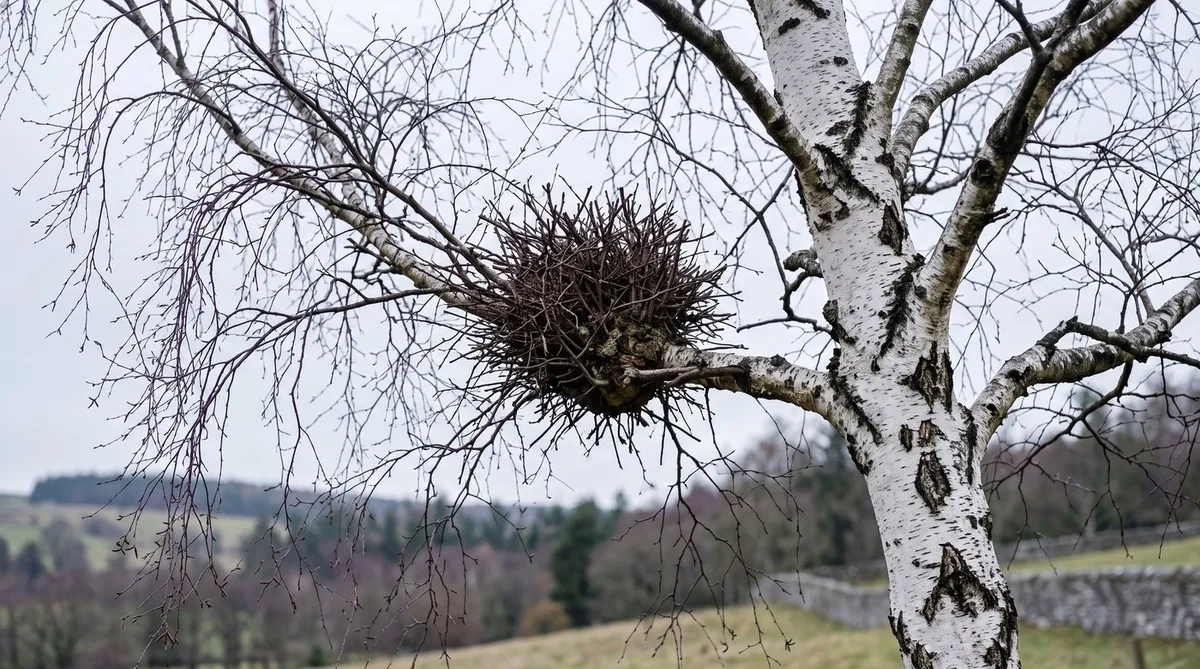
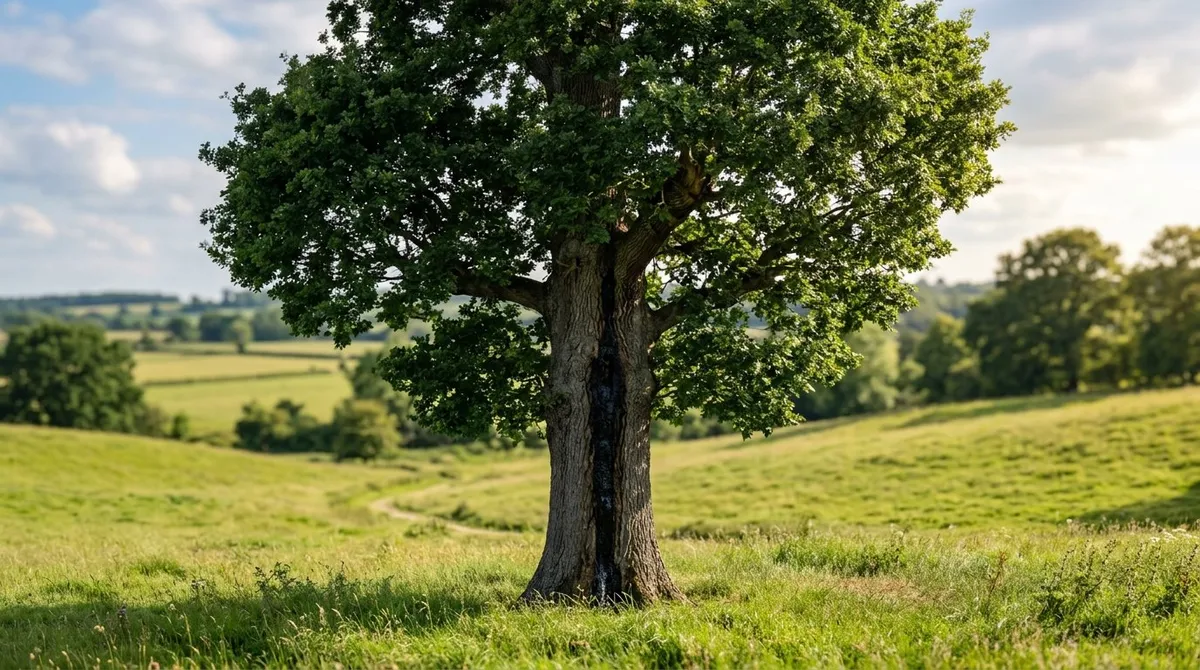
Key takeaways
- Ash dieback is a fungal disease found across the UK since 2012
- In summer look for blackened, wilting leaves and dark diamond marks on stems
- Tiny white fungi on last year's leaf stalks, July to September, confirm it
- Bare upper branches and bushy shoots on the trunk mean an advanced case
- There is no cure; fell only trees that are unsafe, and leave healthy ones
- Have trees near houses, paths and roads checked by a qualified tree surgeon
Ash dieback shows up as blackened summer leaves, dark diamond-shaped marks on stems and a crown that thins from the top down. The surest sign is tiny white fungi on last year’s fallen leaf stalks in late summer.
It is caused by a fungus, Hymenoscyphus fraxineus, and has been found across the UK since 2012. Young trees can die in a season. Big trees usually decline over several years. This guide helps you tell it from drought or frost damage, and decide whether your tree needs watching or a tree surgeon.
How does ash dieback spread?
The fungus spreads on the wind. It spends the winter on fallen ash leaf stalks in the leaf litter. In summer it fruits, and its spores blow onto fresh ash leaves overhead.
From the leaf it grows into the twig, then the branch, killing shoots as it goes. Year by year the crown thins. It attacks our native common ash (Fraxinus excelsior), and narrow-leaved ash too. Other trees, including mountain ash (rowan), are not affected, as rowan isn’t a true ash.
You can’t stop wind-blown spores, but you can avoid carrying the disease on logs, leaves and young plants to new places.

The fungus winters in fallen leaf stalks, fruits in summer and blows onto the leaves above. That’s why summer is the time to look.
How to spot ash dieback through the year
What you look for depends on the month. Summer gives the clearest signs, while a bare winter crown on its own proves little.
| Season | What to look for | Where |
|---|---|---|
| Spring (April to May) | Late or patchy leaves, dead twigs from last year | Outer twigs and branch tips |
| Summer (June to August) | Dark blotches on leaves, black wilting leaflets, dying shoots | Leaves and new shoots |
| Late summer (July to September) | Tiny white fungi on last year’s blackened leaf stalks | Leaf litter under the tree |
| Autumn (September to October) | Early leaf drop, leaves browned rather than yellow | Leaves, then bare stems |
| Winter (November to March) | Thin crown, bare upper branches, bushy shoots on the trunk | Whole crown and trunk |
Blackened leaves are the easiest summer sign. Healthy ash leaves stay green, then turn a clear yellow in autumn. Diseased leaves get dark patches, wilt and go black out of season. On young trees, whole shoots blacken from the tip back.

A healthy ash leaf on the left and a diseased one on the right. Dark blotches and black, collapsed leaflets in summer are a classic early sign.
What do ash dieback stem marks look like?
Look for a dark brown or purplish patch of dead bark, often diamond-shaped, around the base of a dead side shoot. It forms where the fungus has moved from the shoot into the stem.
Check the joins between living stems and dead twigs. The bark there is sunken and discoloured. On young trees a mark like this can circle a thin stem and kill everything above it in one season. On a thick branch, one mark does less harm, which is why big trees decline more slowly.

A diamond-shaped mark centred on a dead side shoot is one of the clearest signs on the stem.
The white fungi that confirm ash dieback
The tiny white fungi on the leaf litter settle the question. From July to September they push up from last year’s fallen ash leaf stalks. Each is only a few millimetres across, with a short stalk and a little cup or cap.
On a damp summer day, look under a suspect tree. Turn over the blackened, bare leaf stalks from the previous autumn. The fungi grow straight from them, often in small groups. A magnifying glass helps.
Drought, frost and beetles never make these. Find them on ash leaf stalks and you can be sure it’s ash dieback. Forest Research’s ash dieback page has more photos to compare.

Turning over last year’s leaf stalks in late summer is the best way to be sure. The tiny white fungi grow right on them.
Is it ash dieback or something else?
Several other problems look similar, and getting it wrong can lead to felling a healthy tree.
| What you see | Ash dieback? | More likely something else |
|---|---|---|
| Black, wilting leaves in summer, with dead shoots | Yes | Frost, if it only hit soft spring growth after a cold snap |
| Brown, crispy leaf edges in a dry spell | Sometimes | Drought, usually across the whole tree |
| Diamond marks at dead-shoot bases | Yes | Animal or mower damage looks ragged, not diamond-shaped |
| Small round holes in the bark | No | Ash bark beetle, often in already weak trees |
| Toadstools or brackets at the base | No | Honey fungus or other decay fungi |
| White fungi on fallen leaf stalks | Yes, confirms it | Nothing else |
Watch for honey fungus too. It often attacks ash already weakened by dieback, rotting the base of the trunk. White sheets under the bark at the base, or honey-coloured toadstools in autumn, are the clues. Our guide on how to deal with honey fungus explains what to do. Elms have their own killer disease with different signs, covered in our guide to Dutch elm disease symptoms.
How fast does ash dieback kill a tree?
Young trees can die in one or two seasons. Big trees usually decline over several years, and some keep going for a long time.
A typical decline looks like this:
- Early: scattered dead twigs and black shoots in the outer crown. Easy to miss from the ground.
- Middle: more stem marks, a clearly thinner crown, and bushy clusters of new shoots on the trunk and main branches.
- Advanced: bare, dead upper branches standing above living lower growth. Brittle branches start to fall.
- Late: big branches drop, the base may rot, and the tree can eventually collapse.
The bushy shoots on the trunk look healthy, which fools people. They are the tree trying to make up for its lost crown, not a sign of recovery.

Bare branches up top and bushy shoots on the trunk mean a tree in the advanced stage. In a park or garden, this is when to get it checked.
Warning: Dead ash wood goes brittle fast. Branches can fall without warning, especially in wind. Keep clear of badly affected trees and don’t try to fell a big one yourself.
What should you do if your ash has dieback?
There is no cure or spray, so it all depends on where the tree stands.
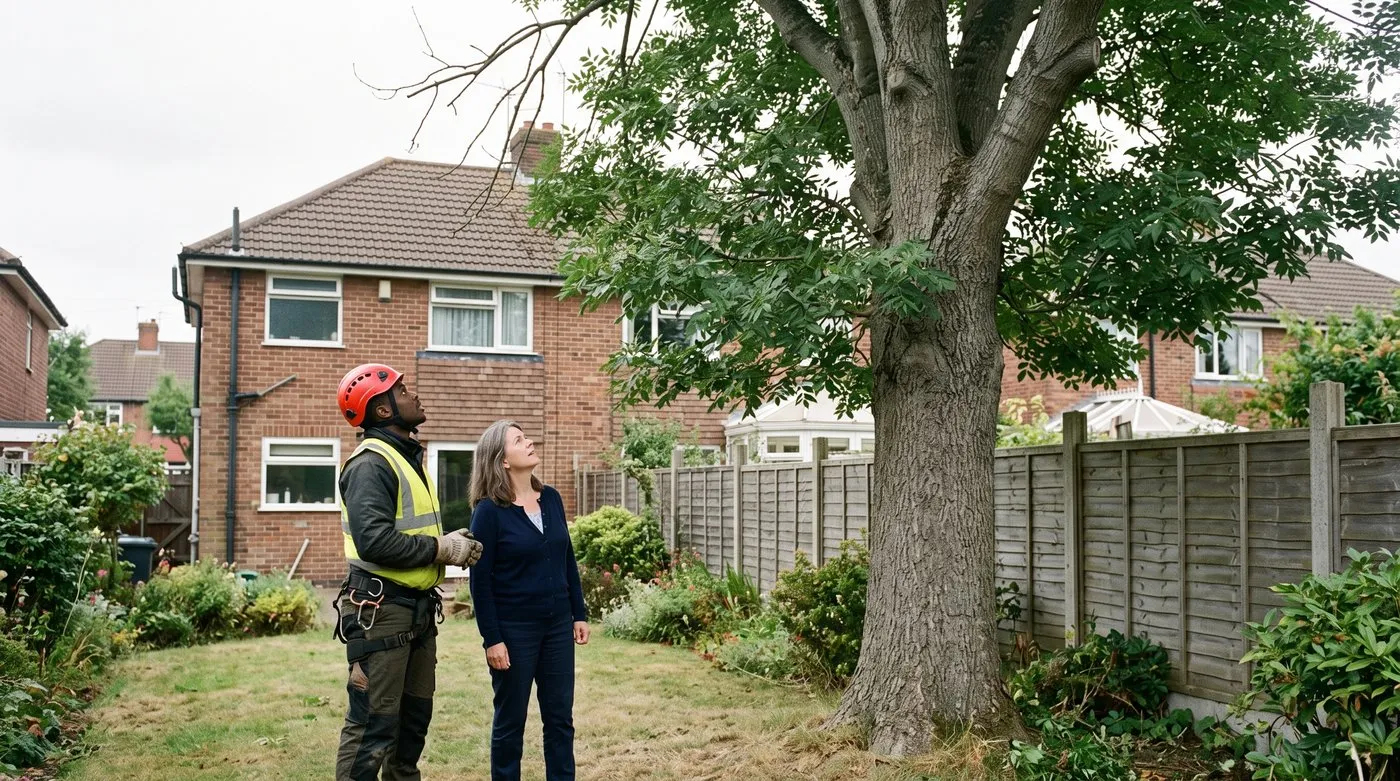
A diseased ash close to a house or path needs a professional eye. A qualified tree surgeon can tell you if it’s safe to leave.
Trees away from people and buildings can be left. Photograph the crown from the same spot each summer to track it. Dead and dying trees are great for insects, fungi and woodpeckers.
Trees near houses, paths, roads or play areas need a safety check once they start losing branches. Ask a qualified, insured tree surgeon to assess them. If the tree has a Tree Preservation Order or stands in a conservation area, contact your council before any work.
Don’t fell healthy-looking ash just to be safe. A tree that stays green while others nearby decline may be one of the tolerant few the species needs.
Stopping the spread on your kit
Ash dieback is now widespread, so most areas no longer need to report it. Check Forest Research’s TreeAlert service to see if a report is useful where you live. Either way:
- Clean mud and leaves off boots, tools and tyres between woods.
- Don’t move ash logs, branches, leaves or young plants to other sites.
- Rake up and compost fallen ash leaves under a garden tree in autumn, which may reduce spores locally.
Replanting after losing an ash
Where an ash has to come down, plant a mix of other trees rather than one kind. A mix copes far better with future pests and diseases.
There’s no need to rush. If a dead ash is safe, leave some standing or stack the wood as a habitat pile for wildlife. For gap-fillers, our guide to the best small native trees for UK gardens has good options such as rowan, hawthorn and field maple.
Common mistakes when checking for ash dieback
- Mistaking autumn colour for disease. Healthy ash turns yellow in autumn. Dieback shows as black leaves in June and July.
- Judging from a bare winter crown. Thin crowns have lots of causes, from drought to old age. Confirm with summer signs.
- Blaming dieback for frost or drought. Neither makes diamond stem marks or white fungi on leaf stalks.
- Felling every ash on sight. You may remove a tolerant tree. As with canker on fruit trees, cutting too hard can do more harm than good.
- Moving logs and leaves. Keep ash material on site and clean your tools before moving on.
You’ll find more tree and plant troubles in our garden problems hub.
Frequently asked questions
How do I know if my ash tree has ash dieback?
Look for blackened leaves, diamond-shaped stem marks and a thinning crown. In late summer, check last year’s fallen leaf stalks for tiny white fungi, which confirm it. Young trees die quickly, while big trees decline over several years.
What does ash dieback look like on the leaves?
Leaves get dark brown blotches, then wilt and turn black. They often hang limp on otherwise green branches in mid-summer. Healthy ash leaves stay green until autumn, then turn a clean yellow.
Can a tree recover from ash dieback?
Most infected ash decline slowly, but a few cope well. A small number of trees show some natural tolerance and keep a healthy crown. There is no cure or spray, so watch the tree and keep any that stay healthy.
Should I cut down an ash tree with ash dieback?
Only if it is becoming unsafe. Trees near houses, paths or roads should be checked by a qualified tree surgeon. Healthy-looking ash should be left, as they may be the tolerant trees the species needs.
Is ash dieback dangerous to humans or pets?
The fungus itself does not harm people or animals. The danger is falling wood. Diseased branches go brittle and can drop without warning, so keep clear of badly affected trees in wind.
Do I need to report ash dieback?
Usually not, as it is now widespread. Forest Research’s TreeAlert service explains when reports are still useful. Whatever your area, don’t move ash logs, leaves or plants to new sites.
Now you can spot ash dieback, read our guide to the best trees for small gardens to choose a replacement that suits your space.
Our team produces practical UK gardening guidance from source research, contributor records and established horticultural practice. Editorial standards are overseen by Matt W.