Key takeaways
- A witches' broom is a dense cluster of the tree's own shoots growing from one swollen point
- Taphrina fungi cause most UK brooms, mainly on birch, cherry and hornbeam
- Brooms are almost always harmless, so most can simply be left
- Mistletoe is evergreen with white berries, while a broom is bare twigs in winter
- If you remove one, cut back well below the swelling into healthy wood
- Prune birch in late summer to early winter and cherry in summer
That untidy bird’s nest high in your birch is probably a witches’ broom. It’s a mass of the tree’s own twigs, all sprouting from one spot. Most UK brooms are caused by a fungus called Taphrina, and they turn up most often on birch, cherry and hornbeam. The good news: they almost never harm the tree. This guide shows you how to recognise one, tell it from mistletoe and decide whether to bother removing it.
What does witches’ broom look like?
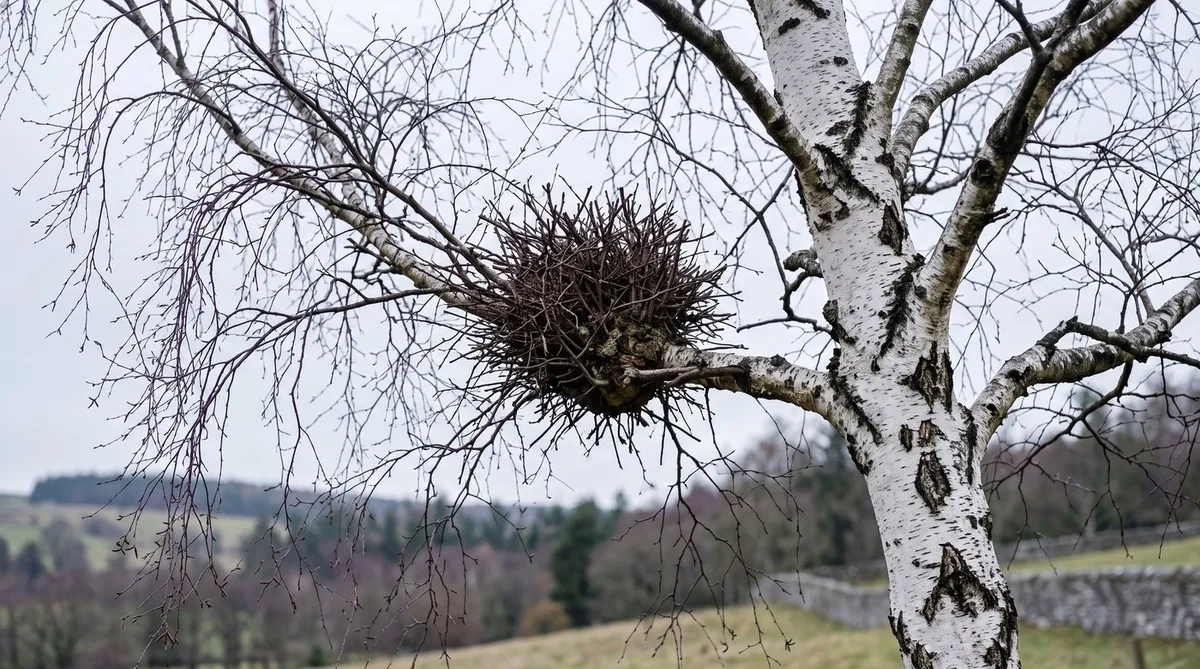
A witches’ broom is a dense cluster of short, thin shoots, all growing from one small area of a branch. From the ground it looks like a dark, twiggy nest against the sky. It’s easiest to spot in winter when the leaves are off.
Look underneath and you’ll find a swollen, knobbly lump where the shoots start. That swelling is where the fungus lives, and it’s what separates a broom from an old bird’s nest.
In spring, brooms on birch often come into leaf a little ahead of the rest of the tree. Their leaves can be smaller and paler. By midsummer they blend into the canopy and are easy to miss.
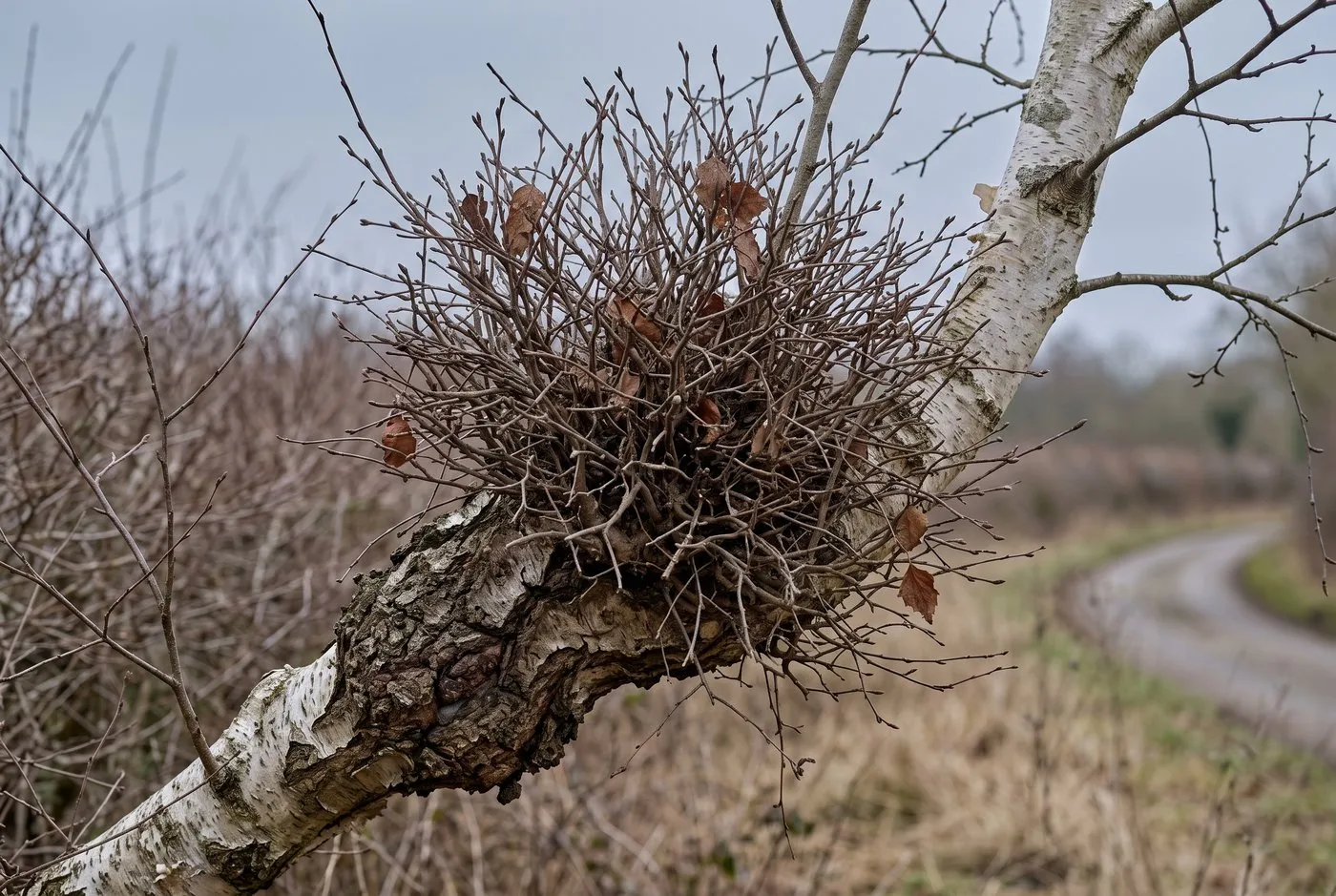
Lots of short, thin twigs all bursting from one swollen spot. That knobbly base is the giveaway.
What causes witches’ broom?
Usually a fungus. Normally the tip of a shoot keeps the buds below it in check. Taphrina fungi upset that balance, so every bud in one spot wakes up and keeps branching. The fungus then lives on in the swollen base and the broom grows a little bigger each year.
Each tree tends to have its own type of Taphrina. The birch fungus stays on birches, the cherry fungus on cherries and the hornbeam fungus on hornbeams.
Less often, brooms are caused by tiny mites, other microbes, or a natural mutation in a single bud. That last kind can’t spread at all, and it’s the source of many dwarf conifers.
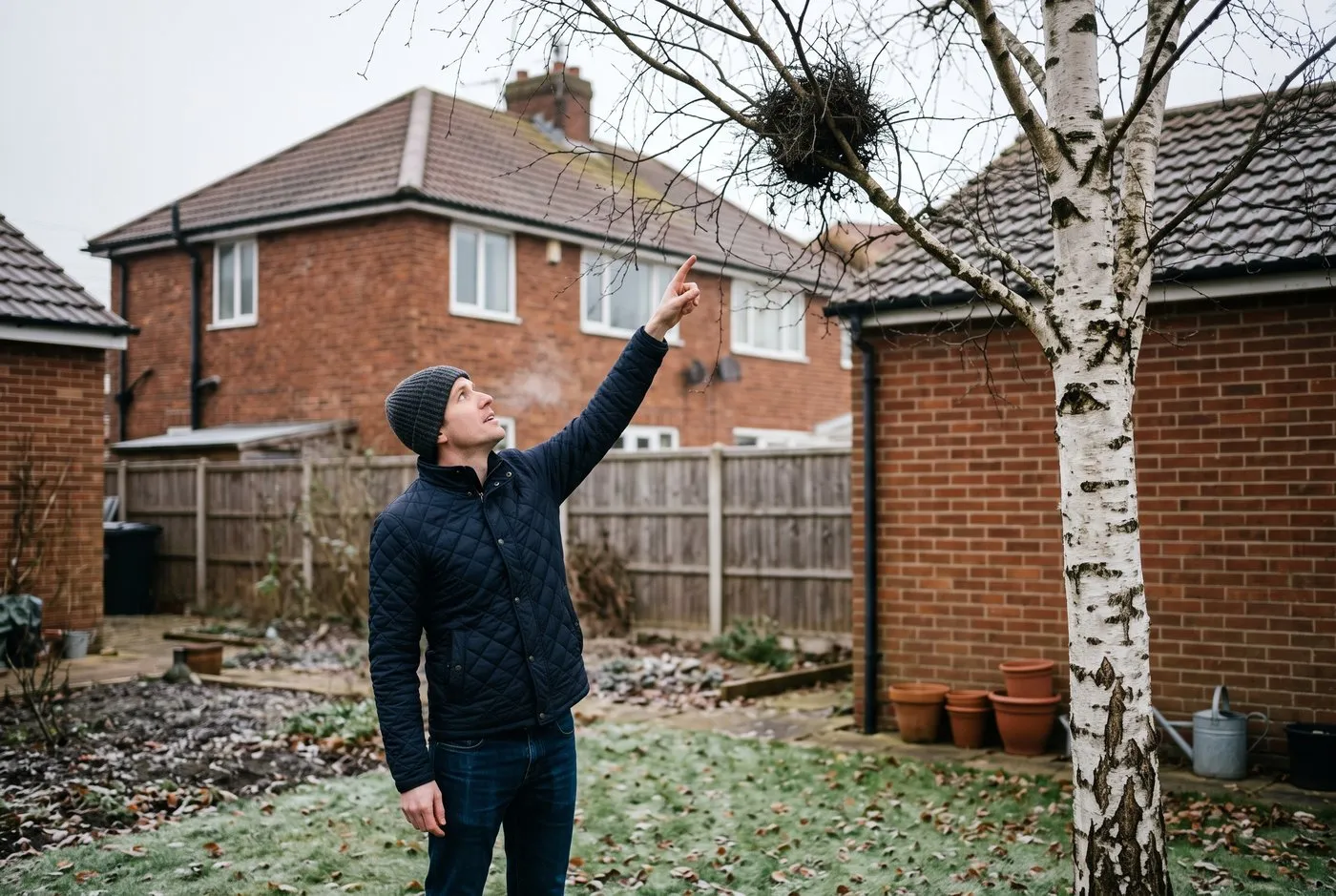
Winter is the time to spot brooms. With the leaves off, they stand out clearly against a grey sky.
Which UK trees get witches’ broom?
Silver birch and downy birch are the classic hosts. Mature birches can carry several brooms, and street and park birches are full of them. The guide to growing silver birch covers the tree’s wider care.
Cherry comes next. Both ornamental cherries and wild cherries get compact brooms that leaf up early. If your flowering cherry has one broom among healthy blossom, it’s just cosmetic.
Hornbeam picks up brooms too, often hidden inside clipped hedges until winter. Trim a hornbeam hedge and you may find the odd one.
Conifers such as pine and silver fir get them now and then. These often look like a small, extra bush wedged into a branch.
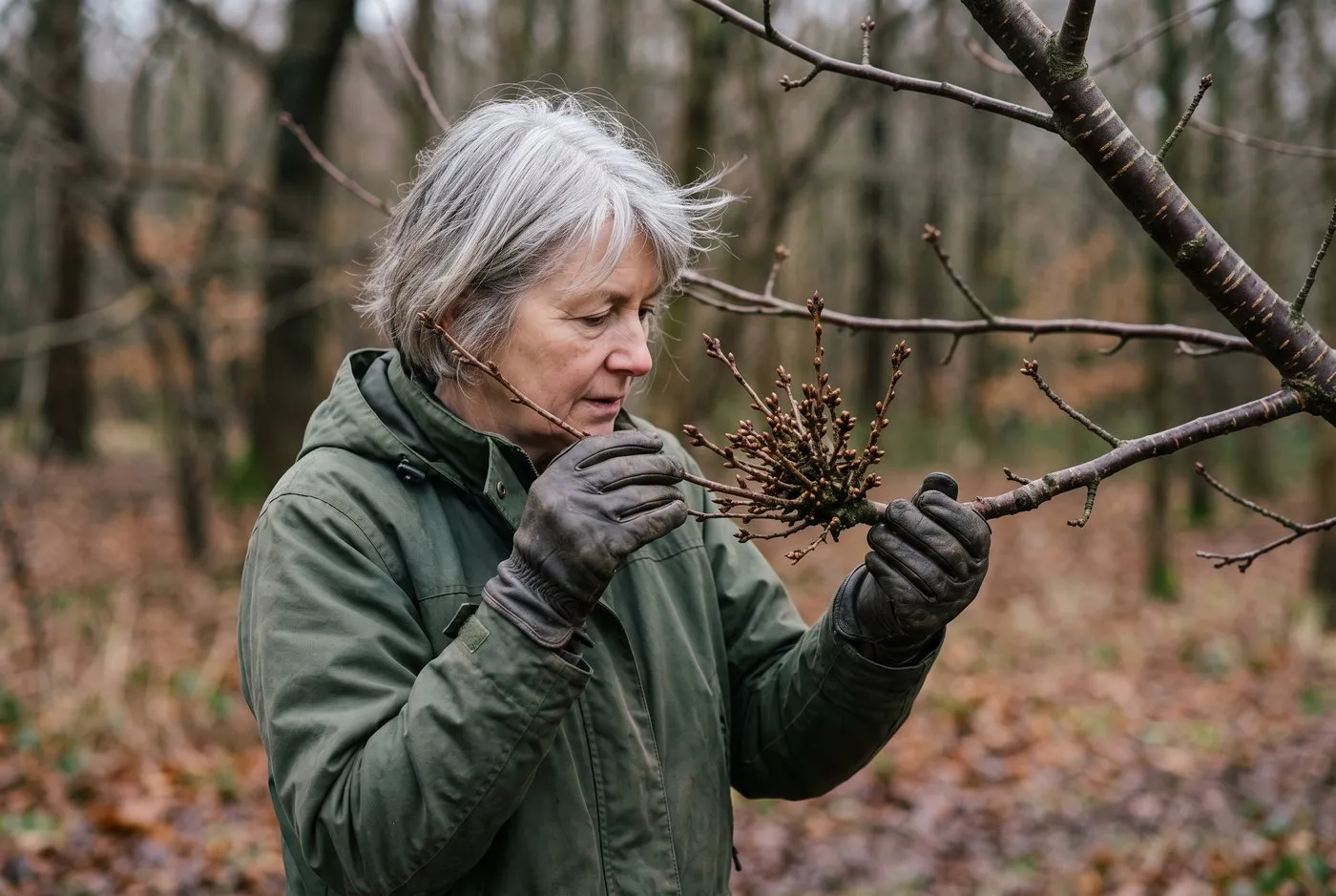
Low brooms are worth a close look. You can see how short and crowded the shoots are compared with normal growth.
Witches’ broom or mistletoe?
Mistletoe is the usual mix-up, but it’s easy to tell apart. Mistletoe is a separate evergreen plant that grows on the tree. It hangs as a neat green ball with paired, oval leaves and sticky white berries in winter. You’ll see it most on apple, lime, hawthorn and poplar.
A witches’ broom is made of the tree’s own twigs. In winter it’s bare, with no berries. So if it’s green in December, it’s mistletoe. If it’s a leafless tangle, it’s a broom.
| Feature | Witches’ broom | Mistletoe | Squirrel drey |
|---|---|---|---|
| Made of | The tree’s own twigs | A separate green plant | Sticks and leaves |
| In winter | Bare tangle | Green ball, white berries | Solid, leafy lump |
| How it’s attached | Grows from a swollen base | Roots into the bark | Wedged in a fork |
| Harm to the tree | Very little | Mild, it takes water | None |
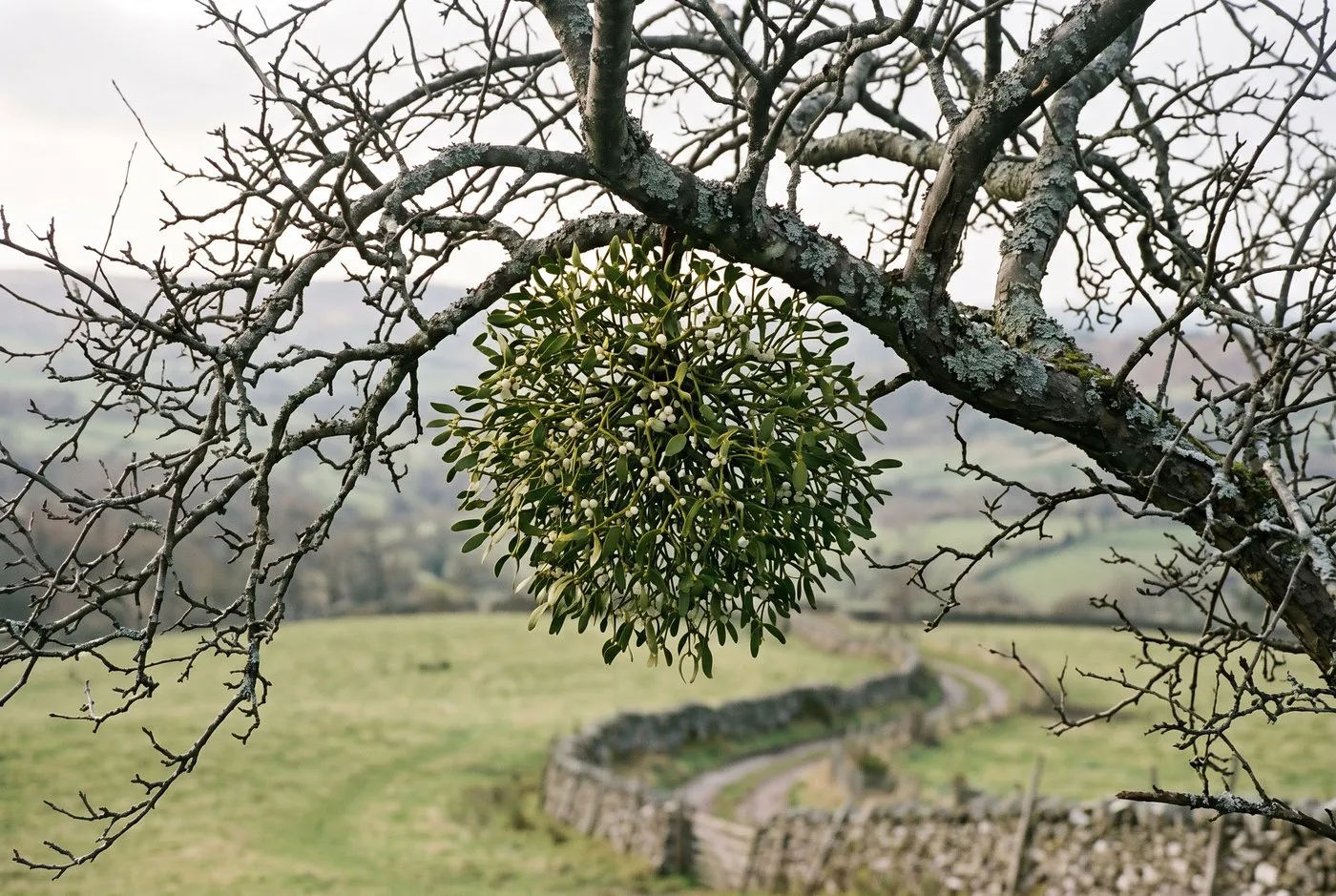
Mistletoe stays green with white berries all winter. A broom is bare and made of the tree’s own twigs.
Should you remove a witches’ broom?
Usually not. A broom does the tree little or no harm, so leaving it is the easiest and safest option. Removing it is about looks, not health.
It’s worth taking one out if it:
- hangs low over a path or patio
- looks untidy on a small ornamental tree
- grows big and heavy on a thin branch
To remove one, cut the branch back well below the swollen base, to a healthy side branch or the trunk. Cutting off just the twigs leaves the fungus in the base, and the broom regrows. No spray will reach the fungus inside the wood.
Timing matters. Prune birch from late summer to early winter, as it bleeds sap if cut in late winter or spring. Prune cherry in summer, when it’s least likely to pick up silver leaf disease through the cut.
Warning: Don’t climb a tree or stretch from a ladder to reach a high broom. If a big one really needs removing, call a qualified tree surgeon.
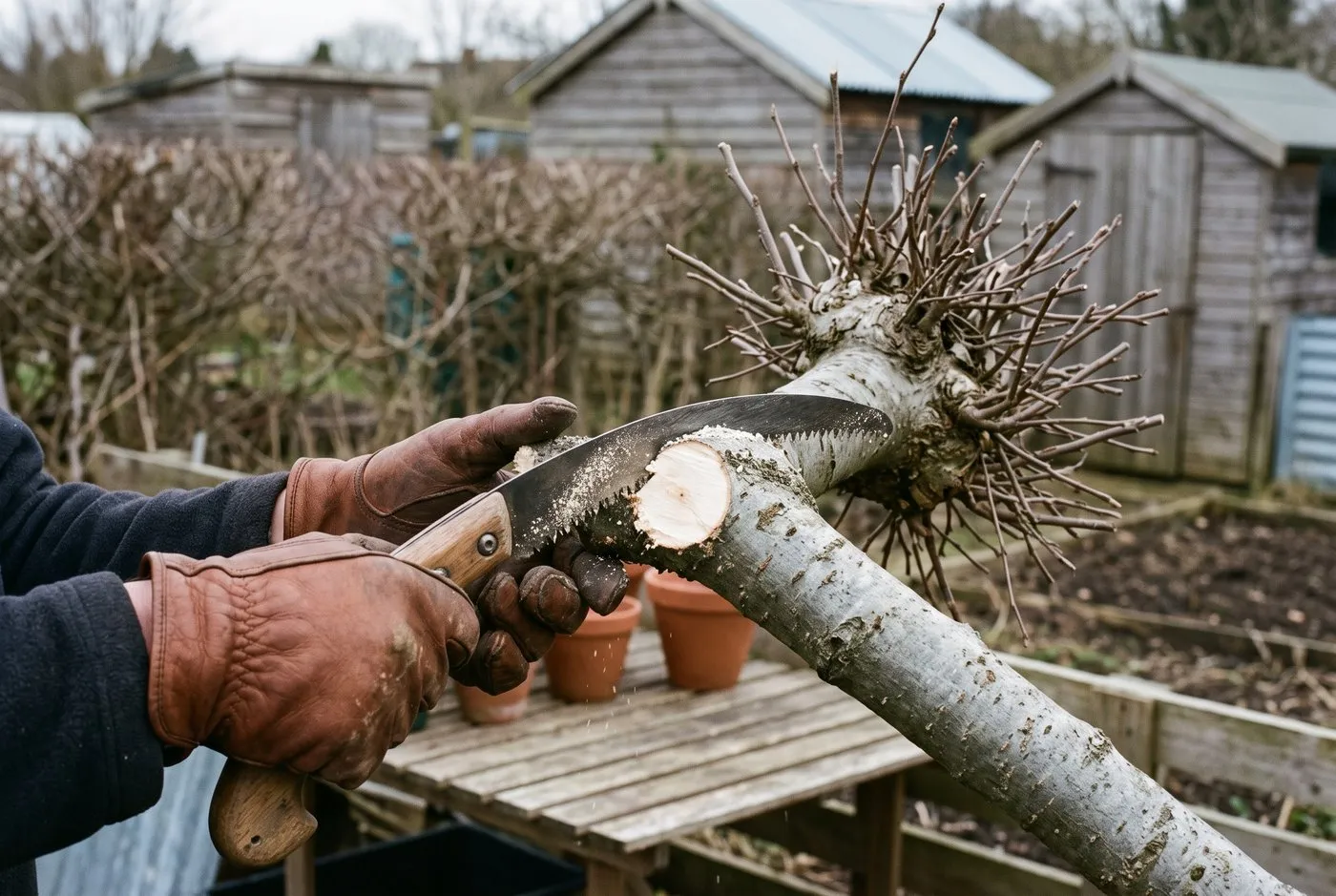
Cut into clean wood below the swollen base so the fungus goes with the broom.
Why do brooms come back after pruning?
Because the fungus lives in the swollen base, not the twigs. Saw off just the tangle and a new broom sprouts from the same lump next spring. Cut back further, into wood without the swelling, and that broom is gone for good.
You can’t stop new brooms forming somewhere else. Fungal spores drift about each spring. A healthy, well-watered tree simply shrugs them off as the minor thing they are.
How dwarf conifers began as witches’ brooms
Here’s a fun twist. Many dwarf conifers sold in garden centres started life as a broom on a full-size tree. A broom caused by a natural mutation stays compact. Grow it on from cuttings or grafts and you get a tight, slow-growing little plant.
Collectors even go broom hunting for promising ones on pines and spruces. Dwarf Norway spruce such as Picea abies ‘Little Gem’ is one well-known result.
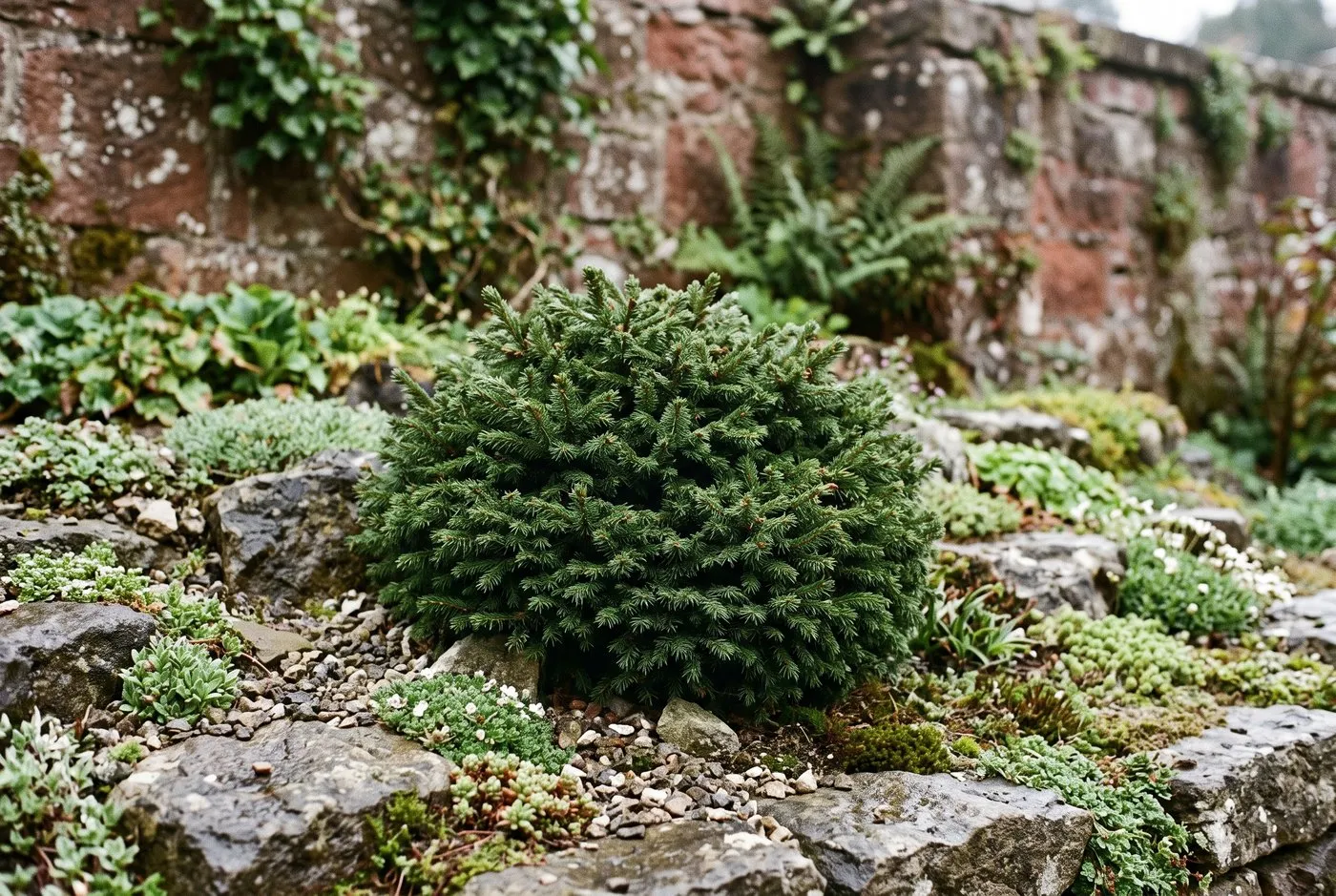
Many dwarf conifers like this one began as a broom. That tight, bushy habit is broom growth turned into a garden plant.
Witches’ broom calendar
| Month | What to do |
|---|---|
| December to February | Best time to spot brooms against the sky, and tell them from mistletoe |
| March to April | Birch brooms often leaf up early. Avoid pruning birch now, as it bleeds |
| June to August | Prune unwanted brooms out of cherries, in dry weather |
| August to December | Prune unwanted brooms out of birch once the sap has slowed |
| October to November | Leaves drop and brooms reappear. Decide which, if any, to remove |
Common mistakes with witches’ broom
Felling a healthy tree. A crown full of brooms looks alarming, but the tree is usually fine. Brooms are no reason to fell a sound tree.
Cutting off just the twigs. The fungus stays in the swollen base and the broom regrows. Cut back below it.
Buying a fungicide. No spray reaches the fungus inside the wood. It’s money wasted.
Pruning cherry or birch at the wrong time. Winter cuts on cherry risk silver leaf, and spring cuts on birch bleed sap.
Thinking it’s a killer disease. Brooms behave nothing like serious tree problems. The guide to sudden tree death covers the warning signs that really matter, such as honey fungus.
Browse more tree and plant troubles in the garden problems hub.
Frequently asked questions
Is witches’ broom harmful to trees?
No, it’s almost always harmless. A healthy tree can carry brooms for many years without suffering. Only step in if a broom gets heavy enough to risk breaking a branch, or you dislike the look.
What causes witches’ broom in trees?
Usually a fungus called Taphrina. It upsets the tree’s normal bud control, so lots of shoots sprout from one spot. Mites, other microbes or a natural mutation can cause brooms less often.
Should I remove a witches’ broom?
Only if you don’t like the look or it’s getting heavy. Removing it won’t make the tree healthier. High brooms on big trees are best left alone or handled by a tree surgeon.
Is witches’ broom the same as mistletoe?
No, mistletoe is a separate evergreen plant. It hangs as a green ball with paired leaves and white berries. A broom is a bare tangle of the tree’s own twigs in winter.
Which trees get witches’ broom in the UK?
Birch most often, followed by cherry and hornbeam. Conifers such as pine and silver fir get them occasionally. Each tree usually has its own type of fungus.
Can witches’ broom spread to my other trees?
It can spread slowly to trees of the same kind. The birch fungus won’t infect your apple or oak. Neighbouring birches may pick up the odd broom over the years.
How do you get rid of a witches’ broom?
Cut the branch back well below the swollen base, to a healthy side branch. Cutting off just the twigs leaves the infected base, which regrows. No spray will get rid of it.
Another harmless-looking tree blemish is covered in the guide to acer tar spot, which looks dramatic but leaves maples perfectly healthy.
Our team produces practical UK gardening guidance from source research, contributor records and established horticultural practice. Editorial standards are overseen by Matt W.