Key takeaways
- Native silver birch grows 15-20m. Himalayan birch stays smaller with even whiter bark
- Plant bare-root birch between November and February
- Multi-stem birches suit smaller gardens and show off more white bark
- Birch roots are shallow, so keep the tree well away from drains and houses
- Bluebells, wood anemones and ferns look lovely underneath
- Prune from late summer to early winter, never in spring when the sap bleeds
Silver birch is one of Britain’s best-loved native trees. You’ll know it by its peeling white bark, dangling catkins and golden autumn leaves. It looks good all year, is wonderful for wildlife and grows in more gardens than most people expect.
This guide covers our native silver birch (Betula pendula) and the Himalayan birch (Betula utilis var. jacquemontii), which has the whitest winter bark. You’ll find how to plant, which one to choose, what to grow underneath and the mistakes to avoid.
Which silver birch is right for your garden?
Two birches are the garden favourites: our native Betula pendula and the Himalayan birch. Both have white bark, but they differ in size and how bright the bark is.
Birches at a glance
| Birch | Height | Bark | Best for |
|---|---|---|---|
| Betula pendula (native silver birch) | 15-20m | White with dark cracks | Big gardens, wildlife |
| Betula pendula ‘Youngii’ | 4-6m | White, improves with age | Small gardens, weeping shape |
| Betula pendula ‘Laciniata’ | 12-15m | White | Medium to big gardens, lacy leaves |
| Betula utilis var. jacquemontii | 10-12m | Bright chalk white | Small to medium gardens |
| Betula utilis ‘Silver Shadow’ | Smaller | Pure white | Small gardens |
| Betula utilis ‘Grayswood Ghost’ | 10-12m | Bright white | Medium gardens |
| Betula utilis ‘Doorenbos’ | 10-12m | Bright white | Medium gardens |
| Betula albosinensis ‘Fascination’ | 10-15m | Orange-pink to copper | Something different |
The RHS Betula page lists plenty more birches if you fancy browsing. For wildlife gardens, the Woodland Trust silver birch profile is a lovely read on what lives in our native birch.
Native or Himalayan birch?
Pick native Betula pendula if wildlife is your priority, you have room for a bigger tree, or you want a natural, woodland feel. Its seeds feed finches in winter, and insects, birds and fungi all make use of it.
Pick Himalayan birch if you want the brightest white bark in a smaller space. Its chalky trunks are much whiter than native birch and really glow in winter, especially against a dark background.
Got room for both? Put a native birch in the wilder part of the garden and a multi-stem Himalayan birch near a path or patio, where you’ll see the bark up close.
How to plant silver birch
How you plant makes a big difference. Birch grows fast but has shallow roots, so a good start and some early care really pay off.
Planting bare-root birch (November to February)
Bare-root birch is the cheapest way to plant and settles in well when planted properly.
Step 1: Dig a hole twice as wide as the roots and no deeper. The point where roots meet trunk should sit at ground level. Lay a cane across the hole to check.
Step 2: On heavy clay, rough up the sides of the hole with a fork so roots can push out. Don’t dig deep into the clay below, as the hole can fill with water like a sump.
Step 3: Check the roots. Trim off any that are damaged or circling round with clean secateurs.
Step 4: Set the tree in place, backfill with the soil you dug out and firm it gently with your foot as you go. Don’t add compost or fertiliser. Birch does well in lean soil.
Step 5: Water well. Spread a 5cm ring of bark or wood chip mulch around the tree, keeping it a hand’s width from the trunk. It keeps grass from stealing water while the tree settles.
Step 6: Only stake on a windy site. Use a short stake at an angle into the wind, with a rubber tie, and take it away after a year or so. A little movement helps the roots grow strong.
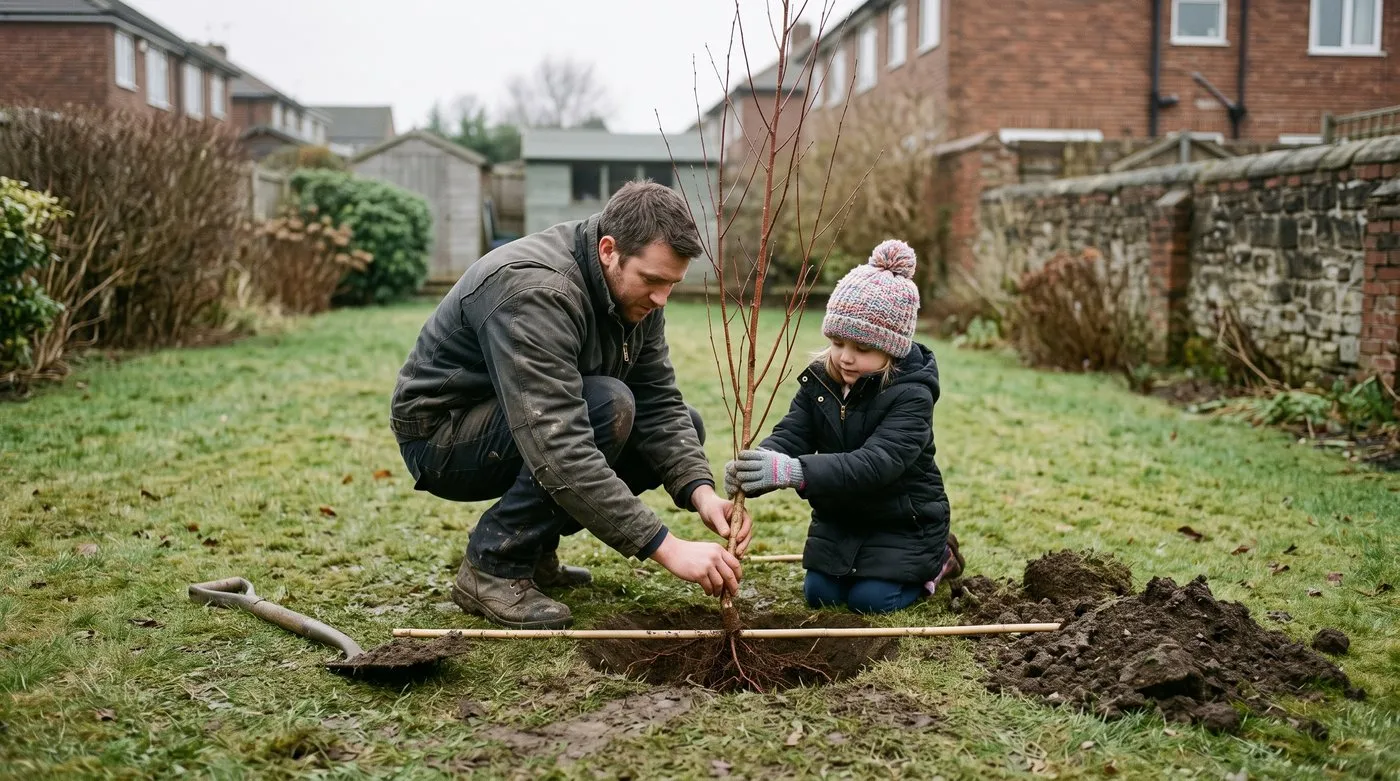
A cane across the hole shows where the roots should meet the trunk, right at ground level. Birch likes lean soil, so skip the compost and fertiliser.
Planting a multi-stem birch
A multi-stem birch has three to five trunks growing together in a clump. They’re very popular in modern gardens because you get more white bark in the same space.
Spacing tips for multi-stem birch:
- Leave a few metres of clear space around it for the canopy as it grows
- Keep it at least 1.5m from paths and paving, as surface roots can lift them
- Keep it at least 8m from a house on clay soil, and 5-6m on sandy soil
- In a bigger garden, plant three or five together for a little woodland grove
For more on planting bare-root trees, see our guide on how to plant a bare-root tree in the UK.
Soil
Birch likes soil that drains well and is acid to neutral, but it copes with most garden soils that don’t stay soggy. On very chalky soil it can struggle and the leaves may yellow.
A cheap test kit tells you what you’re working with. If your soil is very chalky, our native trees guide has trees that like those conditions. For partners that enjoy the same acid conditions as birch, see best plants for acid soil.
Single-stem or multi-stem?
It mostly comes down to the size of your garden and the look you want.
 A three-stem Himalayan birch makes a striking centrepiece, with white bark that shines all winter.
Single-stem birch
This is the classic woodland tree: one clean trunk rising to a light, airy top. It suits:
- Big gardens or rural plots with room for a full-sized tree
- A lawn, where you can see the bark clearly
- Wildlife gardens, as a bigger canopy means more insects
- Natural, woodland-edge planting with other native trees
A fully grown native birch is tall and fairly wide, so it’s too big for most small gardens.
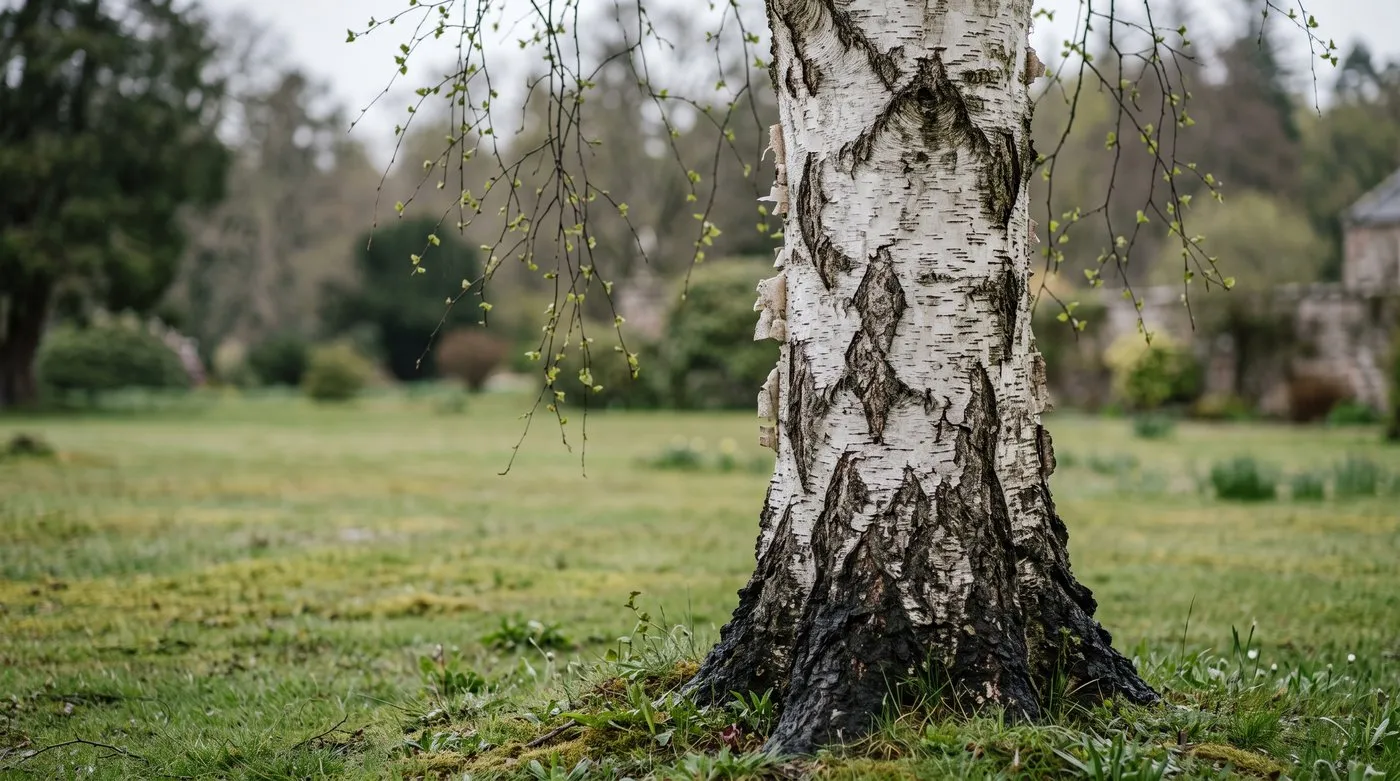
Native birch has white bark with dark cracks that turn rough and black low down. It’s the one to pick if wildlife is your priority.
Multi-stem birch
These are either several young trees planted close together, or nursery trees grown with several trunks from the start. You get a sculptural clump of white trunks that looks like one feature tree.
Why people love them:
- They usually stay shorter than a single-stem tree
- More trunks means more white bark to enjoy from autumn to spring
- The stems share the load in strong winds
- The lower canopy is easier to live with in a smaller garden
The downsides:
- They cost more than a single-stem tree of the same height
- Planting around several trunks is a bit fiddlier
- They take up more room at ground level
For more small-garden ideas, see best trees for small gardens in the UK.
What to plant under silver birch
Birch casts light, dappled shade rather than deep shade, so it’s one of the best trees to plant beneath. Its fine leaves let plenty of light through in summer.
Birch roots are shallow and thirsty, though, so pick plants that cope with light shade and drier soil near the trunk.
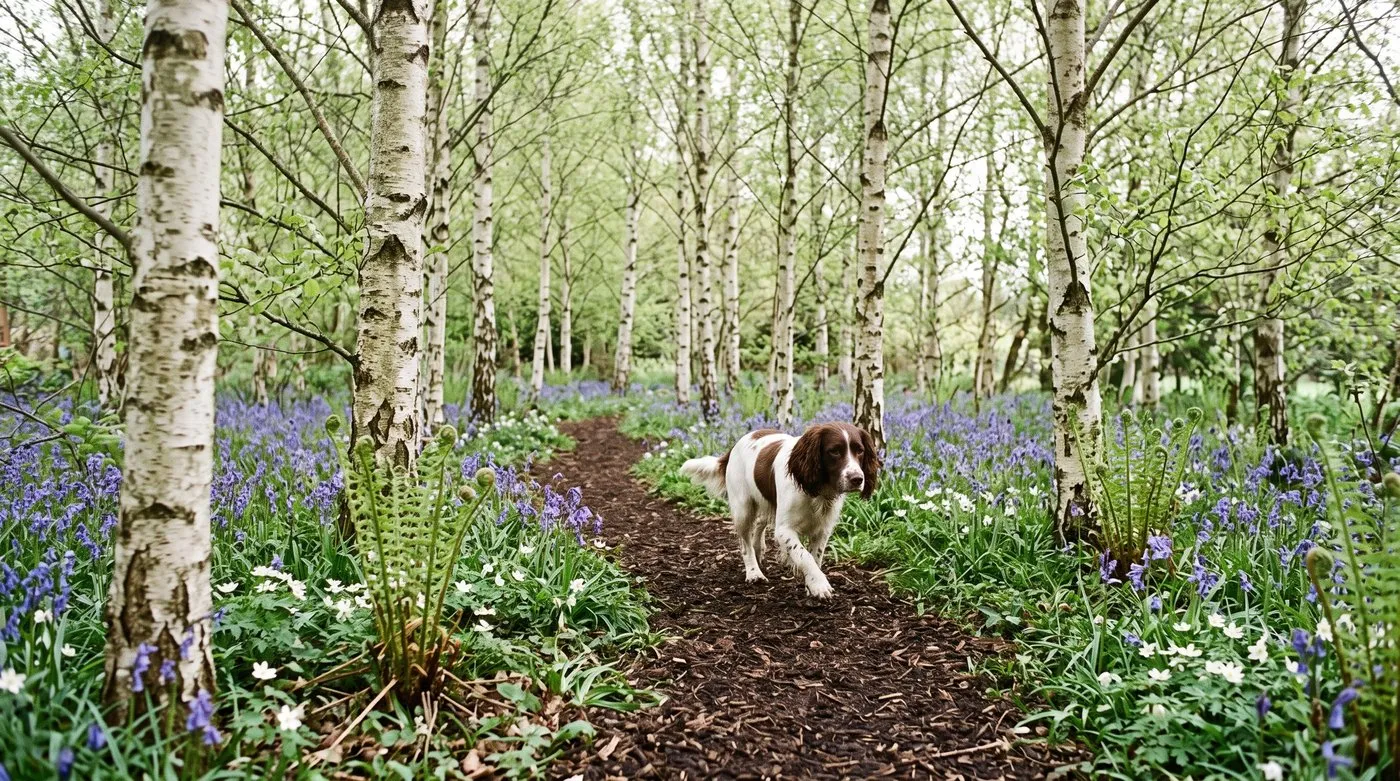
Birch casts light, dappled shade, so woodland plants like these thrive underneath. A bark or leaf mould mulch each autumn helps them through dry summers.
Planting ideas under birch
| Look | Plants | Good to know |
|---|---|---|
| Native woodland floor | Bluebell, wood anemone, primrose | Spreads over a few years, great for wildlife |
| Ferns | Male fern, soft shield fern, lady fern | Copes with dry shade once settled |
| Easy ground cover | Geranium macrorrhizum, epimedium, Vinca minor | Keeps weeds down, little work |
| Spring bulbs | Wild daffodil, snowdrop, dog’s-tooth violet | Asleep in summer, so no fight for water |
| Acid-loving shrubs | Rhododendron, Gaultheria, blueberry | Only on acid soil |
| Wild and buzzy | Foxglove, wood dock, a contained bramble | Bees, butterflies and nesting birds |
A 5cm layer of bark or leaf mould under the tree each autumn helps keep moisture in for the plants below during dry summers.
Silver birch autumn colour
Birch is one of the first UK trees to turn in autumn. Leaves start yellowing in September and are at their best through October, usually dropping by early November.
Native birch turns a clean, bright golden yellow. Himalayan birch goes a similar yellow, though the show is a little shorter.
For the best effect, plant birch where low October sun shines through the leaves. A dark yew or holly hedge behind makes the gold really glow. For more trees with great autumn colour, see our guide to best trees for autumn colour in the UK.
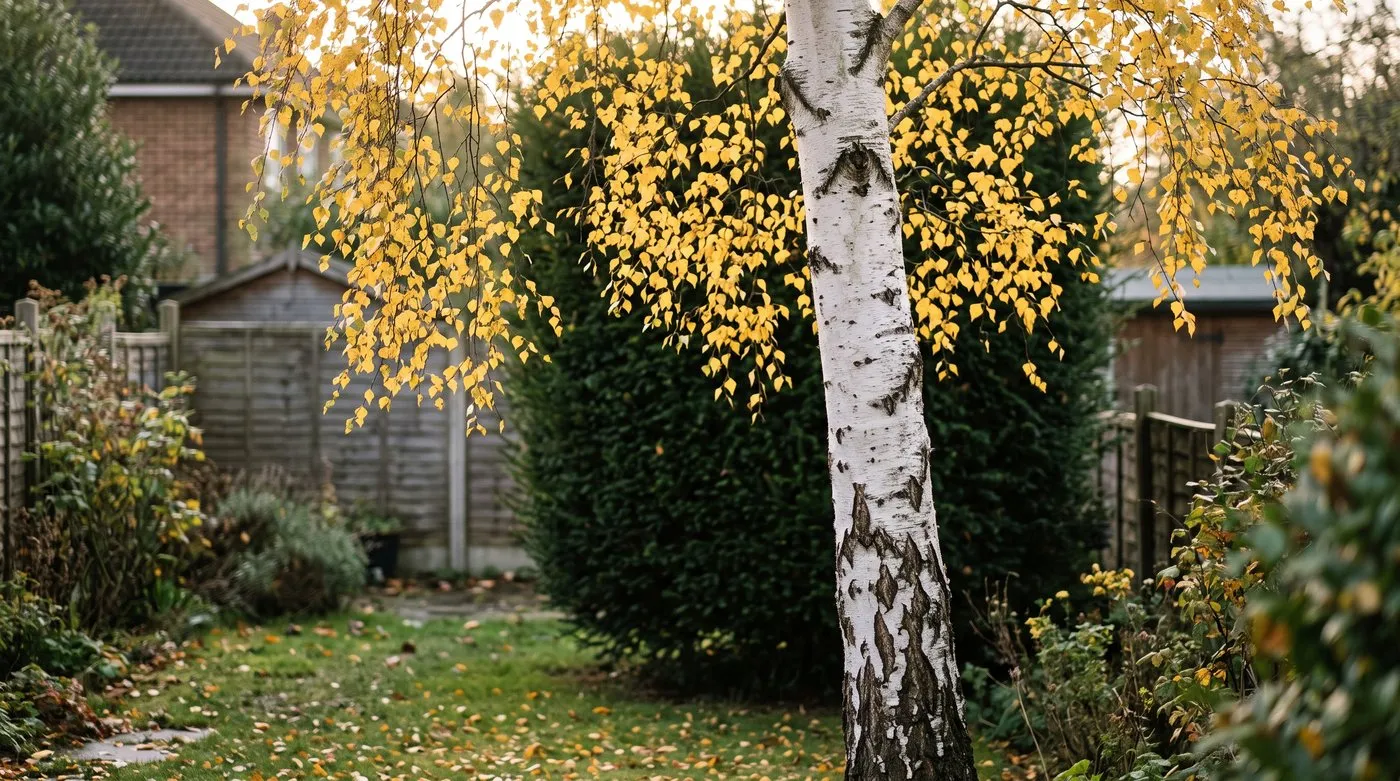
Plant birch where low October sun can shine through the leaves. A dark hedge behind makes the gold really glow.
Silver birch and wildlife
Our native birch is one of the best trees you can plant for wildlife. Lots of insects feed on it, and plenty of other creatures follow.
Insects: Many moth caterpillars feed on birch leaves, including the buff-tip and pale prominent. Those caterpillars and the aphids on birch are food for birds.
Birds: The tiny winged seeds fall from late summer and are a favourite of siskins and redpolls. Blue tits hunt the branches for caterpillars and aphids all spring.
Fungi: Birch has its own fungi. Birch polypore grows on dying and dead trunks, and the red and white fly agaric often pops up beneath living birches in autumn. Fly agaric is poisonous, so keep children and pets away from it. Leave dead birch standing if it’s safe, as beetles and other creatures depend on it.
Fallen leaves: Birch leaves are small and rot down quickly. Leave them to break down under the tree unless they’re smothering evergreen plants.
For more ideas, see how to create a wildlife garden in the UK.
Silver birch problems and fixes
Birch is generally healthy and easy, but a few things are worth knowing.
Leaf miners and aphids
Tiny sawfly and moth grubs tunnel inside birch leaves from May, leaving pale brown blotches. It’s only cosmetic and the tree isn’t harmed. Blue tits eat the grubs, so leave them be.
Birch aphids can gather on branches in summer. They drip sticky honeydew, which can turn black with sooty mould on the leaves below. Ladybirds, lacewings and hoverfly larvae usually keep them in check. On a small tree, a strong jet of water knocks them off.
Birch polypore (bracket fungus)
A pale, kidney-shaped shelf fungus on the trunk means the wood inside is rotting. The tree can carry on for years, but it gets weaker over time. Keep an eye on it each year and ask a qualified tree surgeon if it’s near a house, path or play area.
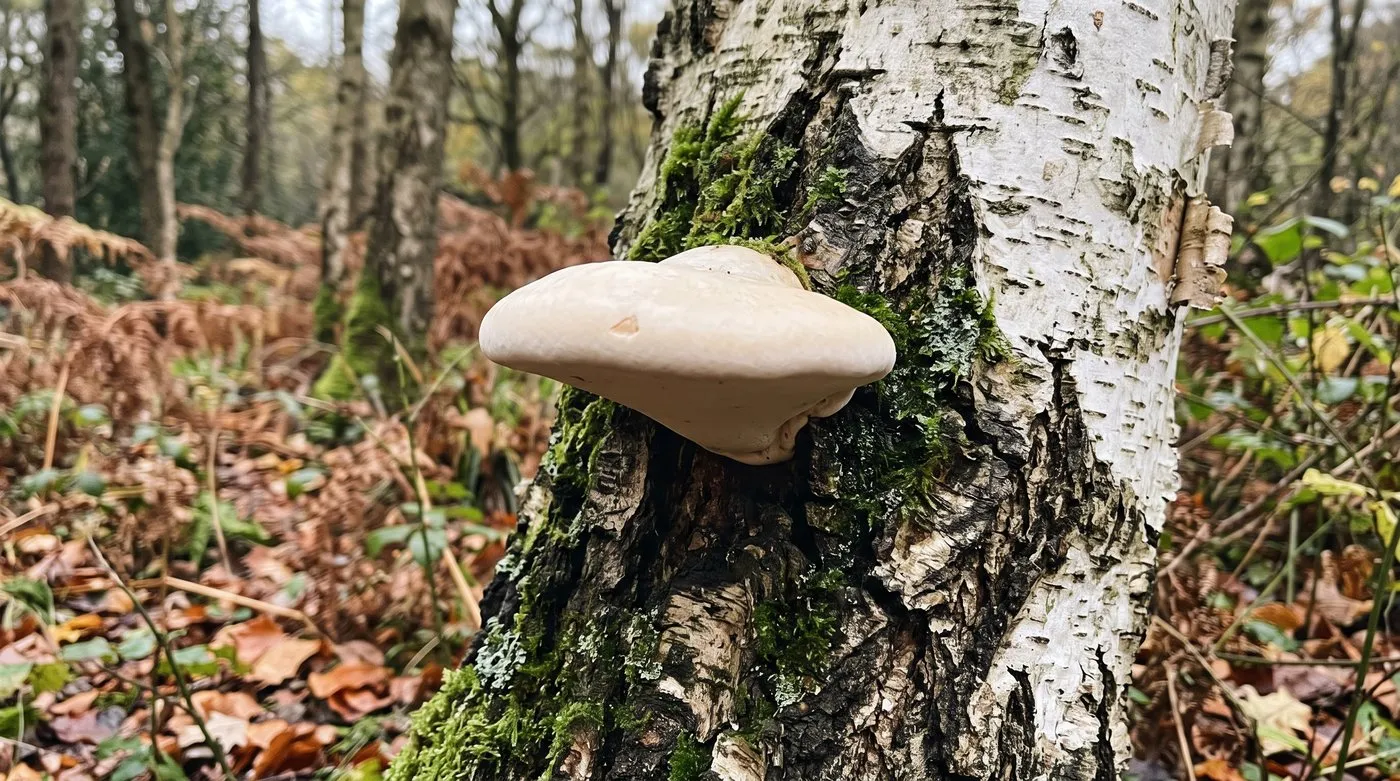
A pale shelf fungus like this means the wood inside is rotting. If the tree is near a house, path or play area, ask a qualified tree surgeon to check it.
Yellow leaves on chalky soil
Leaves that yellow between the veins usually mean the soil is too chalky for the tree to take up enough iron. A sequestered iron feed in spring helps in the short term. A bark mulch each year helps too. If your soil is very chalky, a different tree may be happier.
Our guide to how to prune shrubs in the UK covers the shrubs that often grow around birch.
Buying silver birch
| Type | Size | Good for |
|---|---|---|
| Bare-root whip (native birch) | Small, under 1m | Hedges, woodland planting, buying in bulk |
| Potted native birch | 1-1.5m | A garden tree you can plant most of the year |
| Potted Himalayan birch | 1-1.5m | A smart feature tree |
| Multi-stem Himalayan birch | 1.5-2.5m | Instant impact in a modern garden |
| Large single-stem tree | 3-4m | Quick screening or a landmark tree |
Bare-root whips are the cheapest by far, and big multi-stem trees cost the most. The Woodland Trust sometimes offers free or low-cost native trees to schools and community groups. Specialist tree nurseries have the widest choice of Himalayan birches.
Bare-root trees are sold from late autumn to late winter. Potted trees are available all year, but avoid planting in hot, dry summer weather.
Silver birch for privacy
Birch isn’t a privacy tree on its own, as its open canopy hides little and it loses its leaves in winter. It works well as part of a mixed screen, though. Three or five multi-stem birches planted a few metres apart give a soft, woodland-edge screen that filters the view.
For screening all year, put evergreens behind the birch, such as Portuguese laurel or Osmanthus. For more ideas, see best trees for privacy in UK gardens.
Silver birch care through the year
| Month | What to do |
|---|---|
| January-February | Last chance for bare-root planting. Check stakes and ties on young trees. |
| March | Top up the mulch ring, keeping it off the trunk. |
| April | Start watering young trees in dry spells, a good soak once a week. Use sequestered iron if leaves yellow. |
| May | Catkins release pollen. Leaf-miner marks may appear, but no action needed. |
| June | Keep watering young trees in dry spells. Watch for aphids. No pruning. |
| July-August | Pruning time. Remove dead, damaged or crossing branches. |
| September | Seeds fall, so leave them for the finches. Check the trunk for bracket fungus. |
| October | A great month to plant potted trees. Enjoy the autumn colour. Spread leaf mould underneath. |
| November | Bare-root planting season starts. Last chance for any pruning. Clear leaves off evergreen plants beneath. |
| December | Check stakes. Plan next year’s planting. |
Frequently asked questions
How fast does silver birch grow in the UK?
Silver birch is a fairly fast grower. In a sunny spot with soil that drains well, it shoots up in its early years, then slows as it nears its full 15-20m. Himalayan birch is a little slower and stops at about 10-12m.
What is the best silver birch for a small garden?
Himalayan birch (Betula utilis var. jacquemontii) is the best pick. It stays smaller than our native birch and is often sold as a multi-stem tree, which suits smaller plots. ‘Silver Shadow’ is a more compact choice. All have that gorgeous white bark.
Can silver birch grow in clay soil?
Yes, as long as the ground doesn’t stay waterlogged. Birch roots need air and rot in soil that’s wet all the time. On clay, rough up the sides of the planting hole and don’t dig a deep hole that fills with water. If your clay sits wet all winter, choose a different tree.
How far from a house should I plant silver birch?
Keep it well away, ideally at least 8m from a house on clay. Birch roots are shallow and spread wide, and shrinkable clay soils can move as trees take up water. Keep at least 5m from drains. If in doubt, ask a tree surgeon before planting.
What can I plant under a silver birch tree?
Shade-loving woodland plants work best. Try bluebells, wood anemones, foxgloves and male fern. Birch casts light, dappled shade, so hardy geraniums, epimediums and hostas do well too. Birch roots are thirsty near the surface, so water new plants well in their first summer.
When should I plant silver birch?
Plant bare-root birch between November and February. The tree is dormant then, so it settles in with less stress. Potted birches can go in at other times, but autumn to early spring is best. Avoid planting in hot, dry summer weather.
Does silver birch need pruning?
Hardly at all. Remove dead, damaged or crossing branches between late summer and early winter. Don’t prune in late winter or spring, when cuts bleed sap heavily. On multi-stem trees, rub out unwanted shoots from the base while they’re small. Never chop the top off a birch.
More birch and tree guides
- Native trees for UK gardens: British native trees for wildlife-friendly planting
- Best trees for small gardens in the UK: compact trees for smaller plots
- Best trees for autumn colour in the UK: the best trees for autumn leaves
- How to plant a bare-root tree in the UK: a step-by-step planting guide
- Best plants for acid soil in the UK: partners that enjoy the same soil as birch
Our team produces practical UK gardening guidance from source research, contributor records and established horticultural practice. Editorial standards are overseen by Matt W.