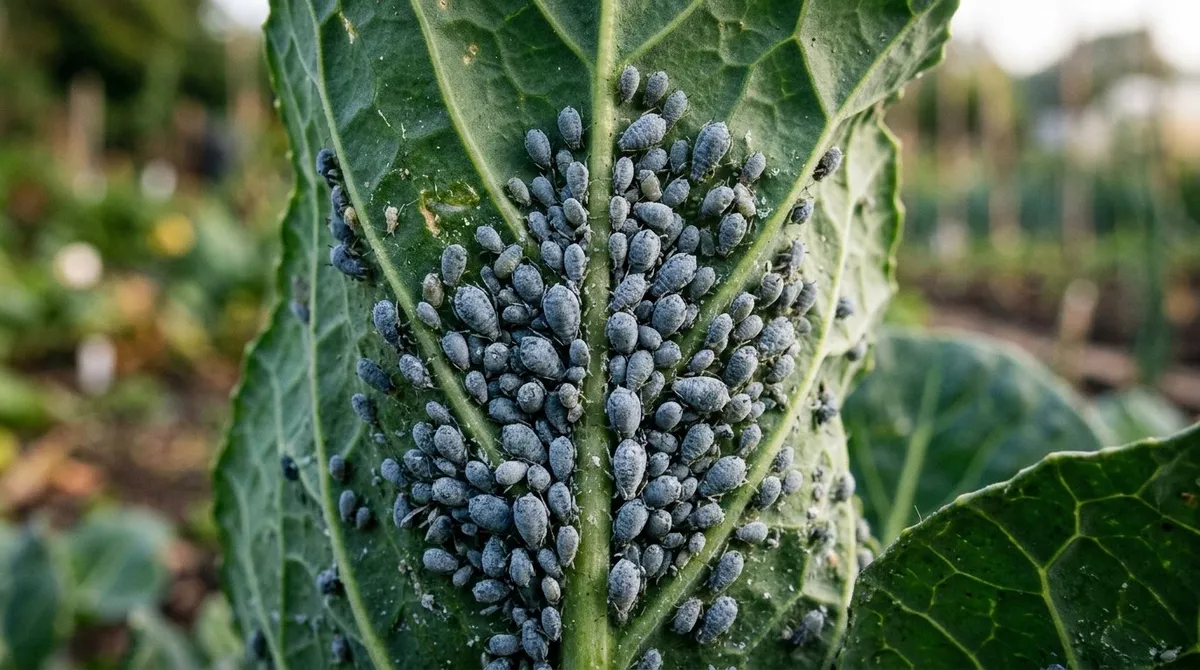
Key takeaways
- Cover brassicas with fine insect mesh from planting time, with the edges sealed to the ground
- Check under the leaves every week from April to October and rub off yellow eggs
- July and August are the busiest months, so don't stop checking after June
- Small White caterpillars are plain green and hide in the heart of the plant
- Bt sprays aren't allowed for home gardeners in the UK, so stick to mesh and hand-picking
Cabbage white caterpillars are the main reason brassicas get eaten in UK veg plots. The good news is that fine mesh and a weekly look under the leaves stop nearly all of the damage. Here’s how to tell who’s who, and how to keep them off your cabbages, broccoli and kale.
How to identify cabbage white butterflies in the UK
Three white butterflies visit brassicas in UK gardens, but only two of them cause real trouble.
The Large White (Pieris brassicae) is the big one, with creamy wings and bold black tips. It’s one of the pests on the RHS cabbage white guide, and its caterpillars feed in hungry gangs.
The Small White (Pieris rapae) is smaller, with faint grey tips and one or two small spots. It flies low over the crops. Its caterpillars are sneaky, so it often does just as much harm.
The Green-veined White (Pieris napi) looks like the Small White but has greenish veins under its back wings. It mostly lays on wild plants like garlic mustard. It rarely bothers your veg and is a handy pollinator, so leave it be.
| Feature | Large White | Small White | Green-veined White |
|---|---|---|---|
| Size | Large | Small | Small |
| Wing tips | Bold black | Faint grey | Faint grey |
| Eggs | Yellow clusters | Single, pale | Single, on wild plants |
| Caterpillars | Yellow-green with black spots, in groups | Plain green, alone | Plain green |
| Risk to your veg | High | High (hard to spot) | Low |
What does cabbage white caterpillar damage look like?
Large White caterpillars are easy to spot. They feed in groups on the outer leaves and work inwards. You’ll see ragged holes and dark green droppings on the leaves. A big group can strip a plant down to its veins in a few days.
Small White caterpillars are plain green and feed alone. They often head into the heart of cabbages and cauliflowers. A plant can look fine from outside, then you cut it open and find tunnels and droppings. Covering plants from planting day is the best answer, and our cabbage growing guide builds mesh into the routine.
Both also go for broccoli, Brussels sprouts, cauliflower, kale, turnips, radish and rocket. Anything in the cabbage family is on the menu.

Large White caterpillars feeding together. The dark droppings and ragged holes are a giveaway.
When cabbage whites are about
Knowing the timing tells you when to be on guard. The butterflies spend winter as chrysalises on walls, fences and sheds. They come out in spring once it warms up.
April to June. The first butterflies appear from mid-April in the south, a little later further north. They lay eggs under brassica leaves. Eggs hatch in a week or two, and the caterpillars feed for a few weeks before wandering off to pupate.
July and August. This is the big one. There are far more butterflies, and warm weather speeds everything up. Most damage happens now.
September and October. In a warm southern autumn, a third wave may lay eggs on late crops. Those caterpillars then pupate for winter.
| Stage | What to look for | What to do |
|---|---|---|
| Eggs | Yellow dots under leaves | Rub off every week |
| Young caterpillars | Tiny caterpillars close together | Pick off before they spread |
| Older caterpillars | Big caterpillars and droppings | Hand-pick every few days |
| Chrysalises | On walls, fences and sheds | Remove some in winter |
How to stop cabbage white butterflies with netting
Choosing the right netting
Mesh is your best friend here. Choose insect mesh or butterfly netting with holes of 7mm or smaller. Anything coarser lets the smaller butterflies squeeze through. Fine insect mesh such as Enviromesh also keeps out other pests and lasts for years if you look after it.
Avoid fleece over summer. It traps heat and cuts airflow, which suits diseases like downy mildew. Mesh lets rain, air and light through but keeps butterflies out. Brassicas have other troubles too, such as club root, so good growing habits matter as well.
How to fit netting correctly
The most common mistake is a gap at ground level. Butterflies will crawl in underneath and then lay eggs inside, safe from birds.
- Make hoops from lengths of flexible water pipe pushed firmly into the soil, so the arches stand well above your plants.
- Space the hoops along the row so the mesh doesn’t sag onto the leaves. Butterflies can lay through mesh that touches a leaf.
- Drape the mesh over the hoops with plenty spare on each side.
- Seal the edges by burying them in a shallow trench, or weigh them down with planks, bricks or bottles of soil. No gaps.
- Close the ends by gathering the mesh, twisting it and pegging it down.
Lift the mesh to weed, harvest or check plants, then put it straight back. On sunny summer days, don’t leave crops uncovered for long.

Fine mesh over pipe hoops, with the edges buried so nothing can crawl underneath.
Simple ways to deal with eggs and caterpillars
Hand-picking eggs and caterpillars
Turn the leaves over once a week and look for eggs. Large White eggs sit in bright yellow clusters and are easy to rub off. Small White eggs are pale, laid one at a time, and often along the central vein. Miss one and you may find a caterpillar in the heart of your cabbage a couple of weeks later.

Large White eggs under a cabbage leaf. Rubbing these off each week saves a lot of bother later.
In July and August, check plants every few days for caterpillars. Large Whites are easy to see in their groups. Pick them off and squash them, or pop them on the bird table. Small White caterpillars hide along the middle of the leaf, so run your fingers along the rib to find them.
Why Bt sprays are not an option
Older and overseas guides often mention Bt sprays, but they aren’t allowed for home gardeners in the UK. Stick with mesh, hand-picking and natural helpers. Ladybirds, hoverflies and parasitic wasps all pitch in, especially if you avoid insecticides.
Companion planting to reduce cabbage white damage
Companion planting can take a little pressure off, but it won’t do the job alone. Use it alongside netting. Our companion planting guide has lots more ideas.
Nasturtiums as trap crops
Sow nasturtiums outside from late April, about 30cm apart, near your brassicas. The butterflies often lay on them instead. Once the nasturtiums are covered in caterpillars, pull them up and put them in the green bin. Don’t compost them, as the caterpillars may carry on.
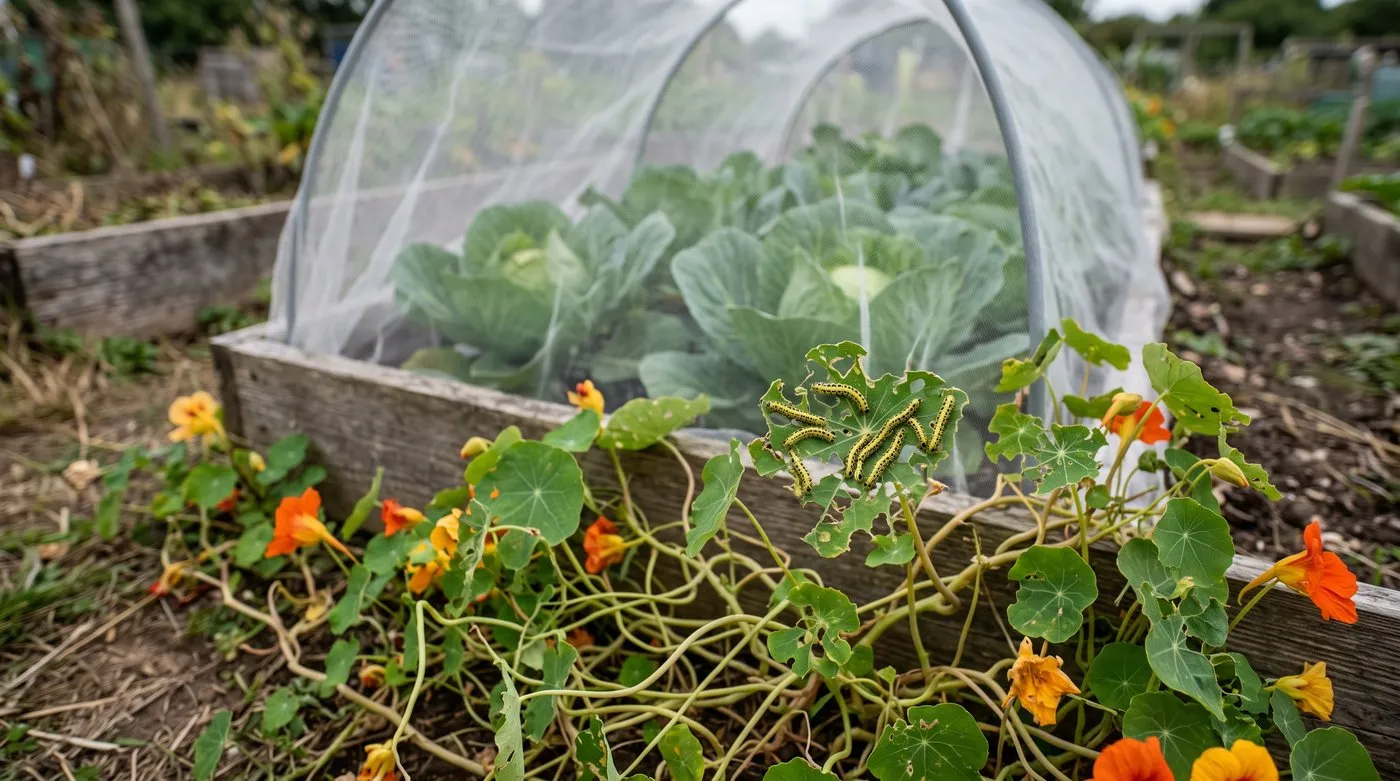
Nasturtiums often take the eggs instead of your cabbages. Once they’re covered, pull them up and put them in the green bin.
Aromatic herbs for scent masking
Female butterflies find cabbages by smell. Strong-smelling plants nearby may help hide that smell.
French marigolds are a popular choice, tucked in between the brassicas. Rosemary, thyme and sage are worth a go too. These herbs also feature in our list of plants that repel flies around a patio. The effect is small and fades on windy days, so treat it as a bonus.
Encouraging natural predators of cabbage whites
Plenty of garden wildlife helps keep cabbage whites in check. Our guide to biological pest control explains the bigger picture.
Tiny parasitic wasps lay their eggs inside caterpillars, which then die. They’re harmless to people. If you see a dead caterpillar surrounded by little yellow cocoons, that’s their work, so leave it.
Other small wasps lay eggs in the chrysalises on walls and fences. When clearing chrysalises in winter, leave a few behind. Some will be hosting these helpers for next year.
Birds like sparrows, blue tits and great tits pick caterpillars off brassicas. A nest box near the veg plot is a lovely way to recruit them.
Ground beetles eat eggs and young caterpillars that fall to the ground. Log piles, stones and a bit of untidy border give them somewhere to live.
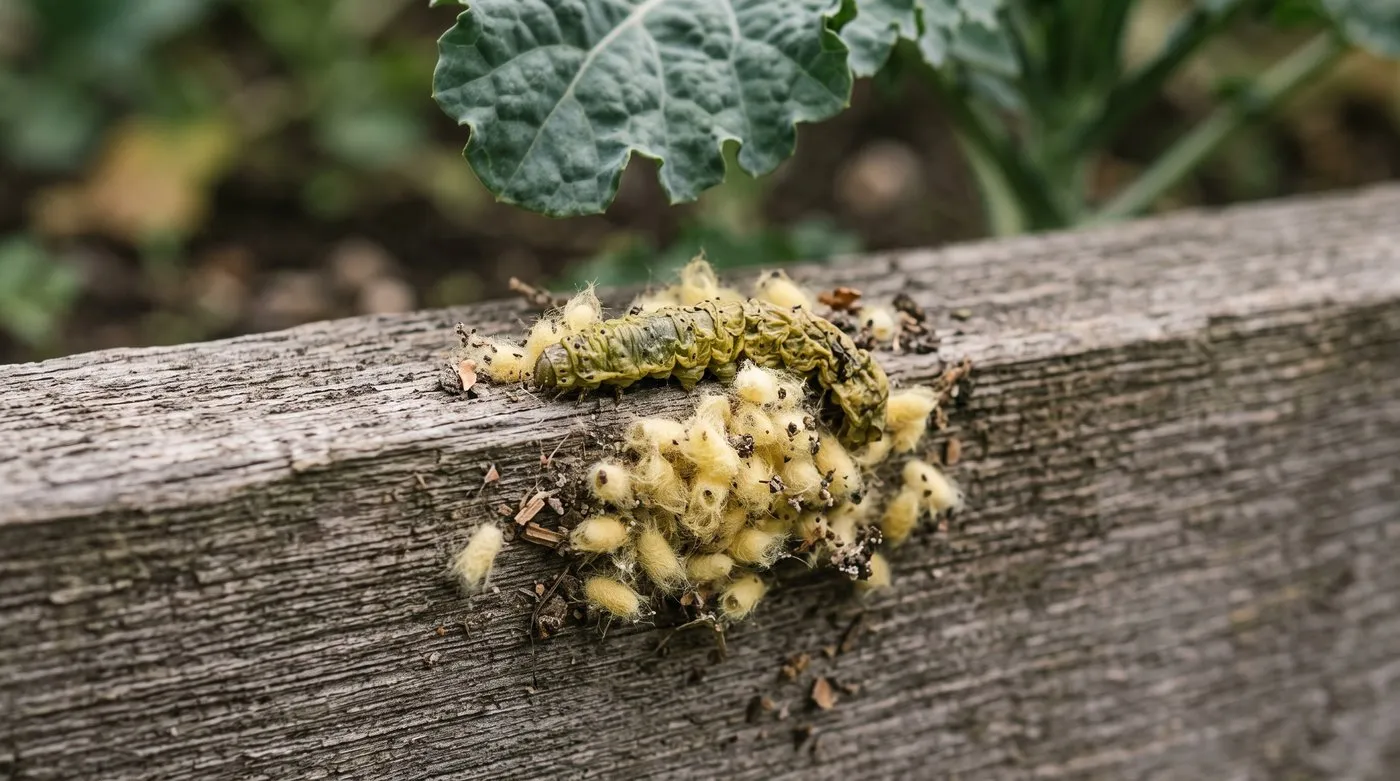
A caterpillar wrapped in little yellow cocoons has been parasitised by tiny wasps. Leave it be, as they’re on your side.
Common mistakes with cabbage white control
Mesh that’s too coarse. Wide netting lets the Small White through. Go for holes of 7mm or smaller.
Gaps at the bottom. Butterflies walk in under loose edges. Bury or weigh down the edges all the way round.
Only looking on top of the leaves. Eggs go underneath. Lift the leaves and look.
Relaxing after June. The July and August wave is the biggest. Keep checking right through the summer.
Reaching for a spray. Bt and home-made sprays aren’t allowed as pesticides for home gardeners in the UK. Mesh and hand-picking work and keep you on the right side of the rules.
Month-by-month cabbage white control calendar
| Month | Task |
|---|---|
| January-February | Look on sheds, fences and window frames for chrysalises. Remove most of them. |
| March | Get your hoops ready. Sow nasturtiums indoors for an early start. |
| April | First butterflies appear. Fit mesh over new brassicas and start weekly egg checks. |
| May | Egg-laying in full swing. Rub off egg clusters and plant out nasturtiums. |
| June | First caterpillars about. Pick them off any uncovered plants. |
| July | The busy month. Check the mesh for gaps and look for eggs twice a week. |
| August | Lots of caterpillars. Check uncovered plants every few days. |
| September | A third wave is possible in the south. Keep checking until it turns cool. |
| October | Clear old brassica stumps. Pull up and bin the nasturtiums. |
| November-December | Tidy brassica beds and plan your crop rotation for next year. |
For other pests on the veg patch, see our vegetable pests and diseases guide. And to give the friendly butterflies a treat, try our list of best plants for butterflies.
Frequently asked questions
What is the difference between Large White and Small White butterflies?
The Large White is bigger, with bold black wing tips. The Small White is smaller with faint grey tips. Large White caterpillars are yellow-green with black spots and feed in a crowd. Small White caterpillars are plain green and feed alone, so they’re much harder to spot.
When do cabbage white butterflies lay eggs in the UK?
From April to October, in two or three waves. The first lot flies from mid-April to June. The second, bigger lot peaks in July and August. In a warm southern autumn you may get a third. Keep checking under the leaves all through that time.
Does netting really stop cabbage white butterflies?
Yes, if the mesh is fine enough and has no gaps. Choose mesh with holes of 7mm or smaller. Bury the edges or weigh them down so butterflies can’t crawl underneath. Keep the mesh off the leaves too, or they can lay through it.
What companion plants deter cabbage white butterflies?
Nasturtiums are the best known helper. They tempt the butterflies to lay on them instead of your cabbages. Strong-smelling herbs like rosemary, thyme and sage may help hide the cabbage smell. None of them work on their own, so use netting too.
Can you use Bacillus thuringiensis on cabbage whites?
No, it isn’t allowed for home gardeners in the UK. Fine insect mesh, picking off eggs and caterpillars, and welcoming birds and parasitic wasps will do the job without any spray.
How do I identify cabbage white eggs?
Look for tiny yellow eggs under the leaves. Large White eggs are bright yellow, bullet-shaped and laid in neat clusters. Small White eggs are paler and laid one at a time. Rub them off or squash them before they hatch, usually within a week or two.
Should I kill cabbage white butterflies in my garden?
No, there’s no need to go after the adults. Stop them laying on your crops with netting and pick off eggs and caterpillars instead. The Green-veined White rarely touches veg and is a useful pollinator. Let the butterflies enjoy your flowers and keep your brassicas covered.
Our team produces practical UK gardening guidance from source research, contributor records and established horticultural practice. Editorial standards are overseen by Matt W.