
Key takeaways
- Wasps hunt aphids, caterpillars and flies to feed their young
- They help pollinate ivy in autumn and early flowers in spring
- Late-summer pestering is about sugar, as the colony winds down
- A nest away from doors and paths can usually be left alone
- Nests die off in autumn and are never reused
- Solitary wasps are gentle and very rarely sting
Wasps are some of the most helpful insects in a UK garden, even if they’re not the most loved. All summer they hunt aphids, caterpillars and flies. They only become a nuisance for a few weeks at the end of summer, when they gatecrash picnics.
Here’s what wasps do for your garden, how their year works, and how to get along with them.
Why wasps deserve a better reputation
Wasps are free pest control. They sting and they spoil picnics, which is why people dislike them. But for most of the year they’re out hunting garden pests.
 A common wasp hunting aphids on a rose stem. Workers catch pests all day to feed the grubs back in the nest.
Every nest is busy all summer. Workers catch caterpillars, aphids, flies and other soft insects. They chew them into a paste and feed it to the grubs in the nest. In return, the grubs give the workers a sugary drink. That swap keeps the whole colony hunting.
So if you have a nest nearby, you have a team of pest controllers working for nothing.
UK wasp species you might see in your garden
Most people only notice two: the common wasp and the German wasp. But several others visit gardens too.
The common wasp is the one you’ll see most. It has an anchor-shaped black mark on its face. It often nests underground in old mouse holes or in wall cavities.
The German wasp looks very similar, but usually has three black dots on its face instead of an anchor. It often nests in lofts, sheds and hollow trees.
The tree wasp hangs its grey papery nest in hedges, shrubs and low branches. It’s usually less bothersome than the common wasp.
The Saxon wasp arrived in Britain in the 1980s and has been spreading north. It nests in bushes and under eaves.
The median wasp is the biggest social wasp after the hornet. It nests in hedges and trees and is usually calm unless its nest is disturbed.
How wasps control garden pests
Worker wasps hunt soft-bodied insects all summer to feed their young. That’s great news if you’re battling aphids.
On the menu:
- Aphids, including greenfly and blackfly
- Caterpillars, such as cabbage white and winter moth
- Flies, including houseflies and bluebottles
- Sawfly larvae, such as rose and gooseberry sawfly
That makes wasps a big part of organic pest control. A nest nearby helps keep your veg and fruit cleaner without any spraying.
The pollination role of wasps
Wasps are underrated pollinators. They’re less hairy than bees, so they carry less pollen, but they visit lots of flowers. They matter most at two times of year.
 A common wasp on ivy flowers in October. Wasps are among the busiest visitors to ivy in autumn.
Autumn ivy is the big one. Ivy flowers in September and October, after many bees have finished for the year. Wasps, hungry for sugar, swarm over the flowers and help set the berries that feed birds through winter.
Spring queens do their bit too. When queens wake from hibernation in spring, they feed on early flowers like willow catkins, blackthorn and dandelions. Planting bee-friendly flowers helps them as well.
Fig wasps are a curious case. Wild figs in warm countries rely on tiny wasps to pollinate them. Figs grown in UK gardens ripen without them, so no wasps in your figs.
A wasp’s year: from queen to empty nest
Knowing how a wasp’s year works explains the late-summer grumpiness.
Spring: Queens wake up from hibernation in log piles, sheds and bark. Each one picks a nest site and builds the first papery cells from chewed wood.
Early summer: The queen raises the first workers on her own. Once they hatch, they take over the hunting and she stays home laying eggs.
High summer: The nest is at its biggest. Workers hunt hard, bringing back loads of insects. This is when they do the most good.
Late summer: The queen switches to raising new queens and males. With fewer grubs to feed, workers lose their sugary drink and go looking for sugar elsewhere. That’s when they turn up at your picnic.
Autumn: New queens and males leave to mate. The males die soon after, and the new queens find somewhere to hibernate. The old queen and workers die, and the nest is never used again.
Why wasps become a nuisance in late summer
It’s about sugar, not bad temper.
All summer, workers swap hunted insects for a sugary drink from the grubs. When the queen stops laying worker eggs, there are fewer grubs and less sugar. The workers get hungry and go after ripe fruit, jam, fizzy drinks and anything sweet.
Fallen fruit makes it worse. Windfall apples and plums start to ferment, and wasps feeding on them get dozy and clumsy. They’re more likely to sting if you tread on one or brush against it.
This phase lasts a few weeks, then the cold finishes the colony off. A little patience goes a long way.
Living alongside wasps safely
Sharing your garden with wasps is easy once you know what they want. Most stings happen through panic, trapping a wasp against skin, or getting too close to a nest.
Stay calm. A wasp buzzing round you is just checking whether you’re food. Keep still and it will move on. Swatting can upset it and bring others over.
Cover food and drinks outside. In late summer, sweet drinks are the big draw. Use lids on cups and cover bowls. Pick up windfall fruit, too.
Keep perfume for indoors. Sweet, flowery scents can draw wasps in late summer.
Help children stay still. Running and flapping is how most children get stung. Practise staying calm together.
Learning to live with wasps is part of creating a wildlife garden that welcomes everything.
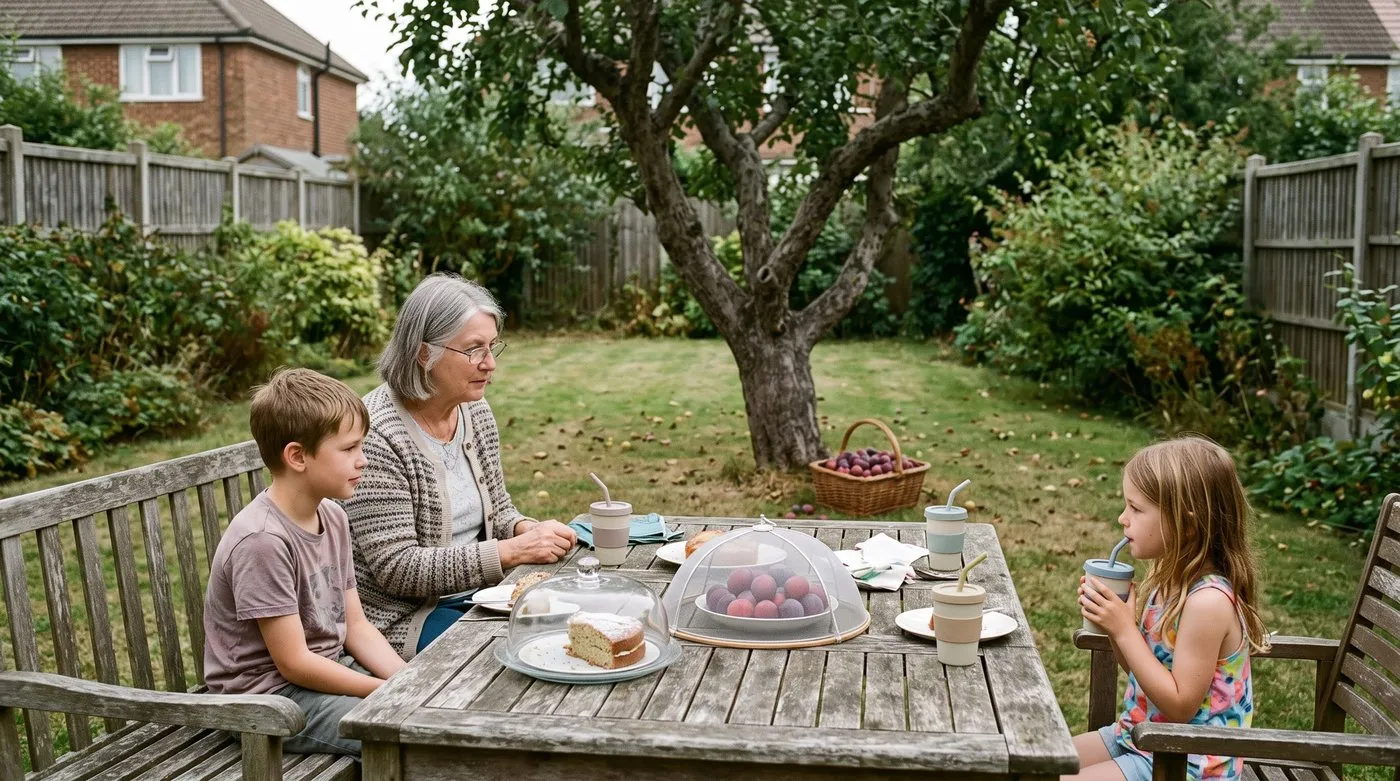
In late summer, wasps are after sugar, not you. Cover food, use lids on drinks and pick up windfall fruit, and everyone can enjoy the garden.
When to remove a wasp nest and when to leave it
Most wasp nests are best left alone. A nest in a shed roof, compost heap or hedge away from paths does little harm. It keeps hunting pests all summer and dies off naturally in autumn.
Think about removal only if the nest is:
- Right beside a door or path you use a lot
- In a wall where everyday noise keeps upsetting it
- Where small children play
- Near someone with a known wasp sting allergy
If it needs to go, call a pest controller rather than doing it yourself. A disturbed nest can be genuinely dangerous.
Never block a nest entrance. The wasps will dig another way out, sometimes into your house. Never pour water in or try to burn it either. Both are risky and don’t work.
Solitary wasps: the overlooked allies
 A solitary mason wasp moving into a bug hotel. Solitary wasps are gentle and pose no threat to people.
Solitary wasps work alone and very rarely sting. The UK has over 200 kinds. Each female builds a few nest cells, stocks each with prey for her young, and lays an egg. No colonies, no swarms, no picnic raids.
Mason wasps nest in hollow stems, old beetle holes and bug hotel tubes. They stock their nests with small caterpillars.
Potter wasps make tiny clay pots on heather stems. They’re rare and found on southern heaths.
Spider wasps hunt spiders and drag them into burrows to feed their young.
Ruby-tailed wasps are dazzling metallic red and green insects. They lay their eggs in the nests of mason wasps and solitary bees.
Making a home for solitary wasps is easy. Drill holes of different sizes, from about 4 to 10mm, into a block of untreated hardwood. Or bundle up hollow bamboo or elder stems. Fix it somewhere sunny and sheltered, facing south or south-east. Flowers like fennel and wild carrot nearby give them a good feed.
Which social wasps live in the UK?
| Wasp | Where it nests | How bothersome? |
|---|---|---|
| Common wasp | Underground, wall cavities | Can be pesky in late summer |
| German wasp | Lofts, sheds, hollow trees | Can be pesky in late summer |
| Tree wasp | Hedges, shrubs, low branches | Usually easy-going |
| Saxon wasp | Bushes, under eaves | Leave the nest alone |
| Median wasp | Hedges, trees | Calm unless the nest is disturbed |
| Red wasp | Underground, banks | Usually easy-going |
| Norwegian wasp | Bushes, low branches | Usually easy-going |
| Hornet | Hollow trees, lofts | Gentle unless the nest is threatened |
| Cuckoo wasp | Takes over red wasp nests | Rarely seen |
The hornet deserves a special mention. It’s big and looks scary, but the native European hornet is surprisingly gentle. It rarely stings unless its nest is threatened. Hornets hunt by night as well as by day, catching moths, beetles and other large insects. If you find a hornet nest, leave it be.
For more ways to make your garden buzz with life, see our guide to composting for wildlife.
Frequently asked questions
Are wasps beneficial to gardens?
Yes, wasps are really helpful in the garden. All summer, workers catch aphids, caterpillars and flies to feed their young. They also visit flowers, especially ivy in autumn when few other insects are about. They’re one of the hardest-working pest controllers you have.
How many wasp species are there in the UK?
Around nine social kinds and over 200 solitary ones. The common wasp and German wasp are the two you’ll see most. Solitary wasps like mason wasps and spider wasps are easy to overlook because they don’t live in big colonies. The Bees, Wasps and Ants Recording Society keeps records of them all.
Why do wasps become aggressive in late summer?
Their colony is winding down and they want sugar. Through summer, the grubs in the nest give workers a sugary treat. Late on, there are fewer grubs, so workers go looking for fruit, jam and fizzy drinks instead. It only lasts a few weeks before the colony dies off in autumn.
Should I remove a wasp nest from my garden?
Usually not, if it’s out of the way. A nest in a shed roof, compost bin or hedge away from paths can be left alone. It dies off naturally by late autumn. Think about removal only if it’s by a door, path or play area, or near someone allergic to stings. Call a pest controller for that.
Do wasps pollinate flowers?
Yes, wasps visit and pollinate lots of flowers. They’re especially important for ivy, which flowers in autumn when most bees have finished. Queens also feed on early spring flowers like willow catkins when they wake up from hibernation.
What is the difference between wasps and bees?
Wasps are smooth with a narrow waist, while bees are furry and rounder. Wasps hunt insects to feed their young. Bees collect pollen and nectar. A wasp can sting more than once, but a honeybee dies after stinging. Both help pollinate flowers.
How can I avoid getting stung by wasps?
Stay calm and don’t swat. Swatting a wasp can bring others to see what’s going on. Cover sweet drinks and food outside in late summer, and don’t stand in front of a nest entrance. Most stings happen when a wasp gets trapped against skin. The Wildlife Trusts wasp guide has more friendly tips.
Our team produces practical UK gardening guidance from source research, contributor records and established horticultural practice. Editorial standards are overseen by Matt W.


