Key takeaways
- Bitter pit is a calcium shortage in the fruit, not a disease or pest
- Look for sunken brown skin spots and brown, bitter flecks in the flesh
- Calcium moves with water, so dry spells stop it reaching the apples
- Large fruit on vigorous, heavily fed trees suffers most
- Mulch, steady watering and summer calcium feeds prevent most of it
- Affected apples are safe to eat but store badly, so use them first
Bitter pit is one of the most disappointing things to find in a home-grown apple. The fruit looks fine on the tree. Then sunken brown spots appear on the skin, the flesh is full of brown flecks, and a bite tastes slightly bitter. It isn’t a disease or a pest. It is a calcium shortage in the fruit, usually caused by the tree running short of water at the wrong time.
This guide explains what causes bitter pit and why sprays for disease won’t help. It then shows how to prevent it next year.
What is bitter pit in apples?
Bitter pit is a growing disorder, not a disease. The brown spots are small patches of dead cells inside the fruit, caused by a shortage of calcium.
Calcium helps hold the fruit’s cell walls firm. Where it runs short, small groups of cells collapse and turn brown. You see them as sunken pits on the skin and brown flecks through the flesh, often worst towards the bottom of the apple.
Because no fungus or pest is involved, fungicides and insecticides do nothing. The fix is to help calcium reach the fruit. Tomatoes get a similar calcium problem called blossom end rot, and the cure is much the same: steady watering.

The brown flecks are patches of calcium-starved cells. Cut them out and the rest of the apple is fine to eat.
Why does bitter pit happen?
The key fact is that calcium moves with water. It travels up from the roots in the flow of water the tree draws through its leaves. Once it arrives somewhere, it can’t easily move on. So calcium only reaches the fruit while water is flowing steadily to it.
In a dry spell, or with on-off watering, that flow falters. The fruit then goes short of calcium, even if the soil has plenty.
This explains the usual pattern:
- Dry summers bring more bitter pit.
- Large apples need more calcium, so they suffer most.
- Vigorous, heavily fed trees grow lots of leaves, which pull water and calcium away from the fruit.

Small, dark, sunken spots on the skin are often the first sign, sometimes before picking and sometimes in store.
How to tell bitter pit from other apple spots
Other problems mark apple skins too, so check before you act.
| Problem | What you see |
|---|---|
| Bitter pit | Small sunken brown spots on the skin, brown flecks scattered in the flesh |
| Scab | Dark, rough, scabby patches on the skin, sometimes with cracks |
| Codling moth | A hole with brown, crumbly droppings and a tunnel to the core |
| Bitter or off flavour | Taste problems without spots, often from picking or storage |
For dark scabby patches, see our guide to apple and pear scab. If your apples taste odd but have no spots, our guide to why apples and pears taste bitter covers the other causes.
Which apples get bitter pit?
Some varieties are much more prone than others. Bramley’s Seedling, Egremont Russet, Newton Wonder and Crispin are all known for it. Large-fruited, vigorous varieties suffer most.
Some habits make it worse on any tree:
- Heavy feeding, especially with nitrogen, drives leafy growth that competes with the fruit.
- Thinning too hard leaves a few giant apples, each needing lots of calcium.
- Hard winter pruning triggers a flush of vigorous new shoots.
- Very acidic soil can hold less available calcium.
Keeping the tree steady and moderate, rather than pushing it hard, goes a long way.

Egremont Russet is one of the varieties prone to bitter pit, so it is worth giving it steady water in dry summers.
How to prevent bitter pit
Steady watering and a summer calcium feed do most of the work. Feeding and thinning sensibly support them.
Mulch and water steadily
Keep the soil evenly moist from fruit set until harvest. Spread a thick mulch of garden compost or bark over the root area in spring to hold moisture in. In dry spells, give the tree a deep soak once a week rather than a daily splash. For young trees and trees in pots, check more often.

A thick spring mulch holds moisture in the soil, so calcium keeps flowing to the fruit through dry spells.
Spray a calcium feed on prone varieties
On a tree that pits every year, a calcium foliar feed helps. Spray it onto the fruit every two weeks from June to August, following the product label. It tops up the calcium that reaches the apples directly. Spray in the cool of the evening, not in hot sun.
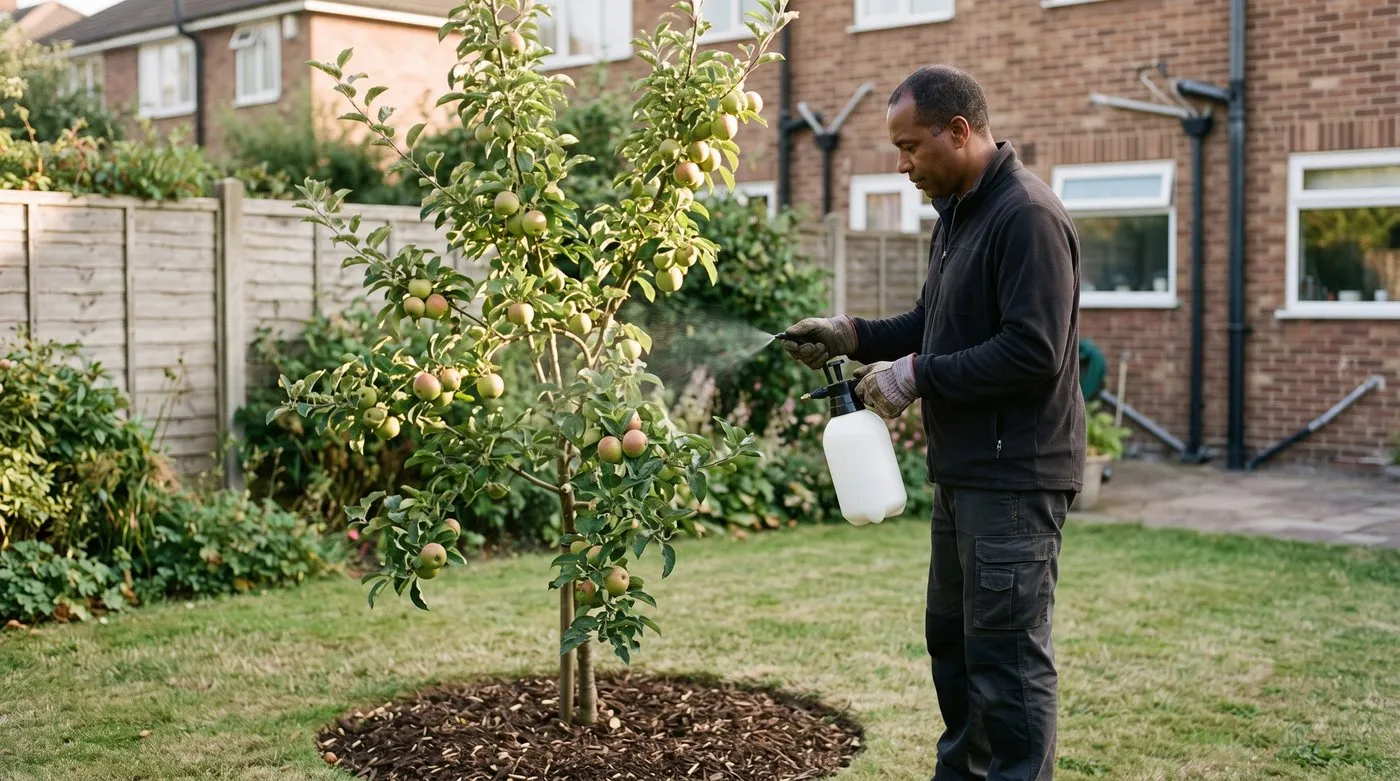
A calcium feed goes onto the fruit itself. Evening is the best time, when the sun has gone off the tree.
Feed lightly and thin sensibly
Feed lightly in spring rather than heavily. Avoid high-nitrogen feeds on vigorous trees. Thin fruitlets in June so they aren’t touching, but don’t strip the tree down to a few huge apples.
If you think your soil is very acidic, test it first. Our guide to garden lime explains when and how to add it.
| Method | When | How much it helps |
|---|---|---|
| Mulch and steady watering | Spring to harvest | The biggest single help |
| Calcium foliar feed on the fruit | June to August, every two weeks | Strong help on prone varieties |
| Light feeding | Spring | Avoids leafy growth that competes for calcium |
| Sensible thinning | June | Avoids over-large fruit |
| Liming very acidic soil | Winter, after a soil test | Helps only where soil is very acidic |
Bitter pit prevention through the year
| Month | What to do |
|---|---|
| January to February | Prune moderately. Test soil pH if you suspect it is acidic |
| March to April | Mulch the root area. Feed lightly |
| May | Start watering in dry spells as fruit sets |
| June | Thin fruitlets. Start calcium feeds on prone varieties |
| July to August | Water deeply in dry spells. Keep up calcium feeds every two weeks |
| September to October | Pick carefully. Store only sound fruit, and use prone varieties first |
| November to December | Check stored apples. Note which trees pitted for next year |
Common mistakes with bitter pit
- Spraying a fungicide. No fungus is involved, so it does nothing.
- Feeding more to “fix” it. Extra nitrogen grows leaves that compete for calcium.
- Letting the tree dry out. Uneven watering is the main trigger. Mulch and water steadily.
- Thinning to a few giant apples. Big fruit needs more calcium than the tree can deliver.
- Storing marked fruit. Bitter pit gets worse in store. Use spotted apples first.
Frequently asked questions
What causes bitter pit in apples?
A shortage of calcium in the fruit causes bitter pit. Calcium moves with water, so dry spells or uneven watering stop it reaching the apples. Large fruit on vigorous, heavily fed trees suffers most, especially after a dry summer.
Is bitter pit a disease and can I spray for it?
No, bitter pit is a growing disorder, not a disease. No fungus or pest is involved, so fungicides do nothing. A calcium foliar feed on the fruit in summer can help on prone varieties. Steady watering matters just as much.
How do I prevent bitter pit?
Keep the soil evenly moist with mulch and watering through summer. Avoid heavy feeding that drives lots of leafy growth. Thin fruit sensibly rather than hard. On prone varieties, spray a calcium feed on the fruit every two weeks from June to August.
Can I eat apples with bitter pit?
Yes, apples with bitter pit are safe to eat. Cut out the brown flecks, which taste a little bitter. Use affected fruit soon rather than storing it, as the spots get worse in store.
Which apple varieties get bitter pit most?
Bramley’s Seedling, Egremont Russet, Newton Wonder and Crispin are prone to it. Large-fruited, vigorous varieties suffer most. On these, mulch, steady watering and calcium feeds are worth doing every year.
Does bitter pit appear in storage?
Yes, it often shows up weeks after picking. Spots can appear and spread on apples that looked clean when picked. Check stored apples regularly and use prone varieties first.
Find more fruit troubles in our problems hub. For the wider care that keeps apples sound, read our guide to growing apple trees.
Our team produces practical UK gardening guidance from source research, contributor records and established horticultural practice. Editorial standards are overseen by Matt W.