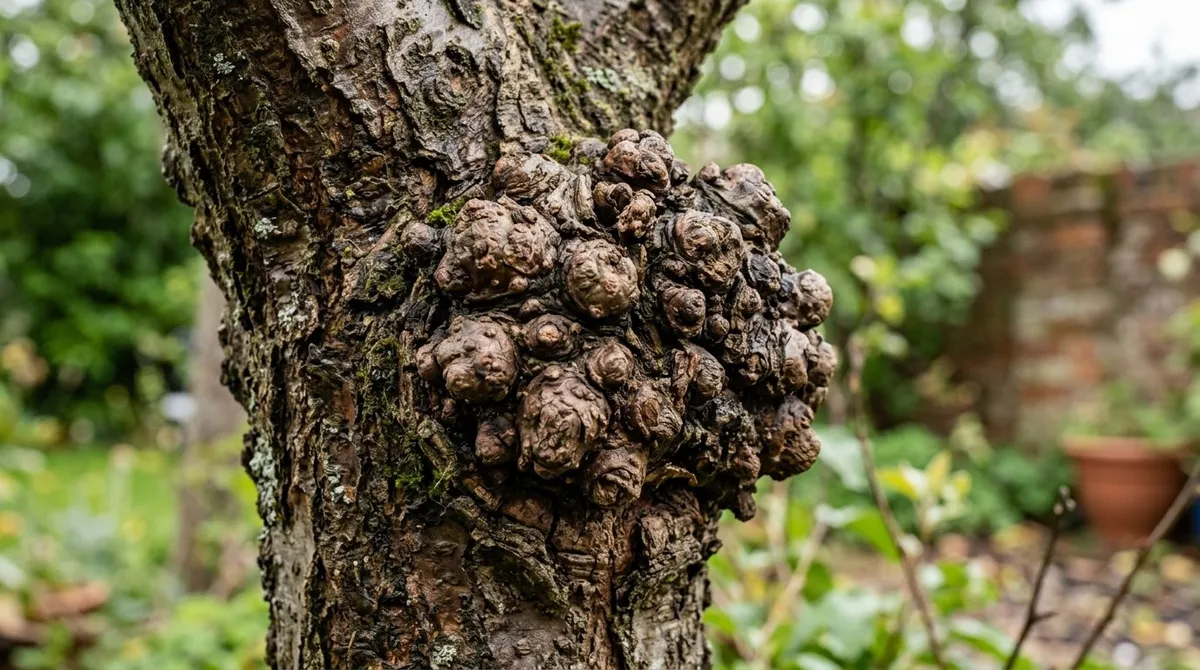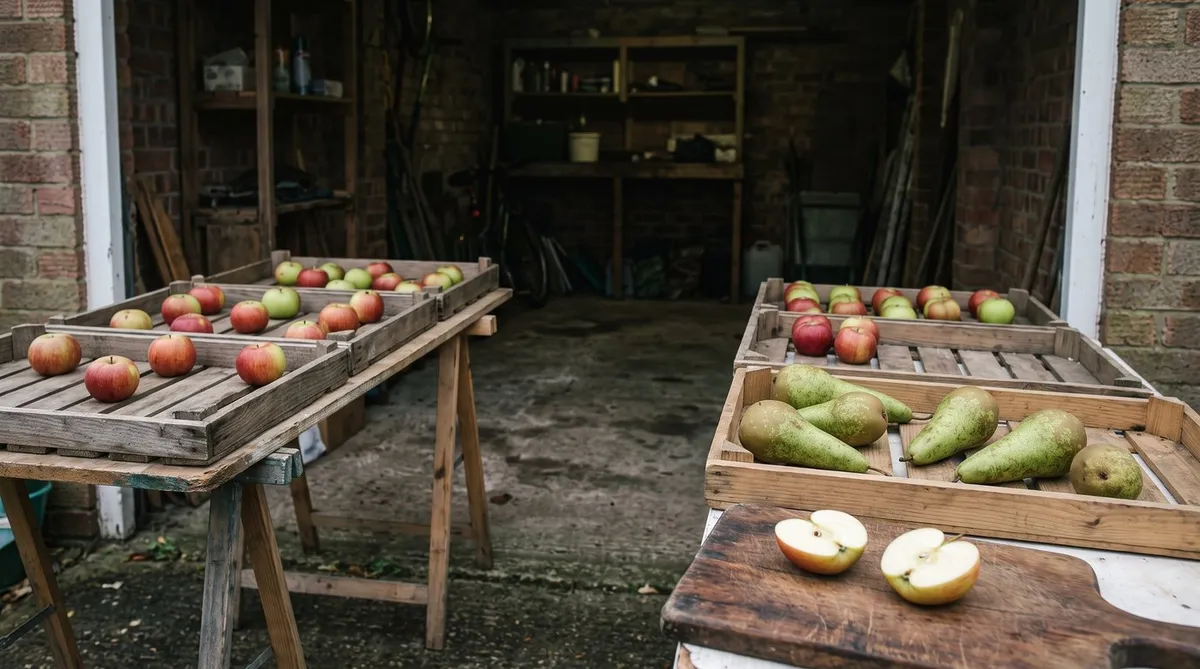
Key takeaways
- Bitter apples with brown flecks under the skin usually have bitter pit
- Pears that go brown and mushy from the core were picked or kept too late
- Mealy, dry fruit is over-mature; bland, starchy fruit was picked too early
- Pick pears firm and ripen them indoors; pick apples when they lift off easily
- Store only sound fruit somewhere cool and dark, away from onions and paint
- Cider apples and crab apples taste bitter or sharp by nature, which is normal
Apples and pears that taste bitter, mealy or plain odd are usually telling you something specific. Cut one open, look at the flesh and taste it. Brown flecks, a brown core, a dry texture or a strange smell each point to a different cause.
Most of these faults are easy to prevent once you know what they are. Some are fixed straight away by changing how you pick and store. Others are set in the garden in summer, so you fix them next year.
What is making my fruit taste wrong?
Match the taste and the look inside to the most likely cause. This table covers the common ones.
| Taste and look | Most likely cause | What to do |
|---|---|---|
| Bitter, small brown spots under the skin | Bitter pit (apples) | Water steadily next summer |
| Brown and mushy from the core, skin looks fine | Sleepy pear | Pick firmer, store cooler |
| Dry, grainy, woolly | Over-mature fruit | Pick and eat sooner |
| Bland, starchy, hard | Picked too early | Wait for the lift-and-twist test |
| Tastes of onion, paint or fuel | Tainted in store | Store away from strong smells |
| Winey, fermented, soft brown patches | Rot or stored too long | Throw it away, check the rest |
| Bitter and drying in the mouth | Cider apple or crab apple | Normal for the variety |
The key split is between faults from picking and storing, which you can change this autumn, and bitter pit, which starts on the tree in summer.
Why do my apples taste bitter?
Bitter apples with small brown spots under the skin almost always have bitter pit. The spots are dry and corky, and the flesh around them tastes bitter.
It is not a disease and it doesn’t spread. The fruit is short of calcium, usually because the tree went short of water in summer while the apples were swelling. Large apples, light crops and heavily fed trees suffer most, and Bramley is especially prone. Spots often appear a few weeks into storage, so apples that looked fine at picking can turn bitter later.
Nothing you do in store will cure it. Steady watering through dry spells next summer is the main fix. Our guide to apple bitter pit covers prevention in full.

Small brown corky spots like these are bitter pit. Cut them out and cook the apple, then water more steadily next summer.
Why are my pears brown and mushy inside?
Pears that are brown, grainy and mushy at the core are sleepy pears. They were left to ripen on the tree, or kept too warm or too long after picking.
Pears ripen from the inside out. Left to soften on the tree, the flesh round the core goes brown while the skin still looks perfect. That is the opposite of apples, and it catches lots of people out.
The fix is to pick pears firm and ripen them indoors:
- Pick when the fruit lifts off with a gentle twist, while it is still hard.
- Store the pears somewhere cool.
- Bring a few at a time into a warm room.
- Check daily. They are ready when the flesh near the stalk gives slightly to gentle pressure.
Early pears ripen fastest, so pick them a little before they look ready. For reliable varieties, see our guide to the best pear trees to grow.

A sleepy pear goes brown from the core while the skin still looks fine. Picking firm and ripening indoors stops it.
Why are my apples mealy or bland?
Mealy apples, dry and woolly in the mouth, are over-mature. They stayed on the tree too long, sat somewhere warm, or were stored past their best. Early varieties such as ‘Discovery’ don’t keep, so eat them within a week or two of picking.
Bland, starchy apples were usually picked too early, before their starch turned to sugar. Many late varieties are also hard and sharp straight off the tree. They are meant to sweeten in store over a few weeks, so give them time before you judge them. Our guide to the best apple varieties for UK gardens notes which ones keep.
How to pick apples and pears at the right time
The lift-and-twist test is the easiest way to get picking right. Cup the fruit in your hand, lift it and give a gentle twist. If it comes away with its stalk, it is ready. If you have to tug, leave it a few more days.
Remember what “ready” means for each fruit. Apples should come away ripe. Pears should come away while still firm, ready to finish indoors. Windfalls on the ground are a handy sign that the tree is nearly there.

Cup the pear, lift and twist. If it comes away with its stalk while still firm, it is ready to pick and ripen indoors.
The starch-iodine test for apples
For a closer check, cut an apple in half and brush the cut face with iodine solution from a chemist. Starch stains blue-black. As the apple ripens, its starch turns to sugar, so less blue means a riper apple.
A face that is mostly blue is not ready. One with only a little blue near the skin is ready for storing. Throw the test apple away afterwards, as iodine isn’t safe to eat.

Lots of blue-black means plenty of starch left, so the apples need more time on the tree.
Why does stored fruit taste of onions or go off?
Apples and pears soak up strong smells, so fruit stored near onions, garlic, paint, creosote or fuel soon tastes of them. Keep fruit in a separate space from these, or at least well away from them.
Fruit that tastes winey or fermented has been kept too long or too warm. Soft brown patches mean rot has started. Brown rot turns fruit brown, often with rings of pale, raised spots, and spreads to fruit that is touching.
Throw away any fruit that is soft, mouldy or smells fermented, and check the fruit next to it. For a full guide to setting up a fruit store, see how to store apples and pears.

Wrapping each apple and keeping them apart stops one rotten fruit spoiling its neighbours.
Quick storage rules
- Store only perfect, unbruised fruit with the stalk still on.
- Keep it cool, dark and airy, and frost-free.
- Lay fruit in a single layer, not touching, on slatted trays.
- Store pears separately from apples, as they need checking more often.
- Check every week or two and remove anything going soft.
If you can’t store fruit well, surplus is better dried at home than left to spoil.
When is a bitter taste normal?
Some fruit is meant to taste bitter or sharp. Cider apples, especially the bittersweet types, are naturally bitter and drying in the mouth. Crab apples are sour and sharp, and are meant for jelly rather than eating raw. Cooking apples such as Bramley are sharp rather than bitter.
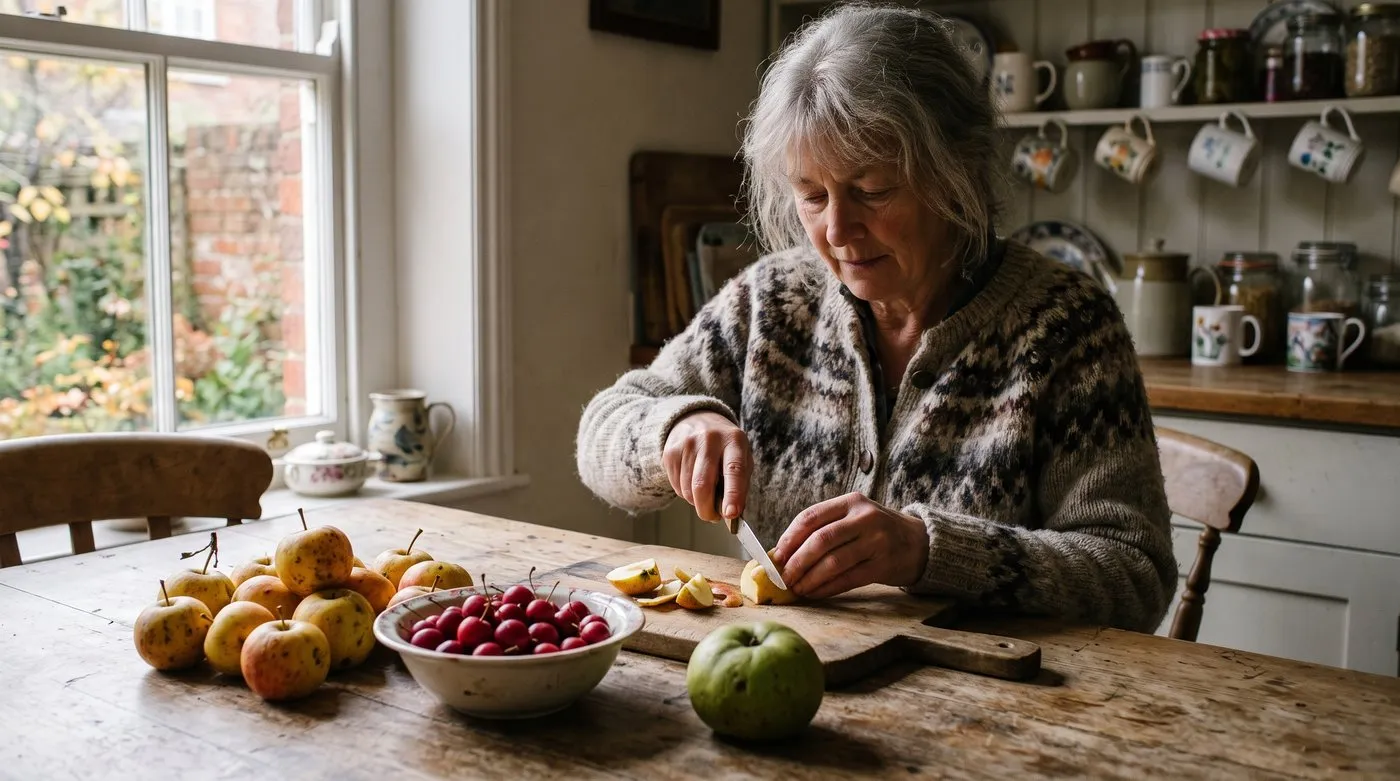
Cider apples and crab apples are meant to taste bitter or sharp, so a sour bite from these is no cause for worry.
If a tree has always given bitter, drying fruit with no brown spots, it is probably a cider or crab variety. The fruit is fine for cooking, juicing or cider.
Common mistakes that spoil the taste
- Leaving pears on the tree to soften. Pick them firm and ripen indoors.
- Storing damaged fruit. Bruised or pecked fruit rots and spreads it to the rest.
- Keeping fruit in a warm kitchen. Warmth ages fruit fast and makes it mealy.
- Storing next to onions or paint. Fruit picks up the smell.
- Watering in fits and starts. Dry spells, then a soaking, lead to bitter pit. Our guide to watering your garden properly helps.
There’s plenty more on healthy trees and crops in the fruit growing hub.
Frequently asked questions
Why do my stored apples taste bitter?
The usual cause is bitter pit. It shows as small brown spots under the skin and through the flesh, often appearing after picking. It comes from uneven watering in summer, so the fix is steady watering next year.
Why are my pears brown and mushy inside?
They are sleepy pears, picked too late or kept too warm. Pears ripen from the inside, so one left to soften on the tree can be brown at the core while the skin looks fine. Pick them firm and ripen a few at a time indoors.
Why are my apples dry and mealy?
Mealy apples are over-mature. They were left on the tree too long, kept too warm or stored past their best. Early varieties go mealy fastest, so eat them within a week or two of picking.
How do I know when to pick apples and pears?
Use the lift-and-twist test. Cup the fruit, lift and twist gently. If it comes away with its stalk, it is ready. Apples should come away ripe, pears while still firm.
How should I store apples and pears so they keep?
Store only perfect fruit somewhere cool, dark and airy. Lay it in a single layer, not touching, away from onions, paint and fuel. Check every week or two and remove any that start to rot.
Are bitter apples safe to eat?
Usually, yes, as long as the fruit is not rotten. Bitter pit spots just taste unpleasant, so cut them out or cook the apple. Throw away fruit that is soft, mouldy or smells fermented.
Now you know why your fruit tasted wrong, read our guide to growing pear trees for healthy, well-timed crops next year.
Our team produces practical UK gardening guidance from source research, contributor records and established horticultural practice. Editorial standards are overseen by Matt W.