Key takeaways
- Burr knots are stalled roots on the bark, not canker, crown gall or rot
- Dwarfing rootstocks such as M9 and M26 are the most prone
- Shade, damp and still air around the trunk make them spread
- Leave healthy knots alone, as cutting them invites apple canker
- Watch them for woolly aphid fluff, canker and splitting branches
- Keep the base weed-free, mulch 10cm from the trunk and use mesh guards
Knobbly, root-like lumps on an apple trunk are almost always burr knots, and they are rarely anything to worry about. They are not canker, gall or rot. They are the tree trying to grow roots in the wrong place.
They look alarming the first time you spot them, often in a cluster just above the graft. The good news is that most need no treatment at all. This guide shows you how to tell them from real problems, and the few times they are worth acting on.
What are apple burr knots?
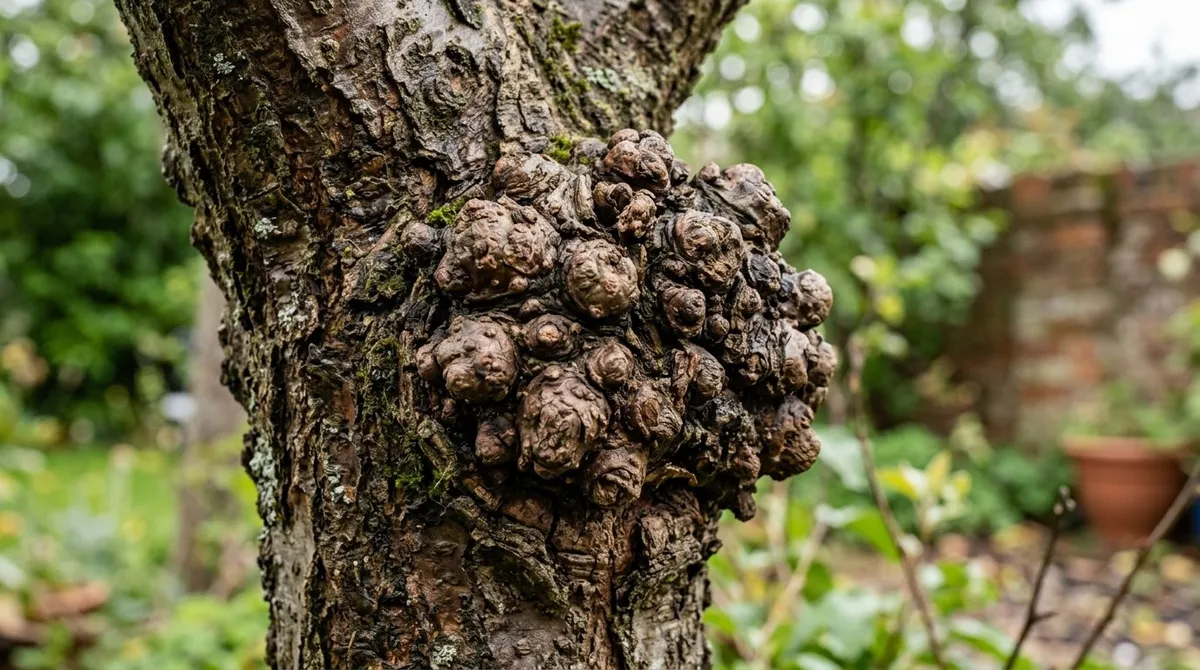
Burr knots are clusters of root buds that break through the bark on the trunk or branches. Apple trees carry these dormant root buds in their stems. Usually they stay hidden. On some trees they swell and push out, forming rough, knobbly bumps.
Look closely and each bump is the blunt tip of a root that started to form and then stalled. Give one damp moss or compost and it will grow into a proper root. That is the whole story: root tissue sitting above ground, waiting for moisture. The RHS page on burr knots has more pictures if you want to compare.
Why do apple trees get burr knots?
Burr knots come from a mix of the tree’s genes and damp, shady conditions. Some trees are simply built to make them, and shade brings them out.
The rootstock matters most. Nearly every garden apple is two plants joined together: the named variety on top and a rootstock below that controls the tree’s size. Dwarfing rootstocks are the most prone, especially M9 and M26. If you have a neat bush or patio apple, it is very likely on one of these. Our guide to fruit tree rootstocks explains what each one does.
Shade, damp and still air around the trunk set them off. That is why they cluster low down, on the shaded side. Long grass, weeds, mulch heaped against the bark or a solid plastic guard all trap the damp air they like.
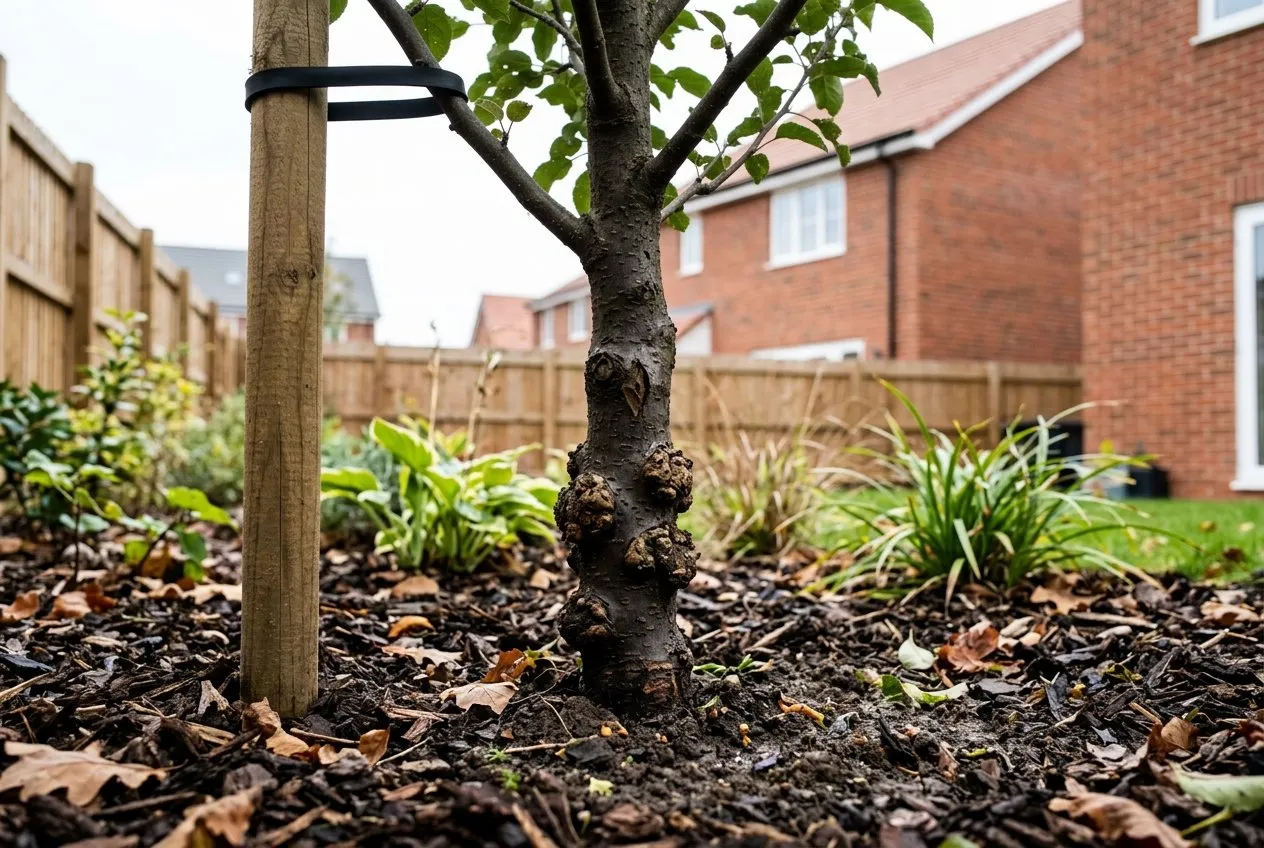
Young trees on dwarfing rootstocks often show small knots low on the trunk. On a tree growing this well, they are nothing to worry about.
Are burr knots a disease?
No. Nothing is infecting the tree. No fungus, bacterium or virus causes burr knots.
This matters because they are easy to mistake for something nasty. They look rough and odd, and it is tempting to assume canker. But a tree that is cropping well and putting on new growth is fine, even with plenty of knots. Many dwarf apples carry them for their whole life and fruit happily every year.
When do burr knots become a problem?
Burr knots only matter when they weaken a branch or let something else in. Keep an eye out for three things.
Weak branches. Large knots, or several merged together, interrupt the wood beneath. A heavily knotted branch carrying a big crop is more likely to split at the knot.
Woolly aphid. This aphid covers itself in white, waxy fluff that looks like cotton wool. It loves the cracks in a burr knot and settles in to feed. Spot the fluff early and deal with it while colonies are small.
Canker and boring pests. The split bark of a knot is an open door for apple canker, a fungal disease that sinks and rings branches. Apple clearwing moth larvae can also tunnel into damaged bark.
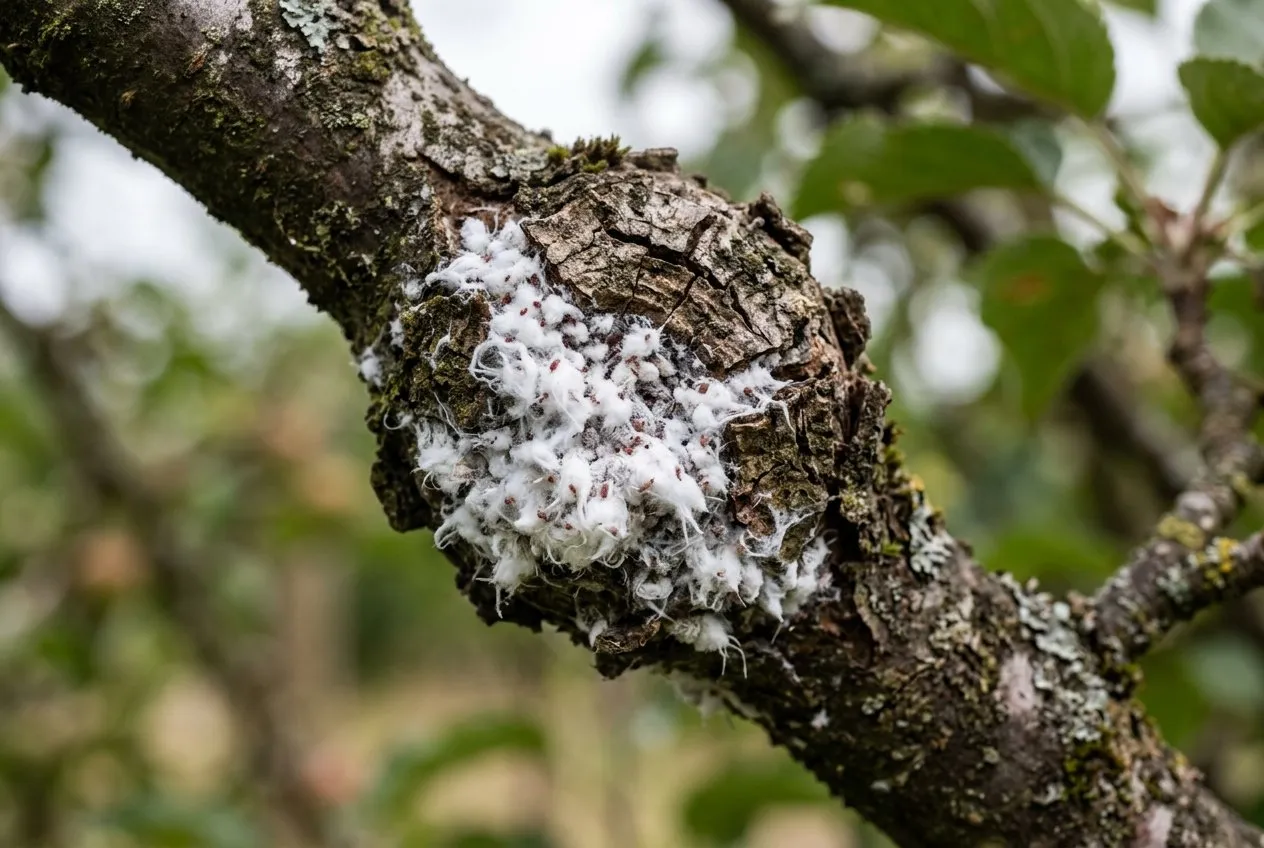
White fluff tucked into a knot is woolly aphid. This is the sign that turns a harmless knot into a job.
Warning: Never cut or gouge a healthy burr knot off to tidy it. The fresh wound is exactly where apple canker gets in, and you swap a harmless bump for a disease that can kill the branch.
Burr knot, crown gall or canker?
Where the lump sits and what it looks like tell you which one you have. Only burr knots are harmless.
Burr knots sit on the trunk and branches above ground. They are clusters of short, blunt, root-like bumps, roughly the colour of the bark.
Crown gall is caused by a soil bacterium. It appears at or just below soil level and bulges out as a rough, wart-like lump. If the lump is right at the ground line, suspect crown gall.
Apple canker shows as sunken, cracked patches of dead bark, often in rings, that can circle and kill a branch. In winter you may see small red dots on it. Our guide to canker in fruit trees covers how to treat it.
| What to look at | Burr knots | Crown gall | Apple canker |
|---|---|---|---|
| Cause | The tree’s own root buds | Soil bacterium | Fungus |
| Where | Trunk and branches, above ground | At or just below soil level | Any woody stem |
| Looks like | Clusters of blunt root-like bumps | Bulging, wart-like lump | Sunken, cracked, ringed bark |
| Harmful? | Usually not | Rarely serious on established trees | Kills branches |
| What to do | Usually nothing | Avoid wounding the base, buy clean stock | Cut out to clean wood |
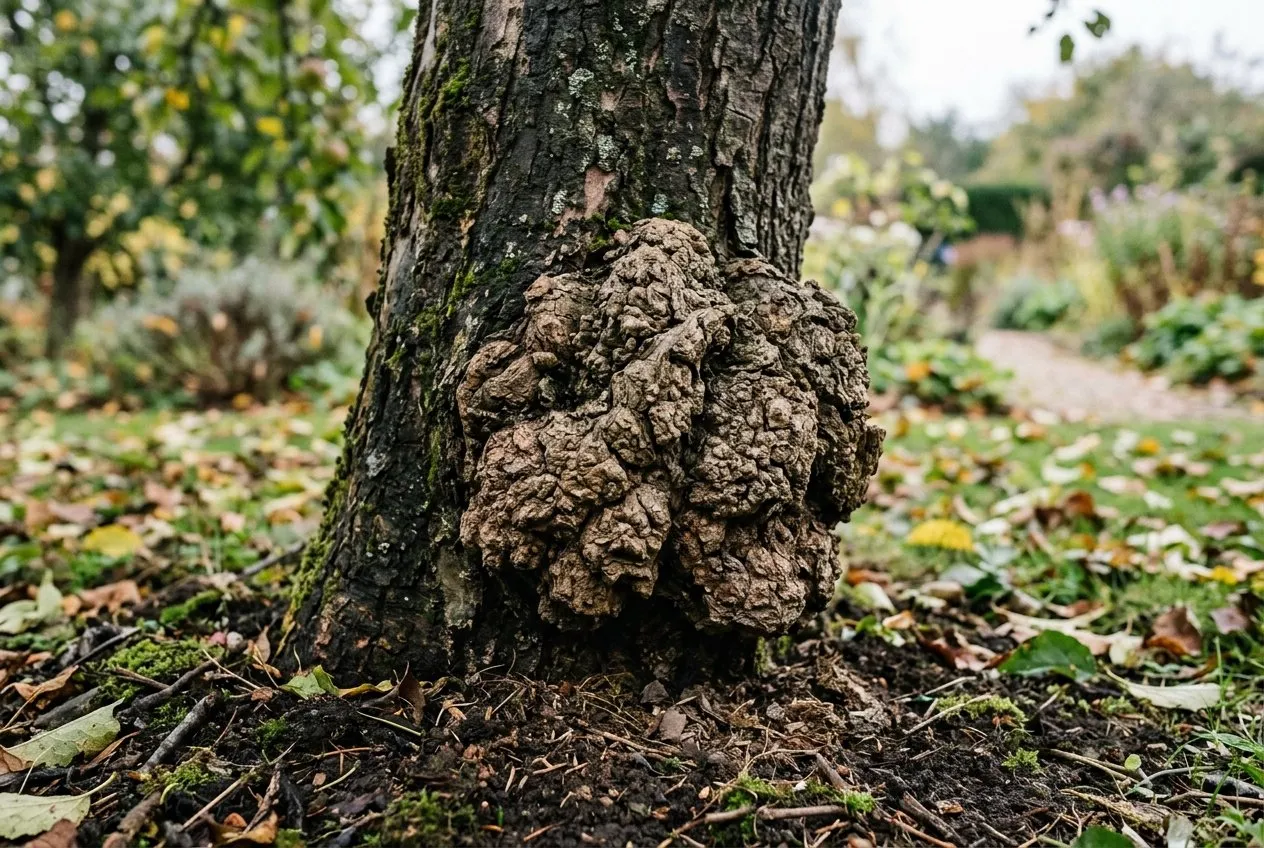
Crown gall sits right at soil level and bulges outward. Burr knots form higher up, on the trunk and branches.
How to manage burr knots on apple trees
Leave the knot alone and change the conditions around it. There is no spray for burr knots, and you don’t need one. It all comes down to light and air.
- Clear the base. Pull weeds and cut long grass around the trunk so air can move.
- Keep mulch off the bark. A mulch ring is good for the roots, but stop it 10cm short of the trunk. Never bury the graft union.
- Swap solid guards for mesh. Solid plastic spiral guards keep the trunk dark and damp. If you need rabbit protection, use an open mesh guard.
- Open up the canopy. Prune for an open shape so sun reaches the lower trunk.
- Prune only real damage. If knots have badly weakened a branch, remove the whole branch in dry weather, cutting back to healthy wood.
For clean cuts and timing, see our guide to pruning fruit trees.
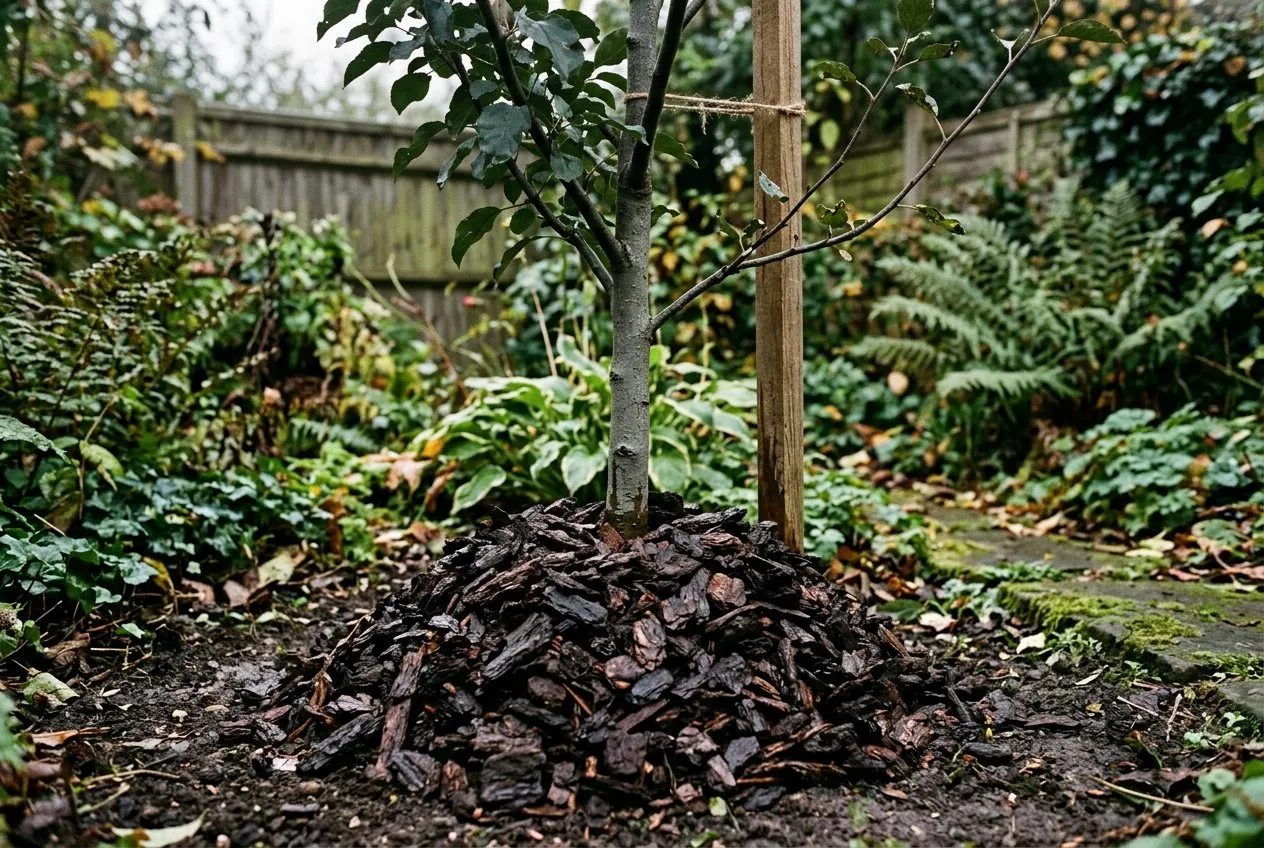
Mulch heaped against the trunk keeps the bark damp. Pull it back so there’s a 10cm gap all round.
When should you worry? A quick check
A knot on its own is rarely a reason to act. A second problem alongside it usually is.
| What you see | What it means | What to do |
|---|---|---|
| Small, dry knots, tree cropping well | Normal | Nothing |
| Knots spreading on a shady, weedy base | Damp is driving them | Clear the base, let light in |
| White cotton-wool fluff on the knots | Woolly aphid | Rub off small colonies, keep checking |
| Sunken, cracked bark near a knot | Apple canker | Cut back to clean wood in dry weather |
| Small holes or sawdust-like waste at a knot | Boring larvae | Prune out badly affected wood |
| A knotted branch bending or splitting | Weak wood | Remove the branch cleanly |
| A lump right at soil level | Probably crown gall | Check carefully before acting |
Can you grow a new apple tree from a burr knot?
Yes. Because a burr knot is already a set of roots waiting to grow, it roots easily. People have used them to propagate apples for a very long time, and one old variety is even called ‘Burr Knot’.
The simplest method is air-layering in spring:
- Pick a healthy young branch with a good knot.
- Wrap the knot in a handful of damp sphagnum moss.
- Seal it in clear plastic, tied tightly at both ends.
- Leave it through summer while roots grow into the moss.
- In autumn, once you can see roots, cut below them and pot the new tree up.
You can also try hardwood cuttings of knotted wood in winter. Bear in mind that a tree grown this way is on its own roots, not a dwarfing rootstock, so it will grow much bigger. If you want a small tree, grafting onto a chosen rootstock is the better route.
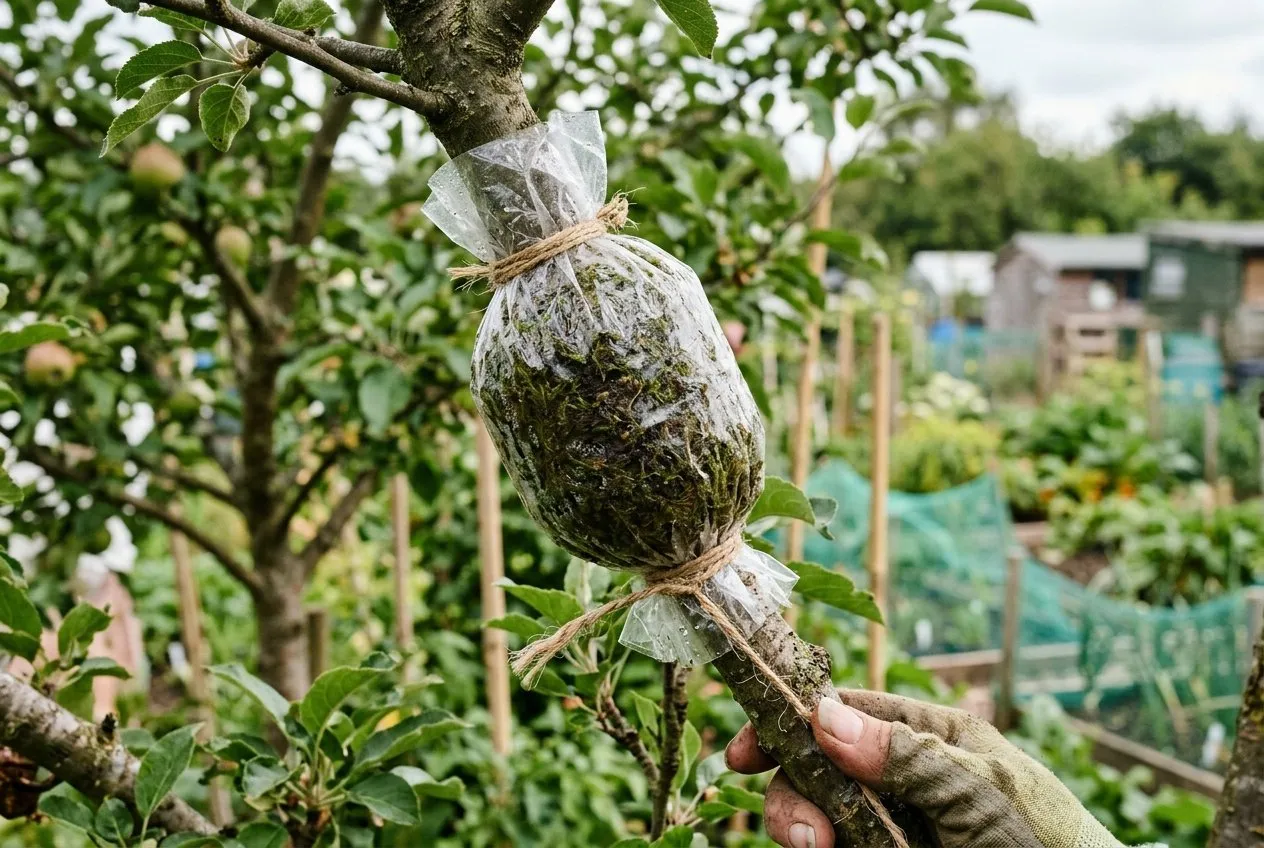
Wrapped in damp moss and plastic, a burr knot puts out roots over summer. By autumn you have a new little tree.
A year of keeping an eye on burr knots
Burr knots don’t need a treatment plan, just a quick look now and then.
| Month | What to do |
|---|---|
| Winter (December to February) | Check trunks while bare. Take hardwood cuttings if you want to propagate |
| March | Clear weeds and long grass from the base |
| April | Check the graft union is above soil and mulch is 10cm clear of the trunk. Start air-layering |
| May to July | Look for white woolly aphid fluff on knots every couple of weeks |
| August and September | Check knotted branches carrying heavy fruit for splitting |
| October and November | Look for sunken canker patches as leaves fall |
Common mistakes with burr knots
Cutting healthy knots off. This is the big one. A knot on sound wood is harmless. Cut it and canker can walk straight in.
Heaping mulch against the trunk. It holds damp exactly where knots and woolly aphid thrive, and can rot the base.
Using solid plastic tree guards. They make a warm, dark, damp sleeve around the trunk. Use open mesh instead.
Watching the knot and missing the aphid. The white fluff is the real pest. Check knots from May and act while colonies are small.
Treating it as canker. Reaching for a knife because a knot looks rough can spread real disease. Identify it first.
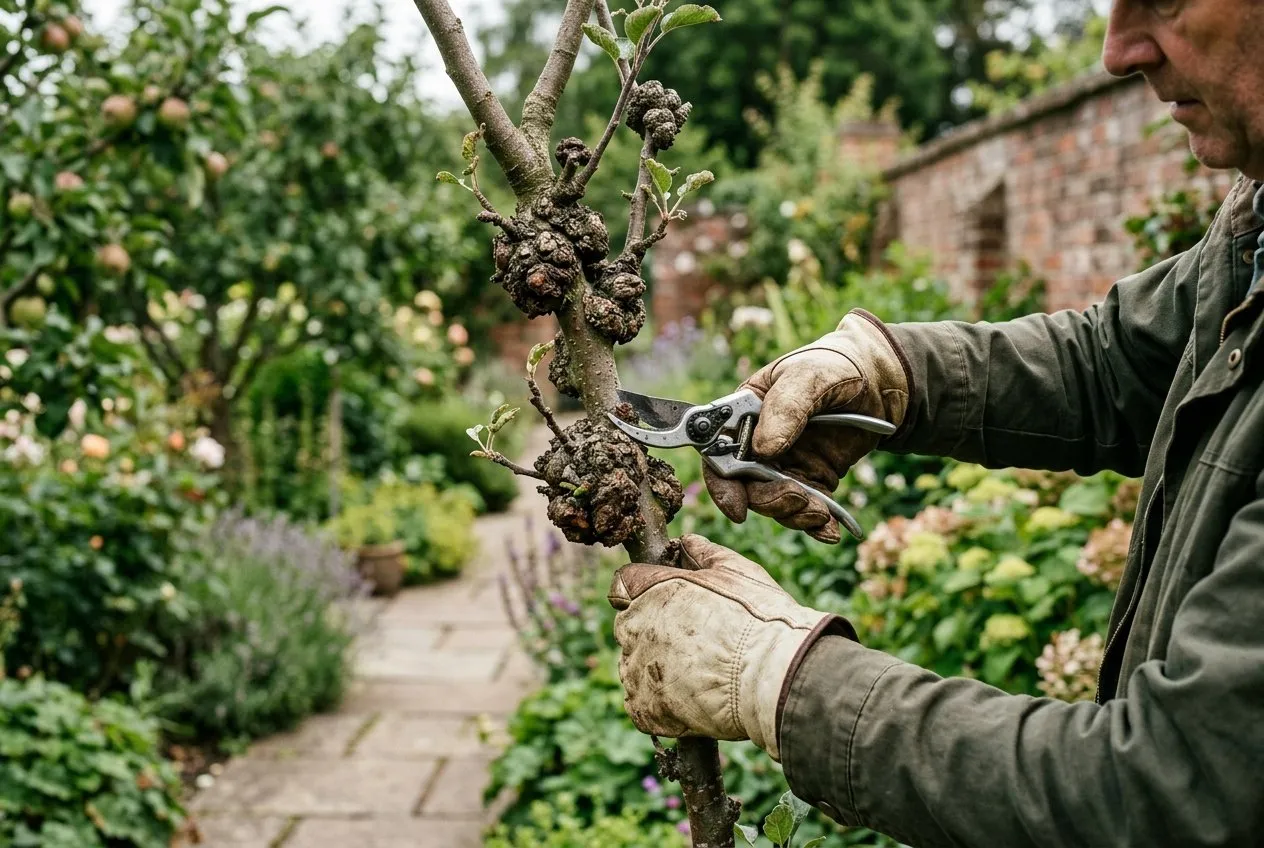
Only prune a knotted branch if the knots have weakened it, and always cut back to clean wood on a dry day.
Keeping a knotted tree healthy for years
A tree that makes burr knots will always make them, because it is in the rootstock. Your aim is to keep them dry, sunny and pest-free so they stay harmless.
An open, sunny, weed-free base is the best thing you can give it. Feed and water the tree well too, as a vigorous tree shrugs off a few aphids or a small patch of canker far better than a stressed one. Our guide to growing apple trees covers feeding, watering and thinning, and there are more fruit guides in the fruit growing hub.
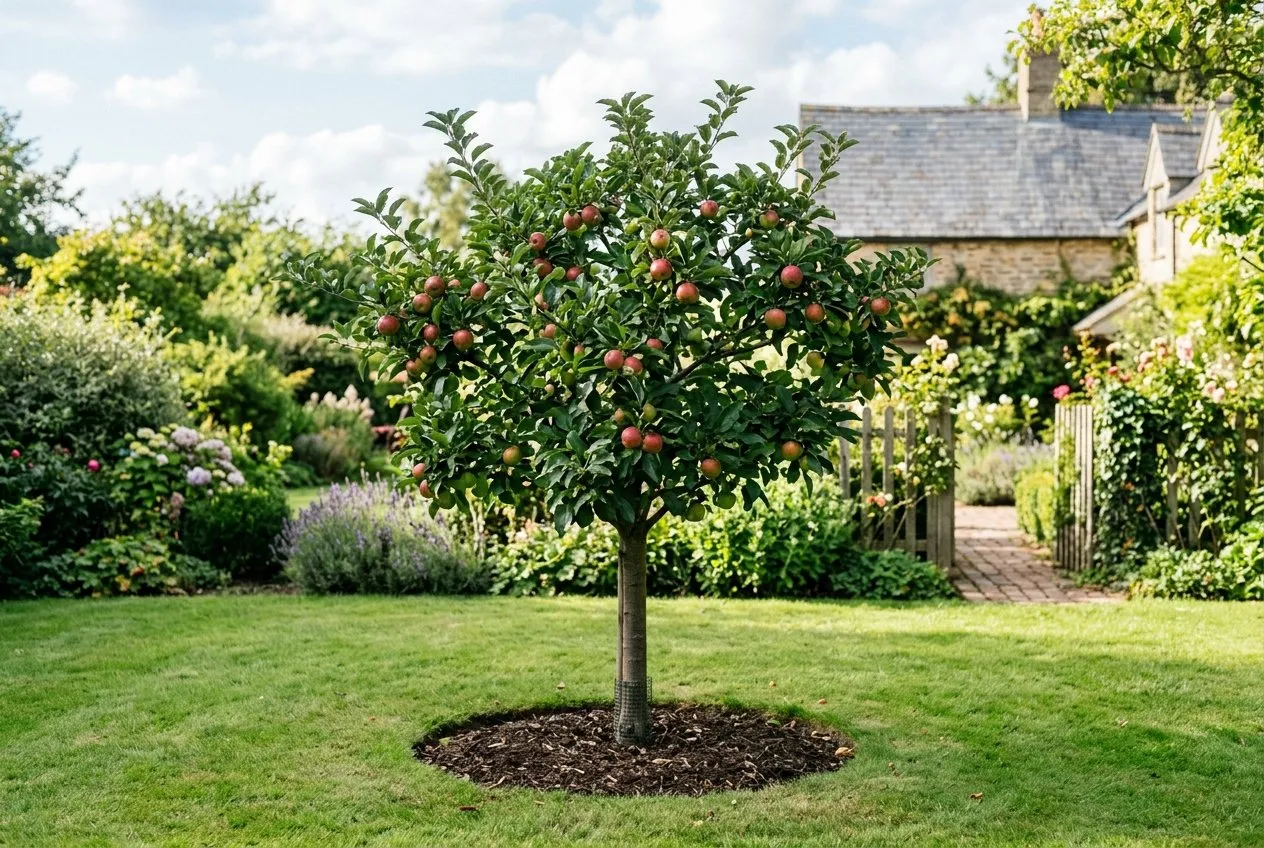
An open, sunny spot with a clear base keeps burr knots dry and harmless. Light and air do most of the work.
Frequently asked questions
Are apple burr knots a disease?
No, burr knots are not a disease. They are clusters of stalled root buds that break through the bark instead of growing underground. Nothing is infecting the tree, and healthy knots on a vigorous tree need no treatment.
Do burr knots harm the apple tree?
Usually not, but they can cause two problems. Large knots can weaken a branch so it splits under a heavy crop. The rough, cracked bark also gives woolly aphid and apple canker an easy way in.
How do I tell a burr knot from crown gall?
Look at where it sits. Burr knots form on the trunk and branches above ground and look like clusters of blunt roots. Crown gall sits at or just below soil level and bulges out as a rough, wart-like lump.
Should I cut burr knots off my apple tree?
No, leave healthy burr knots alone. Cutting them leaves a fresh wound that apple canker can get into, which is far worse than the knot. Only remove a whole branch if knots have badly weakened it.
Why does my apple tree have knobbly lumps on the trunk?
Knobbly clusters low on an apple trunk are usually burr knots. They form where the tree tries to make roots on its above-ground bark, a habit of dwarfing rootstocks such as M9 and M26. Shade and damp make them bigger.
Can you grow a new apple tree from a burr knot?
Yes, burr knots root readily because they are roots already. Wrap a knot on a young branch in damp moss and clear plastic in spring. Once it has rooted, cut it off and pot it up. The new tree grows on its own roots, so it will be bigger than a dwarf tree.
How do I stop burr knots getting worse?
Keep the trunk open, dry and sunny. Clear weeds and long grass from the base, keep mulch 10cm clear of the bark and swap solid plastic guards for open mesh ones.
Now you can tell a harmless burr knot from a real problem. If white fluff does turn up, our guide to woolly aphid identification and control takes you through the next step.
Our team produces practical UK gardening guidance from source research, contributor records and established horticultural practice. Editorial standards are overseen by Matt W.