Key takeaways
- Small maggots in summer raspberries are raspberry beetle grubs
- Autumn-fruiting raspberries usually escape raspberry beetle
- Cut fruited summer canes to the ground soon after picking to remove disease
- Thin rows to about 10 strong canes per metre so air can dry them
- Canes wilting and dying in wet soil often point to root rot, so plant on well-drained ground
- Yellow mottled leaves mean a virus, so dig out and replace the plant
Raspberries are one of the easiest fruits to grow, but a few pests and diseases can take a big share of the crop. The usual culprits are raspberry beetle, which leaves maggots in the fruit, and cane diseases that kill canes before they crop. The good news is that the same few habits deal with most of them. This guide helps you work out what’s wrong and what to do. Planting and pruning from scratch are covered in the growing guide linked at the end.
What’s wrong with your raspberries? Quick symptom check
| What you can see | Likely cause |
|---|---|
| Small cream maggot and dry brown patch at the stalk end of summer fruit | Raspberry beetle |
| Tiny white maggots in soft autumn fruit | Spotted wing drosophila |
| Fuzzy grey mould on ripe fruit | Grey mould (botrytis) |
| Dark patches low on canes, canes snapping or dying in summer | Cane blight or cane midge |
| Purple blotches round the buds, silvery canes in winter | Spur blight |
| Small purple spots with grey centres on canes | Cane spot |
| Canes wilting and dying, roots brown, soil wet | Root rot |
| Orange powdery spots under leaves | Raspberry rust |
| Yellow mottled, puckered leaves, poor crops | Virus |
Raspberry beetle: maggots in summer fruit
Raspberry beetle is the pest behind maggoty raspberries. The small brown beetles appear in late spring and lay eggs in the flowers. The grubs feed inside the ripening fruit, leaving a small cream maggot and a dry, brown patch near the stalk. They’re harmless if eaten, just unpleasant.

A cream grub and a dry, crumbly patch at the stalk end are the signs of raspberry beetle.
How to cut the damage:
- Grow autumn-fruiting varieties. They flower after most beetles have laid their eggs, so they usually escape. The autumn raspberry guide covers varieties and care.
- Pick promptly and clear fallen fruit, so fewer grubs drop to the soil to pupate.
- Lightly fork the soil under the canes in winter, so birds can find the grubs.
- White sticky traps with a raspberry beetle lure are sold for gardens. They catch some adults and show when they’re about.
If damage is bad every year, an approved product labelled for raspberry beetle can be used, following the label. Never spray open flowers while bees are working.

A white sticky trap catches some beetles and tells you when they’re active.
Spotted wing drosophila in autumn raspberries
Spotted wing drosophila is a small fruit fly that lays eggs in ripening soft fruit. Autumn raspberries are a favourite, mostly from late summer. Fruit goes soft and leaky, with tiny white maggots inside.
Pick every day or two in warm weather. Remove all overripe and fallen fruit rather than leaving it on the ground. Over a small row, fine insect mesh keeps the flies off. The guide to fruit flies explains the difference between this and ordinary kitchen fruit flies.
Cane midge and cane blight: canes dying in summer
Cane blight is the most damaging cane disease. A fungus gets in through wounds near the base, such as frost cracks, rough pruning or cane midge damage. In early summer, fruiting canes show dark brown or purple-black patches at the base. The bark goes brittle, and canes wilt and snap, often when they’re full of fruit.
Raspberry cane midge is a tiny fly whose pinkish larvae feed under the bark of new canes, in natural splits low down. On its own it does limited harm. The trouble is that the feeding damage lets in fungi, giving midge blight. Look for dark patches under the bark on the lower part of new canes in late summer. Those canes may fail the next spring.
What to do:
- Cut out affected canes to ground level, below any dark patch, and bin them.
- Wipe secateurs between cuts so you don’t spread spores.
- Avoid wounding canes. Don’t strim close to them, and tie them in gently.
- Thin new canes so they grow steadily without deep splits.
- Grow autumn-fruiting types on a problem site. Cutting them to the ground each winter leaves no old canes for midge or blight.

A healthy cane beside one killed by cane blight. The dead one is dark and brittle at the base.
Spur blight and cane spot
Spur blight and cane spot are fungal diseases that weaken canes rather than killing them outright.
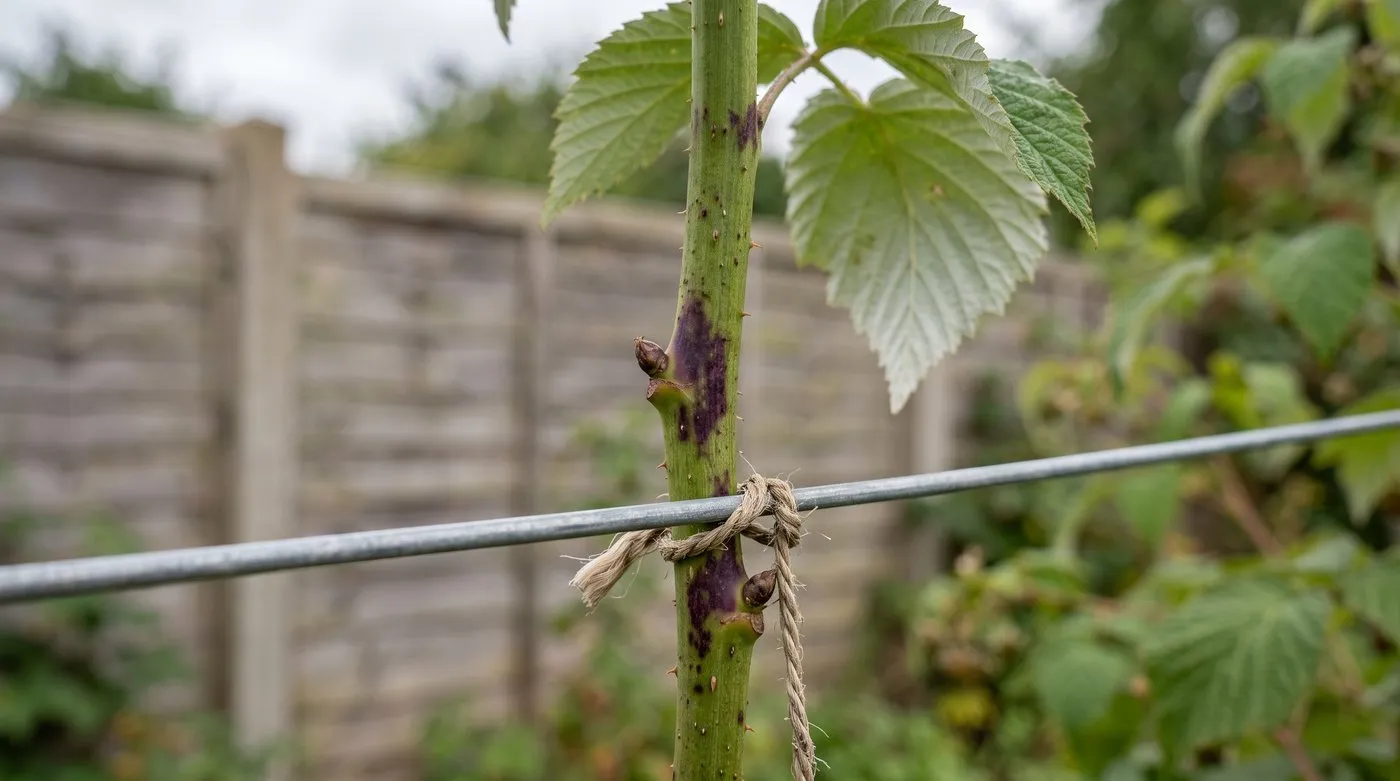
Purple-brown blotches around the buds are spur blight. Cut out the worst canes and thin the row.
- Spur blight shows as purple-brown blotches round the buds on new canes from midsummer. Over winter they turn silvery, and the buds inside them fail or crop poorly. Soft growth from too much nitrogen makes it worse.
- Cane spot shows as small purple spots with pale grey centres on canes and leaves. Bad cases crack the bark.
Both spread by rain splash and love crowded, damp rows. Control is the same for both: cut out fruited canes after harvest, cut out badly marked new canes, thin rows to about 10 canes per metre and feed with a balanced fertiliser rather than lots of nitrogen.
Root rot: canes dying in wet ground
Raspberry root rot is a common reason a whole row slowly fails. It’s caused by a phytophthora water mould that attacks roots in wet soil. New canes wilt and die, often in patches. Dig one up and the roots are brown and rotten, with few fine white roots.
There’s no cure. Dig out affected plants and replant with fresh certified canes on well-drained ground, ideally a different spot or a raised ridge. Raspberries hate wet feet. The phytophthora root rot guide explains the disease in more detail.
Grey mould on ripe fruit
Grey mould (botrytis) turns ripe raspberries into a fuzzy grey mush, on the cane or in the punnet within a day of picking. It’s worst in warm, wet summers and spreads from berry to berry by touch.
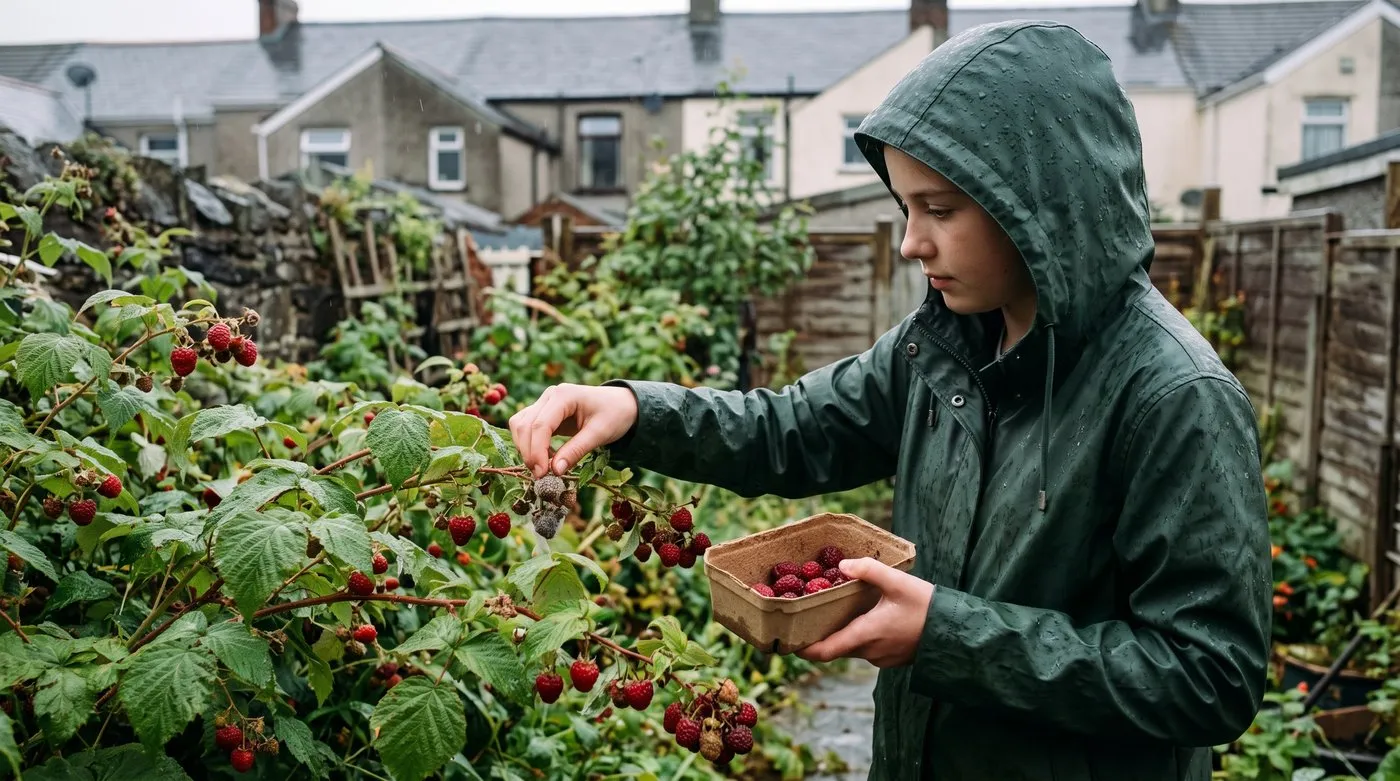
In wet weather, pick every day or two and take off any mouldy berries before they spread it.
- Pick every day or two in wet weather, before berries go too soft.
- Remove mouldy berries straight away.
- Thin the row and take off low leaves so air dries the fruit faster.
- Water the soil, not the fruit.
- Chill or freeze fruit soon after picking. The guide to freezing fruit shows how.
Raspberry rust
Raspberry rust shows as bright orange or yellow powdery spots, mainly under the leaves, from late spring. It weakens plants over time and is worse in wet areas and crowded rows.
Pick off the worst leaves in summer. In autumn, rake up fallen leaves and put them in the green waste bin. Thin canes and clear weeds so leaves dry quickly.

Orange spots under the leaves are raspberry rust. Clear fallen leaves in autumn to slow it down.
Raspberry viruses and aphids
Raspberry viruses show as yellow mottling, blotches or yellow veins on the leaves, often with puckered growth. Plants lose vigour each year and the fruit gets small and crumbly. Aphids carry most of them from plant to plant.
Viruses can’t be cured. Dig out and bin any plant with clear symptoms before aphids spread it. Plant certified virus-free canes, away from old raspberry rows and wild brambles where you can. Most raspberry beds need replacing after about 10 years anyway. Keep aphids down by encouraging ladybirds, lacewings and hoverflies, and see the guide to getting rid of aphids for more ideas.
Birds and other raspberry pests
Birds, especially blackbirds and pigeons, can strip ripening fruit fast. A fruit cage or fine mesh over a frame is the only reliable answer. Keep netting taut and check it daily so birds and hedgehogs don’t get tangled.
Rabbits and deer nibble new canes in spring on rural plots. A wire mesh fence keeps rabbits out. Deer need much taller fencing.
The habits that prevent most raspberry problems
Most raspberry trouble comes down to old canes, damp crowded rows, wounds and tired stock. Get these right and you prevent far more than any spray could.
- Cut out fruited summer canes to the ground soon after picking. Cut autumn types to the ground in late winter.
- Thin to about 10 strong canes per metre and keep weeds down.
- Plant on well-drained ground, on a slight ridge if your soil is heavy.
- Handle canes gently to avoid wounds.
- Start with certified stock, and replace old, tired beds on a fresh spot.

Cutting out old fruited canes removes the place where cane diseases spend the winter.
Raspberry problem calendar
| Month | What to do |
|---|---|
| January | Order certified canes for any new bed |
| February | Cut autumn-fruiting canes to the ground. Lightly fork the soil under summer canes |
| March to April | Check new canes for spur blight and cut out badly marked ones. Mulch, but go easy on nitrogen |
| May to June | Raspberry beetle lays eggs at flowering. Check lower canes for dark patches |
| July | Summer harvest. Pick often against grey mould. Watch for wilting canes |
| August | Cut out fruited summer canes soon after the last pick and tie in new ones |
| September to October | Autumn harvest. Pick often against spotted wing drosophila. Net against birds |
| November to December | Rake up rusty fallen leaves. Mark any virus-looking plants for removal |
Common mistakes with raspberry problems
Leaving old canes standing. Dead summer canes carry cane diseases through winter. Cut them out after picking.
Letting the row get crowded. Too many canes trap damp air and feed every fungal disease. Thin to about 10 per metre.
Planting in wet ground. Waterlogged soil invites root rot. Choose a well-drained spot or plant on a ridge.
Over-feeding with nitrogen. Soft, sappy growth suits spur blight and aphids. Use a balanced feed.
Hanging on to a virus-hit bed. Yields only get worse. Replace it with fresh certified canes on a new spot.
Frequently asked questions
What are the little maggots in my raspberries?
Usually raspberry beetle grubs. The adult beetle lays eggs in the flowers in early summer, and the grubs feed inside the fruit. You’ll find a small cream maggot and a dry, brown patch at the stalk end.
Why are my raspberry canes dying off before they fruit?
Cane blight, cane midge damage or root rot are the usual causes. Blight and midge damage show as dark patches low on the canes. Root rot kills canes in wet soil. Cut out dead canes to the ground and check the drainage.
Should I cut down raspberry canes after fruiting?
Yes, for summer-fruiting raspberries. Cut every cane that has fruited down to the ground soon after picking, then tie in this year’s green canes. Autumn-fruiting types are cut down to the ground in late winter.
Can raspberry problems spread to other fruit?
Some can. Blackberries, loganberries and tayberries share several cane diseases and viruses with raspberries. Plant new raspberries away from old canes and wild brambles where you can.
How do I stop maggots in raspberries without spraying?
Grow autumn-fruiting varieties, which flower after most raspberry beetles have laid their eggs. For summer types, pick promptly, clear fallen fruit, and lightly fork the soil under the canes in winter so birds can find the grubs.
Why are my autumn raspberries full of tiny white maggots?
It may be spotted wing drosophila, a small fruit fly. It lays eggs in ripening fruit, mostly from late summer. Pick every day or two, clear all overripe and fallen fruit, and use fine mesh over small rows.
Get your raspberry row back on track
Most raspberry problems fade once old canes go and air can move through the row. The raspberry growing guide covers planting, pruning and feeding for a healthy crop, or browse more fruit and veg problem guides.
Our team produces practical UK gardening guidance from source research, contributor records and established horticultural practice. Editorial standards are overseen by Matt W.