Key takeaways
- A shared scheme lets flats and small gardens compost without space of their own
- Three pallet bays (filling, cooking, ready) are the simplest and cheapest start
- Taking in other people's garden waste usually needs a free T23 exemption in England
- Food waste needs an enclosed, rat-proof unit and brings extra Animal By-Products rules
- Clear signs and a named volunteer rota matter more than the design of the bays
A community composting scheme lets a group share one compost system instead of each household going it alone. It suits flats, tiny yards and paved front gardens, where there is simply no room for a heap. It also makes a better heap, because a big shared pile stays hotter than a small bin.
This guide is for the person who wants to get one going: on an allotment, behind a block of flats, at a school or for a whole street. It covers the site, the system, the paperwork and, most important, the people. If you only want to compost your own scraps in a flat, the guide to composting without a garden is a better fit.
What does a community composting scheme look like?
Community composting can be as simple or as organised as your group wants. Most schemes fall into one of three types:
- A shared allotment heap, where plot-holders pool their waste into communal bays.
- An estate or street scheme, where neighbours bring garden and kitchen waste to one managed spot.
- A school or community garden, composting on site as part of growing and teaching.
Whatever the size, the idea is the same. Many people contribute, a few people look after the heap, and everyone shares the compost.
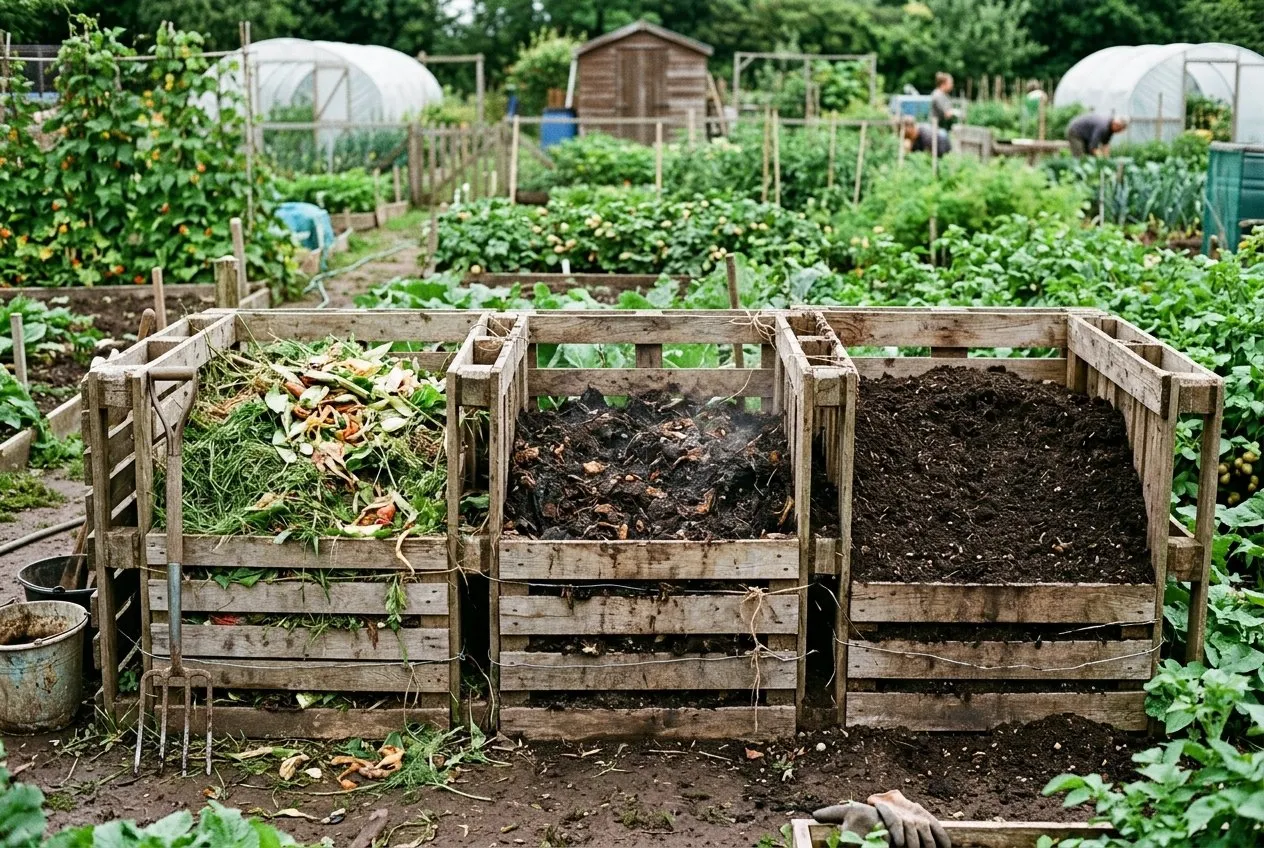
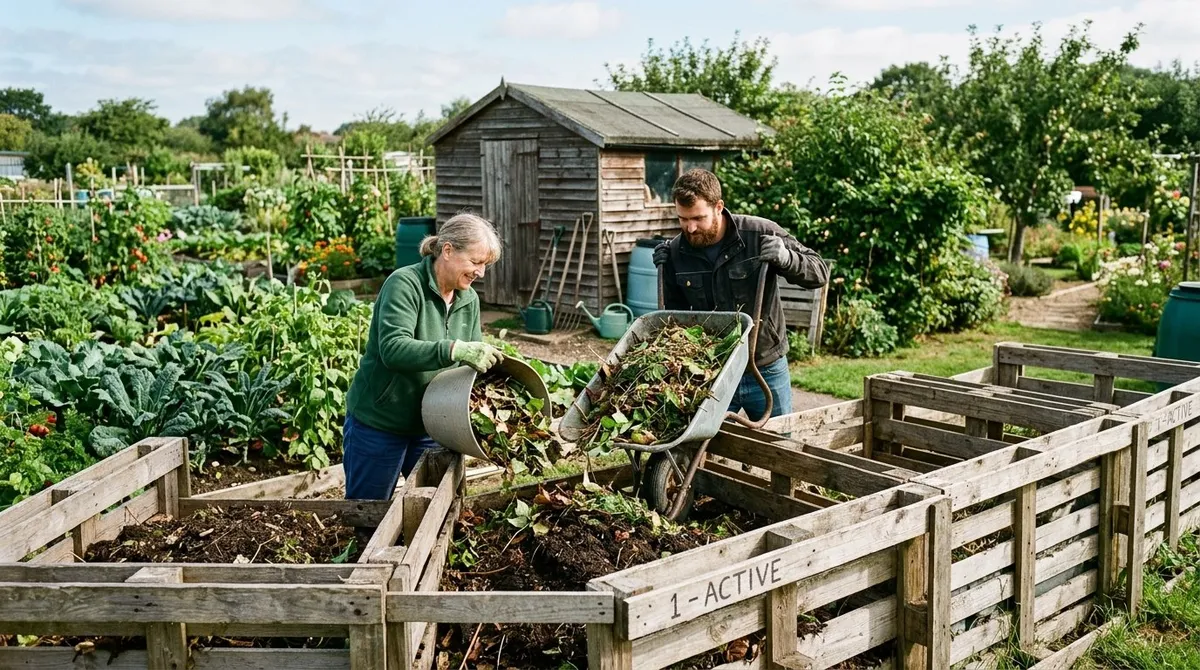
Three bays side by side is the backbone of most schemes: one filling, one cooking and one ready to use.
How to find a site for shared composting
Look for a flat, well-drained spot with easy access for wheelbarrows and bags. Ideally it is close to where people live or garden, so dropping waste off is no effort.
Good places to ask include:
- Allotment sites, often the easiest start, as the land is already used for growing.
- Housing associations and estate managers, who may have a corner of shared ground.
- Schools, churches and community gardens, which often welcome a project.
- Your council’s parks team, for a corner of a park or green space.
Get the landowner’s permission in writing before you build anything. Agree who is responsible for the site and what happens if the scheme stops. Keep the bays away from house windows and watercourses, and on soil rather than concrete so worms can get in.
Which compost system suits a community scheme?
Start with three pallet bays for garden waste. They are cheap or free, easy to build and hold a lot. Add an enclosed unit later if you want to take kitchen scraps.
| System | Best for | Takes food waste? |
|---|---|---|
| Three pallet bays | Allotments and gardens, garden waste | No, open bays draw rats |
| Enclosed hot composter | Small groups, mixed waste | Yes, it is sealed |
| Large rotating drum composter | Schools and food-heavy sites | Yes, rat-proof |
| Wormery | Small groups, raw fruit and veg | Yes, raw scraps only |
| Long open heap | Big sites with lots of garden waste | No |
The table above is about scale. For the bought bins you might also use at home, the guide to compost bin ideas compares the main types.
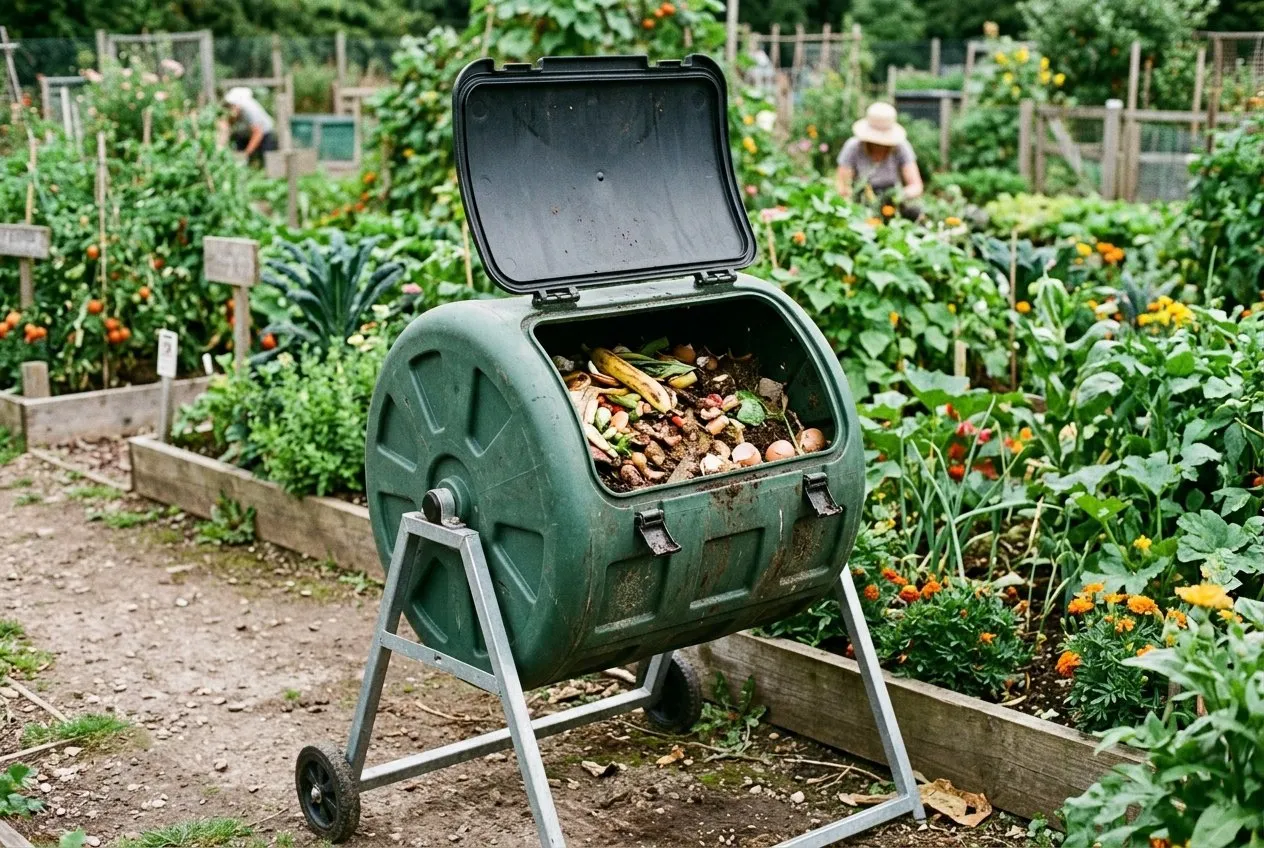
A sealed drum like this keeps rats out, which is what you need before taking in kitchen scraps.
Do you need permission to run a community compost heap?
Often, yes, but it is usually simple. Composting your own garden waste at home needs no permission. Once a scheme takes in waste from other people, the rules change.
- England: a scheme composting other people’s garden waste usually needs to register a free T23 waste exemption with the Environment Agency. The GOV.UK T23 guidance sets out what it covers.
- Food and kitchen waste brings extra rules under the Animal By-Products regulations. Cooked food and meat are the main concern. Many groups avoid this at first by sticking to garden waste.
- Scotland, Wales and Northern Ireland have their own regulators: SEPA, Natural Resources Wales and NIEA.
Check with your regulator and your council before you open. Getting it right at the start saves trouble later.
How to run a three-bay community compost system
Five pallets stood on end and wired together make three bays side by side. Fill the first, turn it into the second, and keep finished compost in the third.
- Mix greens and browns. Add roughly equal amounts of soft green waste and dry brown waste. Greens are grass, veg peelings and soft prunings. Browns are cardboard, dry leaves and woody stems.
- Keep it damp. The heap should feel like a wrung-out sponge. Water dry heaps and add browns to soggy ones.
- Turn it. Move the heap into the next bay every few weeks. This adds air and gets it hot again.
- Check the heat. An active heap should be hot in the middle, ideally 55-65°C. That kills most weed seeds and roots.
- Sieve the finished compost. Put anything lumpy back into the active bay.
The guide to cold, fast and hot compost methods explains how to get a heap properly hot.
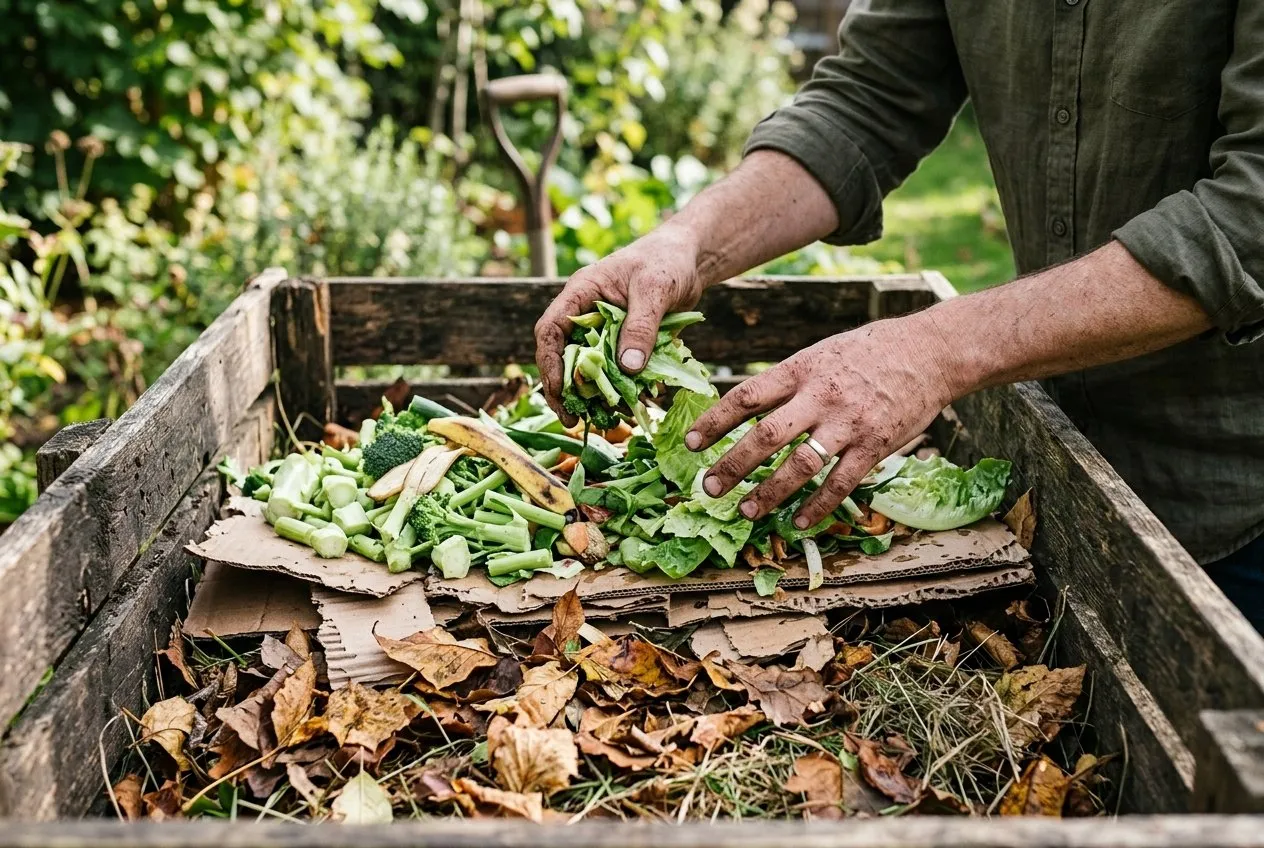
Layer soft greens with dry browns. Too many greens turn slimy, and too many browns never heat up.
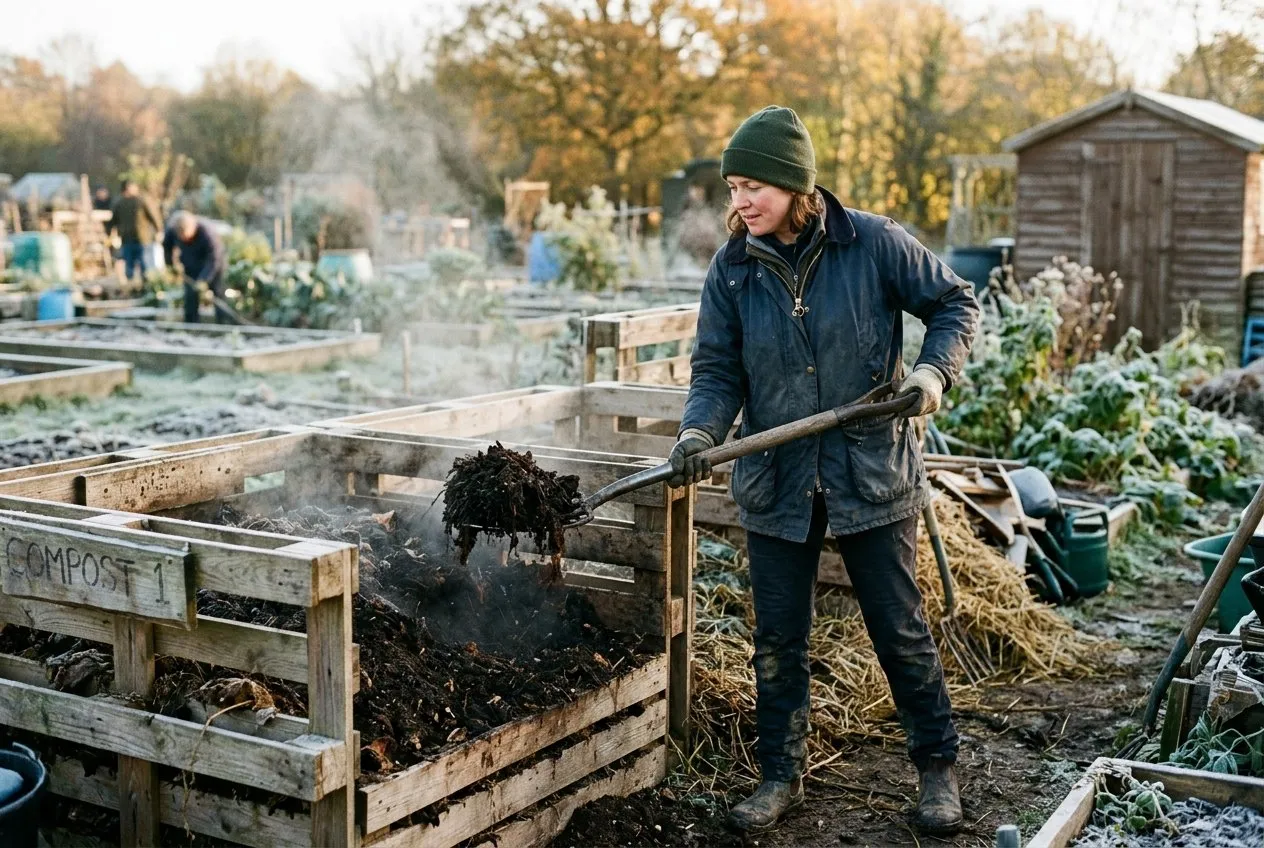
Steam rising on a cold morning is a good sign. The heap is hot and working.
How to keep volunteers and contributors on side
A community heap usually fails because of people, not timber. Three things keep it going.
- A clear sign. List what goes in and what stays out. It stops plastic, turf and perennial weed roots wrecking the heap.
- A named rota. Ask three or four people to turn the bays on a fortnightly rota. Jobs that belong to nobody don’t get done.
- A quick welcome. Show each new contributor the ropes once. It prevents most contamination.
Contributors collect scraps in kitchen caddies between drop-offs. In summer these can draw fruit flies, so share the tips on getting rid of fruit flies with your group.
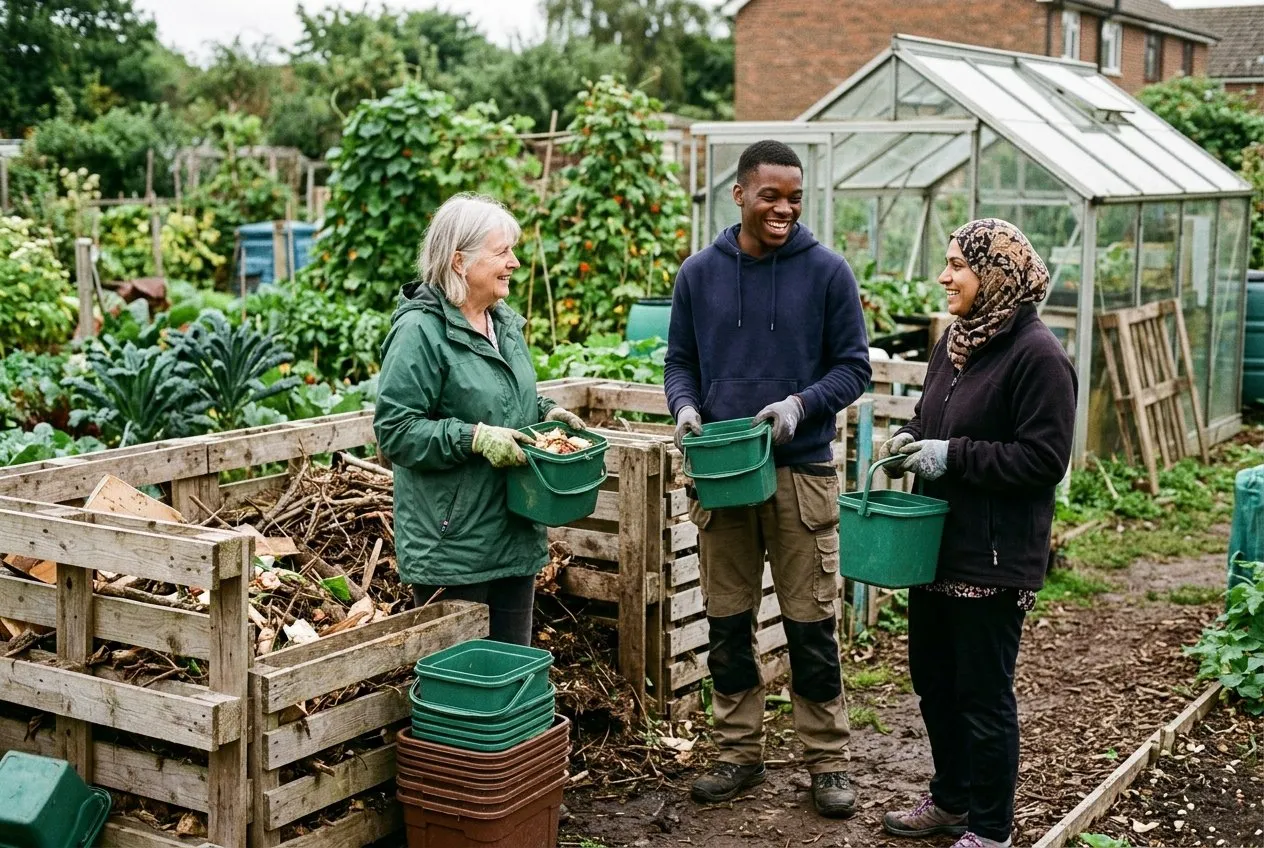
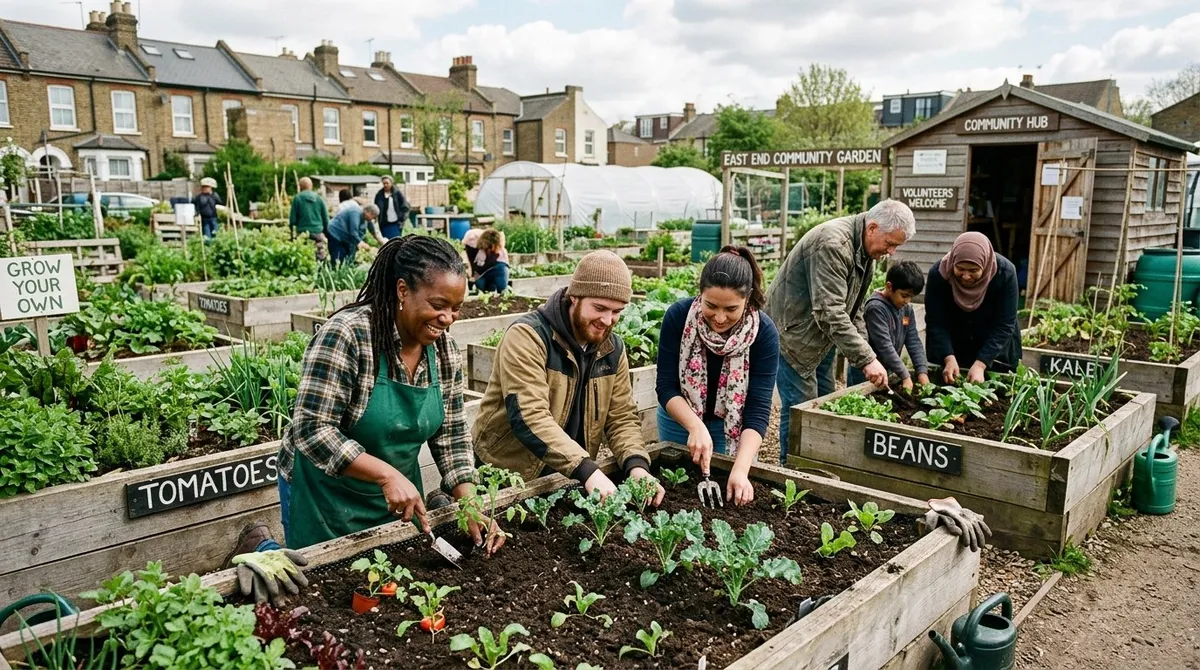
Friendly faces and a regular rota keep a shared heap going far better than any clever design.
A first-year plan for a community compost scheme
| Stage | What to do |
|---|---|
| Month 1 | Gather a group, find a site, get the landowner’s written permission |
| Month 2 | Register any exemption you need; decide on garden waste only, or food too |
| Month 3 | Build the bays or install units; make a sign and a rota |
| Months 4-6 | Open for garden waste; keep the mix balanced; start turning |
| Months 7-9 | Check the heat; sieve the first finished compost |
| Months 10-12 | Share the compost; review what worked; think about adding food waste |
Common community composting problems and fixes
- The heap stays cold. It is too small, too dry or too brown. Build it bigger, water it, add greens and turn it.
- It smells of ammonia or rot. Too many greens and not enough air. Add browns and turn it.
- Rats move in. Cooked food has gone into open bays. Keep open bays to garden waste only. The guide to dealing with rats in the garden has more help.
- Rubbish turns up. Plastic, turf and weed roots arrive. Make the sign clearer and talk to contributors.
- Volunteers drift away. Name the jobs, share the compost and say thank you.
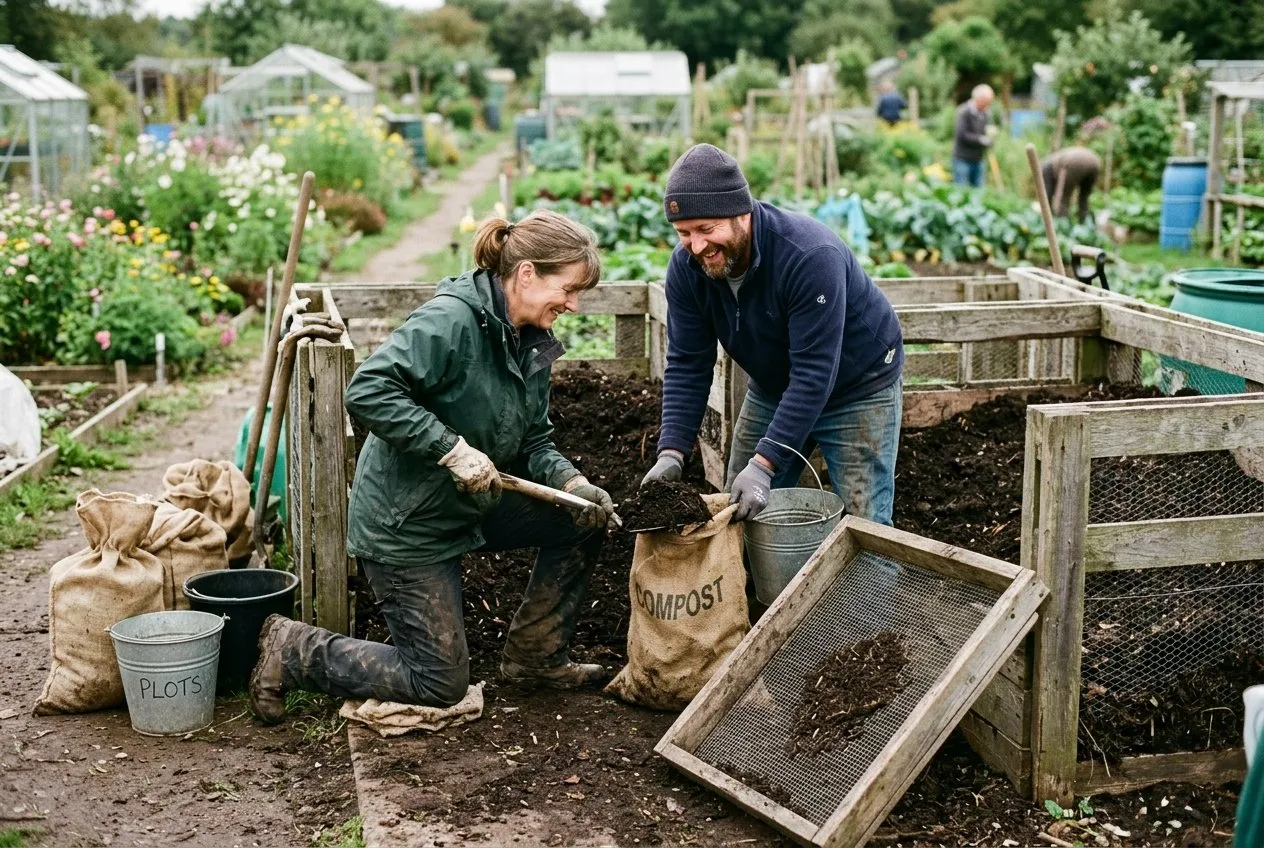
Sharing out the finished compost is the best bit, and the best way to keep people coming back.
Once your scheme is up and running, brush up on the basics with the guide to how to make compost, and see how a shared heap can help local nature in composting for wildlife. There are more practical guides in the how-to section.
Frequently asked questions
What is community composting?
It is a shared compost scheme run by a group rather than one household. Neighbours, allotment sites, schools and estates run them. People bring garden and kitchen waste to one place, a small team keeps it turning, and everyone shares the finished compost.
Do you need a permit for community composting in the UK?
Often yes, but in England it is usually a free waste exemption. A scheme taking in garden waste from others commonly registers a T23 exemption with the Environment Agency. Food waste brings extra Animal By-Products rules. Scotland, Wales and Northern Ireland have their own regulators, so check with yours and the landowner first.
Can you compost food waste in a community scheme?
Yes, but it needs an enclosed, rat-proof unit and extra care. Cooked food and meat attract rats and fall under Animal By-Products rules. Many groups start with garden waste only and add food later. Check the rules with your regulator before you accept food from the public.
How do you set up a community compost site?
Find a willing landowner, a small group of volunteers and someone to coordinate. Get written permission for the site, register any exemption you need, then build three pallet bays. Put up a clear sign of what goes in and set a turning rota before you open.
How hot should a community compost heap get?
An active heap should feel hot in the middle, ideally around 55-65°C. That heat kills most weed seeds and roots. A big, well-mixed, damp heap gets there. A small or dry heap stays cool and breaks down slowly. A long compost thermometer lets volunteers check without digging in.
How long does community compost take to make?
A hot, regularly turned heap is usually ready in three to six months. A cold heap left alone takes a year or more. Turning the bays and keeping the mix damp speeds things up. Sieve the finished compost and put lumps back into the active bay.
Our team produces practical UK gardening guidance from source research, contributor records and established horticultural practice. Editorial standards are overseen by Matt W.