Key takeaways
- Find a local group through the Social Farms and Gardens directory, your council or local Facebook groups
- To start one, you need a few keen people, some land and public liability insurance
- Get something growing quickly, as people join projects they can see
- A Community Interest Company (CIC) is a popular, simple set-up for a new group
- National Lottery Awards for All and supermarket community funds help with start-up costs
Community gardening has really taken off in the UK. There are now thousands of community gardens, from tiny plots on old car parks to big orchards on the edge of villages.
Whether you want to join a group or start your own, it’s simpler than you might think. Finding one takes minutes online. Starting one needs some land, insurance and a handful of keen people, and grants can cover most of the costs.
How do I find a community garden near me?
Start with the Social Farms and Gardens directory, which lists community growing projects across the UK. Search by postcode to find groups near you. It includes community gardens, orchards, city farms, therapy gardens and shared allotment projects.
Next, try your local council website. Many list community growing projects on their parks or community pages, and some have staff who can put you in touch with groups.
Facebook is great for finding smaller, informal groups. Search “community garden” plus your town. Lots of little projects are only found this way or by word of mouth.
The National Allotment Society can point you to allotment sites, many of which have shared growing areas. If your local site has spare room, it might welcome a community project.
Transition Town groups also run food growing in many UK towns. They’re a friendly way in, especially if you’re keen on growing food sustainably.
What does a community garden actually involve?
A community garden is any shared space where people grow food, flowers or wildlife habitat together. They come in all shapes. Some work like shared allotments, with a raised bed each. Others are fully shared, with everyone working the same beds and splitting the harvest.
You’ll find raised beds for families, shared veg beds on a rota, community orchards, food forests and permaculture gardens, sensory and therapy gardens, and school growing projects.
Most groups meet once a week for a couple of hours. Members can usually pop in to tend their beds at other times too. The social side matters as much as the growing. Lots of people join for the company, fresh air and exercise as much as the veg.
Produce is usually shared informally, often on a produce table. Some groups give extra to food banks, and a few sell at markets to cover running costs.
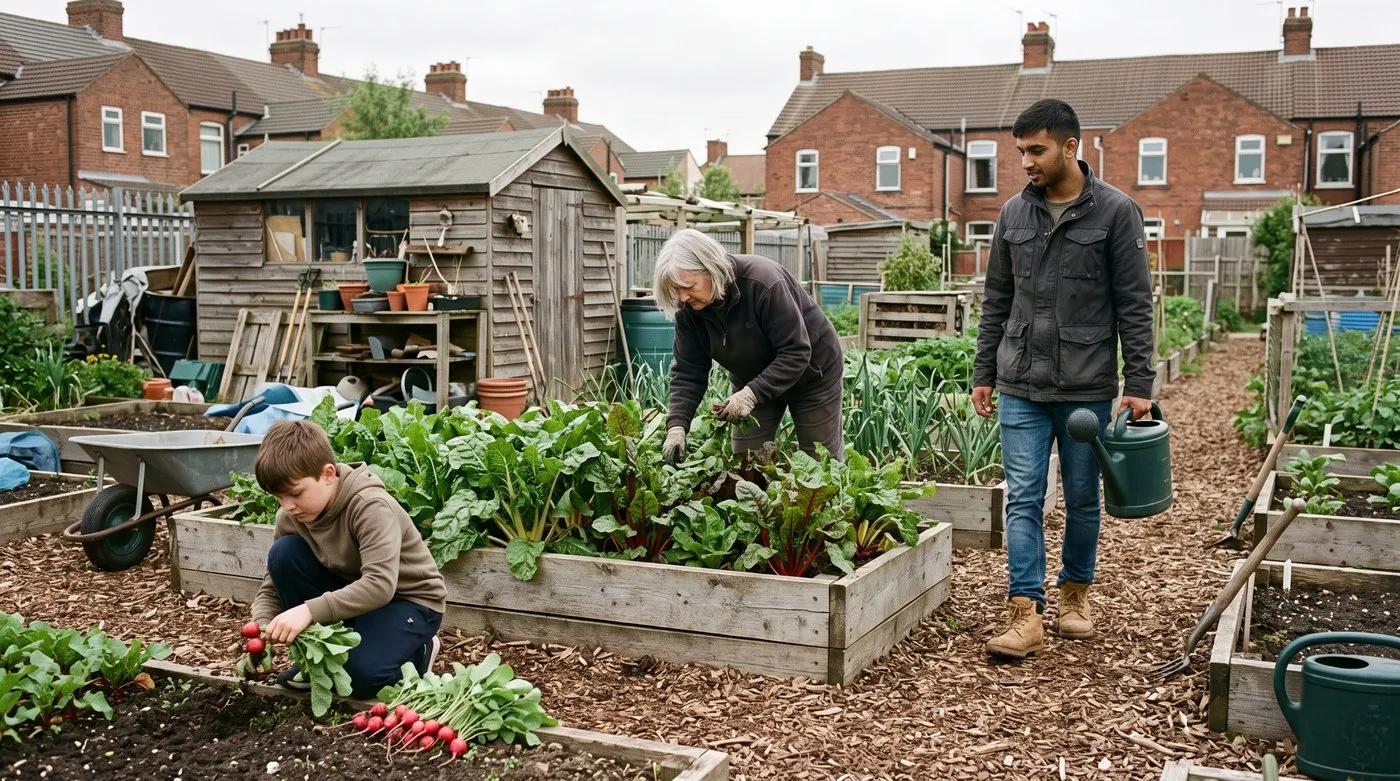
Most groups meet once a week for a couple of hours. The company and fresh air matter as much as the veg.
How do I start a community garden from scratch?
Get three to five keen people together, find some land and get something growing within the first month. The most common mistake is spending months on paperwork and grant forms before planting anything. People join projects they can see.
Step 1: Gather your founding group
You need at least three people willing to meet regularly and get their hands dirty. Don’t wait for a big group. Post on local Facebook groups, community noticeboards and in the library. A simple “Would anyone like to help start a community growing space?” often gets a good response.
Step 2: Find land
Council land is the most common starting point. Contact your council’s estates, parks or regeneration team. Many have spare green spaces, old garage sites or unused plots.
Council licences are often free or very cheap, as the council saves on upkeep. The paperwork can take a few months, so start small on temporary land while you wait.
Churches, schools, housing associations and businesses with spare ground are worth asking too. Explain how it will help the local community, and offer to keep the land tidy.
Step 3: Set up basic infrastructure
You need raised beds, water, basic tools and somewhere to keep them. That’s it to begin with.
| What you need | Notes |
|---|---|
| Raised beds | Scaffold boards or reclaimed timber work well |
| Topsoil and compost | A bulk delivery is cheapest |
| Water | Water butts are cheap, a mains tap needs a plumber |
| Basic tools | Spades, forks, trowels, watering cans, a wheelbarrow |
| Lockable storage | A secondhand shed or metal container |
| Paths | Wood chip or gravel, wide enough for a wheelchair |
| Signs | A welcome board and bed labels |
| Public liability insurance | Needed before the public can join in |
You can keep costs down with reclaimed materials. Scaffold boards make great bed sides. Tree surgeons often drop off wood chip for free. Local businesses sometimes donate spare materials.
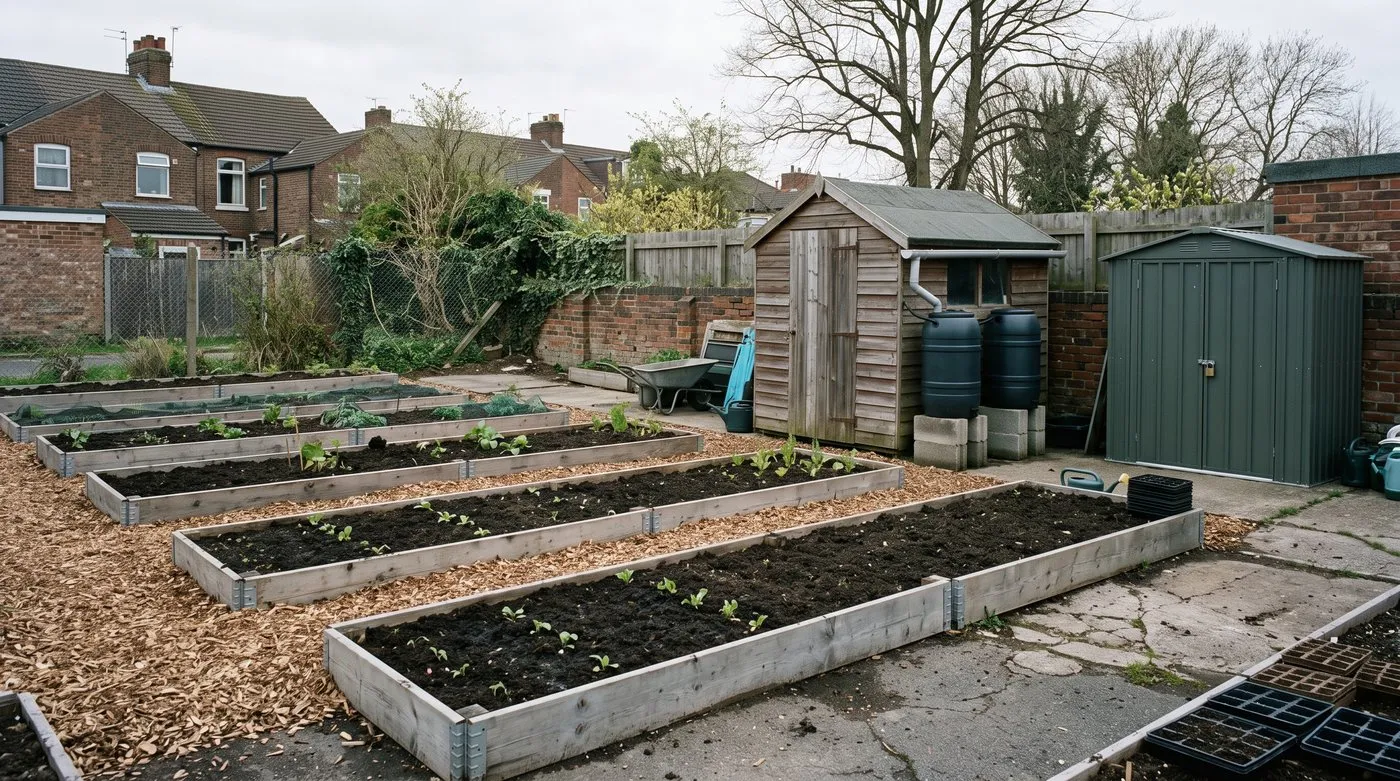
Scaffold boards make sturdy beds and tree surgeons often drop off wood chip for free. Keep paths wide enough for a wheelchair.
What legal structure does a community garden need?
A Community Interest Company (CIC) is a popular, practical choice for UK community gardens. It protects organisers from personal liability, stops anyone taking profits privately and is well known to funders. You register online with Companies House.
Here are the three main options:
| Set-up | Protects organisers? | Grants | Gift Aid | Paperwork |
|---|---|---|---|---|
| Unincorporated association | No | Some | No | Very little |
| Community Interest Company (CIC) | Yes | Most funders | No | Some |
| Charitable Incorporated Organisation (CIO) | Yes | All funders | Yes | Most |
For most new groups, a CIC is a good fit. It gives you protection and access to grants without the paperwork of a charity. You need at least one director and a simple set of rules, and Companies House has templates.
If you grow big enough to want Gift Aid and charity grants, you can switch to a CIO later. Start simple. Many groups run as an informal association while the CIC is set up, and that’s fine for the early days.
How do I get funding for a community garden?
National Lottery Awards for All is the best place to start, with a straightforward application. It’s open all year and has funded lots of community gardens.
Other good sources include:
- Tesco Community Grants, voted on by shoppers in local stores
- Co-op Local Community Fund, linked to Co-op members’ shopping
- Local council community grants, which vary by area
- Postcode Lottery Trust, for more established groups
- Social Farms and Gardens, which can help members with small grants, equipment and seeds
- Groundwork UK, offering funding and hands-on help in some areas
Funders like to see local support. Include photos of your first growing sessions, a list of supporters and, if you can, a letter from a local councillor or GP practice.
How do community gardens benefit mental health?
Gardening with others is good for your mood. Fresh air, gentle exercise, time outdoors and a bit of company all help people feel better.
GPs can now refer people to community growing projects through social prescribing link workers, so your group might welcome new members this way.
It’s good exercise too. Digging, weeding and barrowing compost all get you moving, and regular sessions soon add up.
Growing your own often means eating more veg. Community gardeners love trying crops they’d never buy, from heritage beetroot varieties to chard and kohlrabi.
How do I run a community produce swap?
Put out a table with a “give what you can, take what you need” sign and let it run itself. Prices and record-keeping kill a swap. The best ones are completely informal.
Put the table near the entrance. Members leave spare courgettes, tomatoes, herbs, jam, eggs or flowers, and anyone can help themselves. No money, no records.
It works because everyone gets a glut of something at some point. The courgette grower is drowning in August, and the bean grower is in the same boat in July. The table shares it all out.
You can swap seeds, plants and tools too. A seed swap in January is a lovely, free event that brings people together. Our seed saving guide covers how to save seed for swapping.
Some groups put the table where the public can reach it, by a gate or outside a community centre. It builds goodwill and brings in new members.
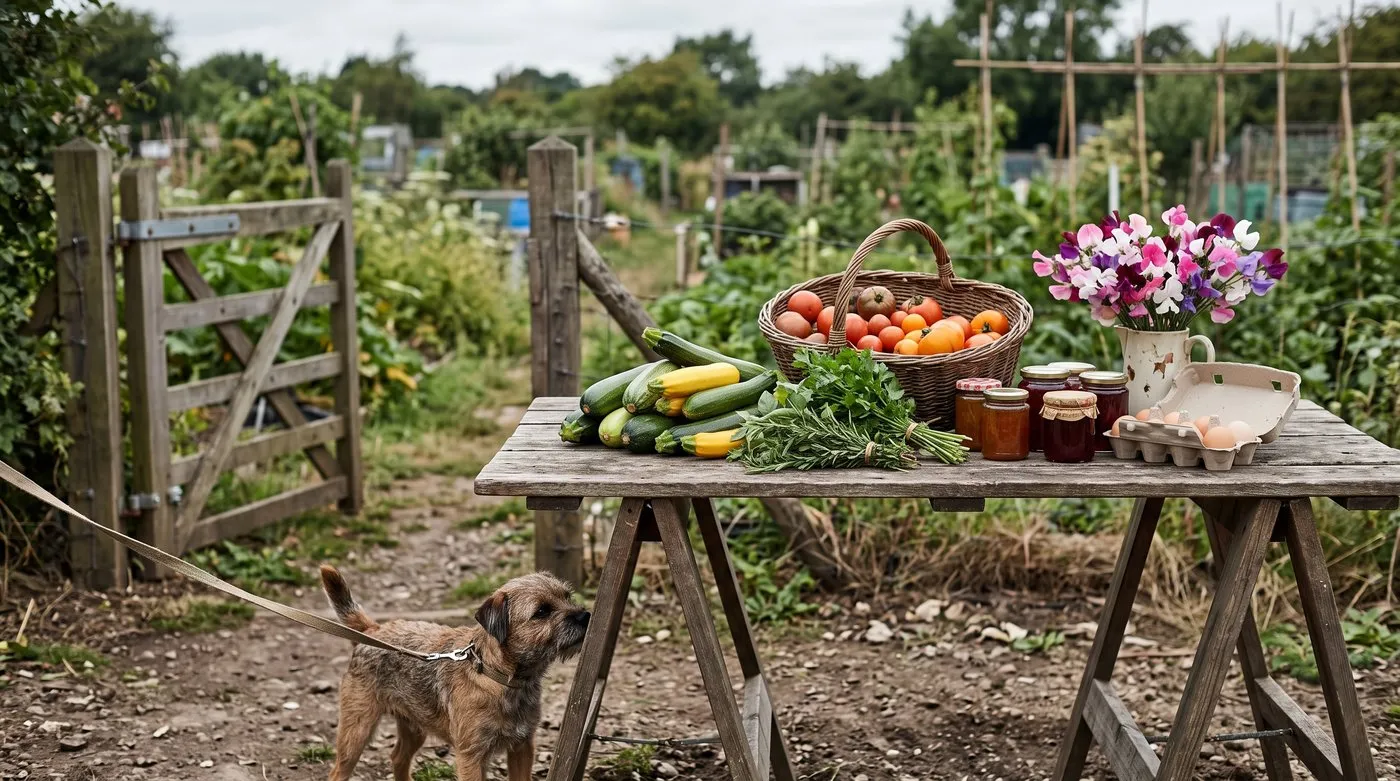
Keep it informal: no prices, no records. Everyone has a glut of something at some point, and the table shares it out.
What is a community orchard and how do I start one?
A community orchard is a shared planting of fruit and nut trees looked after by local people. You’ll find them on old farmland, in churchyards, on school grounds and on spare council land.
Orchards are a longer game than veg beds. An apple tree takes a few years to crop well, so you’ll want the land secured for at least ten years before planting.
Start with 10-15 trees. Pick ones that suit your area, with harvests spread from late summer into autumn. Include local varieties where you can.
Good choices include ‘Bramley’s Seedling’ for cooking, and ‘Cox’s Orange Pippin’ and ‘Discovery’ for eating. Add pear trees and plums for variety. Our fruit tree growing guide covers planting and care.
What about therapeutic and school gardens?
Therapy gardens offer guided growing sessions for people with mental health conditions, learning disabilities or physical impairments. Trained leaders run the sessions and adapt the jobs to suit everyone. The focus is on enjoying the growing, not the size of the crop.
Many are linked to NHS trusts, charities like Thrive and Mind, or council social care teams. If you’d like to add a therapy side to your garden, speak to your local social prescribing link worker through a GP practice.
Therapy gardens need raised beds at wheelchair height, level paths at least 1.2 metres wide, shady seating, easy-grip tools and a trained session leader. Our accessible gardening guide explains how to design an inclusive space.
Lots of schools have growing spaces now too. The RHS Campaign for School Gardening offers free resources and support. Community groups that team up with a local school often find funding easier to get.
Many community gardens take referrals, so it’s worth reading how gardening on prescription works.
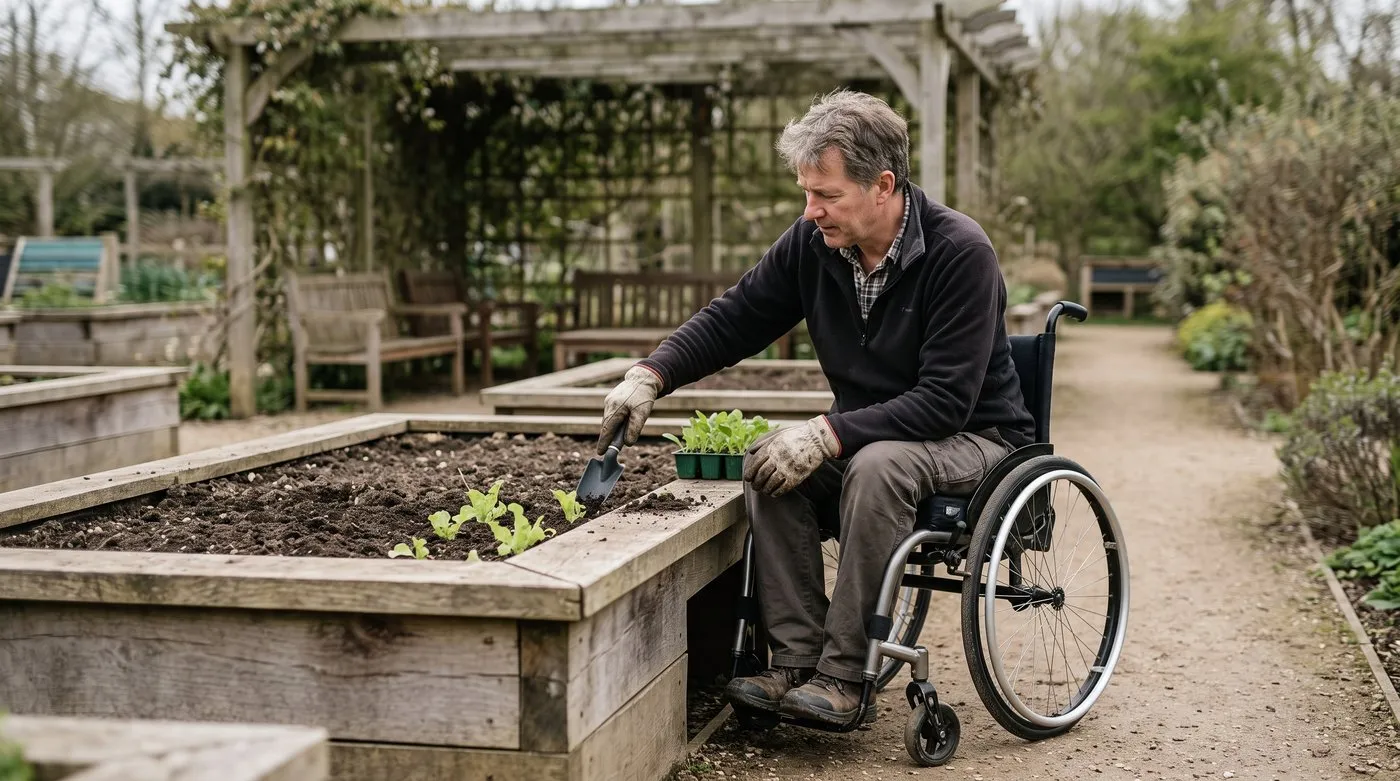
Wheelchair-height beds, level paths at least 1.2m wide and easy-grip tools let everyone join in.
Frequently asked questions
How do I find a community garden near me?
Search the Social Farms and Gardens directory by postcode. It covers England, Scotland, Wales and Northern Ireland. Your council website may list local projects too. Searching Facebook for “community garden” plus your town often turns up smaller groups. Some allotment sites also have shared growing areas.
How much does it cost to start a community garden?
Less than you might think, and grants cover most of it. The main costs are raised beds, soil, tools, water, storage and public liability insurance. Reclaimed timber and free wood chip keep costs down. Council land is often free or cheap to use.
Do I need planning permission for a community garden?
Not usually for raised beds, paths and growing on open land. You may need it for permanent structures like sheds, polytunnels or large hard surfaces. Check with your council’s planning team before building anything permanent.
What insurance does a community garden need?
Public liability insurance, before anyone starts gardening. It protects you if someone gets hurt on site. Without it, organisers could be personally liable. Social Farms and Gardens can help members find suitable cover.
What legal structure should a community garden use?
A Community Interest Company (CIC) is a popular, simple choice. You register online with Companies House. It stops anyone taking profits privately. Other options are an unincorporated association, which is simplest but gives no protection, or a charitable incorporated organisation (CIO) for larger groups wanting charity status.
How do I get funding for a community garden?
National Lottery Awards for All is a great place to start. Tesco, the Co-op and local councils also run community funds. Funders like to see local support, so collect names of supporters and photos of your first sessions.
Can I start a community garden on council land?
Yes, many councils let community groups use spare land. Contact the council’s estates or parks team. Licences are often free or very cheap, as the council saves on upkeep. It can take a few months, so start small while you wait.
Our team produces practical UK gardening guidance from source research, contributor records and established horticultural practice. Editorial standards are overseen by Matt W.