Key takeaways
- Social prescribing links you to non-medical support, such as a gardening group
- Ask your GP practice for a social prescribing link worker to get started
- Many community gardens and charities also take self-referrals
- Sessions are usually weekly, friendly and free, with tools provided
- No gardening experience or garden of your own is needed
- It works alongside your usual care, not instead of it
You can be referred to gardening by your GP. It’s called social prescribing, and gardening is one of its most popular routes. A health worker connects you with a local gardening group to support your wellbeing, alongside any other care you get. It’s usually free, and you don’t need any experience.
This guide explains how to get referred, how to refer yourself and what to expect when you turn up. For why gardening helps and ideas to try at home, see the guide to gardening for mental health.
What is social prescribing?
Social prescribing links people to practical, non-medical support in their community. A GP, nurse or other health worker refers you to a social prescribing link worker. The link worker gets to know what matters to you and connects you with activities and services that could help.
Gardening is one of the most common choices, alongside walking groups, arts, volunteering and advice services. The idea is simple. Loneliness, lack of routine and stress affect health, and a pill doesn’t fix them. Fresh air, company and a reason to get out of the house can.
Green social prescribing is the name for nature-based referrals, such as gardening, conservation volunteering and walking groups. The NHS England social prescribing page explains how link workers fit into care. Scotland, Wales and Northern Ireland run their own schemes, so ask your GP practice what’s available where you live.

The tea breaks and the company matter as much as the plants at most gardening groups.
How gardening on prescription works
Once you’re referred, a link worker matches you with a local gardening project. Then you join regular group sessions, with tools, guidance and company all provided. You don’t have to arrange anything complicated yourself.
Most projects meet weekly at a community garden, allotment site or therapeutic garden. A coordinator or trained horticultural therapist leads the session, but the feel is relaxed rather than clinical. You might sow seeds, weed a bed, pick veg or simply sit with a cup of tea while others work.
The sessions are about people, not productivity. The plants give everyone a shared purpose and a reason to turn up. Many projects use raised beds so everyone can join in, whether standing or seated. The guide to accessible gardening covers the kind of adaptations you’ll often see.

Tools, seeds and a friendly hand are all provided. Nobody expects you to know what you’re doing on day one.
Who is gardening on prescription for?
Gardening on prescription is for a wide range of people. It’s often suggested for:
- loneliness or isolation, including after a bereavement or a move
- low mood, stress or anxiety
- long-term conditions, such as diabetes, heart problems or chronic pain
- staying active and connected as you get older
- recovery after illness, or a gentle way back into a routine
Many people find that being outdoors, moving about and chatting with others lifts their mood. It isn’t a cure, and it isn’t a replacement for treatment. Think of it as a gentle support that sits alongside your usual care. If you’re struggling with your mental health, talk to your GP as well.

Raised beds let people garden standing up or sitting on a stool, so everyone can join in.
How to get referred or refer yourself
There’s usually more than one way in. Pick whichever feels easiest.
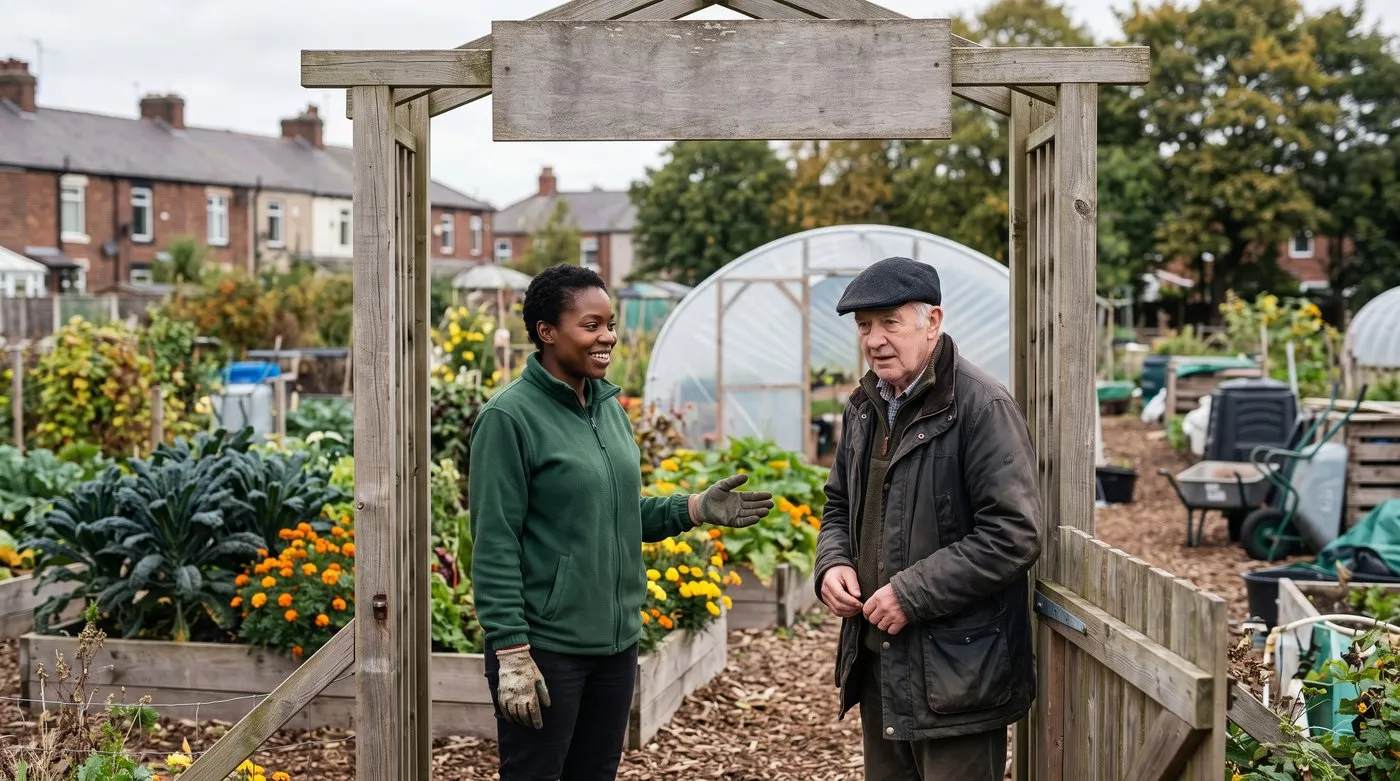
Many community gardens welcome self-referrals, and a friendly face at the gate makes that first visit much easier.
- Ask your GP practice if they have a social prescribing link worker. Many practices do. You can ask the receptionist, a nurse or your GP.
- Talk to the link worker about what you’re hoping for, and any health or mobility needs.
- Get matched with a local gardening group, community garden or therapeutic project.
- Go along to a first session, ideally with the link worker’s help to arrange it.
You don’t always need to go through a doctor. Many community gardens, mental health charities, older people’s charities and local councils run gardening groups that take self-referrals. Search for community gardens or therapeutic horticulture near you and ask if they welcome new people. The guide to community gardens has tips for finding one.
There’s no need to wait until things feel bad enough. If you think it would help, that’s reason enough to ask.
Routes into gardening on prescription compared
| Route | How it works | Best for |
|---|---|---|
| GP practice referral | A health worker refers you to a link worker | Anyone already in touch with their practice |
| Link worker | A chat about what suits you, then a match | Anyone wanting help choosing |
| Self-referral to a community garden | You contact the project directly | People ready to start straight away |
| Charity or wellbeing group | Mental health, carers’ or older people’s charities | Specific needs or support |
| Therapeutic horticulture project | Structured sessions led by a trained therapist | People needing more support |
For most people, asking the GP practice about a link worker is the easiest first step, as they do the matching for you. If you already know a friendly community garden nearby, going direct can be quicker.
What to expect at your first session
A first session is usually low-key. Expect a warm welcome, a tour of the site and a cup of tea. The coordinator will suggest a gentle job, such as sowing seeds, potting up or watering.
- Wear old clothes and sturdy shoes. Gloves and tools are usually provided.
- Do as much or as little as you like. Sitting and chatting counts.
- Mention any health needs so the coordinator can suggest suitable jobs.
- Ask if someone can meet you at the gate if you feel nervous going alone.
Every good scheme is used to newcomers. That small welcome often makes the difference between going once and going every week.
Keep it going at home
A group session once a week builds a habit, and a little gardening at home keeps it going between sessions. You don’t need much: a few pots, a windowsill of herbs or a small raised bed.
Checking on plants, watering and watching them grow gives a gentle daily routine. The guide to raised bed gardening for beginners is an easy place to start. For calming plants with scent and texture, see the ideas for a sensory garden.

A single raised bed or a few pots at home keep the routine going on the days there’s no group.
Common worries about gardening on prescription
- No gardening knowledge. Most people know very little when they start. You’ll be shown what to do.
- No garden at home. You don’t need one. Sessions happen at shared sites.
- Worried about fitness. Jobs can be done seated or at raised beds, and you set the pace.
- Nervous about going alone. Ask the link worker or coordinator to meet you at the gate.
- Worried about cost. Most sessions are free. Ask first if you’re unsure.
Frequently asked questions
What is gardening on prescription?
It’s social prescribing that connects you with a gardening group for your wellbeing. A health worker refers you to a link worker, who finds a local community garden, allotment group or therapeutic project. It is often used for loneliness, low mood, stress and long-term health conditions.
How do I get referred to a gardening scheme?
Ask your GP practice whether they have a social prescribing link worker. Many practices now do. The link worker talks through what would suit you and connects you to a nearby group. You can also contact local community gardens and wellbeing charities directly.
Is social prescribing free on the NHS?
Seeing a link worker through your GP practice is free. Most gardening sessions are free too, run by charities or community groups. A few specialist therapeutic horticulture programmes may charge, so ask before you start.
Does gardening actually help mental health?
Many people find it lifts their mood and eases stress. Being outdoors, moving about, having a routine and chatting with others all help. It isn’t a cure, but it can be a gentle support alongside other care.
Do I need my own garden to take part?
No, you don’t need a garden or any experience. Most schemes run at shared sites such as community gardens, allotments and therapeutic plots. Tools and guidance are provided, and people with no outdoor space at home are very welcome.
What happens at a first gardening session?
Usually a friendly welcome, a cup of tea and a gentle job. A coordinator shows you round and explains what’s going on. You might sow seeds, weed or water, and you can do as much or as little as you like.
Once you’ve found your feet, read the guide to gardening for beginners to grow your confidence at home, or browse more how-to guides.
Our team produces practical UK gardening guidance from source research, contributor records and established horticultural practice. Editorial standards are overseen by Matt W.