
Key takeaways
- Build raised beds 60-75cm high so you can garden seated or from a wheelchair
- Keep beds no more than 60cm deep from the side you work from
- Paths need to be firm, level and at least 1.2 metres wide, and wider for powered chairs
- Light tools with padded or pistol-grip handles and ratchet secateurs are kind to sore hands
- A soaker or drip hose on a tap timer takes the hard work out of watering
- Ask your council about the Disabled Facilities Grant for essential garden changes
Accessible gardening isn’t a second-best garden. It’s simply good design. With beds at the right height, wide firm paths and tools that suit your hands, most people can keep growing and enjoying a garden. That goes for wheelchair users, people with arthritis or sight loss, and anyone with a bad back.
Raised bed heights for wheelchair and seated gardening
Raised beds for seated or wheelchair gardening work best at 60-75cm high. At that height you can reach over the edge without straining. A 60cm bed suits most wheelchair users. Around 65-70cm suits gardening from a stool or chair. A 75cm bed suits a high chair, or standing if bending is hard.
Width matters just as much. If you can only reach from one side, keep the bed no more than 60cm deep. If you can get to both sides, 90-120cm is fine. Stretching any further gets tiring quickly and can throw you off balance.
Leave a recess of 15-20cm at the bottom of the front edge. Your footrests slide underneath, so you sit closer to the plants. It costs nothing extra when you build the bed and makes a real difference.
A raised bed at 65cm with a gap at the base for footrests puts every plant within easy reach.
| Bed height | Who it suits | Good to know |
|---|---|---|
| 30-45cm | Kneeling gardeners | Too low for seated gardening |
| 50-55cm | Low chairs and garden stools | A bit low for most wheelchairs |
| 60-65cm | Most wheelchair users and seated gardeners | The most useful all-round height |
| 70-75cm | High chairs, some powered chairs, standing | Good if bending is hard |
| 80cm and up | Standing only | Too high for wheelchair users |
Timber sleepers, scaffold boards and galvanised steel all work well at these heights. Our raised bed design ideas show the options. Three scaffold boards stacked give you about 65cm, which makes a tidy weekend job. For soil, drainage and first crops, see our guide to raised bed gardening for beginners.
How wide do paths need to be for wheelchair access?
Make paths at least 1.2 metres wide for a manual wheelchair. Any narrower and you’ll be catching your knuckles on the edges. Allow 1.5 metres for a powered chair. If a carer walks alongside, or two chairs need to pass, go for 1.8 metres.
Wider is always better. Turning takes more room than going straight, so give corners and junctions extra space.
The surface matters as much as the width:
| Surface | How it works for wheels | Good to know |
|---|---|---|
| Smooth concrete | Very good | Hard-wearing, can be slippery when wet |
| Tarmac | Very good | The easiest surface to push on |
| Block paving | Good | Joints must be flush and level |
| Fine compacted gravel | OK | Must be packed down hard. Loose gravel is a nightmare |
| Bark chippings | Poor | Soft, drags on wheels and goes soggy in winter |
| Grass | Poor | Soft when wet and ruts quickly |
| Smooth decking | Good | Needs a non-slip finish, and gaps catch small wheels |
On a budget, a path of crushed limestone gravel works well if it’s properly compacted. Lay weed membrane underneath, then pack it down with a hired plate compactor.
Run your widest path to the places you’ll use most: the seating area and the growing area. Our patio ideas for small spaces can help with the layout.
Easy-grip tools for arthritis and weak hands
Light tools with soft, padded or pistol-grip handles take a lot of strain off your hands. If you have arthritis, a weak grip or garden one-handed, the right tool makes all the difference.
Pistol grips, padded handles and light materials make tools easier to hold for longer.
What to look for:
- Light weight. Heavy tools tire your hands and are harder to control.
- Foam or rubber grips spread the pressure across your palm instead of your fingers.
- Pistol-grip handles keep your wrist straight.
- Loop handles support your wrist if gripping is hard.
- Long handles save bending if you garden standing up.
- Ratchet secateurs cut in stages, so each squeeze needs much less effort.
If you garden one-handed, choose tools you can use without steadying them with the other hand. A kneeler with handles on both sides helps you get down and back up. A potting bench at standing height saves lifting compost bags.
Good secateurs make the biggest difference of all, so buy the best ratchet pair you can afford. Our guide to choosing secateurs can help. For dry or sensitive skin, see our pick of hand creams for gardeners, including gentle, fragrance-free ones.
How to plan a sensory garden for sight loss
A sensory garden uses scent, touch and sound to help you find your way and enjoy plants without relying on sight. And everyone else loves them too.
Scented herbs along a path edge help you find your way and smell lovely as you brush past.
Scent and texture as signposts. Plant scented herbs along path edges. Lavender, rosemary, lemon thyme and mint are tough enough to brush past and smell lovely when touched. Change the path surface at junctions, say from paving to gravel, so you can feel where you are.
Sound landmarks. A small fountain always tells you where you are. Wind chimes and rustling grasses work too, and bamboo at a corner whispers when the wind blows.
Plants to touch. Lamb’s ear (Stachys byzantina) has soft, furry leaves everyone wants to stroke. Fennel, grasses and tree bark add variety. Put touchable plants at the front of beds or at hand height along walls.
Within reach. Raised beds at 60-75cm bring scent and harvests up to you. Hang wall planters and baskets where you can reach them easily, a little lower for wheelchair users.
Herbs are one of the most rewarding things to grow this way. Our guide to growing herbs in the UK covers the easiest ones for beds and pots.
Growing upwards to save bending
Vertical gardening grows plants up walls, frames and towers, so you can tend them without bending down. If kneeling is hard or your back complains, it’s one of the most useful changes you can make.
Good options:
- Wall pockets fixed to a fence at chest height, great for herbs, lettuce and strawberries
- Tower planters that fit lots of lettuce or strawberries into a small space
- Trellis or frames for French beans, cucumbers and squash, so you pick at chest height
- Lengths of guttering fixed to a fence at about waist height, filled with compost for salad leaves
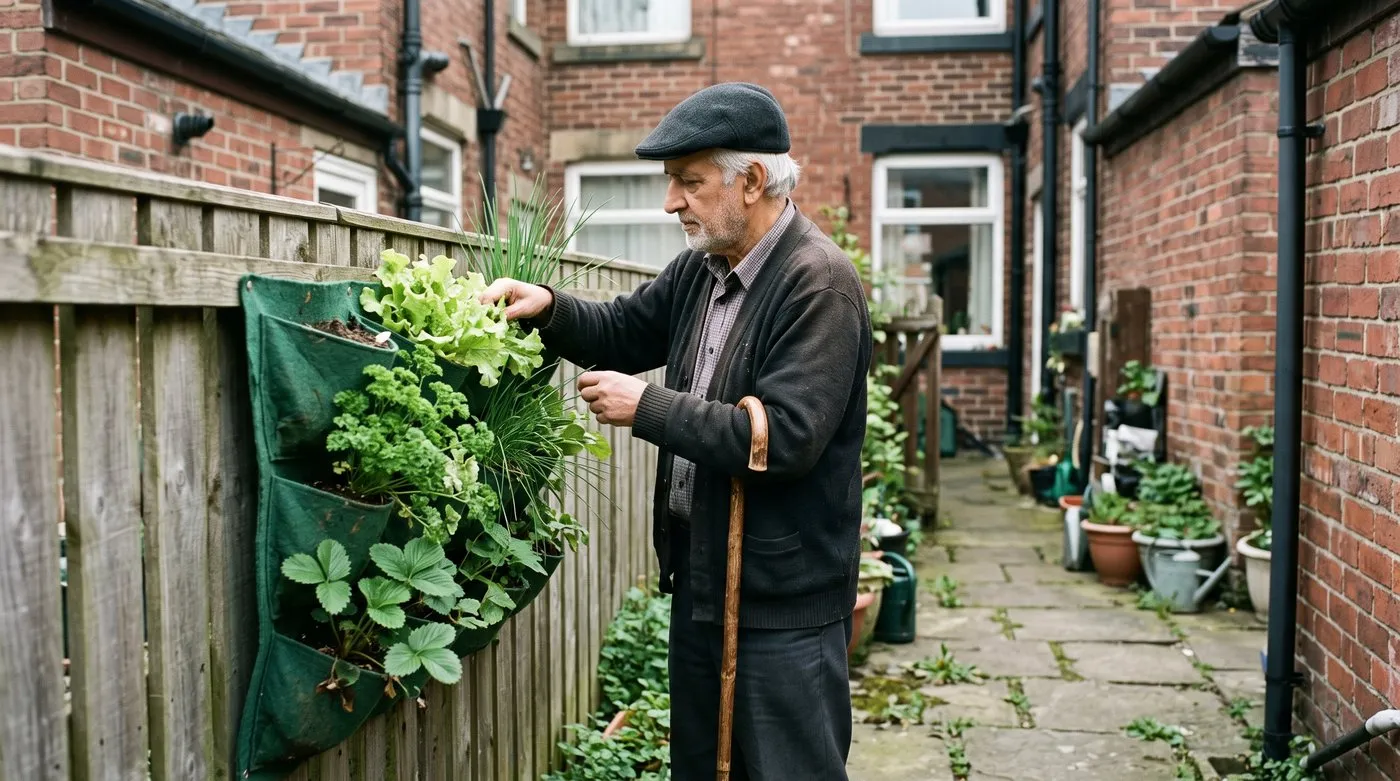
Wall pockets at chest height turn salad picking into a standing job. Herbs, lettuce and strawberries all do well in them.
Easy watering that saves carrying cans
A drip or soaker hose on a tap timer does the watering for you. Carrying full cans is often the hardest job in the garden, and this takes it off your list.
| Watering option | Effort | Best for |
|---|---|---|
| Standard watering can | High | Small spaces, no access issues |
| Small, light can | Medium | Arthritis or weaker arms |
| Hand-held hose | Medium | Bigger areas, needs some grip |
| Soaker hose and timer | Low | Raised beds and borders |
| Drip kit and timer | Very low | Lots of beds and pots |
| Self-watering pots | Low | Patios, balconies and single pots |
| Drip kit with soil sensor | Very low | Holidays and full independence |
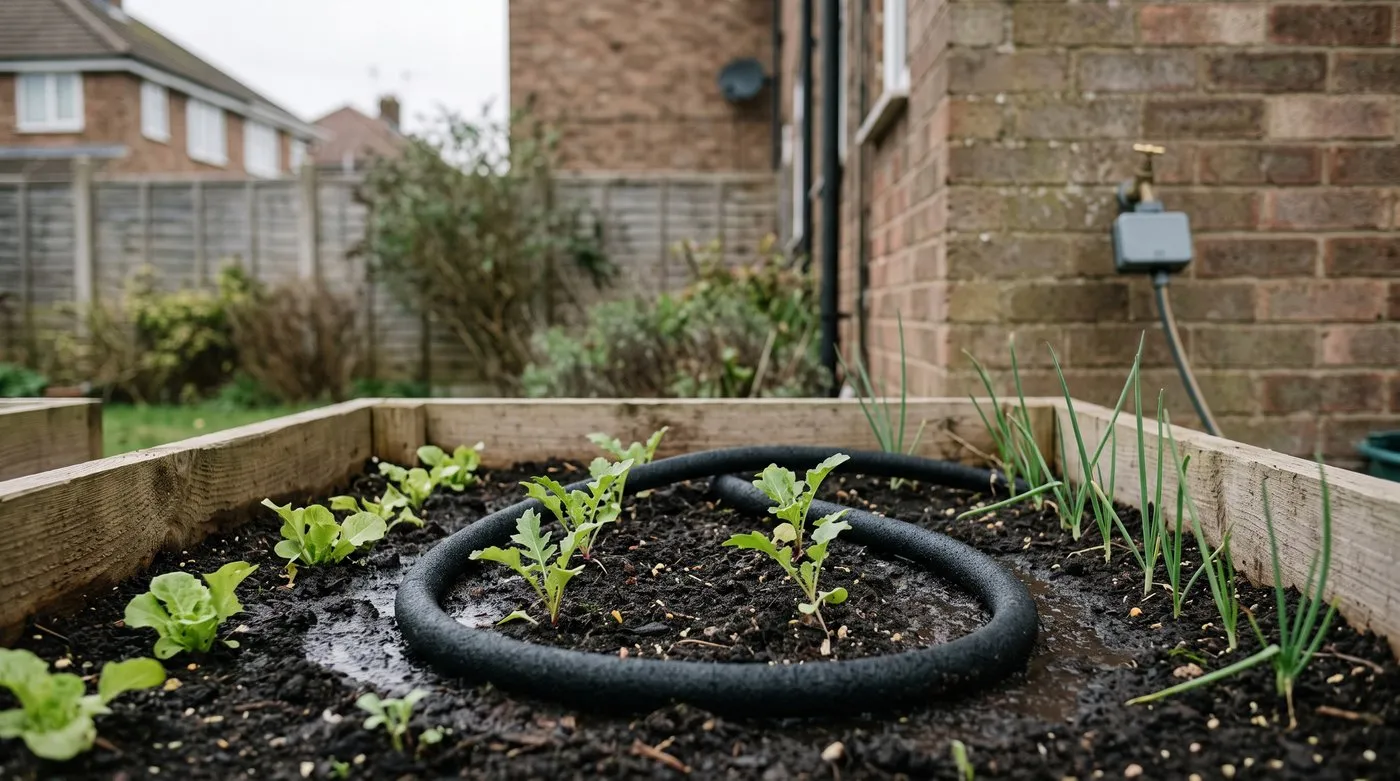
Lay the soaker hose once in spring and the timer does the rest. Fit the timer where you can reach it without stretching.
Help with the cost of garden changes
In England, the Disabled Facilities Grant (DFG) pays up to £30,000 for home changes that help you live independently. Garden changes can count. Your local council runs it in England, Wales and Northern Ireland, with different limits in Wales and Northern Ireland. Scotland has its own scheme, so ask your council. Adults are means tested.
The change has to be needed for your independence or safety. An occupational therapist visits and writes a report confirming the need.
Garden changes that can qualify include:
- Raised beds in place of ground-level beds
- Firm paths so a wheelchair can reach the garden
- Wider gates
- A ramp for level access from the house to the garden
- Automatic gate openers
To start, contact your council’s housing team and ask for a DFG assessment. It can take several months from start to finish, so apply early.
The RHS accessible gardening advice and Thrive’s gardening with a disability pages both have tips on funding and finding help.
Why gardening feels so good
Gardening lifts your mood, and being able to look after your own patch brings real independence. Growing your own food and caring for plants feels good in a way that’s hard to beat.
The charity Thrive runs gardening programmes across the UK for people with disabilities. Your GP or occupational therapist can refer you, or you can contact them yourself. Our guide to gardening for mental health and wellbeing has more on how gardening helps.
The easiest crops for accessible gardening
Salad leaves, radishes, herbs and bush tomatoes give the most food for the least effort. They grow happily in raised beds and pots, need no staking and keep cropping for ages.
| Crop | Pot size | Ready in | How easy | Good to know |
|---|---|---|---|---|
| Cut-and-come-again lettuce | 20cm pot or trough | 4-6 weeks | Very easy | Pick the outer leaves |
| Radishes | 15cm deep pot | 3-4 weeks | Very easy | The quickest crop going |
| Chives, mint, parsley | 15-20cm pot each | Straight away | Very easy | Buy plants rather than sow |
| Spring onions | 15cm deep trough | About 8 weeks | Easy | Sow in clumps |
| Bush tomatoes | 30 litre pot | 10-12 weeks from planting | Easy | No pinching out or tying in |
| Dwarf French beans | 30 litre pot | 8-10 weeks | Easy | Crops for weeks |
| Courgettes | 50 litre pot or raised bed | 8-10 weeks | Easy | One plant is plenty |
| Strawberries | Tower or wall pockets | From the second year | Easy | Pick at chest height |
For the easiest salad crop of all, see our guide to growing lettuce in the UK.

A raised bed at 60-75cm lets you garden comfortably from a chair or wheelchair.

Padded grips, angled handles and light materials are kinder on joints.

Lavender and rosemary smell wonderful when you brush past them.
Frequently asked questions
What height should raised beds be for wheelchair users?
Aim for 60-75cm high. That lets you reach over the edge comfortably without leaning too far. Keep the bed no more than 60cm deep from the side you work from, or about 120cm wide if you can reach from both sides. A small recess at the base lets your footrests slide underneath, so you sit closer to the plants.
What tools are best for gardening with arthritis?
Light tools with thick, soft or pistol-grip handles are best. They spread the pressure across your hand and need less grip. Ratchet secateurs cut in stages, so each squeeze takes less effort. Long or extendable handles save bending and kneeling. Try tools in your hand before you buy, as weight and balance matter more than brand.
Can you garden from a wheelchair?
Yes, with the right layout you certainly can. Raised beds around 60-75cm high are the main thing. Paths should be firm, level and at least 1.2 metres wide, with room to turn. Wall planters, table-height troughs and climbing crops bring more plants within reach. A drip hose saves carrying watering cans, and a greenhouse with a level floor lets you garden in poor weather.
What is the Disabled Facilities Grant and how do I apply?
It’s council money for home changes that help a disabled person live independently. In England it pays up to £30,000, with different limits in Wales and Northern Ireland. Garden changes such as safe paths can qualify if they’re essential. Apply through your local council, which usually arranges an occupational therapist visit. Adults are means tested. Homeowners and tenants can both apply.
What is a sensory garden and how does it help people with visual impairment?
It’s a garden planted for scent, touch, sound and taste. That gives people with sight loss cues to find their way and plants to enjoy. Lavender and rosemary along a path mark where you are. Soft plants like lamb’s ear invite a stroke. A change of path surface signals a junction, and water or rustling grasses act as sound landmarks.
What automatic watering systems work best for disabled gardeners?
A drip hose or soaker hose on a tap timer works best. It saves carrying heavy cans and waters without any daily effort. Kits are easy to find and simple to lay along raised beds. For pots, self-watering containers only need topping up every few days. Fit the timer at a height you can reach easily.
Which vegetables are easiest to grow with limited mobility?
Salad leaves, radishes, spring onions and herbs are the easiest. They need little care, grow happily in pots or raised beds and need no staking. One courgette plant in a big pot gives plenty. Bush tomatoes need no pinching out or tying in. Dwarf French beans in containers crop for weeks at a comfy picking height.
Related reading
- Raised Bed Garden Design Ideas, ideas and materials for raised beds at any height
- Raised Bed Gardening for Beginners, soil, drainage and first crops
- Container Vegetable Gardening UK, growing food in pots on patios and balconies
- Patio Garden Ideas for Small Spaces, layouts for small, easy-to-reach spaces
- Gardening for Mental Health and Wellbeing, how gardening helps you feel better and how to start
Many gardening schemes run through the NHS. See our guide to gardening on prescription.
Our team produces practical UK gardening guidance from source research, contributor records and established horticultural practice. Editorial standards are overseen by Matt W.


