Key takeaways
- Most gardening back pain comes from bending, heavy lifting and twisting with a load
- Switch jobs every 20-30 minutes so you're not stuck in one position
- Bend your knees, keep the load close and turn with your feet, not your back
- Kneel on a pad rather than crouching, and use long-handled tools
- Raised beds and no-dig gardening take away much of the bending
- Get medical help if pain spreads down a leg or doesn't ease within a few weeks
Gardener’s back pain is common, but most of it can be avoided. It usually comes from staying bent over too long, lifting awkwardly or twisting with something heavy. Small changes to how you work, the tools you use and the shape of your beds make a big difference.
This guide is about protecting your back while you garden, whatever your age. If you’re adapting a garden for a long-term condition or wheelchair use, see the guide to accessible gardening.
Why does gardening hurt your back?
Gardening asks your back to do four tricky things, often all in one afternoon:
- Bending forward for a long time, such as digging, weeding and planting.
- Lifting heavy things from the ground, such as compost bags, pots and full watering cans.
- Staying in one position, such as crouching to weed or kneeling to plant.
- Twisting while carrying a load, such as tipping soil into a barrow or throwing weeds on a heap.
Most “bad back the next morning” moments come from doing one of these for too long without a break. The fixes below tackle each one.
How to lift without hurting your back
Lift with your legs, keep the load close and turn with your feet. It sounds obvious, but it is easy to forget for “small” jobs like a full watering can.
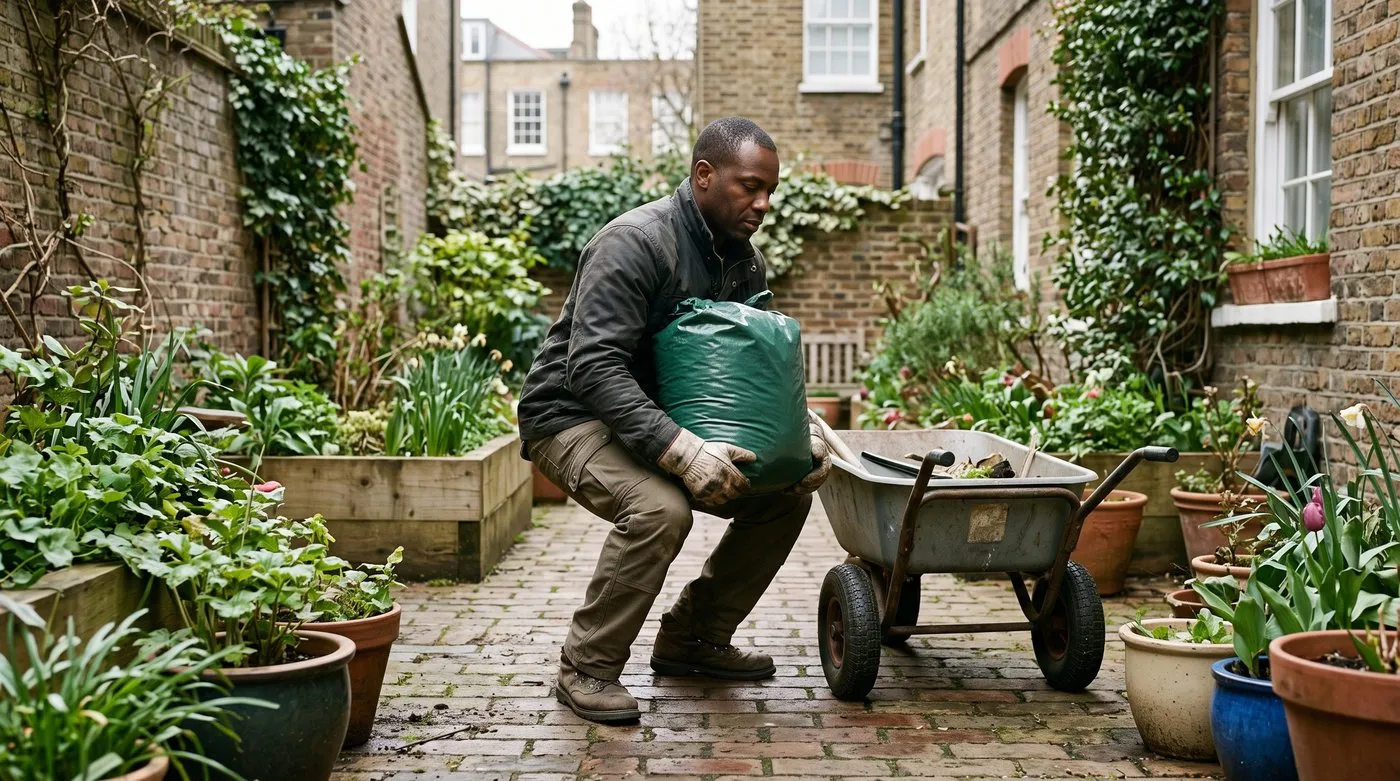
Knees bent, back straight and the bag held close: the safe way to lift, with a cart ready to take the weight.
- Stand close to the load with your feet apart.
- Bend your knees and keep your back fairly straight.
- Get a good grip and hold the load close to your body.
- Stand up using your legs, not by straightening your back.
- Turn by moving your feet, never by twisting your back.
- Put it down the same way, bending your knees.
Make loads lighter wherever you can. Half-fill watering cans, split big compost bags into buckets and use a barrow or sack truck. Get help with anything that feels too heavy, such as large pots or paving slabs. A garden cart with two wheels is easier on the back than a single-wheel barrow, as you don’t have to balance it.
Kneel, don’t crouch
Crouching strains your back, knees and hips all at once. Kneeling on a pad is far kinder. Kneel on one knee with the other foot forward, so you can lean in without rounding your back.
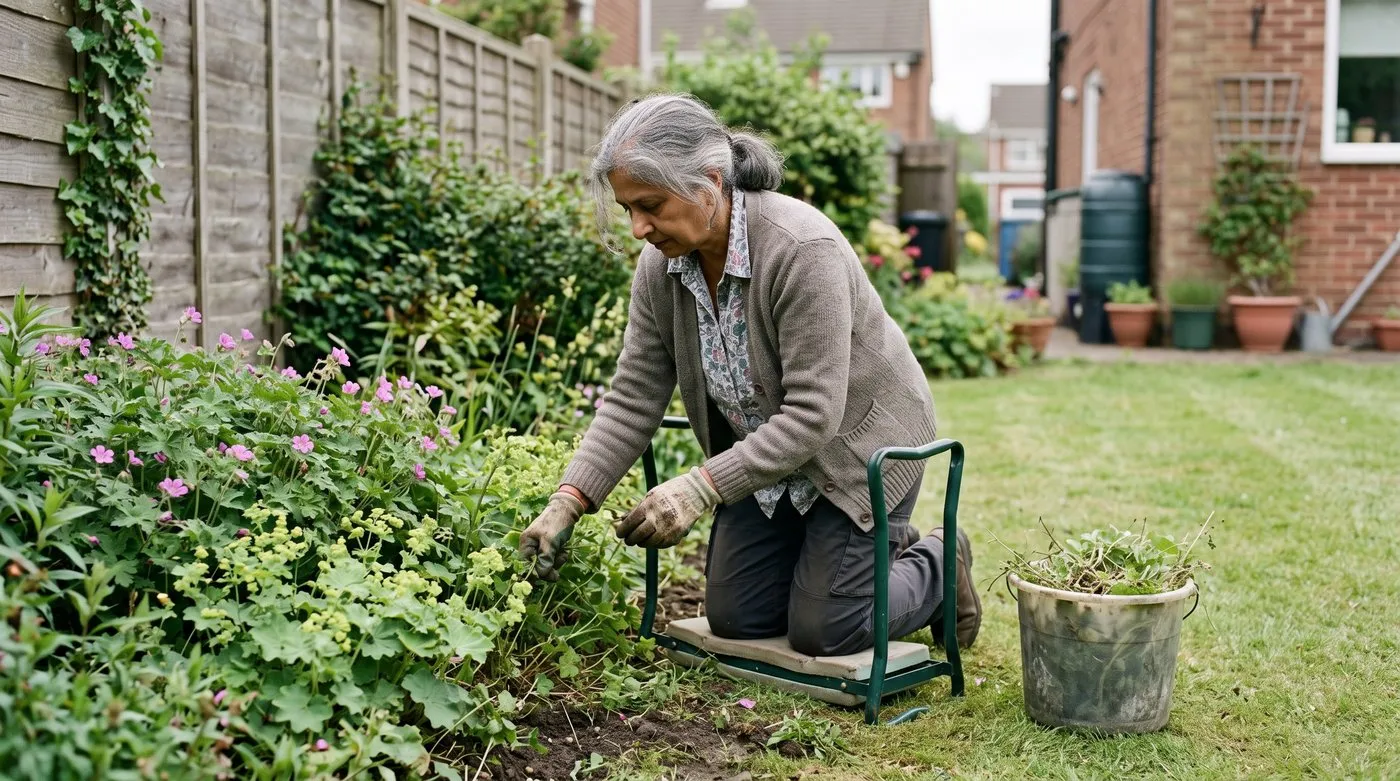
A kneeler with handles makes getting down and back up much easier, and keeps your back upright while you weed.
A kneeler with handles helps you get down and back up without a heave. Flip it over and it becomes a low seat for jobs at bed height. Keep a pad in each part of the garden, so it is always to hand.
When you weed, work close to you. Shuffle along the bed rather than stretching out to reach.
Change jobs every 20-30 minutes
Staying in one position too long is what leaves you stiff the next day. Switch jobs every 20-30 minutes: weed for a bit, then stand up to prune, then walk the barrow to the heap.
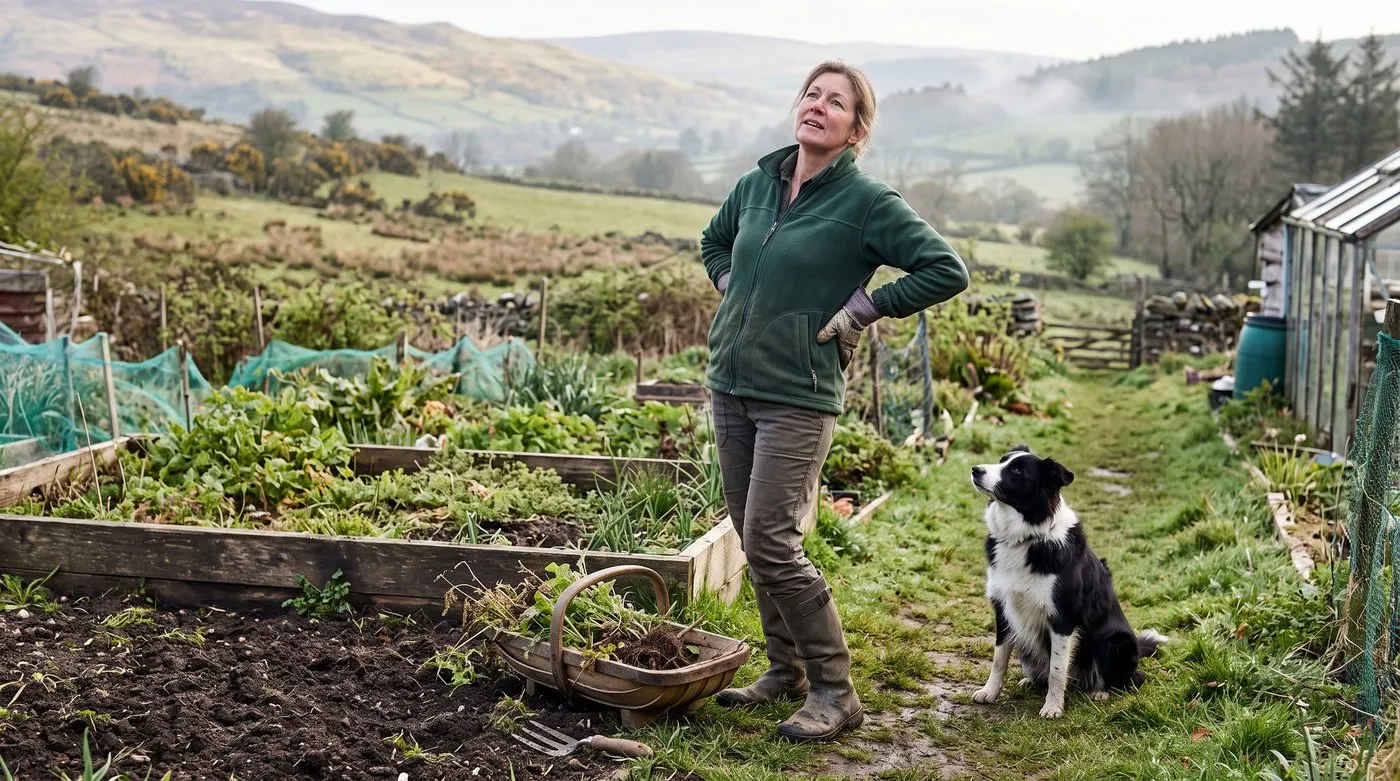
Stand up, stretch and switch jobs every 20-30 minutes. The dog will usually approve of the break.
Plan your session so heavy and light jobs alternate. Stand up, stretch and walk about for a minute between spells. Swap hands and sides when you dig or rake, so one side doesn’t do all the work. Stop before you feel tired, as that is when people take shortcuts with lifting.
Back-friendly tools that help
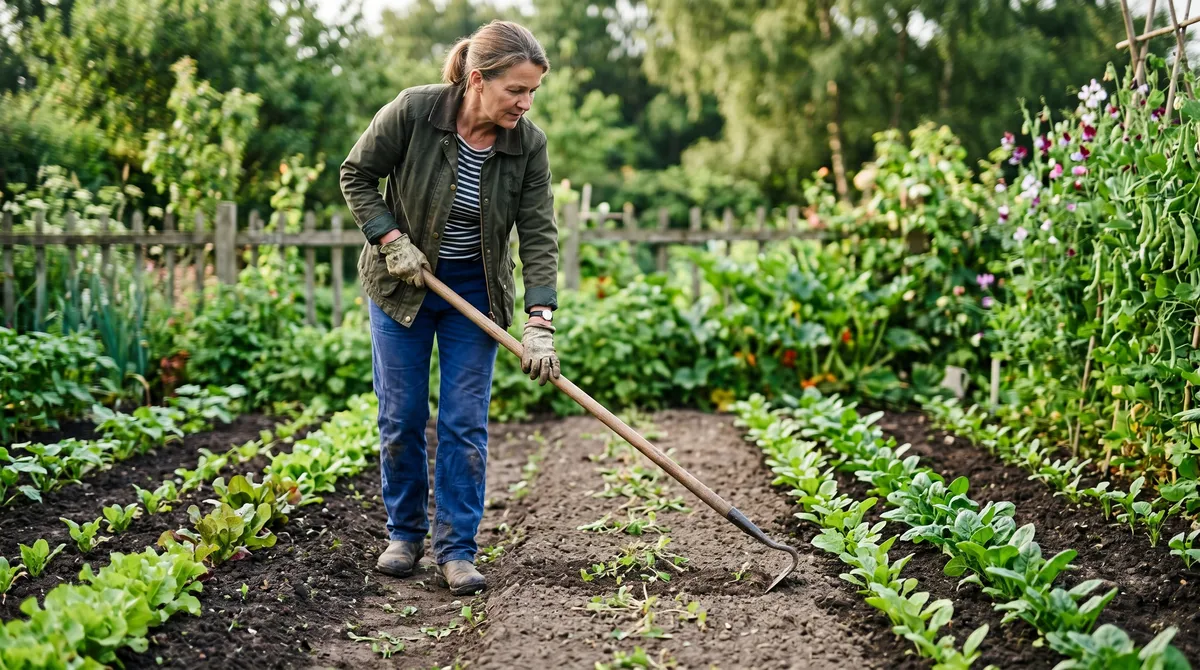
Long-handled tools let you work standing up. A long-handled hoe deals with weeds without bending, and the guide to hoeing borders shows how to use one well. Long-handled forks, weeders and bulb planters all help too.
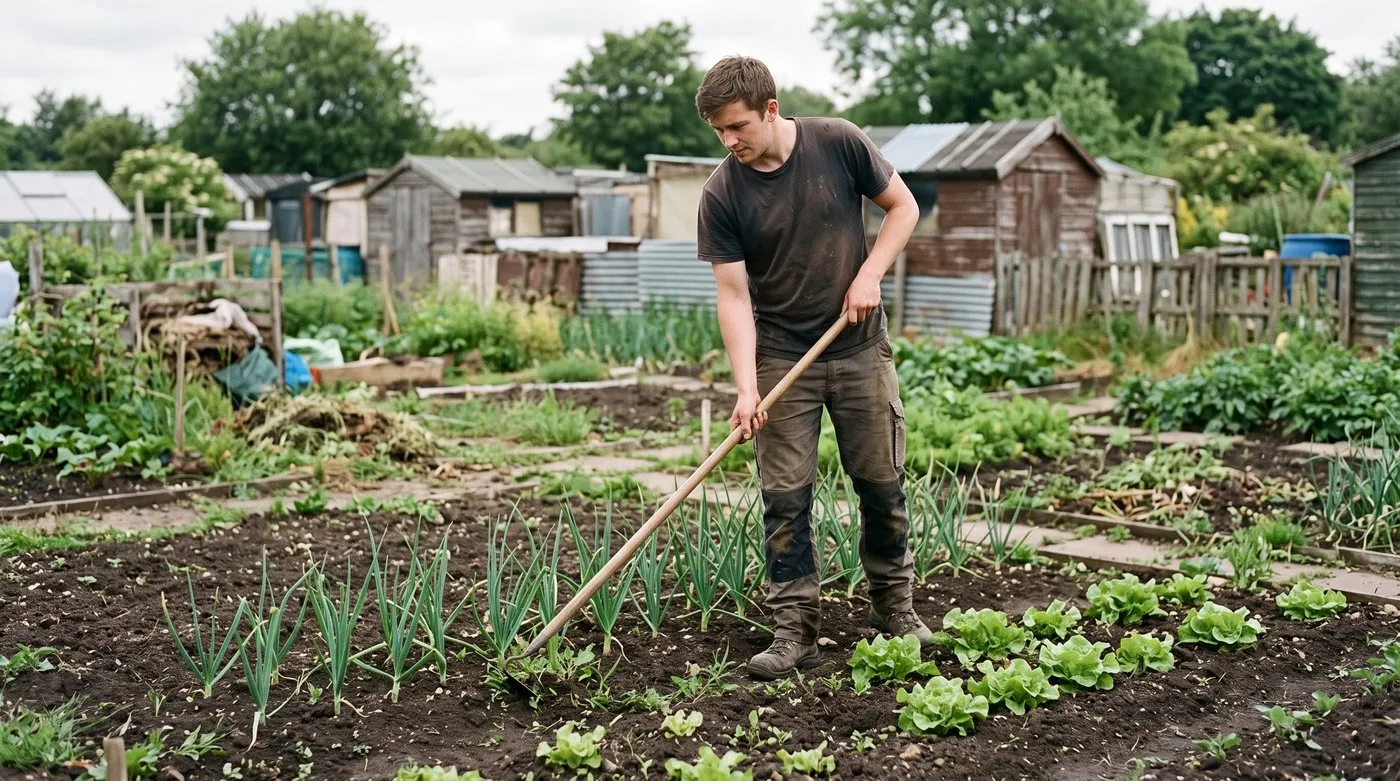
A long-handled hoe lets you weed standing tall. The handle should reach comfortably towards your chest.
Other kit worth having:
- A smaller, lighter spade or border fork, so each spadeful weighs less.
- Padded or chunky grips, which are easier on stiff hands.
- A two-wheeled garden cart that stays upright on its own.
- A kneeler with handles for jobs at ground level.
- Sharp tools. A sharp spade or hoe needs much less force. The guide to sharpening garden tools shows how.
Try tools in the shop before you buy. The handle should reach comfortably towards your chest, so you don’t have to stoop.
Raised beds and no-dig: less bending all year
The biggest long-term fix is to change the garden so the worst bending doesn’t happen.
Raised beds bring the soil up to you. At about 60cm you can perch on the edge and lean in. At about 90cm you can work standing up. Keep beds narrow, about 1.2m if you can reach from both sides, so you never stretch into the middle. The guide to raised bed gardening for beginners covers building and filling them. Growing tables on legs are another option for salads and herbs.
No-dig gardening removes the heaviest job of the year. Instead of digging, you spread compost on the surface each autumn and let worms do the mixing. The guide to no-dig gardening explains how to switch.

A tall raised bed lets you weed, plant and pick standing up, so your back hardly has to bend at all.
A five-minute warm-up for gardeners
Five minutes of gentle movement gets you ready for work, especially on a cold morning. Keep every movement slow and comfortable. Stop if anything hurts.
- Walk round the garden for a minute or two, swinging your arms.
- Roll your shoulders backwards and forwards.
- Gentle side bends, sliding a hand down each thigh.
- Knee lifts, bringing each knee up in turn while holding onto something steady.
- Cat and cow, on hands and knees on a mat, slowly arching and dipping your back.
At the end of the session, walk about for a few minutes and repeat a couple of the gentle stretches. If you have a back problem already, ask your GP or a physiotherapist which stretches suit you.

A gentle cat-cow stretch on a mat loosens the back before a session. Keep it slow and stop if anything hurts.
When to see a GP about back pain
Most back pain from gardening eases within a few weeks. Keep gently active and use ordinary painkillers if you need them. Staying in bed tends to make it worse.
See a GP if:
- pain spreads down a leg, or you get pins and needles or numbness in a leg
- the pain hasn’t started to ease after a few weeks
- the pain is stopping you doing everyday things
Get urgent help (call 999 or go to A&E) if you have numbness around your bottom or genitals, or trouble controlling your bladder or bowels. The NHS back pain page has more on what to do.
Common back-pain mistakes in the garden
- One long session. Doing all the weeding in a single afternoon is a classic cause. Little and often is kinder.
- Bending your back to lift “light” things. A full can or a big pot is heavier than it looks. Bend your knees every time.
- Crouching instead of kneeling. Grab the kneeler, even for a quick job.
- Twisting with a full spade. Turn your feet towards where the soil is going.
- Skipping the warm-up on cold mornings. Stiff muscles strain more easily.
Frequently asked questions
Why does gardening hurt my back?
Long spells of bending, lifting and twisting strain the lower back. Digging and weeding keep you bent over for ages. Lifting compost bags or full cans adds load. Twisting while carrying something, such as tipping soil into a barrow, is especially hard on the back.
What is the best garden tool for a bad back?
A long-handled tool that lets you work standing upright. Long-handled hoes, weeders and border forks all cut down on bending. A lighter, smaller spade means less weight with each lift. A kneeler with handles helps you get up and down more easily.
What height should a raised bed be for back pain?
Around 60-90cm suits most people with back pain. At about 60cm you can sit on the edge and lean in. Around 90cm lets you work standing up. Keep beds narrow enough to reach the middle without stretching.
Should I warm up before gardening?
Yes, five minutes of gentle movement helps, especially on cold mornings. Try a short walk round the garden, shoulder rolls and gentle side bends. Start with lighter jobs before heavy digging or lifting, and take regular breaks.
Does no-dig gardening help back pain?
Yes, it takes away the heaviest job of the year, which is digging. Instead of turning the soil, you spread compost on the surface and let worms mix it in. You still move compost, so use a barrow and carry smaller loads.
When should I see a doctor about back pain from gardening?
See a GP if pain spreads down a leg or lasts a few weeks. Get urgent help if you have numbness around your bottom or genitals, or trouble controlling your bladder or bowels. Most gardening back pain eases with time and gentle movement.
For more ways to keep growing comfortably as the years go by, read the guide to allotment gardening as you age, or browse more how-to guides.
Our team produces practical UK gardening guidance from source research, contributor records and established horticultural practice. Editorial standards are overseen by Matt W.