Key takeaways
- Raised beds around 60-80cm high take most of the bending out of allotment work
- Keep beds narrow enough to reach the middle without stretching, about 1.2m if worked from both sides
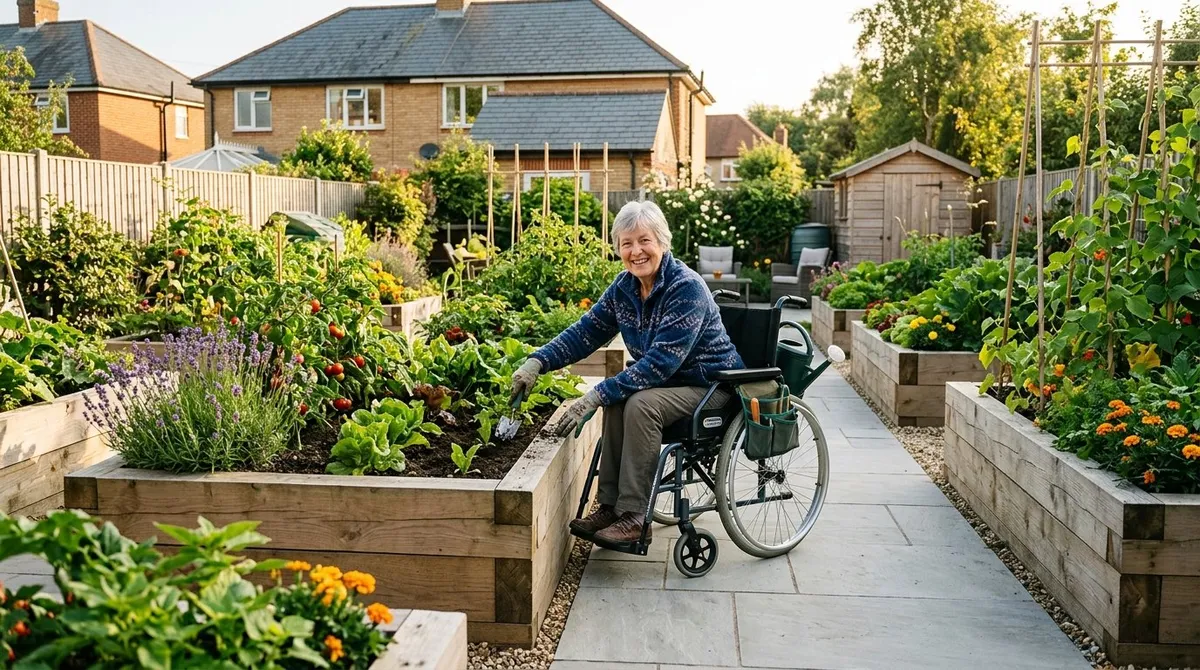
- Paths at least 90cm wide fit a stool or barrow; about 1.2m suits a wheelchair
- Lighter, long-handled tools and ratchet secateurs ease sore hands and backs
- Ask about a half plot or plot-sharing before giving up a plot that's become too big
- Grow fewer, easier crops and mulch well to cut weeding
An allotment is one of the best things you can have as you get older. It gets you outdoors, keeps you moving and comes with a built-in community. The trick is to make the plot fit your body, not the other way round.
That usually means three changes: bring the soil up with raised beds, make the paths wide and firm, and cut the workload. This guide is about adapting an existing allotment plot. For wider advice on gardening with a disability or health condition, see the guide to accessible gardening.
How to adapt an allotment as you get older
Start with the jobs that hurt. If bending is the problem, raise the beds. If you trip or tire on the walk to the shed, sort the paths. If you can’t keep up with the weeds, shrink the area you cultivate.
You don’t have to do it all in one go. Convert one or two beds a year, starting nearest the gate. Ask for help with the heavy building work: family, friends, site work parties or a local handyperson. Many allotment societies are glad to help a long-standing plot holder stay on.
The charity Thrive has helpful advice on gardening with health conditions and getting older.
What height should raised beds be for older gardeners?
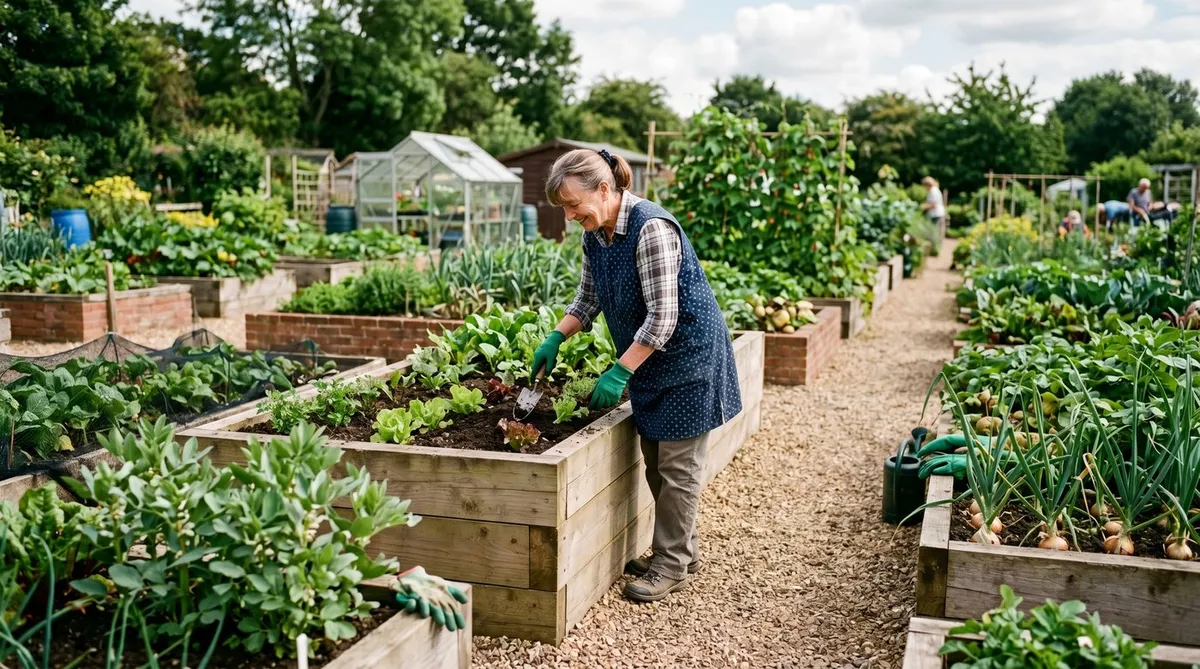
About 60-80cm suits most people. At that height you can sow, weed and pick without bending. Try a few heights against a table or worktop before you build, to see what feels right.
| Bed height | Who it suits |
|---|---|
| 30-40cm | Gardeners who can still kneel for short spells |
| 40-50cm | Working from a stool or low seat |
| 60-80cm | Standing with little or no bending |
| Tabletop bed | Wheelchair users, with knee space underneath |
Width matters too. You should reach the middle without stretching. That’s usually about 1.2m wide if you can get to both sides, and about 60cm against a fence or path edge. Keep beds short enough that you’re not tempted to step across them.
Scaffold boards make sturdy, long-lasting sides. Tall beds hold a lot of soil, so fill the bottom with rough material such as old turf or woody prunings, then topsoil and compost on top. The guide to raised bed gardening covers building and filling in more detail.
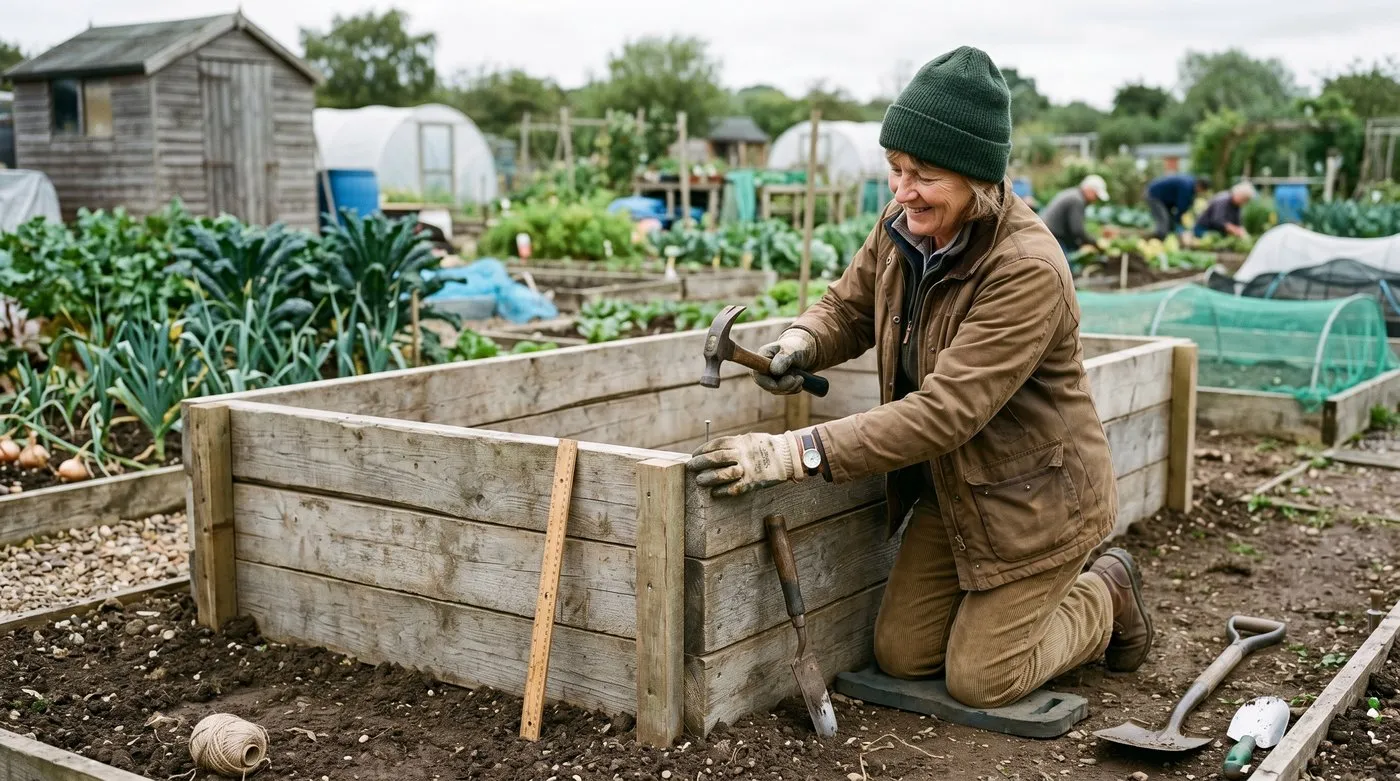
Building the beds is the hard bit, so line up some help. Once they’re in, they save your back for years.
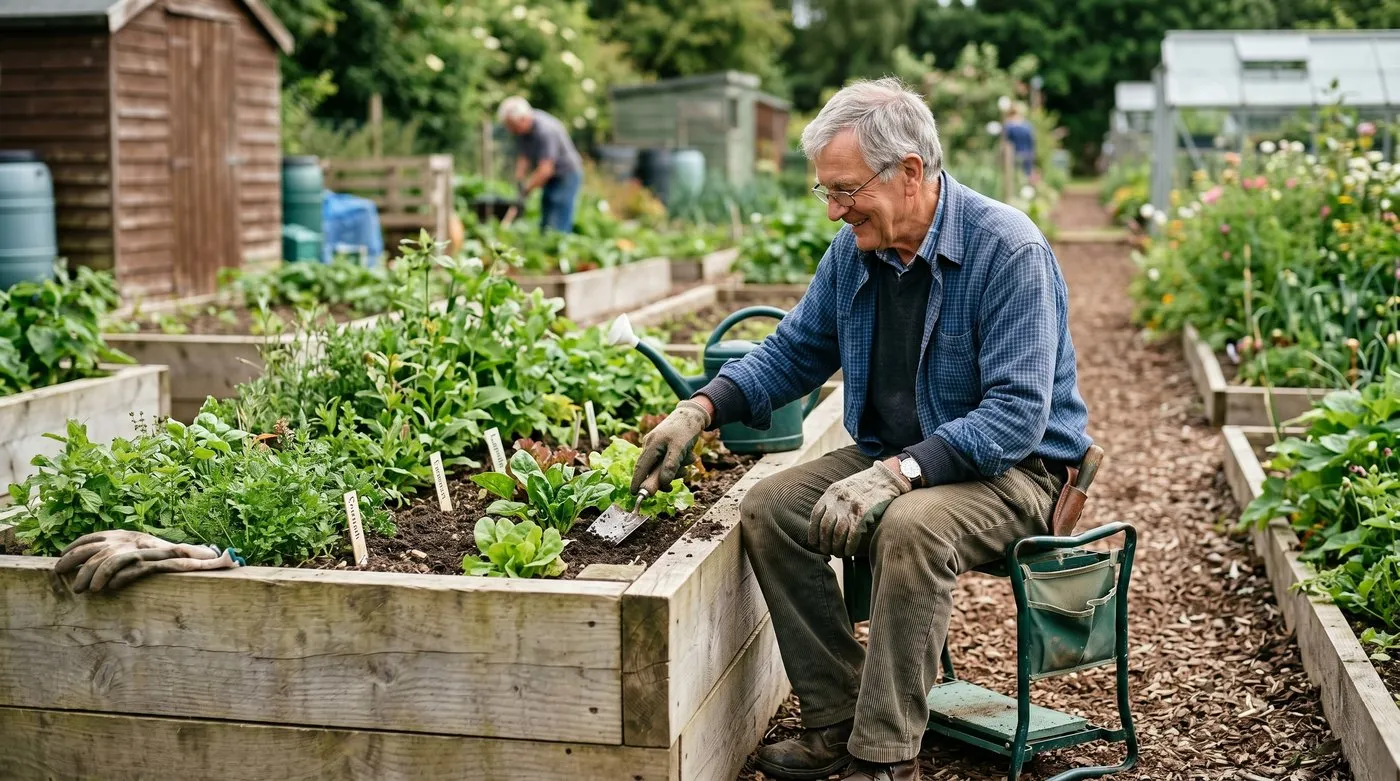
A kneeler stool and a raised bed together mean you can plant and weed sitting comfortably. Flip the stool over and it becomes a kneeling pad.
How wide should allotment paths be?
At least 90cm for the main paths, so a stool or wheelbarrow fits beside the beds. If you use a wheelchair or mobility scooter, aim for about 1.2m.
The surface matters as much as the width. Grass paths get slippery in winter and bumpy in summer. Firmer options include:
- Bark or wood chip on weed membrane: soft underfoot, but top it up each year.
- Compacted gravel or hoggin on a firm base: good for wheels if well compacted.
- Paving slabs bedded on sand: the steadiest surface for sticks, frames and wheelchairs.
Avoid steps where you can. A gentle ramp is safer at any age. The allotment path construction guide explains how to lay each type.
Warning: Wet wood chip and slabs can be slippery. Don’t push a heavy barrow on wet paths. Move smaller loads more often.
Lightweight tools for older gardeners
Light, long-handled tools with comfortable grips make the biggest difference. Try tools in a shop before you buy, as weight and balance vary a lot.
- Spade and fork: a stainless steel head and a lighter shaft. A border spade or fork has a smaller head, so each load is lighter.
- Hoe: a long-handled hoe keeps weeds down without stooping.
- Long-handled trowel and fork: for planting into raised beds from a seat.
- Ratchet secateurs: they cut in stages, so they need less grip. Good for stiff or arthritic hands. See choosing secateurs.
- Kneeler stool: a seat one way up, a kneeling pad with handles the other.
- Two-wheeled barrow or trolley: more stable than a single wheel.
- Hose on a reel: saves carrying full watering cans, if your site allows hoses.
Swap tools gradually as old ones wear out, starting with whatever hurts most to use.
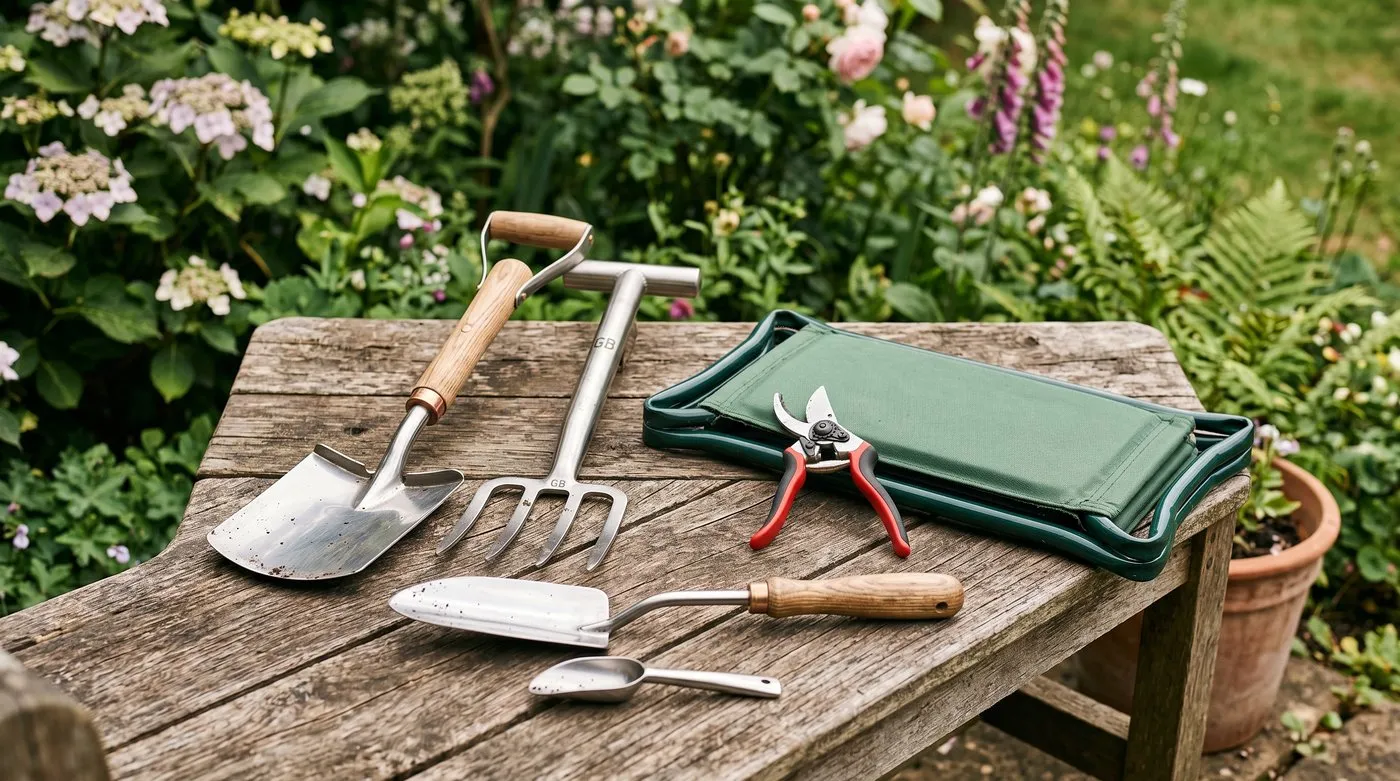
Lighter stainless tools, ratchet secateurs and a kneeler pad make a gentle starter kit. Add pieces as your old tools wear out.
Half plots and plot-sharing
If the whole plot has become too much, don’t give it up straight away. Many sites offer half plots, and many allow plot-sharing with a named co-worker. Always ask your site secretary or council first, as rules vary.
Sharing works well with a younger gardener, a family member or someone on the waiting list. Agree simple things in writing: who does which beds, who pays the rent and how you share the harvest. A quick monthly chat over the beds keeps things friendly. The guide to half plots and plot-sharing covers the arrangements in more detail.
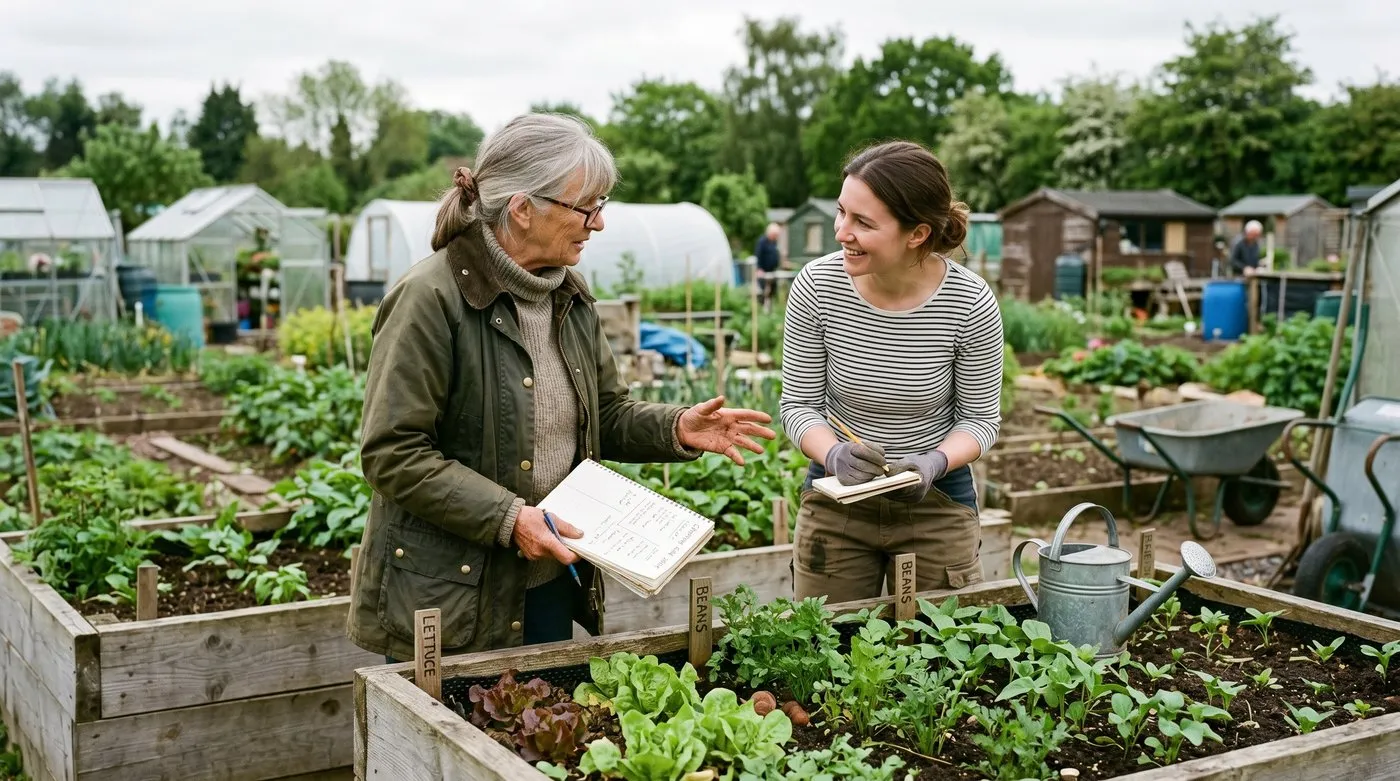
Sharing a plot spreads the work and the knowledge. A regular catch-up over the beds keeps everyone on the same page.
A low-maintenance allotment layout
Keep the hardest-working beds nearest the gate and the shed. Put the least demanding crops furthest away.
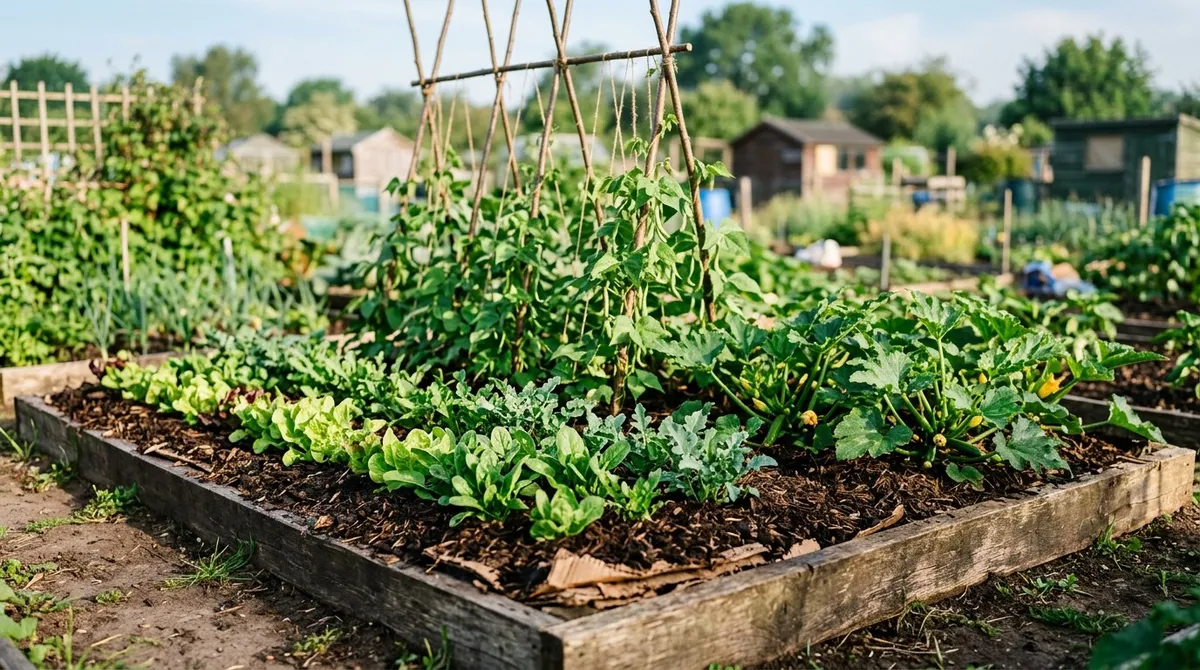
- Near the gate: two or three raised beds for salads, herbs, beans and courgettes, which you visit most.
- Middle: a raised bed or two for roots, onions and brassicas.
- Far end: permanent beds for rhubarb, asparagus and fruit bushes, which need little attention.
- Shed: tools on a wall rack at standing height, and a chair just inside the door.
- Water: water butts on the shed and a hose reel or a can kept near each bed.
- Compost: a bay with a removable front board, so you can shovel compost out without lifting it over the top.
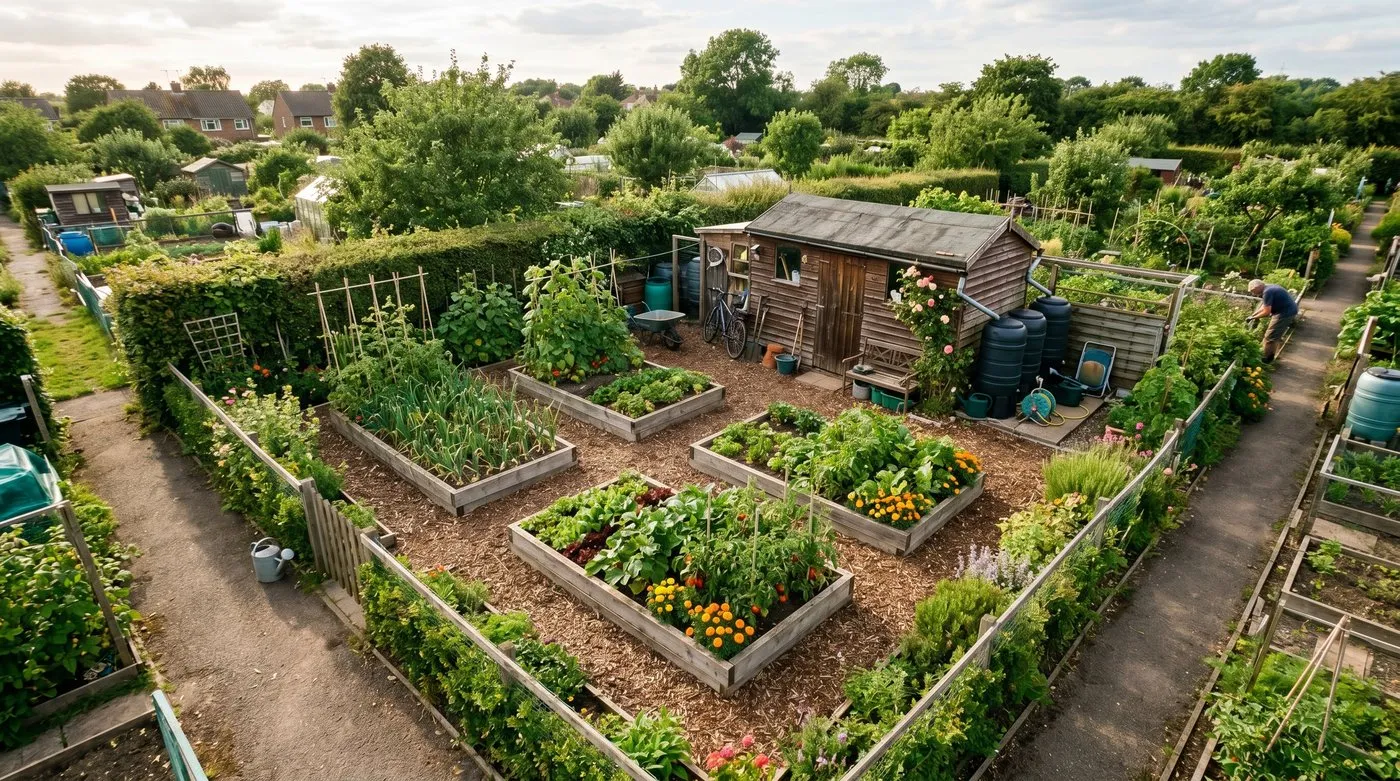
Raised beds, wide chipped paths and the shed close by. A layout like this keeps every job within easy reach.
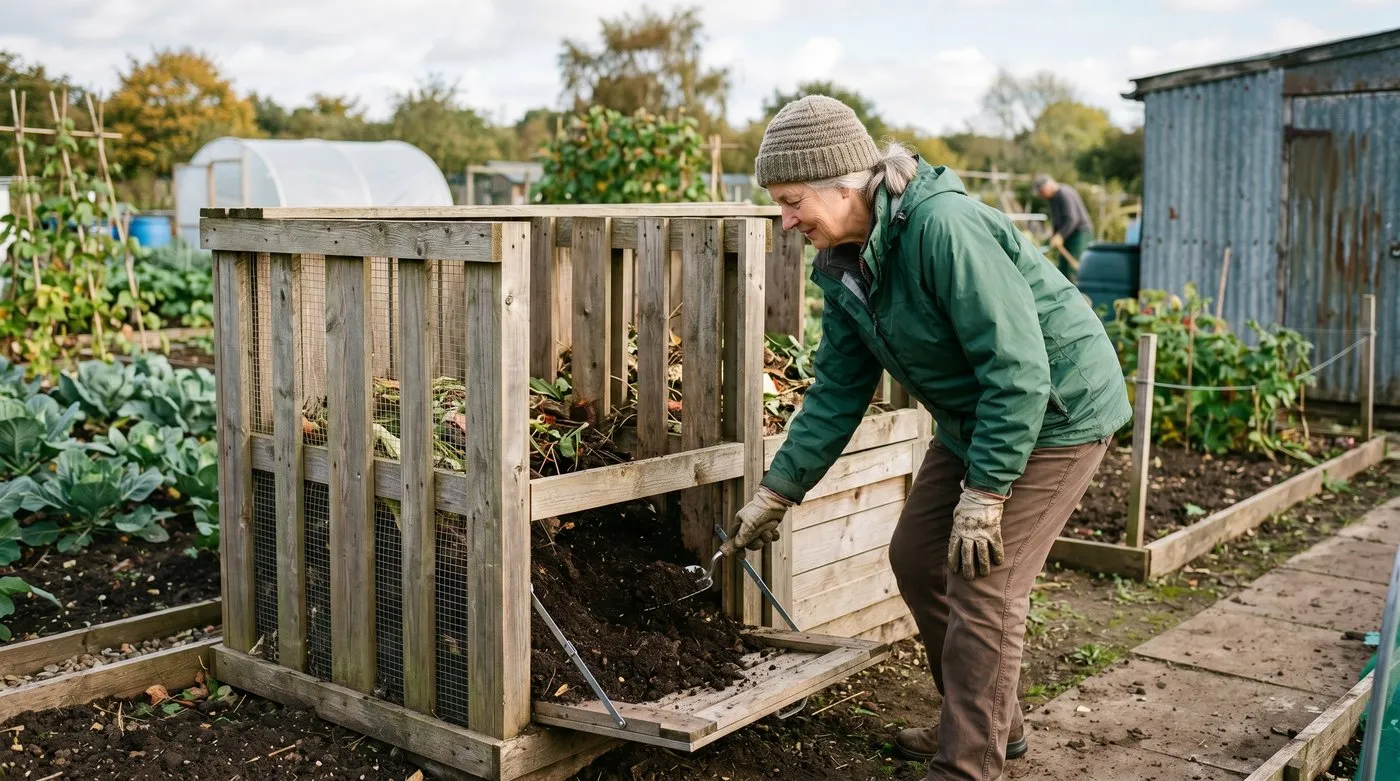
A compost bay with a removable front lets you shovel from the bottom. No lifting heavy forkfuls over the top.
How to cut down the work on an allotment
The fastest way to save time is to grow less, but grow things you love. You don’t need a year’s potatoes any more.
- Mulch beds with compost or wood chip to smother weeds and hold moisture.
- Cover empty ground with cardboard or a sheet over winter.
- Grow perennials such as rhubarb, asparagus, currants and perennial herbs. The guide to perennial vegetables has more ideas.
- Choose easy crops: salads, courgettes, beans, chard and garlic give a lot for little effort.
- Plan short sessions and rest days. Little and often beats one exhausting afternoon.
- Look after your back: the guide to gardener’s back pain has warm-up and lifting tips.
Common mistakes when adapting an allotment
- Building beds too wide. If you can’t reach the middle, it becomes a weed patch.
- Leaving paths narrow. Raised beds lose their point if you can’t get a stool or barrow alongside.
- Building beds too tall to reach into. Very high beds make the middle hard to reach. Test the height first.
- Doing it all at once. Convert a bed or two a year and get help with the heavy work.
- Growing the same as twenty years ago. Drop the crops that wear you out and keep the ones you enjoy.
Once your beds are raised, read our no-dig gardening guide to keep them weed-free with even less effort. More plot advice is on our growing veg hub.
Frequently asked questions
How can I adapt my allotment as I get older?
Raise the beds, widen the paths and cut the workload. Choose lighter tools, mulch to reduce weeding and grow fewer, easier crops. If the plot is too big, ask about a half plot or sharing.
What is the best raised bed height for older gardeners?
About 60-80cm suits most older gardeners. Lower beds of 40-50cm work if you sit on a stool. Wheelchair users usually prefer a tabletop bed with space underneath for their knees.
How wide should a raised bed be?
Narrow enough to reach the middle without stretching. That’s usually about 1.2m if you can work from both sides. Against a fence, keep it to about 60cm.
Can I share my allotment with someone else?
Often yes, but ask your site secretary or council first. Rules vary from site to site. Some add a co-worker to the tenancy, others offer half plots instead.
What tools are easiest for older gardeners?
Lightweight, long-handled tools with comfortable grips. Ratchet secateurs need less hand strength. A kneeler stool and a two-wheeled barrow also save a lot of strain.
Which crops are least work on an allotment?
Perennials and fruit bushes need the least work. Rhubarb, asparagus, currants and perennial herbs come back every year. Salads and courgettes give lots for little effort.
Our team produces practical UK gardening guidance from source research, contributor records and established horticultural practice. Editorial standards are overseen by Matt W.