
Key takeaways
- Keep off flooded beds until the soil no longer holds a clear bootprint
- Throw away any produce that touched floodwater, especially salads and anything eaten raw
- Most allotment flooding is saturated heavy soil, so drainage matters more than barriers
- Raised beds 30-60cm tall lift roots out of the wettest soil
- French drains and soakaways help, but ask your site committee before digging
- Add organic matter every year to improve heavy soil structure
A flooded allotment is miserable, but most plots recover. The golden rules are simple: keep off the wet soil, bin any produce that sat in floodwater, and wait. Once the plot dries, you can make it far more flood-resilient with raised beds and better drainage.
This guide is for allotment holders, so it covers rented plots and shared sites. For a home garden after a downpour, see the guide to a sodden garden after heavy rain.
What to do when your allotment floods
Stay off the beds and let the water go down on its own. Walking on waterlogged soil squashes out the air that roots need, and that damage takes a long time to put right.
- Stay on paths. If you must cross a bed, lay a plank to spread your weight.
- Move loose items such as bins, fleece, netting and pots to higher ground.
- Switch off any mains electrics to sheds or polytunnels at the supply. Don’t touch anything electrical standing in water.
- Don’t pump the plot out. It rarely helps and churns up the soil.
- Wear gloves and wash your hands after touching floodwater or flooded plants.
- Tell your site rep if water is coming from a blocked ditch or drain they look after.

Take stock from the path rather than the beds. Most of the recovery work is simply waiting for the soil to dry.
Can you eat vegetables from a flooded allotment?
No. Throw away any produce that touched floodwater, even if it looks clean. Floodwater can carry sewage and run-off from roads and farmland. Salads, herbs and anything you’d eat raw are the biggest risk.
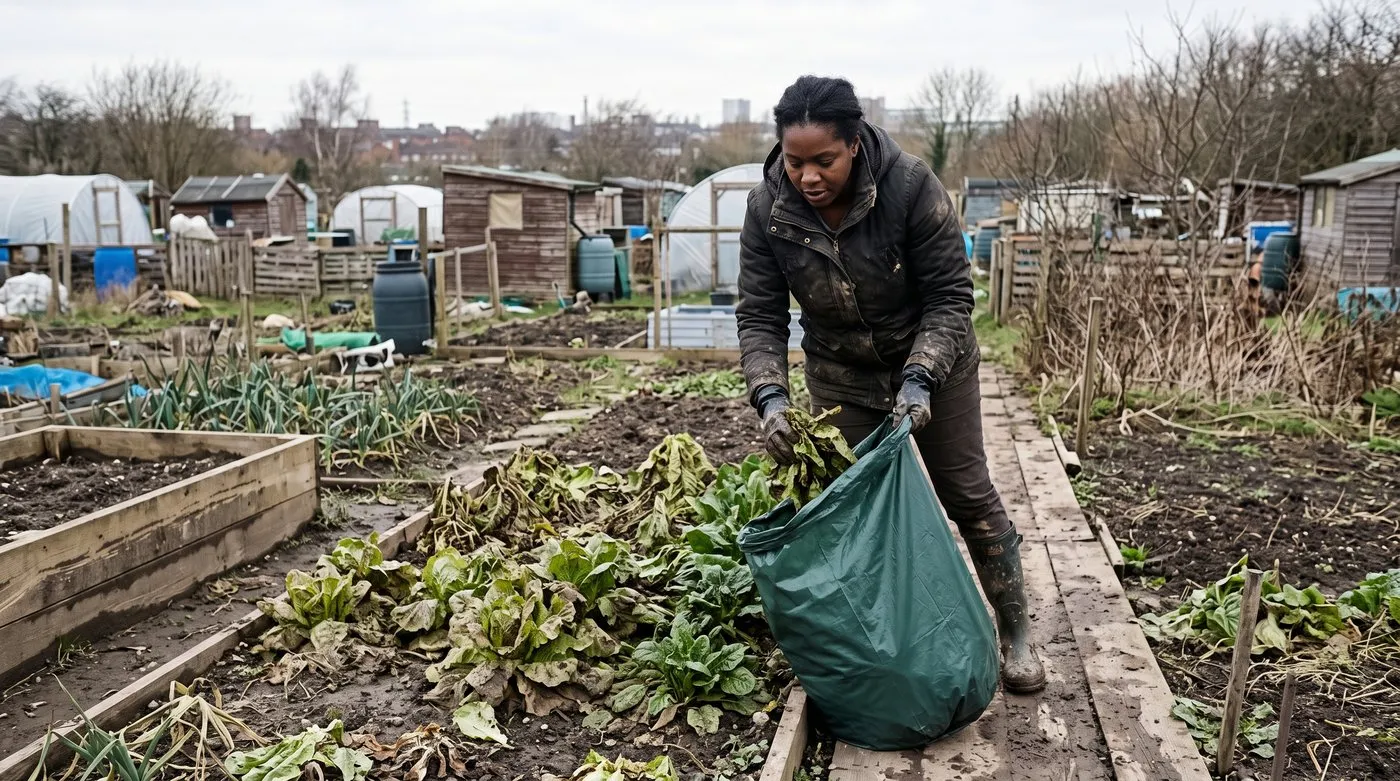
Anything that sat in floodwater goes in the bin, however clean it looks after a rinse. Then you can re-sow with a clear conscience.
Crops that stayed well above the water line are usually fine once washed. If in doubt, compost it or bin it and sow again.
Which crops survive a flood?
It depends on the crop and how long the roots sat in water. Roots need oxygen, so a flood that drains in a day or two does far less harm than one that lingers.
| Crop | How it usually copes |
|---|---|
| Brassicas such as kale and cabbage | Often pull through a short flood |
| Leeks | Often pull through a short flood |
| Broad beans | Autumn-sown plants often recover |
| Onions and garlic | Rot quickly in waterlogged soil |
| Potatoes in the ground | Tubers usually rot |
| Carrots, parsnips and beetroot | Often split or rot, and need binning if flooded |
| Tomatoes, courgettes and French beans | Rarely recover |
Give survivors a week or two before you decide. Pull anything yellowing and collapsing, or smelling of rot.
How to recover allotment soil after flooding
Wait until the soil is workable. A simple test: step on the edge of a bed. If your boot leaves a clear, shiny print, it’s still too wet. On heavy clay this can take weeks.
Once it’s dry enough:
- Clear debris and dead plants. Compost healthy material and bin anything that sat in floodwater.
- Spread well-rotted compost or manure 3-5cm deep over the surface. Worms will pull it in.
- Sow a green manure on bare ground. Mustard and phacelia suit spring and summer; grazing rye suits autumn. The guide to green manures and cover crops has sowing times.
- Check the soil pH with a simple kit before liming anything.
- Start with fast crops such as salads and radishes while the soil settles.
Why allotments flood in the first place
Most allotment flooding is saturated soil. Autumn and winter rain fills heavy clay until it can’t take any more, and the rest sits on top. Less often, water runs in from car parks, roads or higher ground, or a nearby stream overflows.
Work out which you have before spending money:
- Walk the site after heavy rain. Note where water pools and where it flows.
- Dig a test hole about 60cm deep at your lowest point. If it fills from below and stays full, the water table is high.
- Ask long-standing plot holders. They’ll know which plots always flood.
- Check the official flood map. In England, use the GOV.UK long-term flood risk checker for your site’s postcode.
The soil drainage and structure guide explains how to read your soil in more detail.
Raised beds for a flood-prone plot
Raised beds are the most useful single fix. They lift roots out of the wettest soil and give you somewhere to work while paths are muddy.
- 30cm beds suit plots that are soggy in winter but rarely under water.
- 45-60cm beds suit plots that flood or sit wet for weeks. Brace long sides every couple of metres so wet soil doesn’t bow them.
- Mounded beds without walls are a cheap option. Pile soil and compost into a long, wide ridge and plant the top and sides. They need topping up each year.
Fill with a mix of topsoil and well-rotted compost. Raised beds dry out faster in summer, so mulch them well. Tall beds are also easier on your back.

Tall beds keep crop roots up out of the waterlogged ground. The muddy paths show exactly why they’re worth building.
How to build a French drain on an allotment
A French drain is a gravel-filled trench with a perforated pipe in the bottom. It collects water from a wet patch and carries it somewhere it can soak away. Ask your site committee before you start: it’s a permanent change to rented land.
- Plan the route from the wet area to a soakaway or other agreed outlet. It needs a steady fall of about 1cm per metre.
- Dig a trench about 30cm wide and 50-60cm deep, keeping the fall even.
- Line it with permeable geotextile membrane, leaving plenty to fold over the top.
- Add a layer of gravel, lay the perforated land-drain pipe, then cover it with more gravel.
- Fold the membrane over so soil can’t wash in and clog the gravel.
- Top with soil, or with path material if the drain runs under a path.
Never send water onto a neighbour’s plot or into a ditch without permission.

Gravel below and around the pipe keeps water moving. A membrane over the top stops soil silting it up.
Does a soakaway work on an allotment?
A soakaway is a rubble-filled pit that holds run-off and lets it seep into the ground. It works where the topsoil is slow but the ground below drains. It won’t help if your test hole stays full of water all winter.
- Pick a spot downhill of the wet area, at least 5m from any shed, greenhouse or building.
- Dig a pit about 1m wide and 1m deep.
- Fill the lower part with clean broken brick or hardcore, then top up with gravel.
- Cover with membrane, then soil.
- Feed it from a French drain.
Again, check with the committee before digging.

Broken bricks and gravel leave plenty of space for water to collect before it seeps away into the subsoil.
Improve heavy soil so it drains better
Drains help, but better soil structure helps every year. Add well-rotted compost or manure every autumn or spring. Keep off wet soil. Keep paths in fixed places so beds never get trodden.
No-dig growing suits flood-prone clay well, because it keeps the soil’s natural structure intact. The guide to no-dig on heavy clay soil explains how to start. Firm, well-drained paths help too: see the allotment path construction guide for permeable options such as wood chip and gravel.
What to grow on a wet allotment
Grow the most tolerant crops in the wettest corner and keep the rest in raised beds.
Cope with damp ground: mint (best in a sunken pot, as it spreads), comfrey, celery and blackcurrants. Blackcurrants handle heavier, damper soil than most fruit.
Handle winter wet reasonably well: kale, cabbages, leeks and autumn-sown broad beans.
Keep in raised beds: onions, garlic, potatoes, carrots, parsnips, rhubarb, asparagus, tomatoes and Mediterranean herbs such as rosemary and thyme.
For ornamental ideas around a wet site, see plants for wet, boggy soil.

Even rhubarb, which hates sitting wet in winter, does well lifted into a raised bed above the puddles.
Common mistakes after an allotment flood
- Digging too soon. Working wet soil ruins its structure. Wait for the bootprint test.
- Eating flooded produce. It isn’t worth the risk. Bin it and re-sow.
- Building drains with nowhere to go. A drain needs a fall and an outlet.
- Skipping permission. Drains and soakaways are permanent works on rented land.
- Relying on one fix. Raised beds, organic matter and drainage work best together.
Once your plot is drying out, the guide to improving clay soil shows how to keep it workable year after year. More plot advice is on our growing veg hub.
Frequently asked questions
Why does my allotment flood?
Usually because heavy soil is already full of winter rain. Once the ground is saturated, extra rain sits on the surface. Plots at the bottom of a slope, near streams or below hard surfaces flood most.
Can I eat vegetables from a flooded allotment?
No, throw away anything that touched floodwater. Floodwater can carry sewage and other contamination. Crops that stayed clear of the water are usually fine once washed.
Can vegetable plants recover from flooding?
Some can, if the water drains quickly. Waterlogged roots run short of oxygen, so long floods kill most plants. Onions, garlic and potatoes rot fastest.
How do I drain a waterlogged allotment plot?
Combine raised beds, organic matter and, if allowed, a drain. Raised beds lift roots out of the wet. A French drain or soakaway moves water away from the worst spot.
Do I need permission to put drains on my allotment?
Usually yes, so ask your site committee or council first. Drains and soakaways are permanent works on land you rent. Water must not be sent onto a neighbour’s plot.
What grows well on a wet allotment?
Mint, comfrey, celery and blackcurrants cope with damp ground better than most. Brassicas and leeks handle winter wet reasonably well. Keep onions, garlic and Mediterranean herbs in raised beds.
Our team produces practical UK gardening guidance from source research, contributor records and established horticultural practice. Editorial standards are overseen by Matt W.


