Key takeaways
- Keep off sodden lawns and beds until you can walk without leaving deep footprints
- Clear drains, gutters and downpipes from paths while you wait
- Give flattened plants a week or two before deciding they're lost
- Check onions, garlic and salads closely, as they rot quickly in wet soil
- Aerate the lawn with a fork once it has firmed up
- If the same spot floods every time, plan raised beds or proper drainage
After heavy rain, the best thing you can do for a sodden garden is stay off it. Treading on wet soil squashes out the air and makes drainage worse for months. Clear what you can from paths, then wait for the ground to firm up before you start fixing things.
This guide covers the days and weeks after a downpour. If your lawn stays wet long after every rain, the guide to a waterlogged lawn helps you find the cause.
What to do in the first few days after heavy rain
Stay off the lawn and beds. Walking on wet soil packs it down, closing the gaps that let air and water through. Wait until you can walk across without leaving deep, wet footprints.
How long that takes depends on your soil. Sandy soil may be firm by the next day. Heavy clay can take much longer.
While you wait, work from paths and patios:
- Clear leaves and debris from drains and gullies
- Check gutters, downpipes and water butts aren’t blocked or overflowing
- Note any flattened plants or broken branches to check later
- Take photos if there’s flood damage you may want to show your insurer
Don’t dig, hoe, weed, lift plants or mow while the ground is sodden.
How to check plants after waterlogging
Once you can walk on the ground, go round the garden. Most plants recover better than they look at first.
Bedding plants and annuals are most at risk. Remove any with soft, slimy stems. Upright plants splashed with mud usually recover after a gentle rinse.
Perennials usually cope with a short soaking. Cut broken stems back to a healthy leaf, and prop up bent ones with canes. Many straighten themselves within a week or two.
Shrubs and established trees rarely suffer from a short spell of wet. Yellowing leaves low down can be a sign of stressed roots. Leave them be, and don’t feed until they’re growing well again.
Tubers and bulbs, such as dahlias, are more at risk of rotting. Give them a couple of weeks before you judge them. Many reshoot.
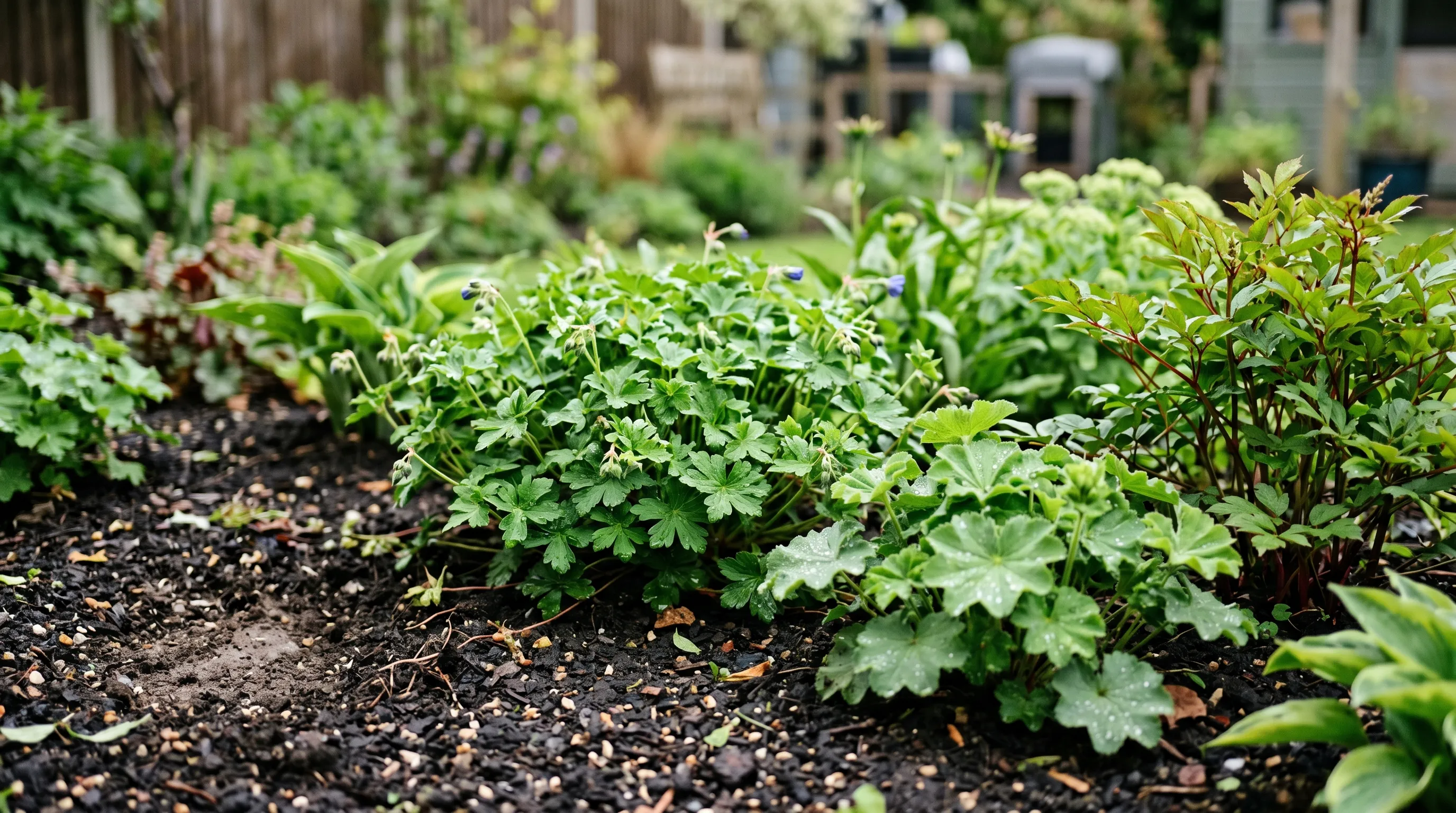
Two weeks on, most perennials are pushing out fresh leaves. That’s why it pays to wait before pulling anything out.
Will vegetables survive heavy rain?
Many will. It depends on the crop and how long the soil stayed wet.
- Tomatoes, courgettes and beans usually bounce back.
- Onions and garlic rot easily in wet soil. Check them often and lift any that go soft or yellow.
- Lettuce, salads and brassicas are prone to rots and mildews after a wet spell. Pick off damaged leaves and keep an eye on them.
Wet weather also brings out slugs and snails, so protect young plants. If your plot sits in a low spot, the guide to a flooded allotment covers veg-growing areas in more detail.
Food safety: If your veg patch was covered by floodwater from a river or sewer, don’t eat crops that were touched by it. Clear them and start again once the ground has dried.
How to help a waterlogged lawn recover
Yellow patches and squelchy ground are normal after heavy rain. Most lawns recover once they dry out.
- Keep off it until it has firmed up.
- Rake off debris gently once it can take your weight.
- Let air in. Push a garden fork in every 10-15cm, wiggling it slightly, or use a hollow-tine aerator on bigger lawns.
- Top-dress by brushing sharp sand or a sandy lawn top-dressing into the holes.
- Reseed bare patches in early autumn, or in spring.
Don’t mow until the grass is dry and the ground is firm. The guide on whether you can mow a wet lawn explains why.
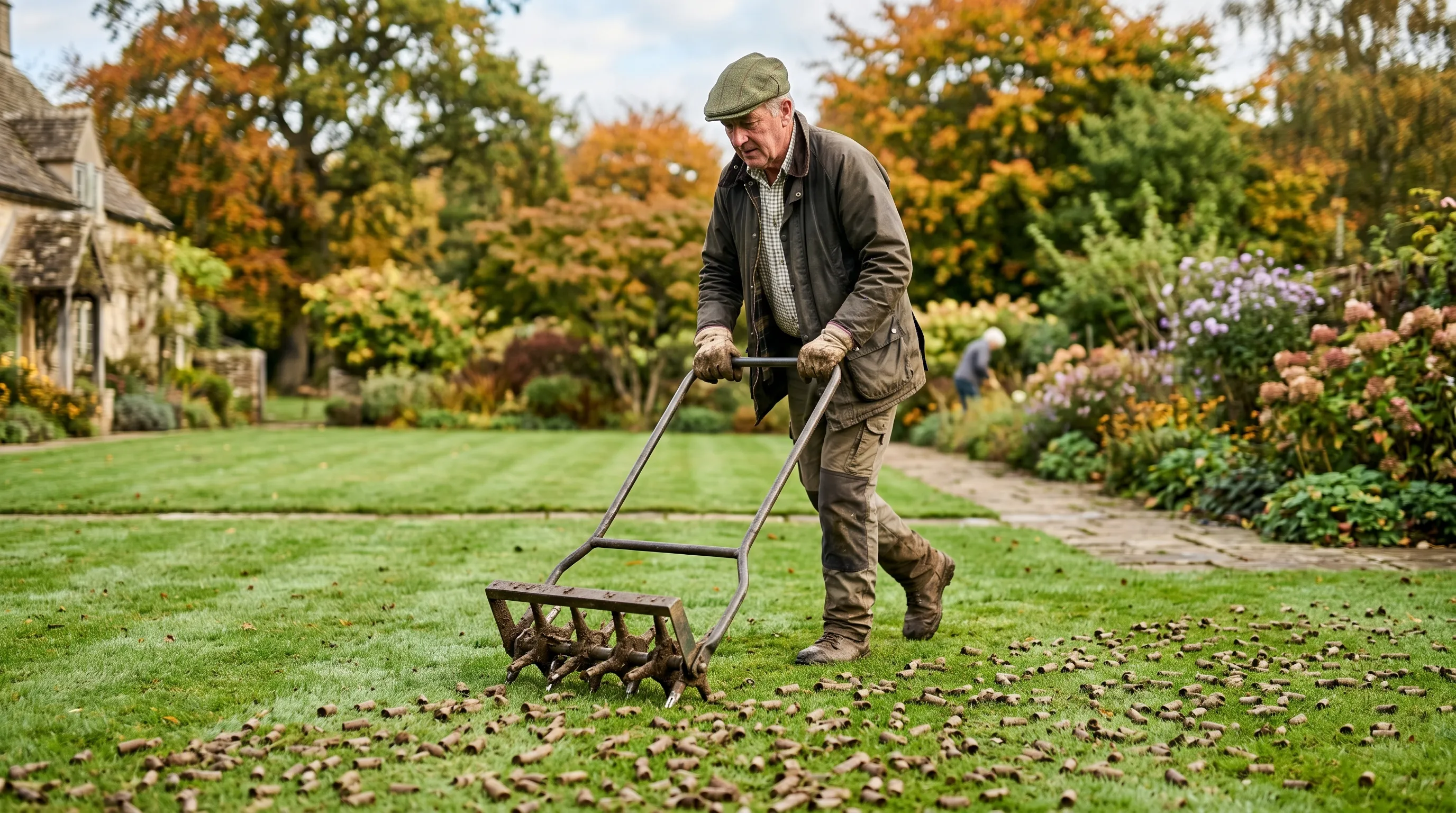
Pulling out little plugs of soil lets air and water back into a squashed lawn. Leave the cores to break down.
How to stop your garden getting waterlogged
If the same spots flood every time it rains, it’s worth making changes once the ground has dried.
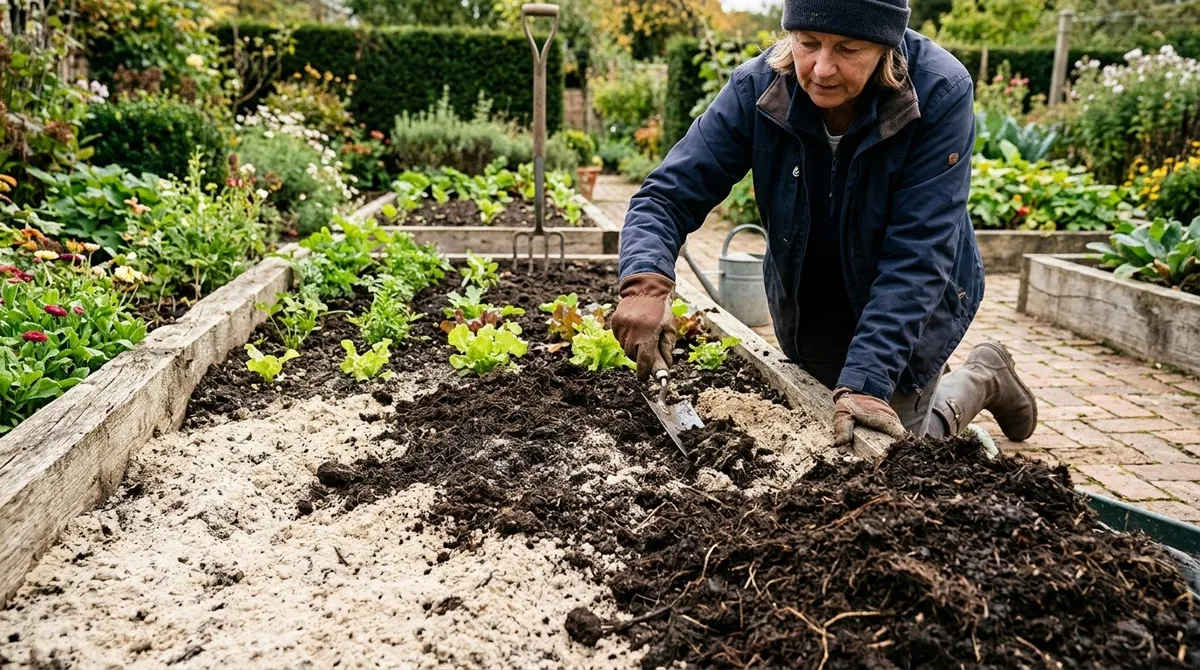
Improve the soil. Spread a few centimetres of compost or leaf mould on beds each year and let worms take it down. On clay, avoid digging when wet. The guide to no-dig on heavy clay shows how to build structure without a spade.
Lift the growing area. Raised beds drain far better than the ground around them. They’re a simple fix on heavy clay.
Give the water somewhere to go. A French drain is a gravel-filled trench with a perforated pipe that carries water away. A soakaway takes water from a downpipe into the ground. A rain garden is a shallow, planted dip that holds runoff and lets it soak away slowly.
Swap hard surfaces. Gravel and permeable paving let rain soak in rather than running off.
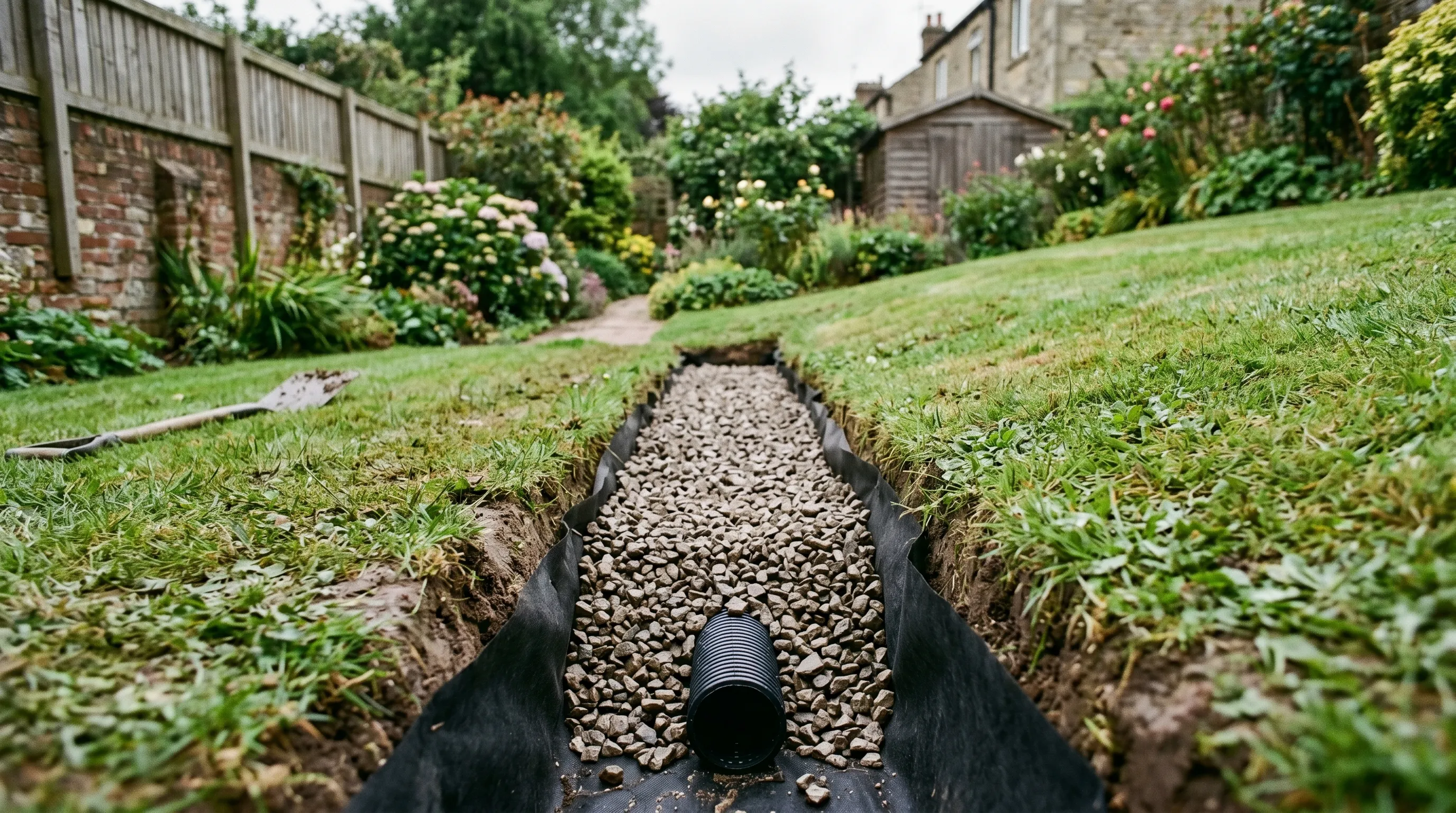
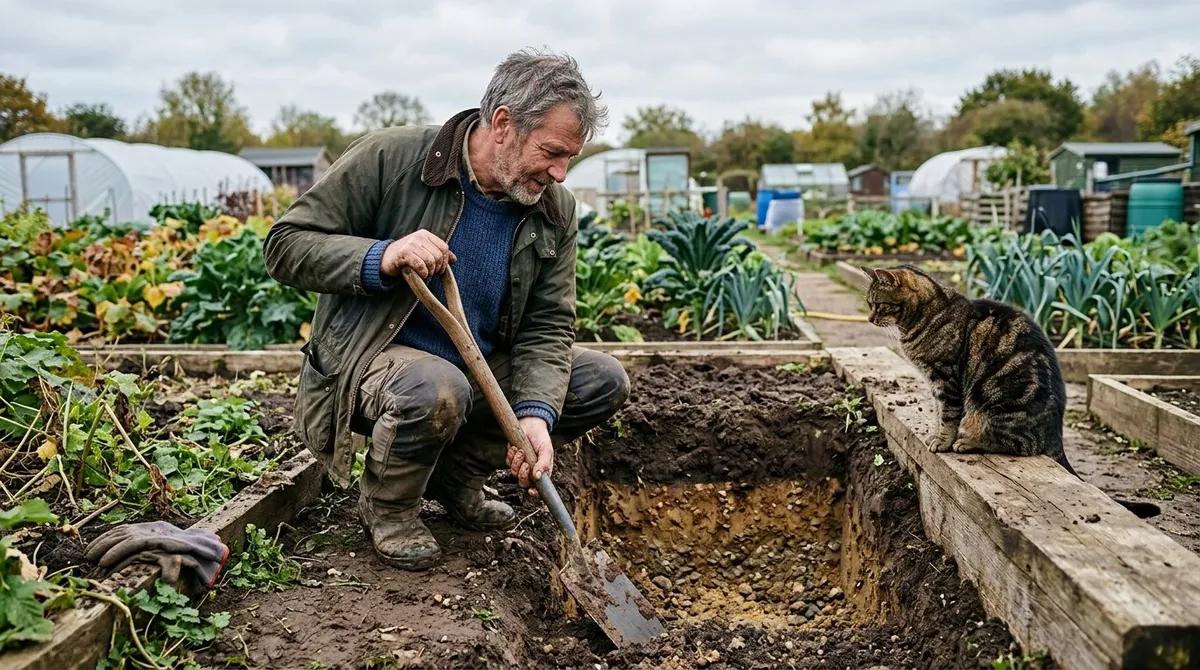
A French drain under construction. The gravel and perforated pipe carry water away from the wet spot.

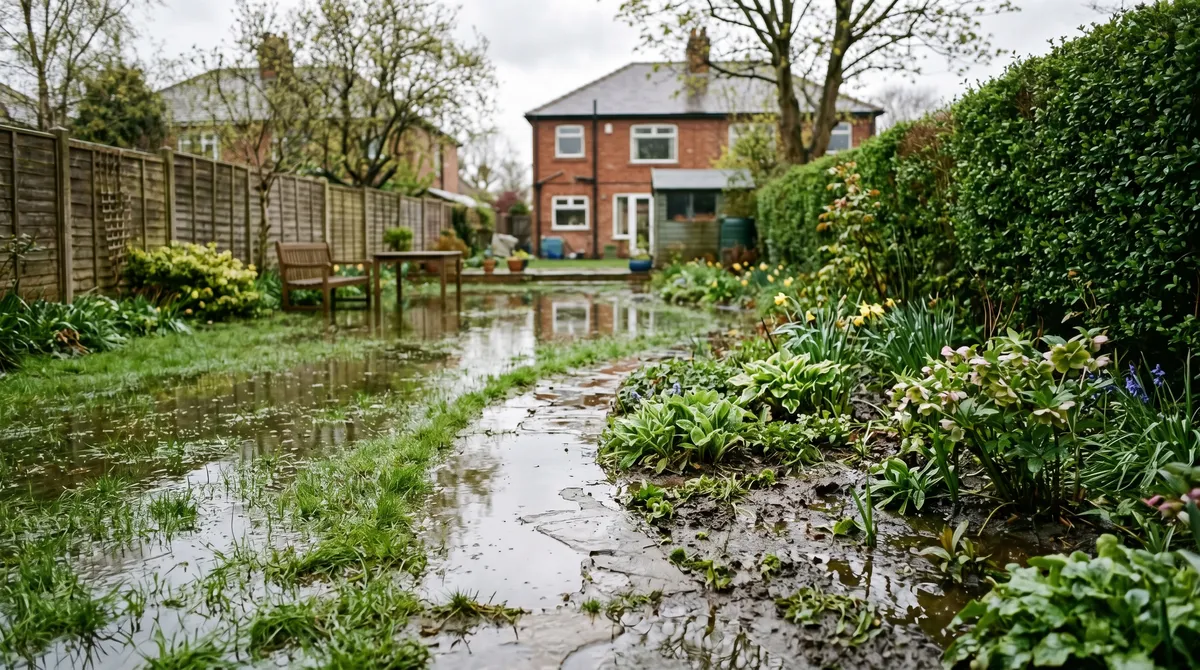
The lawn is still flooded, but the raised beds have drained. Lifting the soil is one of the simplest fixes for wet ground.
Planting for a garden that stays wet
If one corner never really dries out, work with it rather than against it. A rain garden or bog bed turns a problem patch into a feature.
Moisture-loving plants such as irises, astilbe and lobelia thrive where others drown. The guide on how to make a rain garden walks you through it, and the list of plants for wet, boggy soil helps you choose what to grow.
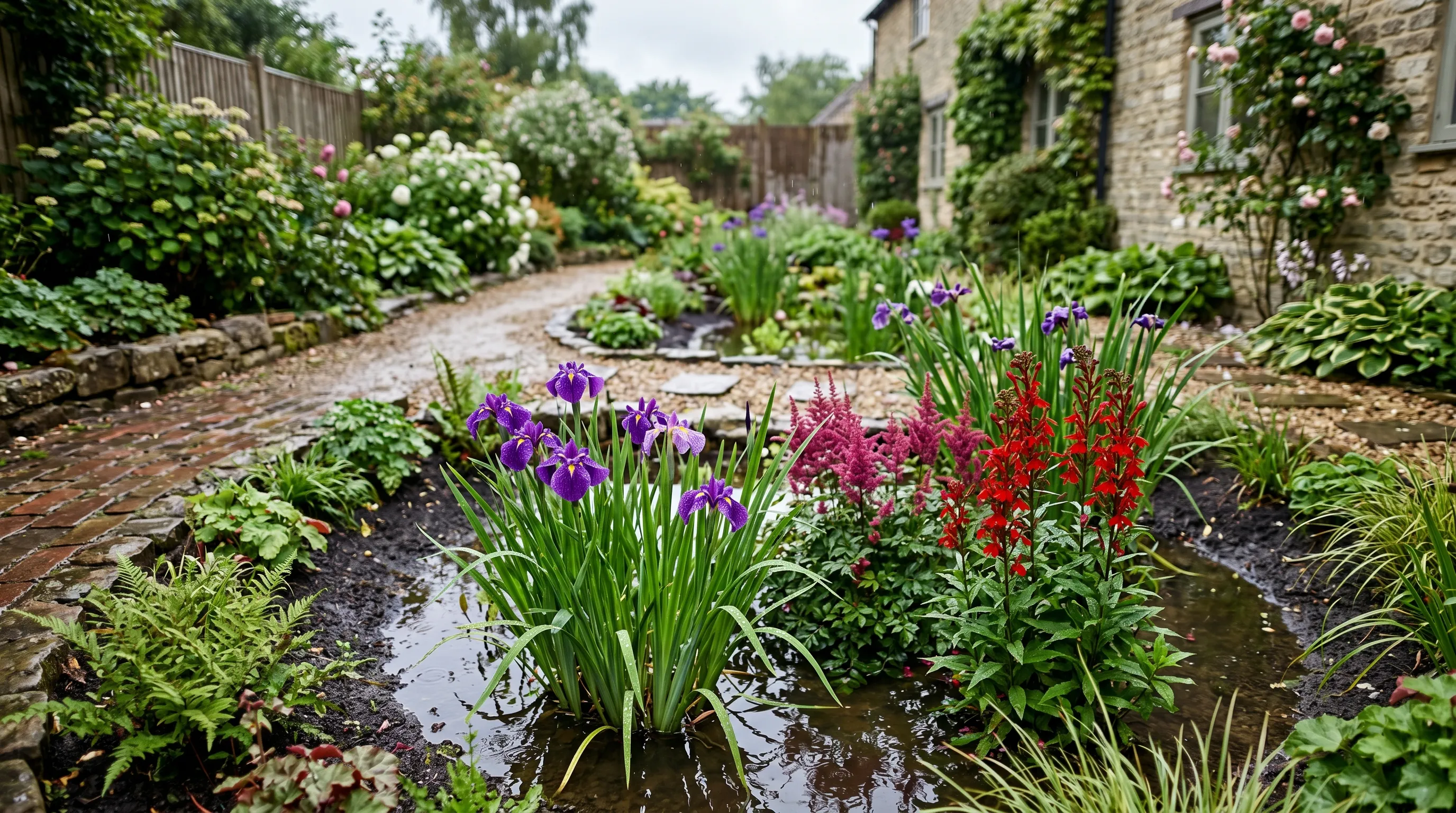
A rain garden holds water for a while after rain, then lets it drain away. These plants are happy with wet feet.
When to call in a professional
Most sodden gardens recover with patience and a fork. Get help if:
- Water is getting near the house, or air bricks are covered
- Paths, walls or foundations show damp damage
- The same area stays flooded for a week or more after ordinary rain
- A slope is slipping or washing away
- A tree is leaning or has cracked soil around its base after the rain
Check your home insurance for storm and flood cover before you pay for repairs.
Common mistakes after heavy rain
- Rushing out to tidy up. You’ll squash the soil and make the next downpour worse. Wait until it’s firm.
- Pulling out flattened plants straight away. Many recover. Give them a week or two.
- Feeding stressed plants. Damaged roots can’t use it. Wait until they’re growing again.
- Forgetting the lawn. Squashed lawns stay wet. Let air in once it has firmed up.
- Treating it as a one-off. If it keeps happening, plan drainage or raised beds.
Year-round jobs to keep a garden draining well
| When | Job |
|---|---|
| Winter | Clear drains and gutters. Note where water sits |
| Late winter | Plan raised beds, drains or a rain garden |
| Spring | Mulch beds with compost or leaf mould |
| Summer | Build drains or soakaways while the ground is dry |
| Early autumn | Aerate and top-dress the lawn. Reseed bare patches |
| Autumn | Collect leaves for leaf mould. Clear gutters after leaf fall |
For more on soil and drainage, see the soil drainage and structure guide, or browse the how-to guides. Once things have dried out, the autumn gardening jobs checklist helps you get the garden ready for winter.
Frequently asked questions
What should I do immediately after heavy rain in my garden?
Stay off sodden lawns and beds until the ground firms up. Walking on wet soil squashes it and makes drainage worse. Work from paths: clear drains and downpipes, and note any damage to check later.
Will my flowers recover from being waterlogged?
Most established plants recover from a short spell of waterlogging. Bedding plants and young plants are more at risk. Give them a week or two, then remove anything with soft, rotting stems.
How do I dry out a waterlogged lawn?
Mostly by waiting and keeping off it. Once it’s firm, push a garden fork in every 10-15cm to let air in. Brush sharp sand or a sandy top-dressing into the holes, and reseed bare patches in early autumn.
Will my vegetables survive heavy rain?
Many will, depending on the crop and how long it stayed wet. Tomatoes, courgettes and beans usually bounce back. Onions, garlic and salads rot more easily, so check them often and lift any that go soft.
How can I prevent garden waterlogging long-term?
Improve the soil and give water somewhere to go. Mulch with compost or leaf mould every year. Grow in raised beds on heavy clay, and add a drain or rain garden where water collects.
Our team produces practical UK gardening guidance from source research, contributor records and established horticultural practice. Editorial standards are overseen by Matt W.