Key takeaways
- The same puddles can have five different causes, and each needs a different fix
- A steel rod that stops dead at the same depth all over the lawn points to a buried clay pan
- A 60cm hole that fills to within 30cm of the surface in winter means a high water table
- A soakaway dug into solid clay just fills up and stays full
- Thatch thicker than about 1cm can hold water like a sponge on well-drained soil
- Test in winter and fix in autumn, and keep off the lawn while it's sodden
A waterlogged lawn is a symptom, not a diagnosis. Five quite different problems all leave the same puddles on the grass, and each needs its own fix. That’s why so much money gets wasted on hired aerators and soakaways that never work. This guide helps you find the real cause with a steel rod, a spade and a winter afternoon, then match the fix to it.
If your whole garden is soaked after one big storm, the guide to a sodden garden after heavy rain covers short-term recovery. This page is for lawns that puddle every winter.
Why standing water doesn’t tell you the cause
Water sits on a lawn for one of two reasons. Either it can’t get into the soil, or it can’t get away once it’s in.
If the surface is shut, by compaction, thatch or a crust, rain can’t soak in. The soil a spade’s depth down may be quite dry. If water soaks in but then hits a hard layer or saturated ground, it backs up from below.
A third case catches lots of people out. Where the water table (the level of groundwater) rises into the root zone each winter, the lawn isn’t draining badly. It’s sitting in groundwater, and no surface work will change that.
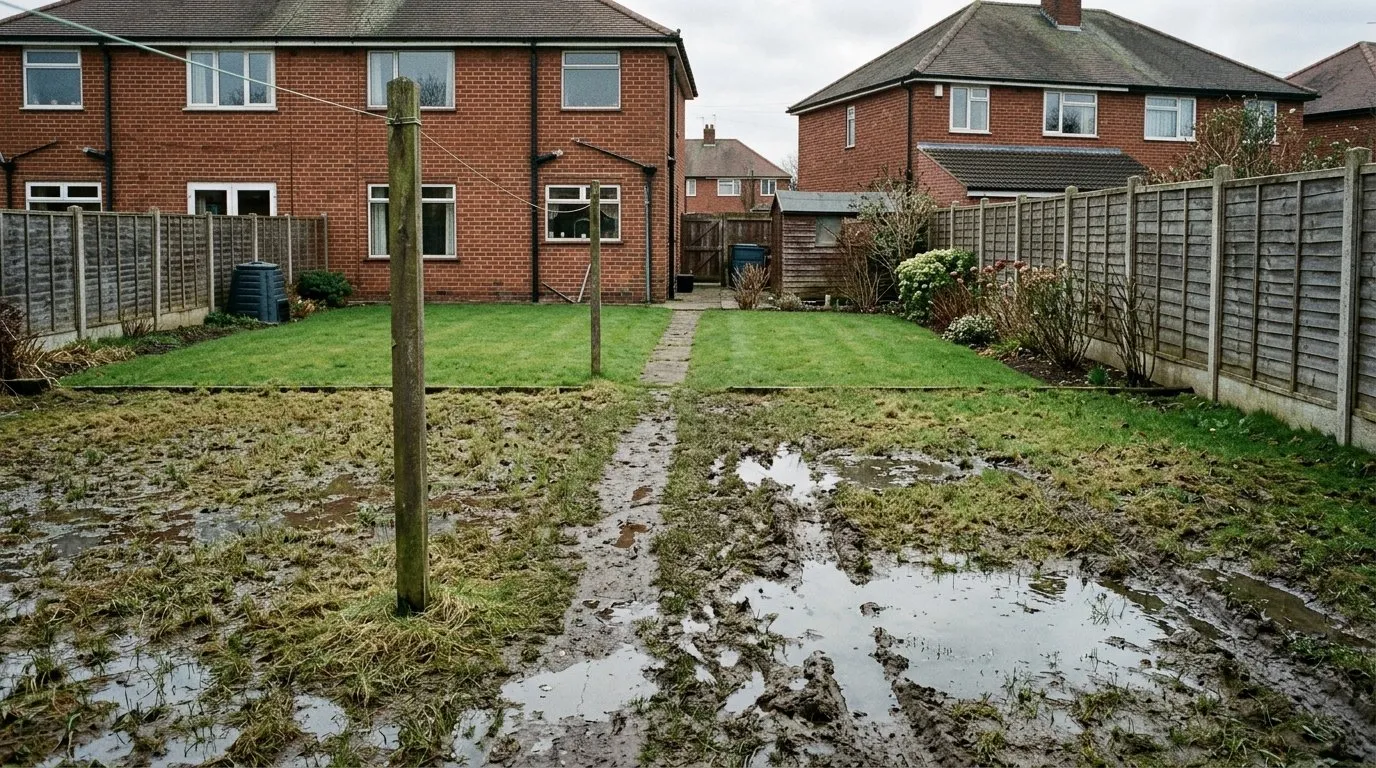
Same lawn, same soil, very different results. The muddy end is usually down to wear and a buried hard layer, not the soil type.
The five reasons UK lawns waterlog
Compaction from mowing, feet and play
Compaction squeezes the air spaces in the soil shut, so rain can’t soak in. It’s the most common cause and the easiest to fix. Mowing wet grass, a trampoline in one spot or a dog’s favourite route along the fence all press the soil down.
It’s a surface problem, mostly in the top 5-10cm. That’s exactly the depth hollow-tine aeration reaches. The tell is puddles that follow use: under the washing line, along paths and down the dog’s route, with firm grass in quiet corners.
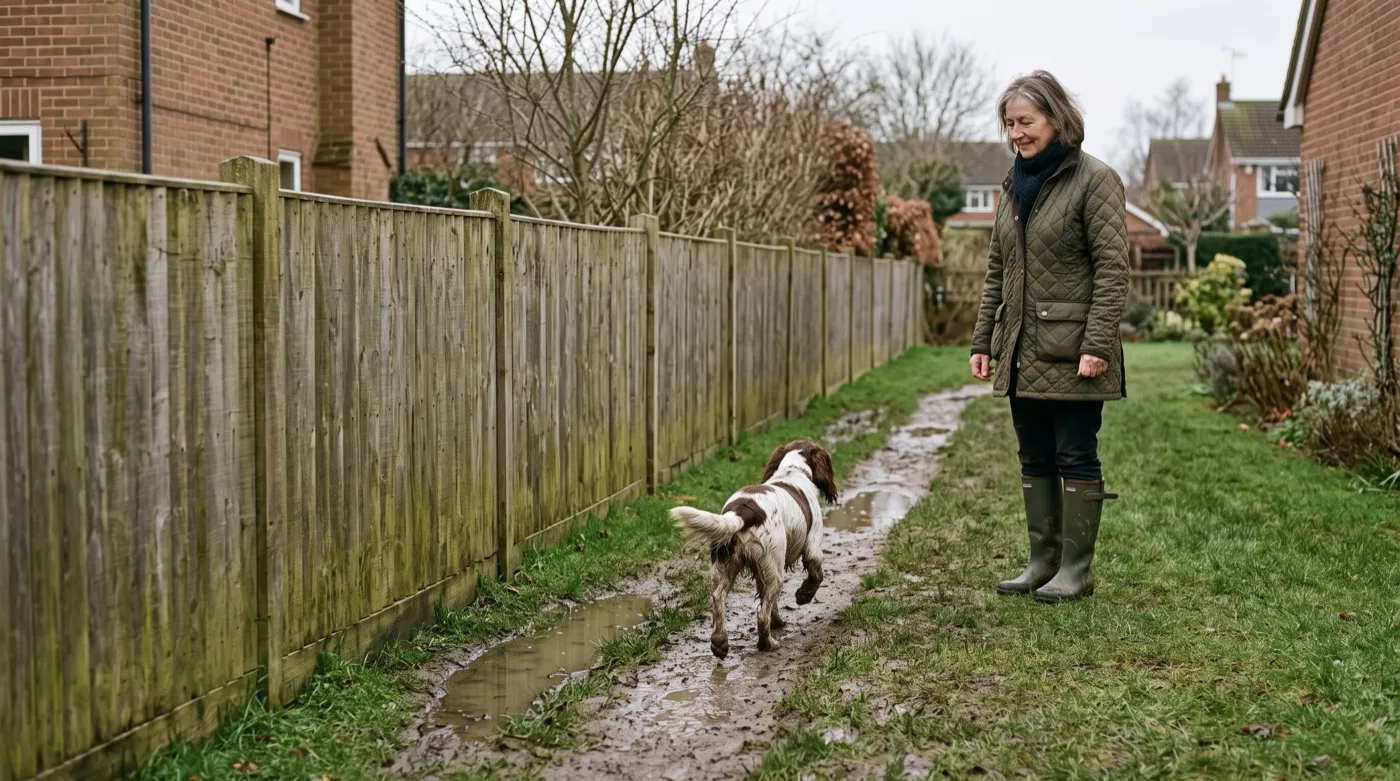
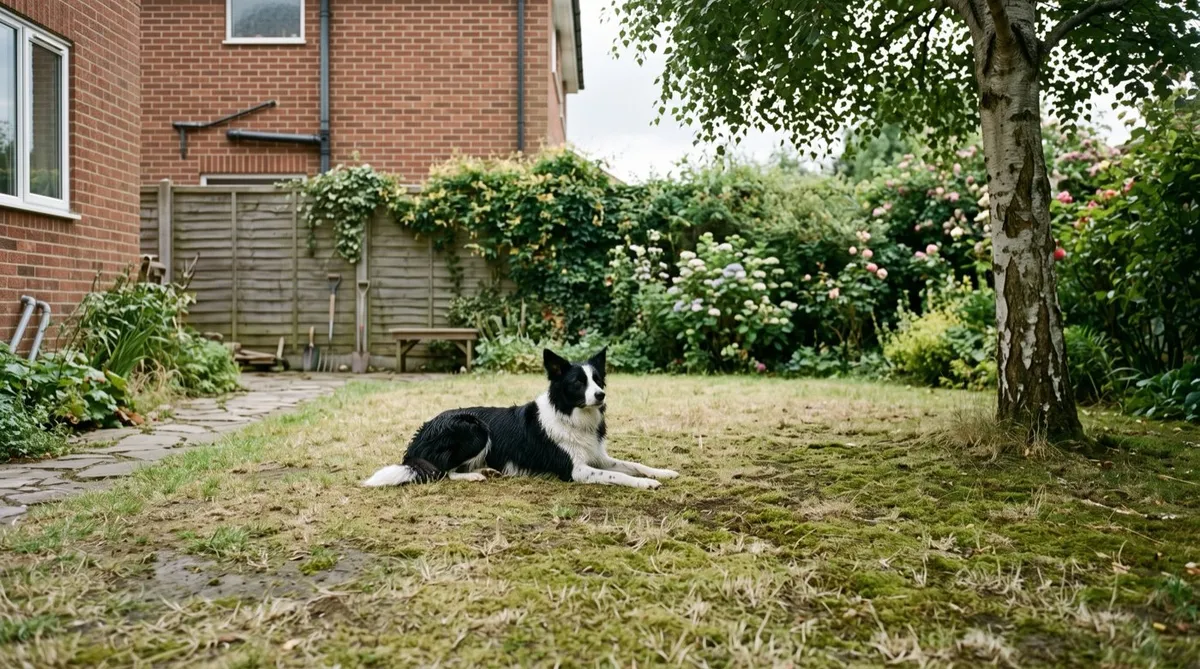
A dog’s patrol route soon shows up in the lawn. The same paws on the same strip every day squash the soil until water can’t get in.
A clay pan smeared flat by machinery
A compaction pan is a hard, smeared layer of clay about 10-25cm down. It forms when diggers or rotavators work wet clay. Water passes through the topsoil, hits the pan and stops.
This is the cause that wastes the most money. Ordinary hollow tines only reach about 7-10cm, so they never touch a deeper pan. You could core the lawn every autumn and see no change.
Builder’s subsoil under new-build turf
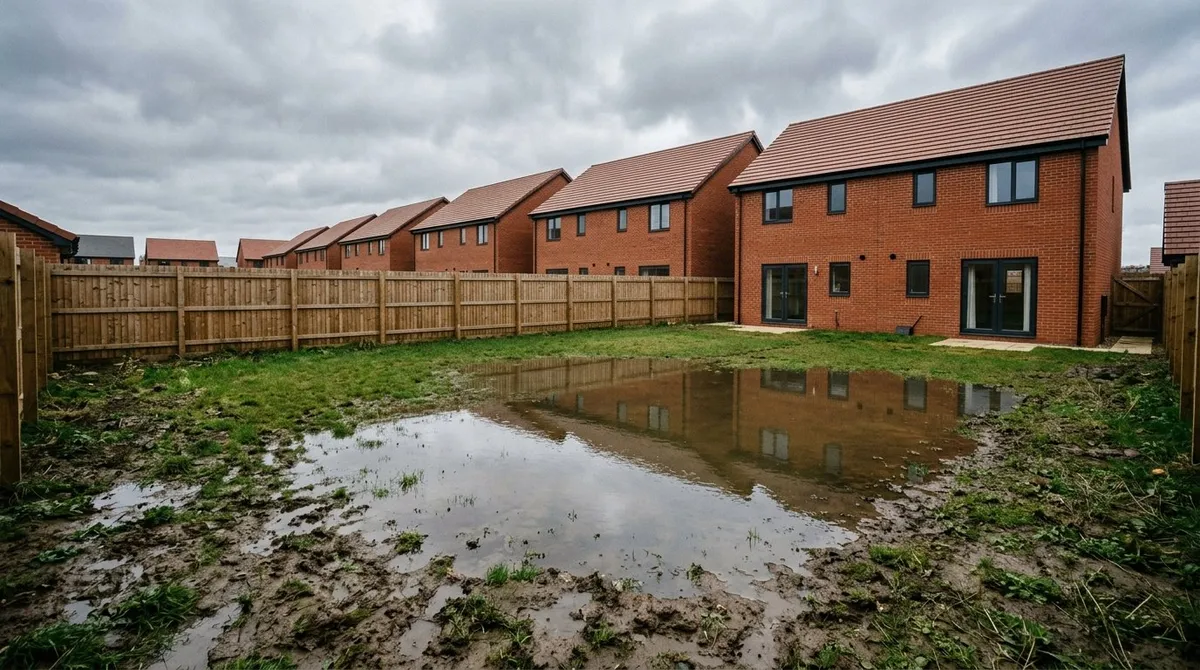
New-build lawns often waterlog because of what’s underneath. Heavy machinery runs over the plot for months, then a thin layer of topsoil goes over the squashed subsoil and turf is rolled straight on. The result is a shallow bath that fills every winter. The guide to turning a new-build plot into a real garden covers what to expect under the turf.
A high water table
Some gardens are simply low, such as valley bottoms, spots beside streams or floodplains. In winter the water table rises into the root zone and the lawn is soaked from below.
Thatch acting as a sponge
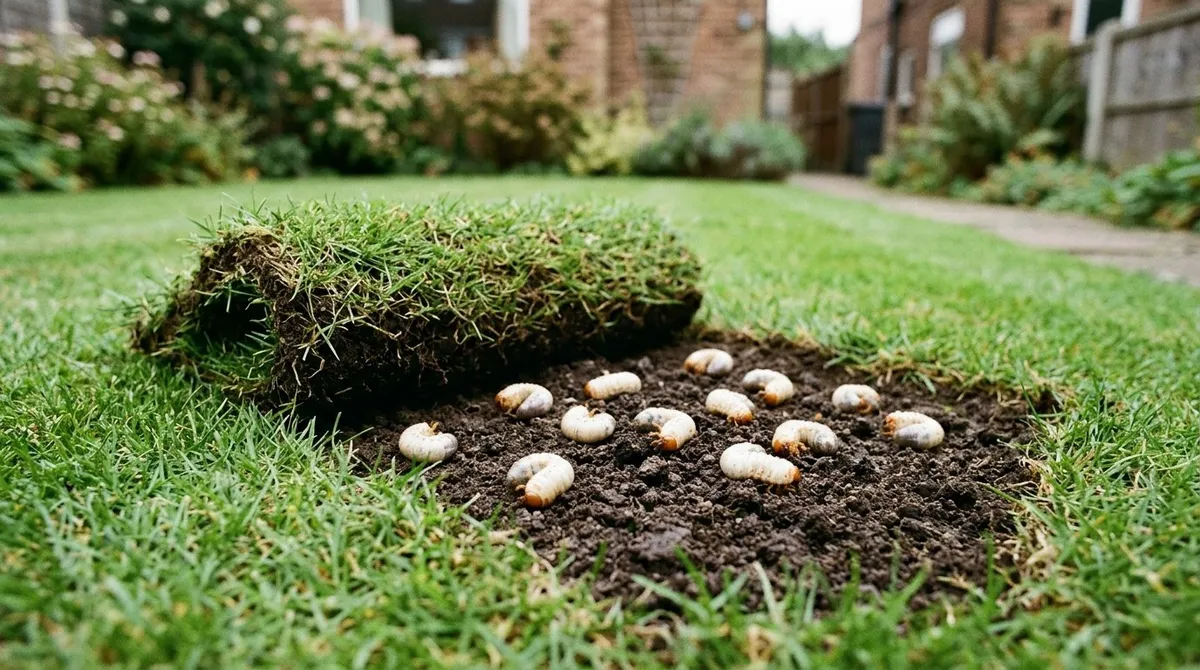
Thatch is a mat of dead stems and roots between the green grass and the soil. When it gets much thicker than about 1cm, it holds water like a sponge and stays squelchy for days.
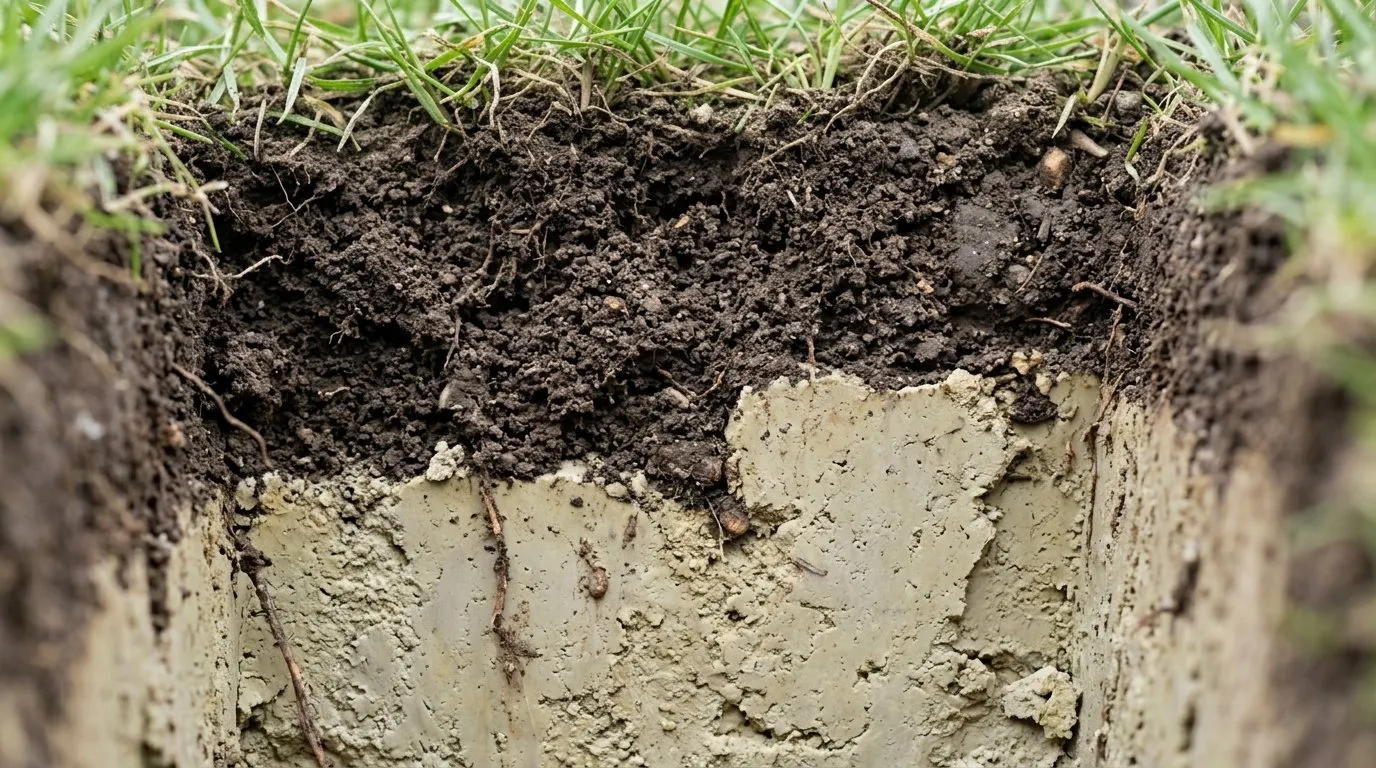
A spade slice tells the story. Dark topsoil stopping sharply at pale, dense clay is the classic new-build bathtub.
Three simple tests to find the cause
Do all three before you spend anything. Together they take an afternoon.
1. The rod test for a pan. Push a steel rod or a long screwdriver slowly into the lawn at about 20 spots across it. Note where it gets hard to push. Ordinary clay stiffens gradually and at different depths. A pan gives a sudden hard stop at much the same depth each time.
2. The drainage hole. Dig a hole about 30cm deep and wide in the wettest spot. Fill it with water and let it drain, then fill it again and see how long it takes to empty. If it’s gone in a few hours, the soil drains fine and the problem is near the surface. If it’s still full the next day, suspect a pan or a high water table.
3. The winter water table hole. In December or January, dig a hole about 60cm deep and leave it uncovered overnight. If water rises to within about 30cm of the surface, the water table is high. Check again in summer to see how much it drops.
While you’re at it, cut a small wedge out of the turf with an old knife and look at the thatch. A brown fibrous layer much over 1cm is part of the problem. The guide to scarifying and aerating a lawn shows how to remove it.
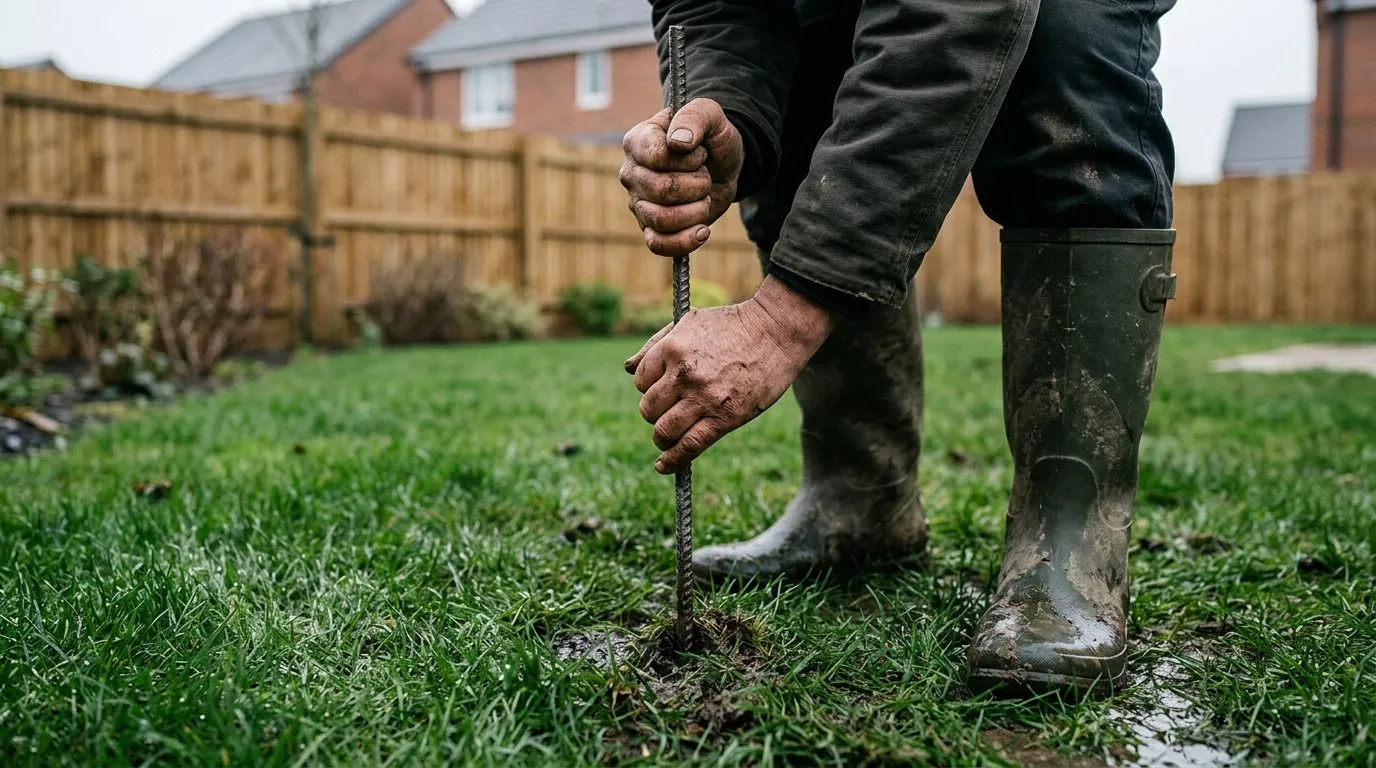
A steel rod is the cheapest test in the garden. If it stops dead at the same depth all over, you’ve found a pan.
Which fix works for which cause?
Match the fix to the cause. Most fixes are good at one job and useless at the others.
| Fix | Works for | Won’t help with |
|---|---|---|
| Hollow-tine aeration | Compaction in the top 7-10cm | A deeper pan, a high water table or thatch |
| Sharp sand top-dressing after aerating | Slowly opening up heavy clay over several years | A pan beneath the sand |
| Deep tining or subsoiling | A pan at 10-25cm | Lawns with no pan |
| Scarifying | Thick thatch | Lawns with thin thatch |
| Land drains | Trapped water, where there’s somewhere lower to send it | Flat sites with no outlet |
| French drain | Water running onto the lawn from a slope | Water that falls on flat ground |
| Soakaway | Free-draining sand or gravel below | Solid clay |
| Re-grading | Puddles in dips and hollows | Soil that won’t take water in |
| Bog or rain garden | The wettest corner | Giving you grass to walk on |
For an ordinary compacted clay lawn, the steady winner is hollow-tine aeration plus sharp sand top-dressing every autumn. The guide to fixing a waterlogged lawn on clay soil walks you through it step by step.
Why judging drainage in summer misleads you
A lawn that clears a summer downpour in a few hours can hold water for weeks in January. In summer, growing grass draws water up and out through its leaves. In winter it’s barely growing, so water lingers.
So test in winter. A summer drainage test on a lawn that floods every December tells you very little.
Why a soakaway in clay is money down a hole
A soakaway is a pit filled with rubble or plastic crates that stores water and lets it seep away. It only works if the ground around it drains freely. Over sand or gravel it can work well. In heavy clay it fills in the first storm and stays full until spring.
Land drains have the same catch. The pipe needs a gentle, steady fall and an outlet lower than the pipe, such as a ditch or a soakaway in free-draining ground. On a flat plot with nowhere to send the water, the pipe just fills.
Warning: Never connect garden drains to the foul sewer. Ask your council before draining into a ditch or stream, as you may need permission. Building regulations guidance puts soakaways at least 5m from a house.
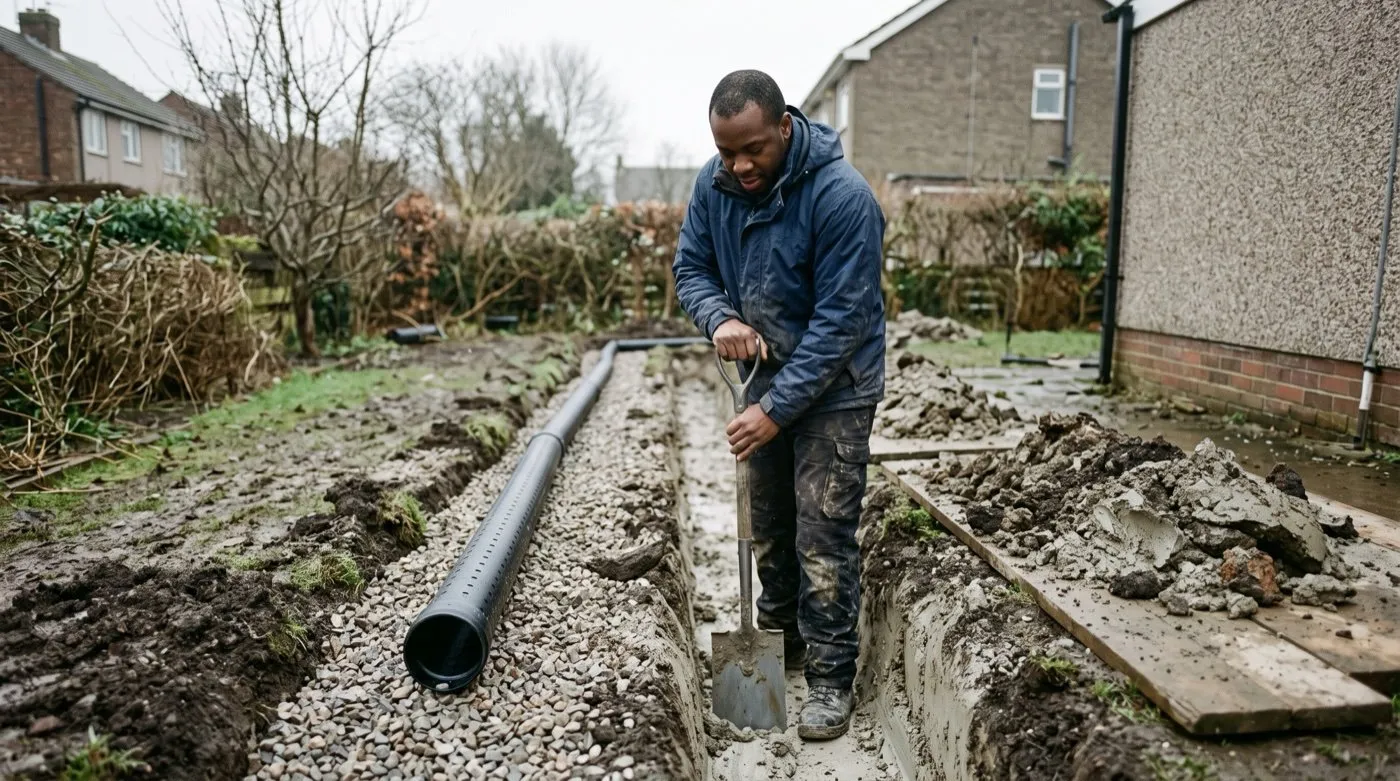
Land drains need a steady fall and somewhere lower to empty into. Without both, the trench just fills up.
Re-grading hollows that collect water
Where water gathers in a dip, re-grading raises the low spot so water runs off instead. Lift the turf, add topsoil, firm it and relay. Shallow dips can be filled gradually by top-dressing a little at a time over a few seasons.
Re-grading moves water around rather than helping soil absorb it. On clay that won’t drain, the puddle simply shifts somewhere else. It’s best for a sound lawn with one or two hollows left by settling or an old tree stump.
When to stop fighting and plant the wet corner
Some ground won’t drain, and spotting that early saves a lot of money. If the water table sits near the surface all winter and there’s nowhere lower to send the water, no drainage scheme will hold.
Instead, plant the wettest corner with things that love it. A bog garden needs no liner or pump in naturally wet ground. Marsh marigold (Caltha palustris) flowers bright yellow in spring. Siberian iris, astilbe, ligularia and purple loosestrife all enjoy damp soil. The guide to creating a bog garden has planting plans.
A rain garden is a shallow planted dip that takes water from a roof or drive and lets it soak away slowly. The guide to making a rain garden explains how to size and plant one. Keep the drier part as lawn and let the low end be wet.
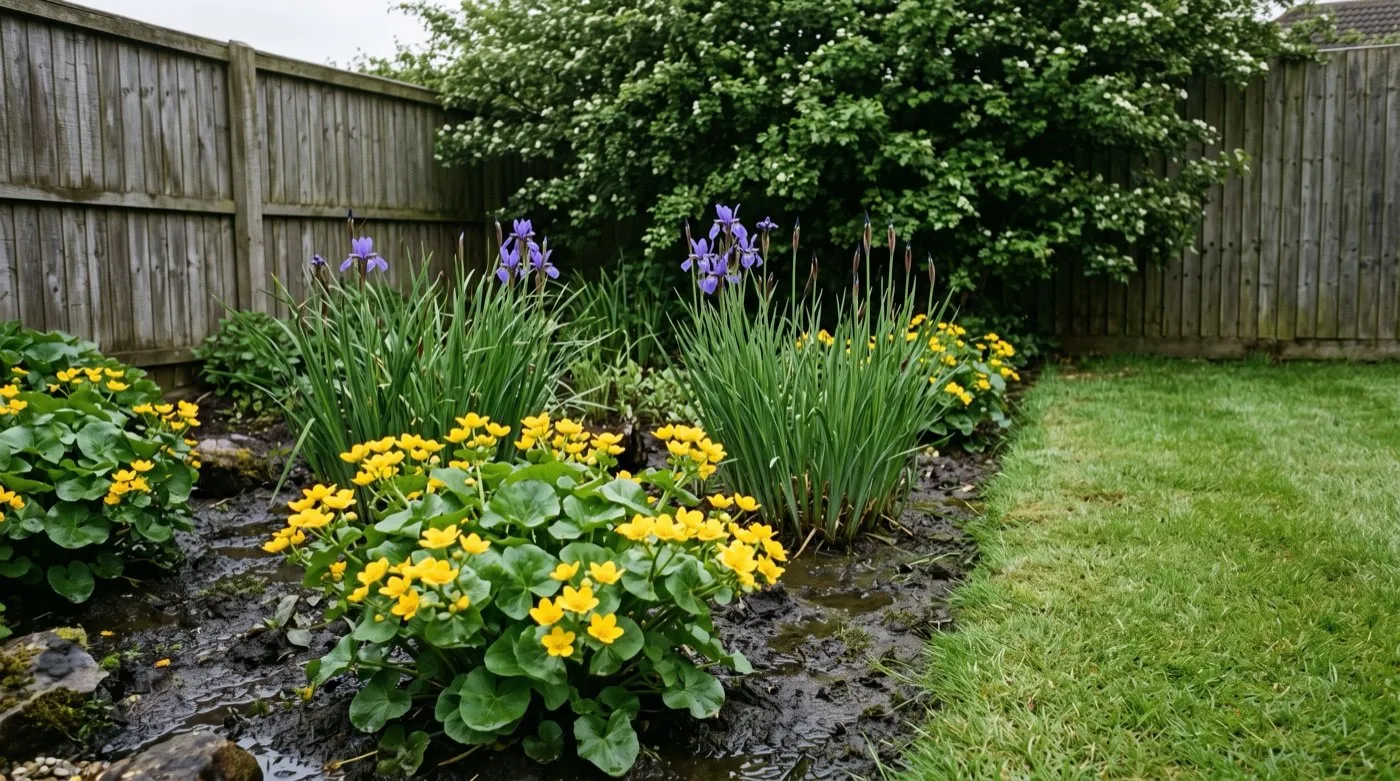
Planting the soggiest corner is often smarter than draining it. Marsh marigolds and irises are perfectly happy with wet feet.
How to stop a lawn waterlogging again
Most of these causes come back to one thing: squashing clay while it’s wet. Wet clay smears instead of crumbling, and the air spaces collapse. A digger does it deep down. A mower and feet do it near the surface.
So keep weight off clay when it’s wet:
- Stay off a sodden lawn as much as you can
- Don’t mow until the surface has firmed up
- Never roll a clay lawn
- Lay boards if you must cross it in winter, and run the wheelbarrow along a plank
The guide on whether you can mow a wet lawn covers the mowing side.
For a brand-new lawn, break up squashed subsoil before the topsoil goes on, and use a deeper layer of topsoil than builders usually do.
Waterlogged lawn calendar
| Month | What to do |
|---|---|
| December to January | Note where water sits and for how long. Dig the water table hole. Keep off the grass |
| February | Rod-test across the lawn while the ground is soft |
| March | Dig the drainage test hole and check the thatch |
| April | Decide on your fix. Book any contractors early |
| May to August | Mow a little higher and avoid heavy work on dry, hard clay |
| September | Hollow-tine, brush off the cores and top-dress with sharp sand |
| October | Deep-tine any confirmed pan, overseed thin areas, lay drains if planned |
| November | Plant the bog corner. Rake leaves off the grass |
Common mistakes with waterlogged lawns
Skipping the tests. Buying a fix before finding the cause is how most drainage money gets wasted.
Testing in summer. A lawn that drains quickly in July can stay soggy all winter. Test when it’s wet.
Digging a soakaway in clay. It fills and stays full. Test the drainage at full depth first.
Coring a lawn with a deep pan. Shallow tines can’t reach it, however many times you aerate.
Walking and mowing on soggy clay. It’s what caused the compaction in the first place.
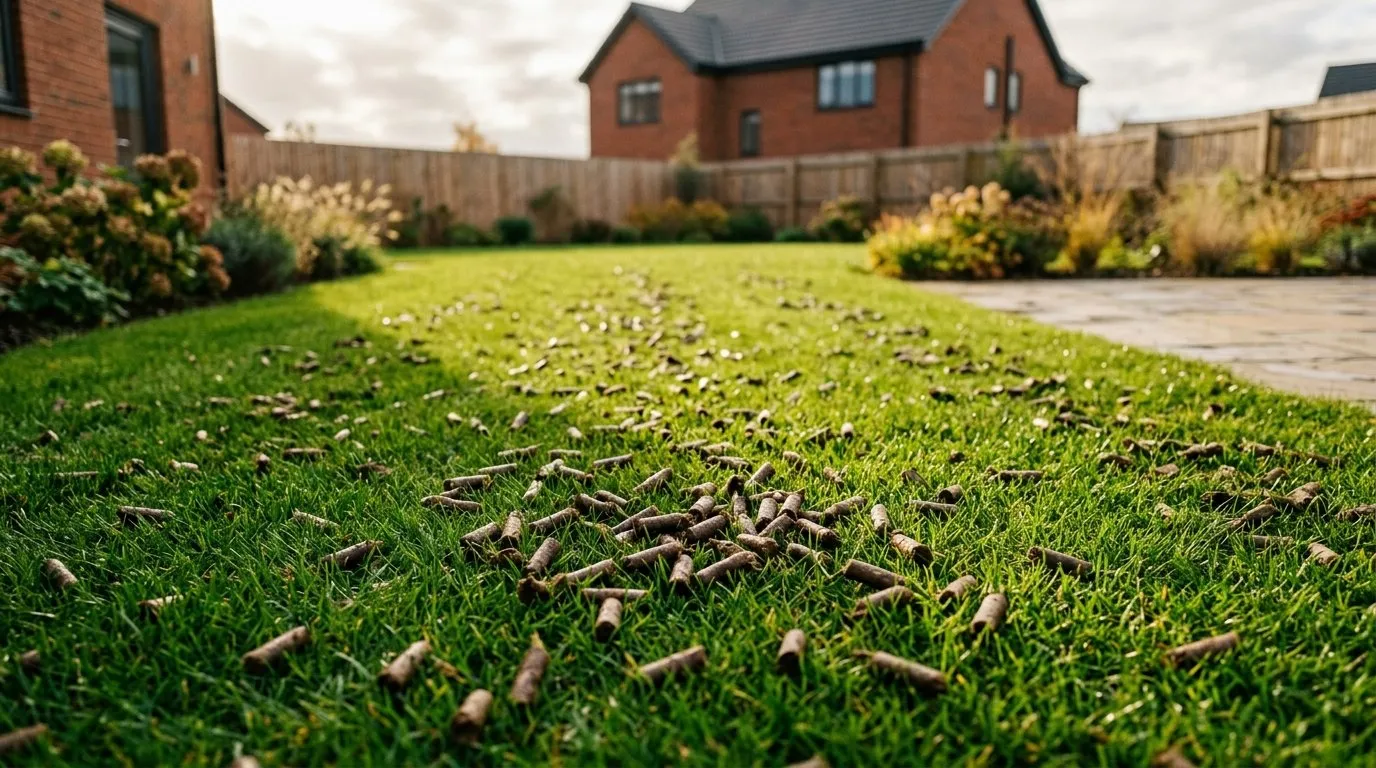
Cores left after hollow-tining in autumn. Brush them away, top-dress with sharp sand, and water starts to soak in rather than sit.
More lawn guides are in the lawn care hub.
Frequently asked questions
Why is my lawn waterlogged when my neighbour’s is fine?
Usually compaction or a buried pan, not different soil. Two lawns on the same clay can drain very differently if one was driven over by builders, mown wet or used as a play area. A steel rod pushed into both often shows the difference.
How do I know if my lawn has a compaction pan?
Push a steel rod in at about 20 spots. A pan stops it dead at much the same depth each time, usually 10-25cm down. Ordinary clay gets harder gradually and at different depths.
Will a soakaway fix a waterlogged lawn on clay soil?
No, not if it’s dug into solid clay. A soakaway only works when the ground below drains freely. In clay it fills in the first storm and stays full. Test how fast water drains at full depth before you dig one.
Can thatch make a lawn look waterlogged?
Yes, thick thatch holds water like a sponge. The soil beneath can drain well while the surface stays squelchy. Cut out a small wedge and measure the brown fibrous layer. Much over 1cm needs scarifying, not drainage work.
How do I test for a high water table in my garden?
Dig a hole about 60cm deep in winter and leave it overnight. If water rises to within about 30cm of the surface, the water table is high. Aeration won’t help, and drains only work if there’s somewhere lower to send the water.
Does hollow-tine aeration fix every waterlogged lawn?
No, it only fixes compaction near the surface. Hollow tines reach about 7-10cm. They can’t reach a deeper pan, lower a water table or remove thick thatch.
Is it worth making a bog garden instead?
Often yes, for the wettest corner of the garden. Where the water table sits near the surface all winter, drains rarely cope. Planting that corner with moisture-loving plants turns the problem into a feature.
Once you know the cause, read the guide to top-dressing a lawn with the right sand mix to help a freshly aerated clay lawn drain better each year.
Our team produces practical UK gardening guidance from source research, contributor records and established horticultural practice. Editorial standards are overseen by Matt W.