Key takeaways
- Fine fescues such as creeping red fescue and Chewings fescue are the best grasses for shade
- Check the seed mix: ryegrass is a sun grass, even when it's in a bag labelled for shade
- Under trees, roots stealing water often kill grass more than the lack of light
- Mow shaded grass at about 5-6cm and feed it lightly, not hard
- Sow shade lawns in September so the roots settle before summer dryness
- If grass fails twice in the same spot, switch to shade-loving ground cover
Grass in shade can work, but only with the right seed and realistic hopes. Fine fescues are the grasses that cope best. Many “shade” seed mixes are full of ryegrass, which is really a sun grass. And under big, thirsty trees, the real problem is often water, not light.
This guide shows you which grasses to sow, how to care for a shaded lawn, and how to spot a place where grass will never last. If it’s moss you’re battling, the guide to getting rid of moss in your lawn covers the treatment side. Here, the focus is the light and the grass.
How much light does grass need?
Most lawn grasses need at least a few hours of direct sun a day. Fine fescues get by with less, especially in dappled light under a light, airy tree. In all-day deep shade, no lawn grass holds on for long.
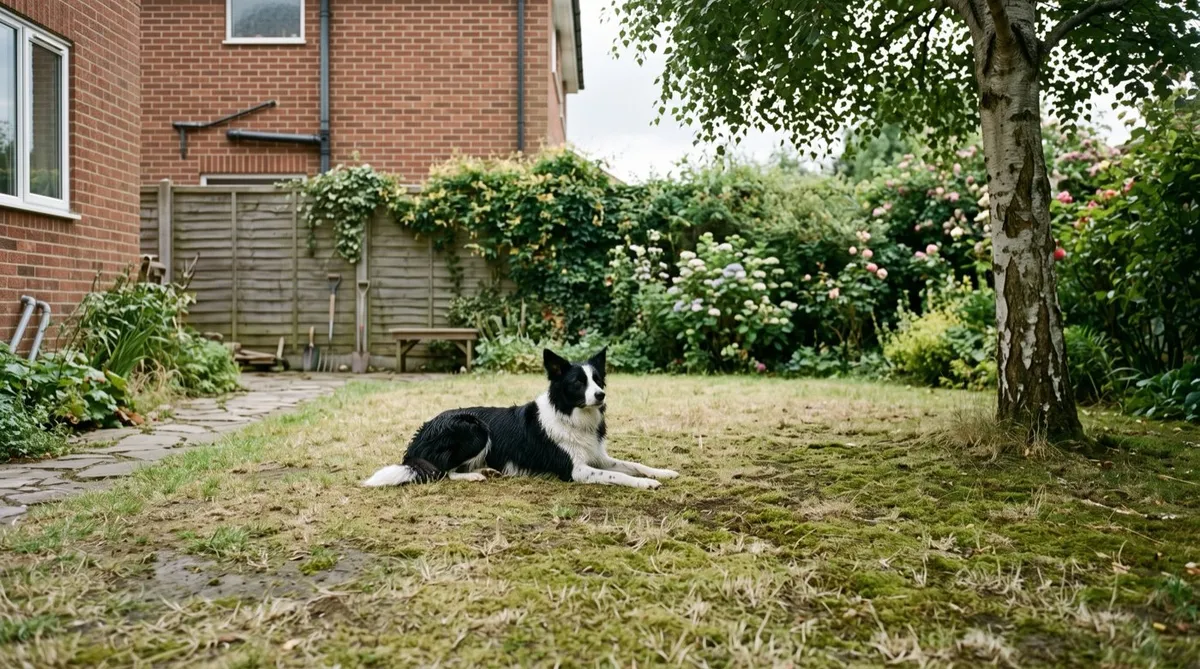
Dappled light counts for much more than solid shadow. A lawn under a birch, where light flickers through all day, is a very different place from a strip beside a high north-facing wall. Watch your garden on a sunny day in early summer. Note which bits get direct sun, and for roughly how long. The guide to sun mapping your garden shows a simple way to do it.
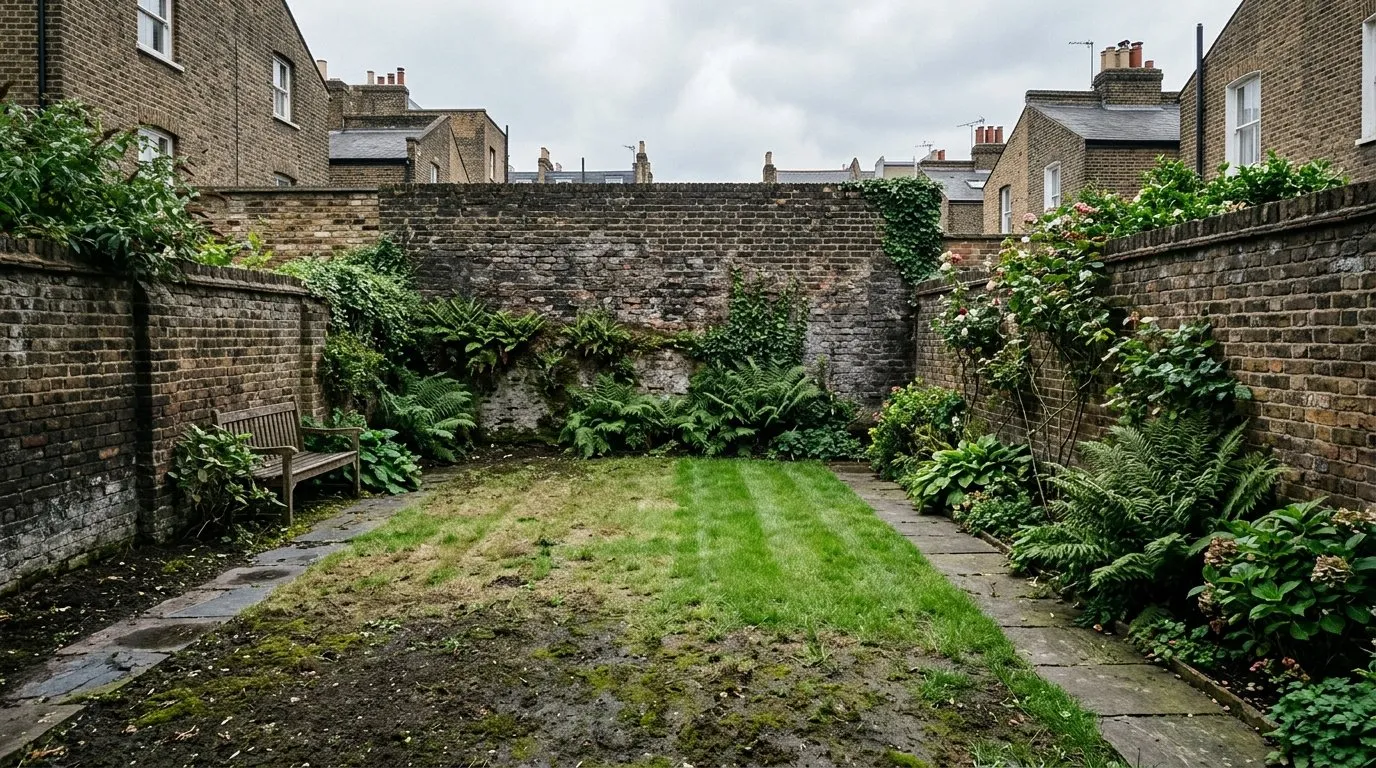
The strip right beside a high wall gets the least light. That’s usually where the grass gives up first.
Which grasses tolerate shade best?
Fine fescues are the best lawn grasses for UK shade. Look for these names on the back of the bag.
Creeping red fescue
Creeping red fescue has fine, needle-like leaves and spreads by underground runners. That spreading habit matters in shade. When a few plants die, the survivors creep sideways and fill the gap before moss moves in. Make it the backbone of any shade mix.
Chewings fescue
Chewings fescue is another fine fescue, but it grows in tufts rather than spreading. It copes well with drier soil and close mowing. It won’t fill gaps the way creeping red fescue does, so it works best as part of a mix with it.
Rough-stalked meadow grass
Rough-stalked meadow grass (Poa trivialis) copes with low light and loves damp shade, such as the ground under a north wall. The catch is that it’s shallow-rooted. It browns off fast in a dry summer, and it’s often counted as a weed grass in fine lawns. Use it only where the shade is damp all year, never under trees.
Ryegrass and smooth-stalked meadow grass
Perennial ryegrass is tough and quick to grow, but it’s a sun grass. It turns up in many “shade” mixes because it germinates fast and makes the bag look like it’s working. In real shade it tends to thin out within a year. Smooth-stalked meadow grass is also happier in sun. Read the list of grasses and their proportions on the bag before you buy.
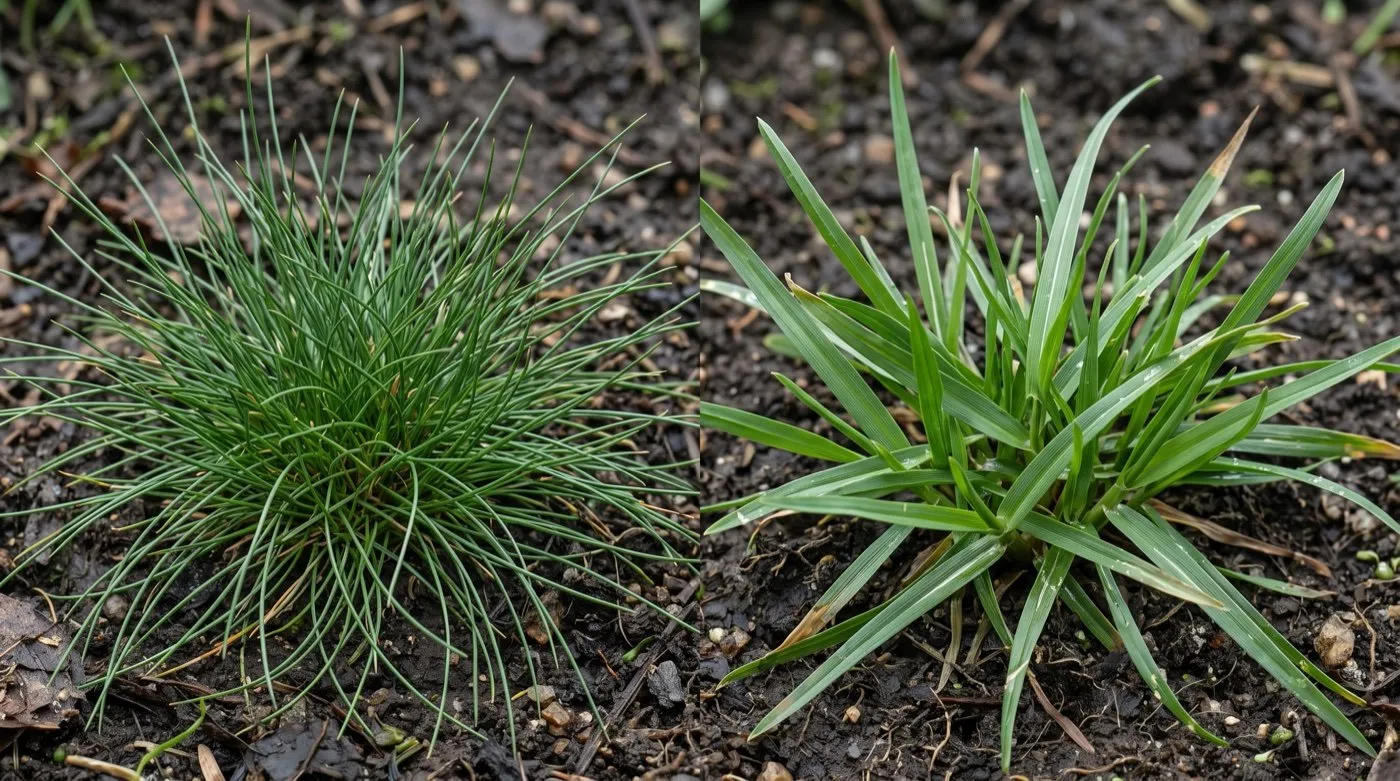
Fine, needle-thin fescue on the left, broader ryegrass on the right. For shade, you want plenty of the fine stuff.
| Grass | How it copes with shade | Watch out for | Best use |
|---|---|---|---|
| Creeping red fescue | Good | Struggles in dry shade under big trees | Main grass in any shade mix |
| Chewings fescue | Good, especially on drier soil | Doesn’t spread to fill gaps | Mix with creeping red fescue |
| Rough-stalked meadow grass | Good in damp shade | Dies back in drought | Damp shade only, never under trees |
| Perennial ryegrass | Poor | Thins out in shade | Sunny lawns and play areas |
| Smooth-stalked meadow grass | Poor | Slow to establish | Sunny, hard-wearing lawns |
Sow a fescue-led shade mix in early autumn, at the rate on the pack. The guide on how to sow grass seed covers ground preparation and aftercare.
Why grass dies under trees
Most lawns under trees die of thirst, not darkness. A big tree such as a sycamore has a mat of shallow roots in the top layer of soil, just where grass roots live. In a dry summer, the tree drinks first.
Shade makes it worse. Grass in low light grows smaller roots than grass in sun, so it starts the fight already weaker. That’s why dry shade under a tree is much harder than the damp shade beside a north wall. A wall blocks light but leaves the soil moist. A tree blocks light and dries the soil too.
There’s a quick test. Dig a small hole about 15cm deep under the tree in July, and another on the open lawn. If the soil under the tree is dust-dry while the open lawn is merely dry, tree roots are the problem. No seed choice will fix that.
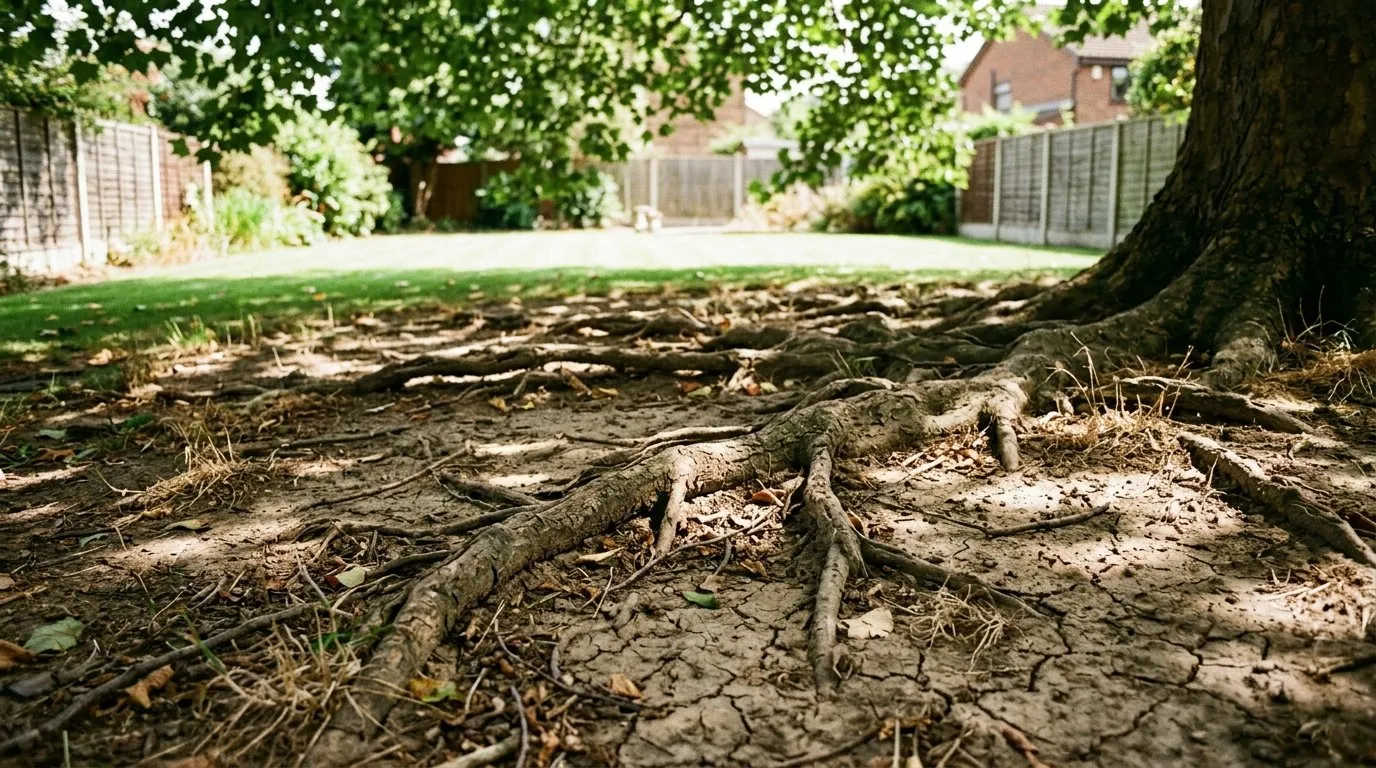
Cracked, dusty soil and roots at the surface tell you the tree is winning the battle for water. Grass can’t compete here.
Can you grow grass under a beech tree?
Realistically, no. Beech casts some of the densest shade of any garden tree, and its shallow roots soak up the water. Look at the floor of a mature beech wood: it’s mostly bare leaf litter. Your garden will behave the same way.
The type of tree matters more than the seed you buy. Light, open trees such as birch let plenty of dappled light through, and a fescue mix has a fair chance there. Under beech, sycamore, horse chestnut or dense conifers, grass is a constant struggle. Accepting this early saves seed, time and frustration.
Why moss takes over a shaded lawn
Moss is the sign of a light problem, not the cause of it. Grass in shade grows thin and stretched, and it stops making new side shoots to thicken up. Plants die off one by one, leaving gaps. Moss loves those shady, damp gaps and fills them.
It’s worst in late winter. Grass more or less stops growing in cold weather, while moss carries on. That’s why shaded lawns can look terrible in February.
Moss killer clears the moss for a while, but it comes back if nothing changes about the light. So deal with the shade, the grass and the moss together: rake out moss gently in spring, overseed with fescue in autumn, and let in more light where you can.
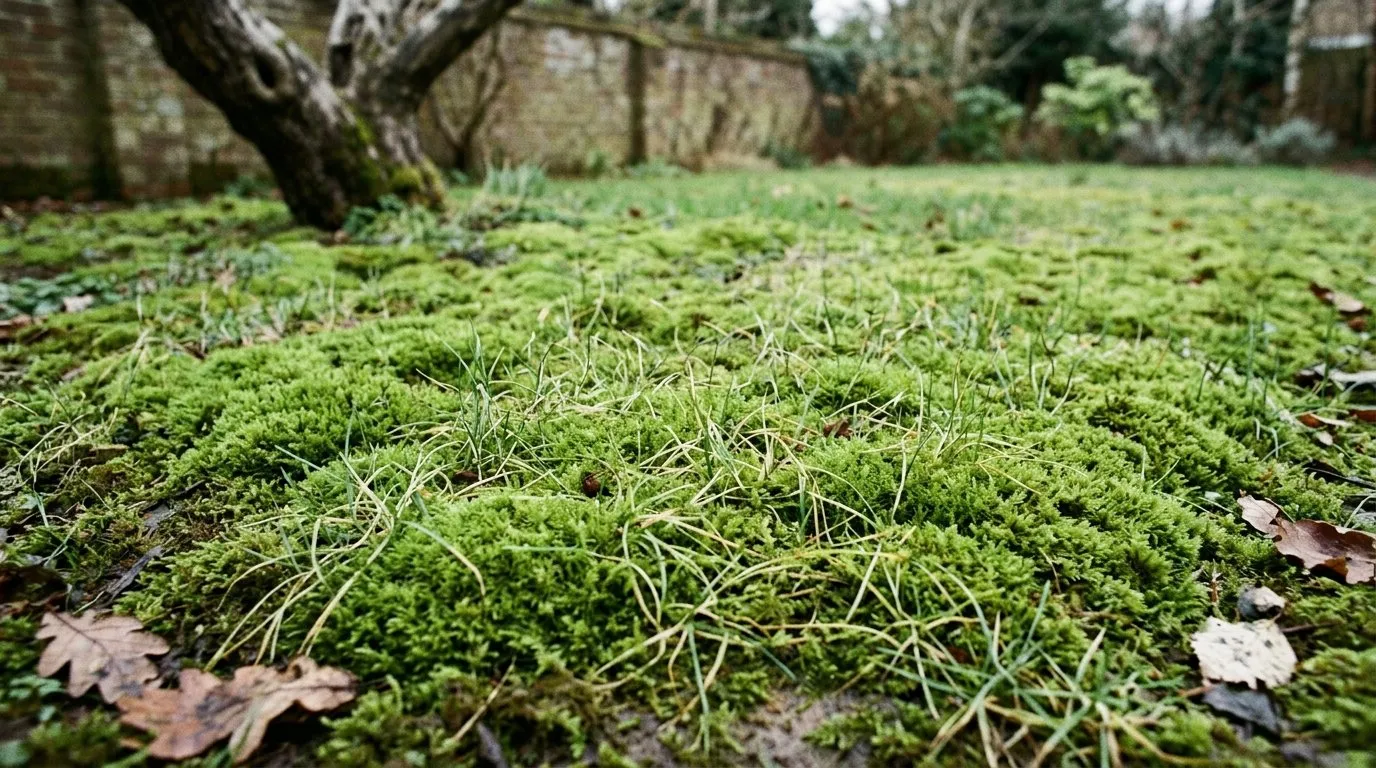
When moss looks like this, the grass lost the battle some time ago. More light and fescue seed are the long-term fix.
How to mow and feed a shaded lawn
Mow shaded grass higher, at around 5-6cm, and feed it lightly. Both feel a bit backwards, but both help.
Longer leaves catch more of the light that’s available, so the grass stays stronger. Raise the mower blades in spring and leave them there all year. Mow less often than the sunny lawn, and never scalp a shaded patch. The guide to how low to mow your lawn explains mowing heights in more detail.
Go easy on the feed. A thin shady lawn looks hungry, so it’s tempting to feed it hard. But lots of nitrogen pushes soft, lush growth the grass can’t support in low light. That soft growth in a damp corner invites disease such as red thread. Give a light feed in spring and early autumn only.
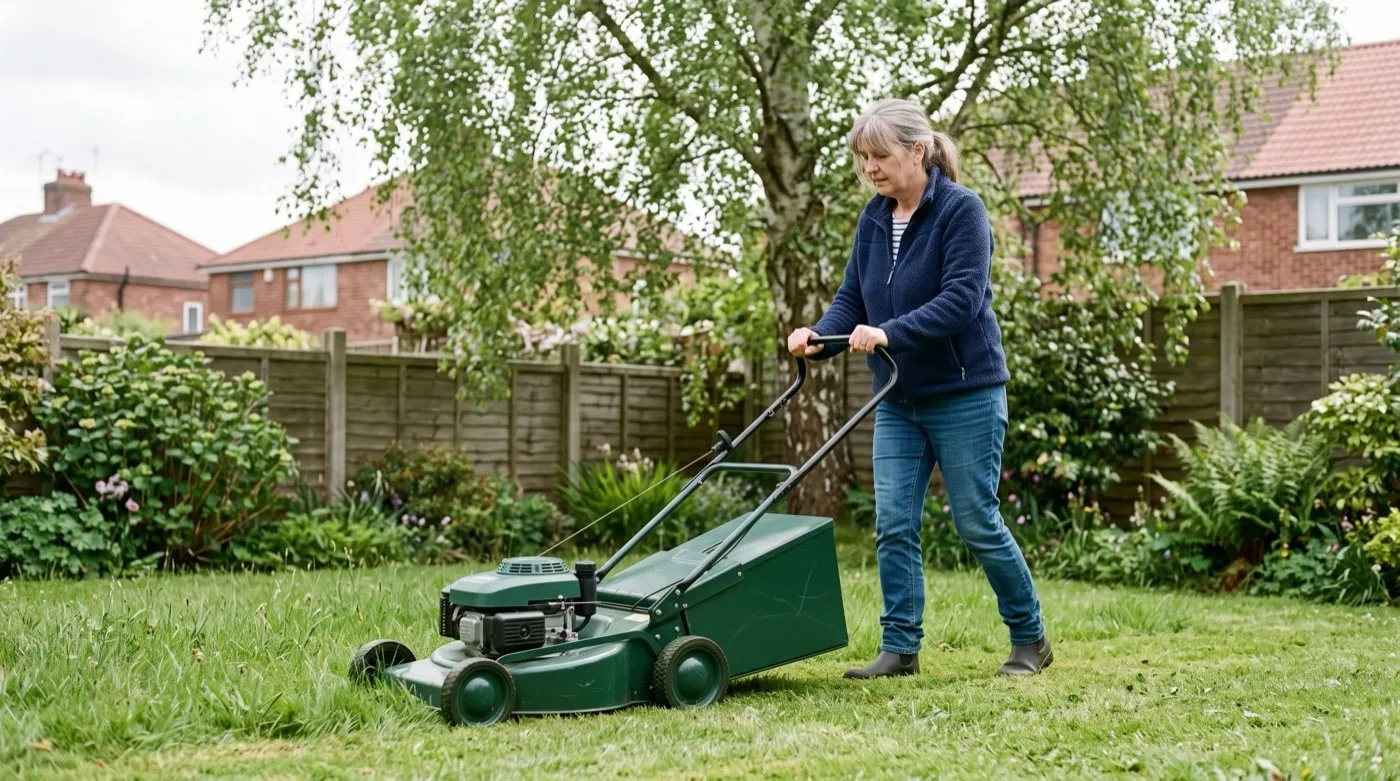
Raise the blades before you mow under the trees. Longer grass catches more light and stays thicker.
Letting more light reach the lawn
More light usually helps a shaded lawn more than more seed. If a tree is the problem, a tree surgeon can help in two ways.
Crown lifting removes the lowest branches, so morning and evening sun can reach under the canopy. Crown thinning removes some of the inner branches, so more dappled light filters through. Use a qualified, insured arborist, and get more than one quote.
Warning: Check with your council’s tree officer before any work if the tree may have a Tree Preservation Order or you live in a conservation area. Working on a protected tree without permission can be a criminal offence. Avoid cutting in spring and summer too, when birds may be nesting. Disturbing an active nest is an offence.
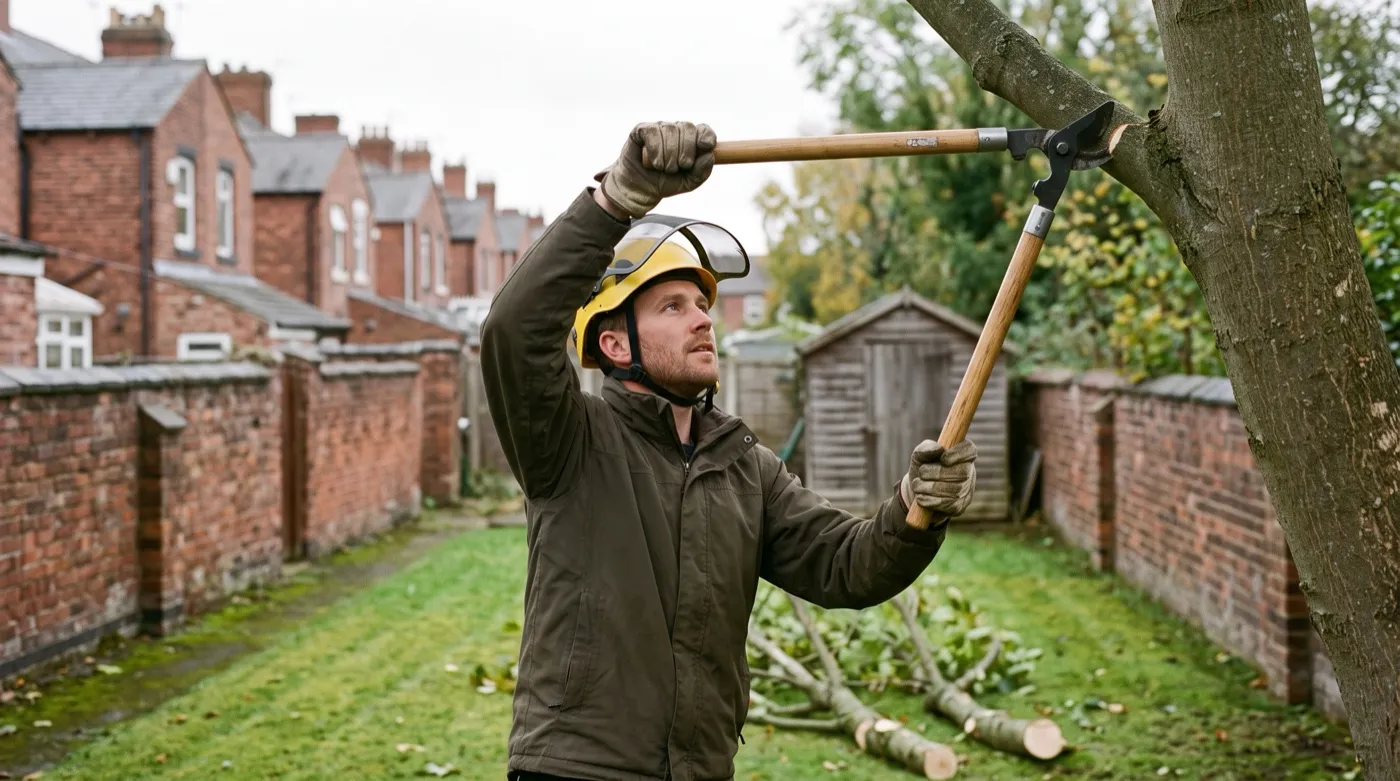
Taking off the lowest branches lets more light under the tree. It can be the difference between thin grass and a decent lawn.
When to stop sowing and plant ground cover
If grass has failed twice in the same spot, switch to plants. Two failures tell you light or water is the limit, and a third bag of seed won’t change that.
Shade-loving ground cover often looks better than thin grass anyway. Geranium macrorrhizum is a tough, scented, semi-evergreen favourite for dry shade under trees. Epimedium copes with dry shade too, with pretty spring flowers. Vinca minor (lesser periwinkle) spreads quickly. Luzula sylvatica, the greater woodrush, looks a bit like grass and is happy in deep shade.
The guide to lawn alternatives and ground cover covers more options for replacing grass.
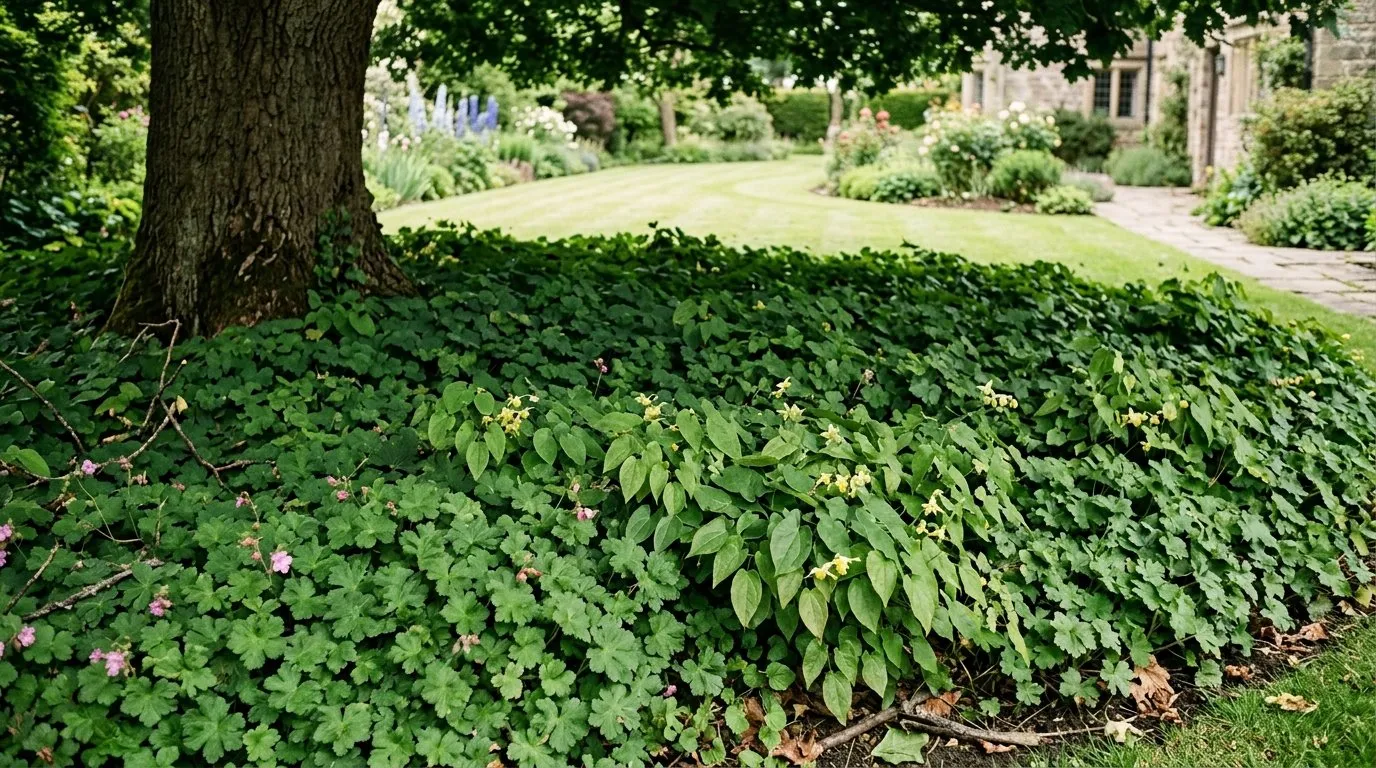
Geranium macrorrhizum and epimedium give full, green cover under a tree where grass kept failing.
Month-by-month shade lawn calendar
| Month | What to do |
|---|---|
| January to February | Keep off frosty or soggy grass. Note where moss is worst |
| March | Rake out moss gently by hand. Avoid heavy scarifying in shade |
| April | Give a light spring feed. Raise the mower blades |
| May | Mow high and less often than the sunny lawn |
| June | Watch where the sun falls through the day. Note the darkest spots |
| July | Do the dry soil test under trees. Water new fescue patches in dry spells |
| August | Buy a fescue-led shade mix. Book any tree work for autumn |
| September | Main sowing month. Overseed thin areas into raked soil |
| October | Keep fallen leaves off the grass. Light autumn feed if needed |
| November | Plant ground cover where grass has failed twice |
| December | Keep clearing leaves, as they smother thin grass |
September is the key month. The soil is still warm and the rain is back, so new fescue has time to root before winter. Spring sowings in shade often fail, because the young grass meets its first dry summer with tiny roots.
Common mistakes with grass in shade
- Buying by the label, not the grass list. A “shade” bag full of ryegrass is a sun mix. Look for mostly fescue.
- Feeding a thin lawn harder. Heavy feeding in shade gives soft growth and disease. Feed lightly.
- Mowing shade grass short. Short grass catches less light. Keep it at around 5-6cm.
- Treating only the moss. Moss comes back unless you tackle the shade and thicken the grass.
- Sowing the same spot a third time. If it’s failed twice, plant ground cover instead.
Shady corners are often wet too, as they dry out slowly. If yours holds water, the guide to diagnosing a waterlogged lawn covers drainage.
Frequently asked questions
What grass grows best in shade in the UK?
Fine fescues, especially creeping red fescue and Chewings fescue. Look for a shade mix where they make up most of the bag. Rough-stalked meadow grass copes with damp shade but browns off quickly in a dry summer.
How many hours of sun does grass need?
Most lawn grasses need at least a few hours of direct sun a day. Fine fescues manage with less, especially in dappled light under a light canopy such as birch. In deep, all-day shade, no lawn grass lasts for long.
Why does grass die under trees even with shade seed?
Usually because the tree takes the water as well as the light. Tree roots fill the top layer of soil, exactly where grass roots grow. Shade seed helps with the light, but it can’t win that fight for water in a dry summer.
Can you grow grass under a beech tree?
Realistically, no. Beech casts very dense shade and has a mat of shallow, thirsty roots. Under lighter trees such as birch, a fescue mix has a fair chance. Under beech, plant shade-loving ground cover instead.
Should I mow shade grass higher or lower?
Higher, at around 5-6cm. Longer leaves catch more of the little light there is, which keeps the grass stronger. Mow less often too, and never scalp a shaded patch.
Does feeding a shade lawn more nitrogen help?
No, it usually makes things worse. Heavy feeding pushes soft, lush growth the grass can’t support in low light, and that invites disease such as red thread. Give a light feed in spring and early autumn only.
When should I give up on a shade lawn?
If grass has failed twice in the same spot, it’s time to switch. That tells you light or water is the limit, not your technique. Shade-loving ground cover such as Geranium macrorrhizum or epimedium will cover the ground instead.
Find more seasonal jobs in our lawn care hub. If your shady spot is ready for plants instead of grass, read our guide to the best plants for dry shade next.
Our team produces practical UK gardening guidance from source research, contributor records and established horticultural practice. Editorial standards are overseen by Matt W.