Key takeaways
- Voles leave narrow runs through the grass and small open holes, but never soil mounds
- If you have molehills, it's a mole, not a vole
- The real damage is gnawed bark on young trees and shrubs in winter, not the lawn
- Short grass and tidy edges take away the cover voles need
- Spiral guards fitted in autumn stop bark gnawing
- Avoid poison: it isn't approved for voles and harms owls, kestrels and pets
If your lawn has narrow worn runs through the grass and small open holes, but no molehills, you probably have voles. They’re small, blunt-nosed rodents that live in long grass. The good news is that they do little real harm to a lawn. The thing to protect is young trees, whose bark they gnaw in winter.
This guide shows you how to tell voles from moles and mice, what damage to look for, and the simple, humane ways to make your garden less inviting. If you do have mounds of soil, head to the guide to getting rid of moles instead, as the fix is quite different.
Voles, moles or mice: which is it?
The quickest test is the soil mound. Moles push up heaps of loose earth as they tunnel. Voles never do. If the lawn has runs and holes but no heaps, it’s voles.
The animals look different too. A vole has a blunt nose, small ears and a short tail. A mouse has a pointed nose, big ears and a long tail. A mole is velvety black with big digging paws, and you’ll hardly ever see one above ground.
| Sign | Vole | Mole | Mouse |
|---|---|---|---|
| Soil mounds | None | Heaps of loose soil | None |
| Surface runs | Narrow worn paths through grass | None | Faint, if any |
| Holes | Small, open, no soil around them | Rare | Small, often by walls and sheds |
| Bark damage | Gnaws base of young trees | Never | Occasionally |
| Seen by day | Sometimes, briefly | Almost never | Mostly at night |
If you’ve got lots of small, neat holes appearing overnight and no runs, the guide to small holes in the lawn helps rule out birds, squirrels and insects.
Field voles and bank voles
Two kinds of vole turn up in UK gardens.
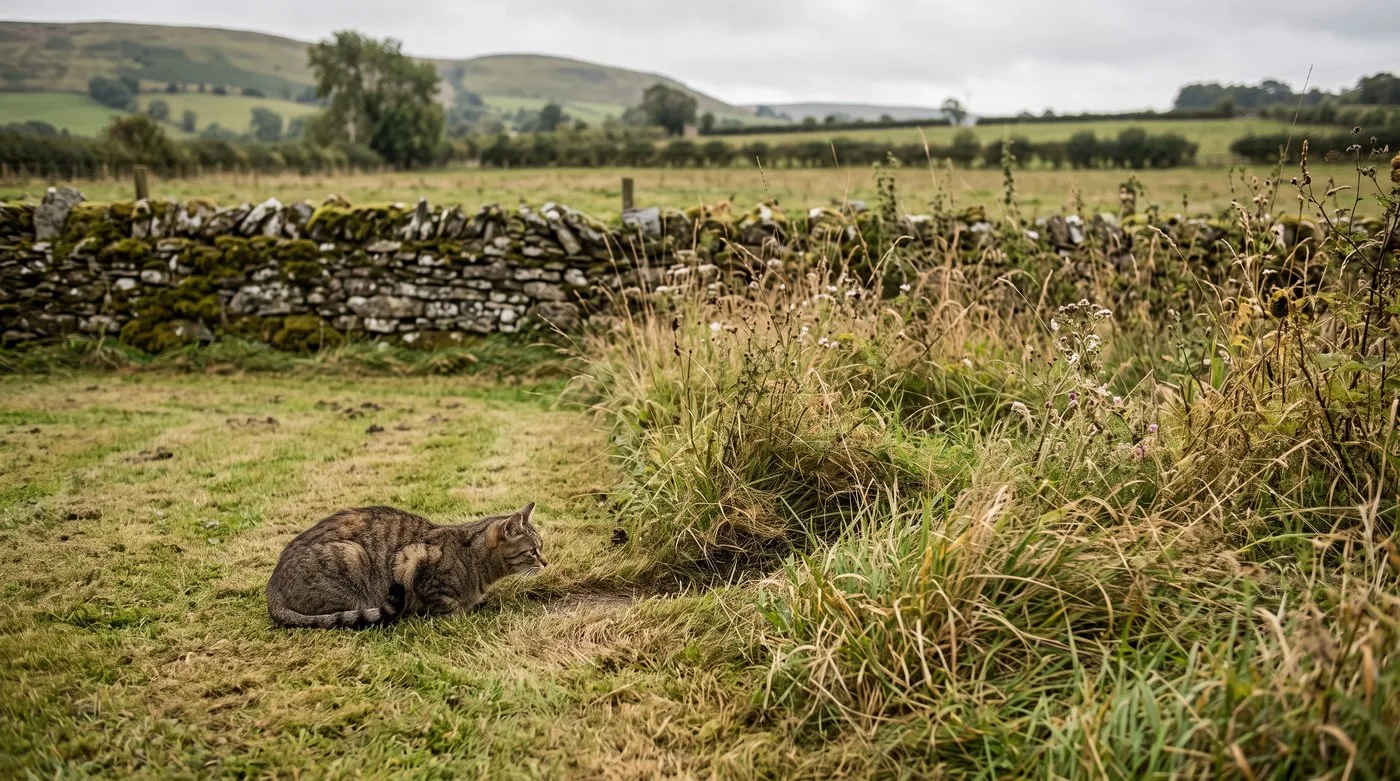
Rough grass by fields and verges is classic field vole country. A cat may catch a few, but short grass does more.
The field vole is one of Britain’s commonest mammals. It’s grey-brown with a very short tail and loves rough, tussocky grass. It’s the usual lawn visitor, especially in gardens next to fields, verges or wild corners.
The bank vole is a little redder, with a slightly longer tail. It prefers hedge bottoms, shrubby borders and woodland edges, and climbs better than the field vole.
Both breed through spring and summer, so numbers can jump in a good year. A mild winter and plenty of long grass often mean more voles by spring.
Neither is protected. The water vole is protected by law, but it lives along rivers, ditches and ponds, not in lawns. If you garden next to water and see a larger, chunkier vole, leave it be.
The signs of voles in a lawn
Voles leave a clear set of clues once you know what to look for.
- Surface runs. Worn paths about 3-4cm wide through the grass, often hidden under longer growth at the edges. Part the grass and you’ll see bare, flattened soil.
- Open holes. Small round entrances with no soil piled round them. That’s the big difference from moles.
- Clipped grass and droppings. Short snipped bits of grass and small green-brown droppings collect along the runs.
- Gnawed bark. Strips of bark eaten from the base of young trees and shrubs, usually in winter.

Part the grass and you’ll find a bare, flattened run and a small open hole. No heap of soil means voles, not moles.

Snipped grass and little droppings along a run are a sure sign voles are using it.
What damage do voles actually do?
On the lawn, not much. The runs and holes look untidy but recover once the grass is mown short and the voles move on. You might need to rake and reseed a few bare patches. The guide to fixing a patchy lawn shows how.
On young trees, a lot. In winter, voles gnaw bark at the base of young trees, shrubs and new hedging, often hidden under long grass or snow. If they strip a ring right round the stem, everything above it dies. Young apple, plum and other fruit trees are especially at risk.
Compare voles with other lawn pests and they’re a minor nuisance. Leatherjackets kill patches of grass from below, and rabbits digging up the lawn do far more damage.

Gnawed bark near the base of a young tree. The spiral guard lying on the grass should have been around the stem.
How to get rid of voles humanely
You don’t need poison. Rodenticides aren’t approved for voles, and poisoned voles can kill the owls, kestrels and pets that eat them. Instead, take away what voles need and protect what matters.
- Cut the cover. Voles hide in long grass and tangled edges. Mow the lawn to 2.5-4cm through the growing season and strim long edges. Read how low to mow a lawn for the right height for your grass.
- Tidy their hiding places. Move log piles, compost heaps and stacks of pots away from the lawn and young trees.
- Guard young trees. Fit a spiral guard round the base of every young tree and whip in autumn. Keep mulch and long grass pulled back a hand’s width from the trunk.
- Trap where numbers are high. Mouse-sized snap traps set inside a tunnel or covered box along a run can help with a localised problem. The cover keeps birds and pets away from the trap. Check traps every day.
Mole traps won’t work, because voles don’t use deep tunnels. Ultrasonic spikes and home-made deterrents aren’t worth the money either.

Fit spiral guards in autumn, before the winter gnawing starts. Check them each spring and loosen them as the trunk thickens.
Let owls and kestrels help
Voles are a favourite food of barn owls, tawny owls and kestrels. Short grass lets these birds spot voles from above, so mowing and predators work together.
A post or fence along the edge of an open lawn gives kestrels and owls a lookout. Avoid rodent poisons, which can kill these birds. The Wildlife Trusts’ field vole page explains why voles matter so much to wildlife.
A few voles in a rural garden are a sign of a healthy food chain. The aim is to protect your trees, not to clear every vole for miles.

A kestrel watching from a fence post. Short, open grass makes it easy for birds of prey to spot voles.
A year-round vole plan
| Month | What to do |
|---|---|
| January to February | Check young trees for fresh gnawing. Make sure guards are snug |
| March | First mows. Cut long winter edges back |
| April to June | Keep grass short. Clear leaf and weed piles near the lawn |
| July to August | Move log and compost stacks away from grass. Trap hot spots if needed |
| September | Strim long edges before autumn |
| October to November | Fit spiral guards on all young trees. Pull mulch back from trunks |
| December | Keep edges tidy. No rodent poisons |
Common vole mistakes
Buying mole traps. Voles don’t use deep tunnels, so the traps never catch them.
Reaching for poison. It isn’t approved for voles and can kill owls, kestrels and pets.
Leaving long grass right up to young trees. That’s exactly where voles gnaw bark unseen.
Forgetting tree guards. A spiral guard is cheap. A replacement tree isn’t.
Worrying about the lawn. The grass recovers. Protect the trees instead.
Frequently asked questions
How do I tell voles from moles in my lawn?
Voles never make soil mounds, and moles always do. Voles leave narrow worn runs on the surface and small open holes. Moles stay underground and push up heaps of loose soil. If you see molehills, it’s a mole.
Are voles protected in the UK?
Field and bank voles are not protected. You can deter or humanely control them in your garden. Water voles are protected by law, but they live along rivers, ditches and ponds, not in lawns.
What is the best way to get rid of voles in a lawn?
Take away their cover and let predators do the work. Mow to 2.5-4cm, cut back long edges and move log piles away from the lawn. Fit spiral guards on young trees. Snap traps set inside a tunnel help where numbers are high.
Do voles damage lawns badly?
No, the lawn damage is mostly cosmetic. Runs and small holes soon recover once the grass is mown and the voles move on. The real harm is bark gnawed off young trees and shrubs in winter, which can kill them.
Will a cat get rid of voles?
A cat may catch some, but rarely clears them. Voles breed quickly and hide in long grass. Short grass, tree guards and wild predators such as owls and kestrels do more.
Now you know how to deal with voles, use our lawn care calendar to keep your grass short and thick all year, or browse more lawn care guides.
Our team produces practical UK gardening guidance from source research, contributor records and established horticultural practice. Editorial standards are overseen by Matt W.