Key takeaways
- Sow in early autumn or mid-spring, when the soil is warm and moist
- Weigh the seed for your area using the rate on the box, usually around 35g per square metre
- Split the seed in half and sow in two passes at right angles for even cover
- Rake lightly so the seed is only just covered, then firm gently
- Keep the surface damp with a fine spray until the grass is up
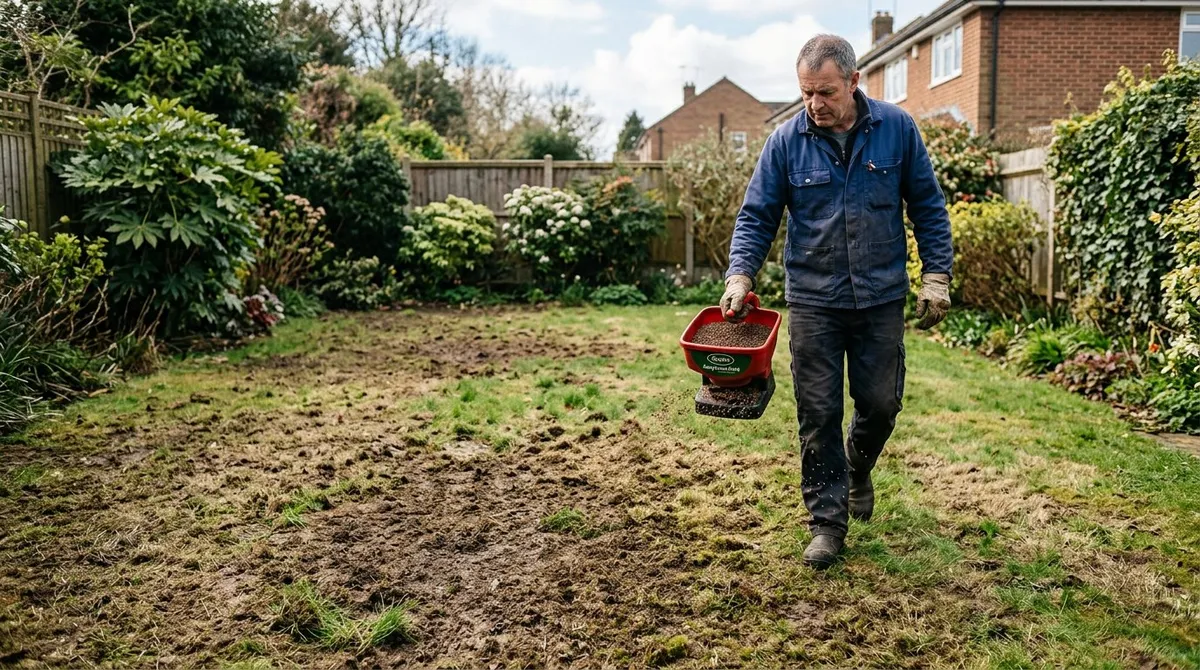
The secret to a good lawn from seed is sowing it evenly. Weigh the seed, split it in half, and sow one half up and down and the other across. Then rake it in lightly, firm it and keep it damp until it comes up.
This guide is all about the sowing itself. For choosing seed, timing and the full first year, see the guide to growing grass from seed.
When to sow grass seed
Sow when the soil is warm and moist. September is ideal in most of the UK. The soil is still warm from summer and autumn rain helps with watering. Mid-April to May is the next best time.
Avoid hot, dry spells in summer, when the surface dries in hours. Avoid winter too, when cold soil means slow, patchy germination.
Check the forecast before you start. A few days of mild weather with light showers is perfect.
How to get the ground ready
Even sowing needs an even surface. Get the ground ready a week or two before you sow.
- Clear weeds. Dig out perennial weeds like dandelions and docks, roots and all. If you use a weedkiller, choose one approved for the job and follow the label, including how long to wait before sowing.
- Loosen the soil. Dig or fork over the top 10-15cm and remove stones and old roots.
- Level it. Rake in two directions to fill dips and knock down bumps.
- Firm it. Shuffle across on your heels in small steps, then rake again. The surface should be firm, not fluffy.
- Rake to a fine crumb. The top couple of centimetres should be fine and crumbly, with no big clods.

A fine, level, crumbly surface like this lets seed settle evenly and come up together.
How much grass seed to use
Follow the rate on the box. Most mixes for new lawns suggest around 35g per square metre. Hard-wearing mixes may say a little more. Overseeding an existing lawn usually needs less.
Measure your area and work out the total. For example, a 40 square metre lawn at 35g per square metre needs 1.4kg.
Don’t be tempted to sow extra thickly. Crowded seedlings grow weak and are more prone to disease.
How to sow grass seed evenly
The two-pass method gives the most even cover, whether you sow by hand or with a spreader.
- Weigh the seed for the whole area.
- Split it into two equal halves.
- First pass: walk up and down the area in straight lines, scattering one half as evenly as you can.
- Second pass: walk across at right angles, scattering the other half. This fills any gaps from the first pass.
- Do the edges carefully. Sow right up to the edge, but keep seed out of borders.
By hand, scatter small handfuls in low, sweeping arcs. Practise a few throws on a path or sheet first to see how it spreads.
With a spreader, set it as the seed box suggests and test it on a small patch first. A spreader is handy on bigger lawns.

Scatter in low, even arcs. Sowing half the seed one way and half the other fills the gaps.
Raking in, firming and protecting the seed
Rake very lightly after sowing, so most of the seed is just covered or pressed into the surface. Don’t bury it deep.
Then firm gently. Walk over it on a board, or use a light roller. This presses the seed into contact with the soil.
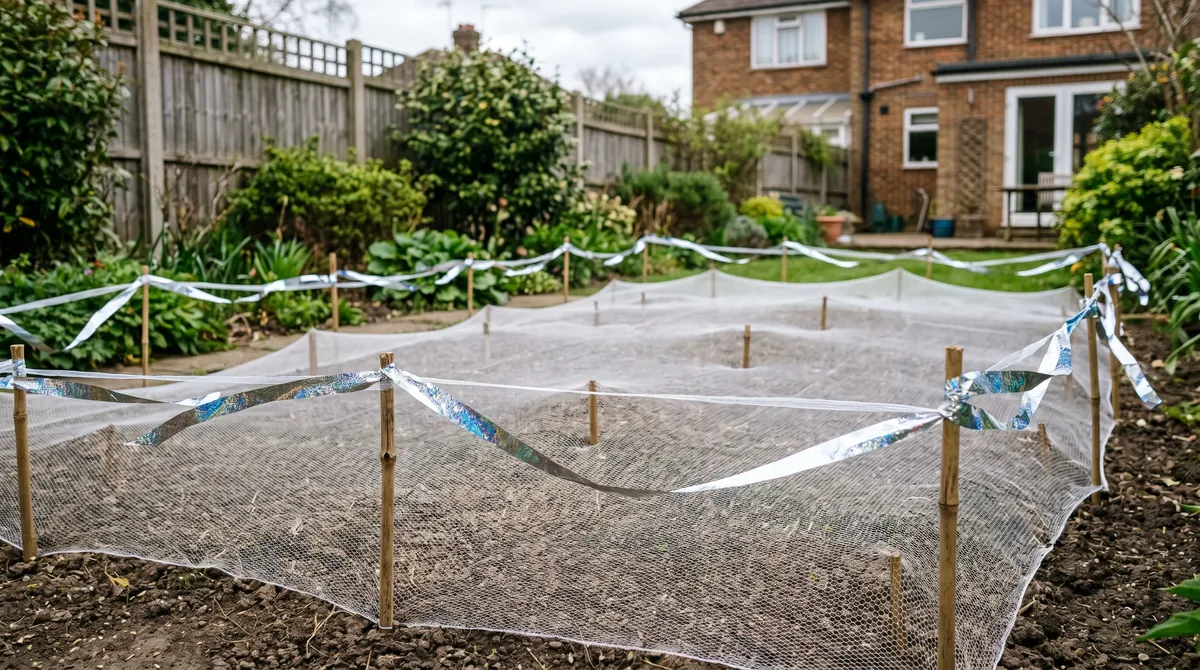
Birds love fresh grass seed. Netting, fleece or a few strings of old CDs help. The guide on how to protect grass seed from birds compares the options.
How to water new grass seed
Keep the surface damp, not soaked, until the grass is up. Seed that dries out after starting to sprout dies.
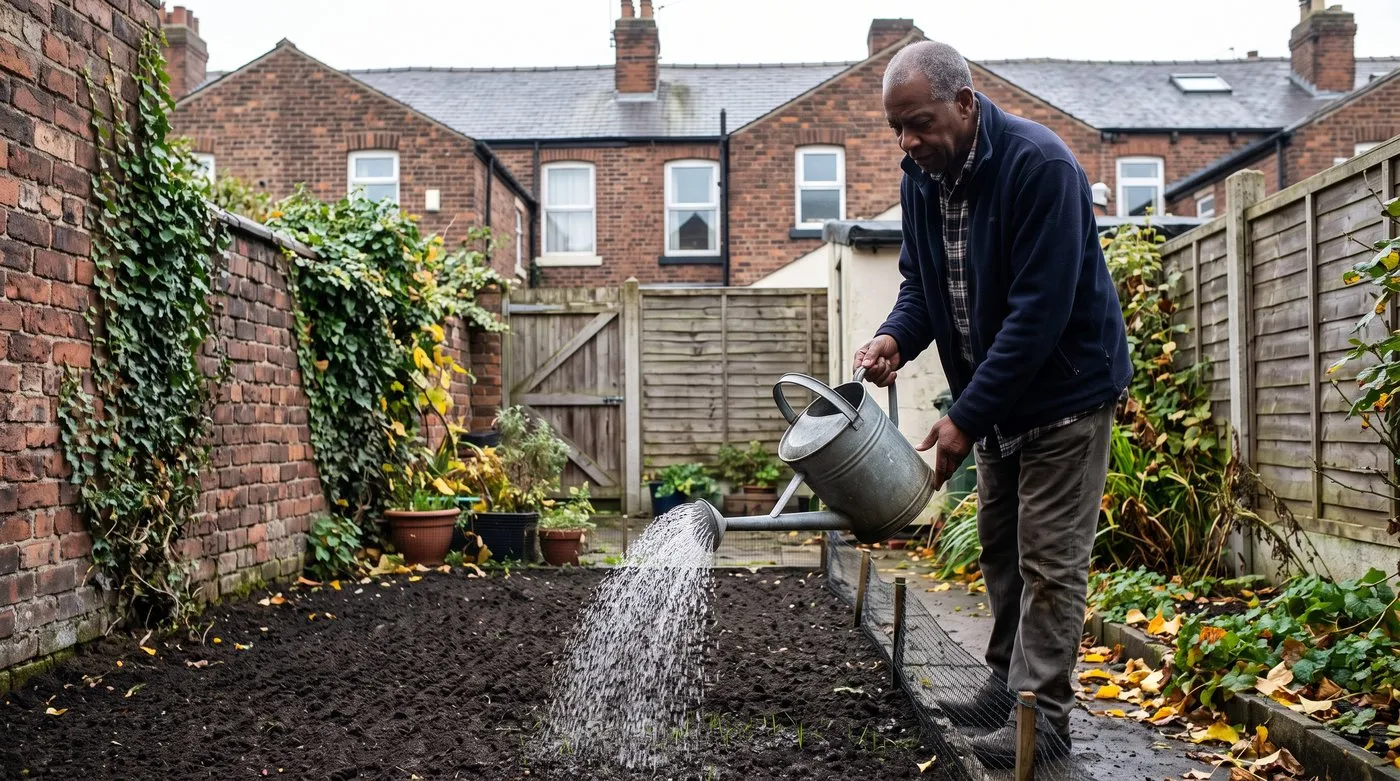
A fine rose keeps the seed where you sowed it. A strong jet washes it into clumps.
- Use a watering can with a fine rose, or a sprinkler on a fine spray. A strong jet washes seed into clumps.
- Water little and often, daily in dry weather, sometimes twice in warm spells.
- Let rain do the work when it’s showery.
- Once the grass is a few centimetres tall, water less often but more deeply, to help roots grow down.
What to expect as grass seed comes up
Most mixes come up in one to three weeks. Ryegrass is first, often in about a week in warm soil. Fine fescues take longer.
At first, the lawn looks thin and patchy. That’s normal. It thickens over the next few weeks as more seedlings appear and start to spread.
If bare patches remain after about three weeks, lightly rake them and sow a little more seed.

The first green haze. It looks thin to begin with but thickens up over the next few weeks.
First mow and early care
Give the first mow when the grass is about 7-8cm tall. Set the mower high and just take the tips off. Make sure the blade is sharp, or it can pull young grass out of the soft ground.
Keep foot traffic to a minimum for the first couple of months. Hand-pull any weeds rather than using lawn weedkillers, which usually can’t be used on young grass. Check the label if you’re unsure.

Get the sowing right and keep it watered, and by the next summer you could have a lawn like this.
Overseeding a thin lawn
The same method works for thickening up a tired lawn, at a lower rate.
- Mow fairly short.
- Rake hard or scarify to clear moss and thatch and expose some soil.
- Sow at the overseeding rate on the box, using the two-pass method.
- Top-dress lightly with a sandy mix and keep it damp.
Early autumn is the best time. The guide to scarifying and aerating a lawn explains the prep. For individual bare patches, the guide on how to fix a patchy lawn is a better fit.
Common grass sowing mistakes
- Sowing into cold or dry soil. Germination is slow and patchy. Wait for warmth and moisture.
- Sowing too thickly. It wastes seed and gives weak grass. Stick to the rate on the box.
- Sowing in one pass. It leaves stripes and bald lines. Use two passes at right angles.
- Burying the seed. Rake lightly so it’s only just covered.
- Letting it dry out. Keep the surface damp until the grass is up.
Want instant results instead? Compare it with laying turf. For more lawn guides, see the lawn care hub. Once your new grass is growing, the lawn care calendar shows what to do next, month by month.
Frequently asked questions
When is the best time to sow grass seed in the UK?
Early autumn is best, with mid-April to May next. The soil is warm and moist then, so seed comes up quickly. Avoid hot, dry summer spells and cold winter soil.
How much grass seed do I need per square metre?
Follow the rate on the box, usually around 35g per square metre. Overseeding a thin lawn needs less. Sowing much thicker wastes seed and gives weak, crowded grass.
How long does grass seed take to germinate in the UK?
Usually one to three weeks, depending on warmth and moisture. Ryegrass is quickest. Fine fescues are slower. It’s slow and patchy in cold soil.
When should I first mow a newly sown lawn?
When the grass reaches about 7-8cm tall. Set the mower high and only take the tips off. Use a sharp blade so you cut the young grass rather than pull it.
Can I sow grass seed in summer?
You can, but it’s risky. Hot, dry weather dries the surface fast and seedlings die without moisture. Water at least daily in dry weather, or wait until late summer.
Should I cover grass seed after sowing?
Only very lightly, by raking it in. Most seed should be just covered or pressed into the surface. Burying it deep slows germination and leaves gaps.
Our team produces practical UK gardening guidance from source research, contributor records and established horticultural practice. Editorial standards are overseen by Matt W.