Key takeaways
- Sparrows and pigeons can take 60-90% of newly sown grass seed in 2-3 days
- Fine mesh netting: 95% effective, 10-15 year reuse
- Horticultural fleece: 90% effective, lets light through
- Shimmer tape and CD strings: 65-75% effective alone
- Pre-soaked seed germinates faster, reducing the vulnerable window
- Remove protection at 25mm grass height
Why Birds Target Grass Seed
A freshly sown UK grass seedbed offers exactly what UK garden birds need most: high-energy food, easily accessible, in dense quantity. A single sparrow can eat 800-1500 grass seeds per day. A wood pigeon can take 3000-5000 per day. A small flock of 10-15 birds clears a 5m² bed in 48-72 hours.
The vulnerability window:
- Days 0-3: Seed visible on surface; maximum bird interest
- Days 4-10: Seed swelling and germinating below soil; some birds dig
- Days 10-21: Seedlings emerging; less attractive to seed-eaters but green shoots tempt blackbirds and pigeons
- Days 21-42: Grass establishing; protection still useful
- Day 42+: Grass at 25mm+ height; birds lose interest
The protection target is the first 42 days from sowing. Most UK gardeners under-protect.
The 6 Methods Ranked
Method 1: Fine Mesh Netting
Fine plastic or polypropylene mesh (10-15mm holes) stretched on bamboo canes 100-150mm above the seedbed.
UK products: Defenders Garden Netting (£15-£25), Wickes Garden Netting (£12-£20), pea and bean netting (£10-£18 per 5x5m).
Setup: Push 8-12 short bamboo canes (200mm tall) around the perimeter and through the middle of the bed. Stretch netting tight across the canes. Pin edges with ground pegs or bricks. Leave 100mm clearance above soil for water and growing space.
Limits: starlings can sometimes get through 15mm holes, switch to 10mm for problem gardens. Slugs can crawl underneath; combine with slug protection.
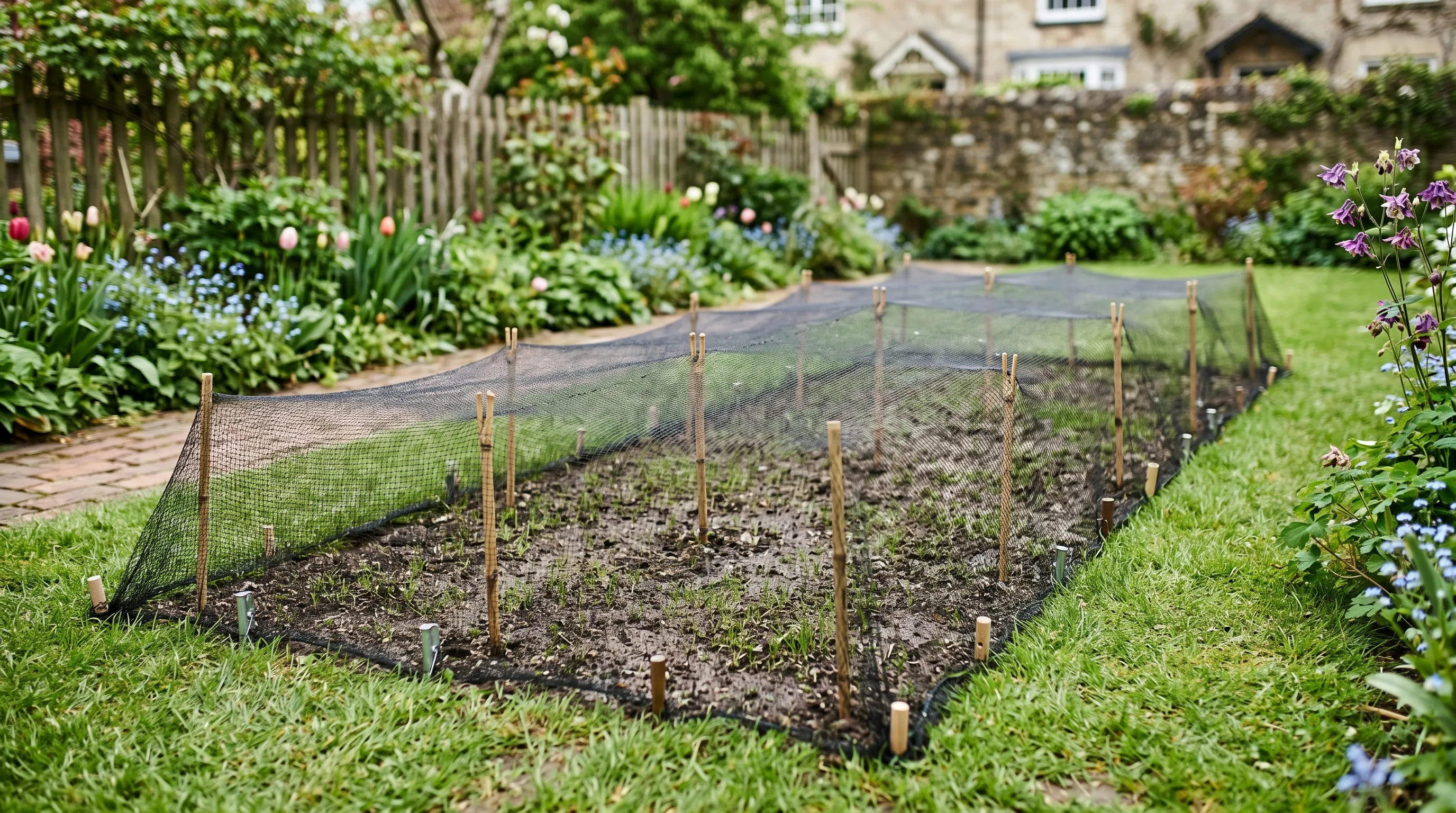 The Staffordshire netting setup. Fine 10-15mm mesh on 200mm bamboo canes, 100-150mm clearance above soil. Achieves 95% seed survival versus 10-40% on unprotected beds.
Method 2: Horticultural Fleece
White polypropylene fleece laid directly on the seedbed.
UK products: Defenders Plant Fleece (£8-£15 per 5m), Vitax Frost Protection Fleece (£10-£18), Garden Centre own-brand fleece (£5-£12).
Setup: Lay fleece directly on the sown bed. Weight edges with bricks, stones or pegs. Water through the fleece (it allows water through but slows evaporation).
Best for: Cool-season sowing (March, October) when temperature is a factor. Fleece raises soil temperature by 2-3C.
Avoid for: Summer sowing in warm weather (heat builds up under fleece).
Method 3: Shimmer Tape and Tinsel
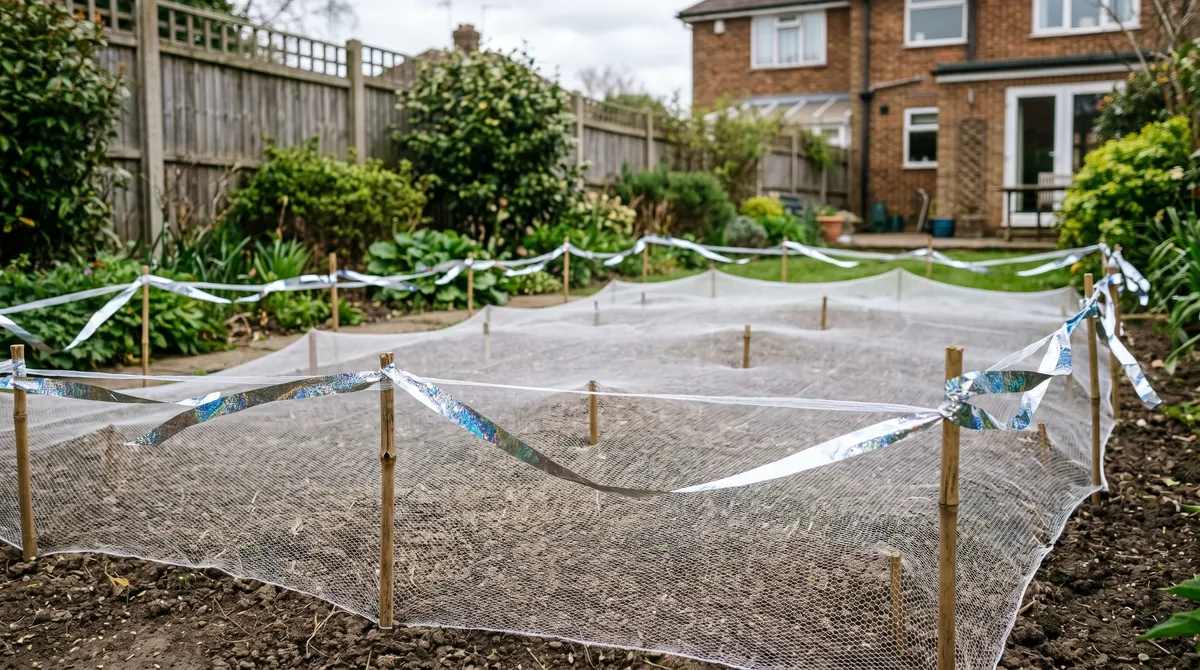
Reflective metallic strips strung 200-300mm above the seedbed.
UK products: Defenders Reflective Bird Repellent Tape (£4-£8 per 50m), Christmas tinsel from December sales (50p-£2), Garden centre shimmer strips (£3-£6).
Setup: String tape between short bamboo canes at 200-300mm height. Cross-pattern works better than single lines. Replace any tape that breaks or weathers.
Best for: Short-duration protection on tough-to-cover oddly shaped beds. Combined with netting for extra deterrent layer.
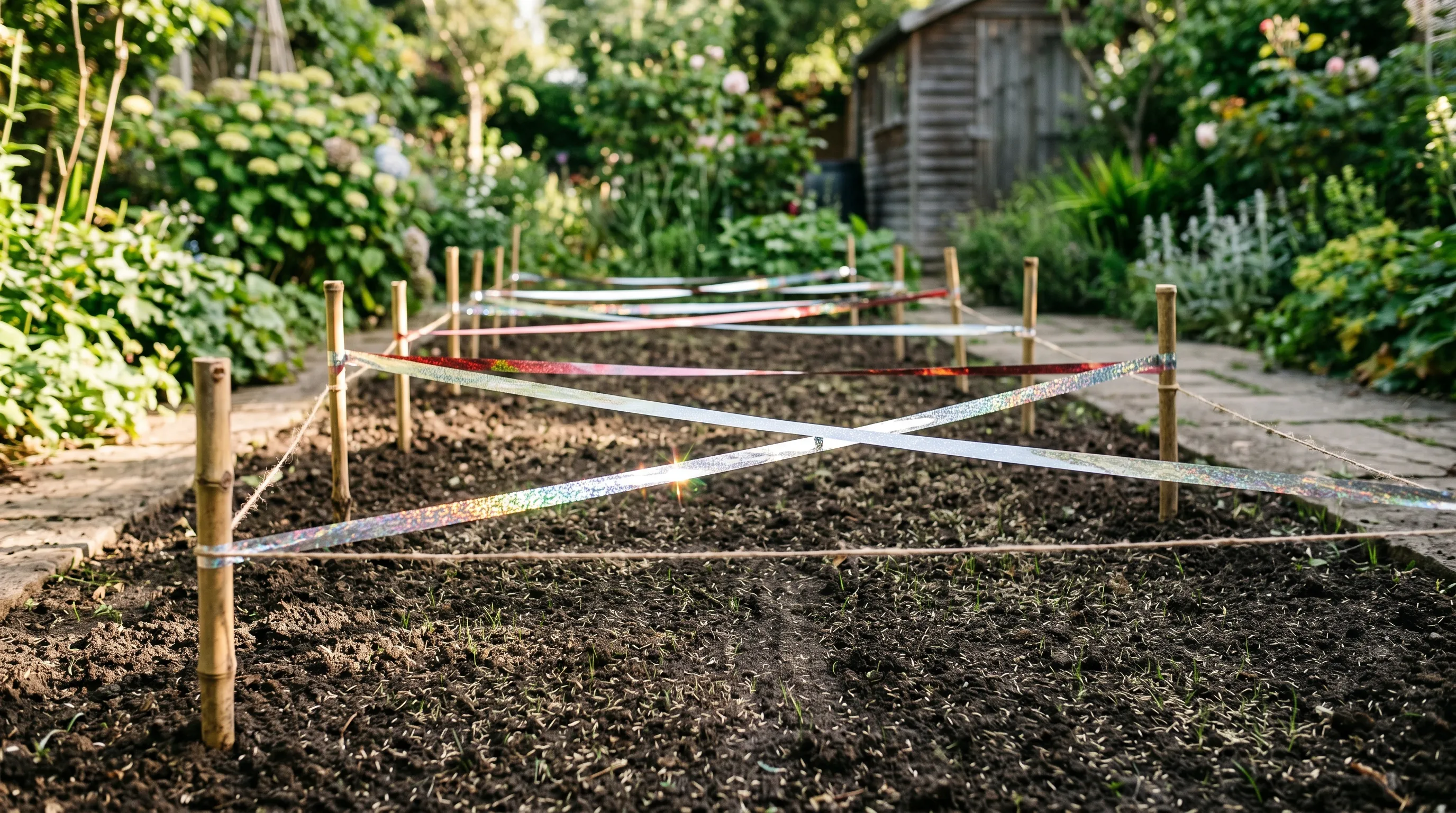 Shimmer tape protection on a UK seedbed. Reflective tape strung 250mm above soil reduces bird visits by 65-75% for the first 7-10 days. Birds adapt fast; combine with netting for longer protection.
Methods 4-6 in Brief
CD strings: Old CDs threaded on strings 200mm above the bed. Free from household recycling. 60-70% effectiveness for 10-14 days. Best for small areas.
Pre-soaked seed: Soak grass seed in cold water for 24-48 hours before sowing. Germination accelerates by 2-4 days, shortening the vulnerable window. 55% effectiveness as a stand-alone, useful as a supplement.
Scarecrow or fake owl: Static deterrents that birds adapt to within 7-14 days. 30-50% effectiveness in week 1, dropping to under 20% by week 3. Move position every 2-3 days for slightly better results.
Sowing Window and UK Timing
UK grass seed sowing windows affect bird pressure.
| Sowing month | Bird pressure | Protection level needed |
|---|---|---|
| March-April | Very high (spring breeding) | Netting plus shimmer tape |
| May | High (chicks hatching) | Netting |
| June-July | Moderate (drought-water-limited) | Fleece or netting |
| August | Low (post-breeding) | Light netting or fleece |
| September-October | Moderate (autumn migration) | Netting |
| November-February | Very low (most birds elsewhere) | Sometimes no protection needed |
Spring sowing requires the strongest protection. Autumn sowing is generally easier to protect.
For the wider lawn seeding process, our grass seed guide covers the soil prep, seed selection and timing detail.
Common Mistakes With UK Bird Protection
Mistake 1: removing protection too early. Most UK gardeners take netting off at 14-21 days when grass just emerges. Birds return immediately to take the tender shoots. Keep protection until grass reaches 25mm.
Mistake 2: using too-large mesh. 25mm+ holes let sparrows and chaffinches through. Use 10-15mm mesh.
Mistake 3: laying netting flat on soil. Birds can still feed through netting touching the ground. Always raise it 100-150mm on canes.
Mistake 4: relying on shimmer tape alone. Effectiveness drops sharply after 10-14 days. Combine with netting.
Mistake 5: not pegging edges. Wind lifts unsecured netting, letting birds in. Always peg or weight every edge.
For the wider lawn establishment, our grass seed guide covers the full UK lawn-from-seed process. For how to attract UK birds elsewhere in the garden, our wildlife guide covers feeding stations that draw birds away from seedbeds.
Bird Protection Calendar UK Month-by-Month
| Month | Bird protection task |
|---|---|
| January | Plan spring lawn seeding areas |
| February | Order netting and fleece for spring sowings |
| March | Sow spring lawns; protect immediately |
| April | Continue protection on March sowings |
| May | Most spring sowings reach 25mm; remove protection |
| June | Summer lawn repair; protect new areas |
| July | Continue summer lawn maintenance |
| August | Autumn sowing preparation begins |
| September | Main autumn sowing window; full protection |
| October | Continue autumn protection |
| November | Most autumn sowings established |
| December | Store netting and fleece for next year |
Frequently asked questions
What is the best way to stop birds eating grass seed?
Fine mesh netting (10-15mm) stretched 100-150mm above the seedbed on short bamboo canes. UK trials show 95% seed survival versus 10-40% on unprotected beds. Cost: £15-£25 for a 5x5m roll. Reusable for 10-15 years. Remove when grass reaches 25mm.
Does shimmer tape really keep birds off grass seed?
Partially. Shimmer tape and metallic strings reduce bird visits by 65-75% in UK trials. Birds adapt within 7-14 days, so effectiveness drops. Best as a supplement to netting or fleece, not a single solution.
When can I remove bird protection from new grass?
When grass reaches 25mm in height with established roots, typically 4-6 weeks from sowing. By this stage, birds are not interested in mature grass and the seedlings are firmly rooted enough to survive any bird traffic.
Should I water grass seed under bird protection?
Yes. Net or fleece does not affect watering. Water through the protection daily for the first 14 days, then every other day for 2 weeks. Pre-soaked seed germinates 2-4 days faster than dry seed, reducing the vulnerable window.
Can I use scarecrows or fake owls for grass seed?
Mostly no. UK trials show scarecrows reduce bird visits by 30-50% in week 1, dropping to under 20% by week 3 as birds adapt. Not effective enough as a primary method. Use only as a supplement to netting.
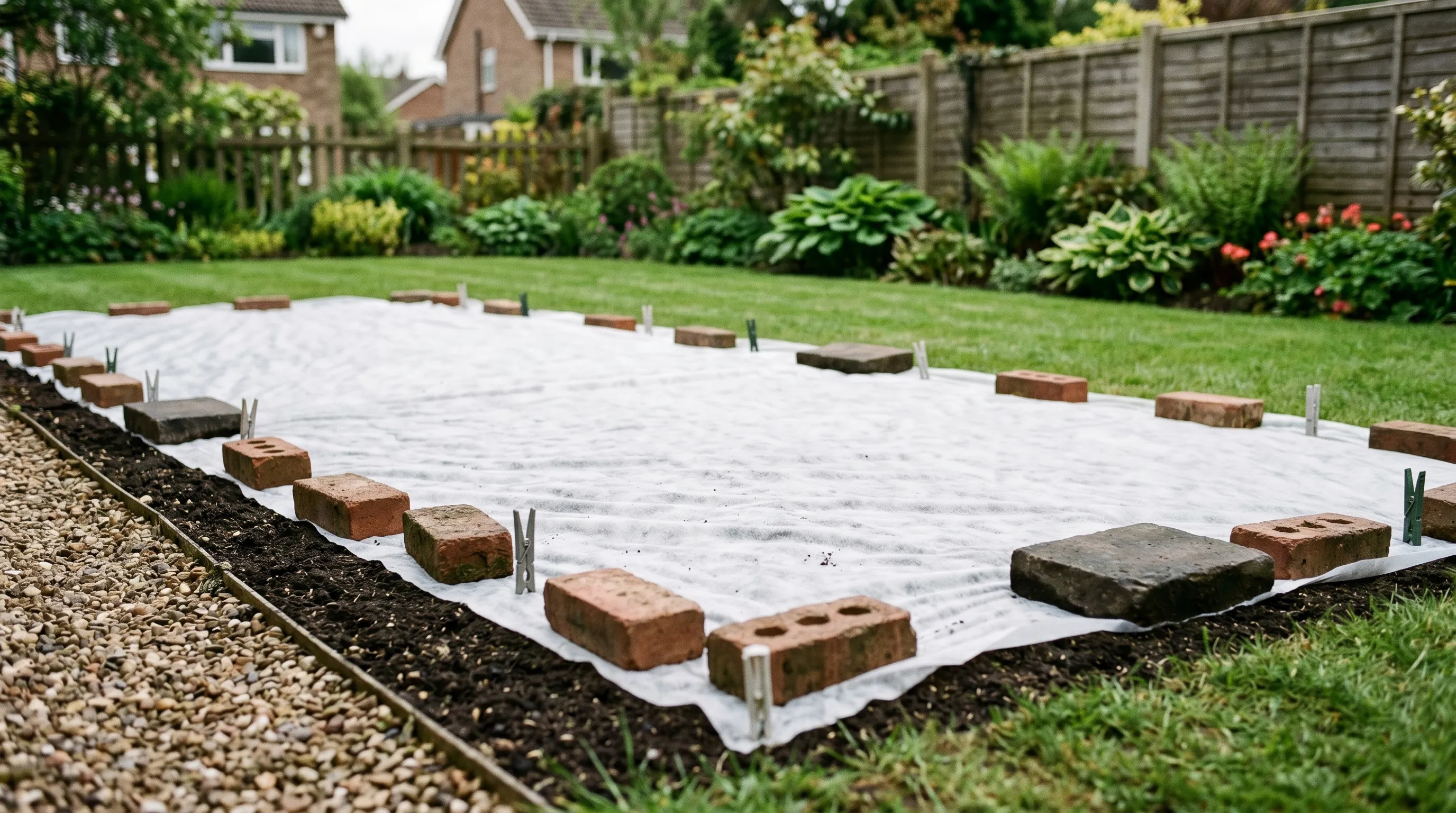 Horticultural fleece laid directly over newly sown grass seed. Weighted at every edge with bricks and pegs. 90% seed survival plus 2-3C soil warming. Best for cool-season sowing.
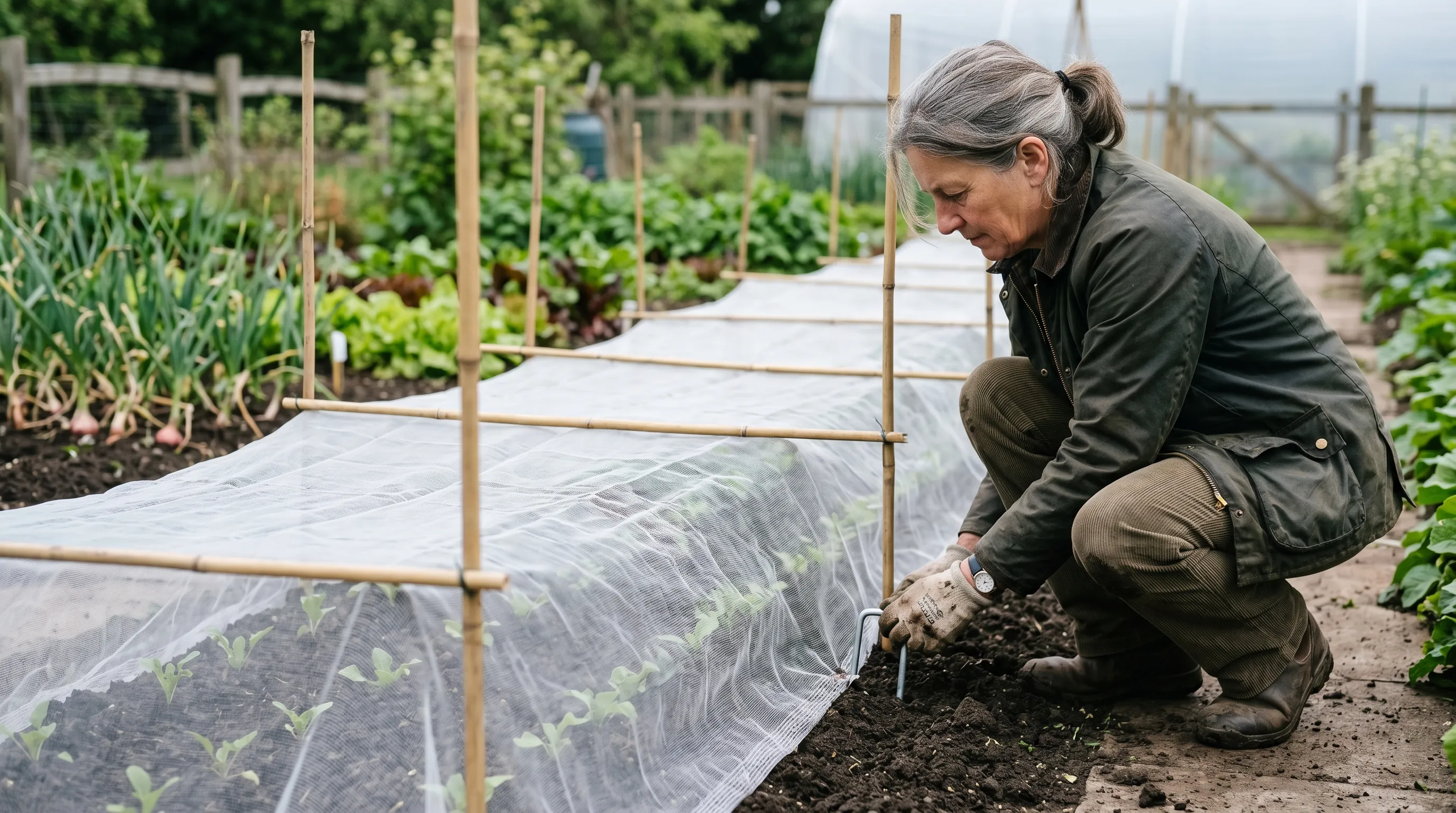 Pegging the netting edge with metal ground pegs. Critical step: unsecured edges let birds underneath. Bamboo canes hold the netting 150mm above soil for water access and seedling growth.
Now plan the wider lawn project
Our team produces practical UK gardening guidance from source research, contributor records and established horticultural practice. Editorial standards are overseen by Matt W.